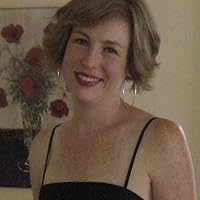
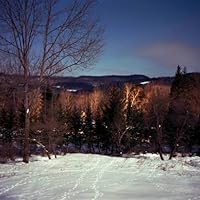
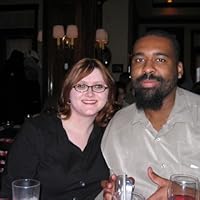
Taryn Simon's The Innocents documents the stories of individuals who have served time in prison for violent crimes they did not commit. This most recent edition delves into the pandemic's additional compounding effects on our overcrowded prisons and jails.
Taryn Simon’s practice features rigorous research and an extensive engagement with archives, which help the artist explore systems of power. Her subjects have included bloodlines, the structure of the criminal justice system, and flower arrangements from photographs of political signings. Simon explores these interests in taxonomic photographs, text works, sculptures, films, and performances that critique long-standing institutions and the ways art has supported them.
The Innocents (2002), for example, documents wrongful conviction cases in the United States and considers how photography and mistaken identification can undermine criminal justice efforts. For An American Index of the Hidden and Unfamiliar (2007), Simon photographed traditionally out-of-sight objects and spaces—from a braille edition of Playboy to the CIA’s art collection—that she believed to be foundational to American mythologies.
Simon’s work belongs in the collections of the Art Institute of Chicago, the Centre Pompidou, the Guggenheim Museum, the Metropolitan Museum of Art, the Museum of Modern Art, and the Tate.
As you may know, dna testing has helped thousands of wrongfully convicted men and women get released from jail, some of them serving many years toward life sentences. This book by Taryn Simon reveals what photography can do in the service of social justice. The cover depicts all the men she interviewed, The Innocents, and within, each person is photographed again, and powerfully, in the place of wrongful identification, or in the place of a clear alibi, sometimes with their accusers. The photographs are accompanied by wrenching stories, all of them.
The prison system in this country has been broken for decades, and most of us know it. This book proposes no solutions, but supports a view of the wrongfully convicted as human, as wronged, with some righteous outrage. I can't get this book out of my head.
I hope I go to neither heaven nor hell. I wish that at the time of my death that I could go to sleep and never wake up and never have a bad dream.
These are the words of Ron Williamson, a man who served eleven years of a death sentence for a brutal rape and murder that he didn't commit. One of 47 people profiled in The Innocents, all wrongly convicted of brutal crimes, and all cleared by post-conviction DNA testing, Williamson's words speak to the terrible scars left by these miscarriages of justice.
Each profile includes a photograph by Taryn Simon, usually at some significant location like the scene of the crime or the arrest; commentary on the case by Peter Neufeld and Barry Scheck, whose organization The Innocence Project has played such a crucial role in winning each individual's exoneration; and a brief statement from the wrongfully convicted man or woman.
This is a sobering book, not because it highlights mistakes within our criminal justice system, but because it makes a powerful statement about the nature of those mistakes. Many of the innocents are African-American, some of them are developmentally or psychologically disabled, and almost all of them are poor. The class biases of the legal system, in which unequal access to good counsel and technology help to facilitate wrongful convictions, as well as the fundamentally flawed nature of the identification process, quickly become apparent to the reader.
I was horrified to discover that so many of the cases profiled here were NOT the result of good-faith mistakes, but the product of deliberate and willful indifference on the part of investigators and prosecutors, who ignored or suppressed any evidence that did not fit their (incorrect) theories of the crime. Take the case of Tim Durham, sentenced to 3,220 years in prison for the rape of an eleven-year-old girl, despite the fact that he had 11 alibi witnesses who could place him at a shooting competition at the time of the crime. Or Marvin Anderson, who served 15 years of a 210-year sentence, despite the fact that the real perpetrator confessed five years after his conviction.
Finally, I was particularly struck, while reading The Innocents, by the fact that almost every one of these cases involved the brutal rape of a woman or child. I found myself, as a woman, trying to imagine being the victim of such a heinous crime, of enduring the trauma of testifying about it in public, only to discover years later that my attacker was not who I thought it was. And then I found myself trying to imagine being falsely accused of such a crime, of pleading my innocence to the indifferent or hostile powers-that-be, of being imprisoned for a crime I didn't commit, of being freed years later, and dumped out into the world with no assistance.
There were two sets of crimes here, and as I perused this powerful collection of photographs and stories, I kept thinking that these men were the victims of both crimes. Yes, they were railroaded by a legal system that was stacked against them. But they were also ensnared by a culture that permits widespread violence against women. I find that heartbreaking.
probably one of my favourite, saddest, infuriating and most impactful books I have ever read.
It is merely a coffee table photo book however the subjects (ex prisoners who were eventually released after being proven innocent) and the locations of their photo, e.g. place where they where when the actual crime took place, is truly moving.
I read this book after I read The Innocent Man. It was different than I was expecting, but still, really interesting and worth reading. Joy is borrowing it now, along with Dreams of Ada.
Coincidentally, I started reading this book right after I read chapter 11: Rape, racism and the myth of the black rapist in Women, Race and Class by Angela Davis. This chapter provided horrifying context for The Innocents that almost made it hard to read because I was so angry. Falsely accusing black men of crimes, especially rape, has been used as a tool since the end of slavery to control, oppress, and kill black people. This book does a good job, from the photographs to the interviews at telling the story of these men who were wrongfully convicted and what that does to your mental and physical health. A deeply moving book, these photographs are so powerful.
This book was very hard to read, filled with mugshots of wrongfully convicted people who spent on average at least a decade incarcerated. Overwhelmingly filled with the faces of aged Black men, it displays transcripts, police paperwork, and handwritten letters of testimony used during their trials.
Not my favourite series of Taryn Simon photographs, but a very interesting subject matter. I would have loved to have read more about the innocents’ experiences. The quotes mainly fit into the same 4 or 5 categories - the saddest being: 1) people being hyper-aware of what they are doing at all times, keeping mental or physical notes of their activities, being afraid to be near children, wanting to volunteer to be monitored, etc. stemming from a fear of being wrongfully accused again. 2) these wrongfully imprisoned people getting out of jail and not receiving any support - even less support than those who actually did the crimes and served their sentences, who are given at least a token amount of help to integrate back into society.
Another thought provoking series by this great young photographer.
These tales of the wrongfully convicted are made that much more poignant by the powerful photographs that accompany each narrative, many of which revisit the scene of the original crime or arrest.
In researching eyewitness identification case law, The Innocents is an invaluable supplement to help accurately convey the levity of wrongful convictions, the fragility of human life and the great responsibility of the criminal justice system.
Another great book of photos by Taryn Simon. The subjects have all been convicted of crimes and subsequently, often years later, cleared. Many are photographed at the site of their alleged crime. It is really chilling stuff. See her other book Hidden and Unfamiliar, for sure.