

What do you think?

Hadrian and the Triumph of Rome
Acclaimed author Anthony Everitt, whose Augustus was praised by the Philadelphia Inquirer as “a narrative of sustained drama and skillful analysis,” is the rare writer whose work both informs and enthralls. In Hadrian and the Triumph of Rome–the first major account of the emperor in nearly a century–Everitt presents a compelling, richly researched biography of the man whom he calls arguably “the most successful of Rome’s rulers.”
Born in A.D. 76, Hadrian lived through and ruled during a tempestuous era, a time when the Colosseum was opened to the public and Pompeii was buried under a mountain of lava and ash. Everitt vividly recounts Hadrian’s thrilling life, in which the emperor brings a century of disorder and costly warfare to a peaceful conclusion while demonstrating how a monarchy can be compatible with good governance. Hadrian was brave and astute–despite his sometimes prickly demeanor–as well as an accomplished huntsman, poet, and student of philosophy.
What distinguished Hadrian’s rule, according to Everitt, were two insights that inevitably ensured the empire’s long and prosperous He ended Rome’s territorial expansion, which had become strategically and economically untenable, by fortifying her boundaries (the many famed Walls of Hadrian), and he effectively “Hellenized” Rome by anointing Athens the empire’s cultural center, thereby making Greek learning and art vastly more prominent in Roman life.
With unprecedented detail, Everitt illuminates Hadrian’s private life, including his marriage to Sabina–a loveless, frequently unhappy bond that bore no heirs–and his enduring yet doomed relationship with the true love of his life, Antinous, a beautiful young Bithynian man. Everitt also covers Hadrian’s war against the Jews, which planted the seeds of present-day discord in the Middle East.
Despite his tremendous legacy–including a virtual “marble biography” of still-standing structures–Hadrian is considered one of Rome’s more enigmatic emperors. But making splendid use of recently discovered archaeological materials and his own exhaustive research, Everitt sheds new light on one of the most important figures of the ancient world.
Born in A.D. 76, Hadrian lived through and ruled during a tempestuous era, a time when the Colosseum was opened to the public and Pompeii was buried under a mountain of lava and ash. Everitt vividly recounts Hadrian’s thrilling life, in which the emperor brings a century of disorder and costly warfare to a peaceful conclusion while demonstrating how a monarchy can be compatible with good governance. Hadrian was brave and astute–despite his sometimes prickly demeanor–as well as an accomplished huntsman, poet, and student of philosophy.
What distinguished Hadrian’s rule, according to Everitt, were two insights that inevitably ensured the empire’s long and prosperous He ended Rome’s territorial expansion, which had become strategically and economically untenable, by fortifying her boundaries (the many famed Walls of Hadrian), and he effectively “Hellenized” Rome by anointing Athens the empire’s cultural center, thereby making Greek learning and art vastly more prominent in Roman life.
With unprecedented detail, Everitt illuminates Hadrian’s private life, including his marriage to Sabina–a loveless, frequently unhappy bond that bore no heirs–and his enduring yet doomed relationship with the true love of his life, Antinous, a beautiful young Bithynian man. Everitt also covers Hadrian’s war against the Jews, which planted the seeds of present-day discord in the Middle East.
Despite his tremendous legacy–including a virtual “marble biography” of still-standing structures–Hadrian is considered one of Rome’s more enigmatic emperors. But making splendid use of recently discovered archaeological materials and his own exhaustive research, Everitt sheds new light on one of the most important figures of the ancient world.
392 pages, Hardcover
First published January 1, 2009
About the author
Anthony Everitt
12 books501 followersAnthony Everitt is a British academic. He studied English literature at the University of Cambridge. He publishes regularly in The Guardian and The Financial Times. He worked in literature and visual arts. He was Secretary-General of the Arts Council of Great Britain. He is a visiting professor in the performing and visual arts at Nottingham Trent University. Everitt is a companion of the Liverpool Institute of Performing Arts and an Honorary Fellow of the Dartington College of Arts. Everitt has written books about Roman history, amongst which biographies of Augustus, Hadrian and Cicero and a book on The Rise of Rome. He lives in Wivenhoe near Colchester.
Ratings & Reviews
Friends & Following
Create a free account to discover what your friends think of this book!
Community Reviews
Displaying 1 - 30 of 194 reviews

September 14, 2014

In 2017 we celebrate 1900 years since Hadrian became Emperor.
Early in the year somehow I learnt of a blog and site that would trace the course of the year with landmarks from Hadrian's life. I enrolled to receive the updates.
www.followinghadrian.com
The truth, though, is that I have not paid a great deal of attention to Hadrian nor during this year . To compensate I had decided that I would at least reread Yourcenar’s Memoirs of Hadrian in 2017. As the year-end approached and as I had not yet picked up this fictional biography I opted for reading first this historical biography and comply with my 2017 Hadriatic goal and leave Yourcenar for 2018.
Coincidentally, the Archeological Museum in Madrid (MAN) had organized this Fall a cycle of lectures on Rome. The cycle was opened by the popular Mary Beard but one of the later talks, given by Anna Maria Reggiani was about Hadrian. Very timely for me her Luxuria Romana – Culture in the Court of Emperor Hadrian.
So, now on Hadrian himself and this biography.
About half of the book deals with the background and the years leading to Hadrian’s time. Everitt starts with the assassination of Nero, the civil war that ensued and then the Flavian dynasty. Although I enjoyed reviewing all the preceding period I did wonder on whether Everitt had enough material on his personage to fill a single book. But as the account unfolds, the preamble justifies its existence because it does succeed in approaching this enigmatic character to the reader.

Hadrian's is a fascinating one to follow. May be because of his wide travels; or because he was a hands-on commander and supervised directly the very strict training of an army that had to be ready for sustained peace and containment; or because he or because he comprehended the need to found a legal system as solid as a rock by systematizing the Perpetual Edict; or because he democratized government by opening it to figures other than senators; or because he had a sophisticated and hellenized mind and granted to posterity his magnificent building enterprises (his villa in Tivoli, the Pantheon, and the Castel Sant'Angelo); and even for his quaint interest in everything magic. There are many facets to enrich a biographical account and Everitt is convincing. I particularly enjoyed the way he brings in his primary sources, in particular the Historia Augusta, always qualifying the extract with a critical eye.

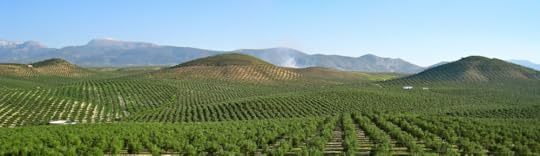
Reggiani's lecture was an excellent complement to the read. Speaking to a Spanish audience she underlined the Spanish provenance of Hadrian and of his ‘pater’ Trajan. She stressed the novelty that it was for Roman political society when provincial and bourgeois merchants entered the body politic (first the Senate and then as heads of the Empire) displacing the Roman aristocracy. This was a lobby whose energy originated in olive oil exports.
Reggiani also mentioned the exhibition that took place in the British Museum back in 2008, a year before this biography was first published, as if pointing to a relatively recent phase of restoration of the Emperor. Not only the Historia Augusta but other antique sources were supposedly very critical of Hadrian.
Everitt's account offers a firm anatomy, but it remains somewhat distant and in stone. Reggiani succeeded in adding more flesh and breath to the figure. But if I now want to approach Hadrian's mind, it seems I will have to tackle Yourcenar's book.
But I have paid my respects in this 900 year anniversary.

September 10, 2015
Anthony Everitt writes well and gives the reader a great sense of the Age of Rome, however, he freely speculates on people and events far too much for my taste. I compare him with contemporary Roman historian, Adrian Goldsworthy, whom I admire tremendously, and Everitt falls short. I understand that Emperor Hadrian's life is not as well documented as are the lives of other leaders of Rome; but still. Perhaps it is the topics of which he seems endlessly fascinated with such as Hadrian's loveless marriage or possible relations with Antonious. Who cares? I wanted to understand the political process of a maturation of an Empire, the decisions involved with withdrawal from Parthia, the politics of Imperial consolidation, etc. What made all Roads lead to Rome? Everitt skimmed over these matters to consider how two lovers frolicked along the Nile. I really wanted to know why Hadrian committed so blood and treasure suppressing the Third Jewish Revolt when he had Roman legions retreating from far more lucrative and less troublesome lands. I did not gain any insight into Hadrian the politician. Still, this book was a worthwhile read. I learned a great deal about events of Hadrian's life, his apprenticeship under Nerva and Trajan, the period of Roman history when it was most formidable and travelling the Roman roads. Few popular histories are written about Hadrian and that is unfortunate.

January 18, 2019
Yes, I will admit it. I pulled this book of my shelf and read it mainly because I wanted to know a little bit more about a populist dictator with an unhealthy obsession with building walls. It seemed, I don't know, relevant.
But it was on my shelf to begin with because I have read all four of Anthony Everitt's other books: his histories of Rome and Athens and his biographies of Cicero and Augustus. I liked this better than the other two biographies, which I found a little bit too thin, given the available sources for their two much better known subjects. Hadrian and the Triumph of Rome suffers (if it does suffer) from the opposite problem: it is the longest of the three biographies despite the fact that its subject, Hadrian, left far fewer primary sources.
And to give this book a coveted five-star ranking, I had to ignore two somewhat serious shortfalls in a biography of Hadrian: 1) it is not really a biography; and 2) it is not really about Hadrian.
To call this a biography overstates the quality of the evidence. Really, it is more of a biographical novel, since Hadrian just didn't leave that much behind. A huge portion of the novel comes from the Historia Augusta, which was written about a hundred years later. To be fair, though, Everitt is pretty responsible about letting us know when he is engaging in fanciful speculation. But he does engage in fanciful speculation. And a lot of what he says is along the lines of, "this is what somebody like the person we think Hadrian was would have done in the situation that we think he was in." So, perhaps, "novel" is too harsh. It is a biography of Hadrian's context salted with an occasional grain or two of knowable fact.
And when I say it is not really about Hadrian, I mean that it is not only about Hadrian. About half the book could more properly be called a history of the Roman Empire from the last days of Nero through the reign of Trajan (37-117 AD). He spends a lot of time setting the stage for his subject, which includes in-depth narratives. During much of this time, Hadrian has not been born, or is very young, or is off living the good life as Trajan's closest male relative and confidant. Until Trajan actually becomes the emperor on page 170, we get a lot of narrative about the things that he may or may not have seen or been part of.
But I actually liked this much more than I would have liked an an-depth account of Hadrian's privileged and unremarkable early life. Over the past few years, I have read a fair number of books on the late-Republic period of Rome (Cicero, Caesar, Mark Anthony, and that lot), and a less-fair-but-not-insignificant number of books about the Christian period (from Constantine to the end of the Empire). But I knew almost nothing about this middle period, or the reigns of Vespasian, Domitian, Trajan, and Hadrian.
But literarily, this is the period of classical antiquity that I know and love the most: the time of Horace and Juvenal, Tacitus and Plutarch, Epictatus and Marcus Aurelius. These are among my favorite works of literature and philosophy in the whole history of ever, but I knew very little about the context that produced them. So I actually enjoyed the non-Hardian parts of this book about Hadrian than I did the Hadrian parts.
But the Hadrian parts were cool too. Like most Roman Emperors, he was part visionary genius and part violent sociopath, but, in his case, the sociopath usually stayed behind the scenes (which is why Edward Gibbon christened him one of the "Five Good Emperors." And he made one of the most consequential policy decisions of any Roman Emperor since Augustus: he decided that Rome was big enough and didn't need to conquer any more territory.
This decision actually took a lot of political courage. The people loved wars and rumors of wars (but mainly wars), and the Senate loved being covered in glory. But Hadrian understood that, militarily, Rome had reached the point where it could no longer defend all of its territory without unacceptable costs. So he very consciously stopped the official policy of expansion that had been going on for hundreds of years. And he even gave Armenia and Parthia back to the Armenians and the Parthians.
And this, it turns out, is why he built walls--including his famous wall between England and Scotland, but also other walls throughout the empire. He wanted to create borders--evidence of where Rome stopped. He wanted a tangible demonstration of what was, and what was not, part of the Roman Empire. As Everitt writes of Hadrian's most famous wall:
And this, more than anything else, is why I rate Hadrian and the Triumph of Rome a five-star book: it gave me the answer I was looking for. It helped me understand emperors who build walls. And though there are a lot of things that are not similar between the proposed Trump Wall in America and Hadrian's Wall in England, there is one thing that is completely similar: both are acts of architecture-as-political-theatre. They are both symbols of something, rather than meaningful solutions to real problems like immigration, crime, and smuggling. I'm not knocking it. Symbols are important. But before a nation spends its time and treasure on a symbol, it is worth knowing what we are going to be symbolizing.
Or, as an American poet would write many centuries after Hadrian's wall, but a few years before Trump's,
But it was on my shelf to begin with because I have read all four of Anthony Everitt's other books: his histories of Rome and Athens and his biographies of Cicero and Augustus. I liked this better than the other two biographies, which I found a little bit too thin, given the available sources for their two much better known subjects. Hadrian and the Triumph of Rome suffers (if it does suffer) from the opposite problem: it is the longest of the three biographies despite the fact that its subject, Hadrian, left far fewer primary sources.
And to give this book a coveted five-star ranking, I had to ignore two somewhat serious shortfalls in a biography of Hadrian: 1) it is not really a biography; and 2) it is not really about Hadrian.
To call this a biography overstates the quality of the evidence. Really, it is more of a biographical novel, since Hadrian just didn't leave that much behind. A huge portion of the novel comes from the Historia Augusta, which was written about a hundred years later. To be fair, though, Everitt is pretty responsible about letting us know when he is engaging in fanciful speculation. But he does engage in fanciful speculation. And a lot of what he says is along the lines of, "this is what somebody like the person we think Hadrian was would have done in the situation that we think he was in." So, perhaps, "novel" is too harsh. It is a biography of Hadrian's context salted with an occasional grain or two of knowable fact.
And when I say it is not really about Hadrian, I mean that it is not only about Hadrian. About half the book could more properly be called a history of the Roman Empire from the last days of Nero through the reign of Trajan (37-117 AD). He spends a lot of time setting the stage for his subject, which includes in-depth narratives. During much of this time, Hadrian has not been born, or is very young, or is off living the good life as Trajan's closest male relative and confidant. Until Trajan actually becomes the emperor on page 170, we get a lot of narrative about the things that he may or may not have seen or been part of.
But I actually liked this much more than I would have liked an an-depth account of Hadrian's privileged and unremarkable early life. Over the past few years, I have read a fair number of books on the late-Republic period of Rome (Cicero, Caesar, Mark Anthony, and that lot), and a less-fair-but-not-insignificant number of books about the Christian period (from Constantine to the end of the Empire). But I knew almost nothing about this middle period, or the reigns of Vespasian, Domitian, Trajan, and Hadrian.
But literarily, this is the period of classical antiquity that I know and love the most: the time of Horace and Juvenal, Tacitus and Plutarch, Epictatus and Marcus Aurelius. These are among my favorite works of literature and philosophy in the whole history of ever, but I knew very little about the context that produced them. So I actually enjoyed the non-Hardian parts of this book about Hadrian than I did the Hadrian parts.
But the Hadrian parts were cool too. Like most Roman Emperors, he was part visionary genius and part violent sociopath, but, in his case, the sociopath usually stayed behind the scenes (which is why Edward Gibbon christened him one of the "Five Good Emperors." And he made one of the most consequential policy decisions of any Roman Emperor since Augustus: he decided that Rome was big enough and didn't need to conquer any more territory.
This decision actually took a lot of political courage. The people loved wars and rumors of wars (but mainly wars), and the Senate loved being covered in glory. But Hadrian understood that, militarily, Rome had reached the point where it could no longer defend all of its territory without unacceptable costs. So he very consciously stopped the official policy of expansion that had been going on for hundreds of years. And he even gave Armenia and Parthia back to the Armenians and the Parthians.
And this, it turns out, is why he built walls--including his famous wall between England and Scotland, but also other walls throughout the empire. He wanted to create borders--evidence of where Rome stopped. He wanted a tangible demonstration of what was, and what was not, part of the Roman Empire. As Everitt writes of Hadrian's most famous wall:
What was Hadrian’s Wall for? This is a harder question to answer than one might think. Little is known for sure about the population of northern Britannia (Scotland), but it is hard to believe that it posed much of a military threat. It is not obvious that building and managing a defended frontier along a fixed line was cheaper in manpower and treasure than annexing and governing the Scottish Lowlands, [which] could have been defended by a loose arrangement of forts that would cost no more, and maybe less, than manning a great wall from the Solway coast to the North Sea.
. . . . . .
One can only conclude that the emperor was restating his commitment to imperial containment. As with his building program in Rome, he used the visual language of architecture and engineering to make a political point. The white ribbon thrown across an empty landscape and the monumental vallum were politics as spectacular art. (244-45)
And this, more than anything else, is why I rate Hadrian and the Triumph of Rome a five-star book: it gave me the answer I was looking for. It helped me understand emperors who build walls. And though there are a lot of things that are not similar between the proposed Trump Wall in America and Hadrian's Wall in England, there is one thing that is completely similar: both are acts of architecture-as-political-theatre. They are both symbols of something, rather than meaningful solutions to real problems like immigration, crime, and smuggling. I'm not knocking it. Symbols are important. But before a nation spends its time and treasure on a symbol, it is worth knowing what we are going to be symbolizing.
Or, as an American poet would write many centuries after Hadrian's wall, but a few years before Trump's,
Before I built a wall I'd ask to know
What I was walling in or walling out,
And to whom I was like to give offence.

February 21, 2023
Hadrian is one of the better Roman Emperors. He has two good ideas: 1. No more war of conquest. Indeed, he built a wall around the boundary of the empire to indicate the stop of expansion. The northern English part built by stone is a tourist attraction today. 2. His love of Greece prompted his promotion of the eastern part into an equal partner.
Hadrian seems to be a good person in general. He devoted most of his time outside arkonship to culture. He loves his animals so much that he offered tomb for all when they died. Hadrian applies himself to administrative tasks of all kinds. As the emperor, he acted consistently as a Princeps, first among equal, not a dominus. The same time as promoting Greece, Hadrian is simultaneously trying to demote the home land into a coequal region as others. This unpopular reform was repealed after his death. However, for all the claim to make every part of the empire co-equal, Hadrian’s put down of the Jewish revolt shows its falsity. The territory was renamed Syria Palestina. Hadrian was then proclaimed imperator, a title only adopted by an emperor after a signal victory.
Interesting aside: When Hadrian’s young boyfriend Antinous died of drowning. Hadrian cried “like a woman”. Antinous’s statues and coins were everywhere. The book also said he is one of the few people of antiquity to have an ”active” website. (Not sure what that means though, status update? I didn’t find it after a quick search.)
Hadrian seems to be a good person in general. He devoted most of his time outside arkonship to culture. He loves his animals so much that he offered tomb for all when they died. Hadrian applies himself to administrative tasks of all kinds. As the emperor, he acted consistently as a Princeps, first among equal, not a dominus. The same time as promoting Greece, Hadrian is simultaneously trying to demote the home land into a coequal region as others. This unpopular reform was repealed after his death. However, for all the claim to make every part of the empire co-equal, Hadrian’s put down of the Jewish revolt shows its falsity. The territory was renamed Syria Palestina. Hadrian was then proclaimed imperator, a title only adopted by an emperor after a signal victory.
Interesting aside: When Hadrian’s young boyfriend Antinous died of drowning. Hadrian cried “like a woman”. Antinous’s statues and coins were everywhere. The book also said he is one of the few people of antiquity to have an ”active” website. (Not sure what that means though, status update? I didn’t find it after a quick search.)

July 2, 2016
I enjoyed this a lot, although frankly there are some of the same problems that seem to be cropping up in a lot of ancient history that I read these days. What gives with the need to make things up? Everitt never hesitates; if there is no evidence that Hadrian visited someplace, like Xenophon's estate in Greece, by God, he must have because he would never have been able to resist the temptation.
Well . . . maybe. Everitt is also pretty quick off the mark to describe how Hadrian felt during his initiation in the Eleusinian Mysteries, and the only reason I quibble is because he then leaps to the death of Antinous as a sacrifice based upon those Mysteries. Again, well . . . maybe. This is not a leap that is supported by hard evidence, although to his credit Everitt does label the idea that the drowning was a ritual sacrifice designed to renew Hadrian as speculation. Hard cheese for Hadrian if it was, since of the two, it is Antinous whose memory survived in the ancient world in the form of cult worship.
But these are quibbles. The biography is vastly readable, and remarkably lucid in its account of Hadrian's peripatetic career as princeps. The common belief that people just didn't get around in the ancient world (outside of St. Paul) gets dealt a death blow. Hadrian went everywhere, building monumental edifices all over the empire, adjudicating everything that came to his attention, and died with his boots on, paving the way for the next fifty years as the Golden Age of the Roman Empire.
Highly recommend.
Well . . . maybe. Everitt is also pretty quick off the mark to describe how Hadrian felt during his initiation in the Eleusinian Mysteries, and the only reason I quibble is because he then leaps to the death of Antinous as a sacrifice based upon those Mysteries. Again, well . . . maybe. This is not a leap that is supported by hard evidence, although to his credit Everitt does label the idea that the drowning was a ritual sacrifice designed to renew Hadrian as speculation. Hard cheese for Hadrian if it was, since of the two, it is Antinous whose memory survived in the ancient world in the form of cult worship.
But these are quibbles. The biography is vastly readable, and remarkably lucid in its account of Hadrian's peripatetic career as princeps. The common belief that people just didn't get around in the ancient world (outside of St. Paul) gets dealt a death blow. Hadrian went everywhere, building monumental edifices all over the empire, adjudicating everything that came to his attention, and died with his boots on, paving the way for the next fifty years as the Golden Age of the Roman Empire.
Highly recommend.
December 23, 2020
Though far more balanced that Nero and Caligula, Hadrian has shared their notoriety. He was (as Everitt observes) the unspeakable, perverted emperor. The Victorian historians bypassed him because of his love of men. In Hadrian and the Triumph of Rome , Everitt writes with balance and poise: he is keen to set Antinous in his place, as just one part of Hadrian's precocious life. The Antinous cult today borders on hysteria. Apparently, the ghost of Hadrian's Bithynian boy walks Simon Cowell's millionaire mansion! Everitt's book is written as an antidote to the pseudo-mysticism that still surrounds the boy who became a god, the beloved who received an Ovidian metamorphosis and entered the heavenly stars. Perhaps, to avoid the excesses that follow Hadrian-Antinous, Everitt underwrites their same sex relationship. He is quick to speculate why Hadrian valued Greece. His father took him there and his love of Greece was a tribute to his father. There is no evidence for this whatsoever. But when it comes to Antinous, Everitt is dry as dust and he reads evidence according to the letter. The devotion of Hadrian is explained entirely in terms of Greek mores. Hadrian was the lover educating his beloved. The parameters are set by Foucault's analysis of Greek love in The History of Sexuality and that is that. Overall this is a highly intelligent and cultured study that re-instates Hadrian warts and all.
August 15, 2023
This is a very good biography of one of Rome's greatest emperors, Hadrian. Following the militaristic reign of Trajan, Hadrian decided to abandon further plans of expansion. He recognised that the Roman Empire was too large to govern and that more military conquests would prove fatal for the empire. The Roman military policy would now be more defensive in nature. This did not mean, however, that the army was not seen as important. Hadrian made sure that the legions stayed in shape and were ready for war through rigorous training. Being one of the most active emperors, Hadrian travelled across the whole empire, inspecting the frontier regions and the construction of defences. Famously, he visited the north of Britain, where he commissioned the construction of defences, which we now know as Hadrian's Wall. As a lover of everything Greek, Hadrian spent time in Athens, which he made more culturally important for the empire. Aside from his travels throughout the whole empire, he also left a mark on the city of Rome itself. He rebuilt the Pantheon (with the largest unreinforced concrete dome in the world even to this day), commissioned his large mausoleum (Castel Sant'Angelo) and his large villa at Tivoli.
As a person, Hadrian's character is very interesting to read about and Everitt does a great job at telling the story of his life. I enjoyed his way of writing a lot and I felt that he was very knowledgeable. Of course, a biography like this one includes some guesswork, as not everything is known. Aside from this, I felt it was a great book and I recommend it to anyone that wants to learn more about the life and accomplishments of Hadrian! Five stars!
As a person, Hadrian's character is very interesting to read about and Everitt does a great job at telling the story of his life. I enjoyed his way of writing a lot and I felt that he was very knowledgeable. Of course, a biography like this one includes some guesswork, as not everything is known. Aside from this, I felt it was a great book and I recommend it to anyone that wants to learn more about the life and accomplishments of Hadrian! Five stars!

September 2, 2014
To be fair, very well researched, but there's so little that's actually known about Hadrian Everitt didn't have much to say and it seemed both confusing and flat. A lot of "we think" or "we can surmise", again, what else was the guy to do, but I left without knowing anything about him that I couldn't read in the Hadrian wikipedia page. It actually made me wish I could read a fictionalized account of his life, which I will now do! But I mean a gay Spanish guy who hated his wife and deified his boy toy...who he may have had killed...I mean this is definitely a movie, or at least a Bravo Movie-of-the-Week.

May 26, 2019
As many other reviewers have said, this book is best described as a portrait of the Roman empire in Hadrian's time rather than a biography of the emperor. Due to a lack of surviving materials, there is almost no information on Hadrian until his rise to prominence. Even then, there are significant periods of time where little is known of his activities.
However, if viewed as a history of Rome during those times, this work ranks as a success. Everett provides a clear and will written account of the period.
However, if viewed as a history of Rome during those times, this work ranks as a success. Everett provides a clear and will written account of the period.
March 17, 2010
The weakest of the Everitt's three books about great Romans, "Hadrian" suffers from a lack of historical data about this last great emperor. Too often, the text suffers from guessing and extrapolation.

November 11, 2012
If you are looking for a book to skim for quotes to put in your Roman History paper, keep looking. This book consists of a lot of guesswork and a lot of information not necessarily of any specific interest. However if you want to read an excellent biography that not only gives you a sense of the man, but the time he lived in, this is the book for you. The beginning of the book gives much information on the emperors preceding Hadrian and any information about Hadrian's activities during his early years is (admittedly educated) guesswork. Its purpose, which is brilliantly accomplished, is to establish the man's character and quirks so that the later chapters can shed light on the decisions and policies he implemented as emperor, when the historical record is most complete. The author avoids using high-minded or confusing language, keeping the narrative readable and engaging. His many references to great Latin and Greek writers and personalities are usually explained, so the reader needs no prior knowledge of classics to follow his writing. You will come away from this book feeling like you knew Hadrian personally, it reads very much like a character study of a brilliant man and leader.

September 30, 2017
I've read Anthony Everett's books about Cicero and Augustus, and really enjoyed both of them. I like his Hadrian too, although the sources available in writing a book about Hadrian are significantly thinner than those for Cicero and Augustus, so the portrait here isn't quite as rich or detailed and sometimes Everett is forced to resort to guesswork in teasing out explanations for certain events. Can't blame him for this though, he does a very good job with the tools he has.
This book goes a bit beyond the mere life of Hadrian, digging into the Flavian dynasty and the transition into the period of the good emperors. I've read a lot of Roman history, but Nerva and Trajan hadn't registered very deeply on my mind. This book gave me a new appreciation of them.
And I liked his Hadrian too. A good and humane man by the standards of his day (which, I have to admit, were some brutal standards), he was also cultured and smart and gave the world some of the best remaining examples of Roman architecture.
Everett does it again. I'll be happy to read any biography he writes about any Roman.
This book goes a bit beyond the mere life of Hadrian, digging into the Flavian dynasty and the transition into the period of the good emperors. I've read a lot of Roman history, but Nerva and Trajan hadn't registered very deeply on my mind. This book gave me a new appreciation of them.
And I liked his Hadrian too. A good and humane man by the standards of his day (which, I have to admit, were some brutal standards), he was also cultured and smart and gave the world some of the best remaining examples of Roman architecture.
Everett does it again. I'll be happy to read any biography he writes about any Roman.

Read
May 28, 2015An interesting well-written biography of Hadrian. Just what classical biographies should be like. Not as good as Everitt's books about Cicero and Augustus, but this is because I'm inherently less interested in Hadrian.

August 18, 2019
Let me preface this review by admitting that: No, I am not familiar with Roman history and culture. My pitiful knowledge of the Roman empire stops at anecdotes such as Julius Ceasar being stabbed on the Ides of March, or Nero setting Rome on fire.
(Fun fact: the Nero Burning ROM software is a pun on Nero burning Rome!)
Given how little I knew, this biography of Emperor Hadrian awed me with the portrayal of Pax Romana, of a world where primogeniture was not hegemonic and where boy's love was unapologetic. The road to the crown was long (since I came to this book without realizing that it would take Hadrian 40 years to ascend the throne), to the point that the awareness of its eventuality could not stop me from pondering whether the hero would really make it. No doubt Hadrian contemplated the same thing at the time. Perhaps this speaks to Anthony Everitt's masterful story-telling style, where no amount of hindsight can help readers predict what would come next.
Besides the legacy already mentioned in the book sypnosis (the cessation of fruitless imperiael expansion and the Hellenization of the Roman empire), Hadrian also facilitated the cult of Antinous. Ironically, the ancient world did not differ from the modern world that much in the universal worship of young pretty boys.
Overall, "Hadrian and the Triumph of Rome" is an excellent introduction to the historical figure responsible for the creation of Hadrian's Walls, the "first among equal" citizen emperor who managed to course-correct Rome to the its most prosperous period.
(Fun fact: the Nero Burning ROM software is a pun on Nero burning Rome!)
Given how little I knew, this biography of Emperor Hadrian awed me with the portrayal of Pax Romana, of a world where primogeniture was not hegemonic and where boy's love was unapologetic. The road to the crown was long (since I came to this book without realizing that it would take Hadrian 40 years to ascend the throne), to the point that the awareness of its eventuality could not stop me from pondering whether the hero would really make it. No doubt Hadrian contemplated the same thing at the time. Perhaps this speaks to Anthony Everitt's masterful story-telling style, where no amount of hindsight can help readers predict what would come next.
Besides the legacy already mentioned in the book sypnosis (the cessation of fruitless imperiael expansion and the Hellenization of the Roman empire), Hadrian also facilitated the cult of Antinous. Ironically, the ancient world did not differ from the modern world that much in the universal worship of young pretty boys.
Overall, "Hadrian and the Triumph of Rome" is an excellent introduction to the historical figure responsible for the creation of Hadrian's Walls, the "first among equal" citizen emperor who managed to course-correct Rome to the its most prosperous period.

November 24, 2012
Antony Everitt's biography of the Emperor Hadrian is very different from his earlier biographies on the Emperor Augustus and the orator Cicero. The reason is the difference of subjects' time periods. In the two earlier books, one system, the Republic, is coming to an end, while a new system, the Principate of the Roman Empire, is established. Cicero tries to save the Republic and dies in the attempt, while Augustus creates the Principate and rules until his seventies. When Hadrian was born the Principate had been established for over a hundred years. Rome was now in the reign of Emperor Vespasian, who took over at the brief interruption of the Pax Romana, the Year of the Four Emperors. Hadrian would be born a citizen of Rome, living under the rule of emperors until ultimately becoming the Emperor himself.
Hadrian's family came from the province of Spain, his ancestors having settled there after the Second Punic War. Through political connections his father would rise to become a senator of Rome. Because of his family and the fact that his father died when he was rather young he received a guardian named Trajan. Trajan was a soldier who would also rise to the height of Roman society by wearing the imperial purple.
Everitt's biography of Hadrian is actually a history of Rome during the mid-imperial period. While Hadrian rises through the ranks of the military and Roman upper-class senatorial society, Everitt also tells the story of the Flavian dynasty of Emperor Vespasian and his two sons, Emperors Titus and Domitian. The three emperors do battle not only in the field but at home in the Senate. The Stoic opposition, senators who resisted these three emperors with civil disobedience, to use a modern term, are quite a handful for the three rulers.
When Emperor Domitian is assassinated he is replaced by a senior senator named Emperor Nerva. Nerva has a short but important reign, he is known as the first of the five good emperors, who guide Rome in what is regarded as its Golden Age. Emperor Nerva adopts Trajan as his son and successor. This puts Hadrian in direct contact with the imperial throne. He works his way up during Trajan's reign, fighting in the army and assisting in the administration of the Empire. He is adopted by Emperor Trajan and succeeds him upon his death.
The book then goes in to the reign of the middle emperor of Rome's five good ones. Hadrian as an emperor was active, liked to travel though his empire, and was generally a good ruler. Emperor Hadrian stops Rome's conquests, wishing to change the Empire's mission from unlimited expansion to defense and internal improvement. Hadrian is a great builder who improves the city and the provinces. Everitt tells of his love affair with Antinous, his trials in the Senate, and his undying love of Greek culture.
The only one complaint I have about this book is the capitalization. I realize I should not care that much but I really cannot stand it. `Emperor Hadrian succeeds emperor Trajan as ruler of the Roman empire.' Seriously, it drives both me and my grammar check nuts. Everitt has retained this practice from his book Augustus, but he did not in Cicero.
Nevertheless this is a great book and I recommend it to anyone who is interested in the Roman Empire and its rulers.
Hadrian's family came from the province of Spain, his ancestors having settled there after the Second Punic War. Through political connections his father would rise to become a senator of Rome. Because of his family and the fact that his father died when he was rather young he received a guardian named Trajan. Trajan was a soldier who would also rise to the height of Roman society by wearing the imperial purple.
Everitt's biography of Hadrian is actually a history of Rome during the mid-imperial period. While Hadrian rises through the ranks of the military and Roman upper-class senatorial society, Everitt also tells the story of the Flavian dynasty of Emperor Vespasian and his two sons, Emperors Titus and Domitian. The three emperors do battle not only in the field but at home in the Senate. The Stoic opposition, senators who resisted these three emperors with civil disobedience, to use a modern term, are quite a handful for the three rulers.
When Emperor Domitian is assassinated he is replaced by a senior senator named Emperor Nerva. Nerva has a short but important reign, he is known as the first of the five good emperors, who guide Rome in what is regarded as its Golden Age. Emperor Nerva adopts Trajan as his son and successor. This puts Hadrian in direct contact with the imperial throne. He works his way up during Trajan's reign, fighting in the army and assisting in the administration of the Empire. He is adopted by Emperor Trajan and succeeds him upon his death.
The book then goes in to the reign of the middle emperor of Rome's five good ones. Hadrian as an emperor was active, liked to travel though his empire, and was generally a good ruler. Emperor Hadrian stops Rome's conquests, wishing to change the Empire's mission from unlimited expansion to defense and internal improvement. Hadrian is a great builder who improves the city and the provinces. Everitt tells of his love affair with Antinous, his trials in the Senate, and his undying love of Greek culture.
The only one complaint I have about this book is the capitalization. I realize I should not care that much but I really cannot stand it. `Emperor Hadrian succeeds emperor Trajan as ruler of the Roman empire.' Seriously, it drives both me and my grammar check nuts. Everitt has retained this practice from his book Augustus, but he did not in Cicero.
Nevertheless this is a great book and I recommend it to anyone who is interested in the Roman Empire and its rulers.

August 19, 2012
Everitt finishes his trilogy/triptych on the Roman Empire with this biography of Hadrian. His biography on Cicero describes the end of the Roman Republic, his biography of Augustus centers on the consolidation and expansion of Roman empirial power. The biography of Hadrian shows the peak, maturity of Roman emperial expansion.
Historically, Hadrian has always been an under-appreciated emperor, so I was glad to see his biography tackled by Everitt. It also makes sense to try and bookend Everitt's trilogy with Hadrian. However, whether it is due to the lack of abundant historical information on Hadrian (as Everitt notes himself) or due to Everitt trying too hard to make Hadrian's reign fit into his neat (1.2.3.) pattern, this biography just sags and disappoints given Everitt's claim that Hadrian "has a good claim to have been the most successful of Rome's leaders."
In the end, it feels like Everitt was trying to do too much (Bio of Hadrian, triptych of the Roman Empire, etc) with too little. It reminded me of the architect Apollodorus' critique of Hadrian's own temple of Venus and Rome, the book was simply "too tall for the height of the cella."
Historically, Hadrian has always been an under-appreciated emperor, so I was glad to see his biography tackled by Everitt. It also makes sense to try and bookend Everitt's trilogy with Hadrian. However, whether it is due to the lack of abundant historical information on Hadrian (as Everitt notes himself) or due to Everitt trying too hard to make Hadrian's reign fit into his neat (1.2.3.) pattern, this biography just sags and disappoints given Everitt's claim that Hadrian "has a good claim to have been the most successful of Rome's leaders."
In the end, it feels like Everitt was trying to do too much (Bio of Hadrian, triptych of the Roman Empire, etc) with too little. It reminded me of the architect Apollodorus' critique of Hadrian's own temple of Venus and Rome, the book was simply "too tall for the height of the cella."

May 1, 2018
Hadrianus heeft zijn naam onsterfelijk gemaakt door zich te verbinden aan de Muur die vanaf Newcastle het Noorden van Engeland doorkruist. Bovendien genoot deze Romeinse keizer de eer het onderwerp te vormen van één van Marguerite Yourcenar haar boeken, 'Mémoires d'Hadrien'. Als politiek-militair leider typeert de bouw van deze muur vrij goed zijn beleid. Na de laatste expansie onder zijn voorganger en mentor Trajanus in Dacië en Arabië leek de rek uit het Romeinse Rijk. Het werd te groot en te complex om nog verder naar uitbreiding te streven, zo leek het Hadrianus. Hij trok zich achter de Eufraat en verstevigde de noordelijke grenzen. Daarnaast trok hij door het rijk om er recht te spreken en de militaire discipline aan te scherpen. Eigen aan de Romeinse filosofie hanteerde hij een religieuze tolerantie (hoewel hij zelf aanleunde bij het epicurisme), maar was hard voor volkeren die zich politiek aan de Romeinse invloed wilden onttrekken zoals Judea. Everitt schetst ook een persoonlijk beeld van de keizer, die na 1900 jaar iets positiever lijkt dan zijn tijdsgenoten wilden laten geloven. Het adagium dat het eenzaam is aan de top, geldt ook voor Hadrianus. Al benieuwt het de lezer uitermate om te weten wat de omstandigheden waren waarin zijn 'eromenos' Antinoüs stierf. Een duistere kant van Hadrianus?
Hadrianus zijn verdienste was dat hij het Rijk feilloos liet overgaan van expansie naar status quo. Ook zorgde hij voor een continuïteit van bestuur door twee bekwame opvolgers aan te duiden, Antoninus Pius en Marcus Aurelius. De gouden jaren voor Rome zouden nog enkele decennia blijven duren.
Verwacht weinig schwung of verrassende elementen van het boek. Het verhaal kabbelt voort en pas na twee derden begint het bewind van Hadrianus. Een lange inleiding dus en minder ruimte om de politiek-militaire impact van Hadrianus te bespreken. Een gemiste kans.
Hadrianus zijn verdienste was dat hij het Rijk feilloos liet overgaan van expansie naar status quo. Ook zorgde hij voor een continuïteit van bestuur door twee bekwame opvolgers aan te duiden, Antoninus Pius en Marcus Aurelius. De gouden jaren voor Rome zouden nog enkele decennia blijven duren.
Verwacht weinig schwung of verrassende elementen van het boek. Het verhaal kabbelt voort en pas na twee derden begint het bewind van Hadrianus. Een lange inleiding dus en minder ruimte om de politiek-militaire impact van Hadrianus te bespreken. Een gemiste kans.

September 9, 2025
I’ve read so much about the various Julio-Claudian emperors, that I wanted to branch out and learn more about some of the subsequent emperors. Starting with Hadrian, the third of the “Good Emperors” sounded like a great place to begin.
As others have noted, actual information about Hadrian’s early years is limited. As a result, the author has to speculate a lot about some incidents or portions of Hadrian’s life. Much of the book also feels more like an account of the Flavian dynasty, as well as the time of Nerva and Trajan. That worked for me, as I also want to learn more about that period. However, if you’re looking for a book centered completely on Hadrian, this might not work for you
As others have noted, actual information about Hadrian’s early years is limited. As a result, the author has to speculate a lot about some incidents or portions of Hadrian’s life. Much of the book also feels more like an account of the Flavian dynasty, as well as the time of Nerva and Trajan. That worked for me, as I also want to learn more about that period. However, if you’re looking for a book centered completely on Hadrian, this might not work for you

May 11, 2020
An excellent popular account of Hadrian’s life and times. Everitt writes in a very accessible and easy to read style. The book does not require a lot of background knowledge on Rome since Everitt explains who or what someone/something was. I enjoyed how Everitt portrayed different aspects of Hadrian’s life such as being appointed by Trajan as his successor, Hadrian’s policies of consolidation and hellenization throughout the empire , and finally the death of his lover Antinous.
Due to lack of sources related to parts of Hadrian’s life Everitt did have to speculate/theorize about the motives behind certain events. For example Everitt proposes some ideas about Antinous’ death, most interesting of which was Hadrian sacrificed him for youth/health.
Overall I recommend this book to someone interested in the Roman Empire.
Due to lack of sources related to parts of Hadrian’s life Everitt did have to speculate/theorize about the motives behind certain events. For example Everitt proposes some ideas about Antinous’ death, most interesting of which was Hadrian sacrificed him for youth/health.
Overall I recommend this book to someone interested in the Roman Empire.

April 9, 2020
WOW! Quite a ride through the historical Roman world! At the time he was born (76 A.D.) it was the precipice of the Christian influences in the early Roman Empire. So, that was part of the overlapping. Then the endeavors he was placed in from his youth on. He started out rather humbly (with respect to the times) and ascended to the Emperorship. His Helenizing of the Roman world and the ceasing of the Roman expansion of territories and shored up the borders with the Hadrian walls. An intriguing and interesting historical account.
February 3, 2021
What an excellent biography of Hadrian. Everett is an excellent writer who brings this story to life. I learned quite a bit about Hadrian, Roman history and Roman culture. A very informative and enjoyable read.

December 27, 2021
I really liked this book. Some readers found the author to make maybe too many assunptions. He tried to fill the gaps and to present a real biography. Hadrian was an unique emperor. One of the best and last ones to follow Roman and Greek traditions.
September 24, 2019
Great read
If you enjoy Roman history, this was a great insightful read. This makes twenty words I hope. Nope. Not yet. Now
If you enjoy Roman history, this was a great insightful read. This makes twenty words I hope. Nope. Not yet. Now
March 17, 2023
It is a very enjoyable read. Provided context prior to getting into Hadrians rule and easily states when evidence is missing and we are just attempting to fill in the gaps.

December 25, 2025
Pretty interesting information (Trajan's rule, the change to consolidation rather than expansion, Antoninus, the Judea crisis, etc).
Still, it feels there are too many holes throughout, though obviously not fault of the author, as material on Hadrian is scarce.
Still, it feels there are too many holes throughout, though obviously not fault of the author, as material on Hadrian is scarce.

November 8, 2018
Despite a decent knowledge of Roman history, I knew very little about Hadrian before this biography. This may be due to the comparative paucity of sources about him or just that I didn't retain the information. I think Everitt paints a very clear picture of Hadrian's personality that makes me think he's more likely to stick in my memory.
That said, I have no idea how accurate this portrayal is. Given that Everitt makes a big deal about how little is known about Hadrian, I was sorta surprised at how much information was in the book. I suspect there was a decent amount of speculation and extrapolation going on.
That said, I have no idea how accurate this portrayal is. Given that Everitt makes a big deal about how little is known about Hadrian, I was sorta surprised at how much information was in the book. I suspect there was a decent amount of speculation and extrapolation going on.

May 23, 2017
A good, well written, but not great book on the emperor Hadrian. While giving a good overview of the time period and giving at least an idea of how Hadrian was the author speculates entirely too much. Too be fair there is very little information too go on but his endless asides about Hadrians sexual preference and the authors thoughts on the subject became a bit overdone. A good introduction to one of the good 5 emperors but it lacks a cohesion needed to make it a good book.
This book does accomplish my desire to learn more about the emperors not named Augustus and for that alone its worth a read.
This book does accomplish my desire to learn more about the emperors not named Augustus and for that alone its worth a read.

July 31, 2022
Short review follows - full review to come later
So I made the mistake of reading this after reading Kate Quinn’s Mistress of Rome series recently which uses this very book as source material.
As a result, I was pretty much familiar with all the facts that the book covered. This left me not so particularly engaged with this book. The book is less an analysis or POV from the author and more about providing biographical facts about Hadrian. If you are familiar with the facts then I am not sure of the book add much more to the reading.
I know this is not the book’s fault but I am rating the book on my reading experience. This will probably be better for people who don’t have that context.
The writing is clear enough and not dry in an academic sense which I appreciated. We do go from event to event in Hadrian’s life - it’s not a bad thing per se as this IS as biography but I was hoping for more exploration and analysis of the reign in terms of its impact on Rome.
Ah well… the rating is kind on me I guess. Yes I am an idiot … I should have flipped the reading order.
So I made the mistake of reading this after reading Kate Quinn’s Mistress of Rome series recently which uses this very book as source material.
As a result, I was pretty much familiar with all the facts that the book covered. This left me not so particularly engaged with this book. The book is less an analysis or POV from the author and more about providing biographical facts about Hadrian. If you are familiar with the facts then I am not sure of the book add much more to the reading.
I know this is not the book’s fault but I am rating the book on my reading experience. This will probably be better for people who don’t have that context.
The writing is clear enough and not dry in an academic sense which I appreciated. We do go from event to event in Hadrian’s life - it’s not a bad thing per se as this IS as biography but I was hoping for more exploration and analysis of the reign in terms of its impact on Rome.
Ah well… the rating is kind on me I guess. Yes I am an idiot … I should have flipped the reading order.

January 8, 2019
As others have noted, this is a fast, pleasant read with a good bit of information about Hadrian’s era and not much about him. Given the paucity of the historical record, Everitt is often reduced to saying, ‘this might have been the time at which Hadrian visited...’ or ‘if Hadrian did (x), he would have experienced it this way:’. The main takeaway is that Hadrian did a truly extraordinary thing in resisting Rome’s expansionary tendencies.

May 17, 2010
An occasionally engrossing portrait of one of Rome's most controversial but capable emperors, this book nonetheless pales in comparison to Everitt's biography of Cicero, so in sum and total, I personally considered Hadrian to be a disappointment.
The most interesting part of the book, in my opinion, comes during his early life as Hadrian comes in and out of favor as Trajan's heir apparent. In fact, the first third was so much more intriguing than the rest that I kind of wish Everitt had simply written a book on Trajan with Hadrian as a minor character. I realize that I have already broken two fundamental rules of book-review, rating it against other books and commenting on the book that wasn't written. But whatever, it's my review and I'll do what I want.
None of this is to say that Hadrian isn't worthy of his own biography. He's a three-dimensional emperor, wildly unpopular in his time but whose legacy in the Roman Empire's pantheon of ruler improved over the ages.
To the Romans of his day, he was an outsider. He spoke in an outrageously hickish Spanish accent and was a Hellenophile who considered anything Greek to be inherently superior to any product of the cultural elites anywhere in the Empire, including Rome. To underscore his preference, he scandalized the capital by growing a beard and dressing like a Greek.
Whatever their distaste for his foreign birth and affectation, most later Romans seemed to understand that Hadrian was ultimately the savior of the Roman Empire, and probably kept it going for a couple hundred years longer than it would have lasted if he had never come to power. This was because he was the first Roman Emperor to realize that the Empire could not keep expanding indefinitely. In fact, by his time, the Empire already had too much land and not enough men to defend it.
Hadrian scaled the borders of the Empire back to defensible positions along the Rhein and Danube Rivers, and built a series of walls and fortifications to defend the gaps between its natural defenses. This was utterly repulsive to most Romans of his day, as they had grown used to the never-ending river of money, land and slaves that had been flowing into Rome for centuries thanks to the conquest of new provinces. And yet, Hadrian's strategy was never completely abandoned, so clearly they understood, however grudgingly, that he was right. In fact, his reign kind of marked a sea change in the Roman Empire. It's focus once and for all turned from conquering new territories to defending its frontiers from barbarian invaders.
One people among whom his legacy has not recovered, however, is the Jews. Jerusalem had been destroyed in 70 A.D. and when Hadrian proposed rebuilding the city, he was at first welcomed as a savior. That was, until he made it clear that he wanted to rededicate the holy city to the god Jupiter. In fact, he went on to all but outlaw the Jewish religion, criminalizing circumcision and barring Jews from living inside Jerusalem.
This treatment all but forced the Jews still living in Judea into a third revolt against the Roman Empire, which, again, is worthy of its own book without Hadrian as its main character. The rebellion succeeded at first. After a few years of Jewish independence, though, Hadrian sent a full third of Rome's legions into Judea to crush the rebellion, which they promptly did.
Hundreds of thousands of Jews were killed in the ensuing fighting and those that weren't killed were ordered to leave. This pretty much finished the Jews off in Palestine. In fact, many Jewish historians date the diaspora as beginning with the failure of this rebellion and to this day, when rabbis mention Hadrian's name in services, they immediately follow it with the words, "May his bones be crushed."
So a mixed legacy, to be sure. And while this book certainly is not a waste of time, it's too bad that such a multi-faceted and historically influential figure couldn't inspire a more consistently riveting biography.
The most interesting part of the book, in my opinion, comes during his early life as Hadrian comes in and out of favor as Trajan's heir apparent. In fact, the first third was so much more intriguing than the rest that I kind of wish Everitt had simply written a book on Trajan with Hadrian as a minor character. I realize that I have already broken two fundamental rules of book-review, rating it against other books and commenting on the book that wasn't written. But whatever, it's my review and I'll do what I want.
None of this is to say that Hadrian isn't worthy of his own biography. He's a three-dimensional emperor, wildly unpopular in his time but whose legacy in the Roman Empire's pantheon of ruler improved over the ages.
To the Romans of his day, he was an outsider. He spoke in an outrageously hickish Spanish accent and was a Hellenophile who considered anything Greek to be inherently superior to any product of the cultural elites anywhere in the Empire, including Rome. To underscore his preference, he scandalized the capital by growing a beard and dressing like a Greek.
Whatever their distaste for his foreign birth and affectation, most later Romans seemed to understand that Hadrian was ultimately the savior of the Roman Empire, and probably kept it going for a couple hundred years longer than it would have lasted if he had never come to power. This was because he was the first Roman Emperor to realize that the Empire could not keep expanding indefinitely. In fact, by his time, the Empire already had too much land and not enough men to defend it.
Hadrian scaled the borders of the Empire back to defensible positions along the Rhein and Danube Rivers, and built a series of walls and fortifications to defend the gaps between its natural defenses. This was utterly repulsive to most Romans of his day, as they had grown used to the never-ending river of money, land and slaves that had been flowing into Rome for centuries thanks to the conquest of new provinces. And yet, Hadrian's strategy was never completely abandoned, so clearly they understood, however grudgingly, that he was right. In fact, his reign kind of marked a sea change in the Roman Empire. It's focus once and for all turned from conquering new territories to defending its frontiers from barbarian invaders.
One people among whom his legacy has not recovered, however, is the Jews. Jerusalem had been destroyed in 70 A.D. and when Hadrian proposed rebuilding the city, he was at first welcomed as a savior. That was, until he made it clear that he wanted to rededicate the holy city to the god Jupiter. In fact, he went on to all but outlaw the Jewish religion, criminalizing circumcision and barring Jews from living inside Jerusalem.
This treatment all but forced the Jews still living in Judea into a third revolt against the Roman Empire, which, again, is worthy of its own book without Hadrian as its main character. The rebellion succeeded at first. After a few years of Jewish independence, though, Hadrian sent a full third of Rome's legions into Judea to crush the rebellion, which they promptly did.
Hundreds of thousands of Jews were killed in the ensuing fighting and those that weren't killed were ordered to leave. This pretty much finished the Jews off in Palestine. In fact, many Jewish historians date the diaspora as beginning with the failure of this rebellion and to this day, when rabbis mention Hadrian's name in services, they immediately follow it with the words, "May his bones be crushed."
So a mixed legacy, to be sure. And while this book certainly is not a waste of time, it's too bad that such a multi-faceted and historically influential figure couldn't inspire a more consistently riveting biography.
Displaying 1 - 30 of 194 reviews