

What do you think?

The Insect Crisis: The Fall of the Tiny Empires that Run the World
From ants scurrying under leaf litter to bees able to fly higher than Mount Kilimanjaro, insects are everywhere. Three out of every four of our planet’s known animal species are insects. In The Insect Crisis, acclaimed journalist Oliver Milman dives into the torrent of recent evidence that suggests this kaleidoscopic group of creatures is suffering the greatest existential crisis in its remarkable 400-million-year history. What is causing the collapse of the insect world? Why does this alarming decline pose such a threat to us? And what can be done to stem the loss of the miniature empires that hold aloft life as we know it?
With urgency and great clarity, Milman explores this hidden emergency, arguing that its consequences could even rival climate change. He joins the scientists tracking the decline of insect populations across the globe, including the soaring mountains of Mexico that host an epic, yet dwindling, migration of monarch butterflies; the verdant countryside of England that has been emptied of insect life; the gargantuan fields of U.S. agriculture that have proved a killing ground for bees; and an offbeat experiment in Denmark that shows there aren’t that many bugs splattering into your car windshield these days. These losses not only further tear at the tapestry of life on our degraded planet; they imperil everything we hold dear, from the food on our supermarket shelves to the medicines in our cabinets to the riot of nature that thrills and enlivens us. Even insects we may dread, including the hated cockroach, or the stinging wasp, play crucial ecological roles, and their decline would profoundly shape our own story.
By connecting butterfly and bee, moth and beetle from across the globe, the full scope of loss renders a portrait of a crisis that threatens to upend the workings of our collective history. Part warning, part celebration of the incredible variety of insects, The Insect Crisis is a wake-up call for us all.
With urgency and great clarity, Milman explores this hidden emergency, arguing that its consequences could even rival climate change. He joins the scientists tracking the decline of insect populations across the globe, including the soaring mountains of Mexico that host an epic, yet dwindling, migration of monarch butterflies; the verdant countryside of England that has been emptied of insect life; the gargantuan fields of U.S. agriculture that have proved a killing ground for bees; and an offbeat experiment in Denmark that shows there aren’t that many bugs splattering into your car windshield these days. These losses not only further tear at the tapestry of life on our degraded planet; they imperil everything we hold dear, from the food on our supermarket shelves to the medicines in our cabinets to the riot of nature that thrills and enlivens us. Even insects we may dread, including the hated cockroach, or the stinging wasp, play crucial ecological roles, and their decline would profoundly shape our own story.
By connecting butterfly and bee, moth and beetle from across the globe, the full scope of loss renders a portrait of a crisis that threatens to upend the workings of our collective history. Part warning, part celebration of the incredible variety of insects, The Insect Crisis is a wake-up call for us all.
272 pages, Hardcover
First published January 1, 2022
About the author
Oliver Milman
1 book20 followersOliver Milman is a British journalist and the environment correspondent at the Guardian. He lives in New York City.
Ratings & Reviews
Friends & Following
Create a free account to discover what your friends think of this book!
Community Reviews
Displaying 1 - 30 of 315 reviews

April 9, 2022
Have you noticed less insects in your lifetime? In my 80 years, interested in the natural world, I certainly have.
This book is a stark review of the sweeping, all too obvious evidence of the accelerating insect crisis. It explains and explores the unfolding crisis, what all is causing it, and what can be done to stem the loss of the miniature empires that are keystones to life as we know it on our little blue canoe. It even explains some of climate change’s vicious paradoxes, such as why a warming climate will cause monarch butterflies to freeze to death.
Some may think this book alarmist, but I think it takes an appropriate tone given the seriousness of the subject matter, and the author does fairly present all sides in the scientific community and beneficial efforts to stem the crisis.
Save for maybe some butterflies and bees, too many of us don't fancy pesky, creepy-crawly, biting insects — an all to common attitude. Not enough humans understand the critical ecosystem roles that insect biodiverse populations play in our being, and many are apathetic in their immediate profit-centric mindsets. Additionally, younger generations may be subject to "Shifting Baseline" syndrome.
As an example, honey bees, which we employ to work in poisoned, monocropped environments, are only holding on with increasing assistance (themselves a livestock money crop). Other wild bee species, just as important to our environment, are faring much worse, having increasingly declined 75 to 95 percent in many regions of the world over the last century. I won't even get started on the other countless insect species we depend on, of which too many have been found to be diminishing at accelerating rates, and we don't know all the insect species and their ecological roles.
Read the prologue of this book (with the Amazon Look inside feature), if you dare, to understand the consequences of the world we are creating on our present course. The ignorance and greed of much of humanity has the pedal to the metal in our relentless drive to the abyss, in too many cases simply thinking we'll be fine without much of the biodiversity.
Actually, the whole book is a must read, even if you don't like insects or are ambivalent. It will give you an idea of how much our existence depends on insect populations and their biodiversity.
The maddening aspect of declining and disappearing insects worldwide, save for such as bed bugs and cockroaches, is that this is one of the easier environmental degradation issues to stem, and one where individuals could make a genuine difference (the uplifting aspect of this book with exemplary successes).
This is a book I would highly recommend for our and our children's sake. We can reassure ourselves that we can survive in a diminishing environment, but the pace of changes in the biosphere threatens to make such wishful thinking.
"By flattening and poisoning our landscapes, altering the chemical composition of our atmosphere, and creating biological deserts in the pursuit of progress and aestheticism [e.g. beautiful lawns], we are conducting a high-stakes experiment with hideous risks." ~ Oliver Milman
This book is a stark review of the sweeping, all too obvious evidence of the accelerating insect crisis. It explains and explores the unfolding crisis, what all is causing it, and what can be done to stem the loss of the miniature empires that are keystones to life as we know it on our little blue canoe. It even explains some of climate change’s vicious paradoxes, such as why a warming climate will cause monarch butterflies to freeze to death.
Some may think this book alarmist, but I think it takes an appropriate tone given the seriousness of the subject matter, and the author does fairly present all sides in the scientific community and beneficial efforts to stem the crisis.
Save for maybe some butterflies and bees, too many of us don't fancy pesky, creepy-crawly, biting insects — an all to common attitude. Not enough humans understand the critical ecosystem roles that insect biodiverse populations play in our being, and many are apathetic in their immediate profit-centric mindsets. Additionally, younger generations may be subject to "Shifting Baseline" syndrome.
As an example, honey bees, which we employ to work in poisoned, monocropped environments, are only holding on with increasing assistance (themselves a livestock money crop). Other wild bee species, just as important to our environment, are faring much worse, having increasingly declined 75 to 95 percent in many regions of the world over the last century. I won't even get started on the other countless insect species we depend on, of which too many have been found to be diminishing at accelerating rates, and we don't know all the insect species and their ecological roles.
Read the prologue of this book (with the Amazon Look inside feature), if you dare, to understand the consequences of the world we are creating on our present course. The ignorance and greed of much of humanity has the pedal to the metal in our relentless drive to the abyss, in too many cases simply thinking we'll be fine without much of the biodiversity.
Actually, the whole book is a must read, even if you don't like insects or are ambivalent. It will give you an idea of how much our existence depends on insect populations and their biodiversity.
The maddening aspect of declining and disappearing insects worldwide, save for such as bed bugs and cockroaches, is that this is one of the easier environmental degradation issues to stem, and one where individuals could make a genuine difference (the uplifting aspect of this book with exemplary successes).
This is a book I would highly recommend for our and our children's sake. We can reassure ourselves that we can survive in a diminishing environment, but the pace of changes in the biosphere threatens to make such wishful thinking.
"By flattening and poisoning our landscapes, altering the chemical composition of our atmosphere, and creating biological deserts in the pursuit of progress and aestheticism [e.g. beautiful lawns], we are conducting a high-stakes experiment with hideous risks." ~ Oliver Milman

March 5, 2022
I work in a sister field to conservation so it is a close topic to my heart and I have to say that I did not know or think about conservation of insects almost ever beyond the headline grabbing “Save the Bees” campaign or monarch butterflies.
This book was really eye opening and I think it is accessible to almost anyone. It definitely gave me messaging that I can use in my interactions with people through my job. If you want to help native animals including birds then you can help BUGS. And its not even that hard. There is a part in this where they talk about a campaign of ‘doing less’ so you don’t even have to do anything! Just do less: less lawn maintenance and less pesticides and herbicides. You can have your own conservation project in YOUR YARD. It was just a super cool idea and I totally plan on using it to encourage people on how they can help. Bugs feed other animals. By helping their population you are helping conservation.
There was super cool insect facts throughout. The author had a good sense of humor and the writing style and formatting kept it interesting and never too repetitive or dull which can happen with even interesting non-fiction sometimes. Hearing about how windshields used to be covered in bugs on road trips and thinking about how it just doesn’t happen anymore was pretty shocking to think about. Lots of numbers that are plummeting and depressing but overall there is such a good message of hope and what you can do in this book.
There are also chapters about the ‘save the bees’ and monarchs if that is all you know, you probably don’t know all of it. I found myself super interested in the bee industry and sad about the future of monarchs.
But anyways, buy native plants! Let your yard be a little more natural! You can help the world be a slightly more buzzy place (which is annoying for us but great for literally everything else).
Thank you to Netgalley and Highbridge audio for this audiobook copy. This was narrated by Liam Gerrad who did great and I would recommend the audiobook format.
This book was really eye opening and I think it is accessible to almost anyone. It definitely gave me messaging that I can use in my interactions with people through my job. If you want to help native animals including birds then you can help BUGS. And its not even that hard. There is a part in this where they talk about a campaign of ‘doing less’ so you don’t even have to do anything! Just do less: less lawn maintenance and less pesticides and herbicides. You can have your own conservation project in YOUR YARD. It was just a super cool idea and I totally plan on using it to encourage people on how they can help. Bugs feed other animals. By helping their population you are helping conservation.
There was super cool insect facts throughout. The author had a good sense of humor and the writing style and formatting kept it interesting and never too repetitive or dull which can happen with even interesting non-fiction sometimes. Hearing about how windshields used to be covered in bugs on road trips and thinking about how it just doesn’t happen anymore was pretty shocking to think about. Lots of numbers that are plummeting and depressing but overall there is such a good message of hope and what you can do in this book.
There are also chapters about the ‘save the bees’ and monarchs if that is all you know, you probably don’t know all of it. I found myself super interested in the bee industry and sad about the future of monarchs.
But anyways, buy native plants! Let your yard be a little more natural! You can help the world be a slightly more buzzy place (which is annoying for us but great for literally everything else).
Thank you to Netgalley and Highbridge audio for this audiobook copy. This was narrated by Liam Gerrad who did great and I would recommend the audiobook format.

May 20, 2026
While not involved with agriculture, forestry or any other field where the presence of insects might be a serious issue, Oliver Milman's The Insect Crisis: The Fall of the Tiny Empires That Run the World was a holiday gift from my son, whose hobby is entomology. In reading the book, aimed at the layman, I became fascinated with Milman's commentary abut the plight of insects.

It seems that 3/4 of all the known animal species on earth are insects. And of the many varieties of insects, only the butterfly is considered with affection, the others seen as "an irritant, a menace or pointless". Milman's book catalogues what is viewed as an "Insect Armageddon", a devastating loss of insects that are of critical importance to the ecosystem.
If we lose whole species of insects, vital to soil & plant health, our ecosystem is diminished on an exceedingly large & potentially permanent scale. Insect species, including bees & beetles, have been "part of a critical & delicate dance of terrestrial interactions for millions of years."
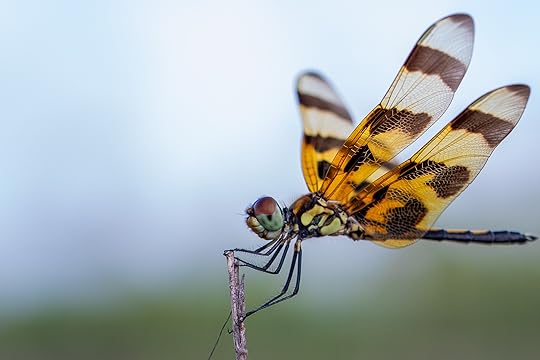
All insect species seem to be in decline, both in numbers & in their biomass, by about 9% a decade since 1990, though some aquatic species have increased. The decline has affected insect species from the arctic to the tropics. Among the causes of decline are the increased use of insecticides, aimed at enhancing crop production and also the scourge of climate change.
As Rachel Carson put it in Silent Spring, "Pesticides still the song of birds & the leaping of fish in the stream, creating a world in which the enchanted forest of the Brothers Grimm has become poisoned."
Some of what is included in The Insect Crisis seems more anecdotal than scientific. And by way of an attempt at authorial balance, Millman does mention that in curtailing the use of pesticides, even more land would be required to produce sufficient crops.
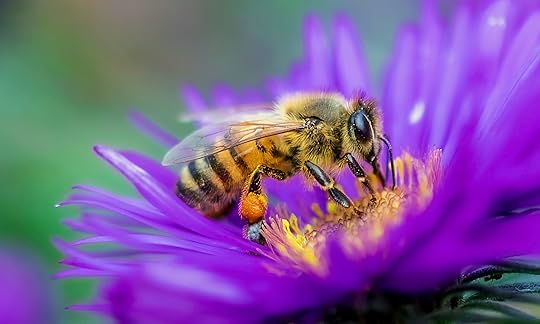
Oliver Milman intones that climate change imperils insects but it also interlocks with poverty, racism, social unrest, inequality, & decreasing biodiversity. The ecological narrative proceeds like this: if we lose bees, we lose fruits, vegetables & even grains; and without those, we begin to lose birds. Thus, bees are the cornerstone to biodiversity.
Given our enchantment with butterflies, "A Monarch's Journey" is of particular interest in Milman's book, detailing their migration pattern. And yet, Monarch Butterflies are vulnerable to heat, cold, storms, habitat loss, insecticides & climate change. It seems that caterpillars are languishing worldwide due to climate change. And without them, no butterflies!
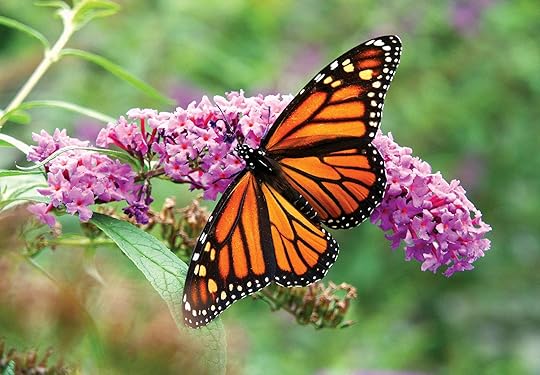
And in spite of our affection for butterflies, Milman suggests that, "butterflies are ecologically pointless but they are harmless & they are pretty." By this, the author means to suggest that butterflies don't aid pollination & if they were to disappear, no ecosystem would be damaged.
The Insect Crisis is a well-written, very compelling assessment of the currently imperiled world of insects, a critical part of our ecosystem. The author advises his readers that:
It seems that 3/4 of all the known animal species on earth are insects. And of the many varieties of insects, only the butterfly is considered with affection, the others seen as "an irritant, a menace or pointless". Milman's book catalogues what is viewed as an "Insect Armageddon", a devastating loss of insects that are of critical importance to the ecosystem.
If we lose whole species of insects, vital to soil & plant health, our ecosystem is diminished on an exceedingly large & potentially permanent scale. Insect species, including bees & beetles, have been "part of a critical & delicate dance of terrestrial interactions for millions of years."
All insect species seem to be in decline, both in numbers & in their biomass, by about 9% a decade since 1990, though some aquatic species have increased. The decline has affected insect species from the arctic to the tropics. Among the causes of decline are the increased use of insecticides, aimed at enhancing crop production and also the scourge of climate change.
Some insects, such as dragonflies, are nimble enough to cope with creeping change; unfortunately, most are not. Butterflies & moths are often quite mobile but in certain stages of their life cycle, they rely on certain terrestrial conditions & particular plant foods and so are acutely vulnerable.Historically, plants that seem noxious to farmers & others have been eradicated, though they support both insects & birds. As a result, some bird species have disappeared completely.
Meanwhile, pollinators such as bees & flies can move only short distances, exacerbating an emerging world food security crisis where farmers will struggle to grow certain food due to a lack of pollination that becomes untenable at an increase of 3 degrees Celsius. As an example, the area necessary to crow coffee & chocolate is expected to shrivel as temperatures in tropical regions surge to levels unseen in human history.
As Rachel Carson put it in Silent Spring, "Pesticides still the song of birds & the leaping of fish in the stream, creating a world in which the enchanted forest of the Brothers Grimm has become poisoned."
Some of what is included in The Insect Crisis seems more anecdotal than scientific. And by way of an attempt at authorial balance, Millman does mention that in curtailing the use of pesticides, even more land would be required to produce sufficient crops.
Oliver Milman intones that climate change imperils insects but it also interlocks with poverty, racism, social unrest, inequality, & decreasing biodiversity. The ecological narrative proceeds like this: if we lose bees, we lose fruits, vegetables & even grains; and without those, we begin to lose birds. Thus, bees are the cornerstone to biodiversity.
Given our enchantment with butterflies, "A Monarch's Journey" is of particular interest in Milman's book, detailing their migration pattern. And yet, Monarch Butterflies are vulnerable to heat, cold, storms, habitat loss, insecticides & climate change. It seems that caterpillars are languishing worldwide due to climate change. And without them, no butterflies!
And in spite of our affection for butterflies, Milman suggests that, "butterflies are ecologically pointless but they are harmless & they are pretty." By this, the author means to suggest that butterflies don't aid pollination & if they were to disappear, no ecosystem would be damaged.
The Insect Crisis is a well-written, very compelling assessment of the currently imperiled world of insects, a critical part of our ecosystem. The author advises his readers that:
We are at the beginning of a major extinction event. We need to develop a cultural appreciation of wildlife that is equivalent to music. We should care for Monarchs like we care for Mozart. Insects predated us on this planet & we need them more than they need us.*Within my review of The Insect Crisis are the images of author, Oliver Milman; also, a variety of insects, including a bee at work & a Monarch Butterfly.

April 1, 2022
The insects are going going....
Its not your imagination. The insects that used to be all around you every summer are indeed not coming back this summer, or next summer, or ever. Too many pesticides, too much habitat destruction, and worst of all, too hot. So what you say? Good riddance you say? The problem is fruits are pollinated by a lot of the disappearing insects - and its not just about the honeybees, either. Many other insects are, or rather used to, pollinate vegetables, fruits and flowers. The birds that eat insects aren't doing so well either. Do you have any idea of how much poop and dead things there would be about us if insects weren't on the job of eating or using what to them are stuff that sustains them in one way or another? Butterflies, omg, the butterflies are also disappearing. They do nothing but beautify our lives. Dying, dead, gone.
Are we imagining we aren't seeing the usual buzzing clouds harassing us every summer? No. Oliver Milan's book 'The Insect Crisis: The Fall of the Tiny Empires That Run the World' provides the proofs of scientific studies along with personal anecdotes of people who are either amateurs or professional observers of the natural world.
New kinds of insects are moving into areas that are not their normal environments due to global warming. This is not really a good thing. For one thing, these new neighbors are often infected with deadly disease-carrying mites and bacteria. For another, they cannot replace the huge variety of insects who have died or are dying off as the new guys moving in are not coming in the numbers representative of the large variety of insects they are replacing.
This book can seem hyperbolic, but it isn't. It really isn't. The insects ARE disappearing. I have seen this with my own eyes in the six decades of my life. Drive your car down any country road in August. Then get out and inspect the grill work in front of your car. Unlike thirty years ago, there will barely be enough dead smashed insects there to require more than one paper towel to wipe them off. I haven't seen a bumblebee in years. As I am a magnet for biting bugs, I've noticed I barely have the usual number of itchy bites I get for the last five summers. Yes, I am concerned because I love birds. Birds love mosquitoes, and for some birds mosquitoes are their meat and potatoes.
The book has an extensive Notes and Index.
Its not your imagination. The insects that used to be all around you every summer are indeed not coming back this summer, or next summer, or ever. Too many pesticides, too much habitat destruction, and worst of all, too hot. So what you say? Good riddance you say? The problem is fruits are pollinated by a lot of the disappearing insects - and its not just about the honeybees, either. Many other insects are, or rather used to, pollinate vegetables, fruits and flowers. The birds that eat insects aren't doing so well either. Do you have any idea of how much poop and dead things there would be about us if insects weren't on the job of eating or using what to them are stuff that sustains them in one way or another? Butterflies, omg, the butterflies are also disappearing. They do nothing but beautify our lives. Dying, dead, gone.
Are we imagining we aren't seeing the usual buzzing clouds harassing us every summer? No. Oliver Milan's book 'The Insect Crisis: The Fall of the Tiny Empires That Run the World' provides the proofs of scientific studies along with personal anecdotes of people who are either amateurs or professional observers of the natural world.
New kinds of insects are moving into areas that are not their normal environments due to global warming. This is not really a good thing. For one thing, these new neighbors are often infected with deadly disease-carrying mites and bacteria. For another, they cannot replace the huge variety of insects who have died or are dying off as the new guys moving in are not coming in the numbers representative of the large variety of insects they are replacing.
This book can seem hyperbolic, but it isn't. It really isn't. The insects ARE disappearing. I have seen this with my own eyes in the six decades of my life. Drive your car down any country road in August. Then get out and inspect the grill work in front of your car. Unlike thirty years ago, there will barely be enough dead smashed insects there to require more than one paper towel to wipe them off. I haven't seen a bumblebee in years. As I am a magnet for biting bugs, I've noticed I barely have the usual number of itchy bites I get for the last five summers. Yes, I am concerned because I love birds. Birds love mosquitoes, and for some birds mosquitoes are their meat and potatoes.
The book has an extensive Notes and Index.

January 18, 2026
This book looks at the potential consequences of the decline in insect populations worldwide. Milman cites studies of regions where insect numbers have dropped by more than 75 percent due to such factors as pesticides, habitat destruction, and climate change. It is a problem that most people do not realize could turn into a crisis. Many people view insects as something to be exterminated, but the potential effects on the food chain would be devastating.
Milman interviews entomologists, farmers, and conservationists, and explains how insects pollinate crops, decompose organic matter, maintain soil health, and sustain food chains that support birds, fish, and mammals. The book is structured around case studies. Each chapter focuses on specific types of insects. The writing style is direct. The author helps readers understand complex ecological relationships through straightforward analogies and explanations.
Milman advocates wide-ranging changes in farming practices, use of natural resources, and chemical regulation. This book helped me understand the nature of the challenge, and in general, raises awareness of a forthcoming ecological crisis that has received limited publicity.
Milman interviews entomologists, farmers, and conservationists, and explains how insects pollinate crops, decompose organic matter, maintain soil health, and sustain food chains that support birds, fish, and mammals. The book is structured around case studies. Each chapter focuses on specific types of insects. The writing style is direct. The author helps readers understand complex ecological relationships through straightforward analogies and explanations.
Milman advocates wide-ranging changes in farming practices, use of natural resources, and chemical regulation. This book helped me understand the nature of the challenge, and in general, raises awareness of a forthcoming ecological crisis that has received limited publicity.
November 7, 2022
An excellent, thoughtful and thorough review on what we know about the decline of insects. All insects, not just the ones that are "good" for us. Domesticated bees are like chicken and having them represent all the diversity isn't constructive to the cause. Without insects dead or rotting material of all sorts would not disappear nearly as fast, for example.
We all have a story that we can relate to in terms of how impoverished our surroundings are becoming. I remember driving through central Europe in 1999 and being incredibly grateful to the gas station attendant who washed our windscreen clear of bugs, it was cm thick. This doesn't happen anymore. I drove from southern Norway to northern Finland in 2020 and there was hardly a bug. Certainly nothing that warranted any additional windscreen cleaning. Actually, the situation is so dire that I don't kill any "pests" on my plants anymore, not even by hand, much less with any toxins. The lawn is left mostly uncut, to leave a little breather of "wilderness". Did you know that lawn grass is the most cultivated crop in the United States? It would be funny, except it isn't. It's just a green desert that could be used differently. Even just cutting it less often would make a difference.
It's hard to know what the world will look like in 50 or 100 years, but surely it will be much impoverished, given how drastically the biodiversity has been reduced in my lifetime. Close by, so that I notice. Back in 2000, I took my friends on a walk through a meadow teeming with butterflies and other insects. However, we ended up running out of there, with a cloud of mosquitoes and other blood sucking insects following us. That doesn't happen anymore either.
It's not fearmongering. It's real and every little thing that we do for a positive impact could potentially make the future for coming generations a little brighter. I do not want to live in a world without butterflies. And if the insects go, there are so many other creatures that will be starved into extinction that it does not bear thinking about.
We all have a story that we can relate to in terms of how impoverished our surroundings are becoming. I remember driving through central Europe in 1999 and being incredibly grateful to the gas station attendant who washed our windscreen clear of bugs, it was cm thick. This doesn't happen anymore. I drove from southern Norway to northern Finland in 2020 and there was hardly a bug. Certainly nothing that warranted any additional windscreen cleaning. Actually, the situation is so dire that I don't kill any "pests" on my plants anymore, not even by hand, much less with any toxins. The lawn is left mostly uncut, to leave a little breather of "wilderness". Did you know that lawn grass is the most cultivated crop in the United States? It would be funny, except it isn't. It's just a green desert that could be used differently. Even just cutting it less often would make a difference.
It's hard to know what the world will look like in 50 or 100 years, but surely it will be much impoverished, given how drastically the biodiversity has been reduced in my lifetime. Close by, so that I notice. Back in 2000, I took my friends on a walk through a meadow teeming with butterflies and other insects. However, we ended up running out of there, with a cloud of mosquitoes and other blood sucking insects following us. That doesn't happen anymore either.
It's not fearmongering. It's real and every little thing that we do for a positive impact could potentially make the future for coming generations a little brighter. I do not want to live in a world without butterflies. And if the insects go, there are so many other creatures that will be starved into extinction that it does not bear thinking about.

January 22, 2023
Every once in a while, I find a book that changes the way I view the world. This is certainly one of them. I've been a lifelong environmentalist but somehow missed the importance of insects till now. And I had just pulled some dandelions from my yard but, fortunately, didn't finish the job. I will now leave the remainder to feed the pollinators. California poppies are also emerging all over my yard after the rains. When they bloom, they will also feed the pollinators.
A few notable quotes:
Page 214: The vast tracts of land we've turned into biodiversity deserts are in many cases not even directly feeding people -- a third of all viable cropland is used to produce feed for livestock, which themselves take up a quarter of the planet's ice-free habitat. Mealworms and crickets, both excellent sources of protein that can multiply to enormous numbers in tight spaces, are a less destructive alternative to traditional Western diets and would help ease agricultural-driven pressures that blight insects, such as climate change, chemical use, and land degradation. "They are also delicious," says ... an entomologist.
My comment: Years ago, I raised mealworms and fried them in butter. They were crunchy with a nutty flavor. Even one of my kids dared to eat some.
Page 219: It's an arrogant presumption that we will sail unscathed through the sixth mass extinction without the diversity of insect life we are laying to waste. We need them far more than they need us. The insect crisis is, from our own self-interested point of view, a human emergency.
Highly recommended to all!
A few notable quotes:
Page 214: The vast tracts of land we've turned into biodiversity deserts are in many cases not even directly feeding people -- a third of all viable cropland is used to produce feed for livestock, which themselves take up a quarter of the planet's ice-free habitat. Mealworms and crickets, both excellent sources of protein that can multiply to enormous numbers in tight spaces, are a less destructive alternative to traditional Western diets and would help ease agricultural-driven pressures that blight insects, such as climate change, chemical use, and land degradation. "They are also delicious," says ... an entomologist.
My comment: Years ago, I raised mealworms and fried them in butter. They were crunchy with a nutty flavor. Even one of my kids dared to eat some.
Page 219: It's an arrogant presumption that we will sail unscathed through the sixth mass extinction without the diversity of insect life we are laying to waste. We need them far more than they need us. The insect crisis is, from our own self-interested point of view, a human emergency.
Highly recommended to all!

May 17, 2022
This book is terrifying. It's definitely an introduction to the problem of what is happening to insects and how that will affect the planet, and doesn't go far into presenting solutions, but considering how much of the data here was unknown to me, even if I knew the general 'idea' (Like that bees are dying), I think it's important to read. The information is presented well and clearly, and is not bogged down with anything except the stuff the reader really needs to know. I would recommend this book to mostly everyone.
Near the end of the book, Milman goes into how butterflies are dying off in large numbers for essentially a whole chapter and then ends with something that really affected me. I did the audiobook so I can't quote it exactly, but to paraphrase it- "It's actually incredible that for all the efforts going into saving the butterfly population, butterflies are perhaps the only insect we don't need. They aren't a major food source for other animals, and won't really have a noticeable effect if they were to be driven to extinction. But they are pretty, they are harmless, and most people like them. This recalls to mind Winston Churchill's response in WW2 when it was suggested he cut funding to the arts, he responded "Then what would we be fighting for?"
So yeah, read this book if you want an even better idea of how we're destroying the planet and gain some more anxiety you can do nothing about!
Near the end of the book, Milman goes into how butterflies are dying off in large numbers for essentially a whole chapter and then ends with something that really affected me. I did the audiobook so I can't quote it exactly, but to paraphrase it- "It's actually incredible that for all the efforts going into saving the butterfly population, butterflies are perhaps the only insect we don't need. They aren't a major food source for other animals, and won't really have a noticeable effect if they were to be driven to extinction. But they are pretty, they are harmless, and most people like them. This recalls to mind Winston Churchill's response in WW2 when it was suggested he cut funding to the arts, he responded "Then what would we be fighting for?"
So yeah, read this book if you want an even better idea of how we're destroying the planet and gain some more anxiety you can do nothing about!

April 28, 2022
"We are at the beginning of a major extinction level event [...] things are just going to get worse if humanity chooses to do nothing differently."
That statement just about sums up the message in "The Insect Crisis." I was aware of the issue that the book covers so what really hit me reading it, was the sheer scale of the crisis. It's gobsmackingly and alarm-blaringly shocking to me. I am at a legitimate loss for words (which, to those who know me, likely says quite a lot).
Milman, journalist and environment correspondent at the Guardian, does a great job here. The book is both easy to read and accessible, and it lends a weight to the message that defies the digestible format a bit. But really, that could just be the numbers that he cites - once you start talking about 90+ percent population declines in a couple of years, yeah, it's like running into a wall. But I also think it's a testament to Milman's use of language and the very much spot-on analogies he employs so adroitly:
"While the hideous fire and flooding of the climate crisis is starting to resemble a Hieronymus Bosch painting, the decline of insects is more like a partly hidden Picasso. Invisible to us in parts, slightly misshapen and ambiguous in others."
The book paints a pretty dire picture for us. "Most of life on earth would disappear if we didn't have insects. And if there were any humans left, they wouldn't be having much fun." Because, in true human fashion we are, of course, managing to fuck up the very thing we depend on. By means of everything from our vanity of the perfect lawn and leaf blowers, through monocultures and pesticides, to our destruction of habitats and anthropogenic climate change. In fact, we likely couldn't have done a better job of killing insects off if we'd been trying to - and, spoiler alert, in the case of pesticides that is indeed exactly what we are trying to do.
Additionally, even when we are actively trying to keep insects alive, we still often fuck it up - I'm thinking here, of course, of honeybees. Milman illustrates the phenomenon admirably - albeit, I think, not deliberately - when he claims that, "[h]oneybees are not much different from tiny flying cows or pigs." Humans are, after all, pretty shit at taking care of these animals as well.
However, Milman isn't all doom and gloom. He points out that insects, in general, are really good at recovering, given the chance. And it really doesn't take very much in the way of human intervention to turn this crisis around. Other than easing up on pesticides (which, as he mentions, might actually be a net positive for production anyway), it's sometimes as easy as having a bit of biodiversity growing at the edges of fields and in our gardens. Considering what's at stake, that doesn't seem too hard from my perspective.
Highly recommended!
That statement just about sums up the message in "The Insect Crisis." I was aware of the issue that the book covers so what really hit me reading it, was the sheer scale of the crisis. It's gobsmackingly and alarm-blaringly shocking to me. I am at a legitimate loss for words (which, to those who know me, likely says quite a lot).
Milman, journalist and environment correspondent at the Guardian, does a great job here. The book is both easy to read and accessible, and it lends a weight to the message that defies the digestible format a bit. But really, that could just be the numbers that he cites - once you start talking about 90+ percent population declines in a couple of years, yeah, it's like running into a wall. But I also think it's a testament to Milman's use of language and the very much spot-on analogies he employs so adroitly:
"While the hideous fire and flooding of the climate crisis is starting to resemble a Hieronymus Bosch painting, the decline of insects is more like a partly hidden Picasso. Invisible to us in parts, slightly misshapen and ambiguous in others."
The book paints a pretty dire picture for us. "Most of life on earth would disappear if we didn't have insects. And if there were any humans left, they wouldn't be having much fun." Because, in true human fashion we are, of course, managing to fuck up the very thing we depend on. By means of everything from our vanity of the perfect lawn and leaf blowers, through monocultures and pesticides, to our destruction of habitats and anthropogenic climate change. In fact, we likely couldn't have done a better job of killing insects off if we'd been trying to - and, spoiler alert, in the case of pesticides that is indeed exactly what we are trying to do.
Additionally, even when we are actively trying to keep insects alive, we still often fuck it up - I'm thinking here, of course, of honeybees. Milman illustrates the phenomenon admirably - albeit, I think, not deliberately - when he claims that, "[h]oneybees are not much different from tiny flying cows or pigs." Humans are, after all, pretty shit at taking care of these animals as well.
However, Milman isn't all doom and gloom. He points out that insects, in general, are really good at recovering, given the chance. And it really doesn't take very much in the way of human intervention to turn this crisis around. Other than easing up on pesticides (which, as he mentions, might actually be a net positive for production anyway), it's sometimes as easy as having a bit of biodiversity growing at the edges of fields and in our gardens. Considering what's at stake, that doesn't seem too hard from my perspective.
Highly recommended!

July 19, 2025
This book examines the impact of the current sixth mass extinction on Earth's insect populations, utilizing both scientific data and empirical evidence to explain the rapid decline of insect species. Insect populations are currently diminishing at a rate of ten percent per decade, and in some regions, the populations are on the verge of complete collapse. This is due to a combination of factors, including climate change, the use of pesticides and herbicides, urban development, pollution, the replacement of native plants, and the decline of animal life.
The empirical data is the most profound evidence in the book. If you are old enough, like me, I'm 45, you remember a time when insects were abundant. I recall being stung a dozen times over the years by various bees, as they were everywhere; sometimes hundreds could be seen on a single patch of land, especially when the red clover bloomed on Long Island. I used to love being barefoot, but after a few stings, I would wear shoes or sandals on the grass. Baseball teams were just colors back then, and I was on the yellow team one year, and we were harassed by bees and yellowjackets the entire season because they were attracted to the color. Various species of butterflies, locusts, and crickets could be found very easily. Praying mantis and large dragonflies were not unusual. Lightning bugs lit up the night, giving childhood summers a magical vibe. Black hornets were my favorite as a child, and you could attract them if you created a mound of mud. Black Hornets are feared, but they leave you alone if you do not bother them, and this book also talks about maligned insects that serve important roles on this planet. We need to take care of all life because we can not survive without them.
There are some things you can do to help insects and the environment.
1. Plant native species that can support your local insect populations. Even if you live in an apartment, a few flower pots can help insects.
2. Never use pesticides and herbicides! There are many good organic gardening channels on YouTube where you can learn about organic gardening. It is easy and fun.
3. Replace lawns with native plants. Lawns offer no benefits to nature and the insect population. You can grow food for yourselves and grow pollinators for the insects. It will add beauty to your neighborhood, and you will be giving back to nature.
4. Be smart with your money. Try to buy from ethical, environmentally safe companies. This is not always easy but companies do listen when it affects their bottom line. I emailed a company because I liked their product, but did not like the plastic packaging the product came in, and they said they received this complaint from various customers and changed to glass bottles within the year. You do have a voice and money, so use them both wisely.
5. Be sure to vote for candidates that support environmentalism. I am writing this in 2025, where we have a party (the republicans) that is openly hostile towards the environment. It is sad when people see environmental degradation as progress, but we are living in dystopian times, and this type of binary thought is extremely dangerous.
6. Talk to people about environmental issues, but always in a polite manner, and use the Socratic method. I was once approached by a right-wing neighbor who did not like environmentalists; he believed that environmentalism was coming for his job and vehicle. I listened to his plight and asked him a series of questions, like Do you like clean air and water? Do you like fresh, healthy food that is not contaminated with heavy metals and pesticides? He begrudgingly said yes to all, and I told him he sounded like an environmentalist. I asked him if he recycled his garbage. Yes, and he even volunteered information. He composted food waste in his yard and gardened. Environmentalism is a natural state of mind, so talk to people about these issues.
The empirical data is the most profound evidence in the book. If you are old enough, like me, I'm 45, you remember a time when insects were abundant. I recall being stung a dozen times over the years by various bees, as they were everywhere; sometimes hundreds could be seen on a single patch of land, especially when the red clover bloomed on Long Island. I used to love being barefoot, but after a few stings, I would wear shoes or sandals on the grass. Baseball teams were just colors back then, and I was on the yellow team one year, and we were harassed by bees and yellowjackets the entire season because they were attracted to the color. Various species of butterflies, locusts, and crickets could be found very easily. Praying mantis and large dragonflies were not unusual. Lightning bugs lit up the night, giving childhood summers a magical vibe. Black hornets were my favorite as a child, and you could attract them if you created a mound of mud. Black Hornets are feared, but they leave you alone if you do not bother them, and this book also talks about maligned insects that serve important roles on this planet. We need to take care of all life because we can not survive without them.
There are some things you can do to help insects and the environment.
1. Plant native species that can support your local insect populations. Even if you live in an apartment, a few flower pots can help insects.
2. Never use pesticides and herbicides! There are many good organic gardening channels on YouTube where you can learn about organic gardening. It is easy and fun.
3. Replace lawns with native plants. Lawns offer no benefits to nature and the insect population. You can grow food for yourselves and grow pollinators for the insects. It will add beauty to your neighborhood, and you will be giving back to nature.
4. Be smart with your money. Try to buy from ethical, environmentally safe companies. This is not always easy but companies do listen when it affects their bottom line. I emailed a company because I liked their product, but did not like the plastic packaging the product came in, and they said they received this complaint from various customers and changed to glass bottles within the year. You do have a voice and money, so use them both wisely.
5. Be sure to vote for candidates that support environmentalism. I am writing this in 2025, where we have a party (the republicans) that is openly hostile towards the environment. It is sad when people see environmental degradation as progress, but we are living in dystopian times, and this type of binary thought is extremely dangerous.
6. Talk to people about environmental issues, but always in a polite manner, and use the Socratic method. I was once approached by a right-wing neighbor who did not like environmentalists; he believed that environmentalism was coming for his job and vehicle. I listened to his plight and asked him a series of questions, like Do you like clean air and water? Do you like fresh, healthy food that is not contaminated with heavy metals and pesticides? He begrudgingly said yes to all, and I told him he sounded like an environmentalist. I asked him if he recycled his garbage. Yes, and he even volunteered information. He composted food waste in his yard and gardened. Environmentalism is a natural state of mind, so talk to people about these issues.
April 13, 2026
Everyone place a pollinator in their garden or on your windowsill and kiss every insect that buzzes by please

July 29, 2022
Milman convincingly argues that insect populations in general are in steep decline and that spells trouble for all of us. The writing is straightforward and compelling while managing to avoid histrionics.
The causes are numerous and are described well without bogging down the reading experience.
Many of us with outdoor space can do something to help. This book provides some useful examples.
The causes are numerous and are described well without bogging down the reading experience.
Many of us with outdoor space can do something to help. This book provides some useful examples.

November 16, 2022
An excellent book. As the title suggests, the book is about an insect crisis: due to climate change, insecticides, habitat loss, etc (ie. HUMANS), insects are dying off, and the world is in trouble. Insects are crucial for pollination, decomposition, and as a food source for birds and other animals, and humans are killing them. Without insects, we're screwed.
The Insect Crisis was such an interesting read and I was engaged from the first page. I like to read on my commute, and several people who saw me reading the book would ask me about it, which made me happy, as I highly recommend it.
The Insect Crisis was such an interesting read and I was engaged from the first page. I like to read on my commute, and several people who saw me reading the book would ask me about it, which made me happy, as I highly recommend it.
January 22, 2025
*Bangs pots and pans* GUYS THE INSECTS ARE DYING!!!
But seriously, even in my own experience prior to reading this book I feel like insects haven't been as abundant as they were in my childhood. I remember chasing monarch butterflies as a kid and seeing dragonflies, sometimes even the rare firefly in parks in the evening. I haven't seen either of the three in quite a long time. And the book, which seems extensively researched, confirms this. Insect populations around the world are plummeting for a variety of reasons: loss of habitat, climate change, pesticide use, urbanisation, the list goes on. And while insects are arguably the most adaptive and resilient of animals, they can't deal with all these pressures at the same time.
To make matters worse, asides from a few "pretty privileged" species, people don't really care about insects in general. I'll be the first to admit that I'm far less moved when I hear mosquitos, or beetle, or, cockroaches, or whatever are in decline. But as the book shows, everything is connected and necessary. If that mosquito you hate so much were to disappear then perhaps that bird or bat would disappear. Which would cause that flower to disappear. Which would cause that rabbit to disappear. And all the while you're sitting there in this colourless world wondering why life sucks so much.
The book does a decent job explaining all of this but to be honest, much of my interest and enjoyment came from a preexisting interest in the topic. Certain sections felt overly dense, and just contained fact after statistic after percentage. and after a while you start feeling numb to it while reading. Insect crisis was at its best when it took one particular animal and fully fleshed out the impact that it had, like the chapter on bees. I'm not sure how to describe it but I felt like the "pacing" was off, (idk if that makes sense, I know this is a nonfiction book).
All in all, this was a fine book, with an interesting topic, and something I hope to learn more about. Also, insects are pretty cool.
Threats don't add, they multiply
But seriously, even in my own experience prior to reading this book I feel like insects haven't been as abundant as they were in my childhood. I remember chasing monarch butterflies as a kid and seeing dragonflies, sometimes even the rare firefly in parks in the evening. I haven't seen either of the three in quite a long time. And the book, which seems extensively researched, confirms this. Insect populations around the world are plummeting for a variety of reasons: loss of habitat, climate change, pesticide use, urbanisation, the list goes on. And while insects are arguably the most adaptive and resilient of animals, they can't deal with all these pressures at the same time.
To make matters worse, asides from a few "pretty privileged" species, people don't really care about insects in general. I'll be the first to admit that I'm far less moved when I hear mosquitos, or beetle, or, cockroaches, or whatever are in decline. But as the book shows, everything is connected and necessary. If that mosquito you hate so much were to disappear then perhaps that bird or bat would disappear. Which would cause that flower to disappear. Which would cause that rabbit to disappear. And all the while you're sitting there in this colourless world wondering why life sucks so much.
The book does a decent job explaining all of this but to be honest, much of my interest and enjoyment came from a preexisting interest in the topic. Certain sections felt overly dense, and just contained fact after statistic after percentage. and after a while you start feeling numb to it while reading. Insect crisis was at its best when it took one particular animal and fully fleshed out the impact that it had, like the chapter on bees. I'm not sure how to describe it but I felt like the "pacing" was off, (idk if that makes sense, I know this is a nonfiction book).
All in all, this was a fine book, with an interesting topic, and something I hope to learn more about. Also, insects are pretty cool.
Threats don't add, they multiply

April 18, 2022
Absolutely loved reading this!
Everything I am into when it comes to the changes our planet is facing & really helped me write my own essay surrounding a similar topic (+ how it is capitalism to blame).
Everything I am into when it comes to the changes our planet is facing & really helped me write my own essay surrounding a similar topic (+ how it is capitalism to blame).

February 25, 2022
Thank you Netgalley for the advance eBook copy of The Insect Crisis by Oliver Mailman in exchange for an honest review.
It is incredibly evident that the author, Oliver Milman, has put in exhaustive amounts of research and heart into this book. Before reading "The Insect Crisis", I knew that the world was already in trouble with honeybee colony collapse disorder and heavily used pesticides negatively impacting pollinators worldwide. However, I didn't even know the tip of the preverbal iceberg when it came to the catastrophe awaiting us—and already occurring—with the global decline in insect populations.
This is not a happy read, nor an easy one due to the sheer amount of information shared. There was no perfect bow to tie it together at the end or an uplifting message of hope because, as the title says, this is a crisis. Instead, Milman focuses on the fragile interdependence of humanity and insect life, and the scientists who continue to research knowing that the balance is shattering.
I for one know that I will never look at a little bug the same way again...
3.5 stars because my little brain can’t deal with all of these facts one after the other. Maybe I need to read more nonfiction…exercise this puppy 🧠
It is incredibly evident that the author, Oliver Milman, has put in exhaustive amounts of research and heart into this book. Before reading "The Insect Crisis", I knew that the world was already in trouble with honeybee colony collapse disorder and heavily used pesticides negatively impacting pollinators worldwide. However, I didn't even know the tip of the preverbal iceberg when it came to the catastrophe awaiting us—and already occurring—with the global decline in insect populations.
This is not a happy read, nor an easy one due to the sheer amount of information shared. There was no perfect bow to tie it together at the end or an uplifting message of hope because, as the title says, this is a crisis. Instead, Milman focuses on the fragile interdependence of humanity and insect life, and the scientists who continue to research knowing that the balance is shattering.
I for one know that I will never look at a little bug the same way again...
3.5 stars because my little brain can’t deal with all of these facts one after the other. Maybe I need to read more nonfiction…exercise this puppy 🧠
November 2, 2024
Over the past year or so, I’ve really garnered an appreciation for insects and other various “creepy crawlies”. This book really helped to make that appreciation so much more vast. Bugs are cool, be kind to them. Please fight to keep them (and all of the planet’s species at risk) around for future generations.

August 4, 2022
I’m just going to say it, this is perhaps the single most important book that has ever been written in our relatively short history, and it is my belief that there isn’t a single drop of hyperbole in this statement.
Starting with a very bleak reality of a world with little to no insects remaining, those four pages of a realistic future that we are hurtling towards, the book doesn’t let up on the bleakness, yet through it there is an intense fascination and enjoyment in learning throughout. Filled with facts and real world examples, for a relatively short book page count wise in delves deep into the issues surrounding our insect world and its peril, yet also delves into wider ideas such as how and why some societies have lost confidence in science, and how scientists have had to respond to that. There are success stories, yes, but it gives us a roadmap to where we are heading yet also, if your mind is open enough, the road map is also there to maybe, maybe just tip the scales a little bit to give insects a slim chance, in turn giving us a slim chance to turn the tide on our tidal wave toward our extinction.
Starting with a very bleak reality of a world with little to no insects remaining, those four pages of a realistic future that we are hurtling towards, the book doesn’t let up on the bleakness, yet through it there is an intense fascination and enjoyment in learning throughout. Filled with facts and real world examples, for a relatively short book page count wise in delves deep into the issues surrounding our insect world and its peril, yet also delves into wider ideas such as how and why some societies have lost confidence in science, and how scientists have had to respond to that. There are success stories, yes, but it gives us a roadmap to where we are heading yet also, if your mind is open enough, the road map is also there to maybe, maybe just tip the scales a little bit to give insects a slim chance, in turn giving us a slim chance to turn the tide on our tidal wave toward our extinction.

August 20, 2022
The phrase “Save the Bees!” is so much more than a cute hip slogan - it’s a necessity for our lives.
This book is sad. From creepy-crawlies to charismatic butterflies, whether you care about insects or not, you’ll care about the effects of their slow disappearance on our everyday lives.
This book is sad. From creepy-crawlies to charismatic butterflies, whether you care about insects or not, you’ll care about the effects of their slow disappearance on our everyday lives.

June 24, 2023
Great book that makes you really see how much of our lives and world depends on the tiny scurrying creatures that most of us humans abhor.
It did kind of freak me out, and we are absolutely doomed. In so many ways. Yes, there are efforts to save some pollinators (bees and butterflies, not flies so much), but climate change and our need to tame and dominate nature are really the major issues that seem impossible to surmount.
It did kind of freak me out, and we are absolutely doomed. In so many ways. Yes, there are efforts to save some pollinators (bees and butterflies, not flies so much), but climate change and our need to tame and dominate nature are really the major issues that seem impossible to surmount.

April 11, 2022
Such an appealing premise and topic, I knew I had to get my hands on it the moment I saw it at the bookstore. But as I'm trying to cut down on book buying, I borrowed a copy from the DC public library and I think I'm the first to crack it open.
My initial excitement for this book was quickly replaced with disappointment. I agree with many of the other criticisms I've seen. While it does an excellent job in raising awareness to a gradually important issue of ecosystem collapse (that affects just about everything humans rely on) with Milman's eye-opening anecdotes and thorough research (evident by the bibliography that takes up 15% of the book), it was overall uncompelling. I find the issue is that the book lacks the gripping structure to drive the narrative of how insect population decline is a serious indicator of catastrophe; in other words, it tells more than it shows.
Understandably, ecosystem collapse is an overwhelmingly complex subject to try to string together, especially at the scale that insects contribute. The intricate web that connects human actions to the pollinators to the food we eat is difficult to comprehend for those who don't spend their lives weaving through them. Yet, The Insect Crisis is arguably among the best attempts I've seen so far at making the subject accessible to a wider audience.
One thing that sets it apart from other climate-related non-fiction is a somewhat optimistic call for "inaction", endorsing conservation approach to let nature heal. We have seen some benefits of this to animal populations during the pandemic period of inactivity, and it could very well work for insects.
Regardless, the book has reminded me to be kinder to insects, even in urban settings* and to appreciate many of the movements that urge more organic farming, reduce pesticide use. I will be visiting Bavaria in May and looking forward to learning more about the impacts of such movements.
*Except mosquitos. I do not care if other insects and animals like to eat mosquitoes - you will just need to find something else to snack on. I will never forgive mosquitoes for giving me the experience of dengue.
My initial excitement for this book was quickly replaced with disappointment. I agree with many of the other criticisms I've seen. While it does an excellent job in raising awareness to a gradually important issue of ecosystem collapse (that affects just about everything humans rely on) with Milman's eye-opening anecdotes and thorough research (evident by the bibliography that takes up 15% of the book), it was overall uncompelling. I find the issue is that the book lacks the gripping structure to drive the narrative of how insect population decline is a serious indicator of catastrophe; in other words, it tells more than it shows.
Understandably, ecosystem collapse is an overwhelmingly complex subject to try to string together, especially at the scale that insects contribute. The intricate web that connects human actions to the pollinators to the food we eat is difficult to comprehend for those who don't spend their lives weaving through them. Yet, The Insect Crisis is arguably among the best attempts I've seen so far at making the subject accessible to a wider audience.
One thing that sets it apart from other climate-related non-fiction is a somewhat optimistic call for "inaction", endorsing conservation approach to let nature heal. We have seen some benefits of this to animal populations during the pandemic period of inactivity, and it could very well work for insects.
Regardless, the book has reminded me to be kinder to insects, even in urban settings* and to appreciate many of the movements that urge more organic farming, reduce pesticide use. I will be visiting Bavaria in May and looking forward to learning more about the impacts of such movements.
*Except mosquitos. I do not care if other insects and animals like to eat mosquitoes - you will just need to find something else to snack on. I will never forgive mosquitoes for giving me the experience of dengue.
October 30, 2022
There is a lot of interesting information in this book. However, the book quickly turns into the author repeating the same point over and over again with not much new added. We understand that insects are in decline and this is bad for us but what would you suggest we do to fix this issue? The later chapters get more interesting with the author focusing on small subsets and diving into real-world examples. I wish we had gotten more of this and less of the author repeating the same point in a thousand different ways.

August 8, 2022
A terrifying but important read! Stop killing bugs! Stop over-curating everything! I remain unmoved on the topic of cockroaches, though.
March 27, 2023
I was well aware of the insect crisis we are dealing with based on other books, and National Geographic’s good research
This book was extremely thorough with regard to covering the research behind the extinctions we are seeing
Most importantly, it brings up the likely fact that technology is not going to save us from this problem
As we lose the good insects that are beneficial and remain mostly hidden from us in our yards and wild spaces, we will gain more of the “bad” insects that invade our home
I think this is very important for the general population, who may not have read a lot about the current research, to understand that most of the free services provided by the insects we are losing area are not familiar to the average person who may not be familiar with current research to understand that the services, which insects provide for free
Not understanding or protecting these insects will cost us money, if businesses or the government have to pick up the slack, so this is directly related to our pocketbooks, and, potentially taxes
The biggest take away from this book are the 3 things we should all keep in mind,
1, reduce pesticides in our yard,
2, plant trees, which is so beneficial to insects as well as the birds that eat them
3, don’t purchase mosquito services
I have been told by a pest control expert.- off the record, and with the request not to share this information - that there is no way to selectively kill only mosquitoes, it kills everything.
However, I was asked not to share it because these companies make so much money off of the service Please keep this in mind as these services are killing everything in our yard, and affecting birds, ability to breed
I hope people will , overtime, help the insects, and, thus, ourselves
This is far more about tiny beneficial insects that are outside of most people’s knowledge than it is about non-native honeybees.
I give this book a superior rating and recommend it for everyone to help understand what we can do to make a difference in our world and the world, we leave the next generation
This book was extremely thorough with regard to covering the research behind the extinctions we are seeing
Most importantly, it brings up the likely fact that technology is not going to save us from this problem
As we lose the good insects that are beneficial and remain mostly hidden from us in our yards and wild spaces, we will gain more of the “bad” insects that invade our home
I think this is very important for the general population, who may not have read a lot about the current research, to understand that most of the free services provided by the insects we are losing area are not familiar to the average person who may not be familiar with current research to understand that the services, which insects provide for free
Not understanding or protecting these insects will cost us money, if businesses or the government have to pick up the slack, so this is directly related to our pocketbooks, and, potentially taxes
The biggest take away from this book are the 3 things we should all keep in mind,
1, reduce pesticides in our yard,
2, plant trees, which is so beneficial to insects as well as the birds that eat them
3, don’t purchase mosquito services
I have been told by a pest control expert.- off the record, and with the request not to share this information - that there is no way to selectively kill only mosquitoes, it kills everything.
However, I was asked not to share it because these companies make so much money off of the service Please keep this in mind as these services are killing everything in our yard, and affecting birds, ability to breed
I hope people will , overtime, help the insects, and, thus, ourselves
This is far more about tiny beneficial insects that are outside of most people’s knowledge than it is about non-native honeybees.
I give this book a superior rating and recommend it for everyone to help understand what we can do to make a difference in our world and the world, we leave the next generation
June 16, 2026
it saddens me that the only way you can get people to care about insects is with listing all the other animals that depend on them for survival. starting with us.
”We may casually wish mosquitoes, for example, would simply vanish, but without them, many animals that we ourselves depend on would be denied a primary food source. Mosquito larvae are feasted upon by fish ranging from guppies to goldfish, and once the mosquitoes reach adulthood, they then become part of the terrestrial ecosystem, preyed upon by bats, birds, turtles, and dragonflies.”
“We are watching the extinction of large, charismatic creatures in real time, a terrible debt of human progress that will seemingly never be paid in full. Amid this carnage, fretting over the loss of fireflies or beetles or even butterflies can feel incidental, even quaint. And yet the tragedy of wiping out rhinos would not threaten the viability of global food production, and the hideous crime of allowing all orangutans to perish would not provoke widespread child malnutrition, trigger the demise of dozens of bird species, or cause the landscape to be covered in rotting cadavers. In terms of impact, the insect crisis drowns out any other alarm bells in the domain of animals.”

July 3, 2023
An erudite, yet surprisingly accessible text. This book showcases the trauma that the human age of innovation has inflicted on the world around us, specifically the insects that we tend to shun, but don't realise are essential to the survival of so much of our lifestyle (mass pollination and artistic value to name but two).
It was interesting, and somewhat frightening, to read about the future of insects around us. I leave the book perhaps barely more intrigued by cockraches than before.
(1. Since I was zero intrigued before this wasn't particularly hard
2. Apparently there are many more types than the household pest variety we all despise)
Insects are rather important creatures apparently, and I have a more heady appreciation for them now.
It was interesting, and somewhat frightening, to read about the future of insects around us. I leave the book perhaps barely more intrigued by cockraches than before.
(1. Since I was zero intrigued before this wasn't particularly hard
2. Apparently there are many more types than the household pest variety we all despise)
Insects are rather important creatures apparently, and I have a more heady appreciation for them now.
January 22, 2026
The Insect Crisis is one of those books that quietly rearranges how you see the world. It is deeply informative, often devastating, and unexpectedly tender toward creatures many of us are taught to overlook or fear.
I read this while planning my wildlife garden, and it fundamentally shifted how I understand insects: not as background noise or personal nightmares, but as the fragile scaffolding holding entire ecosystems together. Even as someone who is genuinely afraid of insects, I found myself growing more attentive, more reverent, and more grateful with every chapter.
This is not an easy read, but it is an important one. It asks you to sit with discomfort, grief, and responsibility—and then gently nudges you toward care. I finished it more aware of my surroundings, more committed to small acts of stewardship, and more willing to coexist with the unseen laborers of the natural world.
A sobering, necessary book—especially for anyone tending land, however small.
I read this while planning my wildlife garden, and it fundamentally shifted how I understand insects: not as background noise or personal nightmares, but as the fragile scaffolding holding entire ecosystems together. Even as someone who is genuinely afraid of insects, I found myself growing more attentive, more reverent, and more grateful with every chapter.
This is not an easy read, but it is an important one. It asks you to sit with discomfort, grief, and responsibility—and then gently nudges you toward care. I finished it more aware of my surroundings, more committed to small acts of stewardship, and more willing to coexist with the unseen laborers of the natural world.
A sobering, necessary book—especially for anyone tending land, however small.
Read
July 17, 2024This book is gripping and easy to read even for those who know very little about insects and entomology, such as myself. Not only did I find this small volume pleasantly educational, but it also made me aware of a crisis that I knew very little about, and that affects all our lives more than we know. I think everyone knows that bees are endangered, but this book raises awareness about the dangers faced by other, less iconic insects, that are nonetheless crucial for our ecosystem. Reading this made me more aware and appreciative of the insects around me, while also making me realise that there are certain types of insects that I haven’t seen since I was a kid. More than anything, this volume made me want to know more — which is the best review I can give any non-fiction book.

February 25, 2026
Well that was terrifying
Essentially all the insect species which are crucial pollinators (notably flies, not so much bees) are being wiped out at astonishing rates, to the point where the global food system is already collapsing in certain areas and will continue to do so until the only things we have on our plates are rice, corn and wheat 😃
Essentially all the insect species which are crucial pollinators (notably flies, not so much bees) are being wiped out at astonishing rates, to the point where the global food system is already collapsing in certain areas and will continue to do so until the only things we have on our plates are rice, corn and wheat 😃

May 15, 2022
The bugs are dying! It's not so easy to notice in California where we never had so many bugs, but in other more historically bug-filled areas, it is more obvious. Almost everyone knows about the problems with bees, but I confess that I had not been aware of the extent of the problem for insects in general. We need them. Most of them are not pests. They serve many essential purposes. We have to find ways to reverse the decline. The biggest culprit here is climate change, and we already know that we have to address that one, but there are other causes too - pesticides and habitat destruction are the obvious ones. We have to save the ugly and disgusting creatures as well as the cute ones. Ecosystems can't survive based on cute creatures alone.
Displaying 1 - 30 of 315 reviews