Is the 'smart city' the utopia we've been waiting for?
The promise of the so-called smart city has been at the forefront of urban planning and development since the early 2010s, and the tech industry that supplies smart city software and hardware is now worth hundreds of billions a year.
But the ideas and approaches underpinning smart city tech raise tough and important questions about the future of urban communities, surveillance, automation, and public participation. The smart city era, moreover, belongs firmly in a longer historical narrative about cities ― one defined by utopian ideologies, architectural visions, and technological fantasies.
Smart streetlights, water and air quality tracking, autonomous vehicles: with examples from all over the world, including New York, Los Angeles, Boston, Portland, and Chicago, Dream States unpacks the world of smart city tech, but also situates this important shift in city-building into a broader story about why we still dream about perfect places.
"John Lorinc's incisive analysis in Dream States reminds us that the search for urban utopia is not new. Throughout the book, Lorinc underscores the fact that a gamut of urban innovations - from smart city megaprojects to e-government to pandemic preparedness tools - only provide promise when scrutinized together with the political, economic, social, and physical complexities of urban life." - Shauna Brail, University of Toronto
"Dream States: Smart Cities, Technology, and the Pursuit of Urban Utopias takes us on a fascinating journey across world cities to show how technology has shaped them in the past and how smart city technology will reshape them in the future. This book is essential reading for policy makers, researchers, and practitioners interested in understanding the opportunities and challenges of smart city technology and what it means for city building." - Enid Slack, University of Toronto School of Cities
""Utopia may be the oldest grift in the city-building business, but Dream States shows that technology is a timeless tool for turning the most ordinary of urban dreams - clean air and water, safe streets, and decent homes - into reality. As digital dilettantes try to sell us on a software overhaul, John Lorinc provides us an indispensable and flawless guide to the must-haves and never-agains of the smart city." - Anthony Townsend, Urbanist in Residence, Cornell Tech, author of Smart Cities
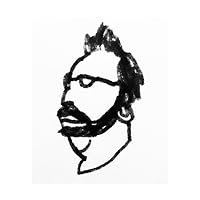
John Lorinc is an award-winning journalist who has contributed to Toronto Life, The Globe and Mail, National Post, Saturday Night, Report on Business, and Quill & Quire, among other publications, and was the editor of The Ward Uncovered: The Archaeology of Everyday Life (Coach House Books, 2018) and The Ward: The Life and Loss of Toronto's First Immigrant Neighbourhood (Coach House Books, 2015). He has written extensively on amalgamation, education, sprawl, and other city issues. He is the recipient of two National Magazine Awards for his coverage of urban affairs.
I expected more from the senior editor of Spacing. Aside from the obligatory comments on Sidewalk Labs' Quayside project and the COVID-19 pandemic, there is almost nothing in this book I haven't read before, or that hasn't been covered better elsewhere. It's 2022—do I really need to read yet another chapter about ShotSpotter like it's news? Lorinc writes about many of these projects and issues like a newspaper reporter, which is to say we learn a lot about other people's opinions of them, but precious little about his own. He also cites the work of many "smart city" academics from the late 2010s, and even they are frequently just rehashing material covered better in Adam Greenfield's 2013 Against the Smart City. What the "smart city" conversation needed from John Lorinc was precise thinking and strong opinions, and what it got instead was a literature review.
I'm not a city or regional planner and I picked up this book because I've been interested in the phenomenon of smart cities and their purported attempts to make my life easy and smooth. It took me a while to get through this book despite finding the general content and thesis interesting, and for a while, I couldn't figure out why.
I picked it back up a week ago (and pushed myself to finish the last few chapters) and realized why I'd needed so many breaks. This book is written like a series of articles in an anthology, and could have worked as a monthly magazine column on smart cities. Even so, the chapters read like (well-researched) literature reviews and I didn't get a sense of the author's journey or opinions on each issue. I still learned something new about smart cities and technology but I can't say that I enjoyed the process of doing so or of reading the prose itself.
Disclaimer: I received a review copy of the book through LibraryThing's Early Reviewers program.
John Lorinc is by far my favourite author when it comes to urban planning books. I just listened to the ULI webinar hosted by John Lorinc which discusses this book along with topics related to Smart Cities and how emerging technologies and data can benefit the public sector. Sidewalk Labs was a very controversial topic in Toronto but there seems to be a lot of opportunities to plan for Smart Cities while still protecting the privacy of residents. I'm hoping to learn more about Smart Cities from this book!
I'm sure those with more of an interest in this field would enjoy this book more than I did. However, I thought some topics discussed were biased and very focused on North America, particularly in Canada. Sometimes it felt very repetitive and I wish the author had focused on a greater variety of tech companies in different parts of the world. That being said, I did enjoy the review of the ethics of some of these smart cities and technologies.
There are a couple of obvious and straightforward factual errors not directly related to the books premise that are concerning..,they call into question whterhe there are other errors that I won’t catch, because I don’t know the facts.
A good interesting read but a bit of a structural jumble. Sidewalk Labs is never properly introduced (What was the point? The goal?) but is strung through as the major antagonist. I feel like there’s a better story to be told here.
John Lorinc’s impressive and enjoyable book Dream States is a brief overview of the history of cities and their systems, followed by a wide-ranging exploration of various notions of, developments toward, and dangers inherent in ‘smart cities.’ Privacy interests and Big Data are, unsurprisingly, recurring themes. (Yes, Toronto’s now-scrapped Sidewalk Labs project comes up.)
Tons of facts, decent narrative and well-explained pushback versus smart-city boosters. The book suffers from the lack of a unifying theme through what another reviewer described as a series of articles posing as a book.
A survey which lacks the gritty detail wonks might prefer. Thoughtful, with historical content that fairly situates "smart city" proposals and shows how urban transformation really works.
Lorinc's strength here is contextualizing Smart Cities as part of the larger interplay between people and technology that is the foundation of cities themselves. I really appreciated this framing.