This visionary manifesto, first published in 1999, has significantly improved our understanding of First Nations' issues. Taiaiake Alfred calls for the indigenous peoples of North America to move beyond their 500-year history of pain, loss, and colonization, and move forward to the reality of self-determination. A leading Kanien'kehaka scholar and activist with intimate knowledge of both Native and Western traditions of thought, Alfred is uniquely placed to write this inspiring book. His account of the history and future of the indigenous peoples of North America is at once a bold and forceful critique of Indigenous leaders and politics, and a sensitive reflection on the traumas of colonization that shape our existence.
This new edition of Alfred's important manifesto is thoroughly updated in the context of current issues related to government policy and First Nations politics today. In addition to new examples of indigenous-state relations, it includes the latest court cases and updated evaluations of key negotiations over land and self-government. A new preface incorporates an original, previously unpublished dialogue with the influential Dakota author, historian, and activist Vine Deloria Jr, recorded shortly before his death in 2005.
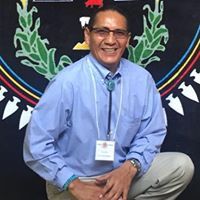
Taiaiake Alfred is a Kahnawà:ke Mohawk philosopher, writer, and political strategist with more than three decades of experience in First Nations governance, politics and cultural restoration and environmental impact assessment. After a 25 year academic career during which he founded Concordia University’s Centre for Native Education and the University of Victoria’s Indigenous Governance Program, and originated and developed Indigenous Resurgence as an intellectual paradigm, he left academia to devote himself to working directly with his own and other Indigenous people at the community level to breathe life into ancestral visions of nationhood. Taiaiake holds a Ph.D. from Cornell University and is the author of three books: Heeding the Voices of Our Ancestors and Peace, Power, Righteousness from Oxford University Press, and Wasáse: Indigenous Pathways of Action and Freedom, and IT'S ALL ABOUT THE LAND from the University of Toronto Press.
My professor Dr David Wilkins (mentioned in this text!) assigned sections of this (the second half of Power and all of Righteousness) in an undergrad indigenous governance and politics seminar. I’m grateful for his guidance in reading in initially- Alfred articulates a vision of leadership and governance so fundamentally different from traditional Western conceptions that having space to work through the practical implications with an expert was invaluable.
This feels like one of the primers on understanding the subject- overall pretty readable, and not constrained to typical political nonfiction formats, blending interview with policy with manifesto. Its very structure challenges Western “standards” of knowledge development and conveyance. The sections in Power on sovereignty, colonial mentality, and co-optation are particularly instructive.
I really appreciated dipping back into this and will be continuing to work through my backlist from this class and more recent acquisitions. It’s a subject I’ll need to work to connect with my current life but I’m interested in thinking more about how these ideas provide an alternative to US empire and how it could be in conversation with the liberation of Palestine.
This is a great manifesto linking Indigenous resurgence with issues of leadership, tradition, politics, and models of sovereignty. Alfred argues that for Indigenous communities in North America to actually take charge of their own destinies, they need to reject Euro-American models of representative democracy and capitalism and instead embrace Indigenous ethical systems valuing balance, harmony, and autonomy. And he argues that the way to do this is by embracing traditional ethics as the foundation for individual, communal, and international life--Indigenous people, communities, and leaders should act with the intention of creating balance and harmony not just between people but throughout existence. And Alfred argues that it is crucial that these changes begin with a strong Native leadership because right now many of the problems facing Indigenous people derive from leaders embracing power-oriented Euro-American style politics, which depends on domination and repression. Instead, he urges the embrace of consensus based politics that respects individual autonomy to withdraw from situations or decisions with which an individual or community disagrees.
I found this book through references in both Paul Nadadsy’s Sovereignty’s Entailments and Ice Geographies by Jen Rose Smith. When two amazing authors point in the same direction, you follow.
Alfred’s work articulate the righteous side of the decolonization spectrum. I will definitely be using this work as a measuring stick for future reading and my analysis of political action. An important perspective as I learn about the land claims process.
Intersting view of Taiaiake Alfred and a call for self governance mixed with a need to traditionalism and identity. The message seems militant at times, and it is more of a manifesto than a research compilation.
This book is a must read for people interested in what the process of decolonization could look like and the different roles we all would have in making that a reality.
“Indigenous people today are seeking to transcend the history of pain and loss that began with the coming of Europeans into our world.”
How was life organized before colonialism? Taiaiake Alfred of the Mohawk Nation, or Kanienʼkehá꞉ka ("People of the Flint") seeks to turn away from today’s colonial structures and return to traditional ways of governing for indigenous people.
A precursor to Leanne Betasamosake Simpson’s idea of indigenous resurgence, Alfred discusses indigenous governance, consensus decision-making, the cooptation of native leaders into colonial politics, and native identity determined by native communities as opposed to blood quantum, the state, or self-identification.
Alfred’s politics of decolonization has emphasizes ancestral teachings because settlers aren’t concerned with tradition, their concern is “development”, modernity, a settler future.
Assimilation to the settler state and its Eurocentric ways is death to traditions. Taiaiake argues to reject European-style representative government and colonial political structures, and to turn inwards towards indigenous ways of governing before the settlers came.
This book calls for a return to political traditions in native communities, the end of colonialism, and sovereignty of the people as opposed to the state.
“Bringing a final end to colonialism will demand complete destruction of its intellectual and moral premises.”
I read the 2nd edition - with a really great preface. Besides bringing together a ton of indigenous authors, scholars, and interviews - Alfred brings his own brilliance. I found his interview with Vine Deloria especially golden.
His work needs to be understood as prophetic in the sense that he's speaking a brighter reality into the abyss. Perhaps some readers will think his objectives for moving towards healing for indigenous peoples (away from assimilation) to be unrealistic. He is flying in the face of the history and systems of abusive power relationships that damaged community over centuries. It might be a strong drink, but it's cogent.
I think he had enough little steps to move towards harmony again, both personal and public. Whenever such a contrasting work to the current norm comes out - the first defensive response from the masses will be tactical in nature - "but how can we....?" It's a manifesto, not IKEA instructions. We need to trust God to give us the courage to make bold changes.
In some of his suggestions, I think he could have went a little stronger on the connection to the land as critical for indigenous health and respect of others.
Fascinating book. Alfred Taiaiake provides a thoughtful (and much needed) look at indigenous rights outside the scope of newcomer state perspectives. It was refreshing to read a truly indigenous perspective on rights, power, sovereignty and self-determination - a perspective which is not premised on the automatic acceptance of state-enforced formulations. As the title plainly shows - it's a manifesto, so the language found within is expected to be bold and unwavering, and as such, inspiring. The only issue I had with the book is Taiaiake's tendency to view the past (pre-contact) with rose colored glasses - as some sort of idyllic world free from war, violence and unrighteousness. Regardless, all-in-all, a wonderful book to read if you're interested in a fresh perspective of indigenous rights.
Written by Taiaiake Alfred of the Mohawk nation, this book clearly defines Political Relationships between the state. Taiaiake calls for Indignous independance, but urges us (indignenous people) not to recreate a structure that is based on westeren thought and ideas (from a western framwork). What he is calling for is OUR form of Government, recalling traditional indigneous forms of Governance. We will never be independant unless we not only have the traditional culture but the traditional forms, structures, descion making, and politics. He also places a great deal on Indigneous leadership, and molding and impowering young adults to lead thier people. great book!!!
An articulate vision on the philosophy behind why indigenous communities require their own form of traditional governance, separated from the colonial infrastructure that is imposed currently. Passionate, and clear this books is a must read for anyone interested in indigenous affairs and Canadian politics.
Alfred's arguments against the word sovereignty and criticism of much of the language of First Nation Leaders for selling out to colonial demands are very rooted in his understanding of tradition and history, as well as western social-political theory. Well written and accessible, this book needs to be read by all Canadians so that it can move past and reconcile with its colonial past.
I've had this book for years and tried to read it multiple times. Unfortunately I am too simple minded to read Taiaiake Alfred, apparently: it was just too difficult for my dyslexic head.