

What do you think?

The Journal of Eugene Delacroix
Delacroix's Journal is one of the great documents in art history, a magnificent work of literature as well as vital documentary source for scholars and students. In it the artist discusses his own paintings, his life, his sorrow and hopes; the paintings and sculptures of Rubens, Michelangelo, Constable, Bonington and others: old and new literature and the music of Mozart, Rossini and Chopin, the events of his time.
This revival of a famous Phaidon series brings together in an elegant format some of the best-known writings of renowned artists, critics and interpreters of our cultural tradition. Each book, an acknowledged classic, provides insights not only into the worlds of the arts and cultural history, but also into the creative and intellectual preoccupations of its author and his time. These Phaidon editions have an introduction and notes by a distinguished editor and a wide range of illustrations specially chosen to complement the text.
This revival of a famous Phaidon series brings together in an elegant format some of the best-known writings of renowned artists, critics and interpreters of our cultural tradition. Each book, an acknowledged classic, provides insights not only into the worlds of the arts and cultural history, but also into the creative and intellectual preoccupations of its author and his time. These Phaidon editions have an introduction and notes by a distinguished editor and a wide range of illustrations specially chosen to complement the text.
570 pages, Paperback
First published January 1, 1893
Ratings & Reviews
Friends & Following
Create a free account to discover what your friends think of this book!
Community Reviews
Displaying 1 - 25 of 25 reviews

December 27, 2008
"bitch moan whine amazing insights of the romantic tempermant more whining long-winded passages about how i'm friends with balzac and ingres is such a waif and chopin has the flu again oh no i think i just sold another painting mozart is a genius but not as genius as beethoven and i think i'd totally have sex with Rubens if he were alive today and poor people are stupid" Delacroix
actually i think this book is amazing and I'm beginning to become obsessed with the diaries of people from history
actually i think this book is amazing and I'm beginning to become obsessed with the diaries of people from history

November 29, 2019
Eugène Delacroix' Tagebuch ist vor allen Dingen interessant um zu verstehen, wie ein Künstler Kunst betrachtet. Er kritisiert und beurteilt am laufenden Bande Bilder, Bücher und Werke der Musik, währen sich sonst nicht übermäßig viel über sein Leben oder Begegnungen mit Dritten in dem Werk findet, denn auch die wiedergegebenen Gespräche handeln in erster Linie von Kunst.
Ich hatte das Manko, das ich dieses Werk auf zwei langen Zugfahrten gelesen habe und ich mir dabei nur sehr eingeschränkt die Werke vor Augen führen konnte, über die Eugène Delacroix urteilt. Das muss ich nachholen, da Delacroix zwar viel über bekannte alte Meister (vor allen Dingen Rubens - bewundert E.D. grundsätzlich, übt aber Kritik am Einzelfall - und die Caracci - mag E.D. nicht - schreibt) oder bekannte Maler seiner Zeit (Corot, Gericault oder David) schreibt, sind viele der von ihm besprochenen Werke nicht unbedingt die Bekanntesten und viele Künstler auch völlig in Vergessenheit geraten. Dasselbe gilt natürlich auch für die Werke der Literatur und der Musik, die Delacroix ebenfalls mit großer Emphase beschreibt. Insgesamt kann man viel lernen, auch wenn ich dem Urteil des Malers oft nicht zustimmen kann, viele wiederholt sich indes auch immer wieder unter anderen Vorzeichen.
Meiner Diogenes Ausgabe fehlt leider eine ausgiebige Kommentierung, diese wäre sehr sinnvoll gewesen.
Ich hatte das Manko, das ich dieses Werk auf zwei langen Zugfahrten gelesen habe und ich mir dabei nur sehr eingeschränkt die Werke vor Augen führen konnte, über die Eugène Delacroix urteilt. Das muss ich nachholen, da Delacroix zwar viel über bekannte alte Meister (vor allen Dingen Rubens - bewundert E.D. grundsätzlich, übt aber Kritik am Einzelfall - und die Caracci - mag E.D. nicht - schreibt) oder bekannte Maler seiner Zeit (Corot, Gericault oder David) schreibt, sind viele der von ihm besprochenen Werke nicht unbedingt die Bekanntesten und viele Künstler auch völlig in Vergessenheit geraten. Dasselbe gilt natürlich auch für die Werke der Literatur und der Musik, die Delacroix ebenfalls mit großer Emphase beschreibt. Insgesamt kann man viel lernen, auch wenn ich dem Urteil des Malers oft nicht zustimmen kann, viele wiederholt sich indes auch immer wieder unter anderen Vorzeichen.
Meiner Diogenes Ausgabe fehlt leider eine ausgiebige Kommentierung, diese wäre sehr sinnvoll gewesen.

August 30, 2012
One of the most inspirational and thought provoking journals I have ever read. Delacroix's journal offers insight into the mind of one of the most amazing painters to have ever lived. He is incredibly thoughtful and so self conscious. He is plagued while illuminated by his passions. Delacroix makes statements that reverberate through every aspect of life, love, and creativity. This is a fantastic read for anybody, artist or not.

February 26, 2022
“Vaarwel, beste vriend, ik verlaat je om te gaan eten; dat is vast niet aardig van me, maar aangezien we niet kunnen leven zonder te eten en we niet van elkaar kunnen houden zonder te leven, ga ik dus eten.”

August 4, 2007
More artists need to be as informed, intelligent and well spoken as Delacroix was. (Richard Serra is super rad at talking about his work.)

March 5, 2023
Brilliant and technical disquisitions on the creative process of a painter, as well as reflections on his society, his reading and his friends.
put-aside
November 12, 2008I'm actually still reading this one, but rather than read large portions of it at a time, I usually just read one journal entry at a time when I go to the studio to paint. It is definitely a must-read for artists.

January 9, 2023
Il "Diario" di Delacroix è un modo per conoscere l'uomo, l'artista che, oltre a occuparsi delle meravigliose opere che ha prodotto, era interessato alla filosofia dell'arte, alla musica, alla letteratura, avendo per esse riflessioni per niente banali (e talvolta avanti coi tempi). Attraverso questo "Diario" scopriamo dunque un altro lato, più intimo, del grande artista francese.

February 15, 2017
Esențialul în lumea asta e să lupți împotriva plictiselii și a tristeții. Lucrează deci cât poți, secretul de a nu te plictisi constă, pentru mine cel puțin, în a avea idei.

April 24, 2012
I am stunned by this whole experience... E. Delacroix is such a diverse thinker, I really don't know where to begin in describing him...Although I must say He like Vincent Van Gogh are extremely well read and for thier age/epoch they seem very up to date with the currents of the thoughts of thier times and its ever changing flow... I'm at about page 541 slow going...
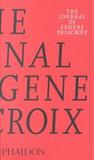 The Journal of Eugene Delacroix by Walter Pach
My rating: 5 of 5 stars
I am stunned by this whole experience... E. Delacroix is such a diverse thinker, I really don't know where to begin in describing him...Although I must say He like Vincent Van Gogh are extremely well read and for thier age/epoch they seem very up to date with the currents of the thoughts of thier times and its ever changing flow... I'm at about page 541 slow going...
View all my reviews
The Journal of Eugene Delacroix by Walter PachMy rating: 5 of 5 stars
I am stunned by this whole experience... E. Delacroix is such a diverse thinker, I really don't know where to begin in describing him...Although I must say He like Vincent Van Gogh are extremely well read and for thier age/epoch they seem very up to date with the currents of the thoughts of thier times and its ever changing flow... I'm at about page 541 slow going...
View all my reviews

January 22, 2020
Beautiful glimpse into a famous artist's life !
I love journals and letter collections of famous people because they're often a valuable insight into the creative process of geniuses and also, we get to see them as living breathing and often very flawed humans.
Delacroix writes endlessly on his opinions of literature and music , his process for painting and mixing colors and for planning out his artistic process.
But he also has long breathless entries about love affairs, frustrations with wanting to both social and am introvert, worries that he isnt smart enough to be a genius, gossip about his famous friends George Sand and Frederic Chopin.
This book is an amazing delight. READ IT NOW!
I love journals and letter collections of famous people because they're often a valuable insight into the creative process of geniuses and also, we get to see them as living breathing and often very flawed humans.
Delacroix writes endlessly on his opinions of literature and music , his process for painting and mixing colors and for planning out his artistic process.
But he also has long breathless entries about love affairs, frustrations with wanting to both social and am introvert, worries that he isnt smart enough to be a genius, gossip about his famous friends George Sand and Frederic Chopin.
This book is an amazing delight. READ IT NOW!

May 13, 2014
Whew! This may be the longest book I've read in my life (731 pages). But I did like this more than I thought I would. DeLaCroix seems to have been a bit of a philosopher as well as a great artist. He seemed to be in touch with his times and with himself. I think I would have liked him.
Here are some of my favorite passages from the book.
"Is living merely vegetating like a mushroom attached to a rotten stump?"
"The presence of a friend is a thing so rare that it is worth all pleasures, or compensates for all miseries."
"At a time when a man's mind has attained its maturity, his body weakens."
"We are all enclosed, pell-mell – animals, men, plants – in that immense box called the Universe."
Here are some of my favorite passages from the book.
"Is living merely vegetating like a mushroom attached to a rotten stump?"
"The presence of a friend is a thing so rare that it is worth all pleasures, or compensates for all miseries."
"At a time when a man's mind has attained its maturity, his body weakens."
"We are all enclosed, pell-mell – animals, men, plants – in that immense box called the Universe."

July 27, 2016
I first read this in High School. The subjects I enjoyed most were his thoughts on Aesthetics, or Genius artists such as Mozart, Rembrandt, Rubens, and Beethoven. He also discusses Dinner parties and how he dislikes certain aspects of his social circle. Sometimes he mentions how bored he gets, and other daily annoyances. A great book, but would be dull to those who aren't artists or interested in 19th century history . It feels like listening to a friend.

June 3, 2015
I totally fell in love with Eugene Delacroix when I read this journal. He's passionate and funny and independent. His thoughts on creativity, depression and sex still seem fresh today. Plus, he knew all the best people...and took no prisoners.

March 13, 2020
On the beauty of solitude he says..
"Think of the blessings that await you, not of the emptiness that drives you to seek constant distraction. Think of having peace of mind and a reliable memory, of the self-control that a well-ordained life will bring, of uninterrupted work, and plenty of it."
"Think of the blessings that await you, not of the emptiness that drives you to seek constant distraction. Think of having peace of mind and a reliable memory, of the self-control that a well-ordained life will bring, of uninterrupted work, and plenty of it."
June 14, 2015
A great book in its entirety. I zeroed in the "solitary" part, that an artist should have more solitary moments to let his/her mind wander creatively.

March 3, 2016
Когато късметът ти те спохожда във вид на издирвана дълго книга, която са ти продали толкова евтино, че направо са ти я подарили. Щастие :D

March 25, 2016
I would have preferred more anecdotes and less theorizing. It feels as if it was intended for publication, but there are some unguarded moments. A very likable voice comes through though.

March 31, 2018
I have never copied more quotes from any book before! What a marvelous writer he was, let alone what he did with paint. I must reread this one.

December 29, 2022
Interessante scorcio nella mente di un artista che aveva da lamentarsi di tutto e tutti e non risparmiava commenti salaci a nulla e a nessuno, tra una riflessione e l’altra sulla pittura, la letteratura e la musica. In fondo lui voleva godersi in pace la sua solitudine e passare il suo tempo a dipingere. Come biasimarlo.

November 25, 2023
This guy wrote as well as he paints.

February 19, 2025
I feel like being too critical of this "book" is unfair. It's an artist's journal (selected entries). I found it personally relatable as I could identify with Delacroix even if I didn't understand all of his references.

October 9, 2019
"Pourquoi ne pas profiter des contrepoisons de la civilisation, les bons livres."

November 9, 2007
A staple of my art history education. In addition to being an excellent artist, Delacroix's writing is a joy to read.

February 2, 2020
A great day to day diary from delacroix, with his busy life and appointements with great painters, musicians etc. I didn't finish it, because it wasn't offering something and I got bored.
Displaying 1 - 25 of 25 reviews