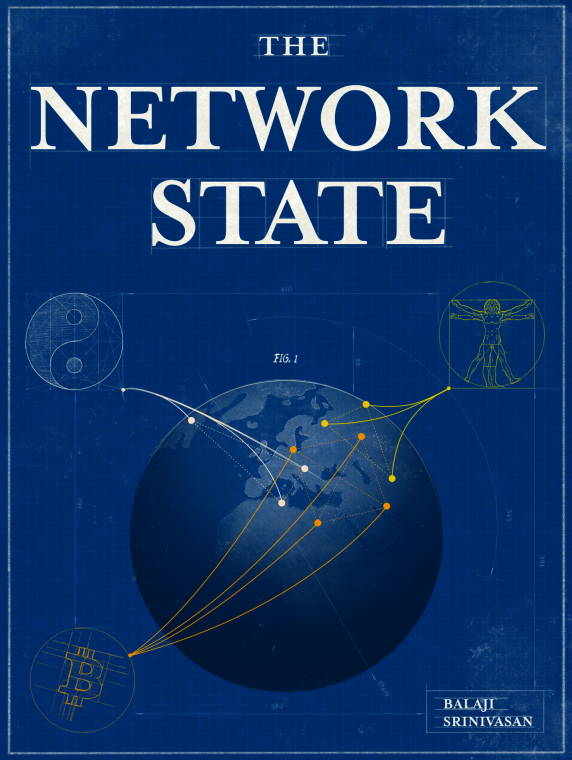
Tech bro writes a book to repackage company-owned towns from the Gilded Age, which were built by corporations to house its workers while giving the company an insane amount of control over their lives.
Similar to other Silicon Valley ventures such as Uber, this takes an existing idea, adds varying levels of technology on top, and calls it a genius, novel invention that helps you, the regular joe. That is of course until the other shoe drops, like when you realize that Uber’s main innovation was to offer cheap prices initially to drive out competitors (aka predatory pricing) by reducing the costs of having their own employees (e.g. drivers are classed as independent contractors) and equipment (rely on drivers’ cars so they also bear all wear and tear costs) all while they use the funding by billionaire investors to keep going (reported making a profit for first time in 2023).
While you may mistake this for generosity, they were just playing the long game - that they are special geniuses who deserve billions of dollars for their special ideas while also eroding public’s belief in the government and laws and regulations, like worker rights and protections. Their companies are the best and the most efficient and the current system (the state) is inefficient and unworkable system. After all, how could they be wrong when they have billions of dollars? Obviously pushing all the costs onto the common man while taking all the profits makes them smart, not greedy and immoral.
You should totally trust them, they are recognized founders of moral innovations, like the virtuous Facebook or Tesla (but only after it was bought by a rich guy because obviously it barely had any value when it was just founded by actual engineers). Go live in their network state and work for them. Although, I guess the founder must want you in the first place, so you better be useful and if you ever give them any issues (costs) or get too old to be useful, that’s your fault, so you can just go outside and figure it out instead of draining THEIR resources. Maybe they’ll throw you a bone of $10 of that specific network state’s crypto currency for charity. It could totally have value outside or in other network states … if they let you in.
So many people, including me, were fooled into thinking companies like Uber or WeWork were good because they came packaged with this cool new technology and all technology is good. Right? Or is shit wrapped in pretty packaging still shit? (And isn’t it oddly fitting that tech bros would pick crypto currency/block chain out of all the things in the world to be the “pretty” packaging for the company-owned town shit?)
Maybe in the early 2000s, you could’ve said that technology is good because the general public didn’t know much beyond the shine of innovation. But every day, we learn more and more (e.g., your data is collected and sold to the highest bidder) and shocker, it’s not all good (nor all bad), like most things made by humans. This of course is due to the Fourth Estate or the fourth power, which refers to the press and news media who not only report news but also play a significant role in monitoring and influencing the other branches of government and society. And now the hate on NYT and journalists makes sense - can’t have your worker bees know they’re being taken advantage of or how this 1% can sow misinformation to influence elections in their favor just so that they can continue to hoard wealth.
By the way, it’s called the Fourth Estate because it derives from the old European concept of the three estates of the realm (the clergy, the nobility, and the commoners) aka the social hierarchy, with the nobility (and depending on the period/region, the clergy) having the power. If we extrapolate this into Balaji’s little book, one would assume the network state founders are the nobility, most people are commoners, and the clergy seemingly doesn’t exist (but how will they use “religious” issues to sow division between the commoners?). As for the fourth estate, perhaps they get rid of it since they hate journalists but just keep some of the unscrupulous ones for a little Ministry of Truth situation.
To everyone who thinks this is a great idea, can you answer the following questions:
1. Do you think you will get to choose to be inside one of these utopian network states or even pick the “best” one?
2. Do you think that if you were chosen, you would hold an important position inside them? Assume you’re not one of those magical “founders” in this situation, because you wouldn’t need to belong to a network state since you already have your own.
If the historical context of nobility and commoners doesn’t help you visualize that the commoner majority, perhaps some basic math will paint a clearer picture. Per Forbes, as of 2024, there are roughly 3,000 billionaires in the world out of a total of 8.2 billion people per the United Nations estimate in 2024. Thus, you have a 3.65854e-7% chance of being one of the founders. “The Ultimate Infinitesimal Chance” would be a great headline, if journalism was still allowed of course.
P.S. Do you think the author, Balaji S. Srinivasan, would get his own network state? He was formerly the CTO of Coinbase, so he could just work for Brian Armstrong or either Marc Andreessen or Ben Horowitz since he’s apparently a General Partner at Andreessen Horowitz.
P.P.S. The one star is for all of Balaji’s very hard work in this attempt to make a corporate-state seem like an actual alternative to people living in countries because it would’ve been impossible for a normie to take the same concept espoused by Curtis Yarvin without mentioning those fun parts about how technology will be used for all-seeing surveillance or to lock poor people in a virtual reality prison. A well-earned participation trophy, if you will.
P.P.P.S. Even if the world comes to this scenario where us lowly peons are chained to our jobs or rather “biometrically locked to a network state,” I would never ever get over the immense, perverse pleasure of knowing that these people will only have each other left.
They might be delusional enough to think that being knowledgeable in one specific STEM area and having billions of dollars makes both them and their ideas smarter and better than the totality of all the regular public school teachers, farmers, economists, mechanics, dentists, and the literal billions of wonderfully normal people that not only make this world work but also interesting and beautiful and conjure up that one little spark of joy or laughter or silliness even in the darkest of times, BUT they will never convince any human being (or even AI for that matter) that being in a group with the likes of Peter Thiel, Elon Musky, Zuckerberg, Bezos, Curtis Yarvin, Balaji, Brian whatever, et al. for the rest of your life would be the best possible life well lived instead of a miserable existence. It would be like going to a party where you had one interesting conversation, that one guy prattling on and on in a corner about physics, some awkward moments, oh another one whining in a different corner about no one coming to his cool sea city even though it’s literally the best and so on, except you’re stuck there, for the rest of your life, forever with all these people who think, who know they are the smartest, bestest boys.
Since I clearly can’t leave well enough alone, is this one of those times where the touch grass meme actually applies? While I’m so happy (and frankly relieved) that y’all found some enjoyment in the art of cinema with your love of “The Matrix,” please know there are so many other, wonderful things you can experience, especially when you talk to people from all walks of life. Appreciating and liking something doesn’t have to lead to obsessing and recreating a fictional world in our very real one. I’ll leave you with a quote from another movie, maybe y’all can give that a watch.
“You are probably going to be a very successful computer person. But you’re going to go through life thinking girls don’t like you because you’re a nerd and I want you to know from the bottom of my heart that that won’t be true. It’ll be because you’re an asshole.” - The Social Network