A bold poetic intervention into the pastoral tradition.
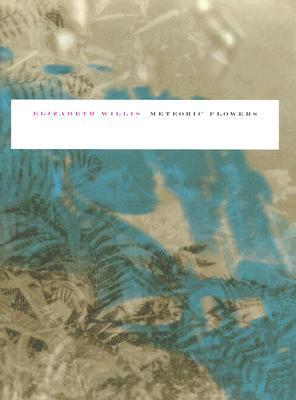
Elizabeth Willis's new collection is a stunning collision of the pastoral tradition with the politics of the post-industrial age. These poems are allusive and tough. While they celebrate the pleasures of the natural world―mutability, desire, and the flowering of things―they are compounded by a critical awareness of contemporary culture. As we traverse their associative leaps, we discover a linguistic landscape that is part garden, part wilderness, where a poem can perform its own natural history. Divided into four cantos interrupted by lyrics and errata, Meteoric Flowers mirrors the form of Erasmus Darwin's 18th-century scientific pastorals. In attending to poetry's investigative potential, Willis shifts our attention from product to process, from commodity to exchange, from inherited convention to improvisational use.
Elizabeth Willis’s most recent book is Alive: New and Selected Poems (New York Review Books, 2015). Her other books of poetry include Address (Wesleyan University Press, 2011), recipient of the PEN New England / L. L. Winship Prize for Poetry; Meteoric Flowers (Wesleyan University Press, 2006); Turneresque (Burning Deck, 2003); The Human Abstract (Penguin, 1995); and Second Law (Avenue B, 1993). She also writes about contemporary poetry and has edited a volume of essays entitled Radical Vernacular: Lorine Niedecker and the Poetics of Place (University of Iowa Press, 2008). A recent Guggenheim fellow, she has held residencies at Brown University, the MacDowell Colony, the Ucross Foundation, and the Centre International de Poésie, Marseille, and has been a visiting poet at University of Denver, Naropa University, and the Iowa Writers’ Workshop. From 1998-2002 she was Distinguished Writer-in-Residence at Mills College. Since 2002 she has taught at Wesleyan University, where she is Shapiro-Silverberg Professor of Creative Writing.
It's as if the fragments of Heraclitus were passed through an algorithm in the form of Sylvia Plath's odd kind of surrealism, and we were then handed this output; beautiful in places, and also a bit "weird". I think it will take a couple re-readings for me to gradually assimilate this text, but on first pass, it was a pleasurably disconcerting experience.
Just finished. I feel so clear about language now. I've spent so much time trying to manage my despair. I woke up today and the sky was really beautiful. So gray and blue! THere's a bird trying to peck his way through my window sill. He uses his beak and rams it against the soft wood. Little pieces fly out. Usually when I observe him he doesn't seem to notice me completely. I think I am too big for him to think I am a person. If I move too quickly though, he seems to figure it out and darts away. But he recovers so quickly, returning to make his hole.
This book makes me wish I had such hope! I am trying really hard to view life as just something I have. If I keep myself very busy or do very little I can half tap into it. The medium just never seems to work. Liz really makes it feel possible, that there is a place for human life in terror, though perhaps its an absent terror. It's her careful attention to phrases and words that gives the life- in the form of humor.
"O' I think therefore I green the grass I'm pinned upon". How awesome.
"What little monster have I made, to favor love of all that's said?" (72)
"Why the ear, the shape of longing, why the endless whorl you came from? Seeing air doesn't mean it sees you back." (73)
"Our boldest type is barely detected, disguised by the habits of first and last things" (68)
"Even if I don't write it down, I'm just a form of tuning. I take this green to build my shirt. I do this work to word you" (53)
"I've lost the face that brought me here, the brush of what I'm brought to hear" (30)
"I'm looking at the evil flower, a fly in the keyhole trying to read the wall. It says we haven't died despite the cold, it sells the green room's sweat and laughter. It's misty in the dream. It says you promised to go on" (3)
I need to revisit the first canto--I first was getting too much "sun"? it felt a little "fields of peace"--but by canto two I was furious, furiously caught up with it. I love the sorta cyber, "party"- and "lady"-laden-ness of canto two, and the book seems to gradually shift back into the fields of peace by canto four, but from the complete opposed direction. Absolutely an essential book for me at this moment, an illustration of how the things one accumulates, the things by which I tend to delineate myself, can assemble, how freshness need not wreak its own waves of destruction, how freshness billows up out of the waves of rubble and dust of the things that are always destroyed, in living.
Idly I turned your name into a kite. Poor bloom couldn’t find itself among the interrupted lady. A little less air for the megaphone, a larger flag over Brownsville. We’re knotted in eights at bossomy altitudes, foreshortened in the wind. Feet are but a bit of leather, breaking through the turf. A stroke of sunlight in a wreck of a bedroom, a mirror of temporary verbs. As for the daisy, I know I frighten you. My face a red bookishness. The rose willow produces other kinds of monsters but the imperishable nettle thinks for us all.
With New Prolific Power
Let me just say that I’m hanging from this screen into an icy darkness. All this planetary turning on a hinge. My head is fair but plain, thinking of Rutherford. I was looking in the window of a newer Canaan, but the dew on its lilies tasted like salt. This piece of my mind is just beyond the hammering, a dog in the yard drifting like trash. Every season cannot be thought at once, even when the world can name it.
Tiptoe Lightning
Tragedy saunters to the pit, swinging its depth charge. If you had X-ray vision you could watch these bones climbing the Mountain Vainglorious without quite touching the ground. Let's ruin our letters, erase all foreign prospect. So many expeditions are but fictive inflections, the garbled ambition of someone stepping up with, like, something less lovely than the legs of Rome. Thumb-power instead of "timber." The answer from above the stage rattles our windows, a modern letter sent from antiquity, its blurred flourish abundantly gutted.