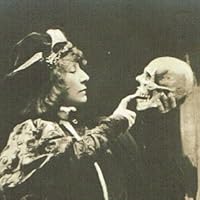
In the Middle Ages it was believed that only a virgin could charm a unicorn out of hiding; but far from being a quaint, anachronistic concept, virginity remains a central value in Western culture. Typing "virgin" into Google results in more than one million hits and includes everything from the Anti-Nicene Fathers to advertisements for free teen virgins, displaying a range of current cultural preoccupations with virginity. This lively, wide-ranging examination of a phenomenon that has touched many aspects of our culture names different archetypes and facets of the concept of virginity. Examples include the Medical Virgin?exploring what exactly virginity is and how to reliably identify one; the Religious Virgin?from the Madonna to the American Christian Right’s insistence on sexual abstinence before marriage; the Popular Virgin of Gothic fiction and modern day horror films; the Political Virgin?virginity’s intimate connection with money and power; and the Monstrous Virgin, as embodiment of what is ultimately unknowable and of violence, excess, and death. Anke Bernau's witty and thought-provoking examination of virginity reveals its many bizarre manifestations throughout its long history as well as its growing contemporary potency.
I probably should have paid more attention to the summary, because my expectations going in were that this book would cover the concept of virginity worldwide. Instead, it's very, very heavily focused on Medieval Western Europe, with some analysis of the modern day as well. Which is fine. It was sort of interesting to see all the different ways people in Medieval Europe interpreted virginity and how that changed over time and going into the nineteenth century. It was a bit dry at times, but an okay read overall.
A fascinating non-fiction read that looks at the concept of virginity throughout the ages, and how it was used to alternately control and at certain points, free women from patriarchal expectations. (By dedicating themselves to the church, women could escape the demands of marriage and children under the guise of purity.) Very relevant in our era of purity balls, rape culture, slut shaming and the ‘we’re sexually liberated but not really’ society we live in.
There were a number of quotes that really stood out for me:
On hymenoplasty:
Yet there is no known physical function that the hymen fulfils, so despite the terminology and qualifications used to reassure the client of the professional and ‘medical’ nature of the procedure, it is undeniably in the service of either supporting or creating certain cultural demands – and not just those of barbaric, ‘other’ cultures out there, as it is sometimes suggested…It is often claimed that such procedures protect women who come from cultures where unfulfilled proof of virginity can lead to a women’s death. They also, however, reinforce and perpetuate the very myth of provable virginity that endangers these women in the first place.
&
Hymenoplasty and other procedures such as ‘vaginal rejuvenation’ are ‘enhancement’, while female circumcision is ‘mutilation’. The implication is that the concept of ‘individual choice’ – representative of Western ideals - is somehow not cultural, as if Western women exist in a vacuum where they are entirely free agents…and not at all influenced by their own culture’s frequently coercive ideals of female beauty and desirability.
On policing virginity:
The anxiety that one often finds in writings on virginity is rooted in both misanthropic and misogynistic views. Human beings were fallen creatures, and women in particular were not to be trusted. Stories of feigned virginity appear wherever the culture places a great value on purity and reveal a fear that there is no secure way of policing this elusive state of being.
&
Bentley gives a very good idea of exactly how precarious and fragile a state virginity was still considered to be – both physically and spiritually – when he lists the seemingly endless ‘snares of Satan’ the virgin must avoid if she hopes to maintain the ‘inestimable treasure’ of her virginity: [B]anquets, weddings, idle games, heathenish sports, & dissolute plays, and pastimes, vain pleasures, and filthy dalliance and dancings, the extreme of all vices: finally, from all envy, arrogance, ambition, impudence, pertness, boldness, rashness, unshamefastness, dissolute laughing, excessive feeding, recklessness, dissoluteness, deliciousness, wantonness, lightness, inconstancy, curiousity…
On subverting the patriarchy:
Motherhood and wifehood were the roles that became increasingly upheld as natural to and desirable for women; maintained virginity could only provoke suspicion and even derision. Furthermore, as in other moments in history, the maintenance of virginity was viewed as potentially subversive, a challenge to the patriarchal order, since it was suspected that women might use virginity as a means of escaping the roles society prescribed for them.
On the Greek tale of Virginia and Apius:
Implicit in this view is the idea that if a man desires a woman, she cannot be truly innocent; that there is something in her that inflames his desire and that she is therefore also to blame for the consequences. No matter how obedient – how ‘pure’ – the woman is, she is at fault if illicit male desire focuses on her. She should have been more invisible…
On the tropes in contemporary romance novels:
Similarly, in contemporary romance novels with virgin heroines, the women portrayed are certainly not asexual and they are not condemned for being sexual creatures. What is nonetheless also emphasized is that this ‘natural’ sexuality needs to be awoken, and that, in turn, can only happen with the ‘right’ man; thus, these virgins manage to be both innocent and sexy…While they are highly sexualized and highly sexed, they don’t ‘sleep around’; they are uninhibited and capable of pleasure and abandon with one man only, and the sign of specialness and their ‘gift’ to this man is that he recognizes this.
THIS TROPE ANNOYS ME SO MUCH. IT MAKES ME SEETHE WITH RAGE. DO YOU HEAR ME, NEW ADULT GENRE? DO YOU?
On language using the female body:
Describing territories or landscapes in terms of women’s bodies and feminine qualities, particularly female fertility, was a familiar rhetorical move which occurs frequently in literary writings. It was also one used enthusiastically by those promoting colonization and conquest…The fecund virgin land – like the nubile human virgin – needs to be possessed; without ‘owner’, she is free for the taking. Indeed, it is for her own good that she should be taken for, as we know, virgin soil needs to be tilled to be fertile, the page needs to be inscribed in order to convey meaning.
Seriously interesting, if rage-inducing at the treatment of women over the centuries.
A well researched exploration over the historical and cultural development of the notion of virginity in the west. The only reason why i gave it two stars out of five is because i find much of the medical and literature explanation in the book a bit shallow,and..well,boring. It might just me,but still it is informative.
This book review is taken from my bookstagram IG @descanto
Virginity is like a question that has many different answers, it’s nevertheless a question that keeps being asked in any culture. What is virginity? How important is it? What identity can be described as virginal? Is it physical or spiritual? Is male virginity different from female? What does it mean to be a virgin? Why does it always amuse us? Is it still relevant?
In legal texts, virginity is discussed mainly in relation to rape, a crime whose definition has shifted from bodily injury to damage of property and then eventually to our modern idea of sexual violation without consent. And yes! In the loss of virginity is perceived - both men and women though not the same way, marking the transition into adulthood.
What is more striking is the contemporary example of perpetuation of virginity many myth’s is the phenomenon of cosmetic vaginal surgery. In the mid-20th century, women would more likely ask the gynaecologist to cut their hymen a little bit in order to experience less pain and discomfort on their wedding nights, the trend today seems to be going in the opposite direction with the existence of hymenoplasty.
There is - I am sure, a long continuation in the discourse of virginity, and this book written by Anke Bernau is without exception. It highlights the virgins from the cultural history including medical and literature point of view. However, my highlights are (1) the writer mostly explores the virginity from the Christian and medieval era which prolly is different than today’s discourses (politically). This POV is surely also different when it's seen from different cultures like Asian or African culture for instance. (2) the information which circles around the medieval era is too dense and making this book suffers from excessive narration about virginity without giving any new perspectives even it’s still informative. Like in the modern era as aforementioned which is rarely being unveiled.
This is a great review of the cultural history of virginity. It’s an easy read and covers a variety of topics from the myths of virgins being unicorn-hunters to abstinence-only sex education. It also features great sources that could be used by anyone researching gender and sexuality.
I loved this! Engaging and informative and, in my opinion, very well-written. Felt a bit like a long and extremely interesting lecture - Bernau writes like she’s speaking - and I especially loved the descriptions and insights into medieval history/literature.
This was an interesting exploration to the history of and contemporary standing of virginity in Western society. Many of her points provoked thought, seemed well researched and were highly informative.
However, she seemed to be trying to argue contemporary far-right view points with out coming right out and expressing her precise stance on the subject. Most confusing was her issue with sex education. While I understood her dislike of an "abstinence only" approach to sex education in schools, it seemed as if she was against the mere suggestion that abstinence may in fact be the better choice for teenagers.
I believe in sex education. In fact, my own book was selected to be part of South African's grade 11 reading list precisely because of the chapters emphasizing sex education for young women. However, Bernau's language seemed very pedantic when addressing the far right's assertion that sex leads to pregnancy and STIs and abstinence is the only way to guarantee avoidance.
But this is true. There isn't a birth control option that can one-hundred percent guarantee protection from pregnancy and STIs. While the far right may in fact be wrong to campaign against telling teenagers what to do to protect themselves should they choose to engage in sex, it doesn't mean they are wrong that engaging in sex can be a highly risky choice. It is risky. If it wasn't risky, then telling teenagers how to protect themselves wouldn't be a big deal. Sex education IS a big deal precisely because the activity comes with so much risk.
Bernau wrote "To insist on abstinence is therefore not only to treat young adults patronizingly, but also to try to prevent their independent growth, to arrest their development at an imagined pre-sexual state of innocence. "
There is no need to "throw the baby out with the bathwater" so to speak. Sex is an adult activity. Maturity in teenagers should not be judged in who has had sex and who does not. In fact, having the self realization that one is "not ready yet" can be the more mature choice.
I do wonder if Bernau has, in the interest in trying to digest her Phd thesis into a book, simply got caught in oversimplifying the issue. Her argument with the far right, led to implications that were perhaps, not meant.
I found this a very interesting read, looking at how virgins and virginity have been constructed and presented in Western culture through the ages. The book does a good job of illustrating how our beliefs around gender roles, sexuality and "purity" have changed over time - drawing attention to how what we may see as "common sense" beliefs today (e.g. about women being naturally less sexual than men) are constructed, and have not remained unchanged through the ages.
This was an easy and engaging read, but a bit dry. It read like an academic thesis, and the thread of argument running through the book as a whole didn't feel clear. Bernau gives example after example to illustrate her points, which is valuable, but these examples didn't always tie together well enough into a clear main point.
It is a good read about virginity. It start with examination of the defination of virginity which is very elusive to do. It continue with the evolution status of virginity in religion, literature pieces and secular through time. From someting that is held at high value if kept to need to be rid off as soon as it can to back being need to be kept. It end with the future of virginity with surprisingly lacking of virginity and more to abstinance sex. What is a let down in this written work is that its exam virginity is the western perspective. I was hoping for more global exanination on virginity with taking into account various religion, culture and society take on viginity.
A nice quick and interesting read. I found the scope of it a little bit narrow at times but that's probably due to it being a more general history book. Even though I felt the author was just repeating herself sometimes this did make me consider the origin of my own biases and idea regarding the significance of virginity.