The Pulitzer Prize-winning author of The Good War and Working writes a chronicle of the American Dream in trouble. Studs Terkel talks to 100 Americans, from housewives and bartenders to teachers and cops. What they have to say presents a candid portrait of a nation divided. A hardcover bestseller. Pantheon.
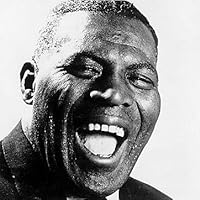
Louis "Studs" Terkel was an American author, historian, actor, and broadcaster. He received the Pulitzer Prize for General Non-Fiction in 1985 for "The Good War", and is best remembered for his oral histories of common Americans, and for hosting a long-running radio show in Chicago.
Terkel was acclaimed for his efforts to preserve American oral history. His 1985 book "The Good War: An Oral History of World War Two", which detailed ordinary peoples' accounts of the country's involvement in World War II, won the Pulitzer Prize. For "Hard Times: An Oral History of the Great Depression", Terkel assembled recollections of the Great Depression that spanned the socioeconomic spectrum, from Okies, through prison inmates, to the wealthy. His 1974 book, "Working" also was highly acclaimed. In 1995, he received the Chicago History Museum "Making History Award" for Distinction in Journalism and Communications. In 1997, Terkel was elected a member of The American Academy of Arts and Letters. Two years later, he received the George Polk Career Award in 1999.
Living life in America, it's too easy to see one's own opinion as authentic, reasonable mainstream and that of others as wild, dangerous and uninformed. Maybe that's human nature, but Americans tend to take things to extremes anyhow. Knowledge of "the facts of life" is hardly imprinted in anyone's genes. You learn these facts over a lifetime and your take on "the facts" can change overnight and dramatically. You are never more aware of the possibility of change---even in the same household---than when you read one of Studs Terkel's compilations of interviews. People from different ends of the spectrum come together, even take actions which once seemed abhorent to them. People who once shared similar views drift, or are wrenched, apart. Soldiers turn against war, ministers against the Church, housewives become activists. Other people hold onto their beliefs. In THE GREAT DIVIDE, as in "Working", "The Good War", "Division Street, America", and "Hard Times"---to name a few of his other books---Terkel presents the life stories, the views, and the complicated picture of a broad section of America. Before you spout off on what Americans think, how they feel, or what they do, it would behoove you to read this or any other of his books. When I'm tempted to make some sweeping generalization about America, I think of Studs Terkel, and keep my mouth shut. People abroad who think they've got a handle on the USA ought to check these works out too. I can't think of any other set of books that give such insight---in relatively painless form too---into American life and values. For every yuppie there's a displaced worker, for every conservative there's a radical, for everyone who knows "the answers to life's questions", there is one who keeps searching. THE GREAT DIVIDE concerns class, an aspect of America that many refuse to face, as well as the major division between those who are only out to look after No. 1, as we say, and those who feel that justice and improvement in society top individual concerns. If we take the 1960s as a time when the latter tendency loomed larger, the 1980s, when Terkel wrote this book, were certainly typified by the former.
The only caveat to THE GREAT DIVIDE is that we seldom learn the circumstances of the interviews, the phrasing of the questions, or what was edited out. This of course is true of any published interview without a full transcription. But the range of opinions and thoughtfulness would tend to convince me that although Terkel has his own views, he let others shine through. Teachers, stockbrokers, laborers, housewives, bosses, soldiers, students, blacks, whites, Hispanics, immigrants, organizers, apathetic standers-by, left, right---all kinds of people appear on these pages. The GREAT DIVIDE is an education in American values, and believe me, "American values" don't belong to any single political party.
This is the third book from Terkel I have read (the others are Giants of Jazz and American Dreams: Lost and Found). It is in his characteristic format, featuring interviews of a few pages in length with perhaps 100 different individuals most in the Chicago area.
Truth be told, this was a tough one for me to finish. It has a scattershot feel, with no central focus. It's published in 1987, so many of the subjects discuss the current events of the time, including the situation in Nicaragua, the economy, labor issues, the Reagan presidency generally, race relations and changing neighborhoods, and so forth. The interviewees, as usual, come from all walks of life, from working class folk to titans of business. A few of the names you may recognize, but the large majority you will not.
While in small doses this "slice of life" approach can be interesting, I'm not quite sure what the book adds up to in the end. The interviews are not long enough to yield much insight, other than Americans have a diversity of views and varying levels of introspection and awareness of the larger world. It's very diffuse.
Terkel is a pretty revered figure, especially on the left, as a voice that recorded regular people, and I hate to minimize his work, but I don't think this is his strongest book, and is in fact somewhat tedious.
This book was published at the tail end of the Reagan era. I did not expect to be as enthralled with the book as I was, and I don't think I would even have picked it from the shelf if it wasn't by Studs. In the end, I was surprised by what I got from reading it. The book contains interviews with an impressive survey of Americans from the most prosperous Wall Street traders to laid-off mill workers. Their experiences convey the outcome of Reagan administration practices, many of which laid the groundwork for current Bush policies. It helped me to understand this administration, and our current economic morass, in the context of history.
There is a famous saying attributed to Winston Churchill that “those who fail to learn from history are doomed to repeat it.” That sentiment along with the statement by Spanish philosopher George Santayana that “those who cannot remember the past are doomed to repeat it” are very much in evidence and substantiated as one reads this book written in 1988. It was published as the Reagan administration, which epitomized an upheaval in American politics and conservative thought denominated the Reagan Revolution, came to its end. The author, through a series of interviews with everyday average Americans from all walks of life and segments of society, sought to divine the causes for what ailed the country, and divided average Americans such that many expressed hopelessness about future prospects, and revulsion and anger towards one another creating deep political divides. He wanted to understand why people were turning away from their historic roots and towards conservative ideologies that were antithetical to their economic and social interests, and well-being, while others were enamored with materialism and getting rich. He sought to comprehend their feelings and knowledge of the Vietnam War and its aftermath, and how that impacted, if at all, their feelings about American involvement in the ongoing conflict in Nicaragua and the possibility of going to war in the future. He also sought to understand why people were turning to evangelical and charismatic Christian religious movements as a source of solace and belonging. His findings continue to be relevant today as the identical problems, ie, loss of well paying jobs as factories close, joblessness, homelessness, the income gap between rich and poor, the hollowing out of the middle class, etc., and similar foreign policy conundrums that apparently defy long-term solutions, continue to plague the United States and fracture its people. The causes as well as the solutions, both failed and successful, remain much the same.
Perhaps foremost among the causative factors that he identifies is the failure to learn history. People are engrossed in a celebrity culture in which they admire the rich and powerful, and seek to emulate them. They don’t question their actions. Instead people do as they say going so far as to act against their own interests because those in authority direct them to do so, and they wish to remain part of their community, which they view as family, and be accepted by their peers. Therefore, they must follow the directions of those in authority. Such actions occur not only in the political arena but in the religious and social ones also. Messaging is simplistic and many follow it like sheep seeking a sense of family and belonging. A few seek to educate themselves about more than the pablum presented to them by the leadership of the groups to which they belong, question them and in some instances take actions and positions that defy them as a result of the knowledge they have gained. However, for the majority wealth and material possessions become all important and the loss of them, for whatever reason, leaves them bitter and willing to pursue the pathway and course of action presented by those who offer to restore them.
The fractured media environment, and a lack of trust in the media is another causative factor. In the aftermath of the Vietnam War people expressed distrust of government provided information, and of that appearing on the media. Misinformation was widespread albeit not to the extent that it appears in current social media.
Many also questioned their ability to make a difference through actions such as peaceful protests or political engagement. They felt that those leading such actions and people involved in them often manipulated them in order to pursue their own agendas.
A person reading it today can substitute current events and people for those mentioned in the book eg Iraq or Afghanistan for Vietnam, or MAGA for the Reagan Revolution. When one does it is clear that the same problems, albeit in slightly different forms, still plague us today. Some may come to the conclusion that they defy solution, while others will draw lessons from the commonalities between the two eras that can be used to develop solutions, and perhaps avoid their recurrence in future along with the threats to our democratic institutions that they portend.
This is a study on the effect of Reagonomics. It is documented at the end of the eighties, when the deregulation boon made life for some outrageously profitable, and really screwed over Labor, small farmers, and those relying on welfare.
"History is the story of the victors." That's what you have to assume in every circumstance but oral. Reading Studs' oral history is a admittedly biased by its editor: I make no pretense of "objectivity"; there ain't no such animal, though we play at the hunt,he says. But nevertheless, even with his editing, you are getting firsthand account--winner, loser; it's all democratic when everyone's words appear the same on paper.
What is so amazing about his documentation is how many people voted for Reagan. Everyone did, voted for Reagan: The simple candidate. The successful guy.
I voted for him because he was popular and the country needed an uplift.
As much as i can't stand Reagan as a person, I voted for him. The liberal approach didn't work: Model Cities, the Johnson poverty program, down the drain. I came to feel in voting for Reagan--as much as he is a jerk--we needed that direction toward the economy.
I think Ronald Reagan is a straw man. He's not real. He's an image. I voted for him, but I'm not really pro-Reagan. I didn't really make up my mind until i walked in the booth. I had worked with Jesse Jackson early in his career. I still have admiration for him. But i couldn't bring myself to pull the lever for him. I felt the country was in better shape in '84 than it was in '80. And maybe a simplistic guy like Reagan is what was needed at this particular time.
What's interesting is the level of enthusiasm for Reagan. This description was from a Chicago Republican congressman:
Philip Crane:I really got turned on by THE speech of that '64 campaign delivered by Ronald Reagan. It was that half-hour television speech in support of Goldwater. I was a surrogate speaker for him in Illinois. Whenever our dobbers got low, we'd just replay the Reagan speech and we'd get charged up again.
Studs: What did he say?
Crane: It was a general speech. It was supportive of the principles. Let's face it, Reagan at his best is doggone good.
Studs: Can you remember what he said in THE speech?
Crane: He talked about patriotism, pride in ourselves as a country. There's no country that can compare with what we've done. You know, give us your poor and huddled masses and we'll turn them into independent, self-supporting people, who'll enjoy the material blessings that no society has ever seen before, 'cause we're the freest society on the face of the earth. (He pauses.) It wasn't just the speech so much. It charged our batteries.
...
The image in this book is one of Reagan's abstraction, his campaign coming to fruition and benefiting Wall Street, bankers, and the like. Whereas the problems with zero regulation, detraction of welfare and a strengthening of the judiciary created a web of problems for most common people, and led to features of upset like the arms race and the stock market crash in October of 1987.
You have scenes of great upsurge in capitalistic integrity. There is an ethical platform that is introduced. It is well noted in this turn towards Adam Smith-type economics:
One day i was browsing in a bookstore and saw the jacket of Adam Smith's Wealth of Nations. I saw this quote, I'll paraphrase: When you seek to help the poor or bring about the common good, you usually don't achieve it; but when you seek your own self-interest, as if by an invisible hand, the common good is served. People benefit indirectly through your pursuit of legitimate self-interest. Boy, it just struck me as so true to my experience. So i got out of planning and just one day walked into a real estate office and said, Hey, can I sell real estate? I'm gonna forget all about this other stuff. It just doesn't make sense. Maybe i can buy a building, fix it up, make a living, and see if somehow my idealism can live through this.
The idea of self-interest, to grow. It is a compelling argument for the sake of encouraging economic activity. But what does it leave in its tow?
As for the country, I honestly believe we are observing a decline of the republic. There's a major shift in American values, between the haves and have-nots, the rich and the poor. We now speak of an underclass. We are screwing the poor people. The family is disintegrating. The divorce rate has tripled. The drug culture among the young is growing. Television is fucking up the country completely, making us more violent and more druggy. The Sistine Chapel ceiling of American creativity is the thirty-second television commercial. That's where America's genius is concentrated. What are they telling us to do? Consume, look after number one, pamper yourself. Your wife isn't pneumatic enough, get yourself a pneumatic wife, trade her in.
So we have a bursting of Business:
A dentist explains the expanding of his industry: Basically, we're talking about the future of dentistry. The profession is just sitting there, waiting for somebody else to dictate what's gonna happen to it. I'm out there hustling. I'm looking for business... And when it comes to Reagan, Some of the things that sounded terrific are not turning out that way. However, he did cut down on regulations: laws restricting advertising and so on. I feel he did the right thing. The marketplace should determine what's happening.
Advertising indeed is a big part of deregulation, it represents the swell of certain commodities that socially protective politicians in the past would have restricted, regulated. Here an advertising mogul, the creative director for Gerald Ford:
You have the knee-driven underclass, which we continue to market sugar and salt and alcohol and nicotine to. We make a good amount of money off of them. You'll find black America still drinkin', still smokin' a lot of cigarettes, still spending a high percentage of their cash on this. You can understand this in terms of what their options are. Much more concerned with short-term gratification, for reasons that sre sad but obvious. Marketing things like potato chips, salty snacks, may seem innocent. If you're black, chances are you will retain a greater percentage of salt and be more prone to high blood pressure. Take a look at the mortality rates in black America, you'll find one of the side effects of the consumption patterns. They are fueled by the Michael Jackson type of marketing, which contributes to--I don't think you live as long.
It is not represented as evil, but free rein of capitalism is representing a sort of money-lovin' apathy:
There is no evil cabal of capitalists with dollar signs on their bulging vests making these decisions. There's a bunch of hardworking number-crunchers who look at the numbers on the rules that have been set-up, and they're making decisions. If you see seven boats sailing in the same direction, it ain't because it's a conspiracy, it's because that's the way the wind's blowing.
Another trend that bothers me is that somebody makes a living in advertising as soon as something becomes bad for you. It turns into big business. There's an ad in Advertising Age that just came out today: "Liquor use drops. Liquor consumption fell five percent in 1986. It was the greatest annual decrease in more than thirty years." Now that's good news.
It's good new for the health of America. It's also good news for advertising. Advertising budgets will probably go up by 10 percent. They're going up because these people in the marketplace fight harder and harder to get their share of the shrinking market pie.
A friend of mine is working on a very big piece of business now: the Beef Council. Ten years ago, beef was not a $20 million-a-year advertising account. people are trying to get America to eat more beef because America's concerned with cholesterol. Suddenly they say, We've got all these cows sittin' around, we gotta market them. For every cow slaughtered, you put a little money in the pot for the Beef Council.
Guess how much is spent selling cheese in America? Twenty-two million dollars. All the nice little dairy farmers from my home state Wisconsin are trying to get you to eat more cheese because you're not eating enough 'cause it's got cholesterol. So we're gonna spend 22 million.
Farms
Which brings us to the disenfranchised. Farmers. Farmers are the real tragic heroes of this collection--completely screwed by the institution that swore them gracious victory:
During the Carter administration we were told: We're going to feed the world. We're going to have this huge agricultural market. Land values shot up. the lenders, especially the FHA, were going to farmers, offering them money, wining and dining them like they were big businessmen. I have one client who went to FHA for a $50,000 loan. They said, We'll give you $150,000 if you'll build a new dairy barn.
What happens? Land values shoot down, there is no equity and farm prices are lower now than they were during the Depression. A farmer says to me, "I took a load of corn in the other day and I got 98 cents a bushel. I can't buy one box of corn flakes for what i get for a bushel of corn." In one week, three farmers called. They took their corn to the elevator and were told they have to pay six cents a bushel. It was worth negative six cents.
...
They come at us with, You gotta have a cash flow, you gotta do a better job on your bookkeeping, a better job on your farming. But still when you sell that bushel of corn for less money than you produce it, you can only cut so far. Our taxes kept going up, interests kept going up on us. At one time, I was paying eighteen percent interest on my farm notes. I came up more short on payments. If i don't make a go of it now, the Newton National Bank will take it. They'll turn around and sell it to someone else. It will probably be a corporation. We call 'em vultures.
...
Just because, forty years ago, half the population lived on the farm, and people thought, Wasn't that a great life? Today nobody lives on a the farm. The American government ruined the American farmer. Three embargoes: '73, '76 and '80. There probably aren't as many Third World countries that have defaulted as much as we have. An embargo's defaulting tells you that your contract's no good, rip it up. That's why we have to spend 35 billlion a year to support the farmers. Australia, Canada, Argentina, Brazil expanded. We made them all rich.
...
Last Friday, the bank foreclosed another neighbor. They hauled off his equipment. his son went to where they stored it and drove the tractor home. he needed it to farm. They now have him on a felony. he can get up to twenty years. For stealing his own tractor. In 1982, when the bank foreclosed on me, I was able to hide some cattle. I saved nine heifers.
...
American land is falling into fewer and fewer and fewer hands: people who are in it purely for profit. They don't care about conserving it. They don't care about the pigs. A farm woman put it to me: Who is going to stay up with the corporate sow? On a family farm, the parents and children are out in the hog barn all night long during farrowing. Or during the calving and lambing season. The whole family. They're not going to let anything happen to those animals. What's going to happen when you have corporate farming?
Labor
Another portion of this book is dedicated to the labor struggles of the eighties. A number of factories closing down because their work is being outsourced. The TWA airtraffic controllers strike as well as the flight attendants strike--people on both sides: flight attendants saying they are being exploited. Pilots saying they signed a contract, they have a job to do...It's an attack on the living standards of workers, since Reagan. And the best way is to hit the unions.
Labor is losing the battle, lawyers judging the "knocks and downslides" as healthy responsibility: Concessions were needed in order to make the company more viable, says a pilot about the TWA strike. His wife is a flight attendant, on strike. She does not agree: those young flight attendants (scabs) are finding out it's not what they thought it was. After a time, all these people will need unions, just like the people who worked in factories for many long hours. The unions are taking hard knocks now, but the pendulum will swing back the other way, hopefully.
A labor lawyer, Tom Costello, talks about how after Vietnam many union elections were being stolen, Maybe we relied on a Labor Department to enforce the laws and, of course, it didn't. Maybe we didn't realize that you can't beat machines the first time out. We became dispirited.
The flooding of Labor with bureaucracy was debilitating its ability to be a democratic institution:
It was a time when the unions were very militant. Certainly at the bargaining table. There were some terrific unions where the unrest was expressed by the leadership. A militancy that now appears gone. Maybe what happened in the sixties, with the antiwar and civil rights movements, not enough attention was paid to labor. It's curious. In the thirties, when the nation's industry was in a shambles, the labor movement came alive. The unions were powerful because a labor bureaucracy had not yet been established. Unions are powerful only to the extent they are not bureaucratic. That's what the fight for union democracy is about. The more people feel they have something at stake, the more they attend union meetings, the stronger the union is. The more the political controversy, the more the members are interested. The more bureaucratic the union, the more the membership is kept at a distance, the weaker it is.
Fiscal Conservatism became the law of the land:
Now they're tellin' you you're not a good citizen if you're not willing to accept less. The whole country's supposed to accept less. It's steadily comin' down.
Action
I think Studs' resolution revolves around a bunch of little actions he details in this book: A pastor in Pittsburgh after it had been completely devalued as industry created actions against Mellon bank, getting laid-off workers to go into the bank and hold off tellers, dropping ten dollars worth of pennies on the ground, then having to clean them up. They got a lot of heat for putting fish in safe deposit boxes.
Studs also spends a lot of time talking about Jean Gump, the grandmother who broke into and then protested missile silos in the Midwest. His interviews with her show she has a lot of gumption, even in prison. Her story is pretty amazing.
I liked this story about Maria Elena Rodriguez-Montes, who tried to block Waste Management from building a toxic waste landfill next to her neighborhood. She went to the IEPA, About thirty of us went ot the governor's office downtown. How can we get these guys to respond? Our strategy was: We'll take our kids down, with taffy apples. The kids were grabbing things, getting all the furniture sticky. The secretaries and staff were getting real upset--(laughs)--how else would we get their attention, unless we disrupted formal office procedure?
...
I remember feeling angry. Did he really think he was fooling us? I called out, "Mayor, will you please come back here? We're not done with you yet, buddy." (Laughs.) I said, "You spoke a long time, but you haven't answered any of my questions. I'm going through them, one by one, and I want an answer to each one." You don't normally speak to a mayor like that, but I wanted somebody to be accountable. Why not the mayor?
"Will you look at that zoning permit, and if possible revoke it. Yes or no?" He'd look at me: "Yes, Mrs. Montes." (Laughs). "Will you, as soon as you get back to City Hall, look at those contracts?" We went through them all. "Final question--let me make this clear--will you keep this compnay out of our neighborhood? Yes or no?" He said yes.
I remember i grabbed him, hugged him, and kisssed him on the cheek. The whole crowd was standing and applauding. It was the best thing that ever happened to us. It was great. We got a real commitment that day. They mayor did put a moratorium in effect.
And this woman, Anndrena Belcher, who tries to design programs in Appalachia which steer it away from the coal monopoly :
I felt very bitter about the coal industry. I don't think the jobs are worth the price people have to pay for their health, for the way the land has been ravaged. I don't like driving down the road and having coal trucks drive over in the middle and me feel like a powerless little thing over on my side. My daddy says he expected me to get shot for saying something against strip mining. It's a hard place to live.
And her resolution:
My daddy used to say this sytem has to burn itself out before people will say the earth is important. I have to have some clean food and some clean air. I have to have some silence. I have to be able to get out and go to the lake or see the stars or hear the wind blow.
Mountain people have always been pretty patriotic. That's because they felt like they really owned the place and cared for it, and wanted to fight for that reason. But now we have this new patriotism. It's a different definition than the one i would have.
There's a hunger for stories. There's a hunger for people to be real. We voted for Reagan because we're movie-star-struck. The reason we're image-struck is because we don't like who we are. We don't like saying we're okay as regular people.
In 1987, when Studs Terkel published this followup to American Dreams, Springsteen's mega-hit was being played all over the radio and co-opted by conservative politicians who hadn't paid attention to the lyrics. Even the disc jockey interviewed by Terkel expressed his surprise at artists like Springsteen cashing in a patriotic mood in 1987. This great disconnect perfectly symbolizes the Great Divide Terkel found in interviews for his oral history.
Terkel made a distinguished career with this type of history, finding, recording, editing, collating, and sequencing interviews. Most of the interview subjects live, work, or go to school in and around Terkel's home base of Chicago. It is fertile ground, yielding a mix of ages, races, economic levels, and given Chicago's pivotal position in the upper Midwest, regional differences. The seemingly effortless self-organization of such oral history writing belies the great interviewing and editorial skill it takes to assemble such readable and meaningful stories.
The year 1987 was freighted with meaning: there was a historically deep dip in the stock market, the Iran-Contra investigation uncovered corruption and deception at the highest levels of American government, shuttered manufacturing plants signaled global economic shifts, the Reagan era distilled strong emotions both for and against his conservative agenda, and the younger generation struggled with worries over the continuing draft, tensions with Central America and still-Soviet Russia with its looming threat of nuclear holocaust. This intergenerational tension also revolved around the parents' participation in or negative responses to civil rights marches and anti-war demonstrations and their children's nostalgic or apathetic response to those widely-reported memories. Terkel's subjects respond to all of these deep questions in ways that reveal the even deeper fissures apparent in their answers.
Those answers remain relevant. While capturing only a point in time, they serve a valuable function of providing us with that snapshot to compare to our world today. With the instant but ephemeral communication channels of Facebook and Twitter now, who will capture the snapshot of 2018 for the next generation to reflect upon? Our reflection backward in Terkel's mirror reveals the roots of the immigration issue that President Trump has so persistently exploited, the roots of the widening income gap and the hollowing out of the middle class as unions died, wages stagnated, and underemployment began to replace unemployment for younger workers. That mirror also captures the changing religious landscape, new agents of political and social change, and an introspective spirit questioning the roots of the American Dream and the great divides that threaten our shared image; these changes continue to work themselves out today, in ways that that can strengthen our shared future if we understand them through the mirror of the past.
Looking in the mirror at Terkel's Great Divide gives readers in 2018 a better route out of a dead man's town.
Studs Terkel is one of a kind, a distinctly American voice. This book, about life in the 1980s, is depressing in that many of its themes -- the displaced, the new economy, the fears of race -- are so pronounced today.
Like this interview of Clarence Page, the longtime Chicago Tribune columnist:
"There is a rage inside, an anger that certain people have tried to turn these advances around and say whatever advances black people have made have been at the expense of somebody else.
"In the new racism, everybody's a victim (laughs). There are no bigots anymore. A Southern leader quit the Klan and formed a new group called the National Association for the Advancement of White People. It's predicated on the notion that the whites are an oppressed class now. They borrow the rhetoric of the civil rights movement, but not its essence. Is the ex-Klansman much different from the Reagan administration that puts forth black spokesmen to oppose affirmative action because this oppresses white males?"
Interesting time capsule of American life and perspectives at the end of the Reagan era in the Midwest. Great to hear people tell their own story, or at least appear to... the authors voice seems a bit homogenous for all the people interviewed. Lots of the same problems and concerns of today, like the next generation being worse off than the last. Nothing too gripping though and overall a bit tedious.
Also ought to mention the book is mostly white male perspectives, including some abhorrent racists.
Like its predecessor American Dreams, this book suffers slightly from the vagueness of "the American Dream" and the resulting lack of cohesion. But, as always, Terkel found fascinating ordinary people to talk to, and I couldn't stop reading. For me the true measure of a book is how well it sticks in my mind long after. For The Great Divide, I expect to always remember the anti-nuclear protestors Jean and Joe Gump, and the many compelling accounts of the U.S. farm crisis of the 1980s.
Well, I carried this book since I got it about 32 years ago. Who would have thought that, as much as many things have changed, a lot of problems and underlying conditions have been ignored and allowed to fester. A young Clarence Page proves prescient, while middle aged DJ Fred Winston proves his didn't listen to the songs he played, assuming, like a lot of mopes today, that Springsteen's Born In The USA is a paean to 'Merican Patriotism.
I read this book over a few weeks time I had to keep putting it down as I was getting so angry he wrote this in the 80’s and NOTHING much has changed and now with our government so polarized of late I don’t know why this is not required reading for our elected officials. It is a good book to read and to try to realize that not only was he a good interviewer but he definitely touched the pulse of the people
Took me a hot minute to read this due to the nature of the book. It's not exactly a page turner just reading interviews. However, it was a good reminder to me that shit has really not changed in this country. In many ways we are still facing the same problems that we were facing 30 years ago. feels as if the same issues have found ways to rear their ugly heads again. hopefully we can look back in another 30 years and see that we've figured some of it out.
This was a pretty good book with interviews from many people with different backgrounds covering various topics such as God, economy, race, nuclear weapons, college and so on. It's fascinating to hear what people say about 'kids these days' compared to now. It's also fascinating hearing how people said since Reagan got elected, you can be openly racist.
Studs Terkel was the people’s writer. From “Working” to this one, his writing is clear, factual, involved; poignant, and often humorous. One of a kind.
Studs Terkel spent his life interviewing ordinary and non-ordinary Americans from all walks of life and social strata, collecting these oral histories into books that serve as bracing snapshots of historical watersheds (for example, WWII and the Great Depression) or U.S. cultural attitudes (on faith, on work).
The Great Divide, through its many voices, is a complex snapshot of the economic, political and social divisions of the late '80s, strong strands being the effects of Reaganomics (you hear both from some who rode financially high on the Reagan Revolution (at least until Black Monday) and many (farmers, factory workers) who were its victims) and how far out of reach the typical "American Dream" became for many people then, as well as various cultural shifts people and communities went through.
Some recurring concerns, like the looming fear of total doom via nuclear war, are more specific to the time the book covers. But in the same way that upheavals of the 60's and 70's haunt this 80's account, many of the fault lines in the current American scene find their echoes or direct causes here: bitter arguments about the role of government in addressing economic inequality, the troubled state of the education system, creationism (erm, intelligent design) vs evolution in public schools, rural/middle-america victims of market forces rejecting the "establishment" and being swayed to follow hateful populist demagogues, the fall of unions, the loss of community in towns and cities, police relations with minorities, and again, how out of reach the American Dream is for so many people.
While often the harsh realities revealed in people's stories here can be depressing, they are also extremely illuminating, and Terkel also documents people working for positive change both inside and outside the system, as well as people honestly grappling with what would be best for themselves and their communities, so it offers some hope as well as disturbing witness.
Essential and fascinating reading for anyone interested in the fractures in American society then and now.
I never seem to know what I will read next but this book was selected because I lived in Chicago for a number of years and recalled listening to Studs Terkel on Chicago FM radio and was often confronted with his opinions through a rather large cigar. The other main reason for investing my time in this book is that it is often helpful to go back in time and review the opinions of the day because with hindsight you can get a feeling for the views of conservatism and liberalism and see what was paranoia, what was trash but also the ideas and cures that were meaningful. The issues confronted by the 100 interviews enclosed in this edition centered mainly on distribution of wealth, the lessons of Viet Nam, integration, President Reagan and other social and moral concerns of the day. My reaction was with hindsight that many issues were current day overreaction but that many remained as important today as they were thirty years ago. This book was interesting for no other reason than it showed that you could get as much opinion into a 500 page book as you can get in a half hour on twitter.
Anyone familiar with Terkel will know what to expect with this interview collection. For the most part the people interviewed are ordinary people struggling financially oe barely skimmimg by. It is sobering to consider that in the late 80's at the time the book was published there was already concern that the next generationn would not have the same opportunities for success as those in the past to improve themselves. All this time later and many feel the same. As always, the voices in the interviews are wistful, funny, and also optimistic.