

What do you think?

Cooking in a Bedsitter
A reprint of the original 1961 edition Cooking in a Corner
224 pages, Paperback
First published July 30, 1961
About the author
Katharine Whitehorn
17 books1 followerMs Whitehorn was educated at the private Roedean School near Brighton, Glasgow High School for Girls (closed in the 1970s), and Newnham College,
Cambridge.
Katharine Whitehorn was a columnist with the Observer. Famous for her classic book for Londoners: Cooking in a Bedsitter in the 60s.
Cambridge.
Katharine Whitehorn was a columnist with the Observer. Famous for her classic book for Londoners: Cooking in a Bedsitter in the 60s.
She has lived in Finland and America.
Was married to thriller-writer the late Gavin Lyall,
In 2018, it was reported that she was living in a care home.
Ratings & Reviews
Friends & Following
Create a free account to discover what your friends think of this book!
Community Reviews
Displaying 1 - 13 of 13 reviews

July 28, 2013
My mother bought me a copy of this book, which had then just been reissued, when I went off to my first (and so far only) bedsit in 1988. That copy went walkies, sometime over the years, and later a kind friend gave me a spare copy that she happened to have - a copy of the 1967 Cookery Book Club edition, which still has the chapter on Drink in (it was excised from the 1980s reprint).
It remains one of my favourite books about cooking - not for the recipes, none of which I have ever been inspired to try cooking, but for the parts about cooking in general. Much of the advice remains sound, and the author has an entertainingly cynical attitude to her subject. It's also, now, a fascinating period piece - some of the ingredients dealt with no longer exist, or are findable only in specialist shops, or have changed their names in the last 50 years. (And given the prevalence of recipes that call for a quarter pound of meat and one or more onions, I can only assume that onions used to be rather smaller than they are now!) And, of course, the bedsit containing a single gas ring and no water source is also a thing of the past.
It remains one of my favourite books about cooking - not for the recipes, none of which I have ever been inspired to try cooking, but for the parts about cooking in general. Much of the advice remains sound, and the author has an entertainingly cynical attitude to her subject. It's also, now, a fascinating period piece - some of the ingredients dealt with no longer exist, or are findable only in specialist shops, or have changed their names in the last 50 years. (And given the prevalence of recipes that call for a quarter pound of meat and one or more onions, I can only assume that onions used to be rather smaller than they are now!) And, of course, the bedsit containing a single gas ring and no water source is also a thing of the past.

April 6, 2013
I first bought this book in London on my way to school in a small town in Italy many years ago. It not only gave advice that I still use (warm plates on top of pot instead of using lid), it provided much amusement during that lonely year.
I'm not sure that I used many of the recipes (tripe just doesn't work it's way into my menus) but the entertainment and "how to's" of handling cooking problems have been invaluable. I find myself giving some of the tips to my daughter (guests will arrive any minute and you just brought in the groceries! --- what to do first) because they've become so ingrained.
I finally passed the book on to a donation bin a couple of years ago; so glad to see it's back in print!
I'm not sure that I used many of the recipes (tripe just doesn't work it's way into my menus) but the entertainment and "how to's" of handling cooking problems have been invaluable. I find myself giving some of the tips to my daughter (guests will arrive any minute and you just brought in the groceries! --- what to do first) because they've become so ingrained.
I finally passed the book on to a donation bin a couple of years ago; so glad to see it's back in print!

April 27, 2020
A funny snapshot of the early 1960s. Like 'Rising Damp' with recipes.

January 9, 2021
The January Fridge: potato-shaped holes and the third paw.
Just as I was turning in last night I learnt of the death of Katherine Whitehorn, the veteran Observer journalist. Her book Cooking in a Bedsitter was an absolute inspiration for this blog and probably many others. Although some of what she wrote is dated now, a young adult armed with a big pan, a limited budget, and a copy of that book will not starve. That is not true for many of the cookbooks on my shelves, even many of the ones that purport to be aimed at beginning cooks or those on a limited budget.
More importantly, the book is funny. Not just a little bit witty here and there, but absolutely hilarious much of the time. Food writing just isn’t funny enough on average.
People complain about the book being dated, and being very English, but it’s full of solid culinary advice. I learnt from Whitehorn about the “potato-shaped space” that must be filled at every meal. I have one, and so does everyone in my family, and while in summer it might be fine to serve a dish of meat and vegetables up with a nice green salad, in January that’s going to leave everyone reaching for the biscuit tin.
The book got revised many times over the years, most disastrously to remove all its light-hearted and rather old-fashioned references to sex, but it’s now available in its charming original form. Few people now live in a bedsit with a single gas ring and no direct access to water, and food safety advice, and many other things, have changed since the 60s; but historical cookery texts still have merit.
She divided the world of cooking into the food you cook for yourself, the food you cook for yourself and a mate, and the food you cook to impress people. That last was further subdivided, accurately, into your posh friends, your parents or their spies (who need to know you’re being sensible), and your paramour. She rightly did not cover the food you cook for your partner and children, but once you’ve got the other groups down, it’s easy to extend the logic.
She told me to stop thinking about ‘meat and two veg’ and start thinking of a simmering cauldron; and although I think she thought this was an expedient until such a time as the reader had a proper cooker, I never stopped. Similarly, her reliance on mixed herbs has also served me very well. Obviously if I have the perfect individual herbs I will use them, but I know that if I’m making food out of random bits and pieces then I can pop in mixed herbs and all will be well. Asda will sell you a big tub of mixed herbs for 30p, which means that no matter how small their budget, anyone can flavour their food. Finally, her “troglodyte in the next bedsit” was the source of my younger child’s blog name.
The recipes are very simple, and despite Whitehorn’s belief that new cooks needed to be told everything, contain nothing like as much hand-holding as a lot of modern cookbooks do. There are no pictures, of course; and it’s fair to say that even if there were pictures, there is not much instagrammable food here. Whitehorn didn’t have much of a culinary background (a fact she concealed from her editor) but she was well-read and had lived the life she was writing about, a rare thing for the writers of books aimed at starter cooks). Her suggestions are practical and edible. Would I recommend it as a starter cookbook now? Probably not. Is it still a great read and deserves its place in Britain’s Favourite Cookbooks? Absolutely.
Just as I was turning in last night I learnt of the death of Katherine Whitehorn, the veteran Observer journalist. Her book Cooking in a Bedsitter was an absolute inspiration for this blog and probably many others. Although some of what she wrote is dated now, a young adult armed with a big pan, a limited budget, and a copy of that book will not starve. That is not true for many of the cookbooks on my shelves, even many of the ones that purport to be aimed at beginning cooks or those on a limited budget.
More importantly, the book is funny. Not just a little bit witty here and there, but absolutely hilarious much of the time. Food writing just isn’t funny enough on average.
People complain about the book being dated, and being very English, but it’s full of solid culinary advice. I learnt from Whitehorn about the “potato-shaped space” that must be filled at every meal. I have one, and so does everyone in my family, and while in summer it might be fine to serve a dish of meat and vegetables up with a nice green salad, in January that’s going to leave everyone reaching for the biscuit tin.
The book got revised many times over the years, most disastrously to remove all its light-hearted and rather old-fashioned references to sex, but it’s now available in its charming original form. Few people now live in a bedsit with a single gas ring and no direct access to water, and food safety advice, and many other things, have changed since the 60s; but historical cookery texts still have merit.
She divided the world of cooking into the food you cook for yourself, the food you cook for yourself and a mate, and the food you cook to impress people. That last was further subdivided, accurately, into your posh friends, your parents or their spies (who need to know you’re being sensible), and your paramour. She rightly did not cover the food you cook for your partner and children, but once you’ve got the other groups down, it’s easy to extend the logic.
She told me to stop thinking about ‘meat and two veg’ and start thinking of a simmering cauldron; and although I think she thought this was an expedient until such a time as the reader had a proper cooker, I never stopped. Similarly, her reliance on mixed herbs has also served me very well. Obviously if I have the perfect individual herbs I will use them, but I know that if I’m making food out of random bits and pieces then I can pop in mixed herbs and all will be well. Asda will sell you a big tub of mixed herbs for 30p, which means that no matter how small their budget, anyone can flavour their food. Finally, her “troglodyte in the next bedsit” was the source of my younger child’s blog name.
The recipes are very simple, and despite Whitehorn’s belief that new cooks needed to be told everything, contain nothing like as much hand-holding as a lot of modern cookbooks do. There are no pictures, of course; and it’s fair to say that even if there were pictures, there is not much instagrammable food here. Whitehorn didn’t have much of a culinary background (a fact she concealed from her editor) but she was well-read and had lived the life she was writing about, a rare thing for the writers of books aimed at starter cooks). Her suggestions are practical and edible. Would I recommend it as a starter cookbook now? Probably not. Is it still a great read and deserves its place in Britain’s Favourite Cookbooks? Absolutely.

December 30, 2019
Re-read this to see how it has stood up to the passage of time, and whether it will be any use to the teenager in my life. It is still quite funny, refreshingly realistic, and there are even a few recipes worth trying out. (It's a lot more modern in some ways than you might expect from the date of publication - quite a bit of Mediterranean influence, for instance). It assumes not much knowledge (even so, I would find some of this challenging, especially without a fridge), explains things clearly, and, because of the assumed space issues, doesn't present you with a huge list of ingredients for everything (so if that is something that puts you off some cookery books this might be a good place to start). Obviously some things are dated or superseded, or even no longer readily available - tinned celery, anyone?) and today's students and young renters probably on the whole have access to better facilities, but I'd say this does still have some value. It was originally published in 1961: I was given mine in 1981, a revised version, and it was for use in a communal hall of residence where we had more than one gas ring, I think also a Baby Belling, but no fridge and nowhere to keep food except our own rooms.

September 4, 2015
A well deserved classic.
I have an early copy which I cannot place my hand on at present. However I do remember that this book must have made it possible for many to live as singletons without dying of starvation !
I seem also to remember it gave advice about entertaining your man, meal wise, when invited to dinner. This was advice given to females, now it could be either !
I assume, but cannot remember, there was similar advice to males.
There was lots more, of course, not just about food.
I have an early copy which I cannot place my hand on at present. However I do remember that this book must have made it possible for many to live as singletons without dying of starvation !
I seem also to remember it gave advice about entertaining your man, meal wise, when invited to dinner. This was advice given to females, now it could be either !
I assume, but cannot remember, there was similar advice to males.
There was lots more, of course, not just about food.

February 16, 2017
I think this book is a capsule in time.We were at college or working away and being sophisticated was imperitive. We had parties and dinner parties in bedsits and they were wonderful. Whitehorn captures the time place and mood of the times.I loved it.

January 17, 2020
Practical, readable and memorable, which is what one needs in a cookery book. (I alway remember the adage about good cheap wine being better than cheap expensive wine; also applies to meat and vegetables!)
Useful for the sort of cooking that goes "I have ingredient X - what can I make with it?" as opposed to what I have privately dubbed the Yotam Ottolenghi school of cookery that requires you to go out and buy half a dozen obscure ingredients before you start. I've never actually needed the expedients that allow you to avoid using more than a single gas ring at once (the modern bedsitter equivalent probably contains only a grotty microwave as cooking facilities!) but the other advice is handy. I deployed milk bottles as rolling pins for some time.
Useful for the sort of cooking that goes "I have ingredient X - what can I make with it?" as opposed to what I have privately dubbed the Yotam Ottolenghi school of cookery that requires you to go out and buy half a dozen obscure ingredients before you start. I've never actually needed the expedients that allow you to avoid using more than a single gas ring at once (the modern bedsitter equivalent probably contains only a grotty microwave as cooking facilities!) but the other advice is handy. I deployed milk bottles as rolling pins for some time.

March 31, 2024
Very funny book- very dry sense of humor.
At this point, I do feel like it's more a list of suggestions to play with than exact instructions (since you're more likely to have a microwave and an air fryer than a gas ring), but I've been thrilled with my experiments so far. Her poached egg recipe is the first decent egg I've ever gotten out of a microwave and the deviled sausages came out of the air fryer pretty nice (though I liked it better with more mustard and less tomato paste, personally.) I have a list of recipes I want to try as long as my arm, a lot of old school essentials that don't show up in easy cooking books or websites very often.
At this point, I do feel like it's more a list of suggestions to play with than exact instructions (since you're more likely to have a microwave and an air fryer than a gas ring), but I've been thrilled with my experiments so far. Her poached egg recipe is the first decent egg I've ever gotten out of a microwave and the deviled sausages came out of the air fryer pretty nice (though I liked it better with more mustard and less tomato paste, personally.) I have a list of recipes I want to try as long as my arm, a lot of old school essentials that don't show up in easy cooking books or websites very often.

April 28, 2019
I bought this on virtually my first bookshop visit when I went to college, and it was such an education! I had learned to cook Mum and Dad's type of food, long before, and I had wistfully collected recipe supplements from the Observer, that used ingredients never seen in my home town; but this book introduced me to foods, meals, veggies that were transformational for me. I kept my beat-up and food-stained copy for many years: but finally discarded it when a fresh look told me that the recipes now seem simple and staid. Tempora mutantur et nos in illis...
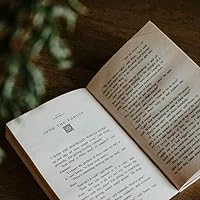
July 31, 2017
The potato shaped space
'the stinking goat on yonder hill
feeds all day long on chlorophyll'
six slimming secretaries
breadcrumbs are a bore in a bedsitter
Broccoli...is full of iodine so should be eaten by those exposed to atomic radiation; some of us feel, not otherwise.
"If your friends don't like garlic, get some new friends"
It is impossible to eat filled pitta without spraying a good deal of food over the surrounding countryside'
(pancake) tossing is for TV experts only
'the stinking goat on yonder hill
feeds all day long on chlorophyll'
six slimming secretaries
breadcrumbs are a bore in a bedsitter
Broccoli...is full of iodine so should be eaten by those exposed to atomic radiation; some of us feel, not otherwise.
"If your friends don't like garlic, get some new friends"
It is impossible to eat filled pitta without spraying a good deal of food over the surrounding countryside'
(pancake) tossing is for TV experts only
June 20, 2023
Found this on the Internet Archive. Pretty funny, get out your asbestos mat!

March 13, 2010
Written in the late 50s when, in the UK at least, if you left home and weren't getting married you lived in a room in a house with a shared bathroom and one gas ring (so no cooker and no kitchen sink).
Republished a couple of years ago as the crowded standards of living for singletons in London is regressing to 50s standards.
Hilarious to read, but honestly I wouldn't try the recipes!
Republished a couple of years ago as the crowded standards of living for singletons in London is regressing to 50s standards.
Hilarious to read, but honestly I wouldn't try the recipes!
Displaying 1 - 13 of 13 reviews