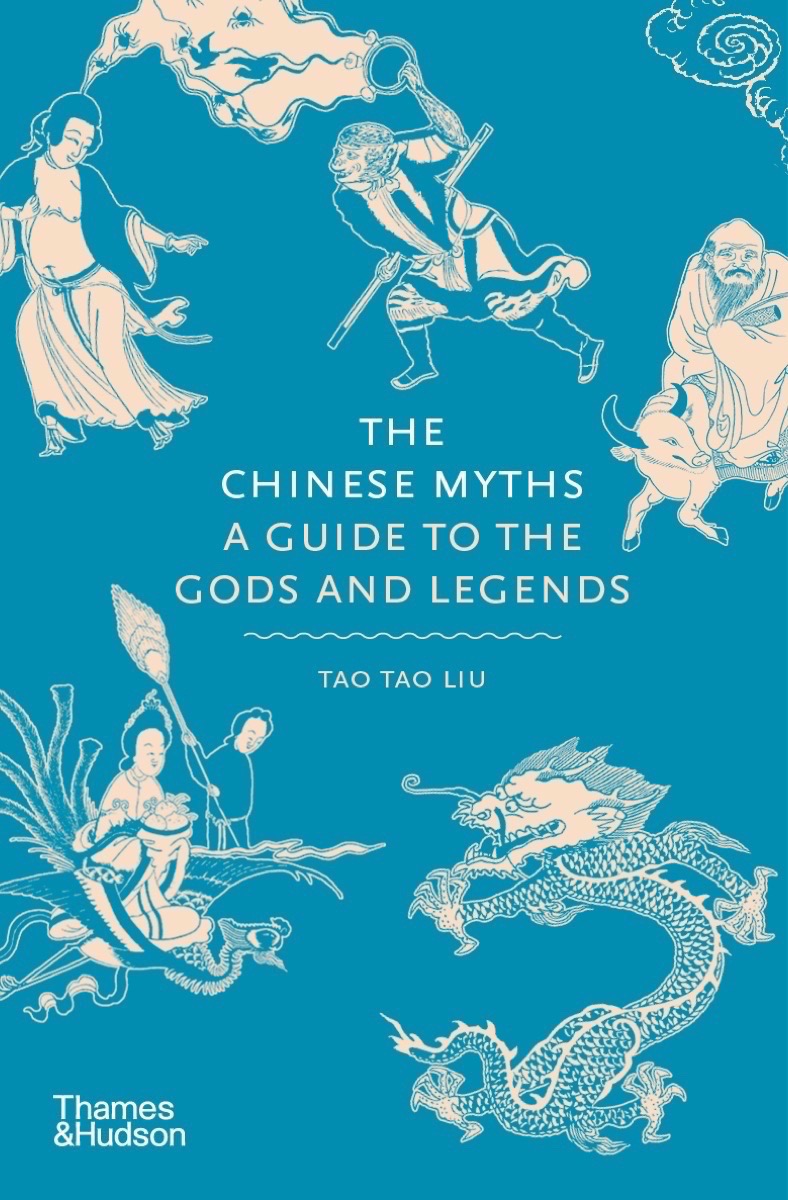
The essential guide to the complex, fascinating world of Chinese retelling the stories and exploring their significance in Chinese culture.
This is a concise and entertaining guide to the complex tradition of Chinese mythology. While many around the world are familiar with some aspects of Chinese myth—through Chinese New Year festivities or the classic adventures of the Monkey King in Journey to the West—not everyone understands the richness of Chinese mythology, influenced by Daoism, Buddhism, and Confucianism.
Offering more than an overview of Chinese mythology, The Chinese Myths not only retells the ancient stories but also considers their place within the patterns of Chinese religions, culture, and history. Expert Tao Tao Liu introduces us to an intriguing cast of gods, goddesses, dragons, and monks, including the ancient hero Yi the Archer, who shot suns out of the sky to save humanity from a drought; Guanyin, the goddess of mercy and compassion, to whom there are temples dedicated all over East Asia; and Madame White Snake, a water snake spirit in the guise of a mysterious widow, her story adapted into countless films and operas. This illustrated volume is for anyone interested in China or mythology, as knowing China’s myths allows readers to understand and appreciate its culture in a new light.
Very readable and interesting, but you can finish this book and come away not knowing that many of the Chinese myths, and not that much about each of them, hence 3 stars.
It does give an overview of Buddhist influences, a fair bit of history, the lunar cycle, temples and festivals and the like, but for a book entitled ‘The Chinese Myths’, there is not nearly enough substance or retelling or paraphrasing on the myths themselves. The rest should, I believe, be in addition to the myths, not in place of them.
Fajna przebieżka przez chińskie wierzenia. Dobra dla laika, chociaż ilość informacji, nieco chaotyczna forma (poniekąd narzucona przez tematykę) i osobliwość przytoczonych mitów mogą przytłoczyć. Chciałabym o wiele więcej o buddyzmie!
It’s more a book about the myths than the book of myths. Also, at least according to many a footnote the editor of the Russian edition has left, it’s riddled with factual mistakes. Since I don’t know who to believe on any of it, the book just left me confused and a bit bored.
Going into this book, I had extremely little knowledge on Chinese Mythology or its legends, and this book did a wonderful job of introducing many Chinese Myths and legends in the context of their dynasty/period of origin, and the religious concepts behind many of these, as the influences of Buddhism, Daoism, and Confucianism are subtle until pointed out. Would recommend to anyone who knows little about Chinese mythology, and will read the rest of the books of this series regarding the mythologies of other cultures around the world.
Szczególnie dobra pozycja dla laików, którzy chcieliby się czegoś dowiedzieć o chińskim folklorze. Trzeba mieć jednak na uwadze, że informacje są w większości skrótowe i momentami bardzo chaotyczne.
Bardzo ciekawe, a jednocześnie rzeczowo przedstawione informacje, ale jednocześnie ich forma niekiedy była dla mnie zbyt chaotyczna. Wszystkiego jest tam dużo i generalnie to dobrze, ale czasem się wręcz gubiłam, a przez wstawki dodatkowych ciekawostek w ramkach te informacje mi się ze sobą mieszały (te ciekawostki ogólnie oceniam na plus, ale nie kiedy były wciskane między główny tekst i mnie z niego wytrącały).
Na pewno chciałabym sięgnąć też po inne mitologie z tej serii, bo koniec końców ta forma jest dla mnie ciekawa. Powiedziałabym, że zahacza o tematy, które można później poszerzyć sobie poprzez wyszukiwanie o nich innych lektur. Pod tym kątem dobrze spełnia swoje zadanie.
Good little introduction to Chinese mythology and folklore which takes a wise approach to the question by explaining the issue with the sources for Chinese myth, namely that almost none of them are written down since Confucians hated the notion of myth and fiction as a whole, even as allegory, and thought you should write down history, the deeds of real men worth imitating, instead - this is why mythological personages that were obviously and still more or less nakedly gods before were also written down as historical personages in far antiquity, such as the Yellow Emperor.
For this end it mostly uses the oldest sources available to us, and frequently quotes the stories in their entirety - this I like, it is better than dry textbook summaries of it. It also goes a bit (and I do mean just a bi) into the ritual origins of plays, and of fictional as a whole - the Journey to the West, per example, is episodic because its episodes are mainly brought over from oral and theatrical storytelling that had to be done in a single night, and plays in China, as is elsewhere, are well known to have come from ritual, in this case from Shamanic "playing".
Also goes over the ties of important festival rituals and the importance of the seasonal cycle to festive ritual and myth likewise, and how these were historicized by Confucians (of course, haha). All in all, perfectly good little intro for Chinese mythology - though the author is mistaken in thinking that Homer, Hesiod, Virgil and Ovid and whoever other epic poets set down "canonical" versions of mythology!
I have read a lot of different mythology books but somehow I have never really come across Chinese mythology before. This is a good brief overview of the subject.
The most memorable quote for me is that
If the Greeks can be said to have mythologized their history, the Chinese historicized their myths.
Este libro es una fascinante introducción a los mitos chinos, profundamente entrelazados con la historia de las dinastías e imperios de China. A lo largo de sus capítulos, Tao Tao Liu explora cómo los mitos no solo reflejan las creencias y valores de cada época, sino que también moldearon la identidad cultural de la nación. Desde la creación del mundo hasta las historias de héroes legendarios, el libro nos lleva a un viaje que combina narrativas míticas con el contexto histórico que las enmarcó, mostrando la evolución del pensamiento y la sociedad china.
Lo que más me impresionó fue la manera en que el autor vincula los mitos con los momentos clave de la historia de China. Aprendí cómo las leyendas no solo embellecen los relatos del pasado, sino que también ayudaron a legitimar el poder de los gobernantes y a construir una identidad colectiva. Además, el libro no solo relata los mitos, sino que también los analiza desde una perspectiva histórica y cultural, haciendo que cada página sea tanto educativa como entretenida.
Recomiendo este libro a todos los que disfruten de los mitos chinos o tengan interés en la historia de China. Es una lectura enriquecedora que ofrece una nueva apreciación de cómo las historias pueden influir en una cultura durante milenios. Sin duda, una obra que merece un lugar en la biblioteca de cualquier amante de la mitología y la historia.
A short yet informative book about Chinese mythology, festivals, beliefs, and philosophy.
I really enjoyed chapters on Buddhism and Daoism and found it fascinating how they are both distinct yet interconnected. To me, learning how Buddhism traveled from India to China and became deeply rooted there was especially interesting.
I'm also planning to continue reading and learning about other Chinese myths and legends, such as the Legend of the White Snake, and classic Chinese novels like the Journey to the West.
Overall, this book is perfect for anyone interested in understanding China better—its culture, history, art, and worldview. 4/5 ⭐⭐⭐⭐
Książka umożliwia czytelnikowi zrozumienie, jak kształtowała się kultura i historia stojąca za poszczególnymi wierzeniami. To wartościowa lektura dla osób, które dopiero rozpoczynają swoją przygodę z Chinami i chcą zbudować solidne podstawy do dalszego zgłębiania tematu. Nie mamy tu do czynienia jedynie z opowieściami o smokach czy bóstwach - to raczej szeroka wędrówka przez świat symboli i narracji, które od wieków formowały mentalność całego społeczeństwa. Dzięki tej lekturze ogromna i złożona kultura Chin staje się bardziej dostępna i łatwiejsza do zrozumienia, przede wszystkim dla kogoś, kto – tak jak ja – nie miał wcześniej styczności z tą tematyką. W książce pojawiają się również wątki dotyczące współczesnych zwyczajów, takich jak Święto Lampionów. A to naprawdę tylko niewielka część bogatego materiału, jaki oferuje ten tom. Szkoda jedynie, że liczne dygresje oraz poboczne ciekawostki momentami zaburzają rytm czytania.
fajny zamysł na książkę, natomiast nie wiem czy jest to wina autorki, tłumaczki czy wydawnictwa ale czyta się ją jak nieprzyjemny podręcznik od historii- zdania słabo sklejone, ciągle przypominanie ze w sumie to nie wiadomo czy tak było naprawdę opisane, wtrącenia przez co ciężko było płynnie przejść przez wszystkie historie. Chciałam przeczytać mity a nie ich skrótowy opis
It’s getting more and more interesting while you read it through. And also shows how deep, amazing, and yet not uniform the Chinese culture and history is
Bardzo cenię sobie serię "Mitologie świata", bo wprawdzie na co dzień zdarza mi się opowiadać o nawiązaniach kulturowych do mitów greckich, to wierzenia innych, odległych mam ludów zawsze mnie ciekawiły.
Po Japonii i Skandynawii przyszedł czas na Chiny. Tao Tao Liu, badaczka kultury i historii Chin, odsłania przed czytelnikami niezwykle barwny świat wierzeń chińskich. Dla mnie to obszar kompletnie obcy i nieznany, więc chłonęłam te często zaskakujące opowieści. Już na początku autorka uprzedza, że otwiera przed nami wielopłaszczyznowy świat. Wpływy Konfucjusza i jego 24 wzorców cnoty synowskiej, wpływy buddyzmu, lakoniczne historie mające kilka wersji, ich nieśmiertelność (anime inspirowane legendami czy chiński łazik na Marsie nazwany imieniem bóstwa ognia). Już powstanie świata było skomplikowane. Kosmiczne siły yin i yang wyłaniające się z chaosu, przemiana Pangu w wiele bytów (oddech - wiatr i chmury, krew - rzeki...). Bogini-Matka, która uformowała ludzi z żółtej gliny, Łucznik Yi, który uratował ich przed morderczą suszą, Trzej Królowie Mędrcy, najważniejsi półbogowie epoki klasycznej. Sporo ekstremalnych zjawisk pogodowych, które trapiły rolników i pozwalały bóstwom na wykazanie się. Smoki - dobre duchy mieszkające w niebie i symbolizujące wodę, która odżywia glebę. Wiele bóstw domowych (szczególnie ciekawe bóstwo paleniska). Wreszcie współczesne Chiny i ich święta, chociażby Święto Lampionów czy sprzątanie grobów. A to tylko mały procent tego, co w tym tomie można znaleźć.
Wszystko to podane przejrzyście, opatrzone rycinami cieszącymi oko - wciąga od pierwszych stron. Polecam, tak jak i poprzednie części.
Me acerqué a este libro buscando un ensayo serio que me diera un panorama de los mitos chinos. En ambos sentidos, este libro cumplió su objetivo.
Como reza el subtítulo, se trata de una guía, nada más. Contiene muy pocos mitos de manera detallada y tampoco es un bestiario. Una de las cosas menos afortunadas de este libro —pero en realidad de cualquier otro con el mismo tema— es la dificultad de consultar fuentes primarias a través de traducciones fiables. Es una pena que, en este preciso momento, no existan traducciones de muchos de los textos seminales de la cultura china.
Very surface level, you’ll fly through this book in a couple of days but won’t have too much knowledge after it.
The author states several times that very little information about these myths and legends has survived to this day, which makes it difficult to actually write a book on the topic.
An easy read and some interesting tidbits, but not much else.
Perfect overview of lots of different myths and legends - such a perfect amount of detail and yet all of the stories were summarised so well that I felt like I knew enough about all of them. Would defo recommend to anyone who wants a simple introduction to some of the Chinese myths and legends :))
Nic nowego dla mnie w tej książce nie było, ale jako odświeżenie wiedzy z czasów studiów- super. Dla osób, które nie mają żadnego doświadczenia z mitologią chińską i szukają czegoś, od czego będą mogły zacząć, to będzie świetny start.
More a book about the history of the myths then the myths themselves. But I am one step closer to understanding what’s going on with Confucianist/Daoist/Buddhist fusion…
This was ok. This is the second book from this Mythology series that I've read, the first one being the one about the Norse mythos. With that book, I was already a bit disappointed because the book is more of a reference/guide book than something designed to maximize the reading experience itself. Nevertheless, I liked it enough that I decided to try and read this one too. I don't regret it but comparatively I found it a bit of a worse read, mainly for two reasons:
1) I'm much less familiar with the Chinese mythos than the Norse ones. Everyone knows Odin, Thor, etc; here I only knew Son Wukong and had heard of the Yellow Emperor maybe once. Since this book (and the entire series) isn't really interested in teaching you the stories behind the mythos as much as it is in summarizing myth origins and influence, the names, gods and stories you read about just kind of end up being a little nondescript if you don't already have a clear mental separation of the concepts and characters you're reading about beforehand.
2) This book is less structured than the Norse one. There, you had a chapter about the Aesir, another about the Vanir, with sections dedicated to each god/myth. Here, it's all a bit jumbled up. You're reading about the Yellow Emperor and then it starts talking about the Cangjie method of writing Chinese characters and then would you look at that now we're reading about Pangu and the Chinese creation myth!
I'm not gonna fault the author or the book itself because I understand it's a muuuuch deeper topic than one can realistically present in a proper manner in a 200-page book; it does a good enough job of showing how Buddhism, folk stories, Daoism and many other independent and clashing factors affected the development of Chinese myths and culture in general. It's just a bit of a slob to go through as a book. Like several summaries of Wikipedia articles jumbled up together - and I love reading Wikipedia articles, mostly because of their detail. If you're sacrificing detail, I think it's best to have more flow between the parts so the reading experience is better, and I think that's what this book lacked.
Nevertheless, there are quite a few stories that are fun to learn about in this book. In particular I had never heard of Pangu and Yu the Great. I also found it interesting how so many of the Chinese legends are based on historical figures, so I'll look more into it in the future.
This book was one of my favorite essay-like books to read. It is “the perfect introduction to the world of Chinese myths, gods, and legends.” The key word is introduction. This book does not go in depth in the stories or show us the original words from the stories. I would recommend to any readers that are planning to read this book to research the myths in this book to get the whole story.
Overall, this book does a good job of introducing readers to the myths, history, and culture of China. It has a chapter devoted to Buddhism in China, which I found interesting and informative. It also dips you into various stories, which is a nice way to show readers China’s stories without actually telling the story. It reads more like a research book than a collection of stories, so be aware of that if you are looking for stories rather than research. I personally liked comparing the Chinese myths to other stories from other countries. For example, the author told the myth of the cowherd and the weaver girl, which is also in Japanese culture!
Despite it being good as a research-type book, the title may lead readers to believe that the book is a collection of stories. There is only one chapter about the myths, and the rest is about Chinese culture. If you believe that research books are boring, this is not the book for you! I occasionally struggled to remain engaged with the book's historical accounts.
This book excels as a research tool for understanding Chinese culture, rather than serving as a collection of its myths, which may disappoint readers seeking immersive storytelling. It does get into some of the myths, but not as in-depth as many would like. The author mainly focuses on history rather than what the title makes you believe this book is about.
An excellent book on Chinese mythology. It was very easy to understand and contained the key information. I wouldn’t classify it as introductory, as it does include some of the nuances (not as much as I wanted but still glad some are included). So, intermediate?
It helped I had some background on some of these myths and the classical tales and exposure to Buddhism, Confucianism, and Daoism. Because of my experience, I paid attention when I noticed some myths could have used more context or some interpretations could benefitted from more nuance, especially regarding any explanations related to history.
I would also have appreciated a little more transparency of the author’s background, as it seems clear to me it greatly influenced some of the interpretations and historical context (e.g. comparing Communism with the far-left and the Republic of China’s Nationalist party with the far-right is reductive and misrepresentative, especially with modern context of the Western political spectrum). For this reason, I consider the last two chapters the weakest. Note, these limitations may also be actively or inactively a factor of politics and Cultural Revolution, so it’s also why I still maintain that this guide is still the best compilations of Chinese mythology in the English language that I’ve encountered.
I loved how I’m finally able to learn the names of so many new gods and mythological figures. Time to dive deeper on these new names.
Biggest pet peeve was that the names were not accompanied by the original Chinese characters or tones on the Pinyin, which I’ve seen included in Thames & Hudson’s Japanese Myths.
Overall a pretty decent introduction to Chinese legends, though a little brief and not very detailed. It is a good compilation of stories and, as a guide, it gives a general overview of how Chinese myth evolved throughout dynasties, and how these legends were adapted to suit the doctrine of the empire at its various stages, whether it was leaning more towards Daoism, Confucianism or Buddhism. However, for someone like me, who already has quite a bit of knowledge about Chinese legends, I don't feel like I got much out of this book, though it did help cement my knowledge and build on it slightly with some of the stories.