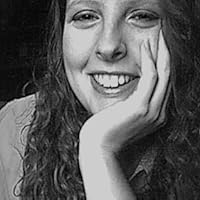
Laura J. Furman (born 1945) is an American author best known for her role as series editor for the O. Henry Awards prize story collection. Her work has appeared in The New Yorker, Mirabella, Ploughshares, Southwest Review.
She has written three collections of stories (The Glass House, Watch Time Fly, and Drinking with the Cook), two novels (The Shadow Line and Tuxedo Park), and a memoir (Ordinary Paradise).
She founded American Short Fiction, which was a three-time finalist for the National Magazine Award. She is currently Professor of English at the University of Texas at Austin, where she teaches undergraduate and graduate courses in writing. Most recently, she has announced that she has submitted a collection of short stories to her agent, and the subsequent collection will be her first new work to follow the release of 2001's Drinking with the Cook.
I think this book could be improved by being shortened considerably. By the last 1/4 I was really wondering what the point of finishing it would be. I really did enjoy reading a selection of writings about reading...how clever does that sound? While some of them were not so very interesting at all, others were quite fun. This is one of those books, if I owned a copy, would pretty much stay in the bathroom reading stack.
Full of short excerpts drawn from books and essays by people who love books, Bookworms was the perfect waiting room book. Easy to pick up and put down, and always moving from one vignette to another, it asked for your attention in brief little flashes rather than any sustained effort.
Though I enjoyed it, it's not one that I will likely return to. Worth a flip though, for anyone who particularly enjoys books about books, but not a necessary addition to your shelves.
Another book about the love of reading, this time by writers...most of whom I know by name even if I haven't read all of them...much underlining and pleasure in hearing stories like my own.
This book took a long time to finish because it's full of little gems - quotes, essays, excerpts from books, poetry - all dealing with the joy of reading. I think it is meant to be taken in a little at a time. One of my favorite sections was at the end, "Queen Lear", with pieces by Ursula LeGuin, Bernard Malamud and Mike Rose. I met some new authors I've now added to my list - Jiri Langer and Laura Furman, for example. The book celebrates reading, and definitely was written for those of us addicted to that endeavor. Spending a few minutes with this book over the course of several months has been a joy.
Perhaps this is a bit too self-obsessive of us readers: to read about how other readers read. But this book does reward us in sharing our obsessions over reading, whether it is purely for escaping the humdrum of present moment, a leaping forward to different time and place, a plunge into companies of a different stripe, or simple to hear the different voices talking, laughing, joking, weeping, or consoling. We are comforted or enraged by authors and books, but reading is what we love, however our paths and modes are different: Alan Bennett from his lower-middle-brow of Leeds, Rita Ciresi from her house full of old newspapers and Reader's Digests, Clarice Lipsector from a bookshop manned by a young girl who tortured her, and many others who arrived at this habit by accidents or by intuition. If these essays do not do much to justify reading a book about reading, then just read David Denby's Queen Lear, his memory of an intelligent, powerful, yet unreflected mother whose psyche was shattered by the stripping of power -- losing husband to death, losing son to marriage, losing social purpose as a business woman. Without a well-stocked interior world, she was the raging female counterpart of Lear -- demanding the world to fill up the dark space where the other forces of life has receded. Perhaps her pain will be more consolable, and her thrusting and grasping less harsh if she had been a reader? David Denby seems to imply that perhaps reading may have been palliative to life's despairing pain.
When I first found this book, I became very excited. After all, it was a book on reading from famous people throughout history. What wasn't to love.
When I first started digging in, it became even better because this book got me . It understood where I was coming from & why I love reading. The experiences in picking up a book for the first time from different viewpoints that were not my own. Someone put into articulate words what it's like to find reading for the first time. What reading would mean to them. The power that words gave them.
Sounds great, doesn't it?
But eventually it just became convoluted and hard to take. A case of a much too much. However, if you wish to at least take a peek and perhaps find a piece of your soul, you should read this. You never know what you might find...
"The home of any serious desultory reader has to be a shambles of odd reading matter, chiefly because such a reader has no useful principle of exclusion. By the very nature of his reading, his interests tend to widen not to narrow, to exfoliate endlessly, like a magical rose." -Joseph Epstein
"Putting my weakest books to the wall last night I came across a copy of Howard's End and had a look into it. But it's not good enough. E.M. Forster never gets any further than warming the teapot. He's a rare fine hand at that. Feel this teapot. Os it not beautifully warm? Yes, but there ain't going to be no tea." -Katherine Mansfield