Drawing from decades of research, Setha Low shows how public space contributes to a flourishing society through promoting social justice and democratic practices. Thriving public spaces also enhance creativity, health, urban resilience, and environmental sustainability. Yet more than ever, public spaces across the world are threatened by urban development, privatization and neglect.
Public spaces -- where people from all walks of life play, work, meet, talk, read, think, debate, and protest -- are vital to a healthy civic life. And, as the eminent scholar of public space Setha Low argues in Why Public Space Matters , even fleeting moments of visibility and encounter in these spaces tend to foster a broader worldview and our willingness to accept difference. Such experiences also enhance flexible thinking, problem solving, creativity, and inclusiveness. There are many such spaces, but they all enhance social life. Sidewalks and plazas offer business opportunities for small-scale entrepreneurs who cannot afford store space. Public parks have long provided major cultural attractions, from plays to concerts, at little or no cost to the public. Central squares have a storied tradition as arenas for demonstrations and political protests. Parks and waterways create sustainable greenways, and during disasters, all manner of public spaces become centers for food delivery and shelter. To illustrate their value, Low draws from decades of research in public spaces across the Americas, from New York to Costa Rica.
Yet we are losing public spaces to accelerated urban development and the belief that public spaces are expendable. Just as important is the broad-scale and ongoing privatization of public space by corporate actors. Low explores why public spaces matter today, how they are at risk, and what we can do about protecting these essential places that support our everyday lives. Finally, she shows how we can work to promote public space protection and expansion at both the grassroots and global levels. Throughout, she focuses on real public spaces and the people who use them in cities and regions across the Americas, from New Jersey to Costa Rica. A powerful, defining statement on a foundational contributor to healthy civic life, Low's book not only details what we are at risk of losing, but shows us how we can not only stop the losses, but work to expand the number of spaces available to the public.
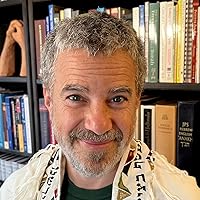
Setha Low is a former president of the American Anthropological Association, a professor in environmental psychology, and the director of the Public Space Research Group at the City University of New York. Low also served as a Conservation Guest Scholar at the Getty Conservation Institute. Her recent research includes an ethnography of residents in gated communities in San Antonio, Texas and on Long Island and a study of urban parks with case studies including New York City's Prospect Park, Orchard Beach in Pelham Bay Park, and Jacob Riis Park in the Gateway National Recreation Area. More broadly Low's research includes work on the anthropology of space and place, medical anthropology, urban anthropology, historic preservation, landscapes of fear, security/insecurity, and gating in Latin America, the United States, and the cities of Western Europe.
para empezar que todavía no hay exactamente consenso entre lo que es un espacio público y lo que no, pero sí está claro que el acceso a ellos es un marcador de privilegio y potente delimitador de salud mental y calidad de vida de la peña. teóricamente es un libro muy importante, pero es que además no he dejado de pensar en qué la mayoría de momentos de mi vida en los que he sido muy feliz y a los que ne encuentro volviendo una y otra vez han sido en espacios públicos. daría mi vida por Holyrood park y por el banco de cara al río en Olibet, y la zona alrededor del náutico donde a veces nos tumbamos y cenamos, y también el paseo de la salida del topo de Herrera a Bidebieta, pero también la zona de entrada a las hurdes y la zona de blackrock de Galway, que yo no me tiré del trampolín pero sí les admiraba mientras nadaba, y también cada momento cuando bajo del Luas en la parada de Sandyford y veo gente en las escaleras charlando alrededor de su overpriced coffee y lo que daría por estar ahira mismo jugando al tenis en fanderia con todes vosotres...
didn’t quite finish it, I kind of lost interest. The book explains the benefits of public spaces and gives various real-life examples, all of which are very cool and valid - but nothing too thrilling.
A well written narrative guide to the philosophy, ethics, politics and maybe most importantly, the psychology of modern urban planning around public spaces. I especially liked the "how to" aspect of collecting observations and data from field studies and the many direct quotes from visitors and users of public spaces. I will not look at parks. plazas or even busy urban sidewalks the same after reading this book.
I quite enjoyed this and did not find it too esoteric as some other reviewers mentioned. (I don’t have any familiarity with the field.) The book has made me more observant of the public spaces I frequent and has helped me both be more appreciative of those spaces as well as be more cognizant of how they can improve.
If this book is the “why” to why public spaces matter, I would love to see a follow-up of the “how” we work to ensure public spaces expand and thrive with more concrete ideas for action.
Really enjoyed reading about public spaces in other parts of the world/country, found the ethnographic methodology valuable + appreciated the framework she creates to define public space (emphasis on “public”) esp. the concept of policing/surveillance limiting “publicness.” Also found the recurring theme of public space quality and creation coinciding with gentrification incredibly interesting and something I’d like to read more about.
However, as i find with a lot of academic writing, theory has virtually no relevance in practice.
The last chapter focuses on the issue of fence heights in the Tompkins square playground, which the writer very clearly considered to be symbolic of exclusion; while she does reference the southwest corner (which we called “crackhead alley” growing up), she does not explicitly mention that the two areas are right next to each other (i.e. people shooting up next to kids playing) and i think if you weren’t familiar with the park, that fact would go right over your head. Moreover she frames parents’ concern and support for the higher fence as products of class bias and gentrification, also implying that mothers’ socializing contradicts the idea of a higher fence providing more safety since their attention is not SOLELY focused on watching their child’s every move. The fence provides protection both from people openly doing drugs and from traffic on the street side— the writer seems to consider this a non-issue, or at least a solution to an issue that is founded in racial/class biases.
She briefly points out that people on the street engaging in open drug use etc. should have support systems and resources from the city, and yeah girl, i should have a million dollars….its just incredibly frustrating to drive this kind of conversation in an obviously ideologically biased way, and yes i do understand the idea of socially just public spaces being open and inclusive all people and activity but there is a BIG difference between shooting up on a PUBLIC park bench and playing in the sandbox. Also when they conduct the interviews about the fence itself and they talk different park users, the parents are always in favor of the higher fence— in my opinion, who TF else needs to give their opinion beyond the people who are using the damn space ?! The southwest playground is a PORTION of the park space, used by parents and children….if other people, junkies or not, aren’t able to look into the park, who effing cares ?????
Accessibly, wide-ranging explanation of why public space matters to individuals and communities. She examines but goes beyond the common sense advantage of fresh air, exercise and encounters with other people to look at the importance of public space to economic opportunity, ecology, and place attachment, including with a chapter on how New Yorkers used public spaces during the COVID pandemic. This is written for the general public, yet for those who want to do their own research there is a final chapter and an appendix on methodology. Very valuable contribution to anyone concerned about community building/maintenance. Sloppy editing is occasionally distracting.
An entry level book for anyone interested in planning or just interested in parks. I liked learning more about the NYS park system and I loved the ethnographic research done. I wish more had been released. My biggest issue with it is that it seemed very surface level. No concept was ever explored to the fullest extent and I feel like a lot of it could be summed up in a TED talk. Still a really nice overview of how parks and their existence are an important social justice issue.
Great stuff on created spaces and their impacts on humanity. Focused towards a social justice lens rather than a strictly environmental one (what I somewhat expected). While the scope of the research was looking at what public spaces are intended for and how they have come about, I would have liked to read a pitch for what they can/ should mean for the future as public spaces are deteriorating or becoming smaller and less available.
I quite enjoyed this book! It is interesting that people found it academic, as I think that the author did a great job outlining Public Spaces: why they matter, how is it defined, examples of impact, and how to evaluate them. I particularly enjoyed the maps and graphics that outlined how to measure public space in our own lives.
I overall agree with the main analysis and the ethnographic aspect to why public space matters, but it sorta got repetitive just a tiny bit for me. This morning I started reading at a nearby park and finished the book later in the day at a library (the book is also a library book!). Free public spaces matter :)
Read for my dissertation. Obviously relevant and honestly really good if a little disjointed. Also refreshingly accessible for an anthropology book. Will be referencing in my paper. Dr. Low if you’re reading this I’m inspired by your work 🙏🏻❤️ #ethnography #urbanplanning #appliedanthropology
Lots of notable insight, especially related to who uses spaces and why. It did have heavily political-leaning rhetoric in it though which affected objectivity.
I found this book confusing. Not because it's pretty academic and fairly inaccessible to a lay person- i have enough of a base in recreation/ecotourism work that i could parse it. I figured this was a book written for people with an academic or practical background in recreation or public planning, but it felt a bit too surface-level for that.
At the end of the book, there was a sentence that made me rethink that. The author states that you, reader, can use the toolkits she's mentioned to "become your own social scientist". So now i'm thinking this was either an unsuccessful and inaccessible attempt to communicate to a lay person, or simply written as a scaffolding for the author's use in her own curriculum.
Overall, I didn't finish this with a new sense of understanding why public space matters, outside of a few very specific urban communities. This issue is mostly just my expectations not meeting the reality of what the intent of this book is, I didn't realize it would exclusively focus on cities.
I would personally have been much more invested if there was more user interviews included, and if non-urban communities were talked about. Rural areas consistently get the short end of the stick, and the effects of lack of accessible, drug-free third spaces looks incredibly different in a more spaced-out environment.