

What do you think?
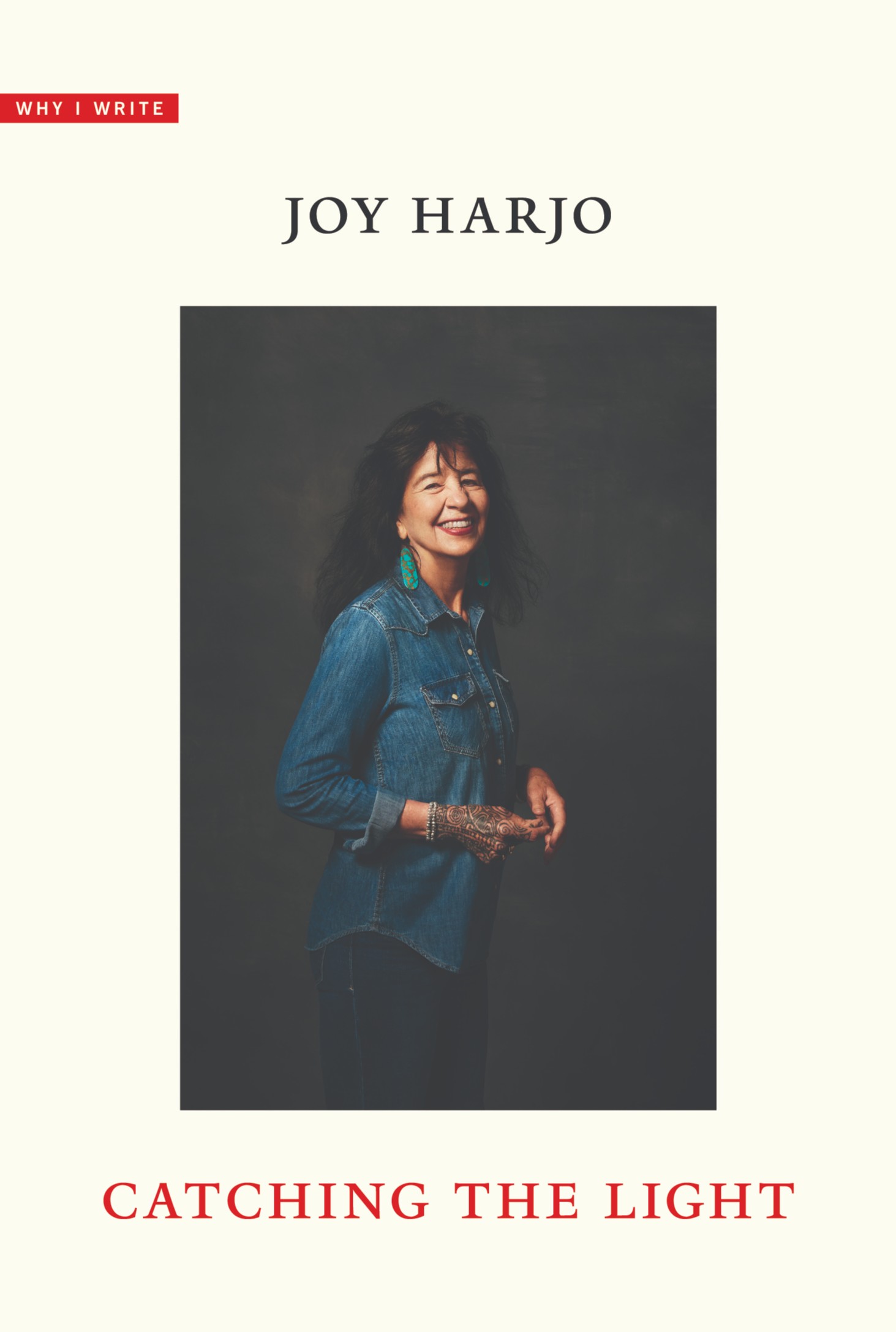
Why I Write
Catching the Light
In this lyrical meditation about the why of writing poetry, Joy Harjo reflects on significant points of illumination, experience, and questioning from her fifty years as a poet. Comprised of intimate vignettes that take us through the author's life journey as a youth in the late 1960s, a single mother, and a champion of Native American culture, this book offers a fresh understanding of how poetry functions as an expression of purpose, spirit, community, and memory.
Harjo insists the most meaningful poetry is birthed through cracks in history from what is broken and unseen. At the crossroads of this brokenness, she calls us to watch and listen for the songs of justice for all those America has denied. This is an homage to the power of words to defy erasure--to inscribe the story, again and again, of who we have been, who we are, and who we can be.
Harjo insists the most meaningful poetry is birthed through cracks in history from what is broken and unseen. At the crossroads of this brokenness, she calls us to watch and listen for the songs of justice for all those America has denied. This is an homage to the power of words to defy erasure--to inscribe the story, again and again, of who we have been, who we are, and who we can be.
128 pages, Hardcover
First published October 4, 2022
About the author
Joy Harjo
109 books2,079 followersBio Joy Harjo
Joy Harjo was born in Tulsa, Oklahoma and is a member of the Mvskoke Nation. She has released four award-winning CD's of original music and won a Native American Music Award (NAMMY) for Best Female Artist of the Year. She performs nationally and internationally solo and with her band, The Arrow Dynamics. She has appeared on HBO's Def Poetry Jam, in venues in every major U.S. city and internationally. Most recently she performed We Were There When Jazz Was Invented at the Chan Centre at UBC in Vancouver, BC, and appeared at the San Miguel Writer’s Conference in San Miguel de Allende, Mexico. Her one-woman show, Wings of Night Sky, Wings of Morning Light, which features guitarist Larry Mitchell premiered in Los Angeles in 2009, with recent performances at Joe’s Pub in New York City, LaJolla Playhouse as part of the Native Voices at the Autry, and the University of British Columbia. Her seven books of poetry include such well-known titles as How We Became Human- New and Selected Poems and She Had Some Horses. Her awards include the New Mexico Governor’s Award for Excellence in the Arts, the Lifetime Achievement Award from the Native Writers Circle of the Americas, and the William Carlos Williams Award from the Poetry Society of America. She was recently awarded 2011 Artist of the Year from the Mvskoke Women’s Leadership Initiative, and a Rasmuson US Artists Fellowship. She is a founding board member and treasurer of the Native Arts and Cultures Foundation. Harjo writes a column Comings and Goings for her tribal newspaper, the Muscogee Nation News. Soul Talk, Song Language, Conversations with Joy Harjo was recently released from Wesleyan University Press. Crazy Brave, a memoir is her newest publication from W.W. Norton, and a new album of music is being produced by the drummer/producer Barrett Martin. She is at work on a new shows: We Were There When Jazz Was Invented, a musical story that proves southeastern indigenous tribes were part of the origins of American music. She lives in the Mvskoke Nation of Oklahoma.
Joy Harjo was born in Tulsa, Oklahoma and is a member of the Mvskoke Nation. She has released four award-winning CD's of original music and won a Native American Music Award (NAMMY) for Best Female Artist of the Year. She performs nationally and internationally solo and with her band, The Arrow Dynamics. She has appeared on HBO's Def Poetry Jam, in venues in every major U.S. city and internationally. Most recently she performed We Were There When Jazz Was Invented at the Chan Centre at UBC in Vancouver, BC, and appeared at the San Miguel Writer’s Conference in San Miguel de Allende, Mexico. Her one-woman show, Wings of Night Sky, Wings of Morning Light, which features guitarist Larry Mitchell premiered in Los Angeles in 2009, with recent performances at Joe’s Pub in New York City, LaJolla Playhouse as part of the Native Voices at the Autry, and the University of British Columbia. Her seven books of poetry include such well-known titles as How We Became Human- New and Selected Poems and She Had Some Horses. Her awards include the New Mexico Governor’s Award for Excellence in the Arts, the Lifetime Achievement Award from the Native Writers Circle of the Americas, and the William Carlos Williams Award from the Poetry Society of America. She was recently awarded 2011 Artist of the Year from the Mvskoke Women’s Leadership Initiative, and a Rasmuson US Artists Fellowship. She is a founding board member and treasurer of the Native Arts and Cultures Foundation. Harjo writes a column Comings and Goings for her tribal newspaper, the Muscogee Nation News. Soul Talk, Song Language, Conversations with Joy Harjo was recently released from Wesleyan University Press. Crazy Brave, a memoir is her newest publication from W.W. Norton, and a new album of music is being produced by the drummer/producer Barrett Martin. She is at work on a new shows: We Were There When Jazz Was Invented, a musical story that proves southeastern indigenous tribes were part of the origins of American music. She lives in the Mvskoke Nation of Oklahoma.
Ratings & Reviews
Friends & Following
Create a free account to discover what your friends think of this book!
Community Reviews
Displaying 1 - 30 of 89 reviews

January 9, 2023
Catching The Light (Why I Write) – Joy Harjo – (2022)
This inspirational creative writing series is called: “Why I Write”. Here, the internationally renowned author, poet, educator, Joy Harjo (the first Native American the 23rd Poet Laurate of the United States) presents this essay collection that showcase her most remarkable gifts as a storyteller and teacher of the literary arts.
In the book, especially through poetry and music the voices of her ancestors are brought forth: whether Joy is writing about life on Muscogee Creek Nation Reservation (a Confederacy of small tribal towns/culture near Tulsa, Oklahoma) – the “Mother Earth” cycle representation of birth (the giving of life) and renewal – land and natural elements are shared with the forces of nature with plants and animals – rivers carry the emotional waves of native culture. The earth and climate crisis fosters a disconnection from the universal laws that were honored and taught by native people: not to take more than you can use, respect life, the giving of life, and give back.
When Joy began her formal education at the University of New Mexico she was a single mother, and recalls the time of great social unrest: how the Native Rights Movement emerged with the Civil Rights Movement and the national protests over the Vietnam War. Joy joined a writing community in Albuquerque, after being overcome by depression and despair and found peace in drawing, painting and other forms of artistic and literary expression.
The international “One World Poetry Festival” was held in Amsterdam (1980). Joy met James Welsh (1940-2003) known as the Native American Renaissance Poet: he appeared as distinguished and scholarly, without beads, feathers, and long braided hair. Regarding the tools and elements for writing: the skills can naturally be improved with listening, reading and ongoing practice. Joy also explained to readers that: “Every poem is a prayer-” and within this, the power of possibility, to transform and heal. **With thanks to Yale University Press via NetGalley for the DDC for the purpose of review.
This inspirational creative writing series is called: “Why I Write”. Here, the internationally renowned author, poet, educator, Joy Harjo (the first Native American the 23rd Poet Laurate of the United States) presents this essay collection that showcase her most remarkable gifts as a storyteller and teacher of the literary arts.
In the book, especially through poetry and music the voices of her ancestors are brought forth: whether Joy is writing about life on Muscogee Creek Nation Reservation (a Confederacy of small tribal towns/culture near Tulsa, Oklahoma) – the “Mother Earth” cycle representation of birth (the giving of life) and renewal – land and natural elements are shared with the forces of nature with plants and animals – rivers carry the emotional waves of native culture. The earth and climate crisis fosters a disconnection from the universal laws that were honored and taught by native people: not to take more than you can use, respect life, the giving of life, and give back.
When Joy began her formal education at the University of New Mexico she was a single mother, and recalls the time of great social unrest: how the Native Rights Movement emerged with the Civil Rights Movement and the national protests over the Vietnam War. Joy joined a writing community in Albuquerque, after being overcome by depression and despair and found peace in drawing, painting and other forms of artistic and literary expression.
The international “One World Poetry Festival” was held in Amsterdam (1980). Joy met James Welsh (1940-2003) known as the Native American Renaissance Poet: he appeared as distinguished and scholarly, without beads, feathers, and long braided hair. Regarding the tools and elements for writing: the skills can naturally be improved with listening, reading and ongoing practice. Joy also explained to readers that: “Every poem is a prayer-” and within this, the power of possibility, to transform and heal. **With thanks to Yale University Press via NetGalley for the DDC for the purpose of review.
October 18, 2022
Poetry is not a career–it is a state of being.
from Catching the Light by Jo Harjo
After reading Jo Harjo’s poetry collection Weaving Sundown in a Scarlet Light, I was lucky to get access to Catching the Light in which she addresses the birth and purpose of poetry in her life and in her heritage. Her book is a testament to the power of words, how they shed light on the dark places and empower those from whom power has been taken away. Poetry connects us; poetry give us the power to survive; poetry cries out for justice and extolls beauty. Poetry is about connection. And it is this that is most important, especially today when hatred and division and the pandemic have separated us.
I consider every poem a kind of love poem.
from Catching the Light by Jo Harjo
Harjo’s writing about the indigenous experience and history is powerful, and I am reminded again how little I understand the experience of so many people, being of European ancestry and growing up working class. Sure, my ancestor in the 16th c was persecuted and jailed for being an Anabaptist. And the British let my Irish ancestors starve and my German nationalist ancestors fled Russian oppression just before WWI. And, yes, my immigrant Swiss Brethren ancestor colonized the Shenandoah Valley and was scalped along with his wife, and four of his children murdered, and his son taken hostage. But my cultural heritage prevailed, my ancestors took over the country. Their children were not taken away to be ‘educated’ in schools of abuse, their language and culture taken away. We took the land and used it up and poisoned it. We enslaved people and denied their humanity. We made the laws that protected us.
And we are the lesser for having prevailed. We did not listen to the wisdom offered by Native Americans about how to live in this world and how to cherish it.
“Every poem is a prayer, a supplication in the cacophony of humanity,” Harjo writes. “There are more words now than ever,” she continues, we are deluged by them. Words can separate and destroy, but they are also “made of ancient songs of coming together that lift us over and through to beauty.” Poetry can “speak to the truth of an age,” and Harjo encourages us to tell our stories, to “catch the light.”
I received a free egalley from the publisher through NetGalley. My review is fair and unbiased.
from Catching the Light by Jo Harjo
After reading Jo Harjo’s poetry collection Weaving Sundown in a Scarlet Light, I was lucky to get access to Catching the Light in which she addresses the birth and purpose of poetry in her life and in her heritage. Her book is a testament to the power of words, how they shed light on the dark places and empower those from whom power has been taken away. Poetry connects us; poetry give us the power to survive; poetry cries out for justice and extolls beauty. Poetry is about connection. And it is this that is most important, especially today when hatred and division and the pandemic have separated us.
I consider every poem a kind of love poem.
from Catching the Light by Jo Harjo
Harjo’s writing about the indigenous experience and history is powerful, and I am reminded again how little I understand the experience of so many people, being of European ancestry and growing up working class. Sure, my ancestor in the 16th c was persecuted and jailed for being an Anabaptist. And the British let my Irish ancestors starve and my German nationalist ancestors fled Russian oppression just before WWI. And, yes, my immigrant Swiss Brethren ancestor colonized the Shenandoah Valley and was scalped along with his wife, and four of his children murdered, and his son taken hostage. But my cultural heritage prevailed, my ancestors took over the country. Their children were not taken away to be ‘educated’ in schools of abuse, their language and culture taken away. We took the land and used it up and poisoned it. We enslaved people and denied their humanity. We made the laws that protected us.
And we are the lesser for having prevailed. We did not listen to the wisdom offered by Native Americans about how to live in this world and how to cherish it.
“Every poem is a prayer, a supplication in the cacophony of humanity,” Harjo writes. “There are more words now than ever,” she continues, we are deluged by them. Words can separate and destroy, but they are also “made of ancient songs of coming together that lift us over and through to beauty.” Poetry can “speak to the truth of an age,” and Harjo encourages us to tell our stories, to “catch the light.”
I received a free egalley from the publisher through NetGalley. My review is fair and unbiased.

November 6, 2022
In the course of 50 essays of varying lengths, Joy Harjo marks her years as a poet, mother, songwriter, and storied champion of Native American culture. She delivers wisdom in many areas: for young single mothers, for anyone wanting to write and seeking inspiration, for those wondering about the place of her culture in her life (answer…it’s inseparable from her and her life). The essays move chronologically, covering her life/issues from her youth and college days, through phases of her writing life, and into the present day and where she places the world of poetry today.
The writing is often lyrical as one would expect and I found myself captivated by many of her images. Her philosophy and beliefs are exciting for me to read about, being earth-centered as Native American truths are.
Highly recommended for those who enjoy poetry, Native American thought, and writing/creation in general.
A copy of this book was provided by the publisher through NetGalley in return for an honest review.
The writing is often lyrical as one would expect and I found myself captivated by many of her images. Her philosophy and beliefs are exciting for me to read about, being earth-centered as Native American truths are.
Highly recommended for those who enjoy poetry, Native American thought, and writing/creation in general.
A copy of this book was provided by the publisher through NetGalley in return for an honest review.
November 18, 2022
This book is beautiful. It is an entirely new reading experience for me. It has also shown me that my vocabulary for analyzing and discussing literature is still too small.
This book taps into the Liminal, the Mytheopeic, and sometimes even the sacred. I only understood maybe half of what Harjo says in this book. It's the sort of book I'd get more out of if I were reading and discussing it with friends. It is a beautiful and dense book but feels ethereal and cloud like. I do wish she'd been more careful on one or two occasions with the placement of I am statements. There were a few occasions when I wasn't quite sure how she was using them.
This book taps into the Liminal, the Mytheopeic, and sometimes even the sacred. I only understood maybe half of what Harjo says in this book. It's the sort of book I'd get more out of if I were reading and discussing it with friends. It is a beautiful and dense book but feels ethereal and cloud like. I do wish she'd been more careful on one or two occasions with the placement of I am statements. There were a few occasions when I wasn't quite sure how she was using them.

September 26, 2022
So much wisdom in such a little book! Though I only read the ARC, this collection of essayettes is very poignant, poetic (of course), philosophical and full of love. Joy Harjo is a national treasure!

September 8, 2023
That was incredible. I’m even more excited now about her upcoming visit to MGA.

April 22, 2024
“When I sing poetry there is no way in for evil.”
“Perhaps a poem is a sign made manifest. Certainly, they can be miracles. Ask any poet.”
Another revelation, the discovery of a warrior poet 💙
I took Joy Harjo’s masterclass “Poetic Thinking” and this woman transcends the mysteries of the world through words. This little booklet was a gem, a little treasure that ought not fool you with its size. Beautiful, through and through. Magnificent.
“When a despot ineptly sought to turn a country to a totalitarian nightmare, where was poetry? It wasn’t sleeping. It kept the poets up at night. We wrote against despair towards beauty, toward a truth that could imprison us for making liars out of the fools deposited in the seats of power, kept there by puppets who kneeled in piles of promissory notes.”
“The breathing as I write is a beat. My heart is the interchange of rivers, so many rivers run through this body. The beat is an iambic line that turns into circles of resonant waves, after the word is thrown like a stone into the river of life.”
“Each generation bears its own network of tales. Being a poet, a musician, or storyteller is not a career. It is a calling, a demand by your spirit to speak to the truth of an age, an appeal to assist justice in finding a home, for healing to take place so the succeeding generations are greeted with an abundance of food, beauty, and fresh air and water.
“We must take care to feed the minds, hearts, and spirits of those coming up behind us—to offer songs, poems, and stories that will break open that which is hardened, expose that which is evil-minded or would harm, and remind us how we are constructed to bring forth beauty of thought and beingness.”
“To write is to make a mark in the world, to assert I am. There is no I without the vertical of family or poetry ancestors. There is no I without the horizontal of the community that includes trees, other plants, animals, the forces of water, air, sunlight, and all other Earthly beings. I mark the doorway with ink marks. The doorway is imagination.”
“Perhaps a poem is a sign made manifest. Certainly, they can be miracles. Ask any poet.”
Another revelation, the discovery of a warrior poet 💙
I took Joy Harjo’s masterclass “Poetic Thinking” and this woman transcends the mysteries of the world through words. This little booklet was a gem, a little treasure that ought not fool you with its size. Beautiful, through and through. Magnificent.
“When a despot ineptly sought to turn a country to a totalitarian nightmare, where was poetry? It wasn’t sleeping. It kept the poets up at night. We wrote against despair towards beauty, toward a truth that could imprison us for making liars out of the fools deposited in the seats of power, kept there by puppets who kneeled in piles of promissory notes.”
“The breathing as I write is a beat. My heart is the interchange of rivers, so many rivers run through this body. The beat is an iambic line that turns into circles of resonant waves, after the word is thrown like a stone into the river of life.”
“Each generation bears its own network of tales. Being a poet, a musician, or storyteller is not a career. It is a calling, a demand by your spirit to speak to the truth of an age, an appeal to assist justice in finding a home, for healing to take place so the succeeding generations are greeted with an abundance of food, beauty, and fresh air and water.
“We must take care to feed the minds, hearts, and spirits of those coming up behind us—to offer songs, poems, and stories that will break open that which is hardened, expose that which is evil-minded or would harm, and remind us how we are constructed to bring forth beauty of thought and beingness.”
“To write is to make a mark in the world, to assert I am. There is no I without the vertical of family or poetry ancestors. There is no I without the horizontal of the community that includes trees, other plants, animals, the forces of water, air, sunlight, and all other Earthly beings. I mark the doorway with ink marks. The doorway is imagination.”

December 18, 2023
This was a great book! More memoir, less poetry, but good.

October 12, 2022
This is a gem of a book. Joy Harjo, former poet laureate of the US, writes about the power of words and music in her life as a Mvskoke/Creek Nation. There are many strands to this book, which Harjo weaves together beautifully--memoir, cultural history, folklore, music, poems, writing are all here. She writes about her own life and how the discovery of words and poetry saved her during some very dark times. She describes the struggles she endured in her quest to get an education as a Native American woman in a difficult relationship and as a single mother caring for her kids at the same time. She tells us about her experiences in various jobs she had along the way and how she formed a band with some lawyers at one point. They named it Poetic Justice--love that!
Harjo muses on the fact that in 2021 it was the 50th anniversary of her first published poem and states, 'This treatise will be something of a journey. about the why of writing poetry. There will be fifty vignettes, some poem-centered; There are points of illumination or questioning.' (p3)
This fine book can be read through and savored with much food for thought. It can also be dipped into randomly, one or two vignettes at a time. It's definitely well worth a read--or several.
Harjo muses on the fact that in 2021 it was the 50th anniversary of her first published poem and states, 'This treatise will be something of a journey. about the why of writing poetry. There will be fifty vignettes, some poem-centered; There are points of illumination or questioning.' (p3)
This fine book can be read through and savored with much food for thought. It can also be dipped into randomly, one or two vignettes at a time. It's definitely well worth a read--or several.

February 22, 2023
Another one-day read but this time bc the words were just too beautiful to stop. Expected this to be a book of poetry, but rather it gave meaning to what poetry is to Joy Harjo as she explains why she writes. These short essays brought to life that poetry is music, dance, a ladder that leads us from one place to another, allows for imagination and ultimately the process of catching light in the dark. Harjo speaks to the Earth, her Native roots, and the power of words that act as balm and I ate it alllll up.
QOTB:
We who take breath here emerge, we learn to walk,
run, and engage with that which challenges us, with
always a light inside that will show us the path.
When she broke on Earth, the light in her was not
broken. We cannot break light, nor can we destroy it.
Let these words be eyes for us to see. Let these
words be ears for us to hear.
Let these words allow us to taste the bitterness so
we can know sweetness without question.
Let these words allow her family to hold her again.
Let these words remind us that she was one of us
and that the circle that makes us family is a spiral. There
is no end to it. We are in a continuum of embrace.
When the world as we knew it ended, we stood
up again in the ruin, and found a way to keep walking
through tears.
(For Alexie)
QOTB:
We who take breath here emerge, we learn to walk,
run, and engage with that which challenges us, with
always a light inside that will show us the path.
When she broke on Earth, the light in her was not
broken. We cannot break light, nor can we destroy it.
Let these words be eyes for us to see. Let these
words be ears for us to hear.
Let these words allow us to taste the bitterness so
we can know sweetness without question.
Let these words allow her family to hold her again.
Let these words remind us that she was one of us
and that the circle that makes us family is a spiral. There
is no end to it. We are in a continuum of embrace.
When the world as we knew it ended, we stood
up again in the ruin, and found a way to keep walking
through tears.
(For Alexie)

November 3, 2022
Catching the Light by Joy Harjo, part of the Why I Write series, offers both wonderful insight into her writing life as well as inspiring perspective on the power of words, especially poetry.
This is the third book in this series I have read and what makes them powerful is that they are all very personal. In this volume we get a glimpse into Harjo's early life, how contemporary lives are in conversation with past and future lives, and what can be accomplished with words. The things fulfilled through writing are personal (as in making her life better), cultural (both within and between cultures), and political (at the very least through making people see others as human beings rather than labels).
This is one of those books that will reward returning to the book in the future. Whether I come back to the volume as a whole or revisit particularly compelling chapters, I know that I will be coming back to it. For comfort, for stimulation, and for inspiration.
Highly recommended for anyone who enjoys Harjo's poetry as well as those who like looking behind the curtain of great writers. This also will be a great source of inspiration (yeah, I have said that a lot, but it fits) for writers who might be wondering why they write.
Reviewed from a copy made available by the publisher via NetGalley.
This is the third book in this series I have read and what makes them powerful is that they are all very personal. In this volume we get a glimpse into Harjo's early life, how contemporary lives are in conversation with past and future lives, and what can be accomplished with words. The things fulfilled through writing are personal (as in making her life better), cultural (both within and between cultures), and political (at the very least through making people see others as human beings rather than labels).
This is one of those books that will reward returning to the book in the future. Whether I come back to the volume as a whole or revisit particularly compelling chapters, I know that I will be coming back to it. For comfort, for stimulation, and for inspiration.
Highly recommended for anyone who enjoys Harjo's poetry as well as those who like looking behind the curtain of great writers. This also will be a great source of inspiration (yeah, I have said that a lot, but it fits) for writers who might be wondering why they write.
Reviewed from a copy made available by the publisher via NetGalley.

March 7, 2023
My theme for this year is "let the light in" so when I saw this book's title, I thought it would be a perfect fit for my 2023 mindset. And it was. In "Catching the Light," Joy Harjo explores her writing journey. I had never heard of the "Why I Write" series, but this was a short, easy read. I imagine others in the series to be the same. I would recommend this series to anyone interested in how people become writers.

January 4, 2023
Maybe not the right book to start with for Joy but if you know what you’re getting into then this really does a great job recreating the experience of talking/listening to her.
January 1, 2024
A collection of short poetic reflections. Some inspired me, some gave me new insight and perspective on how story, song, and poetry tie us to each other and the land.
June 25, 2024
Beautifully written. One of those books where prose reads like poetry.
June 16, 2025
I really savoured this book, reading the small chapters over time. There is a really wise voice in this book and I loved hearing it through the pages.
April 30, 2026
4.5 | what did we as a society do to deserve joy harjo. i’d lay down my life for her.
January 7, 2025
the kind where you just keep taking pictures of pages and end up with half the book in your camera roll

November 13, 2022
I started my reading year with An American Sunrise by Joy Harjo and had found it to be the best start into 2022. So when I saw that her newest publication, this amazing, beautiful, uplifting book was available for review on Netgalley I jumped to the occasion.
Having read it in one go, the book comes in captured moments where Joy Harjo reflects on her journey with her writing and her life, that is both personal and political, I would like to recommend this book to everyone to read.
It touches, it opens up now horizons, it offers forgiveness, where there is so much hate and despair, it really is Catching the Light.
Having read it in one go, the book comes in captured moments where Joy Harjo reflects on her journey with her writing and her life, that is both personal and political, I would like to recommend this book to everyone to read.
It touches, it opens up now horizons, it offers forgiveness, where there is so much hate and despair, it really is Catching the Light.

November 19, 2022
A collection of micro-essays that range from memoir and biography to ruminations on writing and indigeneity. Joy Harjo writes with an economy of words that echoes her poetic background. I found the essays on language and colonization more interesting than the purely biographical ones, but a reader who is familiar with and loves Harjo will enjoy insights into her background and process and how she came to be the powerhouse writer she is today.
Thank you to Netgalley and the publisher for the review copy.
Thank you to Netgalley and the publisher for the review copy.
April 26, 2025
A lyrical and compelling meditation on poetry and storytelling in 50 vignettes. I read this in Santa Fe, New Mexico, where Harjo went to school, and her essays were the perfect (lasting) addition to the trip.
December 27, 2022
“Catching the Light” is Joy Harjo’s metaphor for what a poet experiences when a poem emerges from her pen. This collection of 50 short pieces weaves history, Nature, memoir and tradition into a tapestry that should be experienced both panel by panel and as a whole whose parts mirror each other.
History, “the crossroads of brokenness,” is traced from the papal bull of Pope Nicholas V in 1450 that encouraged the genocide of indigenous persons, to the death of a Mi-kmaq woman attributed by the police, as too often happens, to exposure and alcoholism when it is clear that she was murdered. Given the right tools and the right words, poetry can provide that “the fertile human field of becoming can flower with justice and equality,” and “all the missing women return for the honor dance.”
Harjo celebrates the Earth as a living being. We are “part of an immense field of beingness,” and it is our task to affirm her sacredness and sovereignty. Her poetry stands in opposition to the colonizers’ treatment of the Earth as an inanimate object to be exploited for their own self-indulgence and to enrich those “at the top of the hierarchy.” For her, there is no hierarchy but instead a shared home in which “The heart is the fire in the house that gives light.”
As memoir, Harjo traces her personal story back through “the origin story, the place of the bones of our elders and ancestors,” to a great-grandfather who inspired “She Had Some Horses,” and to her parents’ singing and story-telling, all of whom contributed to her becoming. She has been an academic and the 23rd Poet Laureate of the United States but writes about how “we put down our pens and paper…and picked up a shovel” while part of a group working in a Miskito village in Nicaragua. She taught a class at the Fourth Avenue jail in Anchorage, where poetry could be a refuge and, literally, an anchorage. Her life has been one in which “my writing attempts to find a passable road in chaos,” as well as to celebrate what she encounters on that road.
Leslie Marmon Silko, a Laguna Pueblo writer who “often references the storyteller who, one day, was so immersed in the story that she disappeared in the story…She essentially became the story,” becomes the model for how Harjo sees poets: “You become poetry.” She writes about how a poem happens, not about how to write a poem. “All poems, stories, songs are about connection.” A love poem, for example, can speak of “the ecstatically present” or of “the bereft floating in a sea of lostness,” but either way, it opens the heart to another. She sees her poetry as a continuation of an oral tradition and of song. Baudelaire aside, “When I sing poetry there is no way in for evil,” because for her, “every poem is a prayer.” In the same way that Mercedes Sosa sings “Solo le pido a dios” as a prayer against poverty and injustice, Harjo sees poetry as “a supplication made in the mists of myth,..made of ancient songs of coming together that lift us…to beauty, so that no one can be lost or uncared for again, now, or forever.” Amen.
Harjo’s discussion of poetry sent me back to her selected poems from 1975 to 2001, "How We Became Human," to see the extent to which her ideas are reflected in her poetry. And they are, very much. “She is the woman hanging from the 13th floor window,” who “remembers listening to her own life break loose,” but then “climbs back up to claim herself again.” In “I Give You Back” she confronts the fears aroused by the history her people have lived through and by the world she lives in and tells that fear,
“I release you, my beautiful and terrible
Fear. I release you.
You are not my blood any more…
You can’t live in my eyes, my ears, my voice,
my belly, or in my heart my heart
my heart my heart.”
Her heart beats free of fear as she reclaims herself, her past, her tradition, her people.
In her tribute to Audre Lorde, “Reconciliation, a Prayer” (written in 1998), Harjo prays that as we enter a new century, “...the stories we have of each other. Keep us from giving up in this land of nightmares which is also a land of miracles.” These stories are for her what it means to be Native American, Muscogee, linked to history, tradition, Nature and others. In the collection of Native American poetry that Harjo edited, "Living Nation, Living Words," Marcie Rendon, in her piece “Resilience,” observes that “We create beauty out of scraps.” This is what Harjo calls on everyone to do because “Each of us is a song…It connects all of us: humans, animals, plants, planets, universes, deity.” And each of us has to discover our voice in that song because, like Thomas Builds-the-Fire in Sherman Alexie’s story “This is What it Means to Say Phoenix, Arizona,” we are all storykeepers; we all “carry songs, grief, triumph, thankfulness and joy.” Harjo thus encourages each of us to “catch the light” and weave our stories together out of whatever scraps of beauty we have.
History, “the crossroads of brokenness,” is traced from the papal bull of Pope Nicholas V in 1450 that encouraged the genocide of indigenous persons, to the death of a Mi-kmaq woman attributed by the police, as too often happens, to exposure and alcoholism when it is clear that she was murdered. Given the right tools and the right words, poetry can provide that “the fertile human field of becoming can flower with justice and equality,” and “all the missing women return for the honor dance.”
Harjo celebrates the Earth as a living being. We are “part of an immense field of beingness,” and it is our task to affirm her sacredness and sovereignty. Her poetry stands in opposition to the colonizers’ treatment of the Earth as an inanimate object to be exploited for their own self-indulgence and to enrich those “at the top of the hierarchy.” For her, there is no hierarchy but instead a shared home in which “The heart is the fire in the house that gives light.”
As memoir, Harjo traces her personal story back through “the origin story, the place of the bones of our elders and ancestors,” to a great-grandfather who inspired “She Had Some Horses,” and to her parents’ singing and story-telling, all of whom contributed to her becoming. She has been an academic and the 23rd Poet Laureate of the United States but writes about how “we put down our pens and paper…and picked up a shovel” while part of a group working in a Miskito village in Nicaragua. She taught a class at the Fourth Avenue jail in Anchorage, where poetry could be a refuge and, literally, an anchorage. Her life has been one in which “my writing attempts to find a passable road in chaos,” as well as to celebrate what she encounters on that road.
Leslie Marmon Silko, a Laguna Pueblo writer who “often references the storyteller who, one day, was so immersed in the story that she disappeared in the story…She essentially became the story,” becomes the model for how Harjo sees poets: “You become poetry.” She writes about how a poem happens, not about how to write a poem. “All poems, stories, songs are about connection.” A love poem, for example, can speak of “the ecstatically present” or of “the bereft floating in a sea of lostness,” but either way, it opens the heart to another. She sees her poetry as a continuation of an oral tradition and of song. Baudelaire aside, “When I sing poetry there is no way in for evil,” because for her, “every poem is a prayer.” In the same way that Mercedes Sosa sings “Solo le pido a dios” as a prayer against poverty and injustice, Harjo sees poetry as “a supplication made in the mists of myth,..made of ancient songs of coming together that lift us…to beauty, so that no one can be lost or uncared for again, now, or forever.” Amen.
Harjo’s discussion of poetry sent me back to her selected poems from 1975 to 2001, "How We Became Human," to see the extent to which her ideas are reflected in her poetry. And they are, very much. “She is the woman hanging from the 13th floor window,” who “remembers listening to her own life break loose,” but then “climbs back up to claim herself again.” In “I Give You Back” she confronts the fears aroused by the history her people have lived through and by the world she lives in and tells that fear,
“I release you, my beautiful and terrible
Fear. I release you.
You are not my blood any more…
You can’t live in my eyes, my ears, my voice,
my belly, or in my heart my heart
my heart my heart.”
Her heart beats free of fear as she reclaims herself, her past, her tradition, her people.
In her tribute to Audre Lorde, “Reconciliation, a Prayer” (written in 1998), Harjo prays that as we enter a new century, “...the stories we have of each other. Keep us from giving up in this land of nightmares which is also a land of miracles.” These stories are for her what it means to be Native American, Muscogee, linked to history, tradition, Nature and others. In the collection of Native American poetry that Harjo edited, "Living Nation, Living Words," Marcie Rendon, in her piece “Resilience,” observes that “We create beauty out of scraps.” This is what Harjo calls on everyone to do because “Each of us is a song…It connects all of us: humans, animals, plants, planets, universes, deity.” And each of us has to discover our voice in that song because, like Thomas Builds-the-Fire in Sherman Alexie’s story “This is What it Means to Say Phoenix, Arizona,” we are all storykeepers; we all “carry songs, grief, triumph, thankfulness and joy.” Harjo thus encourages each of us to “catch the light” and weave our stories together out of whatever scraps of beauty we have.

April 1, 2024
A small volume containing profound ancestral and cultural wisdom.
Favorite Passages:
The Southwest taught me an attention to light, to the arrangement of mountains and high plains. I could see the sky and even beyond the sky. And I was coming to learn that words were ladders, with each rung leading between the darkest of hours to sunlight, from confusion to accomplishment, or in the opposite direction.
_______
The traditional ways and rituals of all of Earth's peoples are kept in containers of poetry, song and story. It is how we know who we are, where we are coming from and who we are becoming.
_______
Language is a living being.
_______
As we practiced our arts, we realized that we had a hand in revising the story of who we are as indigenous nations, who we were, and who we were becoming. We would come to learn that our indigenous arts and lifeways are crucial to a healthy and dynamic American story. There is no America without us. And our arts, the arts of all our citizens, show the way to a meaningful future.
_______
Our ears are bent differently based on the culture, environment, and shape of the forming story as we exist in time and place. We flow from the many lines of ancestry we inherit, from family, practice, and place.
_______
There is no such thing as coincidence. There is ever meaning in the patterning of our days.
_______
Perhaps death and transformation are the foundation of understanding eternity. Poetry is the best tool for this.
_______
Dread and loss are the tinder elements of humor.
_______
My favorite room exists now only in the imagination. That's how I visit it these days.
. . . .
Her room was thick with song resonance. Through her eyes I came to see that all is spiritual and we either move about respectfully within it, or we are lost.
One day we went back to her room, and she pulled out her drum. We sang the song she was given when we had gone to the Sandia Mountains for cedar. Her hands were the color of the drum. They appeared to be made from the same earth. She later gave me that drum. When I sing that song for the cedar and what it brings, it reminds me of the spiritual path that sometimes appears dim in the smoke of historical deception.
One of my favorite memories in this life will be sitting outside near the corn patch on a bench, with my daughter and her little boys, my grandsons, waiting for her to drive up. The boys squat in the sandy dirt, running it through their hands. Our love for them plays about their shoulders. It catches the light of the love with which the corn was planted, with which the yard and house was tended, with which her life was lived.
_______
Titling is the naming of a poem. It is a doorway to meaning and marks the beginning of a ritual that a poem makes.
_______
I give my mind the task of holding the door open for the ancestors, the guardians, the winds. When I sing poetry there is no way in for evil.
_______
Cold winds had blown and blasted us for hours. Snow was now drift-walking the highway.
My son slid out to clean the windshield. Teh baby yawned then sleep-talked: "I was just dreaming someone somewhere else, and I wonder if someone somewhere is dreaming us."
_______
To write is to make a mark in the world, to assert I am. There is no I without the vertical of family or poetry ancestors. There is no I without the horizontal of the community that includes trees, other plants, animals, the forces of water, air, sunlight, and all other Earthly beings. I mark the doorway with ink marks. The doorway is imagination.
_______
Dreams have always appeared as doorways. They sustained me as a child and all my years growing up. They are still here to accompany me as I accumulate years, songs, poems, and stories. Each is part of a storehouse of Earthly knowledge of successes and failure.
_______
But we can change the story - and that is done by the artists, the thinkers, and the dreamers, those who can envision from within this immense field. Indigenous artists must be part of the leadership in the revision of the American story. We can change the story of a violent hierarchy that follows in the wake of the papal bulls proclaiming indigenous peoples as non-humans for land and resource theft and slavery, to Manifest Destiny, which opened the West and the world for the taking, and set in place a caste system that places value according to skin color, culture, sexual identity, and economic standing. We can turn to honoring female power, without whom there is no life. Rivers, mountains, lands, other animals, and elemental inhabitants will be respected co-inhabitants.
Favorite Passages:
The Southwest taught me an attention to light, to the arrangement of mountains and high plains. I could see the sky and even beyond the sky. And I was coming to learn that words were ladders, with each rung leading between the darkest of hours to sunlight, from confusion to accomplishment, or in the opposite direction.
_______
The traditional ways and rituals of all of Earth's peoples are kept in containers of poetry, song and story. It is how we know who we are, where we are coming from and who we are becoming.
_______
Language is a living being.
_______
As we practiced our arts, we realized that we had a hand in revising the story of who we are as indigenous nations, who we were, and who we were becoming. We would come to learn that our indigenous arts and lifeways are crucial to a healthy and dynamic American story. There is no America without us. And our arts, the arts of all our citizens, show the way to a meaningful future.
_______
Our ears are bent differently based on the culture, environment, and shape of the forming story as we exist in time and place. We flow from the many lines of ancestry we inherit, from family, practice, and place.
_______
There is no such thing as coincidence. There is ever meaning in the patterning of our days.
_______
Perhaps death and transformation are the foundation of understanding eternity. Poetry is the best tool for this.
_______
Dread and loss are the tinder elements of humor.
_______
My favorite room exists now only in the imagination. That's how I visit it these days.
. . . .
Her room was thick with song resonance. Through her eyes I came to see that all is spiritual and we either move about respectfully within it, or we are lost.
One day we went back to her room, and she pulled out her drum. We sang the song she was given when we had gone to the Sandia Mountains for cedar. Her hands were the color of the drum. They appeared to be made from the same earth. She later gave me that drum. When I sing that song for the cedar and what it brings, it reminds me of the spiritual path that sometimes appears dim in the smoke of historical deception.
One of my favorite memories in this life will be sitting outside near the corn patch on a bench, with my daughter and her little boys, my grandsons, waiting for her to drive up. The boys squat in the sandy dirt, running it through their hands. Our love for them plays about their shoulders. It catches the light of the love with which the corn was planted, with which the yard and house was tended, with which her life was lived.
_______
Titling is the naming of a poem. It is a doorway to meaning and marks the beginning of a ritual that a poem makes.
_______
I give my mind the task of holding the door open for the ancestors, the guardians, the winds. When I sing poetry there is no way in for evil.
_______
Cold winds had blown and blasted us for hours. Snow was now drift-walking the highway.
My son slid out to clean the windshield. Teh baby yawned then sleep-talked: "I was just dreaming someone somewhere else, and I wonder if someone somewhere is dreaming us."
_______
To write is to make a mark in the world, to assert I am. There is no I without the vertical of family or poetry ancestors. There is no I without the horizontal of the community that includes trees, other plants, animals, the forces of water, air, sunlight, and all other Earthly beings. I mark the doorway with ink marks. The doorway is imagination.
_______
Dreams have always appeared as doorways. They sustained me as a child and all my years growing up. They are still here to accompany me as I accumulate years, songs, poems, and stories. Each is part of a storehouse of Earthly knowledge of successes and failure.
_______
But we can change the story - and that is done by the artists, the thinkers, and the dreamers, those who can envision from within this immense field. Indigenous artists must be part of the leadership in the revision of the American story. We can change the story of a violent hierarchy that follows in the wake of the papal bulls proclaiming indigenous peoples as non-humans for land and resource theft and slavery, to Manifest Destiny, which opened the West and the world for the taking, and set in place a caste system that places value according to skin color, culture, sexual identity, and economic standing. We can turn to honoring female power, without whom there is no life. Rivers, mountains, lands, other animals, and elemental inhabitants will be respected co-inhabitants.
June 14, 2026
"I do not know when the first poem was, where it came from, or exactly how. I just know how much I needed it: the scrawl, the questioning, the words lining up in a musical sound sense to make something from the everything of nothing. I was in the dark and decided to investigate the dark to find the light."
"It was in the lands of the Southwest that poetry found its way to me, in words that were given context and lift from red mesas, pinon trees, and a light filtered by mountains"
"I stood along that fat snake of a hungry river, and knew this place now called "New Orleans" was a kind of energetic transformer station within me. I drank it all in - that place, the history, the stories remembered and forgotten then dredged up again by music, by poetry."
"Just as in love poems, all poems, stories, songs are about connection. Are you here, where are you, who am I without you, are you still here?"
"But you cannot make a poet. Poetry is not a career - it is a state of being. You become poetry or are in a state of becoming with poetry."
"Every poem is a prayer, a supplication in the cacophony of humanity. There are more words now than ever, and there are so many so fast on the internet and being texted that they have lost their innate power. They are not cared for, and so many are lost and scattered. I am lonely for lullabbies sung at night, I am lonely for the man singing beautifully out or tune on the street up to the window framing of a beloved [...]. There are some words I would like to call back [...]. I will use words to call my spirit back. These words are made of mists of myth, made of architectures of restorative history, made of ancient songs of coming together that lift us over and through to beauty, so that nothing or no one can ever be lost or uncared for again, now, or forever."
"Late at night, when the dreams came down to dance with us, we took care of them, gave them a place to live in our poetry."
"When a despot ineptly sought to turn a country to a totalitarian nightmare, where was poetry? It wasn't sleeping. It kept the poets up at night. We wrote against despair toward beauty, toward a truth that could imprison us for making liars out of the fools deposited in the seats of power, kept there by puppets who kneeled in piles of promisory notes."
"I have missed speaking with the clouds. They speak in poetry, in metaphor."
"I sang into the baby a song that would give her strength, and sustenance, a song that would call her ancestors to stand behind her, no matter the trials, no matter history and heartbreak. Then I walked with her into time and delivered the baby to the Earth story that needed her."
"Let go of that which has disturbed your soul. Let go one breath into another."
"Start anywhere to catch the light."
"It was in the lands of the Southwest that poetry found its way to me, in words that were given context and lift from red mesas, pinon trees, and a light filtered by mountains"
"I stood along that fat snake of a hungry river, and knew this place now called "New Orleans" was a kind of energetic transformer station within me. I drank it all in - that place, the history, the stories remembered and forgotten then dredged up again by music, by poetry."
"Just as in love poems, all poems, stories, songs are about connection. Are you here, where are you, who am I without you, are you still here?"
"But you cannot make a poet. Poetry is not a career - it is a state of being. You become poetry or are in a state of becoming with poetry."
"Every poem is a prayer, a supplication in the cacophony of humanity. There are more words now than ever, and there are so many so fast on the internet and being texted that they have lost their innate power. They are not cared for, and so many are lost and scattered. I am lonely for lullabbies sung at night, I am lonely for the man singing beautifully out or tune on the street up to the window framing of a beloved [...]. There are some words I would like to call back [...]. I will use words to call my spirit back. These words are made of mists of myth, made of architectures of restorative history, made of ancient songs of coming together that lift us over and through to beauty, so that nothing or no one can ever be lost or uncared for again, now, or forever."
"Late at night, when the dreams came down to dance with us, we took care of them, gave them a place to live in our poetry."
"When a despot ineptly sought to turn a country to a totalitarian nightmare, where was poetry? It wasn't sleeping. It kept the poets up at night. We wrote against despair toward beauty, toward a truth that could imprison us for making liars out of the fools deposited in the seats of power, kept there by puppets who kneeled in piles of promisory notes."
"I have missed speaking with the clouds. They speak in poetry, in metaphor."
"I sang into the baby a song that would give her strength, and sustenance, a song that would call her ancestors to stand behind her, no matter the trials, no matter history and heartbreak. Then I walked with her into time and delivered the baby to the Earth story that needed her."
"Let go of that which has disturbed your soul. Let go one breath into another."
"Start anywhere to catch the light."

June 23, 2023
In this collection of vignettes, the poet muses about the purpose and meaning of poetry and the role of the poet in society and the cosmos.
Favorite Passages:
“I do not know when the first poem was, where it came from, or exactly how. I just know how much I needed it: the scrawl, the questioning, the words lining up in a musical sound sense to make something from the everything of nothing. I was in the dark and decided to investigate the dark to find the light.”
“At the heart of every creation is a need to connect, even if it is to connect to no one in silent defiance or a curious desperation. . . . Every word marks an act of creation, an intent, and often not a studied intent. We make ceremony with words even as our words can lead us to the hells of destruction. This is one of the most portent teachings of the earliest attempts at writing poetry. I have come to see the process as a kind of call-and-response. Silence calls out, as do the kinds of voices that can be heard only when silence is present” (p. 17).
“Poetry first appeared in my life as an oral event. My mother spoke and sang poetry in the everyday of our living. Through this speak-singing, I began to consider the expression of poetry as an entity, a being” (p. 23).
“It was in that listening where the impulse was born in me to turn to the making of poetry, to make word trails that could lead to justice. The awareness of language as a tool for justice, survival, beauty, and persistence began to sing in me” (p. 31).
“Poetry is not a career—it is a state of being. You become poetry or are in a state of becoming with poetry. My chronological map of becoming would not be linear, rather it has been crisscrossed with arcs of events, poems, poets, arts, music, all bound and directed by history and memory” (p. 57).
“. . . the origin place of poetry, the eternal road between myth and the ordinary, between history and odyssey” (p. 103).
“To write is to make a mark in the world, to assert ‘I am’. There is no I without the vertical of family or poetry ancestors. There is no I without the horizontal of the community that includes trees, other plants, animals, the forces of water, air, sunlight, and all other Earthly beings. I mark the doorway with ink marks. The doorway is the imagination” (p. 106).
“Being a poet, a musician, or storyteller is not a career. It is a calling, a demand by your spirit to speak to the truth of an age, an appeal to assist justice in finding a home, for healing to take place so the succeeding generations are greeted with an abundance of food, beauty, and fresh air and water” (p. 116).
Favorite Passages:
“I do not know when the first poem was, where it came from, or exactly how. I just know how much I needed it: the scrawl, the questioning, the words lining up in a musical sound sense to make something from the everything of nothing. I was in the dark and decided to investigate the dark to find the light.”
“At the heart of every creation is a need to connect, even if it is to connect to no one in silent defiance or a curious desperation. . . . Every word marks an act of creation, an intent, and often not a studied intent. We make ceremony with words even as our words can lead us to the hells of destruction. This is one of the most portent teachings of the earliest attempts at writing poetry. I have come to see the process as a kind of call-and-response. Silence calls out, as do the kinds of voices that can be heard only when silence is present” (p. 17).
“Poetry first appeared in my life as an oral event. My mother spoke and sang poetry in the everyday of our living. Through this speak-singing, I began to consider the expression of poetry as an entity, a being” (p. 23).
“It was in that listening where the impulse was born in me to turn to the making of poetry, to make word trails that could lead to justice. The awareness of language as a tool for justice, survival, beauty, and persistence began to sing in me” (p. 31).
“Poetry is not a career—it is a state of being. You become poetry or are in a state of becoming with poetry. My chronological map of becoming would not be linear, rather it has been crisscrossed with arcs of events, poems, poets, arts, music, all bound and directed by history and memory” (p. 57).
“. . . the origin place of poetry, the eternal road between myth and the ordinary, between history and odyssey” (p. 103).
“To write is to make a mark in the world, to assert ‘I am’. There is no I without the vertical of family or poetry ancestors. There is no I without the horizontal of the community that includes trees, other plants, animals, the forces of water, air, sunlight, and all other Earthly beings. I mark the doorway with ink marks. The doorway is the imagination” (p. 106).
“Being a poet, a musician, or storyteller is not a career. It is a calling, a demand by your spirit to speak to the truth of an age, an appeal to assist justice in finding a home, for healing to take place so the succeeding generations are greeted with an abundance of food, beauty, and fresh air and water” (p. 116).
January 4, 2025
On writing poetry.
Quotes:
"My mother was the first songwriter I knew, Emily Dickinson was the first poet and my grandmother the first storyteller. From my mother I learned that songs could hold heartbreak. From Emily I learned that the immense silences I found within me were navigable by words and metaphor. From my grandmother who had no radio, no television, I learned that stories could emerge out of the deepest layers of the imagination and give themselves over to a young woman raising seven children in a sharecropper shack, who would use them to nourish children's minds." (p. 116)
"It was not for money or fame that the music was created. Corn grows better with intention and song. As do all plants. As do our children." (p. 45)
"I do not want to live my life in virtual images or by artificial sound. I prefer the messiness of physical living. Babies crying in the audience, someone coughing and getting up to leave, children whispering as they play with crayons and toys brought to distract them." (p. 22)
"What inspired my father's need to wander was being torn from his mother when she was put away first by tuberculosis, then by death. This was before he had words or an understanding large enough to encompass the hurt. His wordlessness made a kind of mother-ghost that haunted him all his days." (p. 25)
"Every sunrise is sung and makes a continuous dawning all over the world." (p. 92)
Quotes:
"My mother was the first songwriter I knew, Emily Dickinson was the first poet and my grandmother the first storyteller. From my mother I learned that songs could hold heartbreak. From Emily I learned that the immense silences I found within me were navigable by words and metaphor. From my grandmother who had no radio, no television, I learned that stories could emerge out of the deepest layers of the imagination and give themselves over to a young woman raising seven children in a sharecropper shack, who would use them to nourish children's minds." (p. 116)
"It was not for money or fame that the music was created. Corn grows better with intention and song. As do all plants. As do our children." (p. 45)
"I do not want to live my life in virtual images or by artificial sound. I prefer the messiness of physical living. Babies crying in the audience, someone coughing and getting up to leave, children whispering as they play with crayons and toys brought to distract them." (p. 22)
"What inspired my father's need to wander was being torn from his mother when she was put away first by tuberculosis, then by death. This was before he had words or an understanding large enough to encompass the hurt. His wordlessness made a kind of mother-ghost that haunted him all his days." (p. 25)
"Every sunrise is sung and makes a continuous dawning all over the world." (p. 92)

September 4, 2022
Disclosure: I received a free copy of this book through a Goodreads Giveaway.
Joy Harjo is a national treasure. Her poetry demonstrates why she was a three-term Poet Laureate; her memoirs demonstrate how much her Muscogee Creek Nation Indigenous heritage and her compassion toward the Earth and all creatures on it have been drivers for her poetry. This isn’t exactly a memoir—it’s made up of 50 short vignettes, most of them only a page or two, that speak to moments or people in her history, themes important to Harjo and her Muscogee culture, and her approach to poetry, among many other topics. The brief vignettes made it really easy for me to read, even though my brain works significantly differently than Harjo’s. While I didn’t enjoy it as much as I enjoy Harjo’s poetry or hearing her speak, there were moments where the way she phrased things really caught my imagination, and the personality behind the poems really shined through. If you’re a fan of Joy Harjo’s poems, this will be worth a read.
Joy Harjo is a national treasure. Her poetry demonstrates why she was a three-term Poet Laureate; her memoirs demonstrate how much her Muscogee Creek Nation Indigenous heritage and her compassion toward the Earth and all creatures on it have been drivers for her poetry. This isn’t exactly a memoir—it’s made up of 50 short vignettes, most of them only a page or two, that speak to moments or people in her history, themes important to Harjo and her Muscogee culture, and her approach to poetry, among many other topics. The brief vignettes made it really easy for me to read, even though my brain works significantly differently than Harjo’s. While I didn’t enjoy it as much as I enjoy Harjo’s poetry or hearing her speak, there were moments where the way she phrased things really caught my imagination, and the personality behind the poems really shined through. If you’re a fan of Joy Harjo’s poems, this will be worth a read.

Read
October 22, 2022For some reason I don't want to rate this book with stars.
I wanted to experience more of Joy Harjo's thinking and writing, and this book gave me the opportunity to do that. The book consists of 50 short narrative pieces. Reading the narratives I could feel that the poetry is there, even without line breaks. Because there are 50 short narratives this is an excellent book to read in short moments, when you don't have time to read very long. I found many of the narratives calming, centering.
There was one that disturbed me: "One of the last times I saw Jim, we were guests at a (now) mythic writing conference in Grand Forks, North Dakota. The night had degenerated into mescal shots. I convinced the sponsor, the party ringleader, to swallow the worm, claimed it was an old Blackfeet/Creek tradition and we would be offended if he refused worm. He swallowed dramatically." (Page 69)
Joy, you lied to this man. You set him up. You manipulated him. To get him to swallow a worm. When all he wanted to do was not offend you. That was cruel.
I wanted to experience more of Joy Harjo's thinking and writing, and this book gave me the opportunity to do that. The book consists of 50 short narrative pieces. Reading the narratives I could feel that the poetry is there, even without line breaks. Because there are 50 short narratives this is an excellent book to read in short moments, when you don't have time to read very long. I found many of the narratives calming, centering.
There was one that disturbed me: "One of the last times I saw Jim, we were guests at a (now) mythic writing conference in Grand Forks, North Dakota. The night had degenerated into mescal shots. I convinced the sponsor, the party ringleader, to swallow the worm, claimed it was an old Blackfeet/Creek tradition and we would be offended if he refused worm. He swallowed dramatically." (Page 69)
Joy, you lied to this man. You set him up. You manipulated him. To get him to swallow a worm. When all he wanted to do was not offend you. That was cruel.

May 31, 2023
From 2019 to 2022 Joy Harjo was the 23rd Poet Laureate of the United States, and was the first Native American in that position. She is a member of the Muscogee Creek Nation that is geographically located in Tulsa, Oklahoma. Harjo is clear in affirming that the Muscogee Creek Nation Reservation is “at the border of three Native nations that also include the Osage and Cherokee. We honor and acknowledge those original keepers, past, present, and future, who care for these lands. We acknowledge the source of the gifts of our living, for without this Earth, or Ekvnvcakv, we would be without shelter, clothing, food, or inspiration. Consider that the Earth mind, architectures, and aesthetics shape the mother root of our imagination here.” Over years past, the demarcation of states and their borders was made by the United States government, and these divisions layered over the original lands of numerous Indigenous peoples.
This book is deceptive in its length because Joy Harjo tackles seemingly apparent and uncomplicated ideas about poetry, e.g., Why write poetry? How to write poetry? What subjects are appropriate for this genre? For Indigenous peoples all forms of art are sacred and are inclusive aspects of daily life. They are part of the entire life cycle. Therefore, Harjo's examination and analysis of questions, that might be thought of as obvious to non-Indigenous peoples, are complex and rich. This is truly a meditation on life, and a contemplation about poetry and how it saved and enriched her life, and continues to do so.To non-Indigenous peoples the arts might be thought of as a mean of expression, or entertainment, or embellishment, all of which could be miniscule aspects of what the arts are to Indigenous peoples. The arts are major parts of the heart and soul of life for them.
For 50 years Joy Harjo has been writing poetry even though that was not her initial art form--it was painting. In her own home she was inspired by the oil paintings of her grandmother, Naomi Harjo, “a full-blood and deeply cultural Mvskoke Creek. She also played saxophone in Indian Territory before Oklahoma was a state.” Her grandmother died long before Joy Harjo was born. Naomi Harjo’s sister, Aunt Lois Harjo, was a painter in oils and worked at the Creek Council House and taught art to community members. She mentored her niece. As with her other relatives, Joy Harjo is a musician, a dancer, a visual artist, a writer and a poet.
In 1967 Harjo was a student at the Institute of American Indian Arts (IAIA). This was a crucial period because her immediate family life was troubled and dark, and she considered running away from home. In the beginning she was "a reluctant writer, but poetry enabled her “to catch the light.” She advises others that, "The most powerful moment is just ... starting. Start anywhere to catch the light." As a genre, poetry is a compressed form of writing using language to convey thoughts and feelings, often using images as expressed in writing. All of this is reflected in the prose of Joy Harjo as she writes about poetry.
On March 23, 2023, she was honored with the Ivan Sandroff Lifetime Achievement Award from the National Book Critics Circle.
Reviewed by Sheryn Morris, Librarian, Literature & Fiction Dept.
This book is deceptive in its length because Joy Harjo tackles seemingly apparent and uncomplicated ideas about poetry, e.g., Why write poetry? How to write poetry? What subjects are appropriate for this genre? For Indigenous peoples all forms of art are sacred and are inclusive aspects of daily life. They are part of the entire life cycle. Therefore, Harjo's examination and analysis of questions, that might be thought of as obvious to non-Indigenous peoples, are complex and rich. This is truly a meditation on life, and a contemplation about poetry and how it saved and enriched her life, and continues to do so.To non-Indigenous peoples the arts might be thought of as a mean of expression, or entertainment, or embellishment, all of which could be miniscule aspects of what the arts are to Indigenous peoples. The arts are major parts of the heart and soul of life for them.
For 50 years Joy Harjo has been writing poetry even though that was not her initial art form--it was painting. In her own home she was inspired by the oil paintings of her grandmother, Naomi Harjo, “a full-blood and deeply cultural Mvskoke Creek. She also played saxophone in Indian Territory before Oklahoma was a state.” Her grandmother died long before Joy Harjo was born. Naomi Harjo’s sister, Aunt Lois Harjo, was a painter in oils and worked at the Creek Council House and taught art to community members. She mentored her niece. As with her other relatives, Joy Harjo is a musician, a dancer, a visual artist, a writer and a poet.
In 1967 Harjo was a student at the Institute of American Indian Arts (IAIA). This was a crucial period because her immediate family life was troubled and dark, and she considered running away from home. In the beginning she was "a reluctant writer, but poetry enabled her “to catch the light.” She advises others that, "The most powerful moment is just ... starting. Start anywhere to catch the light." As a genre, poetry is a compressed form of writing using language to convey thoughts and feelings, often using images as expressed in writing. All of this is reflected in the prose of Joy Harjo as she writes about poetry.
On March 23, 2023, she was honored with the Ivan Sandroff Lifetime Achievement Award from the National Book Critics Circle.
Reviewed by Sheryn Morris, Librarian, Literature & Fiction Dept.

September 25, 2024
I have entered into the part of my year where I finish up books which I started earlier in the year. I put aside a great number of books this year (due to life's journey and grief). I finished this one up quickly last night. I do recall when I first opened the book that I was surprised it was not a book of poetry. I could have known this as the small print on the back shows the book in the "The Why I Write" series; however, I was mesmerized by the bookstore I was in (The King's English Bookshop in Salt Lake City), and I liked the title so I grabbed it off of the Poetry shelves. The book is a series of essays connected mostly by Harjo's "champion[ing] of the Native nations". I did appreciate learning some new material. I did like some "meditations" more than others as one would expect in a book of essays (or as the blurb says "lyrical meditation"). My mom doesn't read non-fiction material unless it is a narrative so that answers that question.
Displaying 1 - 30 of 89 reviews