Journalist Patrick Laurie keert terug naar zijn geboorteplaats Galloway in zuidwestelijk Schotland en gaat daar aan het werk op zijn familieboerderij. Mijn leven in een verdwijnend landschap is een aangrijpend en ontroerend boek over zijn ervaringen en ontmoetingen, met prachtige beschrijvingen van de natuur en het boerenleven, waarin traditie en modernisering samenkomen en vaak ook botsen.
Het is een persoonlijk verhaal, maar raakt een universeel thema: onze liefde voor - en tegelijkertijd soms desastreuze aantasting van - de natuur.
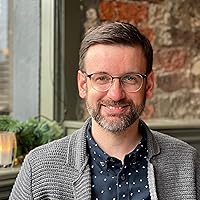
Patrick Laurie was born and brought up near Dalbeatie in Kirkcudbrightshire, Scotland. His blog, Working for grouse is a diary of conservation in hill farming.
As well as writing and farming, he is involved in a number of conservation projects on upland farms across Scotland and the North of England.
Farming is hard and relentless work even with modern machinery and techniques, to do it takes a certain amount of tenacity and a lot of sheer bloody-mindedness. It is part of the reason why a lot of people are choosing not to follow it as a career, even those that would be considered farming stock.
There are some though that cannot ignore that desire to work on the land. Patrick Laurie is one of those people. They pour their money into a small farm in his native Galloway, but rather than acquire modern breeds and the latest expensive equipment, he decides that he would rather get an older tractor and most importantly buy the Riggit Galloway cow, a hardy traditional breed, that is perfectly suited to this landscape.
He is one of the rare people wanting to move back onto the land; most deserted it years ago. The inevitable square plantations of commercial forest have sprung up, the centuries of tradition and sensitive land management have gone and the wildlife has suffered, in particular the curlew. These new Riggit Galloway’s need a completely different method of care compared to modern stock, and as Laurie learns about what they do and don’t need to survive, he discovers that these techniques could bring life back to the landscape.
Taking the land back to the old techniques of rotation and coupled with this and older species of cattle to make the land work as it used to, very quickly bring benefits. He restores an old mower to make hay as they did in the old days rather than take silage off the fields, this longer cropping help the curlews nest. He plants barley and rather than get a combine in to harvest it, it is cut and stooked (what a lovely word) in the old way.
Pain is a different thing under wide and rushing skies. Even in the bleakest moments of solitude, I draw a selfish glow from that kind of darkness. I hoard the prickle of sleet on my face and endure it, telling myself no one else would. I turn away from the warmth of sharing because now I see this place runs far deeper than play or simple sunshine.
It is a brutally honest book, he portrays farming in the cold light of day, the small successes and the brief moments of pleasure are set against the sheer amount of hard work it is just to stand still. It is a dangerous job too, he is not afraid to tell of near misses and the almost callous attitude you must have at times. What is very evident in this though is his deep, deep love of the landscape that he lives in. He is obsessed by curlews, those magical birds that have been disappearing for far to long and are now seriously threatened. I really liked his writing style, he is not nostalgic in any way, though he respects the old ways of working with not against the land. It is a book very much about the place, about Galloway, an often-ignored part of Scotland that has a beauty of its own without the dramatic hills of the highlands. Highly recommended.
Eugh I don't even know where to begin with this book. How it won awards is beyond me!
Ok, so the premise is the son of a farming family returns to his home ground, buys some land and takes up the farming torch. If only it were that simple!
This book repeatedly details fox hunting and the ripping apart of their bodies by dogs, there is reverence of "old-school" farmers who hate foxes, hate snakes and kill adders when they come across one! Or they pour environmentally destructive diesel over everything and burn it!!! Every other page is full of bloodshed, violence and seeming torture of nature, except curlews, which Laurie seems to have a particular hard-on for!
Laurie is full of contradiction. He wants biodiversity but appears nonplussed at the murder of natural predators, he lambasts the planting of pine forests for money but then uses his land for cattle which is equally as climate intensive. He bemoans misuse of the landscape but then states how he worked for a grouse farmer (biggest misuse of moorlands this country has allowed to perpetuate) killing up to 100 foxes a time (with regret!!!) Just do one Laurie!
Farming is tough. Yes, some old style farming is good for the land and should be encouraged. But decimation of wildlife, no. Hunting, no. Cruelty, no. Literary masturbation over where you live whilst moaning about how everyone else has it easier, just f**k off!!
Galloway may be the forgotten corner of Scotland, but third-generation cattle farmer Patrick Laurie can’t imagine living anywhere else. Yet his eyes are open to the contradictions of this landscape and how he makes a living from it. Modern farming practices, like cutting hay while ground-nesting birds are active, are incompatible with conservation. In this year-long nature diary, each month brings rewards as well as challenges as Laurie strives to manage the land in a manner beneficial to wildlife. I’ve read many women’s stories of infertility but none, I think, from a male perspective, so I found this aspect of his story refreshing, and sensitively addressed. I’m lucky enough to have visited Wigtown. You needn’t have been to Galloway in person, though, to appreciate this pensive account rich with the sense of place and balanced between solastalgia and practicality.
This in many ways is a book about what we miss right under our noses. Galloway is an often overlooked part of Scotland. Traditional methods are often an overlooked part of farming. Birds are an often over looked part of our landscape. Folklore and tales are often overlooked until they are gone and there is no one left to remember them. All of this is explored within Laurie’s book and his work over a year on the land. He shows the sheer determination, hard work and at times plain stubbornness needed. Really enjoyed reading this one.
I am not the greatest fan of taglines and quotes littering book covers (in consideration how odd Robert MacFarlane isn't on here as he seems to be quoted on everything these days) and I did think Lordy, James Rebanks "I love this book", was that the best you could come up with, before I started reading this. And now I've finished it, all Ive got to say is: I just loved this book =)
Interesting that Laurie says Galloway isn't on the Scottish tourist trail (I'd agree) but that no one goes there and the land isn't for the photos... well, it's certainly different to the Highlands, which is what everyone thinks of first when you say Scotland, but I love Galloway. Some of it is that it's not on the tourist trail, so it's wonderfully peaceful there, but it is beautiful. I've been up that way twice in recent years and intend to return. Of course, Wigtown, Scotland's book town being there helps - incidentally where I bought this book on an impulse, having never heard of it before.
Laurie grew up on a farm in Galloway, went away to uni, got a white collar job and after some time, he and his wife moved back down this way to start out on a farm, using their jobs to prop up the farm finances for the first few years. His aim was to get a Galloway herd going, and to try and farm in a kinder way to the environment, which as it turns out seems to involve not obsessing about high yield and getting everything done really quickly, but looking at the old methods. He also has a thing about curlews (I get that) and worries about how they are disappearing from Galloway. I hadn't realised the forestry was such a problem - there's me loving the Galloway forest park and thinking it had always been like that when I visit. So I've learned a lot about the land history of the place, and the history of the curlews, including a bit of local folklore connected to the birds.
He's not sugar coating anything here. Farming life is tough, especially in the winter months, and some of it is fighting a loosing battle. But this joy of the natural world is infectious. And there's also some great characters in the old timers he meets. Just loved old Sanny, their closest neighbour who bobs round regularly to help out with advice or heckling. And how he catches the curlew bug and parks off every morning on the way for the paper to watch the curlew chicks. Just a warm and fuzzy feeling. So sad at the end.
I could rattle on about everything I read in the book that I loved, but that would defeat the object of anyone reading this and wondering if they should read it - yes you should!
A brilliant read. Laurie lives what he writes. A farmer and native of Galloway who understands and values the old ways. Rhythm and practice developed over centuries that meld landscape, beast, and man in common purpose. The old ways did the job. Hard work of course. But life, death and renewal weren't driven by harmful practices that ultimately rip up the emotional connection that we have with the land and those who lived and worked on it.
Joyous When you are struggling to concentrate and you have a ‘busy brain’ pick up something gentle and kind that transports you to a place you love - Native did this for me . A few days in Galloway. Beautiful.
Beautiful writing about nature in this account of traditional farming in Scotland. I learned a lot about Galloway cattle, foxes, and especially curlews. 4.5 stars.
Magnificent book about nature, farming, animals, and life on the farm in Galloway. I love the honesty of the author and humanity that he brings in his sentences. Some parts are almost Buddhist and really made me think about life. ❤️
This was an enjoyable read in a very different way. You journey with the author as he wrestles with farming that cares for nature. A theme of curlews runs through which is interesting as they become symbolic for the impact of human intervention th destroys habitats. I mostly enjoyed the book.
Man starts a farm in his native Galloway, using old style methods partially in order to increase curlew (bird) habitat.
I liked it, but I question if cattle farming (I hesitate to call it ranching when it's in this volume and style) is restoration, as opposed to the tree farming that he dislikes. What is the built environment, and what is nature? It's difficult to say when human impact has changed the world so irreversibly.
It reminds me of my area of the world: we have large, wasteful irrigation canals, open to the sky. I'd like to see them capped and piped, but some say this would be detrimental to the wildlife that enjoy the water. It seems to be that the frogs and fish in the natural river would appreciate that water, as well, and this is a higher calling. So, Patrick's birds--they need the gently consumed fields that host his Galloway cattle, but what was there before the cattle? And are the fox that enjoy the non-native tree plantations less valuable than the birds? Both animals are in a built environment, and no mention was made of what was before the cows (perhaps 600+ years ago). So, what do we fight to protect?
The book ended rather on a flat note. I understand that the author is probably sad about the state of the world, and his family's fertility (parallel story of trying to conceive), but it didn't feel like an conclusion.
Don't let Nick Offerman's introduction put you off the book. Skip it if you prefer.
At the start I found myself disliking the author for his shooting, peat cutting, fox killing and apparent dislike of people he doesn’t consider ‘native’ (to Galloway). But his writing is excellent and evocative and I don’t only want to read views I agree with, I want to see inside other people’s dreams. And besides, it is the things we agree on that are important. Life should be lived in the moment, and things have value that are achieved through time and effort. He is fortunate to have those choices. It hard to know what is real and what is imagined, and I particularly like that quality.
Genoten van dit boek. Een categorie waar je wel van moet houden. Maar ik vind het heerlijk om het leven van boer (was daarvoor media man maar verlangde naar het zijn van een ouderwetse boer) te mogen volgen in een gebied in Schotland dat onbekend en onbegrepen is. Ook mooi om te zien hoe echt boeren zou moeten zijn maar wie vind daar in nog plezier in deze moderne tijd. Al waren er momenten dat het ook mij trok terwijl is een echt stadsmens ben. Spreek je dit aan dan moet je het zeker lezen.
He manages to so perfectly capture how it really feels to live in Galloway and how proud we are of where we live and the deep love for the land that we have. I love that he acknowledges the trouble that we have with young people leaving the area and old people coming in and buying properties as second homes.
High four, verging on top marks. Conservation-farming-memoir written in a direct and stylish way. Moving and searching questions about what's been lost, doesn't offer any pat solutions but finds its hope in attention and being.
Brimming with honesty and authenticity of the rigour of farm life, and often hallowing those many beautiful sense memories with something transcendent anyone who has lived it will recognise and rejoice in. A book to steep oneself in and slow down for.
I read this while in Galloway, and while travelling in the Forest Park intentionally took the slow route to see farms and cattle like Laurie describes. I had originally come across the book when it was shortlisted for the Wainwright Nature Prize in 2020. It is at its strength when dealing with farm life, and certainly recommended if you intend to visit the area and be aware of its cultural history. Personally though I wanted more than cows..I’m aware how my criticism may sound, it is after all a book about cows. But I wanted other nature, if which there isn’t much. For example, I’ve only recently read what May go on to be my favourite book of the year, Owls of the Eastern Ice: A Quest to Find and Save the World's Largest Owl, which is comprehensive about all of the nature in the area, as well as its characters and history, but the star of course, is the owl. From that Wainwright shortlist last year, my favourite was The Frayed Atlantic Edge: A Historian's Journey from Shetland to the Channel, should anyone be interested..
The style of this book differed from books I normally choose to read. For an ostensibly non-fiction book, the language was quite florid. That may capture and enchant some people but for me it was a bit off-putting. I felt the author was often trying to convey the emotions of a situation, rather than giving me interesting and useful information for me to take away. That's why I've rated 3 stars, but I can believe that it would be 5 stars for people with different taste. I took several messages from the book; about the changing landscape and ways of living in Galloway, about the fundamental relationship between human use of the landscape for agriculture/forestry/sport and wildlife populations; about the emotional and physical reality of small-scale farming in the climate and soil conditions found in Galloway. I was glad to have read it for presenting me with another personal perspective on those subjects. I admire the goals the author describes trying to achieve - taking over a small farm and managing it in a way to encourage breeding curlews (which involves slow-growing cattle and oat crops). I hope he is able to continue for years to come and see the effects of his efforts. I also hope that larger scale changes occur to help sustain the curlews. This book might help motivate that sort of change.
This book was a gorgeous read. Slow and gentle, it follows a year in a young man's life as he's learning the old ways of farming and raising Galloway cattle in Southern Scotland. Beautiful writing of a vanishing land and vanishing way of life. I loved it.
As I have an emotional connection to land that is just slightly further east, I found 'Native' relatable, and think it offers insight into the mindset of people; farmers, bound to areas and traditional activity through loyalty. Though few individuals have such heritage and are able to live in this splendid isolation, not all would want to, farm labour is gruelling, and the mental strain of the precariousness of this existence is apparent in the book.
With change not just in the air, but possibly afoot as Galloway has been proposed as the location for a new national park for Scotland, and the Scottish government have committed to creating a new national park, and there are no other candidate areas, farming may well soon be supplanted with tourism as the area's primary purpose. Though such a shift in land use might have some benefits, and efforts would be made to preserve anything picturesque or romantic for touristic appreciation – the old, stone, whitewashed cottages, the hedgerows, dykes and scrubland surrounding pastures, and unique wildlife, that feature on this cover, practicalities of living and working meaningfully in Galloway would be radically altered. Thus the book remains relevant five years on.
In 'Native' Patrick Laurie comes across as a thoughtful person. He's invested in Galloway, and recent blog posts on the current potential upheaval articulate the opposing standpoints and provide commentary on the process which could have such far reaching implications for the area, however he has currently slightly distanced himself to simply decrying the poverty of the debate.
It is indeed a nasty drawn-out debate, creating division locally, and I wish the government consultation process would be over, if it is all just a foregone conclusion. Galloway would adapt, and perhaps snapshots of old Galloway scenes would be preserved, static and stagnant, to be viewed through a campervan window. Belted Galloway cattle, if not Riggit, might become as internationally famous as Highland cattle!
I can appreciate the charms of different areas of Scotland. The more remote, bleak places can be the most beautiful, but it's one thing to pass through them, another to remain year round and eke out a living.
In Galloway, livelihood is threatened with an invasion of lifestyle, and it's not obvious the two can co-habit.
There are a number of reasons why I chose to read Patrick Laurie’s 2020 account of (sub-title) ‘Life In A Vanishing Landscape’. First, I’m a sucker for nostalgic natural history books. Second, fellow author (from the ‘other side’ of the Solway Firth – Cumbria) James Rebanks’ cover blurb ‘I love this book’ made reading it a no-brainer (I’ve read three Rebanks books on related subjects in the last few years). Third, Laurie’s homeland – Galloway in southern Scotland – has been the subject of three personal holidays in the past decade and I love the area (scenery, wildlife, people). Fourth, and potentially the most significant reason of all, the book cover (and, I’m pleased to say, its contents) features a picture of the wading bird, the curlew, and Laurie’s love for the fate of this rapidly disappearing natural gem comes through in spades in Native.
As with Rebanks, Lauries charts his family history in the Galloway area and his spells at university, then doing ‘odd jobs’ before embarking on the challenging ambition to establish his own (small) (primarily cattle) farming business. Laurie also gives us some intriguing history of the area – including the (bitter) rivalries with ‘Highlanders’ from the north of Scotland and the presence of Levellers in the area. There is also chapter and verse on Laurie’s attachments to his cattle and the double-edged sword effect of such attachment with the very nature (and inevitable fate) of being in the beef cattle business. My personal favourite theme, though, is that around the diminishing presence of the curlew and the birds’ struggle to survive the extreme weather, the environmental effect of changing farming practices and potential predation (corvids and foxes, predominantly). Laurie’s love-hate relationship with foxes is a particular highlight.
Comparing Laurie’s writing style with Rebanks, the former has a greater (more literary) talent for the abstract and poetic, whilst Rebanks’ prose is probably more readable. Both authors have, though, written brilliantly evocative accounts of the natural world.
Een jaar over het oude en moderne boerenleven en de impact op het landschap, waarvan ik geen enkel benul heb/had. SBS in volle actie. Helaas extreem identitair. Wij=Schotten van Galloway, wij boeren, wij (klein)zonen van boeren, wij hoeders van Galloways, van galloway riggits, die nog ons eigen materiaal repareren, die _ons_ land niet afkomen. Zij=andere Schotten, houtvesters, ecologen, industriële boeren, Europese koeien, toeristen, vossen. En extreem emotioneel, vooral over die wulp. Wat op den duur toch een averechts effect heeft. #Schotland1
*Harde breuken in landschap: - Mond-en-klauwzeer 2001: kuddes verbrand, doodsteek voor veel bedrijven, zonder grote grazers veranderde/t landschap en dus ook fauna fundamenteel. - industriële bosbouw: makkelijker om nieuwe functie voor heuvels te vinden(bosbouw), dan oude evenwicht te herstellen. - specialisatie en monocultuur verving de wisselbouw. - zware machines en schaalvergroting ==>> dat verandert ecosystemen, biodiversiteit, gewoontes, mensenlevens. ==>> Kennis over landbouw die niet gebruikt wordt, gaat snel verloren…
* Er is weinig aandacht voor de diversiteit van het (runds)vlees. Nochtans heel grote smaakverschillen tussen rassen en leeftijden. De commerciële (‘Europese’) rassen groeien als brandnetels voor snelle slacht.
“We hebben ons duizenden jaren tegoed kunnen doen aan wilde Schotse sneeuwhoenders en zal en nu wordt ons verteld dat we zuinig moeten zijn op wat we hebben en dat de natuur kwetsbaar is. Dat klopt: onze zalm is verdwenen en ook ons wild verdwijnt, maar we weten niet wat we van die vogelkijkers en ecologen moeten denken. Ze komen van elders en meestal zeggen ze dat we het verkeerd doen.” (23)
SBS! “Het is alsof mijn generatie een feest bezoekt dat bijna afgelopen is, en het wordt steeds moeilijker om ons de vogels te herinneren zoals ze waren in tijden van overvloed.” (24)
* Ecologen <> de rest Komst van ecologen verpieterde de magie en verhalen over het dierenrijk die o.a. Bij boeren wel bestond: “Het wordt steeds moeilijker om volksverhalen te verzamelen, zeker nu er logische, uniforme manieren zijn om na te denken over de natuur.
“Ik ben te laat om de oude wereld te kennen en te vroeg om hem te kunnen vergeten. Ik ben tussen wal en schip beland, getekend door de verdwijning van weidse heuvels en eenzame, roepende vogels. (61)
“Er zijn mensen die hier naartoe komen omdat ze onze nieuwe bossen prachtig vinden. Soms wou ik dat ik dat ook kon. Mijn leven zou makkelijker zijn als ik deze plek kon accepteren zoals hij nu is. Ik zou niets missen en misschien zou ik zelfs van de nieuwe bossen gaan houden. In plaats daarvan zak ik steeds dieper weg. Ik treed buiten de gebaande paden en kwel mezelf met de fluisterstemmen van vroeger. Elk jaar wordt het moeilijker om me verbonden te blijven voelen met de wereld waar ik van hou. De bossen zijn gegroeid, en wat vroeger dichtbij was, is nu ver weg.” (61)
* “Niemand heeft er ooit aan gedacht de kennis die je nodig hebt om met wisselbouw te werken, op te schrijven.” (68)
Aaahhhh...Bonnie Galloway! Young farmer and conservationist Patrick Laurie writes about his life on a working farm. He and his wife saved up to buy a family farm and couldn't wait to purchase their first Galloway heifer followed by pigs. Thanks to farmers like him heritage livestock breeds are making a resurgence! He realistically details the tremendous positives and pitfalls of farm life from freedom, great health and beautiful scenery to sad animal deaths and isolation. We all have personal issues no matter where we live and Laurie details his challenges. His book is divided into seasonal/monthly sections.
Amongst the things I like best about Laurie's writing are his frankness and gorgeous descriptions. His conversational style is truly lovely and his passion sings in his words. Though not all the anecdotes are joyful, they are hopeful and inspirational. I have always respected farmers, especially those who choose to make a difference for their families on smaller sustainable farms.
Along with grain and livestock farming, Laurie writes about weather, farm dangers, Dalbeattie granite, (de)forestation, foxes, yorlins, wild Galloway cattle herds and haying. His passion is observing curlews. As I grew up on a farm so much is relatable. Our weather is extreme (from -40 to +35C) with snow on the ground for six months a year. so I understand weather challenges. I am also familiar with Galloway including Dalbeattie so can easily picture the topography and immerse myself in the words.
Those who have lived off the land and/or on a farm or simply enjoy dreaming about it, this book should not be missed.
My sincere thank you to Catapult and NetGalley for the privilege of reading this fascinating and enriching book.
I've been raked by the loss of old things ever since I first looked around me. As an adult, I was stifled by fears for the future and my own family. Then farming pressed me to move and think in slow motion, teasing me with reminders of my tiny unimportance. I had slowed down my life to keep pace with old cattle which don't look back or forward and breathe only the latest turn of the wind.
Nagged by nostalgia, Patrick Laurie decides to start farming on a blister of Dalbeattie, a wet, draining place in a south-western corner of Scotland. Relying on another daytime job, it's a conservation project, a desire to be part of an old tradition. The central motif in this book is the sound of the curlew, the sound of Laurie's childhood, an ever-present fact of life which is now however in decline.
Laurie stresses the importance of local 'native tales' or 'myths' that are equally disappearing; he interweaves them in his book, along with many references to the Celtic calendar or Scottish history. Unfortunately 80% of this book consists of agricultural choices and clumsy first experiences, which don't really make up for an exciting (or inspiring) reading.
As for the ecological point of view: Laurie is quick to criticize the replacement of old hill grasses by commercial softwood forests or windmill farms, but he has some pretty dire habits of his own. He burns peat as winter's fuel, kills hundreds of foxes, still resorts to the plough, and can't help to think about his beautiful Galloway Riggit cattle in terms of 'future carcasses'. Maybe some old ways, traditions and paradigms rightfully belong to the past.
Galloway: Life in a Vanishing Landscape by Patrick Laurie is a stunning book that is part memoir part nature journal that really took me, and enveloped me, to a stunning location in Southwest area of Scotland.
This was such a unique, memorable, and wonderful journey that I feel so fortunate to have been able to be a part of. The author’s ability to transcend time and location and deposit me directly into the rustic and rural landscapes of his farm and life is beyond impressive. His descriptions of his professional and personal life, struggles, history, hopes, dreams, fears and day to day happenings was so beautiful.
Not only did I learn so much more about the Galloway cattle, but also what it takes to survive and thrive in this challenging profession. I was also able to see the rewards that are so duly given with all the effort and work involved.
The author balanced that nicely with natural observations, personal reflections and inclusions, so that I really felt as if I was there and included.
He has a real talent, and quite a way with words.
I highly recommend this to anyone that loves to read about nature, history, farming, and memoirs and Scotland in general.
A truly stunning read.
5/5 stars
Thank you NG and Counterpoint for this wonderful arc and in return I am submitting my unbiased and voluntary review and opinion.
I am posting this review to my GR and Bookbub accounts immediately and will post it to my Amazon, Instagram, and B&N accounts upon publication on 11/16/21.
A well written book. Sometimes poetic. You get a feeling of how harsh, how tough it is to live and farm in Galloway in a respectfull way, in harmony with nature.
If you are realistic: nowadays it’s impossible to make a living the way the farmer/writer of this book tries to do. These days seem to have gone forever… But it is courageous and idealistic to even try to do it in a balanced way with nature.
What’s written in this book. It’s a thousand miles away from modern farming allthough we know that modern farming had reached its limits. Pollution of water and land. In my homeland, the Netherlands, there are great problems in agriculture. The industrial way of farming is a very big problem. Animals suffer, can’t grow up well and in a respectfull natural way. And then. Too much pesticides, too much natural manure and fertilitzer in the land. Nature suffers, low and high waterlevels cause damage. Quality of water in locks and streams is bad. Not enough water in summer, too much water at times (floodings). Birds and plants disappear. Less and less biodiversity. The beloved curlews in the book (like a symbol for nature) can hardly live in Holland too. It had become a rare bird. Like in Galloway.
So it is a good lesson, reading this book, for everyone who loves nature, who loves landscapes like Galloway and all the attempts to live there and make a living with respect to nature. Laurie learns us that modern farming presents us with big dilemma’s. But he also shows us his love for nature. Maybe that’s what we need: love and respect for nature and trying to find a way or a balance in the way we produce food. But it has a price….
Real mixed feelings about this book. The author does say at the end that it is to some extent a work of fiction which left me a little disappointed. The author is a young man, born in Dumfries and Galloway to a farming family. His father quit farming to become a solicitor and Laurie moved away for his education and early career as a writer. Married now, he decides to return to a part of the land which was farmed by previous generations of the family and set about trying to bring back disappeared or disappearing ways of life and wildlife. With this in mind he decides that he farm Galloway cattle, a small and slow-growing breed. I believe his blog on his endeavours has been running for many years. This book feels at points like an elegy for what is lost and left me feeling somewhat despairing. The author maybe has had time to come to terms with the losses and identity priorities. The writing was poetic and conjured up the wild (and tamed) landscapes of the area. I did find it a little confusing in terms of chronology though, and really struggled when Laurie talked about killing animals, whether that be foxes, pigs or cows. There was a lot of dying and I appreciate that that's the way nature works, but nature is so out of kilter it sometimes felt wrong. A surprisingly emotional and distressing read, but a powerful one.
This book grew on me as it progressed. At first I thought I was going to feel frustrated by the musings of a self-absorbed writer seeking to discover himself in an artificially created rural paradise. Whilst there is an overwhelming emphasis on Laurie's personal experience the sense of 'journey' or 'finding myself', although present, is very much under the surface.
This is a book about belonging and place. It is a story of roots; the power of old roots and the process of making new roots. At a time when everything about a rural way of life is up for grabs, Laurie is clear eyed about the mistakes of the past and unsentimental about the problems places like Galloway, and the people who work its land, will face in the coming decades.
Native cattle are more valued now than they have been for many years and, who knows, the Riggits may follow in the hoofprints of their Belted cousins in years to come. I hope they do.
Laurie evokes that cussed resilience which every farmer, and particularly every small farmer, meeds, as he writes, "Even in the pits of grim bother, I find comfort in my unnatural loyalty." Profound.
It also has the best Acknowledgements of any book I've read. It caused me to bring to mind so many faces of those whose lives were a part of my rural beginnings.
Gosh I really enjoyed this. Heard about it from a post by Andrew Peterson in which he shared books he read for his newest book “God of the Garden”.
Patrick Laurie is a Scottish Wendell Berry of sorts and this book was filled with magical, almost lyrical prose resplendent with southern Scotland’s costal flora, fauna, and fowl. Namely Scotland’s Galloway Riggit cattle and the Curlew. Hearing Laurie’s story of being raised on a generational cattle farm, return home after university and begin his own cattle and mixed farming homestead was a balm. His obsession for the Curlew’s song made me long to hear it for myself, and thanks to YouTube, I felt the magic at the sound.
There’s so much simplicity and heart and care for creation expressed within these pages. The way he explains the erosion of the population of the local birds (pun intended) is enough to make you want to book a ticket to Galloway and sign up for Greenpeace.
The metaphors for pastoral ministry were numerous and I just loved this farmers love for his land and his animals and the old ways of caring for and stewarding what little plot of land we have.
Love the place you’re in; love the ones you’ve been given.