Jump to ratings and reviews
Rate this book

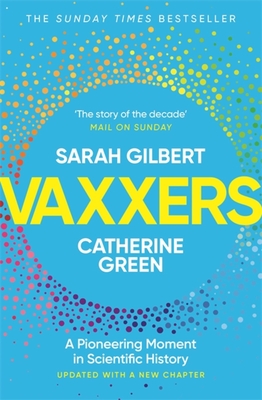
Vaxxers: A Pioneering Moment in Scientific History

Rate this book
Chosen as a Book of the Year 2021 by the Financial Times, Sunday Times, Daily Mail, Prospect, Guardian and The Times.

'Vaxxers is so good that the book will be read for long after the pandemic is over'
Financial Times

'One of the most epic and pioneering moments in human history'
Sir Jeremy Farrar

__________


The bestselling inside story of a historic moment for science and for humanity.

On 1 January 2020, Professor Sarah Gilbert read an article about four people in China with an illness of unknown cause. Within two weeks, she and her team had designed a new vaccine that would go on to save millions of lives from Covid-19.

Capturing a landmark moment, Sarah Gilbert and Catherine Green reveal their story of making the pioneering Oxford AstraZeneca vaccine and fighting a pandemic as ordinary people in extraordinary circumstances. They separate fact from fiction, they explain how they made their highly effective vaccine in record time with the eyes of the world watching, and they give us hope for the future.

352 pages, Paperback

First published July 8, 2021

315 people are currently reading
2391 people want to read

About the author

Sarah Gilbert

50 books

Ratings & Reviews

What do you think?
Rate this book

Friends & Following

Create a free account to discover what your friends think of this book!

Community Reviews

5 stars
1,133 (49%)
4 stars
859 (37%)
3 stars
245 (10%)
2 stars
30 (1%)
1 star
11 (<1%)
Displaying 1 - 30 of 275 reviews
Profile Image for K.J. Charles.
Author 65 books12.1k followers
Read
June 8, 2022
An account of the making of the AstraZeneca Covid vaccine, which explains exactly how they did it so fast. It's told in a sensible, clear, scientific way and I had to stop to cry a few times just because of the memories. Exactly what popular science is about. (One of the authors, Sarah Gilbert, was the one given a spontaneous standing ovation at Wimbledon. That isn't mentioned in the book but I had to go watch the video again.)

Get it in paperback and you can use it to smack anti vaxxers around the head.
Profile Image for Ylva.
Author 2 books11 followers
July 28, 2021
Wish I could recommend this book to everyone I’ve ever met who has expressed doubts about how vaccines are made, what’s in them, whether the development process is being rushed or safety is compromised, whether they give you all kinds of strange adverse reactions, or who has simply read the wrong information on the wrong website. An impressive, scientifically grounded and yet readily understandable account of an enormous feat.
Profile Image for Geevee.
450 reviews338 followers
July 10, 2022
Vaxxers, written by two of the lead members of the (large) team who brought the Oxford-Astra Zeneca Covid-19 vaccine through design, development, trial, testing & verification and then production, is very readable.

The chapters, written - with the help of professional writer/editor Deborah Crewe - either by Sarah Gilbert or Catherine Green, take us through the first murmurings of the Covid-19 story to the release of the vaccine for public use. The information is well-presented and clear in both the what, how, why and when. There are many scientific terms, including many around vaccines and how they are developed and produced, but for the lay person like me, it is explained very well; especially when analogies such as baking bread for example are used.

Like many I suspect, my knowledge of vaccines and the development, design and how they are tested, was less than basic. I now have a much better understanding of the approach, the work, the ingredients, testing and certification and steps, including various terms used to describe types of vaccines and how they are designed. I also have even more trust - and my trust levels were high - in how safe these are based on the steps involved and the way these were explained by Sarah and Cath.

Aside from the vaccine and science bits, we get a good insight into how the Oxford team work, including pre-Covid day jobs, and how they as people felt, functioned, worried and stressed about their quest to develop the vaccine. There are some interesting comments on home life, relations with the media and how they are constantly seeking funding for their (day-to-day) programmes.

Note it is not "to find" but develop a vaccine as existing ingredients, processes, protocols and tests are all used. What they did do, aside from create the vaccine with the right, safe and tolerant ingredients, was to speed up - through properly measured approaches and often tasking in parallel as opposed to standard series - processes, documentation reviews and sign-offs; similar to some extend to how one increases the velocity of any project by adapting aspects that deliver improved or increased output by removing delay or dwell without compromising quality.

I enjoyed the book and its information and insight given by both Sarah and Cath that I now have a better understanding of their work on aspects such as Malaria, Ebola and of course Covid. I am also thankful that we have very clever people who are able to create and deliver the Oxford-Astra Zeneca and other vaccines by groups such as Moderna, Johnson & Johnson and Pfizer using techniques and platform ingredients that are safe and open to review.

Profile Image for Boy Blue.
621 reviews107 followers
September 24, 2025
An absolute must-read. Especially if like this reader you had the AstraZeneca vaccine. How often do you get to read a book about the vaccine that has recently been injected into your arm? This book should have easily won best science book of the year and it should also be given to every person when they get their vaccine, every anti-vaxxer, and just everyone really.


What I found most scary was how misinformed I was, despite my vigilance. I only use what I believe to be reputable news sources, ABC (Australian), The Guardian, BBC, NY Times etc, yet I was still infected by a lot of false reporting and fallacious news. This book set me straight.


Here are the key things I learnt, all of which I found fascinating.


The Oxford AstraZeneca vaccine is a "platform technology". That is to say that these brilliant scientists at Oxford had already created an adenovirus vector to carry anything they may want to transmit. They had successfully used this technology to make a MERS vaccine that was already in use. The Oxford AZ vaccine or ChAdOx1-S recombinant vaccine is a Recombinant, replication deficient chimpanzee adenovirus vector. I'll unpack it for you just as the authors do.

Recombinant: means that the DNA sequence for the Covid-19 spike protein was made in a lab. That is they looked at the 28,000 letters of the Covid-19 virus genetic code and identified the 3,819 letters that encode the spike protein (this was made easier by having already done it on MERS, so they knew what they were looking for). Once the sequence had been identified they recreated it on a piece of computer software and then did a process called codon optimisation. That process involves changing certain letter sequences to correlatives that are more efficient or better recognised by the human body. For example the amino acid arginine is more likely to be AGG than CGT and so you would put the former into the sequence. Once they had their spike protein design complete they sent it off to a lab to be created.

Replication Deficient: The virus cannot replicate once injected. So however many viral particles (in this case 50 billion are in the vaccine) that's how many you will be getting.

Chimpanzee Adenovirus: Bet you didn't know that! They used an adenovirus common in chimpanzees but not present in humans. Why? Well if they use an adenovirus common in humans, the virus would be wiped out before the body had a chance to make an immune response to the spike protein it is carrying. So we use a weakened chimpanzee one to allow the body a chance to recognise the spike protein and start making antibodies.

Vector: The adenovirus was used as a vector to carry the covid-19 spike protein.


I also learnt that the two dose method was in some ways a fortuitous discovery. They had some of the trial vaccine made in a lab in Italy and they had a difference in concentration reading from that batch. They decided to half the dose from the Italian batch just to be safe and then got approval to do a second full strength shot for participants who had received the half dose. Hence the confusing efficacy study results which seemingly baffled the media and caused all sorts of drama. The trials resulted in 70% total efficacy, 62% two standard doses, 90% half dose then standard dose. Which leads me to one of my few criticisms in the book, despite saying they'd address it, neither author explains why the half dose and then full dose is the most effective.


Further learning included finding out that the control group in the UK trials received a meningitis vaccine because it created symptoms that were most similar to the covid-19 vaccine.


From an Australian perspective the biggest controversy around the AstraZeneca vaccine was the blood clotting. It dominated the news here for several months and caused a lot of hesitancy in the population. The authors don't spend a huge amount of time addressing this and don't explain how the blood clotting happens. They do however calmly compare the risk to other behaviour, for example you have more chance of blood clotting from the contraceptive pill than the AstraZeneca vaccine. This reader got his Astro-Zucchinis jab as soon as he was able to, which resulted in some of my friends calling me a gunslinger (a title I proudly bore). The blood clotting issue highlighted how the Australian media often choose to stir up controversy without thinking of the social impact.


I also learnt that the whole mercury in the vaccine fake news stems from decades ago when flu vaccines sometimes had thiomersal a mercury-based preservative in them. Thiomersal was used in multi-dose vials to kill any bacteria that found their way into the vial. The amount of mercury in those vaccines was so tiny and quickly excreted by the body yet it has caused much hesitancy around vaccines. None of the Covid-19 vaccines have thiomersal or any mercury in them.


HEK293. The Oxford AstraZeneca vaccine is grown in Human Embryonic Kidney cells taken from a single foetus aborted in the Netherlands in the 1970's. Cue Catholic outrage. But don't worry the Pope's given his tick of approval. However, it warms the cockles of my heart to think that anti-abortion activists around the world may have life-saving vaccine in them that was created in a rich nutrient bath of aborted foetal cells. The vaccine also has a tiny bit of alcohol in it .002mg per dose, but again don't worry because the British Islamic Medical Foundation have declared it has a negligible effect, as the authors point out you can get more drunk off bread.


Also, the Appendices are probably the most readable appendices I've ever encountered in a book. There's even the full list of ingredients of the Oxford AstraZeneca vaccine with explanations in Appendix C.


Now my only other gripe with this book was Dr Green's and Professor Gilbert's daily grumbles. It's their book and they kind of saved the world, so they can do whatever they want but I just wanted more science and more info that I couldn't get anywhere else. I'm sure many will find their distinctly British humour and quotidian chores a strong human touch to the story but I would have preferred a little more science. Their complaints about the difficulties of attaining funding are valid and exceptionally important but completely boring next to the life saving science going on (and yes I know that science needs to be funded). Please don't let my criticisms dissuade you because this book as I've already said is an absolute must-read.


Finally, the average vaccine takes ten years to be created, the world record before Covid-19 was 4 for the mumps vaccine. These two superstars and their team of superheroes did it in a year.

Read this book!
Profile Image for BTB.
69 reviews3 followers
August 10, 2021
An absolutely fascinating read! I don’t have a science brain at all, but everything is explained so well and clearly, with some wit and good humour thrown in too.
Profile Image for Rebecca.
249 reviews11 followers
July 15, 2021
This is a fascinating and important read. Written incredibly well, despite being a story of two experiences, it is easily understandable & at times Britishly funny. It is a human story as well as a perspective we should all know & understand. The book also ticks all of the important science reads boxes of: good notes, foot notes and appendices.
Profile Image for themariestmarie.
30 reviews3 followers
December 17, 2022
Two unbelievably great scientists stand among the ones who passionately build a better future for all of us.
A phenomenally written and fascinating book about the “internal kitchen” of creating vaccines. Highly recommend reading every scientist, medical doctor, and buddy that loves popular science content.
Profile Image for Elliott Moore.
156 reviews8 followers
September 22, 2021
Not every day that you get to read an entire book about the novel vaccine that was administered into your arm 6 months earlier.

Really down to earth style written almost entirely for the layman (both a pro and a con) that was very easy to follow. Each account from Sarah and Catherine had throwbacks to experiences many of us witnessed during 2020 that feel somewhat nostalgic, but made the entire book feel relatable (even if most of us were just sitting in front of Netflix while these 2 saved the world).

The dual account nature of it is my main criticism, as it doesn't quite feel like one cohesive book. It's perfectly pleasant but doesn't make for an entirely smooth reading experience. The only other criticism I have would be the lack of delta variant inclusion, but that's more due to timing than anything else - I would have just been interested to hear why it has taken 9+ months for a variant booster.

From a technical point of view, this book put my knowledge of vaccine development, manufacturing and trialing to shame, but I can confidently say I know slightly more about it now than the average angry twitter user.

They have helpfully added more technical detail on vaccine types, the different manufacturing processes, and the ingredients in the Oxford/AZ vaccine in the appendices at the back of the book. It almost feels like this should be required reading considering the amount of public discourse regarding vaccine ingredients and safety etc.

Great quote from Catherine towards the end:
"As we face into the future, and turn our attention back to climate change, poverty, war, and other intractable problems that never went away, the pandemic should act as a timely reminder of the global nature of both our biggest challenges and our most powerful solutions."
Profile Image for Desmond Brown.
141 reviews4 followers
September 25, 2021
An enjoyable first-hand account of the development of the Oxford/Astra-Zeneca Covid vaccine, as told by two of the principal researchers. I have a medical background and have been very interested in the development of the Covid vaccines, but I still learned a great deal from this book. Some of the most valuable lessons are: 1) The people who develop vaccines are real, normal people like you and me, and also very smart and hardworking. They take their work and its consequences seriously. 2) These people have been preparing for a pandemic like Covid, and it is partly the preparatory work they have been doing to create "vaccine platforms" that made the development of the Covid vaccine relatively smooth and very quick. 3) The other reason that they were able to develop the vaccine so quickly is NOT that they cut corners in any of the steps, but simply that they had the funding to take multiple steps in parallel (at the same time) rather than sequentially (waiting for one step to be finished before starting the next step.)

This book should be read by everyone who thinks the vaccine was rushed, or that no one knows what goes into a vaccine, or that vaccines are part of a secret plot of some sort. George Soros and Bill Gates are nowhere to be found in this book, just two women bicycling to their labs and a lot of other hardworking people making great personal sacrifices to create a vaccine and save the lives of millions of people around the world.
Profile Image for David Robert Bloomer.
167 reviews1 follower
September 27, 2021
Repetitive

Sorry but I thought this book would be an insightful read. I was wrong. You get the idea of what's going on quite early in the book and then it just repeats it. That's it. Read the 1st hundred pages and you've read the book in essence.
Profile Image for Honey.
498 reviews19 followers
July 17, 2022
One of the better books surrounding the pandemic, and it really is an incredible tale of two women and teams fighting for the greater good. The science is fascinating and very well explained, but also accessible and easy to understand. Overall, insightful, factual, and actually quite endearing as the authors often inject personal anecdotes that make them relatable.
Profile Image for Ben.
969 reviews117 followers
September 30, 2021
I found fascinating the details about vaccine production, and also how the authors' research enlaced with their personal lives. Unfortunately, especially in the second half the book began to feel rather dumbed down and repetitive—particularly the pleas for funding, and defense of science. Perhaps that is understandable in the context of vaccine hesitancy and vaccine politicization. But it seemed I wasn't in the target audience. I wanted more details, not pablum.

> And not just round the clock but against the clock too: samples had to be processed within four hours or the cells would start to die and the tests would be void. People were working in the lab until two or three in the morning, and up to ten days back-to-back. Two couples made donations for us to have healthy meals delivered to the site every day for months. It made us feel noticed and supported and more importantly it stopped us feeling hungry. The catering facilities were shut, and we were all running out of change for the vending machines, and hungry people make mistakes.

> He suggested that if we only did half of the toxicology study, in either males or females, we would only use half of the remaining vaccine. We would then have enough vaccine to do a phase I trial in whatever sex of humans the toxicology study had been done in. It was not something we would normally propose but it would untie the knot. We were, however, unable to come to an agreement so the clinical trial was never carried out
Profile Image for Vasanthi Hariharan.
45 reviews2 followers
September 10, 2022
My first thought after reading this was "I need to read more books like this."

Sarah Gilbert and Catherine Green, with their individual chapters, explain their part in the preparation of a vaccine for a virus that changed our lives in more ways than I can count. The details of the technology employed and the process involved in vaccine preparation (which were outlined with helpful explanations) demonstrated that the world was in fact not in a standstill (as it felt to me) in 2020; it is a literal testament to human effort and cooperation.
This is a must read for everyone.

Wrapping your head around the science may require some time if it's been a while since high school chemistry and biology, like me; the authors understand that, and provide analogies and repetitions to help the reader follow the process. They also share their struggles, personally and professionally, to ground the story to the unfolding of events, from the start to the pandemic to the false ends. The timelines did give me pause because it would go back and forth, between Gilbert and Green, but turning back a few pages to resolve my confusion wasn't a huge problem.

I appreciated the window into the geopolitics of vaccine development and dissemination, the history and myths fueling vaccine mistrust, the issues in academia, and the representation of women of science (in general and in media), woven into the narrative. The last point was addressed specifically by Green [in a chapter titled Vogue] and I'll always remember this line (though it is definitely not my only takeaway from this book, but an important one):

And clearly there is still some work to do on the public perception of women in public roles. It is striking that the male scientists who are equal parts of this project tend not to be introduced in terms like 'Irish brunette mother of two' (Tess), 'serious red-headed mother to triplets' (Sarah) or 'not your stereotypical Oxford boffin' (me). I'm pretty sure Andy has never been described as 'male scientist Andy Pollard'. For the record, Andy's hair is grey, Adrian's is strawberry blonde and Sandy is a brunette.
Profile Image for Tom McCluskey.
67 reviews1 follower
February 4, 2022
This is an excellent insider view into how a small team working tirelessly over a year created something which has saved an immeasurable amount of lives, people from suffering with Illness and money.

The main point of vaxxers, I believe, is to assess and judge where you get your information from and do not take anything at face value.

I would recommend this book to Lucy as it is just brill, it is co-authored by the two scientists pivotal to the vaccine’s creation and manufacture. It gives an amazing insight into how the processes involved in making a vaccine were pre pandemic, how they are now, and how they could be improved.
Profile Image for Keith Weller.
209 reviews3 followers
July 24, 2021
A great book not something I would normally read I did not think to be honest I would understand but the book was written in way that you could understand. The work the Oxford team put in was fantastic despite all the problems from Boris and trump. Anyone who has had the Covid jab should read this book just to see the work and what they all gave up to give us back our way of life
Profile Image for Jonathan Downing.
262 reviews
March 27, 2024
Manages to preserve brilliant insights into the process of manufacturing an adenoviral vector vaccine in the middle of a pandemic while being accessible, friendly and humorous. I learned a heap and realised there were a couple of areas where I'd assumed things about the process being 'rushed' that were just utterly wrong. Worth a read if you're sceptical of how they managed to develop a vaccine in less than a year :D
Profile Image for Andrew.
57 reviews
November 2, 2023
Only took me *looks at watch* nearly two years to finish this, after a major pause. Haha. It's been sitting on my bedside all this time. Weird reading about the pandemic, remembering some of the crazy things that happened, especially around misinformation and poor knowledge of science in the media.
26 reviews
July 20, 2021
It was so inspiring to read what these wonderful scientists did to create a vaccine for Covid-19. Their dedication with the teams and those who supported them has been woven into the story of the making of this vaccine. Some of the technical details were totally beyond me but luckily the it did not detract from the overall story. A must read.
Profile Image for Faisal Chairul.
264 reviews16 followers
July 1, 2023
Seselesainya baca buku Moonshot: Inside Pfizer's Nine-Month Race to Make the Impossible Possible, rasanya saya akan menyesal kalau belum mengulas buku sejenis yang jauh lebih bagus dari buku tersebut. Buku ini, yang juga ditulis oleh pelaku langsung, membahas vaksin Oxford-AstraZeneca, berbeda dengan buku di atas yang membahas vaksin Pfizer/BioNTech.

Buku ini membahas hal-hal teknis dan non-teknis seputar vaksin Oxford-AstraZeneca dengan sangat jelas dan terstruktur. Pembaca umum tidak perlu khawatir dengan pembahasan dari sisi sains, karena selain dipaparkan dengan bahasa yang mudah dimengerti, juga seringkali disertai dengan anekdot untuk memudahkan pembaca dalam memahaminya. Berbentuk seperti jurnal, kita diajak berselancar ke dalam ketegangan demi ketegangan yang dialami oleh masing-masing penulis, Prof. Sarah Gilbert dan Dr. Catherine Green, dalam proses pengembangan vaksin.

Vaksin Oxford-AstraZeneca dikembangkan oleh Universitas Oxford dan kemudian diproduksi massal dan didistribusikan atas kerjasama dengan perusahaan biofarmasi, AstraZeneca. Oleh karena vaksin ini dikembangkan oleh sebuah laboratorium riset di dalam sebuah universitas, pembaca juga disuguhkan proses demi proses yang dihadapinya, tidak hanya hal-hal teknis seperti penelitian di laboratorium, tetapi juga hal-hal non-teknis yang tidak kalah substantif seperti pengajuan hibah. Penolakan, suasana "harap-harap cemas", kebahagiaan, mewarnai proses-proses tersebut.

Kecepatan yang disertai dengan efektivitas tinggi dalam pengembangan vaksin tidak mungkin tidak membuat publik tidak bertanya-tanya. Kedua penulis menjelaskan dengan sangat jelas tiga poin utama yang membuat vaksin yang dalam keadaan normal membutuhkan waktu bertahun-tahun untuk dikembangkan namun dalam keadaan darurat pandemi bisa terwujud dalam hitungan bulan. Di antaranya adalah "readiness", skema pembiayaan yang sangat mendukung, dan pekerjaan yang dilakukan secara paralel alih-alih selangkah demi selangkah.

Selain itu, kedua penulis juga menepis keraguan-keraguan yang muncul, baik itu vaksin secara umum maupun vaksin Oxford-AstraZeneca secara khusus, baik yang tidak memiliki basis apapun maupun yang memiliki basis tertentu.
Profile Image for Andy Lopata.
Author 6 books28 followers
July 25, 2021
What's in the vaccine?

How did they get it completed and ready so quickly?

Why did Germany ban it for over-65s?

This book is not just timely, it's also superb. Cleverly written, well-explained to non-scientists like me without dumbing down, it's a very human insight into the work of the team behind the Oxford AZ Covid vaccine and its impact on their lives.

All of the vaccine-hesitant questions, such as those above, are comprehensively answered in a way that makes perfect sense. The book provides a fascinating peek behind the scenes to the response to a series of challenges unprecedented in our lifetimes.

It's also a great book to role model the role of women in science as well as a manifesto for us to take preventative medicine far more seriously and fund it more effectively.

Please read this book and then tell others to do so. Particularly anyone who hasn't accepted the vaccine and who still has questions.
Profile Image for Shubham Garg.
1 review
December 17, 2021
This is one of the books which should be read by everyone in such uncertain times. It not only provides great insight about the Vaccine development, production and distribution but also strengthen the confidence and trust in these vaccines. Like it was written in book, it's not only about the design, production and distribution of the vaccines but about the acceptance of them. We could only defeat the pandemic faster if we have cent percent acceptance in them. I am so happy that I got the opportunity to read this book. I would strongly suggest you guys to go out and please read this book. This book will bust the myths we have about vaccines- Is vaccine safe? Is the process rushed while designing and creating them? Generally creating novel vaccines takes decades and howcome this vaccine is released in just a year?

Profile Image for Chris.
53 reviews1 follower
August 14, 2021
A must read account from two of the brilliant women who headed up the Oxford University team that delivered the COVID-19 vaccine that we all refer to as “Astra Zenica. For anyone who’d like to know about the behind the scenes work that needed to happen to deliver this vaccine…this book is for you. A factual, no-nonsence account of what it took to design and deliver this vaccine, during a global pandemic when social media misinformation was running hot.
651 reviews8 followers
October 23, 2021
With the coronavirus pandemic in 2020 and 2021, there was talk that the only way it could be beaten was with a widely available vaccine, but no vaccine had ever been created so quickly. But less than a year after the pandemic started, a vaccine was in testing and it was launched to a wider public within roughly a year of coronavirus ever becoming newsworthy. This brought about a rise in vaccine deniers, who disputed that we could never know what was in it, that it had been rushed and corners been cut and those who were against vaccines anyway wouldn’t take it.

“Vaxxers: the Inside Story of the Oxford Vaccine and the Race Against the Virus” is a book designed to take away much of the fake news and urban mythology around one of the coronavirus vaccines, that produced by Oxford University and distributed widely by AstraZeneca. Written by two of the major figures behind the vaccine, Professor Sarah Gilbert and Dr. Catherine Green, who were working on other vaccines and were able to quickly shift their time and experience into researching, developing and testing a new vaccine in a shorter space of time than usual.

The book is written with each author taking a chapter apiece and alternating between the two, talking about their own involvement in vaccine development, both before the pandemic and against COVID-19 specifically, as well as those of their colleagues and the teams around them. They don’t just touch upon their own work, but their personal lives and how they have had to deal with the pandemic in respect of their own family, with one finalising arrangements following a divorce and both having to deal with the media in a much greater way than ever before, such was the interest in their work.

In so doing, both cover some of the myths around the vaccine, with a full list of ingredients and what they are important for in the vaccine within the book. Perhaps the most dangerous myths were around the supposed short-cuts which happened in developing the vaccine, which they discuss in great detail, about how they were able to shorten the process without removing any of the major steps in vaccine development by running some of the usual steps in tandem and how the main delays in vaccine research are actually caused by the need to apply for funding and the length of time this part of the process can take several times in the process, but which wasn’t required in this case thanks to governments keen to release the money they needed, such was the urgency of the situation.

The book was very well written, as with the expertise these two have, they may not be used to speaking to people as far outside their fields of research as the general public mostly are. Admittedly, some of the media demands might have prepared them for this, but the book is largely free of too many unexplained technical terms and language. There are a few occasions where the scientist in them both does come to the fore a little more and a few bits do get a little bogged down, but by and large it’s written in a way that most of us can understand.

I suspect this is a book that won’t change too many minds about the vaccine, but it does come from a point of knowledge that nobody else could possibly write from. If you are still maintaining some of the scare stories about the vaccine development and production after reading this, you may have read it with your eyes closed, as there isn’t a false rumour about the vaccine that isn’t dispelled by someone with direct first-hand experience in exactly what you’re disputing and whilst I fear that the people who most need this book will avoid it for fear of having their prejudices exposed, it’s a fascinating read nonetheless.
Profile Image for Naomi Evans.
10 reviews3 followers
November 5, 2021
A book that you wouldn’t think would be uplifting, but really is.

It’s inspiring to read this relatively humble account of two fantastic role models who were involved in such an incredible scientific accomplishment against the odds, who speak with such wit and heart. I think it’s easy to feel you know everything there is to know about the covid vaccines after such extensive news coverage, but this book showed me how much I don’t know, which I think was very important.

(The more that you do learn, the more amazing you realise their work is, and how it can’t be simplified in the way your aunt on social media who loves sharing misleading sound bites thinks it can.)

The book covers the development story of the Oxford vaccine, the previous vaccine science that their work was built upon (including its failings, and how these have been learnt from), as well as very effectively dispelling misinformation. It also lays out how the technology and processes that this devastating global pandemic has led to could help save many lives in future for a whole myriad of other diseases (such as HIV), some of which don’t even exist yet. I think there can be a lot of comfort found in that something positive can come from such a dark and deeply sad time where so many lives have tragically been lost.

I for one am very grateful for their dedication and sacrifices, and this fascinating insight into their work.
Profile Image for Ami.
163 reviews4 followers
September 25, 2021
I cannot recommend this book highly enough.

A gripping account of the development of the first licensed COVID-19 vaccine, written by the brilliant scientists who made it. With a healthy dose of both humour and reality, the authors describe the lengthy and challenging process of designing the vaccine, applying for funding, and running clinical trials worldwide in the middle of a pandemic. They explain well the basics of vaccine and viral immunology, without lapsing into incomprehensible science-speak. Gilbert and Green describe how their days, usually spent in the lab or in their offices, became full of press interviews and meetings. The book answers a lot of questions usually posed by vaccine skeptics: how was it developed so quickly? How do you know what the long term side effects are? What else is in the vaccine?

Although there is undoubtably financial incentive involved, the actual reason why Sarah Gilbert, Catherine Green, and their teams raced to develop the vaccine is obvious in the book: for science.
12 reviews
September 30, 2021
This book does an excellent job of detailing the process of modern vaccine development; the biochemical foundations, trial and safety protocols, and difficulties of securing funding - all whilst conveying the human element of being involved in such an important and heavily scrutinised undertaking.

Whilst I have always had great confidence in the broader biomedical community, aware of the pressures and devastating implications of any lapses in safety, I now understand how modern vaccines can be designed, tested, and manufactured in such quick succession. It would be a great outcome for the streamlining of trials and funding pioneered for the COVID vaccines to be carried forward. A far more valid question from the antivax cohort than "why did they rush the development of the covid vaccines?" would be "why were our processes so time inefficient beforehand?"As with many books, those best served by this knowledge are unlikely to read it.

But beyond the technical aspects, it was uplifting to learn of the dedication to cause displayed by so many who worked on the project, even as they dealt with the day to day stresses we've all endured as COVID has wreaked havoc on our lives.
117 reviews
November 7, 2021
This is an important book and a surprisingly easy read. It details how a vaccine (the AZ vaccine) was made in record time - because of the specific advances in science that had come before 2020 to allow the rapid development plus the money that was thrown at this for obvious reasons. It tries to explain the science so we can all understand and they do a pretty good job of it - tbh I think the appendix needs to go at the start ! I loved the personal details they shared as well, one of the authors was recently divorced and selling their house mid pandemic etc. Great also to see women in science leading this. A must read for everyone.
Profile Image for Adam Mills.
304 reviews2 followers
March 10, 2023
As the title of this book says this is a narrative from the two leading protagonists about the development and deployment of the Oxford Covid vaccine. As vaccines normally are developed over a period of years this was achieved in record breaking time and this book describes how this was done. There is a lot of technical detail here about the different types of vaccine, how they work and are deployed and how they interact with the human immune system. To a lay reader (this one) this does become quite difficult to follow but an understanding of how they conducted what would normally have been successive steps in the development process, concurrently and at risk is clear. The 'at risk' side, as they are quick to point out, was not with any risk to public safety but with the risk that if a previous step in the process failed or required rerunning then work they had done so far would have to be redone. It is a fascinating and inspiring inside story on a tremendous and globally significant life saving achievement.
Profile Image for Dominykas.
89 reviews17 followers
March 30, 2022

Kas domitės istorija, gal atsimenat, bet kažkada seniai seniai Lietuvoje prieš karą buvo tokia kovido pandemija. Ir per pandemiją labai nesunkiai buvo galima suprast, su kuo turi reikalų, paklausus, ar žmogus pasiskiepyjęs. Atmaskių nesiskiepyt buvo daug ir jos turi kai ką bendro - joms visoms trūko mokslinio pagrindimo.

Šitą knygą parašė dvi mokslininkės, kurios ir išrado Astra Zeneca vakciną. Kaip naktim nemiegojo, kiek velniavos praėjo, kiek žmonių prie to dirbo ir t.t. Nu labai gera knyga. Atsako į absoliučiai visus klausimus:
* Kas yra vakcinos sudėtyje?
* Kokie ankstesni vakcinų vystymo pasiekimai leido dabaritnę sukurti greičiau?
* Prie ko čia aborto liekanos?
* Iš kur tyrimui atėjo pinigai?
* Kodėl vakcinos netestavo dešimt metų?
* Kaip vakcina nepakeis DNR?
* Kas pasidaro smegenims, kad pasiskiepyjus būtinai numeti bajeriuką AJAJAI, AŠ SUČIPUOTAS, KAIP GERAI GAUDO 5G.

Mano supratimu, šitą ne pačią storiausia knygą reikėtų perskaityti visiems, kas abejoja ar aktyviai kovojo prieš vakcinas. Keli minusai - knyga angliškai 🙁 knygoje nedaug paveiksliukų 🙁 knygą reikia skaityti, o ne YouTube žiūrėti 🙁 knygai perskaityti, reikia mokėti skaityti 🙁 Nieko nėra apie Landsbergio klastą :(((((
Profile Image for Rachel Horner.
96 reviews
October 10, 2023
3.5 stars - amazing book with an amazing story. Only 3.5 stars bc it took me a while to get through bc of how heavy the material was, but I think the authors did a great job of simplifying things as much as possible and explaining everything. I also thought the timeline of things could have been a bit clearer and would have loved to see the negative press addressed in a chapter of its own rather than throughout the book. Definitely answered my main question going into it of how it was possible to produce this vaccine so quickly. Would reccommend
Displaying 1 - 30 of 275 reviews

Can't find what you're looking for?

Get help and learn more about the design.