

What do you think?

The Last Beekeeper
Julie Carrick Dalton's The Last Beekeeper is a celebration of found family, an exploration of truth versus power, and the triumph of hope in the face of despair.
"Fans of Delia Owens will swoon to find their new favorite author.” (Hank Phillippi Ryan)
It’s been more than a decade since the world has come undone, and Sasha Severn has returned to her childhood home with one goal in mind―find the mythic research her father, the infamous Last Beekeeper, hid before he was incarcerated. There, Sasha is confronted with a group of squatters who have claimed the quiet, idyllic farm as their own. While she initially feels threatened, the group soon becomes her newfound family, offering what she hasn't felt since her father was security and hope. Maybe it's time to forget the family secrets buried on the farm and focus on her future.
But just as she settles into her new life, Sasha witnesses the impossible. She sees a honey bee, presumed extinct. People who claim to see bees are ridiculed and silenced for reasons Sasha doesn't understand, but she can't shake the feeling that this impossible bee is connected to her father's missing research. Fighting to uncover the truth could shatter Sasha's fragile security and threaten the lives of her newfound family―or it could save them all.
Julie Carrick Dalton's The Last Beekeeper is a celebration of found family, an exploration of truth versus power, and the triumph of hope in the face of despair. It is a meditation on forgiveness and redemption and a reminder to cherish the beauty that still exists in this fragile world.
Also by Julie Carrick
Waiting for the Night Song
"Fans of Delia Owens will swoon to find their new favorite author.” (Hank Phillippi Ryan)
It’s been more than a decade since the world has come undone, and Sasha Severn has returned to her childhood home with one goal in mind―find the mythic research her father, the infamous Last Beekeeper, hid before he was incarcerated. There, Sasha is confronted with a group of squatters who have claimed the quiet, idyllic farm as their own. While she initially feels threatened, the group soon becomes her newfound family, offering what she hasn't felt since her father was security and hope. Maybe it's time to forget the family secrets buried on the farm and focus on her future.
But just as she settles into her new life, Sasha witnesses the impossible. She sees a honey bee, presumed extinct. People who claim to see bees are ridiculed and silenced for reasons Sasha doesn't understand, but she can't shake the feeling that this impossible bee is connected to her father's missing research. Fighting to uncover the truth could shatter Sasha's fragile security and threaten the lives of her newfound family―or it could save them all.
Julie Carrick Dalton's The Last Beekeeper is a celebration of found family, an exploration of truth versus power, and the triumph of hope in the face of despair. It is a meditation on forgiveness and redemption and a reminder to cherish the beauty that still exists in this fragile world.
Also by Julie Carrick
Waiting for the Night Song
384 pages, Hardcover
First published March 7, 2023
Ratings & Reviews
Friends & Following
Create a free account to discover what your friends think of this book!
Community Reviews
Displaying 1 - 30 of 445 reviews

December 1, 2022
What would the world look like if bees became extinct? Well, the availability of produce would decline and human nutrition would likely suffer.
The Last Beekeeper is set ten years after the extinction of bees. Prior to extinction of bees the government were trying to control the situation from getting worse. Others like beekeepers tried to take the matter in their own hands to help the bees survive. Sasha’s father was one of the last beekeepers and when the government found about his bees they arrested him. Sasha now an adult returns to her childhood home to seek answers as to what her father was up to and why he made her keep secrets.
This book kept my attention from the beginning. It’s intriguing to think of a time if bees become extinct, considering how well humans take care of earth…it’s a relatable story and I loved the mystery throughout the book, it kept me turning the pages!
Add this to your TBR, you won’t regret it!
4 ⭐️ ⭐️ ⭐️ ⭐️
Thank you to the publisher as I won this book in return for an honest review.
The Last Beekeeper is set ten years after the extinction of bees. Prior to extinction of bees the government were trying to control the situation from getting worse. Others like beekeepers tried to take the matter in their own hands to help the bees survive. Sasha’s father was one of the last beekeepers and when the government found about his bees they arrested him. Sasha now an adult returns to her childhood home to seek answers as to what her father was up to and why he made her keep secrets.
This book kept my attention from the beginning. It’s intriguing to think of a time if bees become extinct, considering how well humans take care of earth…it’s a relatable story and I loved the mystery throughout the book, it kept me turning the pages!
Add this to your TBR, you won’t regret it!
4 ⭐️ ⭐️ ⭐️ ⭐️
Thank you to the publisher as I won this book in return for an honest review.

April 8, 2023
The feels. I don’t know about anyone else, but when I get chills all over while reading, or listening to a song, or watching a moving scene, as far as I’m concerned, it’s my brain’s way of telling me that this is exceptional. The Last Beekeeper gave me those spectacular goosebumps as I was turning the last page.
This book will be in my top 3 of 2023 for sure. Maybe even my #1.
In The Last Beekeeper, the story is set in the near future where the bees have been extinct for about the last 10 years. Food has become scarce, and a dystopian kind of world has come into being. 11 years before, Sasha’s father who is known as “the last beekeeper” was arrested for keeping bees, which had become illegal, because the government has confiscated all beehives to “try to bring the bees back”.
Sasha grows up in foster homes and when she turns 22, returns to her family farm to find squatters living there. Having to hide her identity, she stays with her newly found family keeping her secrets.
This book is a love story to bees and I couldn’t get enough. The love and respect the characters have for each other, and Sasha’s love for her father and the bees is just so lovely.
This book was brought to my attention when I attended the Tucson Festival of Books and attended an event featuring the author, Julie Carrick Dalton. She had me at bees and dystopian.
I’ve always been a little bit enamored of bees, and now…. I’ll do anything to keep them protected. Save the bees!!
Can’t wait to see what this author does next. I would love to see a sequel to TLB but I’ll take anything at this point!
This book will be in my top 3 of 2023 for sure. Maybe even my #1.
In The Last Beekeeper, the story is set in the near future where the bees have been extinct for about the last 10 years. Food has become scarce, and a dystopian kind of world has come into being. 11 years before, Sasha’s father who is known as “the last beekeeper” was arrested for keeping bees, which had become illegal, because the government has confiscated all beehives to “try to bring the bees back”.
Sasha grows up in foster homes and when she turns 22, returns to her family farm to find squatters living there. Having to hide her identity, she stays with her newly found family keeping her secrets.
This book is a love story to bees and I couldn’t get enough. The love and respect the characters have for each other, and Sasha’s love for her father and the bees is just so lovely.
This book was brought to my attention when I attended the Tucson Festival of Books and attended an event featuring the author, Julie Carrick Dalton. She had me at bees and dystopian.
I’ve always been a little bit enamored of bees, and now…. I’ll do anything to keep them protected. Save the bees!!
Can’t wait to see what this author does next. I would love to see a sequel to TLB but I’ll take anything at this point!

March 1, 2023
This one's going towards the top of the list. I ate this book up! I didn't intend to read it in one day but I just didn't want to put it down. It was so captivating.
Set in the near future where bees have gone extinct, the government is rationing out food and setting up hand pollenation sites to try to stave off mass starvation. It's a strange time in which people who report bee sightings regularly go missing and are deemed to suffer from hallucinations.
The daughter of the last beekeeper carries a secret, one that she's helped to keep ever since her father was sent to jail eleven years ago, and she's finally ready to return home to dig up his hidden research. When she arrives, however, Sasha's surprised to find her old farmhouse populated by a group of four untrusting squatters. Desperate to hide her identify, but just as desperate to understand her father's (and her own) role in what became known as The Great Collapse, Sasha slowly wins them over and soon finds herself with much more than she bargained for - a new family and something she hasn't felt in a very long time... hope... not just for herself but for the world's future.
Don't let this one pass you by. It's going to captivate you too. I promise.
Set in the near future where bees have gone extinct, the government is rationing out food and setting up hand pollenation sites to try to stave off mass starvation. It's a strange time in which people who report bee sightings regularly go missing and are deemed to suffer from hallucinations.
The daughter of the last beekeeper carries a secret, one that she's helped to keep ever since her father was sent to jail eleven years ago, and she's finally ready to return home to dig up his hidden research. When she arrives, however, Sasha's surprised to find her old farmhouse populated by a group of four untrusting squatters. Desperate to hide her identify, but just as desperate to understand her father's (and her own) role in what became known as The Great Collapse, Sasha slowly wins them over and soon finds herself with much more than she bargained for - a new family and something she hasn't felt in a very long time... hope... not just for herself but for the world's future.
Don't let this one pass you by. It's going to captivate you too. I promise.
May 10, 2023
Okay so this would have been 4 or 5 stars if the last 20 percent of the book hadn't felt like I was reading a completely different story than the first 80 percent. Honestly I really liked the first 80 percent or so of the book; the premise of the story was absolutely fascinating. I love the idea of a story exploring a world devastated by the collapse of pollinators, especially given that our real-world overuse of pesticides threatens our pollinators today. I wish the author had given more thought to explaining exactly how societies worldwide had built up the infrastructure to even begin producing food after literally every single pollinator (not just bees) all died in a mass collapse. That would have been fascinating. She didn't do a great job explaining this dystopian pollinator-less world and I wish she had. However, in addition to a very interesting premise that may not be a thing of fiction in another 100 years the author also used one of my absolutely favorite literary tropes- found family. Her main character desperately longs for a family and seizes upon the opportunity to make a family of her own out of a group of squatters she befriends. But she meets these people and then immediately wants to be part of their "family" without much experience or introspection other than wanting to remain at the house they're living in. In their earlier parts of the book Sasha is a very sympathetic character who works hard to earn her place and feels for the plights of others...the last 20 percent of the story she suddenly stops caring about how her actions affect her friends and is completely unable to empathize with them even when her actions are putting them directly into harms way and at risk of losing their home. She goes from a very savvy and self sufficient person to an impulsive child with a single minded task completely unable to view the bigger picture. She repeatedly trusts someone who betrayed her, ignoring her friends who have more than earned her trust. The ending of the book also makes pretty much no sense in the context of everything we have learned about Sasha and her experience with bees in the past. It doesn't wrap up the story so much as try to throw out some great life lessons and "feel-good" phrases that read like captions on "deep" tumblr posts. On their own the sentences are lovely but they feel out of place with the context of the story and the ending was meant to be some great moment of self realization that just completely tanks the entire point of the story in my opinion. It felt too rushed as opposed to the pacing of the first part of the book. I told my work bestie it was like the author had put everything into the first 200 pages of this book and then walked away from her draft for six months and then tried to remember who her characters were, what motivated them and what the natural arc for her story might be. Her "found family" are basically background characters without any development of their own.
Additionally, and this is complete personal bias on my part- there were some sections of the book that wanted to lean really heavily on science and then simply missed any of the actual hard science that could have been used. The main characters forage for food and wander in a heavily wooded forest and full field of wildflowers and undergrowth... it is completely valid for some plants to have been naturally pollinated by the wind and there are some wild plants that have evolved to spread their seeds and have their pollen carried by mammals. BUT most agriculture plants need to be pollinated by insects, and in the book it's not just the bees who are extinct but ALL pollinators (I think the author means only pollinating insects as she mentions bats, squirrels, and mice in her book still being alive). So how is there still so much growth on land that has not only been condemned as contaminated but is completely bereft of pollinating insects?
SPOILER: I understand that some of the pollinating is explained later in the book by a totally "unforeseen" plot twist but that still does not explain the plant growth that seems to be still happening far out of the affected range of said plot twist.
Despite all of my ranting about the last chunk of her story really disappointing me, the premise combined with the story in the majority of the book makes this still a decent read. If you enjoy found family or environmental dystopian books, this will entertain you for at least the first 80 percent.
Additionally, and this is complete personal bias on my part- there were some sections of the book that wanted to lean really heavily on science and then simply missed any of the actual hard science that could have been used. The main characters forage for food and wander in a heavily wooded forest and full field of wildflowers and undergrowth... it is completely valid for some plants to have been naturally pollinated by the wind and there are some wild plants that have evolved to spread their seeds and have their pollen carried by mammals. BUT most agriculture plants need to be pollinated by insects, and in the book it's not just the bees who are extinct but ALL pollinators (I think the author means only pollinating insects as she mentions bats, squirrels, and mice in her book still being alive). So how is there still so much growth on land that has not only been condemned as contaminated but is completely bereft of pollinating insects?
SPOILER: I understand that some of the pollinating is explained later in the book by a totally "unforeseen" plot twist but that still does not explain the plant growth that seems to be still happening far out of the affected range of said plot twist.
Despite all of my ranting about the last chunk of her story really disappointing me, the premise combined with the story in the majority of the book makes this still a decent read. If you enjoy found family or environmental dystopian books, this will entertain you for at least the first 80 percent.

March 20, 2023
4 of 5 stars on The BiblioSanctum https://bibliosanctum.com/2023/04/06/...
Bees have been called the most invaluable species for the planet, not only because of the crucial role they play in pollination and maintaining biodiversity in the ecosystem, but also because the majority of crops that end up on our supermarket shelves require them to reproduce. So what would happen if they all went extinct? Julie Carrick Dalton’s dystopian novel The Last Beekeeper seeks to answer just that by imagining the economic and environmental fallout that would occur in a world without bees, resulting in the collapse of human civilization as we know it.
The story follows protagonist Sasha Severn in two separate timelines, one where she is an 11-year-old living with her scientist father on their quiet countryside farm, the other showing her at age 22, an adult just coming out of a juvenile care facility hoping to return to her childhood home. So much has changed in that time: the environmental disaster known as the Great Collapse is now in full swing, wreaking havoc on society; and Sasha’s father, Lawrence, has been in prison for the last decade, convicted of unlawfully keeping bees. Their hives at the Severn farm had been some of the last remaining in North America, but now they’re all gone, leading the media to dub Lawrence Severn “the last beekeeper.”
As we go back and forth between the two timelines, the circumstances around Dr. Severn’s arrest are gradually revealed in the past, while the present follows Sasha as she finds her way back to her family’s farm only to find that it has been taken over by a group of squatters. Only she knows the secrets her father had stashed away on the property though, and she is hoping that they will also reveal the answers to the many questions she has about the day the government came and took him away. Meanwhile, Sasha comes to an arrangement with the squatters without revealing that she is in fact the last beekeeper’s daughter, staying at the farm to look for the evidence her father had hidden. But in time, the group becomes her newfound family, and they even find work together at the newly established greenhouses as part of an initiative to feed a hungry and dying nation.
Yet lately Sasha has been worried about her own sanity. A couple times since leaving the care system, she thought she’d glimpsed a honeybee, which should be impossible since they’ve all gone extinct. But Sasha is also reluctant to tell anyone, because people who claim to see bees seem to disappear soon after. For some reason, the government doesn’t want anyone talking about the bees, and Sasha has the uncomfortable feeling that it all has to do with the work her father used to do.
Despite its bleak themes, The Last Beekeeper is actually quite a tender novel full of hope and the kindness of found families that will pull at your heartstrings. Having spent most of her life in the care of the state with other displaced children, Sasha has had to deal with the pain of her father choosing to go to prison rather than allowing evidence to come forth which might exonerate him, leaving her all alone. Now she wants to know why. For years she has longed to feel loved and valued again, and against all odds, she finds it with the squatters at the farm. All of them are survivors of the Great Collapse with a story to tell, and soon the fear and mistrust turns to care and friendship.
At the heart of The Last Beekeeper is also a mystery. Telling a story using the duo timelines format is complex enough, but telling one while having to gradually dole out the details of a puzzle is even more challenging. Dalton strikes a good balance while alternating between the perspectives of 11-year-old and 22-year-old Sasha, giving each one equal attention. Clues are cleverly planted in the past timeline which the later timeline builds upon to establish more intrigue.
Then there were the bees, the key to the book’s whole premise. In terms of exploring the far-reaching consequences of all the world’s bees dying out, it wasn’t as well fleshed out as it could be, but then again, I doubt any novel could capture the enormity of a scenario like that. Admittedly, the scope of The Last Beekeeper was relatively narrow with Dalton keeping the plot mainly focused on Sasha and those around her, showing how everyday life has been impacted by the loss of nature’s most important pollinators. The bigger hook here was always her father’s secret project, and unfortunately, between Sasha’s incomplete knowledge of his work and the vague details given of his experiments, that part of the story ultimately came across a bit confusing. That said, the disappearance of all the bees on the planet as the basis for a post-apocalyptic dystopia is still very cool.
I would recommend The Last Beekeeper if you enjoy heartfelt dystopian fiction, especially if you like strong characterization and stories that explore the lives of people living before and after the collapse of society. The fact that this was all caused by a catastrophic bee extinction simply adds an extra layer of intrigue and illustrates the tenuous relationships that exist in our planet’s ecosystems.
Bees have been called the most invaluable species for the planet, not only because of the crucial role they play in pollination and maintaining biodiversity in the ecosystem, but also because the majority of crops that end up on our supermarket shelves require them to reproduce. So what would happen if they all went extinct? Julie Carrick Dalton’s dystopian novel The Last Beekeeper seeks to answer just that by imagining the economic and environmental fallout that would occur in a world without bees, resulting in the collapse of human civilization as we know it.
The story follows protagonist Sasha Severn in two separate timelines, one where she is an 11-year-old living with her scientist father on their quiet countryside farm, the other showing her at age 22, an adult just coming out of a juvenile care facility hoping to return to her childhood home. So much has changed in that time: the environmental disaster known as the Great Collapse is now in full swing, wreaking havoc on society; and Sasha’s father, Lawrence, has been in prison for the last decade, convicted of unlawfully keeping bees. Their hives at the Severn farm had been some of the last remaining in North America, but now they’re all gone, leading the media to dub Lawrence Severn “the last beekeeper.”
As we go back and forth between the two timelines, the circumstances around Dr. Severn’s arrest are gradually revealed in the past, while the present follows Sasha as she finds her way back to her family’s farm only to find that it has been taken over by a group of squatters. Only she knows the secrets her father had stashed away on the property though, and she is hoping that they will also reveal the answers to the many questions she has about the day the government came and took him away. Meanwhile, Sasha comes to an arrangement with the squatters without revealing that she is in fact the last beekeeper’s daughter, staying at the farm to look for the evidence her father had hidden. But in time, the group becomes her newfound family, and they even find work together at the newly established greenhouses as part of an initiative to feed a hungry and dying nation.
Yet lately Sasha has been worried about her own sanity. A couple times since leaving the care system, she thought she’d glimpsed a honeybee, which should be impossible since they’ve all gone extinct. But Sasha is also reluctant to tell anyone, because people who claim to see bees seem to disappear soon after. For some reason, the government doesn’t want anyone talking about the bees, and Sasha has the uncomfortable feeling that it all has to do with the work her father used to do.
Despite its bleak themes, The Last Beekeeper is actually quite a tender novel full of hope and the kindness of found families that will pull at your heartstrings. Having spent most of her life in the care of the state with other displaced children, Sasha has had to deal with the pain of her father choosing to go to prison rather than allowing evidence to come forth which might exonerate him, leaving her all alone. Now she wants to know why. For years she has longed to feel loved and valued again, and against all odds, she finds it with the squatters at the farm. All of them are survivors of the Great Collapse with a story to tell, and soon the fear and mistrust turns to care and friendship.
At the heart of The Last Beekeeper is also a mystery. Telling a story using the duo timelines format is complex enough, but telling one while having to gradually dole out the details of a puzzle is even more challenging. Dalton strikes a good balance while alternating between the perspectives of 11-year-old and 22-year-old Sasha, giving each one equal attention. Clues are cleverly planted in the past timeline which the later timeline builds upon to establish more intrigue.
Then there were the bees, the key to the book’s whole premise. In terms of exploring the far-reaching consequences of all the world’s bees dying out, it wasn’t as well fleshed out as it could be, but then again, I doubt any novel could capture the enormity of a scenario like that. Admittedly, the scope of The Last Beekeeper was relatively narrow with Dalton keeping the plot mainly focused on Sasha and those around her, showing how everyday life has been impacted by the loss of nature’s most important pollinators. The bigger hook here was always her father’s secret project, and unfortunately, between Sasha’s incomplete knowledge of his work and the vague details given of his experiments, that part of the story ultimately came across a bit confusing. That said, the disappearance of all the bees on the planet as the basis for a post-apocalyptic dystopia is still very cool.
I would recommend The Last Beekeeper if you enjoy heartfelt dystopian fiction, especially if you like strong characterization and stories that explore the lives of people living before and after the collapse of society. The fact that this was all caused by a catastrophic bee extinction simply adds an extra layer of intrigue and illustrates the tenuous relationships that exist in our planet’s ecosystems.

February 25, 2023
Thanks to NetGalley & Forge Books for an eARC of this book. The following review is my honest reflection on the text provided.
The Last Beekeeper is a very relatable piece of speculative fiction that I enjoyed very much.
The concept here - the extinction of bees due to climate change and the government working against scientists’ advice with heavy-handed action - is very easy to believe. Even the fallout and the resulting world - poverty, hunger, government decision to focus on feeding the upper echelons and silencing the hopeful and anyone who could make a real difference - is not very farfetched. It makes this dystopian setting feel incredibly possible and easy to be swept up in.
The bee extinction and resultant environmental catastrophe are ever-present in both the past and present timelines. Sasha is trying to come to grips with her history and what her (and her father’s) actions may have done to affect the bees and their own small family. In her present, Sasha is lonely and wary after so many years of being judged and isolated as the last beekeeper’s daughter. She wants answers and to reclaim or create a sense of family that has been missing since before her father was imprisoned.
While The Last Beekeeper can be overly sentimental at times, it was a compelling narrative that was difficult to put down; I read it in one sitting without any awareness of time passing. I appreciated the open-ended conclusion, the focus on family, and the importance of hope. Sasha has an interesting story that I think many would enjoy.
Review originally posted here on Britt's Book Blurbs.

The Last Beekeeper is a very relatable piece of speculative fiction that I enjoyed very much.
The concept here - the extinction of bees due to climate change and the government working against scientists’ advice with heavy-handed action - is very easy to believe. Even the fallout and the resulting world - poverty, hunger, government decision to focus on feeding the upper echelons and silencing the hopeful and anyone who could make a real difference - is not very farfetched. It makes this dystopian setting feel incredibly possible and easy to be swept up in.
The bee extinction and resultant environmental catastrophe are ever-present in both the past and present timelines. Sasha is trying to come to grips with her history and what her (and her father’s) actions may have done to affect the bees and their own small family. In her present, Sasha is lonely and wary after so many years of being judged and isolated as the last beekeeper’s daughter. She wants answers and to reclaim or create a sense of family that has been missing since before her father was imprisoned.
While The Last Beekeeper can be overly sentimental at times, it was a compelling narrative that was difficult to put down; I read it in one sitting without any awareness of time passing. I appreciated the open-ended conclusion, the focus on family, and the importance of hope. Sasha has an interesting story that I think many would enjoy.
Review originally posted here on Britt's Book Blurbs.
Amazon | Blog | Bookstagram | Reddit | Wishlist

March 6, 2023
I have to be honest in saying I absolutely loved this one until the ending. I wanted more public outrage and consequences for those responsible for the misinformation and deceit. But even in saying that- this story pulled me in and I couldn’t put this book down. I’m a little obsessed with bees and I love nature in books so I knew I’d love this one. Add in grief, guilt, self-doubt and found family and you have a winner in my eyes. If you love the emerging genre of climate destruction- this one is for you! Definitely recommend!
Thank you to NetGalley and Tor Publishing Group / Forge Books for the ARC to read and review.
Thank you to NetGalley and Tor Publishing Group / Forge Books for the ARC to read and review.

Want to Read
March 12, 2023Wow!! This book was amazing!! I hardly ever take a break from reading but with this book. I never stopped. I read this book straight through and it took me 5 hours to finish. This book was that good. It’s definitely a reread for me and I will pick up a copy for myself

March 2, 2023
Sasha returns to her childhood home after a decade in foster care. She discovers squatters living there, but rather than reveal her backstory and risk eviction, she covers up her past to fit in. Through two timelines (Sasha at 11, Sasha at 22), the full story is revealed: about her father going to prison for illegally keeping bees, the research she thinks is still hidden on the property, and a bit of government conspiracy (of course). I enjoyed the dynamics of Sasha’s found family and watching their relationships grow; it reminded me of THE LIKENESS (Tana French). The story moves along nicely, the bee science and mysticism were well done, and I liked getting to know the characters while uncovering some mysteries.
I got STATION ELEVEN, A HISTORY OF WILD PLACES, and ONCE THERE WERE WOLVES vibes from this one. If you like speculative fiction, especially dystopian/post-apocalyptic stories with themes of resiliency and redemption, I recommend it.
Thanks, NetGalley, Forge Books, and Julie Carrick Dalton, for a Digital Review Copy of THE LAST BEEKEEPER. US Publication: 7 Feb 23
I got STATION ELEVEN, A HISTORY OF WILD PLACES, and ONCE THERE WERE WOLVES vibes from this one. If you like speculative fiction, especially dystopian/post-apocalyptic stories with themes of resiliency and redemption, I recommend it.
Thanks, NetGalley, Forge Books, and Julie Carrick Dalton, for a Digital Review Copy of THE LAST BEEKEEPER. US Publication: 7 Feb 23

December 19, 2022
A bit of speculative fiction, a bit of sci fy and dystopia... add some mystery and twists and you have a perfect thriller for those who love to explore what might come next in climate change.
Sasha is the daughter of the last beekeeper. Her father sits in jail not speaking and she grew up in children's homes because of it. When she is finally old enough to strike out on her own she moves to the only place she knows - the place where there once were bees. In her old home she finds squatters around her age and she does her best to be absorbed by the group. But all of them have secrets they keep from each other, Is Sasha's too big for the group to handle? When she sees a bee, after years of extinction, out in the forest, she knows she needs to make a choice. If you love thrilling science fiction, dystopia and romance, or just love books about bees (don't we all?) Then The Last Beekeeper is for you!
#Tor #TorForge #TheLastBeekeeper #JulieCarrickDalton
Sasha is the daughter of the last beekeeper. Her father sits in jail not speaking and she grew up in children's homes because of it. When she is finally old enough to strike out on her own she moves to the only place she knows - the place where there once were bees. In her old home she finds squatters around her age and she does her best to be absorbed by the group. But all of them have secrets they keep from each other, Is Sasha's too big for the group to handle? When she sees a bee, after years of extinction, out in the forest, she knows she needs to make a choice. If you love thrilling science fiction, dystopia and romance, or just love books about bees (don't we all?) Then The Last Beekeeper is for you!
#Tor #TorForge #TheLastBeekeeper #JulieCarrickDalton

May 9, 2023
This was frustratingly bad. I picked it up because of the premise, but that ended up being the book's weakest point. Just because a story's central motif is bees, doesn't mean it's the only thing happening in the world, especially when a large part of the world-building centres around a society ravaged by food insecurity–people and governments will have bigger things to worry about than criminalized bee sightings.
I wish there was something nice I could say but every facet I can think of was amateurish at best and ridiculous at worse. Almost every conflict was a result of characters not talking to each other. The writing was consistently weak, from dull plotting to inconsistent pacing. Characters were generic and interchangeable, lacking in personality and giving the reader no reason to care about them apart from a single bit of derivative backstory. And don't even get me started on how moronic everyone had to be in order for the story to happen.
All that is to say that this was a really stupid book that relied on sentimentality to keep the reader interested. It didn't have enough story or conflict to justify its length, and what unimaginative content there was lacked much-needed depth.
I wish there was something nice I could say but every facet I can think of was amateurish at best and ridiculous at worse. Almost every conflict was a result of characters not talking to each other. The writing was consistently weak, from dull plotting to inconsistent pacing. Characters were generic and interchangeable, lacking in personality and giving the reader no reason to care about them apart from a single bit of derivative backstory. And don't even get me started on how moronic everyone had to be in order for the story to happen.
All that is to say that this was a really stupid book that relied on sentimentality to keep the reader interested. It didn't have enough story or conflict to justify its length, and what unimaginative content there was lacked much-needed depth.

May 10, 2023
I genuinely wanted to like this book. I didn't even hate the characters. However, the logic and science plot issues are maddening. There were consistently jarring details showing the author needed a much better editor.
Examples: Sasha planting spinach seeds because it was the only thing she could plant that late. In mid June. Spinach is a cold weather crop, folks. Missing posters posted for folks who lost touch during the power failures... but several characters have cell phones and internet. Mention of how the bees were the last of the pollinators to survive in the wild.... but people still survive by foraging for food. There are apple trees and grasses and herbs growing wild, and yet ag companies are hiring folks to pollinate plants by hand?? *Sigh* Please someone get this woman an editor with a science degree stat.
Examples: Sasha planting spinach seeds because it was the only thing she could plant that late. In mid June. Spinach is a cold weather crop, folks. Missing posters posted for folks who lost touch during the power failures... but several characters have cell phones and internet. Mention of how the bees were the last of the pollinators to survive in the wild.... but people still survive by foraging for food. There are apple trees and grasses and herbs growing wild, and yet ag companies are hiring folks to pollinate plants by hand?? *Sigh* Please someone get this woman an editor with a science degree stat.

May 2, 2023
"You have the whole world to love, Little Bee. Promise you won't spend your life grieving over the things you already lost."
This isn't something I would typically read but that amazing cover grabbed my attention right away.
I got a little bored in the middle but it didn't last long. I was also left wanting a little more closure in the end, at least an Epilogue. I guess that's what my imagination is for though. Overall I'm glad I picked this one up the story will stick with me.
This isn't something I would typically read but that amazing cover grabbed my attention right away.
I got a little bored in the middle but it didn't last long. I was also left wanting a little more closure in the end, at least an Epilogue. I guess that's what my imagination is for though. Overall I'm glad I picked this one up the story will stick with me.
May 4, 2024
3.5*. I read this book for bookclub. I don't usually read apocalyptic books. This one kept my interest as it wasn't a full apocalypse and there was hope. I love nature, bee, and honey so the subject grabbed me. I enjoyed the characters, story and twists. I did feel like all of the conflicts came together a bit too fast at the end in order for the story to wrap up neatly. Looking forward to bookclub discussion.

May 27, 2024
I read this book to decide if it would work for Family Book Club. The kids are big fans of fantasy and Sci-Fi stories. This is a dystopian themed book where the government has screwed up the world ( that wasn’t a hard sell) and now all the bees are gone and there is a food shortage. There is quite a bit going on with the plot which is intriguing- dad is a genetic bee engineer ( for lack of a better description ) and he’s in jail; Sasha, his daughter, helped put him there when she was 11 and now she is 22. And that’s just the beginning. I liked the shifts and turns in the plot and I liked the characters and how they contribute to the storyline. I found a few little loopholes but I think they would just add to a good discussion. Although The Last Beekeeper is true to its title, the book is really more about family and belonging. I think this book would be a good pick for a book club.

November 4, 2023
3.5 ⭐️
While I really enjoyed this book, the repetitive lyrical writing style and the back and forth timeline was annoying to me. I would’ve liked more hard science within the story, as well.
While I really enjoyed this book, the repetitive lyrical writing style and the back and forth timeline was annoying to me. I would’ve liked more hard science within the story, as well.
June 22, 2025
3.5 this would be sooo good as an apple tv show however i have no idea what happened with the last 20% and i think if you’re marketing your book with found family i actually need to feel connected to the characters but the premise was really fun and i wish i liked this more

October 2, 2023
I wasn't as interested in a theme of found family as I was of the story of dying bees. Especially when I've read about author's own experience with bees and other pollinators. This is an important book because it shows us what can happen when bees disappear and how that disappearance may be caused by people in power.
March 1, 2023
This was a really unique premise. A near future dystopian where bees are almost extinct and the government is blamed for ignoring all the signs. It shows the devastation that can happen in a world without bees, such as a shortage of food, and people starving. Sasha is "The Last Beekeeper's daughter who spent a few years in the state's juvenile system after her father went to prison for illegal beekeeping and hiding research. He is up for parole, and she heads back to her family farm to dig up the hidden research. Once she gets there, she finds a group of squatters who have taken up home there. She ends up finding something she feels she never had among these people. A sort of found family.
I can definitely appreciate this story as the climate change crisis is very real. This one started out strong and I thought it was well written, but yet at times it was slow moving for me. There were times I skimmed to move it along. Unfortunately, I'm in the minority with this one, as so many others are really loving it.
Thank you to the publisher and netgalley for the gifted copy. All opinions are my own.
I can definitely appreciate this story as the climate change crisis is very real. This one started out strong and I thought it was well written, but yet at times it was slow moving for me. There were times I skimmed to move it along. Unfortunately, I'm in the minority with this one, as so many others are really loving it.
Thank you to the publisher and netgalley for the gifted copy. All opinions are my own.

March 1, 2026
I have never read a book that resonated so deeply with all five of my senses as The Last Beekeeper by Julie Carrick Dalton. WOW. From the very first page, I was completely immersed - I could practically smell the honey and lavender, hear the hum of the bees, feel the stickiness of the propolis, and taste the homemade soups.
This story is more than words on a page. It’s bees and music. It’s survival and tenderness. It’s a violin and a beautiful voice rising alongside the haunting, sacred hum of a hive. It’s the natural beauty of the land described so vividly you feel rooted in it. And most of all, it’s found family forged in the toughest of times - the kind that grips your heart and doesn’t let go.
I could not put it down. Not once. I’m already missing these characters, missing being inside their world - though my heart has finally settled after that epic, breathtaking ending.
I truly could not have loved this book more. 🐝🐝🐝🐝🐝
This story is more than words on a page. It’s bees and music. It’s survival and tenderness. It’s a violin and a beautiful voice rising alongside the haunting, sacred hum of a hive. It’s the natural beauty of the land described so vividly you feel rooted in it. And most of all, it’s found family forged in the toughest of times - the kind that grips your heart and doesn’t let go.
I could not put it down. Not once. I’m already missing these characters, missing being inside their world - though my heart has finally settled after that epic, breathtaking ending.
I truly could not have loved this book more. 🐝🐝🐝🐝🐝
January 13, 2026
This book was about honey bees and their impact on the environment, and more importantly, how their absence WILL impact the environment. But it is also about having the courage to do what is right, even when it’s scary, even when the government is trying to pull the wool over your eyes, and even without resources. And it’s about finding a tribe of people who won’t let you do it alone. It was fascinating, symbolic, and significant work.
The choices with the ending were just 🤌🏼*chefs kiss*🤌🏼 and made up for a slight lull midway through. Every detail turned out to matter.
I’m wondering if she meant for this to be a political and social allegory in its entirety, or if I’m just a professional overthinker…
🐝🌼
The choices with the ending were just 🤌🏼*chefs kiss*🤌🏼 and made up for a slight lull midway through. Every detail turned out to matter.
I’m wondering if she meant for this to be a political and social allegory in its entirety, or if I’m just a professional overthinker…
🐝🌼

March 19, 2023
TITLE: The Last Beekeeper
AUTHOR: Julie C Dalton
PUB DATE: 03.07.2023 Now Available
This time last year, I read an incredible book by author Julie C Dalton called Waiting for the Night Song about Cadence, a young entomologist studying beetles and the infected pine trees that result in forest fires. It was a five star and a stand out read, making it one of my favorites of 2022.
When the opportunity to read The Last Beekeeper came around, I was ecstatic. I was anxious to read what Dalton comes up next - as her stories are steeped in her love of nature, and incorporates a plot that includes a solid mystery, in a genre bending tale.
Julie Carrick Dalton's The Last Beekeeper is an enjoyable read for me. I already enjoyed Dalton’s writing style involving environmental/climate issues, and this one is focused on a time when bees have become extinct for about a decade and is now affecting the world’s food supply. The gripping mystery kept me turning the pages and I just love the world building and the main characters’ story as told in a dual timeline.
AUTHOR: Julie C Dalton
PUB DATE: 03.07.2023 Now Available
This time last year, I read an incredible book by author Julie C Dalton called Waiting for the Night Song about Cadence, a young entomologist studying beetles and the infected pine trees that result in forest fires. It was a five star and a stand out read, making it one of my favorites of 2022.
When the opportunity to read The Last Beekeeper came around, I was ecstatic. I was anxious to read what Dalton comes up next - as her stories are steeped in her love of nature, and incorporates a plot that includes a solid mystery, in a genre bending tale.
Julie Carrick Dalton's The Last Beekeeper is an enjoyable read for me. I already enjoyed Dalton’s writing style involving environmental/climate issues, and this one is focused on a time when bees have become extinct for about a decade and is now affecting the world’s food supply. The gripping mystery kept me turning the pages and I just love the world building and the main characters’ story as told in a dual timeline.
April 19, 2023
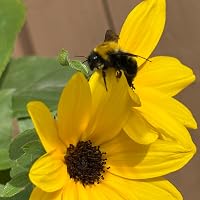
I am not entirely into the cli-fi genre, so I wasn’t certain if this was a story for me. Oh, but it was! It is so thought provoking as to how important bees are, and the potential ramifications of what a world with contaminated soil could look like…no insects, no bees.
Without pollinators, our food supply is threatened.
This story also has a mystery about it, and I loved how Sasha, the main character, valued the found family she befriended when she returned to her abandoned family home.
The audiobook is very well done and is a great way to take in this novel.
Without pollinators, our food supply is threatened.
This story also has a mystery about it, and I loved how Sasha, the main character, valued the found family she befriended when she returned to her abandoned family home.
The audiobook is very well done and is a great way to take in this novel.

Want to Read
February 23, 2023This sounds amazing. I was lucky to listen to an interview with the author and I can't wait to get my hands on this one!!
August 27, 2023
bees, bikes, gardening, books, farmers market, wholesome and subtle romance, found family, some mystery & some fantasy — poetically written & well rounded story telling. my new favorite book!
August 31, 2023
The concept of this book was really good - bees have disappeared and a government plot may be both the cause and the continuation of the lack of bees; anyone who reports seeing a bee disappears. Sasha, the daughter of the last beekeeper looks for information on our family farm to find the truth about what really happened while creating a family with the people who are squatting on her family farm. But the elements of the book never quite came together for me. There seemed to be factual distractions - if there are no pollinators how is lavender and basil still growing. How are there wildflowers in the field? And if I recognize that means there must be bees somewhere, why doesn’t Sasha?
Also, while I understand that people can hold complicated and conflicting feelings at the same time, Sasha’s emotions and feelings are all over the place. She frequently talks about how her father abandoned her by choosing to go to prison, but then says that it was her own testimony that kept him in prison longer. She’s angry with Millie’s continuing betrayals and in the next sentence is worried that Millie is in danger due to her own recklessness.
The ending left me hanging. I don’t feel it resolved the story of Uncle .Chuck or of Millie or the fate of the bees.
Also, while I understand that people can hold complicated and conflicting feelings at the same time, Sasha’s emotions and feelings are all over the place. She frequently talks about how her father abandoned her by choosing to go to prison, but then says that it was her own testimony that kept him in prison longer. She’s angry with Millie’s continuing betrayals and in the next sentence is worried that Millie is in danger due to her own recklessness.
The ending left me hanging. I don’t feel it resolved the story of Uncle .Chuck or of Millie or the fate of the bees.

March 20, 2023
I'm definitely in the minority in this one. Other reviewers rave about the (flat, pretty interchangable) characters. They love the found family angle, despite the fact that Sasha meets them, we see her first week with the group, and then it jumps forward a year where she's already established as part of the group but still constantly worried about being kicked out for some reason. The story was repetitive, and constantly interrupted by flashbacks to Sasha as a child (something bad happens to her when she's 11, and then the novel meanders along for three or four chapters with her as a 22 year old before it's resolved... great way to tell a story...)
The narrator was also... strange. 90, 95% of the time, she was fine. But every once in a while she would OV-ER-EN-UN-CI-ATE parts of a sentence as if she was phonetically sounding out every word.
It wasn't necessarily a bad book. It was just much, much, much too long and didn't have anywhere near as much story to justify the length. It could have been a lot more effective at half the size.
The narrator was also... strange. 90, 95% of the time, she was fine. But every once in a while she would OV-ER-EN-UN-CI-ATE parts of a sentence as if she was phonetically sounding out every word.
It wasn't necessarily a bad book. It was just much, much, much too long and didn't have anywhere near as much story to justify the length. It could have been a lot more effective at half the size.

June 1, 2023
Having recently finished “The Last Beekeeper” by Julie Carrick Dalton, I am happy to have had the chance for the Advanced Reader’s Edition e-copy; thank you NetGalley and Tor Publishing Group!
This is an interesting dual timeline story shifting only eleven years between the memories and present world of Sasha Butler (formerly Alexandra Severn) the daughter of the infamous and imprisoned last beekeeper. In a society where the mention of bees is taboo, and their disappearance has created an agricultural collapse and devastated the global food security for millions, we follow Sasha in hopes of discovering that some of nature's pollinators are surviving in the wild. A fascinating story and one that made me appreciative of all the pollinators in our world, especially those living within the amber glow of a honeycomb.
“I want you to look for the beauty in small things and seek balance in what you take, what you give, and how you live.”
This is an interesting dual timeline story shifting only eleven years between the memories and present world of Sasha Butler (formerly Alexandra Severn) the daughter of the infamous and imprisoned last beekeeper. In a society where the mention of bees is taboo, and their disappearance has created an agricultural collapse and devastated the global food security for millions, we follow Sasha in hopes of discovering that some of nature's pollinators are surviving in the wild. A fascinating story and one that made me appreciative of all the pollinators in our world, especially those living within the amber glow of a honeycomb.
“I want you to look for the beauty in small things and seek balance in what you take, what you give, and how you live.”

March 5, 2023
I can't stop thinking about this book. The characters of The Last Beekeeper are deeply imprinted upon my mind, and the whole wild situation that they have found themselves in, trying to survive in a world in which all the bees are gone--or are they? Julie Carrick Dalton weaves a cautionary environmental tale into a tapestry of family intrigue, growing up, and finding friendship and love among unlikely people. Sasha is a powerful protagonist and her search for truth will keep you turning page after page. Definitely grab this book asap and put it right on the top of your to-read list. You won't regret it!

December 6, 2022
Dalton delivers an enriching story of the value of family and friends while weaving in a disturbing look at what the future might look like without bees. I enjoyed the mystery that unfolds as the protagonist recollects the past and unveils the secrets of her estranged father. The writing style drew me in with well-developed characters and lyrical prose.
ARC was provided by NetGalley and Tor Publishing Group in exchange for an honest review.
ARC was provided by NetGalley and Tor Publishing Group in exchange for an honest review.
Displaying 1 - 30 of 445 reviews