

What do you think?
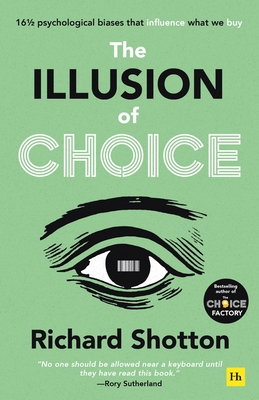
The Illusion of Choice: 16½ psychological biases that influence what we buy
The compelling new book by Richard Shotton, author of The Choice Factory.
Every day, people make hundreds of choices.
Many of these are What shampoo to pick? How much to spend on a bottle of wine? Whether to renew a subscription.
These choices might appear to be freely made, but psychologists have shown that subtle changes in the way products are positioned, promoted, and marketed can radically alter how customers behave.
The Illusion of Choice identifies the 16½ most important psychological biases that everyone in business needs to be aware of today–and shows how any business can take advantage of these to win customers, retain customers, and sell more.
Richard Shotton, author of the acclaimed The Choice Factory, draws on academic research, previous ad campaigns, and his own original field studies to create a fascinating and highly practical guide that focuses on the point where marketing meets the mind of the customer.
You’ll learn to take advantage of the peak end rule, the power of precision, the wisdom of wit–and much, much more.
You simply cannot afford to miss The Illusion of Choice.
PLEASE When you purchase this title, the accompanying PDF will be available in your Audible Library along with the audio.
Every day, people make hundreds of choices.
Many of these are What shampoo to pick? How much to spend on a bottle of wine? Whether to renew a subscription.
These choices might appear to be freely made, but psychologists have shown that subtle changes in the way products are positioned, promoted, and marketed can radically alter how customers behave.
The Illusion of Choice identifies the 16½ most important psychological biases that everyone in business needs to be aware of today–and shows how any business can take advantage of these to win customers, retain customers, and sell more.
Richard Shotton, author of the acclaimed The Choice Factory, draws on academic research, previous ad campaigns, and his own original field studies to create a fascinating and highly practical guide that focuses on the point where marketing meets the mind of the customer.
You’ll learn to take advantage of the peak end rule, the power of precision, the wisdom of wit–and much, much more.
You simply cannot afford to miss The Illusion of Choice.
PLEASE When you purchase this title, the accompanying PDF will be available in your Audible Library along with the audio.
216 pages, Paperback
Published March 28, 2023
Ratings & Reviews
Friends & Following
Create a free account to discover what your friends think of this book!
Community Reviews
Displaying 1 - 30 of 74 reviews

April 15, 2023
I'm a fan of Richard's and he's a lovely chap but I go into all my readings with an objective eye. This is definitely not as good as his The Choice Factory: 25 behavioural biases that influence what we buy which was both practical and compelling. This one is somewhat lighter and fluffier. It's written well and fun but it's all too steeped in some of the equally fluffy parts of behavioural "science".
Each chapter outlines a bias and purports to support that with scientific experimentation. As Richard says right at the end, '[Taking nobody's word is] one of the reasons I love behavioural science. Nothing is argued from authority alone[...] everything must be proved experimentally.' Although when he elaborates on that at the beginning of the book, he does say 'Everything has to be proved experimentally. Behavioural science is based on the peer-reviewed studies of world-renowned scientists. These solid foundations mean you can give the findings genuine credibility.' Hmm.
Over the previous 200 or so pages, most were *not* proven experimentally. Most were hinted at or extrapolated from tiny-scale and academically loose observational experiments (most, I suspect, suffering from varying degrees of confirmation bias). On page 14 he cites a Cheskin study on taste immediately after mentioning the peer-review point. I looked into it; it wasn't peer reviewed. p34, he points to an example to illustrate removal of friction: Bob Bob Ricard and its "Press for Champagne" button. It's attributed to removing friction rather than to, say, novelty or distinctiveness (why no buttons for meal 1, 2 and 3 for example?).
On page 35, he cites a Freedman and Fraser study regarding the 'foot-in-the-door' technique. And the important detail doesn't quite match the study. "Among those who had displayed the window sticker, 76% agreed". In fact the study suggests that irrespective of whether the participant had displayed the sticker, being asked is what made the difference. The authors also noted that only seven men (as against 103 women) were included in the study. The study is from 1966, so there are a variety of possible influences on the results that are not accounted for.
This is a kind of through-line for much of the cited work (and is a huge problem in the field). Where The Choice Factory: 25 behavioural biases that influence what we buy was stronger is that so much of it to my recollection was based directly on his work and results. Too much here is based on weak academic work. So while it's a nice collection of tips, I think it fails the to be rigorous as it wants to be.
Each chapter outlines a bias and purports to support that with scientific experimentation. As Richard says right at the end, '[Taking nobody's word is] one of the reasons I love behavioural science. Nothing is argued from authority alone[...] everything must be proved experimentally.' Although when he elaborates on that at the beginning of the book, he does say 'Everything has to be proved experimentally. Behavioural science is based on the peer-reviewed studies of world-renowned scientists. These solid foundations mean you can give the findings genuine credibility.' Hmm.
Over the previous 200 or so pages, most were *not* proven experimentally. Most were hinted at or extrapolated from tiny-scale and academically loose observational experiments (most, I suspect, suffering from varying degrees of confirmation bias). On page 14 he cites a Cheskin study on taste immediately after mentioning the peer-review point. I looked into it; it wasn't peer reviewed. p34, he points to an example to illustrate removal of friction: Bob Bob Ricard and its "Press for Champagne" button. It's attributed to removing friction rather than to, say, novelty or distinctiveness (why no buttons for meal 1, 2 and 3 for example?).
On page 35, he cites a Freedman and Fraser study regarding the 'foot-in-the-door' technique. And the important detail doesn't quite match the study. "Among those who had displayed the window sticker, 76% agreed". In fact the study suggests that irrespective of whether the participant had displayed the sticker, being asked is what made the difference. The authors also noted that only seven men (as against 103 women) were included in the study. The study is from 1966, so there are a variety of possible influences on the results that are not accounted for.
This is a kind of through-line for much of the cited work (and is a huge problem in the field). Where The Choice Factory: 25 behavioural biases that influence what we buy was stronger is that so much of it to my recollection was based directly on his work and results. Too much here is based on weak academic work. So while it's a nice collection of tips, I think it fails the to be rigorous as it wants to be.

April 17, 2025
"Behavioural science has its roots in social psychology, an academic subject which stretches back to the 1890s. Since then, psychologists have identified thousands of hidden drivers of human behaviour. This variety means that whatever brief you’re tackling, there’s likely to be a relevant bias that you can use."
The Illusion of Choice was a very well-done look into some interesting human psychology. I enjoyed this one.
Author Richard Shotton specialises in applying behavioural science to marketing. He has worked in the field for 22 years and in 2018 founded the consultancy Astroten. Astroten helps brands such as Google, Meta, BrewDog and Barclays use behavioural science to solve their marketing challenges.
Richard Shotton :

Shotten gets the writing here off on a good foot, with a well written intro. He talks about colouring margarine yellow to associate it with butter, and the resulting sales increase it saw after implementing the change.
He's got a great style that I found to be both informative and engaging. I am extremely picky on how readable my books are, and this one passed muster with flying colours. It won't struggle to hold even the finicky reader's attention.
The formatting was also very well done. The book is broken into well delineated chapters, and each chapter; into separate chunks with relevant headers at the top. I like books formatted like this, and don't know why more authors don't employ this in their books. It makes the information so much easier to digest.
Although the book's subtitle mentions psychology, at its heart it is a marketing book, that draws from scientific studies of psychology and social psychology to bolster its claims.
The author drops the quote at the start of this review early on, and continues with this bit of noteworthy writing:
I found lots of excellent writing all throughout this one. The author unfolds this content succinctly and effectively. The book contains countless interesting factoids and related quotes. Well done!
The contents of the book are:
Habit Formation
2: Make It Easy
3: Make it Difficult
4: The Generation Effect
5: The Keats Heuristic
6: Concreteness
6½: Precision
Specific rather than round numbers
Bonus Chapter: Base Value Neglect
7: Extremeness Aversion
B2B as well as B2C
8: Denominator Neglect
Applying the idea laterally
9: The Need to Experiment
10: Framing
11: Fairness
A long pedigree
From cucumbers to cash
12: Freedom of Choice
You are free to ignore the next section of this chapter
13: the Red Sneakers Effect
14: The Halo Effect
Experimental evidence
Why does the halo effect occur?
15: The Wisdom of Wit
16: The Peak-End Rule
Shotton ends the book with a great outro, and drops a short list of other recommended books, which I felt was a nice touch. I'm always looking to add books to my "to read" list.
********************
The Illusion of Choice was an excellent short read; all around. The author did a great job on this one. It is full of super-interesting info, and written in an engaging and effective style.
The book is a great example of wrtiting done well.
An easy 5 star rating from me, and a spot on my "favorites" shelf.
The Illusion of Choice was a very well-done look into some interesting human psychology. I enjoyed this one.
Author Richard Shotton specialises in applying behavioural science to marketing. He has worked in the field for 22 years and in 2018 founded the consultancy Astroten. Astroten helps brands such as Google, Meta, BrewDog and Barclays use behavioural science to solve their marketing challenges.
Richard Shotton :
Shotten gets the writing here off on a good foot, with a well written intro. He talks about colouring margarine yellow to associate it with butter, and the resulting sales increase it saw after implementing the change.
He's got a great style that I found to be both informative and engaging. I am extremely picky on how readable my books are, and this one passed muster with flying colours. It won't struggle to hold even the finicky reader's attention.
The formatting was also very well done. The book is broken into well delineated chapters, and each chapter; into separate chunks with relevant headers at the top. I like books formatted like this, and don't know why more authors don't employ this in their books. It makes the information so much easier to digest.
Although the book's subtitle mentions psychology, at its heart it is a marketing book, that draws from scientific studies of psychology and social psychology to bolster its claims.
The author drops the quote at the start of this review early on, and continues with this bit of noteworthy writing:
"Relevance, robustness and range are three strong reasons for applying behavioural science in your business. However, knowing you should apply behavioural science and actually applying behavioural science are different things.
When there is such a variety of biases, it can be hard to know where to start. This book aims to address that hurdle. Rather than race through a bewildering range of biases, I’ve selected the most pertinent: 16½ ideas that can both be applied easily and have the potential to make a large impact on marketing."
I found lots of excellent writing all throughout this one. The author unfolds this content succinctly and effectively. The book contains countless interesting factoids and related quotes. Well done!
The contents of the book are:
Habit Formation
2: Make It Easy
3: Make it Difficult
4: The Generation Effect
5: The Keats Heuristic
6: Concreteness
6½: Precision
Specific rather than round numbers
Bonus Chapter: Base Value Neglect
7: Extremeness Aversion
B2B as well as B2C
8: Denominator Neglect
Applying the idea laterally
9: The Need to Experiment
10: Framing
11: Fairness
A long pedigree
From cucumbers to cash
12: Freedom of Choice
You are free to ignore the next section of this chapter
13: the Red Sneakers Effect
14: The Halo Effect
Experimental evidence
Why does the halo effect occur?
15: The Wisdom of Wit
16: The Peak-End Rule
Shotton ends the book with a great outro, and drops a short list of other recommended books, which I felt was a nice touch. I'm always looking to add books to my "to read" list.
********************
The Illusion of Choice was an excellent short read; all around. The author did a great job on this one. It is full of super-interesting info, and written in an engaging and effective style.
The book is a great example of wrtiting done well.
An easy 5 star rating from me, and a spot on my "favorites" shelf.

July 29, 2023
A neat and concise delineation of various psychological biases and how they can be harnessed (or manipulated) in marketing.

April 15, 2023
Very superficial.
For anyone interested in reading this, consider Daniel Kahneman’s thinking fast and slow (which this book cites numerous times), and something like the 22 immutable laws of marketing, which basically includes everything mentioned in this book, and a lot more.
Oh, and the title “the illusion of choice” is just a catchy name. The book does in no way justify or even try to explore this idea.
For anyone interested in reading this, consider Daniel Kahneman’s thinking fast and slow (which this book cites numerous times), and something like the 22 immutable laws of marketing, which basically includes everything mentioned in this book, and a lot more.
Oh, and the title “the illusion of choice” is just a catchy name. The book does in no way justify or even try to explore this idea.
July 30, 2023
I concetti sono anche interessanti, ma l’autore si limita a elencare una serie di paper ed esperimenti spesso già noti se non si è assolutamente digiuni da libri di psicologia o economia comportamentale. Nulla di nuovo

January 10, 2024
A short read on some of the common tendencies that drive purchasing decisions. I like the simplicity of it but would recommend thinking fast and slow and influence over it.

February 7, 2023
To me this book strikes a perfect balance between too much and too little detail. It is also written in a light, reader-friendly way. Each chapter introduces new concept using real-life examples. It’s all brief yet explained well (and also referenced well so you can go to source material for more details). Then, you get recommendations on how to use these concepts in a way that works in real life according to experiments and data. Everything is bite-size with no fillers or fluff. Great book.

September 14, 2024
Found this an interesting read - read out of intrigue on the topic as opposed to a studious approach

March 19, 2026
Richard Shotton’s The Illusion of Choice is a clinical yet oddly jarring reminder that our brains are essentially ancient hardware struggling to run modern software. Following up on The Choice Factory, Shotton doubles down on the psychological glitches, the biases, that dictate why we pick one wine over another or finally hit "subscribe" on that app we’ve been ignoring. He breaks down 16.5 of these cognitive shortcuts, and while it’s marketed as a business manual, it feels more like a forensic report on the death of free will. It’s a lean, punchy read that trades flowery prose for cold, hard data, proving that the way a product is framed is often more important than the product itself.
Shotton doesn't just tell you that the "peak-end rule" matters; he shows you the academic receipts and his own field studies to prove it. The "protagonists" here are the biases themselves, invisible forces like the power of precision or the wisdom of wit, that act as the supporting cast in every transaction we make. There’s an intellectual sharpness here that refuses to sugarcoat the fact that we are all, to some degree, predictable.
The book’s emotional impact is less about "feeling" and more about the uncomfortable realization of how easily we are nudged. It’s a bit like finding out how a magic trick works; you’re impressed by the mechanics but slightly annoyed that you were fooled in the first place. Shotton’s style is observational and direct, stripped of the hype that usually plagues the "business guru" genre. He writes with a clarity that respects the reader’s time, which is perhaps the most honest thing a writer can do.
In today’s noise-saturated society, this analysis of choice feels particularly relevant. We’re constantly told we have infinite options, yet Shotton suggests our paths are often pre-paved by subtle environmental cues.
The book's efficiency often feels like a fast-paced lecture, which is my only genuine complaint. I would have preferred a little more philosophical space to consider the ramifications of being so easily swayed. But what makes it special is how useful it is. It is more than just theory; it is a toolkit for both the skeptical and the inquisitive.
If you’re looking for a book that will make you feel better about your shopping habits, this isn't it. But if you want a sharp, slightly humorous, and deeply analytical look at the "why" behind the "buy," it’s essential. It forces you to look at your own decisions through a much narrower lens. It’s a reminder that while we like to think we’re the captains of our souls, we’re often just reacting to the way the wind is being blown by someone with a marketing degree.
Shotton doesn't just tell you that the "peak-end rule" matters; he shows you the academic receipts and his own field studies to prove it. The "protagonists" here are the biases themselves, invisible forces like the power of precision or the wisdom of wit, that act as the supporting cast in every transaction we make. There’s an intellectual sharpness here that refuses to sugarcoat the fact that we are all, to some degree, predictable.
The book’s emotional impact is less about "feeling" and more about the uncomfortable realization of how easily we are nudged. It’s a bit like finding out how a magic trick works; you’re impressed by the mechanics but slightly annoyed that you were fooled in the first place. Shotton’s style is observational and direct, stripped of the hype that usually plagues the "business guru" genre. He writes with a clarity that respects the reader’s time, which is perhaps the most honest thing a writer can do.
In today’s noise-saturated society, this analysis of choice feels particularly relevant. We’re constantly told we have infinite options, yet Shotton suggests our paths are often pre-paved by subtle environmental cues.
The book's efficiency often feels like a fast-paced lecture, which is my only genuine complaint. I would have preferred a little more philosophical space to consider the ramifications of being so easily swayed. But what makes it special is how useful it is. It is more than just theory; it is a toolkit for both the skeptical and the inquisitive.
If you’re looking for a book that will make you feel better about your shopping habits, this isn't it. But if you want a sharp, slightly humorous, and deeply analytical look at the "why" behind the "buy," it’s essential. It forces you to look at your own decisions through a much narrower lens. It’s a reminder that while we like to think we’re the captains of our souls, we’re often just reacting to the way the wind is being blown by someone with a marketing degree.

April 24, 2025
Książka wprowadza czytelnika w świat psychologii i marketingu, pokazując, jak nasze decyzje (zakupowe i nie tylko) są kształtowane przez zewnętrzne bodźce, nawyki i strategie perswazji stosowane przez marki w reklamach.
Autor w każdym rozdziale koncentruje się na innej technice marketingowej opisując mechanizm jej działania, podstawy naukowe oraz prowadząc analizę jej skuteczności i zasadność wykorzystania w konkretnych przypadkach. Każda strategia i związana z nią „pułapka dla umysłu” uzupełniona została przykładami prawdziwych reklam znanych z obecnych i dawnych czasów. Nie brak tu również zwięzłej analizy eksperymentów psychologicznych prowadzonych w celach zdefiniowania jak najskuteczniejszego podejścia reklamowego.
Czego dowiesz się z tego tytułu?
- Czym jest „Efekt IKEA”?
- Czy upraszczanie procesów może paradoksalnie obniżać sprzedaż?
- Jak rymy i muzyka wpływają na skuteczność reklamy?
- Czy darmowe oferty mają przewagę nad zniżkami?
- Jak złożoność komunikatu wpływa na jego skuteczność?
Podobała mi się przystępna narracja i to, jak dobrze wyważona jest dawka teorii w połączeniu z konkretnymi przykładami. Autor nie wdaje się w zbędne szczegóły i unikania „lania wody” operując na konkretach.
Cieszę się, że czułam że czytam przyjemny tytuł popularnonaukowy o marketingu, a nie szczegółową, marketingową, skomplikowaną i specjalistyczną pozycję.
To sprawia, że jest to ciekawa i angażująca lektura zarówno dla osób silnie zainteresowanych marketingiem jak i dla tych, nie zagłębiających się w tę dziedzinę na co dzień.
Dużo wyciągnęłam z niej dla siebie, w trakcie lektury analizowałam, które znane mi reklamy wykorzystały omawiane tu techniki. Dzięki temu byłam zaangażowana w lekturę, która minęła bardzo szybko.
Otwiera oczy na mechanizmy wpływu i dostarcza praktycznej wiedzy, którą można wykorzystać i zaobserwować w codziennym życiu. Tytuł dla każdego, kto lubi poznawać ciekawostki o mózgu i chce zrozumieć, dlaczego wybieramy to, co wybieramy.
Lekka, przyjemna i praktyczna. Polecam!
Autor w każdym rozdziale koncentruje się na innej technice marketingowej opisując mechanizm jej działania, podstawy naukowe oraz prowadząc analizę jej skuteczności i zasadność wykorzystania w konkretnych przypadkach. Każda strategia i związana z nią „pułapka dla umysłu” uzupełniona została przykładami prawdziwych reklam znanych z obecnych i dawnych czasów. Nie brak tu również zwięzłej analizy eksperymentów psychologicznych prowadzonych w celach zdefiniowania jak najskuteczniejszego podejścia reklamowego.
Czego dowiesz się z tego tytułu?
- Czym jest „Efekt IKEA”?
- Czy upraszczanie procesów może paradoksalnie obniżać sprzedaż?
- Jak rymy i muzyka wpływają na skuteczność reklamy?
- Czy darmowe oferty mają przewagę nad zniżkami?
- Jak złożoność komunikatu wpływa na jego skuteczność?
Podobała mi się przystępna narracja i to, jak dobrze wyważona jest dawka teorii w połączeniu z konkretnymi przykładami. Autor nie wdaje się w zbędne szczegóły i unikania „lania wody” operując na konkretach.
Cieszę się, że czułam że czytam przyjemny tytuł popularnonaukowy o marketingu, a nie szczegółową, marketingową, skomplikowaną i specjalistyczną pozycję.
To sprawia, że jest to ciekawa i angażująca lektura zarówno dla osób silnie zainteresowanych marketingiem jak i dla tych, nie zagłębiających się w tę dziedzinę na co dzień.
Dużo wyciągnęłam z niej dla siebie, w trakcie lektury analizowałam, które znane mi reklamy wykorzystały omawiane tu techniki. Dzięki temu byłam zaangażowana w lekturę, która minęła bardzo szybko.
Otwiera oczy na mechanizmy wpływu i dostarcza praktycznej wiedzy, którą można wykorzystać i zaobserwować w codziennym życiu. Tytuł dla każdego, kto lubi poznawać ciekawostki o mózgu i chce zrozumieć, dlaczego wybieramy to, co wybieramy.
Lekka, przyjemna i praktyczna. Polecam!

September 9, 2024
This book discusses research from psychology and other fields from the United States and Great Britain largely. It is helpful in thinking about ways to influence others and understand why we do the things we do.

March 15, 2026
… manipulative

August 23, 2023
2.5/5 ⭐⭐
Overall, not a bad book. Covers many different experiments and studies on how behavioral science influences marketing campaigns and people's decisions on what to buy or not.
Some concepts were interesting and new to me, like 'the denominator neglect' when people tend to fixate on the headline number rather than what that number represents.
The majority of other mentioned biases were known to me already, for example, 'the Hallo effect,' 'framing', 'freedom of choice,' 'the red sneakers effect,' and others. Still, the book serves as a good reminder and knowledge refresher.
My only critique is that some of the studies were explained very superficially. I had expected a more in-depth analysis and more real-life examples in the marketing context.
I'd consider this book a quick intro/overview of the very vast topic - behavioral science & marketing.
All in all, The Illusion of Choice is useful for anyone who works in marketing or is interested in psychology and the choices people make (or, rather, are influenced to make). Gives you a perspective on how easily we are manipulated and sold stuff we don't actually need.
Overall, not a bad book. Covers many different experiments and studies on how behavioral science influences marketing campaigns and people's decisions on what to buy or not.
Some concepts were interesting and new to me, like 'the denominator neglect' when people tend to fixate on the headline number rather than what that number represents.
The majority of other mentioned biases were known to me already, for example, 'the Hallo effect,' 'framing', 'freedom of choice,' 'the red sneakers effect,' and others. Still, the book serves as a good reminder and knowledge refresher.
My only critique is that some of the studies were explained very superficially. I had expected a more in-depth analysis and more real-life examples in the marketing context.
I'd consider this book a quick intro/overview of the very vast topic - behavioral science & marketing.
All in all, The Illusion of Choice is useful for anyone who works in marketing or is interested in psychology and the choices people make (or, rather, are influenced to make). Gives you a perspective on how easily we are manipulated and sold stuff we don't actually need.
May 3, 2023
I think the most disturbing thing you will find when reading this book is that you might think you are freely making a choice between brand x and brand y when shopping in store or browsing online but actually you are a puppet in the hands of psychological geniuses like Richard who are subtlety influencing the way you behave.
I thoroughly enjoyed reading 'The Illusion of Choice'. What I particularly love is the way he does the heavy lifting for the reader by bringing together all previous research on the topic to verify the biases but he also simplifies the subject matter, that can often be complicated, and then gives ideas on how to apply the different bias in real life scenarios.
I cannot stress how useful you will find Richard’s new book whether you are in business or in your personal life and there are even tips you can use to get your child to keep their room tidy using the 'Freedom of Choice' bias :)
I thoroughly enjoyed reading 'The Illusion of Choice'. What I particularly love is the way he does the heavy lifting for the reader by bringing together all previous research on the topic to verify the biases but he also simplifies the subject matter, that can often be complicated, and then gives ideas on how to apply the different bias in real life scenarios.
I cannot stress how useful you will find Richard’s new book whether you are in business or in your personal life and there are even tips you can use to get your child to keep their room tidy using the 'Freedom of Choice' bias :)

January 23, 2024
Did the world really need this book? Most points were covered already in e.g. “Thinking, Fast and Slow,” “Atomic Habits,” or “Designing Experiences.”
I do want to try out two things I found here:
1. The “H_BC Bank” effect: present deliberately ambiguous information to make your audience think – they will remember your content better.
2. “Rhymin’ Simon”: slogans that rhyme actually work. If you’re hesitant to use that, try alliteration.
I do want to try out two things I found here:
1. The “H_BC Bank” effect: present deliberately ambiguous information to make your audience think – they will remember your content better.
2. “Rhymin’ Simon”: slogans that rhyme actually work. If you’re hesitant to use that, try alliteration.

August 31, 2026
Tą książkę miałem tak długo na liście "chcę przeczytać", że teraz, jak już wreszcie ją przeczytałem, mam wrażenie, że większość z zawartych w niej informacji dotarła do mnie już z innych źródeł :D dlatego jakichś wielkich-wow-nowości nie znalazłem. Można nawet powiedzieć, że czuję pewne rozczarowanie - jest mniej o mózgu, a bardziej o... marketingu? Ale i tak, ogólnie: jest ciekawa, warto (jeśli ktoś jeszcze tych informacji nie poznał), nie nudziłem się i nie jest to strata czasu :)
- tia... i potem jest to przekonanie, że te wszystkie składniki to na pewno takie szkodliwe... ;)
- to prawda. Od czasu do czasu zdarza mi się trafić na sklep, który za płatność PayPalem dolicza jakiś procent czy dwa - marketingowo to strasznie słabe zagranie. Pierwsze co robię, to sprawdzam czy nie znajdę równie tanio danego przedmiotu w innym sklepie. A przecież by mogli zaoferować zniżkę za płatność przelewem czy kartą.
- i chyba od tego czasu robią tak i inne lotniska ;)
(czytana/słuchana: 26-27.08.2026, Legimi)
4/5 [7/10]
"W ramach eksperymentu przeprowadzonego w 2009 roku badacze przedstawili uczestnikom listę fikcyjnych dodatków do żywności. Nazwy niektórych substancji trudno było wymówić (np. Hnegripitrom), inne nie stwarzały takich problemów (np. Magnalroxate). Psychologowie poprosili następnie uczestników eksperymentu o ocenę szkodliwości poszczególnych składników w 7-punktowej skali (na której 1 oznaczało substancję bezpieczną, a 7 wskazywało na coś bardzo szkodliwego).
Dodatki spożywcze, których nazwy trudno było wymówić, uzyskały średnią ocenę 4,12. Te przystępniejsze dla aparatu mowy badani ocenili na 3,7. Tym samym substancje o skomplikowanych nazwach zostały uznane za o 11 procent bardziej szkodliwe.
Na tej podstawie psychologowie wysnuli tezę na temat istnienia związku między łatwością artykułowania nazw a ryzykiem przypisywanym rzeczom, których one dotyczą."
- tia... i potem jest to przekonanie, że te wszystkie składniki to na pewno takie szkodliwe... ;)
"Twoja przyjaciółka Hope świętuje wkrótce urodziny, więc urywasz się na chwilę z pracy, żeby rozejrzeć się za jakimś prezentem. Zatrzymujesz się przy sklepie jubilerskim, który ma w ofercie wiktoriańską broszkę. Coś takiego na pewno przypadłoby Hope do gustu!
Bierzesz głęboki wdech i odwracasz metkę. Spodziewasz się zobaczyć cenę, od której oko ci zbieleje.
Rzeczywistość jednak pozytywnie cię zaskakuje. Cena jest niższa, niż się spodziewałeś. Rozpromieniony, ruszasz ze znaleziskiem do kasy.
Stojąc w kolejce, dostrzegasz odręcznie napisaną karteczkę z informacją, że „Za płatność kartą pobierana jest prowizja w wysokości 2,5 procent".
Nie masz przy sobie dość gotówki, żeby zapłacić za zakup. Będziesz musiał odżałować tę dodatkową kwotę za przywilej zapłacenia kartą. Teraz się już denerwujesz.
A przecież sprzedawca mógł zastosować zabieg odwrotny, to znaczy podnieść cenę produktu 0 2,5 procent, a następnie zaoferować klientom odpowiedni rabat za płatność kartą. Wtedy nikt by się nie zirytował. Z ekonomicznego punktu widzenia nie byłoby różnicy, psycholog od razu zwróciłby jednak uwagę na odmienność ramowania. Ponieważ straty odczuwamy mocniej niż uzyskane korzyści, klientom aż tak by nie przeszkadzało, że nie uzyskają zniżki, jeśli zapłacą kartą. Mocno za to odczuwali stratę, gdy wybór takiej opcji płatności oznaczał dla nich dodatkowe koszty."
- to prawda. Od czasu do czasu zdarza mi się trafić na sklep, który za płatność PayPalem dolicza jakiś procent czy dwa - marketingowo to strasznie słabe zagranie. Pierwsze co robię, to sprawdzam czy nie znajdę równie tanio danego przedmiotu w innym sklepie. A przecież by mogli zaoferować zniżkę za płatność przelewem czy kartą.
"Kierownictwo obiektu [lotniska w Houston] z niepokojem obserwowało liczbę skarg dotyczących długiego czasu oczekiwania na odbiór bagażu. Wizyta przy tak zwanej karuzeli to ostatni etap podróży. Ludzie są już wtedy zwykle zmęczeni, a konieczność wypatrywania walizek przez średnio 8 minut często nadwyręża ich cierpliwość.
Władze lotniska zastosowały rozwiązanie, które nie wymagało właściwie żadnych nakładów, a polegało mianowicie na tym, że po przejściu kontroli paszportowej podróżni musieli pokonać... większy dystans. Przejście korytarzami zajmowało im właśnie owe 8 minut, co w praktyce oznaczało, że bagaże jeździły już po karuzeli, gdy oni do niej docierali."
- i chyba od tego czasu robią tak i inne lotniska ;)
(czytana/słuchana: 26-27.08.2026, Legimi)
4/5 [7/10]

September 14, 2025
The Illusion of Choice is a marketing book, through and through.
If you were looking for a book more on the psychology of decision making (like I was), the author has a number of recommendations that he cites and references in this title, but this book has an objective to get the reader thinking about marketing techniques to better promote their brand/idea/concept.
That said: it is a thoroughly researched books with many annotations and references to experiments to prove the points of the author. Each chapter comes with a daily scenario that we can all viualize and ends with a "HOW TO MAKE THIS IDEA WORK FOR YOU" section at the end of the chapter.
In the end, while it was not the sort of read I was expecting, I extracted value from it and strongly feel it will be a useful book to Richard Shotton's normal audience.
Here is my summary of the 16.5 points covered in the book:
1: Habit Formation - hack behavior by forming and destroying habits
2: Make it Easy - Spend time removing friction in choices to reduce effort on the decider.
3: Make it Difficult - Add friction in a 2 step request to default to easier option, add friction to increase perceived value of choice of the more desired option you want from your audience.
4: The Generation Effect - Getting your audience to actively produce or generate information, leads to better recall and memory compared to passively consuming or reading the same information.
BR_NG
TH_M
_NT_
TH_
PR_C_SS!
5: The Keats Heuristic - the easier it is to perceive information (rhyming/alliteration) the more believable it becomes.
6: Concreteness - Concrete ideas (vs abstractions) are more stickier because they can be visualized and thus remembered
6½: Precision - Precise/novel amounts disrupt predictability and stick in the mind easier
7: Extremeness Aversion - People dislike extremes, and so will kore likely chose the middle option (always have you preferred option be your middle option)
8: Denominator Neglect - People tend to fix on the headline number rather than what that number represents.
9: The Need to Experiment - Not really a bias, should have been left in the introduction.
10: Framing - Shape a decider's emotional reaction by editing the focus of their attention (or their known knowns) through loss Aversion, the power of nouns, and social proof
11: Fairness - People are strongly attuned to matters fairness when making decisions (harness righteous indignation, be transparent with your audience on why things appear unfair)
12: Freedom of Choice - Persuasion is better than force when changing the behaviors of others (use this in your language)
13: The Red Sneakers Effect - Contrary to popular belief, being weird and breaking convention can be seen as a good thing and signals status (nonconformity extracts a social cost, so nonconformists but be in a position of power/affluence to be able to do so. The effect of the deviation will maximize if the nonconformist already has the appearance of some status).
14: The Halo Effect - Refers to a cognitive bias where one positive trait of a concept/person leads to a positive perception in other unrelated areas. (Focus on intangible vs hard claims)
15: The Wisdom of Wit - The use of humour is seen to have the following benefits: memorability, appearance of status, positive emotions and mood towards the concept. Use it.
16: The Peak-End Rule - The enjoyment of memories of events/experiences are dependant on 2 things: the peak intensity and the end. So amplify the positive peaks (pinnacles), fill in the negative peaks (troughs).
If you were looking for a book more on the psychology of decision making (like I was), the author has a number of recommendations that he cites and references in this title, but this book has an objective to get the reader thinking about marketing techniques to better promote their brand/idea/concept.
That said: it is a thoroughly researched books with many annotations and references to experiments to prove the points of the author. Each chapter comes with a daily scenario that we can all viualize and ends with a "HOW TO MAKE THIS IDEA WORK FOR YOU" section at the end of the chapter.
In the end, while it was not the sort of read I was expecting, I extracted value from it and strongly feel it will be a useful book to Richard Shotton's normal audience.
Here is my summary of the 16.5 points covered in the book:
1: Habit Formation - hack behavior by forming and destroying habits
2: Make it Easy - Spend time removing friction in choices to reduce effort on the decider.
3: Make it Difficult - Add friction in a 2 step request to default to easier option, add friction to increase perceived value of choice of the more desired option you want from your audience.
4: The Generation Effect - Getting your audience to actively produce or generate information, leads to better recall and memory compared to passively consuming or reading the same information.
BR_NG
TH_M
_NT_
TH_
PR_C_SS!
5: The Keats Heuristic - the easier it is to perceive information (rhyming/alliteration) the more believable it becomes.
6: Concreteness - Concrete ideas (vs abstractions) are more stickier because they can be visualized and thus remembered
6½: Precision - Precise/novel amounts disrupt predictability and stick in the mind easier
7: Extremeness Aversion - People dislike extremes, and so will kore likely chose the middle option (always have you preferred option be your middle option)
8: Denominator Neglect - People tend to fix on the headline number rather than what that number represents.
9: The Need to Experiment - Not really a bias, should have been left in the introduction.
10: Framing - Shape a decider's emotional reaction by editing the focus of their attention (or their known knowns) through loss Aversion, the power of nouns, and social proof
11: Fairness - People are strongly attuned to matters fairness when making decisions (harness righteous indignation, be transparent with your audience on why things appear unfair)
12: Freedom of Choice - Persuasion is better than force when changing the behaviors of others (use this in your language)
13: The Red Sneakers Effect - Contrary to popular belief, being weird and breaking convention can be seen as a good thing and signals status (nonconformity extracts a social cost, so nonconformists but be in a position of power/affluence to be able to do so. The effect of the deviation will maximize if the nonconformist already has the appearance of some status).
14: The Halo Effect - Refers to a cognitive bias where one positive trait of a concept/person leads to a positive perception in other unrelated areas. (Focus on intangible vs hard claims)
15: The Wisdom of Wit - The use of humour is seen to have the following benefits: memorability, appearance of status, positive emotions and mood towards the concept. Use it.
16: The Peak-End Rule - The enjoyment of memories of events/experiences are dependant on 2 things: the peak intensity and the end. So amplify the positive peaks (pinnacles), fill in the negative peaks (troughs).

April 16, 2023
Interested in Behavioural Sceience? this is a definite good overview of the topic and while it doesn't have all the answers - it certainly has an extensive reference companion of sources inside.
Picked this up as an 'Airport read' and wasn't sure what to expect. Well laid out and easy enough to jump in and out of - definitely makes use of the Keats Heuristics font principles mentioned in it. :)
Why behavioural sciences have not gone away - relevance, robustness and range.
On Habits, we know we are 'cognitive misers' and repetition of things is less challenging than changing but when you find the right 'fresh start' it can act as way to start a new habit and the best way of keeping it, is to have a cue rather than relying solely on motivations. Some undertones here of Daniel Pink's book 'When' from 2021.
Other tidbits:
* Door in the Face vs Foot in the Door
* The more concrete a phrase, the more likely to be remembered than abstract ones (36% vs 9%)
* Conveying value through being precise ie specific numbers over rounded numbers
* How a product is framed determines how it will be viewed - 75% lean vs 25% fat
* Peak end Role - Focus on the moments that matter and end on a high.
Picked this up as an 'Airport read' and wasn't sure what to expect. Well laid out and easy enough to jump in and out of - definitely makes use of the Keats Heuristics font principles mentioned in it. :)
Why behavioural sciences have not gone away - relevance, robustness and range.
On Habits, we know we are 'cognitive misers' and repetition of things is less challenging than changing but when you find the right 'fresh start' it can act as way to start a new habit and the best way of keeping it, is to have a cue rather than relying solely on motivations. Some undertones here of Daniel Pink's book 'When' from 2021.
Other tidbits:
* Door in the Face vs Foot in the Door
* The more concrete a phrase, the more likely to be remembered than abstract ones (36% vs 9%)
* Conveying value through being precise ie specific numbers over rounded numbers
* How a product is framed determines how it will be viewed - 75% lean vs 25% fat
* Peak end Role - Focus on the moments that matter and end on a high.

July 26, 2023
This is a very clever book. And it’s clever because it’s using science to explain psychology and human behaviour in a very, very entertaining way. Mr Shotton has taken years of research from all over the world and collated it for managers and small businesses to use it in their marketing.
The book would be ideal for any independent business from a freelance writer to a gardener. The ideas are subtle and easy to use. Many are surprising. A group of people are shown a film with two cars hitting each other and asked to estimate the speed of the cars. If I ask you "the speed at the time they collided" you’ll guess much higher than if I say "the speed when the cars bumped each other" but the speed is the same.
Asking "how important is it to you to vote in the next election" versus "how important is it to you to be a voter in the next election" gets hugely different answers because verbs represent what we do but nouns reflect who we are…
Definitely worth a read if you’re trying to sell your book or convince your clients about something. I’m none of those things and I learned a lot.
I was given a copy of this book by NetGalley
The book would be ideal for any independent business from a freelance writer to a gardener. The ideas are subtle and easy to use. Many are surprising. A group of people are shown a film with two cars hitting each other and asked to estimate the speed of the cars. If I ask you "the speed at the time they collided" you’ll guess much higher than if I say "the speed when the cars bumped each other" but the speed is the same.
Asking "how important is it to you to vote in the next election" versus "how important is it to you to be a voter in the next election" gets hugely different answers because verbs represent what we do but nouns reflect who we are…
Definitely worth a read if you’re trying to sell your book or convince your clients about something. I’m none of those things and I learned a lot.
I was given a copy of this book by NetGalley

Read
May 12, 2025A Ilusão da Escolha (Richard Shotton). O livro explora como as decisões que acreditamos tomar de forma consciente são, na verdade, influenciadas por vieses cognitivos e padrões de pensamento automáticos. Shotton identifica 16 vieses psicológicos relevantes para o mundo dos negócios e demonstra como pequenas mudanças na apresentação de produtos podem impactar significativamente o comportamento do consumidor. A obra é estruturada em capítulos curtos, cada um abordando um viés específico, ilustrado com estudos de caso e exemplos práticos. O autor critica a abordagem tradicional de marketing, que muitas vezes ignora a ciência comportamental, e propõe um uso mais sistemático desses princípios para campanhas mais eficazes. Além de seu foco no marketing, o livro também ajuda os leitores a reconhecerem como são influenciados em suas decisões cotidianas. Shotton enfatiza a importância de usar essas técnicas de forma ética, pois a manipulação antiética pode ter consequências negativas a longo prazo. Ao final, a obra oferece uma visão clara de como a psicologia molda nossas escolhas, tornando-se uma ferramenta valiosa para quem deseja tomar decisões mais conscientes e menos manipuladas.

September 24, 2025
Кратка и практична книга која преку многу експериментални примери ја објаснува бихевиоралната наука зад маркетингот.
Секојдневно носиме стотици и стотици несвесни одлуки - од тоа што да облечеме кога излегуваме од дома, што купуваме во супермаркет и нарачуваме во ресторан, па до тоа како го формираме мислењето за луѓето околу нас. Зад сите овие одлуки стои психолошка позадина која успешните бизниси, рекламни агенции, политичари или инфлуенсери вешто ја манипулираат во своја корист. токму оттаму и насловот "Илузија на избор". Да, ние сме слободни да носиме сопствени избори, но огромен процент од нас е целосно несвесен колку тој "слободен избор" е всушност производ на овие манипулации од страна на оние кои нешто сакаат да ни продадат.
Ова е одлична и корисна книга која треба да биде задолжителна литература за професионаците кои се занимаваат со маркетинг или ПР, но исто така може да им помогне на сите други во разбирање на ефектите на психолошките трикови кои се користат за влијание врз нивните "слободни" одлуки.
Секојдневно носиме стотици и стотици несвесни одлуки - од тоа што да облечеме кога излегуваме од дома, што купуваме во супермаркет и нарачуваме во ресторан, па до тоа како го формираме мислењето за луѓето околу нас. Зад сите овие одлуки стои психолошка позадина која успешните бизниси, рекламни агенции, политичари или инфлуенсери вешто ја манипулираат во своја корист. токму оттаму и насловот "Илузија на избор". Да, ние сме слободни да носиме сопствени избори, но огромен процент од нас е целосно несвесен колку тој "слободен избор" е всушност производ на овие манипулации од страна на оние кои нешто сакаат да ни продадат.
Ова е одлична и корисна книга која треба да биде задолжителна литература за професионаците кои се занимаваат со маркетинг или ПР, но исто така може да им помогне на сите други во разбирање на ефектите на психолошките трикови кои се користат за влијание врз нивните "слободни" одлуки.
June 24, 2023
I loved it, preordered the paperback off the back of a linked in post that had Rory Sutherland talk about it. It’s really easy to read and it’s just given me lots of new ways to think about some of the challenges at work. I’ve shared some of the principles discussed in there with my colleagues too to help us all gain some new perspectives. There was a review below that was saying that this is just a catchy title and it doesn’t allude to the ‘choice’ part… I highly disagree. It’s down to us as readers and professionals in our industry to interpret the knowledge and test if these principles apply to our fields, and learn to (ethically) use them for our goals.
I think maybe if you’re super well-read in this field there will be some things that feel like they repeat but it does feel like it’s got a fresh way to look at some of the problems, either through updated test, anectodal examples or simply reframing of problems.
I think maybe if you’re super well-read in this field there will be some things that feel like they repeat but it does feel like it’s got a fresh way to look at some of the problems, either through updated test, anectodal examples or simply reframing of problems.

March 27, 2026
The Illusion of Choice does a great job of breaking down how much of your decision-making is shaped by subtle nudges, context, and the way choices are presented. Richard Shotton keeps things clear and grounded, so the ideas land without feeling heavy.
The strongest parts are the real-world examples. The mix of behavioral science and marketing case studies shows how small shifts can completely change what people choose. It makes you stop and question how often you are actually deciding versus being guided.
There is some repetition, and a few sections could have been tighter, but the core ideas are strong enough to keep your attention. It stays practical, which makes it easy to connect to everyday decisions.
This is a solid, engaging read if you are interested in how people think and why they choose what they do.
The strongest parts are the real-world examples. The mix of behavioral science and marketing case studies shows how small shifts can completely change what people choose. It makes you stop and question how often you are actually deciding versus being guided.
There is some repetition, and a few sections could have been tighter, but the core ideas are strong enough to keep your attention. It stays practical, which makes it easy to connect to everyday decisions.
This is a solid, engaging read if you are interested in how people think and why they choose what they do.

January 8, 2023
I loved this book. Designed for marketers or business owners wanting to drum up business. This book is marvelous.
I am not a marketer nor a business owner, but I found this book absolutely fascinating.
It provided real world experiments in which to convey why certain brands/advertising works.
I loved learning all about the experiments, how the author set up the book (a man going about his work day and the situations that he might encounter), and really all the tricks to set up advertising.
I would recommend this book to anyone interested in branding, advertising, psychology, or just needs a good easy read for the weekend.
You will not be bored or disappointed by this book.
THank you to Netgalley and to the publisher for this ARC in exchange for this honest review.
I am not a marketer nor a business owner, but I found this book absolutely fascinating.
It provided real world experiments in which to convey why certain brands/advertising works.
I loved learning all about the experiments, how the author set up the book (a man going about his work day and the situations that he might encounter), and really all the tricks to set up advertising.
I would recommend this book to anyone interested in branding, advertising, psychology, or just needs a good easy read for the weekend.
You will not be bored or disappointed by this book.
THank you to Netgalley and to the publisher for this ARC in exchange for this honest review.
January 21, 2023
I was offered this book as an ARC via NetGalley and found it to be in intriguing insight into the world of marketing. This book is aimed at people working within the marketing field (though those wanting to market their own products would find it interesting too) and so there are lots of suggestions and examples as to how research can be applied. The book is full of studies and research, many of which had surprising or counterintuitive outcomes. Personally I do find people's behaviour fascinating so this was a fairly quick and easy read that threw up some thought provoking examples. If you work in this field or are wondering how to better market your own products in this increasingly freelance economy, this book is worth a read.

March 27, 2023
Lots of interesting ideas, ideal for those working in marketing, or running their own business like I do. It's presented in an easy to digest, engaging manner, I found the experiments mentioned really interesting. Lots of good examples too. Sometimes I find reference books slow going as I'm trying to process so much information, but I flew through this one. It was interesting and easy to read.
My only regret is that I didn't read a paper copy instead of the Kindle version. Because I can see this is one of those books I would have filled with post its to highlight the most useful tips so I could easily refer back to them in the future.
My only regret is that I didn't read a paper copy instead of the Kindle version. Because I can see this is one of those books I would have filled with post its to highlight the most useful tips so I could easily refer back to them in the future.

August 13, 2023
I order a pile of books from the library at a time, then I cross reference the ratings with goodreads, and this book was rated highly.
I expected I guess more of a psychological/philosophical ideology, but instead, this is more of a sales/office book. On that level, this book has valuable insight.
I was looking for more subconscious cues or a deeper perspective from the person who makes the choices, not from the person framing them. In that, I am feeling a bit conflicted in my rating. I'm going to rate it as though I was looking to enhance my sales skills.
I would say it is well researched.
I expected I guess more of a psychological/philosophical ideology, but instead, this is more of a sales/office book. On that level, this book has valuable insight.
I was looking for more subconscious cues or a deeper perspective from the person who makes the choices, not from the person framing them. In that, I am feeling a bit conflicted in my rating. I'm going to rate it as though I was looking to enhance my sales skills.
I would say it is well researched.

July 3, 2023
The Illusion of Choice, Richard Shotton
I found this book interesting, particularly in respect of the psychology of marketing. There are a number of things that I was subconsciously aware of, such as repetitive marketing slogans that enable you to remember – a Mars a day helps you work, rest and play; coughs and sneezes spread diseases etc.
I’d particularly recommend this for anyone who is interested in marketing, sales, psychology.
Thank you to NetGalley and Harriman House for a copy of this book, I rate it 3 stars.
I found this book interesting, particularly in respect of the psychology of marketing. There are a number of things that I was subconsciously aware of, such as repetitive marketing slogans that enable you to remember – a Mars a day helps you work, rest and play; coughs and sneezes spread diseases etc.
I’d particularly recommend this for anyone who is interested in marketing, sales, psychology.
Thank you to NetGalley and Harriman House for a copy of this book, I rate it 3 stars.
May 5, 2023
If you don’t read this book you’ll miss out on 16.5 easy to apply tools for changing behaviour. For you to be an effective persuader you need this book, because the simple, clear and efficient lessons can be universally applied. All the examples are backed with solid, peer reviewed evidence - so you can deploy these techniques with confidence and conviction. Make sure you read ‘The Choice Factory’ too. To conclude: a solid manual for behavioural change.

June 17, 2023
The illusion of choice is a cognitive bias that causes people to believe they have more control over their lives than they actually do.
These tactics are often used in advertising and marketing to make people feel like they are in control of their purchase decisions.
Written in plain speak it makes behavioural science quite fun. It’s a fascinating insight into what motivates people to take action & buy.
Packed with loads of surprising examples, backed by plenty of research & field tests 😯
These tactics are often used in advertising and marketing to make people feel like they are in control of their purchase decisions.
Written in plain speak it makes behavioural science quite fun. It’s a fascinating insight into what motivates people to take action & buy.
Packed with loads of surprising examples, backed by plenty of research & field tests 😯
Displaying 1 - 30 of 74 reviews