Jump to ratings and reviews
Rate this book

From From: Poems

Rate this book
A major achievement by Monica Youn, “one of the most consistently innovative poets working today” (NPR).

“Where are you from . . . ? No―where are you from from?” It’s a question every Asian American gets asked as part of an incessant chorus saying you’ll never belong here, you’re a perpetual foreigner, you’ll always be seen as an alien, an object, or a threat.

Monica Youn’s From From brilliantly evokes the conflicted consciousness of deracination. If you have no core of “authenticity,” no experience of your so-called homeland, how do you piece together an Asian American identity out of Westerners’ ideas about Asians? Your sense of yourself is part stereotype, part aspiration, part guilt. In this dazzling collection, one sequence deconstructs the sounds and letters of the word “deracinations” to create a sonic landscape of micro- and macroaggressions, assimilation, and self-doubt. A kaleidoscopic personal essay explores the racial positioning of Asian Americans and the epidemic of anti-Asian hate. Several poems titled “Study of Two Figures” anatomize and dissect the Asian Midas the striving, nouveau-riche father; Dr. Seuss and the imaginary daughter Chrysanthemum-Pearl he invented while authoring his anti-Japanese propaganda campaign; Pasiphaë, mother of the minotaur, and Sado, the eighteenth-century Korean prince, both condemned to containers allegorical and actual.

From From is an extraordinary collection by a poet whose daring and inventive works are among the most vital in contemporary literature.

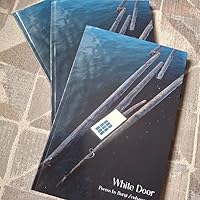
136 pages, Paperback

First published March 7, 2023

41 people are currently reading
1675 people want to read

About the author

Monica Youn

14 books49 followers

Ratings & Reviews

What do you think?
Rate this book

Friends & Following

Create a free account to discover what your friends think of this book!

Community Reviews

5 stars
150 (40%)
4 stars
140 (37%)
3 stars
62 (16%)
2 stars
13 (3%)
1 star
8 (2%)
Displaying 1 - 30 of 80 reviews
Profile Image for Alison Rose.
1,198 reviews63 followers
January 9, 2024
I do appreciate when poetry makes me consider something familiar in a whole new light.

Which I guess is one of the main points of poetry in general.

I enjoyed this collection a good deal, especially the way it was structured and the delineation between the sections. Some of them are more like poetic prose than traditional poems, but they were still very engaging and thought-provoking. The author's examination of the concept of belonging to a whole that does not consider you to be part of it was searing, and I appreciated the nuances around the topics of complex racial identity and the intertwining of life and art and biases.

Also, because I am a nerd, I loved the etymological aspects embedded in many of the poems. Yay words and meanings!

There were a few portions that I felt had less heft than others and a couple of moments where I thought maybe she was trying a little too hard to sound smart, as though she had an SAT vocab words list next to her when writing. I'm not saying she isn't intelligent; she obviously is. But most people don't run around using words like "marmoreal" and such. But overall I thought this was quite brilliant and unique.
Profile Image for Hannah.
2,256 reviews463 followers
June 18, 2024
Going on my reread list. Beautiful, haunting, profound, and accurate.
Profile Image for Dree.
1,785 reviews61 followers
November 18, 2023
I saw Youn read from this at the LA Times Festival of Books 2023, and she was great. So I purchased a copy and had it signed, and am only now reading it since it was listed for the NBA Poetry.

I am so glad to have a copy, because I already want to read it again. I really enjoyed Study of Two Figures (Agave/Pentheus) and especially the entire last section, In the Passive Voice. The poems in this section are based on her experiences--as a Korean-American, as a mother, her thoughts on art and life and racism. Yet these poems, despite being about some very distinct subjects, also all fit together and connect. It is very well done, and I need to read it again to catch more of that!
Profile Image for Khepre.
328 reviews1 follower
October 18, 2023
This poem had bones but no connective tissues for it to make any kinda sense. This poem felt like disconnected words with no roots to grasp on to. There was several poems that had comparative analysis on two different figures that lacked any connection other than the time they were in. The last section,In The Passive Voice, felt completely nonsensical to the point it felt more like collections of thought or essays rather that composed poetry with meaning to be found.
Profile Image for Holly.
756 reviews12 followers
July 8, 2023
Youn’s fusion of form and content is the backbone of this collection. And that’s what I like to see in poetry. I was disappointed in a couple poetry collections I read before this, so it was refreshing to read a modern poetry collection that felt so professional, thoroughly edited, and focused. I didn’t feel the same way about all the poems, but I thought most of them were very sophisticated and offered a lot to the genre and topic (racial identity, nationalism, what it means to be “from” somewhere). She also used a lot of classical references, and I always feel more intelligent when I read about Orpheus and Eurydice, Eros, Narcissus, et al. even if it goes over my head.
Profile Image for Annisha Borah.
93 reviews1 follower
January 6, 2025
I wasn’t moved by the majority of this book, but the poems that hit really hit. My favorites are “Education” on page 28, “Leave” on page 66, and most importantly, “In the passive voice” on page 85 which is a long-form poem that spans 44 pages. Probably the most interesting part of this book is the structure of the various parts — I don’t know what to make of it, but it’s surely interesting, and I’d love to be able to discuss with someone. The notes section at the very end is super helpful, so if you read this book, make sure to reference that throughout.
Profile Image for Hibou le Literature Supporter.
209 reviews14 followers
February 12, 2025
'As if the cure for hatred can ever be knowledge...' from Youn's poem "Thirteen Ways of Looking at a Magpie." She is indeed up for that challenge, collecting and offering from her life, history, literature, and nature, many bits of knowledge. It's a kind of poetry that I'm not used to, full of wry full sentences and completed thoughts, but also incredibly powerful and resonant. The last long poem "Passive Voice" was so hard to put down, such alarming details. I think what impressed me most of all is that this collection takes chameleon forms, depending on whether you are East Asian or not.
Profile Image for Melissa Symanczyk.
320 reviews4 followers
April 12, 2024
I don't read a lot of poetry, but I should! I really, really enjoyed this for reasons both small (I finally learned the entirety of the magpie rhyme) and large (deep dives into the words and phrases we use and perspectives on race and being Asian in America historically and now). But what I really appreciated as a reader was the section at the back that provides some background and context for each poem, including Greek and Korean characters and stories, and where and when/where certain poems were written. It really helps to make the poems less intimidating. So much good stuff. :-)
Profile Image for Hannah L.
48 reviews
January 24, 2024
as a second-gen korean and ex-english major who was obsessed with folk tales and greek mythology growing up, i really appreciated how the author wrote about both, often simultaneously. 대장금 and 제비 were not things i expected to see mentioned going in, but they touched such a deep part of my identity that i honestly think this book would’ve changed my life if i had read it when i was younger.

also really liked the nuanced cultural representation that addressed the racism and discrimination dealt BY asian americans in addition to the racism they experienced, specifically in regards to class inequality and economic exploitation.

there’s a couple points in the book that meander but in the end it pulls itself together into a really strong unique collection. would recommend!!!
218 reviews3 followers
April 8, 2023
Youn is the type of poet who incorporates the etymologies of words into her prose poetry. At their best, these contrasting definitions open up forms of historical and cultural complexity, suggesting the ways that words themselves have been wielded to harm others, often intentionally. The opening poem and the section "In the Passive Voice" are the standouts here, but Youn's meditative quality is always interesting.
Profile Image for Sam.
178 reviews
January 29, 2024
I liked the magpie parables but tbh it didn't excite me.
Profile Image for Poppy✨.
151 reviews
March 18, 2024
I am not a poem person, I don’t read poems or ever really seek them out. The great thing about doing lists is that I can go out of my comfort zone and I read books I’d never read otherwise. I really enjoyed working my way through this book even if I was enjoying it from a superficial level. I most enjoyed the more narrative driven poems like “In the Passive Voice”. I think this is because it’s closer to what normally would seek out. Some of the references did go over my head like the poems that centred around Greek mythology. I really liked how Youn would write which made it worthwhile when I didn’t really understand what was being said. It gave me a lot to think about, maybe I’ll come back to this one when I have more experience reading poems.
Profile Image for Amorak Huey.
Author 17 books48 followers
Read
October 1, 2024
This book is stunning.

The long prose poem "In the Passive Voice" is a tour de force of craft, content, intelligence, beauty, image, uncertainty, and hope. If Doty is right, and we come to poetry to be brought into proximity with someone else's consciousness at work on the world -- well, this is exactly that.
Profile Image for Erin.
1,211 reviews
December 15, 2023
While the husband’s response to my reading aloud the last poem in the book was “that was long” my response was “holy hell. That was brilliant”. The beauty of accretion. Youn is brilliant.
Profile Image for Kent.
Author 6 books44 followers
November 18, 2023
I’ve been teaching Rekdal’s Appropriate: A Provocationand Rankine’s Introduction to the The Racial Imaginary: Writers on Race in the Life of the Mind this semester, so Youn’s consideration of race as a category, and especially the uneven category of race when the race is Whiteness, has been something I’ve been in active class discussions about. Because both Rankine and Rekdal center White complaint in their writing. “You’re not letting me write whatever I want” some figure says to Rankine and Rekdal, and both writers use this to craft a rhetorical situation where they can address what they see as an underlying concern. This isn’t to minimize or oversimplify those texts. Both writers uncover a more complicated situation than what the figured White Writer has insisted is the basis of their complaint.

For me, Youn’s book fits into this conversation, because of how it troubles what Asianness might refer to. What it means to include “hot button” issues in a poem, especially in a poem like "Study of Two Figures (Pasiphäe / Sado)," which I've written about at my blog. And how pervasive Whiteness is when race is being discussed, and in that pervasiveness Whiteness is invisible, and universal, and evasive. It steps into every blank space, but then won’t own up to what it’s doing. Or, historically, Whiteness has been the one defining spaces, and, when those historic conversations might turn to the present, Whiteness is reluctant owning up to what that’s done.

The active conversation around Whiteness and race, and then how complicated a conversation about race would be—a conversation that might even exceed the capacity for a conversation, relates to so many perspectives and cultural references in the book. And most poignantly the extended lyric essay, “In the Passive Voice.” Where Youn troubles the very impetus to start any conversation about race. Who’s the one starting it? What’s the position they’re taking? To what degree does the conversation rely upon the writer’s life experience? And how much on whatever facts the writer brings to bear on the subject? In so many ways, the essay depicts the difficult position for whoever might be starting the conversation. Is the essay based on reaction alone? Is it too passive? Importantly, “In the Passive Voice” isn’t really asking these questions. The essay is much more assertive, and observational, and personal. But it’s aware of its desire to balance those approaches. Of how the information might be judged by readers via the writer’s stance on the information. And how a balance serves the writer as she arranges and juxtaposes information with itself, with personal experience, to deliver fresh and original insights about race in the United States. Especially as she can see it, and how she’s lived it.
Profile Image for Katharine.
316 reviews1 follower
August 21, 2023
At the beginning, I was concerned I wasn't intelligent enough to be reading "From From" by Monica Youn. I did not understand some of the references she used in her "Studies" and therefore spent several pages very confused and not really enjoying things a whole lot. For anyone else plagued by self-doubt while reading this collection - THERE ARE NOTES IN THE BACK that explain the origins of a lot of myths and symbols. You just don't know about this until you get to the end. I enjoyed the poems a lot more when I read them through the second time with my finger marking the relevant notes page near the end, so I could flip back and forth as necessary. Also, I absolutely loved Youn's prose poems in the last third of the book. She floats between words and images that act as bridges between to very different subjects.
I'm glad I discovered it while randomly pulling titles in the "New" section of my local library.
Profile Image for S P.
644 reviews118 followers
June 16, 2023
from 'Study of Two Figures (Echo/Narcissus)' (p14)

Meanwhile the flower wakes,
as if alone, knowing no difference between
a natural or built environment, knowing only
its own desire, but not

that there should be
something other than itself to desire: the water
it can dimly sense but never touch, on pain
of rot; the sun

a theorised absence it mistakes
for purpose or for self, as if purpose and self
could even be differentiated at this early stage.

***

from 'Installation' (p49)

In the first a seedling cries for its rot-mother
A berry serenades a sparrow, a carcass sighs to its spores
Slow tremolo of fungi, the needle-white of flies
The living stitched to the living stitched to the dead

The museum is a quarantine of cultivated silence
Our pale soliloquies coil in upon themselves, rootbound
Twenty-six characters, an alphabet no one speaks
The kindly curators import props to lend us meaning

***

from 'Study of Two Figures (Dr. Seuss/Chrysanthemum-Pearl)' (p57)

eucalyptus leaf litter gold love
locks scatter the doctor gathers
a fistful he fashions a gilt-
tiered coiffure (à la Shirley
Temple) whose filigreed
fretwork screens her secret
face well-concealed in Greek
(à la Trojan horse) translates
as eucalyptus a wispy whispering
gallery for Santa Ana's long-
winded insinuations these invasive
exotic imports outcompete
the native species their incendiary
seed capsules open only after fire


***

from 'Leave' (p67)

because you keep
what is inside from seeping out
because you keep what is outside from
slipping in because in the singular
and as a noun you are a form
of formal permission as in why
don't you make like a tree and

***

from 'Detail of the Rice Chest' (p138)

I made my parents inscrutable. I put my parents into the box.

I decorated the box so it seems foreign, barbaric. I made the box inscrutable so it seemed like a distant ancestor, I buried it so it seemed like a grave.

I made a chink in the box that the gaze could penetrate.

[...]

There was never a chink in the rice chest.

No one could see into the rice chest.

There is a "you" in this poem.

You are a member of the English-speaking audience.

I let you see into the box, into what is private, into what is foreign, into what is inscrutable, into what has been buried.

I am the chink in the box.
Profile Image for Cheryl.
1,332 reviews122 followers
April 29, 2023
As an artist of color, always ask yourself: Who is my audience? the prof cautioned. Is this authentic interiority? Am I self-othering?..

As if the cure for hatred could ever be knowledge, eyes lidlocked open, well irrigated, forced to see..

…because it is to give birth to what you already know to be expendable after it has cleaned after it has fed you because you are enriched by even its deterioration…"


Such an interesting coincidence, to read these poems after we vacationed at the same place the poet did and references in a prose poem. I appreciate the poet’s sharing her way of being in the world, and we need to hear more, to know that the beach experience I had was mine as a white woman’s, and I can never know the experience of people of color, and in fact, can’t even guess at it. I did notice how white everyone was, and saw almost exactly 3 people of color in a week. I also know I can unplug and separate and just be and enjoy the beach and ocean whereas people of color can’t unplug from their experience and the way they are perceived by the mainstream/majority. So grateful for these poems and I feel my eyes open a little more each time I seek out the words of those who are oppressed and judged every single day.

I walk outside, close my eyes, turn my face to the blazing sun. A clear red tide floods my vision, pours into me, filling all my hollownesses. I feel my muscles unknot, my hands unclench, my bones, my organs liquefy, becoming one substance. A free-flowing abundance I can barely recognize, barely put a name to. Rage. An unending flow of righteousness welling up in my chest, a sulfurous spring, blood-warm. It stings a little now, I’m choking a little now, but soon I could learn to breathe in it. To inhabit it effortlessly as the red tide rises to swallow everything, a decorative froth on the surface like remembrance. Like poetry. I walk on the beach. Everyone on the beach is White. I keep my head down. I find a clump of red, still-living coral washed up on the beach. I take it back to the house, wash it in a sinkful of fresh water, but it still smells of salt, of rot.
from IN THE PASSIVE VOICE, a prose poem
3 reviews1 follower
February 2, 2025
This concise book of poetry is bookended by two poems that, together, form a container for the themes of the collection. Both concern the Korean Prince Sado, who in 1762 was locked in a rice chest by his father and left to die. In Youn’s verse, Sado’s containment becomes a metaphor for the containing forces of race, identity, language, and desire, a containment that reverberates throughout the collection: in Greek mythology, Pasiphae and her desire are contained within Daedalus’ wooden bull; in American comics, blackness and whiteness are contained within George Herriman’s drawings of Krazy Kat and Ignatz mouse. Throughout these poems, Youn’s background as a lawyer is apparent in how she plays with language; they are conceptual, not lyric, reproducing and revealing how the structure of language forms the scaffolding for our thoughts.

The longest poem in the collection, In the Passive Voice, is a prose poem Youn wrote during the rise of anti-Asian hate during the pandemic. Taking the familiar and predictable form of a lyric essay alternating between present-day personal narrative, historical facts, and etymological definitions, it is nevertheless a powerful and nuanced dissection of racial violence in all its guises.

One final note: Youn’s erudition informs the subject matter of her poems—I often found myself pulling up Wikipedia while reading this collection. Unfortunately, only when I reached the end did I realize she had included detailed and illuminating footnotes for each of her poems.
Profile Image for Drew.
Author 13 books31 followers
March 1, 2024
Eight discrete sections comprise Monica Youn's engrossing poetry collection, "From From." The long opening poem "Study of Two Figures (Pasiphae / Sado) intertwines two legendary figures -- one from Greek myth, the other from Korean history -- to reflect on gender/race-related violence; "Asia Minor" expands (and reclaims) the classical references while deepening the violence even further; "Deracinations" settles into verses built on two-line stanzas piquantly relating an Asian American coming of age; "Western Civ" dissects Krazy Kat and Dr. Seuss before tangoing between the dream and the studio; "The Magpies" invents an adult children's lit all its own; "In the Passive Voice" free associates memories triggered (or linked) by deconstructions of language; and "Detail of the Rice Chest" uses the movie "The Throne" (which despite my extensive viewing of Korean movies I have yet to see!) as a launching pad to a multipage final poem that somehow pulls the whole book together. If you've only counted seven sections so far, that's because the last one is the author's (detailed) notes which you would be remiss to skip. By the end, you'll want to read more Youn. Trust me.
Profile Image for Gregory Duke.
949 reviews178 followers
October 5, 2023
Good, not great. The first poem ("Study of Two Figures (Pasiphaë/Sado)") is great. The subsequent first section ("Asia Minor") continues being mostly great. Myth recontextualized to expose its colonial underpinnings and preconceptions which echo to the modern day. Then Youn focuses on coming of age and race via the varying semiotics of Korean and American culture. Not much really thrives on the page. The notes explain away most of what Youn writes. Where there is no longer the cleverness of the earlier poems, a bit more imagination becomes required to keep these poems interesting, but I simply do not feel it. The final section ("In the Passive Voice") transcribes the layers of anxiety surrounding post-COVID anti-Asian racism and its legacy in relation to the LA Riots, Latasha Harlins/Du Soon Ja, the Chinese Exclusion Act, the Japanese and Korean Exclusion League, and notions of desire and how there seems to be a tendency to want to decimate that for which you lust. A good, lengthy prose poem sequence. Still not as good as the first few poems though.
Profile Image for sekar banjaran aji.
165 reviews15 followers
August 4, 2024
Aku tertarik membaca Monica Youn karena gerakan #BoycottPenAmerica karena tidak mendukung penulis yang support #FreePalestine Jadi ketika @transit pengumuman bahwa dia punya stock bukunya #MonicaYoun aku langsung ikut pesan.

Aku akan mendeklarasikan bahwa aku sangat menyukai buku ini dan bisa jadi aku sudah bias terhadap penulisnya sejak awal. Monica Youn membahas isu rasisme yang sangat penting. Dia menggunakan pendekatan mitologi Yunani dan cerita leluhurnya di Korea untuk memberikan gambaran bahwa kita nggak bisa memandang sebelah mata kepercayaan orang lain. Dengan demikian penghargaan pada manusia harus sama.

Ini terdengar sangat aktivisa karena mungkin Monica sebelumnya adalah seorang advokat. Namun jika membaca buku ini kalian akan terkejut sebab puisinya masih terasa sangat puisi. Puisinya juga bercerita dan punya banyak informasi sebagai refleksi. Lebih dari sekedar pergolakan batin, Monica menyusuri fakta dan waktu untuk mengajak kita memikirkan ulang siapa kita dan bagaimana kita seharusnya melihat dunia.

Bagus banget.
558 reviews2 followers
January 8, 2024
where are you from - from?
interesting enjoyable collection of poems from an asian american woman...

Here is Part 2 of a poem titled Deracinations: Eight Sonigrams

2. EDUCATION
What's this C in Conduct?
Brandishing the report card

her mother ranted, irate:
Your teachers expect

courtesy, not disrespect.
She started on her rote tirade:

thankless etcetera sacrifice
etcetera etcetera. The second-

grader, teary-eyed, cut in:
But Ma, it was just one incident.

This one boy teases me every day,
calls me "Chinese Eyes, Chink."

So at recess I used karate on him,
kicked him in the shins.

The mother frowned, scrutinized
her daughter's countenance.

And did you tell him that Chinese Eyes
are better than American Eyes?

The daughter stared for a second,
then shook her head, downcast.

The mother hesitated, then chose
to carry on. And did you inform that idiot

you're not Chinese, you're Korean?
—No, Ma, I didn't get a chance.

The mother turned back to the sink,
the dishes. And don’t t talk

like a know-nothing American kid:
it’s not karate. It’s tae kwon do.
Profile Image for Burgi Zenhaeusern.
Author 3 books10 followers
October 13, 2024
"I let you see into the box, into what is private, into what is foreign, into what is inscrutable, into what has been buried.

I am the chink in the box."


In-betweenness in all its aspects and effects threads through the poems in from from: no melding, the mixing fractured and chafing, and the speaker literally caught in-between. The collection poignantly exposes the extent of the insidiousness of racial stereotyping in present-day US society, how no-one is spared its effects, how it traps each and everyone, and equally how White dominance has played minorities against each other (e.g. Parable of the Magpie in the Trap). Myths get juxtaposed, questioned, fractured, and re-framed, all in service of shedding a new light. The poems require the reader to sit with them, maybe look up a thing or two, re-read some lines only to still remain puzzled, and that is just fine. They're certainly worth going back to and discover something new each time.
Profile Image for Jee Koh.
Author 24 books185 followers
May 17, 2023
From From, Monica Youn’s fourth book of poems, is a striking departure from her first three books. Instead of addressing race obliquely and occasionally, From From confronts it full-on, from beginning to end. Interviewed in Bomb magazine, Youn explained, ‘I always felt I had permission to talk about race, but I wanted to figure out a way to write about race that would ring true to me.’ The child of Korean immigrants, Youn trains her incisive intelligence and considerable lyrical gift on her experience growing up in Texas and living in New York as a racial minority. The result is a volume of poems that is deeply heartfelt yet bracingly suspicious, exploratory and accomplished. (from my review in the UK's The Poetry School: https://poetryschool.com/theblog/revi...)
Profile Image for Kim.
364 reviews20 followers
December 4, 2023
This is an ambitious academic work, and I admire the research that went into it. There are 5 sections—all with heavy references to Greek mythology, scripture, art, literature, linguistics, children’s stories, history, and racist or racialized events. I had a hard time reading the run-on syntax of the short-lined poems in the first three sections, but I am in love with the prose and essay structures of the final two sections. I wish the whole collection had taken that format. I appreciate the meditations the author led me through in the final two sections—especially on language and the changes in meaning based on context and audience. The pointed awareness brought to discussions of race in these “poems” was enlightening.
Profile Image for Courtney LeBlanc.
Author 14 books98 followers
January 4, 2024
A collection of poetry about identity, America, growing up Asian, home, and acceptance.

from Marysas, After: "Dust loves me now, along with / leaflets, plastic bags, anything // unattached, anything looking / for somewhere to stop, something // to emblazon."

from Study of Two Figures (Echo / Narcissus): "It's an American / tendency to treat such // deliberateness, such / care, as itself proof of guilt—premeditation / as what tips the scales from mere mishap / into crime."

from 3. Culture: "Schemers accused innocents / of treason, concocted toxins, // spooned them down the throats / of stoic silk-clad maidens."

Profile Image for andré crombie.
777 reviews9 followers
January 14, 2024
the marine layer like a swell
of flesh so cultivated so lush it
takes on a nacreous gleam the self-
soothing shield anxiety secretes
in self-defense to encase the incipient
irritant in a cocoon of quick-
dry sameness even the sun’s gold-
tone strivings raise only the palest
painless blister after all what is a pearl
but a cyst sent to finishing school

Notes: Mostly magnificent — tight bursts of intense language, beautiful and profound in equal measure. The prose poetry passages, particularly the final section of the book, sometimes meandered into the bloggish. A sort of hyper-contemporary twittery journaling I found a bit tedious and even cringy. It’s a testament to the strength of the rest that I loved the book anyway.
Profile Image for priya.
69 reviews
January 21, 2024
I spent an embarrassingly long time with these poems. Between the lofty language and Greek mythology metaphors, I had moments where I honestly felt like I wasn’t intelligent enough to understand what I was reading — but overall, I really enjoyed this collection! Truly a brilliant exploration of identity, belonging, and what it means to be an Asian-American. These poems demand your full attention, and I found myself preferring the longer-form, prose-y centered pieces, especially the final section, “In the Passive Voice.” Thanks Meera for getting this for me on a whim! Sorry it took me so long to finish.
Profile Image for Abigail.
Author 3 books89 followers
January 26, 2024
This is a work of incisive and insightful scrutiny and yet, the purpose is not the insight or even the scrutiny itself. This work calls language itself into question, constantly interrogating the origins of language and of myth. Almost lilting at times in its repetition yet the poems almost obsessively pull back from comforting and from the comfortable more generally. I learned a lot from this book and yet I'm left with the understanding that learning was not the goal. This work asked nothing from me directly. This work asked everything of me. May I continue the work by asking rigorous and deepening questions of myself.
Displaying 1 - 30 of 80 reviews

Can't find what you're looking for?

Get help and learn more about the design.