

What do you think?

The very first Drawn and Quarterly Kitaro collection, now back in print with a lush new cover
Kitaro seems just like any other boy. Of course, he isn’t—what with his one eye and jet-powered geta sandals, and the fact that he can shape–shift like a chameleon. It’s all a part of being a 350–year-old yokai, a Japanese spirit monster. Against a backdrop of photorealistic landscapes, Kitaro and his otherworldly cartoon friends plunge into the depths of the Pacific Ocean and forge the oft-unseen wilds of Japan’s countryside. The twelve stories in this special collection include more works published in the golden age of GeGeGe no Kitaro between 1967 and 1969. It is a must-have for Kitaro’s most devoted fans and features one of the earliest battles of monster versus giant robot battles seen in print. In another very special episode, our titular good guy even battles vampires, werewolves, and witches alongside creepy compatriots and occasional foes.
Kitaro, as seen on TV and played in video games, is now a cultural touchstone for several generations. This updated and newly released edition is a wonderful companion to the classic all-ages Kitaro series that blends the eerie with the comic. The Eisner-Award winner Shigeru Mizuki’s offbeat sense of humor and genius for the macabre make for a delightful, lighthearted romp where bad guys always get what’s coming to them.
Kitaro seems just like any other boy. Of course, he isn’t—what with his one eye and jet-powered geta sandals, and the fact that he can shape–shift like a chameleon. It’s all a part of being a 350–year-old yokai, a Japanese spirit monster. Against a backdrop of photorealistic landscapes, Kitaro and his otherworldly cartoon friends plunge into the depths of the Pacific Ocean and forge the oft-unseen wilds of Japan’s countryside. The twelve stories in this special collection include more works published in the golden age of GeGeGe no Kitaro between 1967 and 1969. It is a must-have for Kitaro’s most devoted fans and features one of the earliest battles of monster versus giant robot battles seen in print. In another very special episode, our titular good guy even battles vampires, werewolves, and witches alongside creepy compatriots and occasional foes.
Kitaro, as seen on TV and played in video games, is now a cultural touchstone for several generations. This updated and newly released edition is a wonderful companion to the classic all-ages Kitaro series that blends the eerie with the comic. The Eisner-Award winner Shigeru Mizuki’s offbeat sense of humor and genius for the macabre make for a delightful, lighthearted romp where bad guys always get what’s coming to them.
432 pages, Paperback
First published January 1, 2013
About the author
Shigeru Mizuki
753 books354 followersShigeru Mizuki (水木しげる) was a Japanese manga cartoonist, most known for his horror manga GeGeGe no Kitaro. He was a specialist in stories of yōkai and was considered a master of the genre. Mizuki was a member of The Japanese Society of Cultural Anthropology, and had travelled to over 60 countries in the world to engage in fieldwork of the yōkai and spirits of different cultures. He has been published in Japan, South Korea, France, Spain, Taiwan, the United States and Italy. He is also known for his World War II memoirs and his work as a biographer.
Ratings & Reviews
Friends & Following
Create a free account to discover what your friends think of this book!
Community Reviews
Displaying 1 - 30 of 97 reviews

January 18, 2016
This is the third large collection/work of the great manga-ka Mizuki that Drawn and Quarterly has had translated and lovingly packaged. The first was Onward to Our Noble Deaths, based on Mizuki's now awful experience in the war, a pacifist tribute to his fellow soldiers, and a castigation of the army leadership. Nonnonba is a memoir of his being in part raised by an older woman who introduced him to the world of yokai, Japanese spirits/monsters, an experience that shaped his personal and professional life.
Mizuki is best known in Japan and the east for his Ge Ge no Kitaro series about a one eyed boy who battles yokai. It began in 1959. The selection we have in this almost 400 page volume comes from the late sixties, some classic tales that feature Kitaro at a particular stage of development and popularity. Initially it is my understanding the earlier Kitaro was more horror, darker, reflecting Mizuki's deep research in yokai. He is also well known for book collections cataloguing and describing in detail various yokai. For this scholarship and Kitaro Mizuki was invited to be a member of the Japanese Society of Cultural Anthropology.
Kitaro features yokai stories for a younger audience, and increasingly became humorous, featuring a range of cartoony characters and goofy plots, a move that vastly increased the series' popularity, leading to half a dozen anime series and cementing sensei Mizuki as one (with Tezuka) of the godfathers of manga. Like Tezuka, he balances detailed realistic background scenes with contrasting cartoony characters and action that I have to say I didn't exactly "enjoy" for the childish story's sake, but I find fascinating for historical purposes. They feel very much like an artifact of the times, each story featuring Kitaro's battle with a different yokai, all catalogued in an appendix. They also interestingly feature Mizuki's longstanding commitment against violence as a solution to personal and social problems.
Oh, and I do like Kitaro a lot! He's a one-eyed boy with powers that seem to emerge in whatever situation he faces. His hair is sensitive to yokai. His father lives in one of his eye sockets and is a yokai guide for him! Weird, right?
Nonnonba and Onward are more sophisticated works, but Kitaro is his classic manga, what he became known for. If you want to check out historical manga, I would start here and with Tezuka'a Astro Boy. Also, just in the last couple years Mizuki's serious Showa, a history of much of Japan's twentieth century is being released in three large volumes. Great stuff. Thanks to Stewart for the reason I have been studying all this work we are now lucky to have!
Mizuki is best known in Japan and the east for his Ge Ge no Kitaro series about a one eyed boy who battles yokai. It began in 1959. The selection we have in this almost 400 page volume comes from the late sixties, some classic tales that feature Kitaro at a particular stage of development and popularity. Initially it is my understanding the earlier Kitaro was more horror, darker, reflecting Mizuki's deep research in yokai. He is also well known for book collections cataloguing and describing in detail various yokai. For this scholarship and Kitaro Mizuki was invited to be a member of the Japanese Society of Cultural Anthropology.
Kitaro features yokai stories for a younger audience, and increasingly became humorous, featuring a range of cartoony characters and goofy plots, a move that vastly increased the series' popularity, leading to half a dozen anime series and cementing sensei Mizuki as one (with Tezuka) of the godfathers of manga. Like Tezuka, he balances detailed realistic background scenes with contrasting cartoony characters and action that I have to say I didn't exactly "enjoy" for the childish story's sake, but I find fascinating for historical purposes. They feel very much like an artifact of the times, each story featuring Kitaro's battle with a different yokai, all catalogued in an appendix. They also interestingly feature Mizuki's longstanding commitment against violence as a solution to personal and social problems.
Oh, and I do like Kitaro a lot! He's a one-eyed boy with powers that seem to emerge in whatever situation he faces. His hair is sensitive to yokai. His father lives in one of his eye sockets and is a yokai guide for him! Weird, right?
Nonnonba and Onward are more sophisticated works, but Kitaro is his classic manga, what he became known for. If you want to check out historical manga, I would start here and with Tezuka'a Astro Boy. Also, just in the last couple years Mizuki's serious Showa, a history of much of Japan's twentieth century is being released in three large volumes. Great stuff. Thanks to Stewart for the reason I have been studying all this work we are now lucky to have!

March 1, 2020
This was fascinating. Some of the later stories were unexpectedly dark.

February 17, 2020
A gem of a thriftstore discovery! I was completely unfamiliar with Mizuki’s much-loved creation and this Drawn&Quarterly collection pulls together some of the “classic” stories from the 1967-1969 timeframe to present lucky North American audiences for the first time. The back cover text wonderfully captures the spirit of these tales as they really do combine the “offbeat humor of an Addams Family story” in “a light-hearted romp that blends the eerie with the comic.”
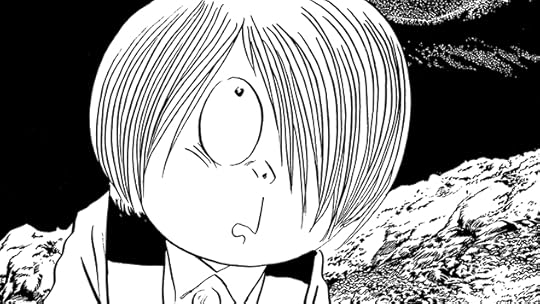
Kitaro looks like a young boy with dishevelled hair. He’s kind of unassuming and quite generous with his time and powers. He happens to be a three hundred and fifty year old yokai (one of many shapeshifting Japanese supernatural beings with origins in Japanese folklore and myth). And it is no wonder how this charming character---more popularly referred to as GeGeGe No Kitarō---has spawned a whole series of films, TV shows, and video games in Japan where he has rebirthed such a fascinating and rich tradition by injecting it into pop culture.
This volume also has a short but wonderful yokai glossary that includes a little background on the creatures that appear throughout these stories. This provides context that definitely enriches the reading experience. For instance, we learn that Kitaro has only one eye but his father is a talking eyeball who travels around in Kitaro’s empty eye socket, watching out for his son and giving him timely advice (his father died when Kitaro was a newborn, but his eyeball “rolled from his jellified corpse” and dear old dad willed himself back to life out of love and concern for his son).

In the West, Mizuki is better known for his more serious works (Onward Towards Our Noble Deaths, a semi-autobiographical account of his time as infantry in WWII; and his Showa series detailing the history of 20th century Japan).
For a bit more on Mizuki, see this New Yorker piece published in 2015 upon his death: ”Shigeru Mizuki’s War-Haunted Art & Life”.
Kitaro looks like a young boy with dishevelled hair. He’s kind of unassuming and quite generous with his time and powers. He happens to be a three hundred and fifty year old yokai (one of many shapeshifting Japanese supernatural beings with origins in Japanese folklore and myth). And it is no wonder how this charming character---more popularly referred to as GeGeGe No Kitarō---has spawned a whole series of films, TV shows, and video games in Japan where he has rebirthed such a fascinating and rich tradition by injecting it into pop culture.
This volume also has a short but wonderful yokai glossary that includes a little background on the creatures that appear throughout these stories. This provides context that definitely enriches the reading experience. For instance, we learn that Kitaro has only one eye but his father is a talking eyeball who travels around in Kitaro’s empty eye socket, watching out for his son and giving him timely advice (his father died when Kitaro was a newborn, but his eyeball “rolled from his jellified corpse” and dear old dad willed himself back to life out of love and concern for his son).
In the West, Mizuki is better known for his more serious works (Onward Towards Our Noble Deaths, a semi-autobiographical account of his time as infantry in WWII; and his Showa series detailing the history of 20th century Japan).
For a bit more on Mizuki, see this New Yorker piece published in 2015 upon his death: ”Shigeru Mizuki’s War-Haunted Art & Life”.

February 19, 2023
A reprint of the 2013 release, if you missed it the first time, it's worth picking up now. This curated collection of Kitaro stories from the 1960s contains a few that will be of special interest to fans of the 2018-20 TV series, including the original "Ghost Train" and "Great Yokai War" pieces, and a couple that showcase Mizuki's ability to work in political themes. Really the only thing missing is Neko Musume (Cat Girl/Chick), which makes me sad, but not enough to knock a star off.

March 14, 2024
I must admit that the ideea of this manga feelt very appealing, but overall the stories left me unimpressed.
I felt quite bored.
So, no big history here!
I felt quite bored.
So, no big history here!

July 13, 2024
This was not only cute, but really interesting and educating. It was really awesome to see some of the Japanese monsters and what they can do.

August 18, 2021
Maybe three and a half.
Really interesting to finally read this comic, especially as a Godzilla fan. Shigeru Mizuki is a huge force in manga, especially through this yokai-centric title, which also helped to inspire the Yokai Monsters set of films from Daiei. The general story of a sort of half-yokai who helps people and deals with various monster-related problems has been done and redone many times as well. I have seen the live-action movie (or maybe both of them, it's a bit foggy now) made from this franchise, but this was my first time to visit the manga, and I loved it and mildly disliked it in turns.
The premise, which seems borrowed from a series of kamishibai that Mizuki did not create if I am understanding correctly, is that Kitaro is a boy half-yokai who lives in a graveyard and who only has one eye--his other eye is actually his father, who can pop out and walk around. Kitaro has a magic vest made from hairs of his ancestors, and he has seemingly endless powers that manifest themselves whenever he needs them to vanquish the latest threat. Kitaro generally helps people, but he is on the fringes and doesn't necessarily side with humans by default.
I liked the mix of detailed backgrounds and cartoony characters. The stories had a bit more darkness to them than I thought they would, which I thought brought them to life. However, I got really tired of how Kitaro just suddenly has another new power that he needs to to conveniently take out the latest monster--just seemed so lazy.
This volume includes the story that inspired Yokai Monsters: The Great Yokai War (really interesting to see just how different it is), and a story based on a previous manga that Mizuki did that featured Godzilla--that manga being Kaiju Raban, which I reviewed over on Toho Kingdom. The Kitaro version of the story is much shorter, but follows Raban practically beat-for-beat. It seems unlikely that Raban will ever be translated into English officially, so Godzilla fans can enjoy this version in English instead as a consolation prize :)
I would like to read more because I like yokai and I like reading historical manga, but I also have to say I am a bit disappointed with the manga so far.
Really interesting to finally read this comic, especially as a Godzilla fan. Shigeru Mizuki is a huge force in manga, especially through this yokai-centric title, which also helped to inspire the Yokai Monsters set of films from Daiei. The general story of a sort of half-yokai who helps people and deals with various monster-related problems has been done and redone many times as well. I have seen the live-action movie (or maybe both of them, it's a bit foggy now) made from this franchise, but this was my first time to visit the manga, and I loved it and mildly disliked it in turns.
The premise, which seems borrowed from a series of kamishibai that Mizuki did not create if I am understanding correctly, is that Kitaro is a boy half-yokai who lives in a graveyard and who only has one eye--his other eye is actually his father, who can pop out and walk around. Kitaro has a magic vest made from hairs of his ancestors, and he has seemingly endless powers that manifest themselves whenever he needs them to vanquish the latest threat. Kitaro generally helps people, but he is on the fringes and doesn't necessarily side with humans by default.
I liked the mix of detailed backgrounds and cartoony characters. The stories had a bit more darkness to them than I thought they would, which I thought brought them to life. However, I got really tired of how Kitaro just suddenly has another new power that he needs to to conveniently take out the latest monster--just seemed so lazy.
This volume includes the story that inspired Yokai Monsters: The Great Yokai War (really interesting to see just how different it is), and a story based on a previous manga that Mizuki did that featured Godzilla--that manga being Kaiju Raban, which I reviewed over on Toho Kingdom. The Kitaro version of the story is much shorter, but follows Raban practically beat-for-beat. It seems unlikely that Raban will ever be translated into English officially, so Godzilla fans can enjoy this version in English instead as a consolation prize :)
I would like to read more because I like yokai and I like reading historical manga, but I also have to say I am a bit disappointed with the manga so far.

October 4, 2013
Kitaro is a kind of bizarro, supernatural superhero. There is no supernatural (or human) attack he can't take, and just when you think he's beaten, he pulls out some new trick, whether it be flattening himself like a pancake or turning his hair into needles shooting from his head (and leaving him nearly bald).
Despite his unbeatable powers, this pulpy character remains humble and really seeks only to live in his strange Baba-yaga like house in the graveyard with his yokai friends.
The thick volume of comics chronicles many adventures, including many where he saves some hapless child from a sticky fate, during which he takes on many fearsome foes, including (but certainly not limited to) other dangerous yokai, yakuza goons, Frankenstein's Monster, a "cat master" and numerous other fiends both strange (Beardback) and familiar (Snotty Kids).
Even though the stories are often fairly funny, and the characters humorously drawn...some of the yokai are quite disturbing and wouldn't have seemed out of place in a Junji Ito work (Uzumaki). Overall, it was very interesting and fun to read, not to pass up for fans of the supernatural, folklore, or manga in general.
Despite his unbeatable powers, this pulpy character remains humble and really seeks only to live in his strange Baba-yaga like house in the graveyard with his yokai friends.
The thick volume of comics chronicles many adventures, including many where he saves some hapless child from a sticky fate, during which he takes on many fearsome foes, including (but certainly not limited to) other dangerous yokai, yakuza goons, Frankenstein's Monster, a "cat master" and numerous other fiends both strange (Beardback) and familiar (Snotty Kids).
Even though the stories are often fairly funny, and the characters humorously drawn...some of the yokai are quite disturbing and wouldn't have seemed out of place in a Junji Ito work (Uzumaki). Overall, it was very interesting and fun to read, not to pass up for fans of the supernatural, folklore, or manga in general.

January 19, 2023
Thoroughly enjoyed this collection and the yokai it showcased some vaguely familiar and some new to me. I also appreciated the glossary included for a bit more details. I'm intrigued to learn more about Japanese folklore, yokai included and appreciated being able to see some of the foundations to Japanese Horror. Also beautiful landscapes and backgrounds.

October 23, 2015
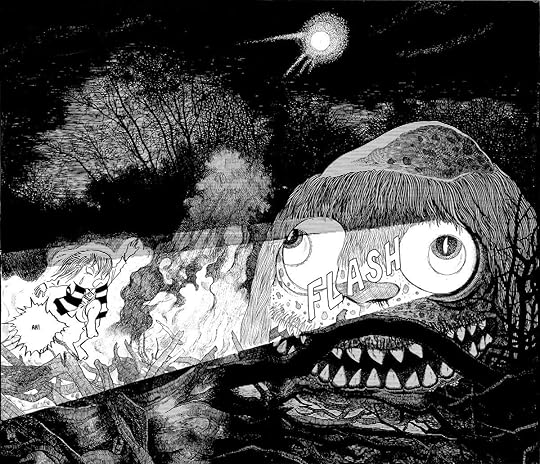
First time I've read any Mizuki, but I want to read more. The best parts of this are the yokai themselves, Mizuki giving them much more detail (drawn and not) than Kitaro or his pops. A glossary in the back gives detail to each one, not that you really need it, but especially great are Hyakume, a baseball playing oversized amalgam of curvy flesh, eyes and mouths; Kyuketsu-ki, a Kubrickian metaphysical night-sky dweller and nebulous god of one of the best stories, "Vampire Trees"; and of course the Zeuglodon, centerpiece from "Creature from the Deep," this collection's best (and longest) story, full of mad scientists, kaiju and battling robots. This is fun campy horror and I see why so many people like it. Strange that D&Q left unnoticed so many typos. Hopefully you'll correct those and re-release this one when volume 2 comes out... Right?

February 23, 2022
This is great stuff. Imagine early X-Files where they were doing monster of the week, but instead of sexy FBI agents you have a ghost/monster/mild god/phantom boy solving the problems, sometimes with clever shit, sometimes by using his varying super powers, like shooting his hair out like needles.
It's unapologetically weird. Kitaro's father is an eyeball with arms and legs who mostly lives in Kitaro's left eye socket, which is just a fleshy pit that he fits in perfectly.
Take EC comics, but make them a little more funny and cartoon-y, and you've got something close to Kitaro. It's just bizarre, goofy fun. This would probably be a good gateway manga for someone who doesn't care for it but is into horror.
Weird thing about my grandma? She always went balls-out for Halloween. Which I don't think was the case when my mom was a kid.
One year she was Grambo, a Rambo grandma, in full camo, helmet, all that shit. But still with her old lady glasses. Another year, we made a haunted house in our basement, and she was a fortune teller. She put on white makeup and heavy eyeliner, and this gigantic wig with long, black, stringy hair. She looked scary. I was kind of freaked out, to be honest, and it was MY grandma. We had a bunch of other kids over to experience the terror of a 10x10 basement with cardboard walls that led you through a maze of nonsense, and they were all a lot more scared of my grandma than anything else with the possible exception of Child's Play 2, which we watched that night even though I was probably in first grade. I have to assume my mom had no fucking idea that it was a Rated R movie where a doll gets its somewhat-human hand ripped off, then jams a knife in its place so he has a knife hand. AND, from the IMDB parents guide:
9 uses of "fuck" (1 written).
A few of "goddamn", "ass", "hell" and "bitch"
1 use of "bastard"
1 use of "dick"
Several uses of "shit"
A man visits a liquor store to try to pick up vodka for a date. Assorted bottles are seen behind the counter.
a child takes a puff of a cigarette and coughs having done so.
A woman is a underage smoker.
And, perhaps my favorite:
A machine in a toy factory shoves doll eyeballs into his actual eyes in a pov shot. He is shown with the doll eyes replaced with blood around the eye socket.
My grandma was a trooper, and she was pretty nice to us when we were kids. I don't know if I'd be the same. I'd like to think so. I mean, what else am I going to do all day? I'm retired, I live in a two-bedroom apartment with a bunch of other seniors. Maybe going balls-out on Halloween is something to look forward to?
But it wasn't a love of Halloween, it was because she was a dope-ass grandma.
It's unapologetically weird. Kitaro's father is an eyeball with arms and legs who mostly lives in Kitaro's left eye socket, which is just a fleshy pit that he fits in perfectly.
Take EC comics, but make them a little more funny and cartoon-y, and you've got something close to Kitaro. It's just bizarre, goofy fun. This would probably be a good gateway manga for someone who doesn't care for it but is into horror.
Weird thing about my grandma? She always went balls-out for Halloween. Which I don't think was the case when my mom was a kid.
One year she was Grambo, a Rambo grandma, in full camo, helmet, all that shit. But still with her old lady glasses. Another year, we made a haunted house in our basement, and she was a fortune teller. She put on white makeup and heavy eyeliner, and this gigantic wig with long, black, stringy hair. She looked scary. I was kind of freaked out, to be honest, and it was MY grandma. We had a bunch of other kids over to experience the terror of a 10x10 basement with cardboard walls that led you through a maze of nonsense, and they were all a lot more scared of my grandma than anything else with the possible exception of Child's Play 2, which we watched that night even though I was probably in first grade. I have to assume my mom had no fucking idea that it was a Rated R movie where a doll gets its somewhat-human hand ripped off, then jams a knife in its place so he has a knife hand. AND, from the IMDB parents guide:
9 uses of "fuck" (1 written).
A few of "goddamn", "ass", "hell" and "bitch"
1 use of "bastard"
1 use of "dick"
Several uses of "shit"
A man visits a liquor store to try to pick up vodka for a date. Assorted bottles are seen behind the counter.
a child takes a puff of a cigarette and coughs having done so.
A woman is a underage smoker.
And, perhaps my favorite:
A machine in a toy factory shoves doll eyeballs into his actual eyes in a pov shot. He is shown with the doll eyes replaced with blood around the eye socket.
My grandma was a trooper, and she was pretty nice to us when we were kids. I don't know if I'd be the same. I'd like to think so. I mean, what else am I going to do all day? I'm retired, I live in a two-bedroom apartment with a bunch of other seniors. Maybe going balls-out on Halloween is something to look forward to?
But it wasn't a love of Halloween, it was because she was a dope-ass grandma.

November 2, 2021
I have never heard of Kitaro before but this was so much fun to read! There are many adventure stories in here about the half-human & half monster named Kitaro. He is the hero of the stories and he ends up fighting other monsters to save the regular humans. He has just one eye and his tiny father lives in his other empty eye socket. Plus he has a magic vest!
To me, reading this was like reading those old fashioned comic books from the 50s or 60s. So relaxing! It's good to forget other things for awhile and just enjoy a good adventure story with lots of yokai. There is a wide variety of stories and they even feature a few western monsters like Dracula, the wolfman, Frankenstein's monster and a witch. Plus there's a giant robot! And yes, in one tale the giant yokai battle it out very much like Godzilla does and who doesn't love Godzilla. So many different kinds of yokai with many types of powers and schemes. And have you ever seen a whale with legs? That story was the longest and Kitaro faces his strongest enemy in my opinion!
These stories were originally published in Japan back in 1967-1969.
Tons of great art in here! Its all black and white but it is basically a super fat comic book! And the book also has a glossary at the back of a few Japanese terms plus a photo gallery of the main characters (yokai).
To me, reading this was like reading those old fashioned comic books from the 50s or 60s. So relaxing! It's good to forget other things for awhile and just enjoy a good adventure story with lots of yokai. There is a wide variety of stories and they even feature a few western monsters like Dracula, the wolfman, Frankenstein's monster and a witch. Plus there's a giant robot! And yes, in one tale the giant yokai battle it out very much like Godzilla does and who doesn't love Godzilla. So many different kinds of yokai with many types of powers and schemes. And have you ever seen a whale with legs? That story was the longest and Kitaro faces his strongest enemy in my opinion!
These stories were originally published in Japan back in 1967-1969.
Tons of great art in here! Its all black and white but it is basically a super fat comic book! And the book also has a glossary at the back of a few Japanese terms plus a photo gallery of the main characters (yokai).

May 19, 2014
Kitaro is the third Shigeru Mizuki book to be released by Drawn and Quarterly and is the first to release to feature Mizuki's most famous creation, the eponymous Yokai boy Kitaro. Kitaro, or GeGeGe no Kitaro, as the series is known in Japan, is easily Mizuki's most famous creation but it has taken until 2013 for an official English release, not counting Kodansha's two bilingual volumes that were released for Japanese audiences learning English and are now fairly hard to come by. As Kitaro is Mizuki's flagship character, he has a fairly long publishing history in Japan and, therefore, it is slightly complicated to track the publishing history without referring to Japanese sources. However, it does seem that the original run of Kitaro comics were published between 1960 and 1969 in Weekly Shōnen Magazine and totalled nine volumes. The comics in this volume are selected from late in that period, although they do not appear in order. The self-contained, formulaic style of the strips means that this does not really distract from readers knowledge or enjoyment although personally I would have preferred it if Drawn and Quarterly had embarked on a full, chronological release of the series. I guess they decided to go with a sort of 'best-of' release in order to gauge interest, as a 9 volume series from the 1960s may have been too risky to undertake. My main criticism with this approach is that readers are introduced to characters who are already established without any sort of origin story. Of course, having not had chance to read the original stories I don't know if this is how Japanese readers would have also been introduced to the characters. Overall, this is only a small criticism and doesn't majorly distract from enjoyment. What is more annoying is that Drawn and Quarterly don't provide any background information relating to original publication dates except for Matt Alt stating in the introduction that they were taken from between 1967 and 1969. Despite this lack, Drawn and Quarterly do provide a few extras with this book including an introduction, a 'Yokai Gossary' (Yokai being the Japanese word for ghosts, goblins and other supernatural beings in Japan) by translator and Yokai expert Zach Davisson and notes to explain some of the references that may be unfamiliar for Western readers. The introduction is fairly short but provides a good introduction to Yokai, Kitaro and Shigeru Mizuki himself, although I would have liked it if it were somewhat more detailed. Still, it is nice that Drawn and Quarterly made the effort to include these as some of their early manga releases included no back ground information whatsoever.
Like all of Drawn and Quarterly's books, especially their manga, this is a high quality release. It's a big softcover with french-flaps, including 375 pages of comics presented in a larger format than most regualr manga releases allowing readers to fully appreciate Mizuki's wonderful artwork that combines detailed, photo-realistic backgrounds, with goofy, fun, cartoony characters. Overall there are 13 different stories of different lengths and, although there are definitely some that stand out more than others, they are all a joy to read. What mostly makes them so interesting is the way that each one will feature different Yokai that Kitaro will have to battle against, sometimes using his wits and other times his strength, to help out humans who are often under threat from the more evil Yokai. Unlike the antagonists in the book, Kitaro, his father, Medama Oyaji, and his sometime friend Nezumi Otoko, are friendly Yokai who are willing to help humans and live peacefully among them. In a few of the weaker stories the way Kitaro overcomes his opponents can be a little ill thought out, with Mizuki having to resort to captions explaining the outcome rather than being able to illustrate it but, what keeps the strips enjoyable is Mizuki's knowledge of the different Yokai of Japan, explaining each Yokai's characteristics and making use of wonderful character designs to make each one interesting and unique.
By far, the standout stories in the book are the longest ones that occur towards the middle of the book, The Great Yokai War and Creature From the Deep. In The Great Yokai War, Mizuki utilises his knowledge of Japanese Yokai to provide Kitaro with a team of Yokai, all of whom look amazing and have interested skills, who then have to battle against a range of Western Yokai who are trying to take over a small Japanese island. This shows the breadth of knowledge Mizuki has in regard to all monsters, both Japanese and Western, as he makes use of some Western ghouls that even Westerners would find to be obscure. The notes for Creature From the Deep claim that it is one of the first stories to combine two massive Japanese pop-culture phenomenons, the giant monster (Kaiju such as Godzilla) and the giant robot, in an amazingly fun story where Kitaro, who has been turned into an unrecognisable giant monster has to slug it out with a giant robot. This story is a perfect example of the goofy, camp fun on display throughout the book and the battle scenes are a joy to behold. Both these stories also represent Mizuki's humanism and seem to have an anti-war sentiment that runs through many of his other works.
Although this is not a perfect book it is pretty damn close and has a lot going for it. All the stories are enjoyable and introduce interesting characters that are well visualised by Mizuki. It does have a slightly old, camp feel to it in line with things like The Munsters but I don't feel this is distracting and I certainly feel that children would enjoy these stories just as much as older manga and comics aficionados. Hopefully, people will have bought and will continue to buy this book and maybe we'll see another volume soon. I certainly wouldn't waste any time in picking up another Kitaro collection.
Like all of Drawn and Quarterly's books, especially their manga, this is a high quality release. It's a big softcover with french-flaps, including 375 pages of comics presented in a larger format than most regualr manga releases allowing readers to fully appreciate Mizuki's wonderful artwork that combines detailed, photo-realistic backgrounds, with goofy, fun, cartoony characters. Overall there are 13 different stories of different lengths and, although there are definitely some that stand out more than others, they are all a joy to read. What mostly makes them so interesting is the way that each one will feature different Yokai that Kitaro will have to battle against, sometimes using his wits and other times his strength, to help out humans who are often under threat from the more evil Yokai. Unlike the antagonists in the book, Kitaro, his father, Medama Oyaji, and his sometime friend Nezumi Otoko, are friendly Yokai who are willing to help humans and live peacefully among them. In a few of the weaker stories the way Kitaro overcomes his opponents can be a little ill thought out, with Mizuki having to resort to captions explaining the outcome rather than being able to illustrate it but, what keeps the strips enjoyable is Mizuki's knowledge of the different Yokai of Japan, explaining each Yokai's characteristics and making use of wonderful character designs to make each one interesting and unique.
By far, the standout stories in the book are the longest ones that occur towards the middle of the book, The Great Yokai War and Creature From the Deep. In The Great Yokai War, Mizuki utilises his knowledge of Japanese Yokai to provide Kitaro with a team of Yokai, all of whom look amazing and have interested skills, who then have to battle against a range of Western Yokai who are trying to take over a small Japanese island. This shows the breadth of knowledge Mizuki has in regard to all monsters, both Japanese and Western, as he makes use of some Western ghouls that even Westerners would find to be obscure. The notes for Creature From the Deep claim that it is one of the first stories to combine two massive Japanese pop-culture phenomenons, the giant monster (Kaiju such as Godzilla) and the giant robot, in an amazingly fun story where Kitaro, who has been turned into an unrecognisable giant monster has to slug it out with a giant robot. This story is a perfect example of the goofy, camp fun on display throughout the book and the battle scenes are a joy to behold. Both these stories also represent Mizuki's humanism and seem to have an anti-war sentiment that runs through many of his other works.
Although this is not a perfect book it is pretty damn close and has a lot going for it. All the stories are enjoyable and introduce interesting characters that are well visualised by Mizuki. It does have a slightly old, camp feel to it in line with things like The Munsters but I don't feel this is distracting and I certainly feel that children would enjoy these stories just as much as older manga and comics aficionados. Hopefully, people will have bought and will continue to buy this book and maybe we'll see another volume soon. I certainly wouldn't waste any time in picking up another Kitaro collection.

November 3, 2025
I get why it's such a seminal part of manga history and so beloved in Japan. It's twisty and dark in a way that doesn't feel like horror because it's not; it's folklore in a most easily digestible form.
My issues were that the text is incredibly wordy and repetitive, and that each case has a lot of build-up only to be solved in such a rush that I often felt like I'd skipped pages.
Not the best manga I've ever read, but definitely something worth reading if you're looking to expand your knowledge base.
My issues were that the text is incredibly wordy and repetitive, and that each case has a lot of build-up only to be solved in such a rush that I often felt like I'd skipped pages.
Not the best manga I've ever read, but definitely something worth reading if you're looking to expand your knowledge base.

January 5, 2025
A truly delightful collection of stories, with an in-depth , informative introduction and translation notes. Not every story is perfect - some are stronger than others, and a few are just ridiculous - but the fascinating insight into the cultural context and how these stories fit in the history of manga and Japanese fiction in general more than makes up for some of the weaker entries. A remarkable work, both as entertainment and as a cultural artifact.

November 15, 2021
An enjoyable collection of stories that are somewhat spooky and somewhat silly. The cultural notes and the yokai dictionary at the back of the book are very helpful. It isn't a fault of this translation, but personally I prefer the older Kitaro stories that are more horror and less superhero.

October 29, 2013
My first exposure to Ge Ge Ge no Kitaro came in the form of some screen captures from one of the assorted video game adaptations that I saw in an issue of a gaming magazine years ago. Ever since then, I've been curious about the series, its cartoonish and appealing yokai that have made such a massive impact on culture, but that have thus far never really been translated for Western audiences for some reason. Thankfully, with this volume, that starts to change.
It's a pretty great series, reminding me a lot of the Cat Eyed Boy books that I read by Kazuo Umezu, though I believe these came first. Shigeru Mizuki's conception of yokai have influenced pretty much every subsequent depiction of them, and notably a bunch of them showed up in Taskahi Miike's semi-recent Great Yokai War, which also borrows the title (though not the exceedingly bizarre plot) from one of the stories in this volume.
My favorite bit in Kitaro was probably the kaiju story, which was top to bottom wonderful. I want a stuffed Zeuglodon now.
It's a pretty great series, reminding me a lot of the Cat Eyed Boy books that I read by Kazuo Umezu, though I believe these came first. Shigeru Mizuki's conception of yokai have influenced pretty much every subsequent depiction of them, and notably a bunch of them showed up in Taskahi Miike's semi-recent Great Yokai War, which also borrows the title (though not the exceedingly bizarre plot) from one of the stories in this volume.
My favorite bit in Kitaro was probably the kaiju story, which was top to bottom wonderful. I want a stuffed Zeuglodon now.

June 1, 2014
Ge Ge Ge No Kitaro is one of those legendary Japanese series, so it's quite a treat to finally see some of it translated into English. These stories originally appeared back in the late sixties, and were written for a younger audience. But, honestly, the naïveté of the plotting is part of the charm. Kitaro seems to develop abilities as the story requires. Still, the pacing is lively and the depth of imagination on display is amazing. In some ways, this reads like the bizarre offspring of Osamu Tezuka and Steve Ditko. Drawn and Quarterly have been working hard to bring Shigeru Mizuki's work to Western audiences. Hopefully this volume will be successful enough to warrant further Kitaro volumes.
December 15, 2013
Just because it's a classic doesn't mean that it's good... I've enjoyed parts of the various and childish Kitarou anime series over the years, but this collection of several chapters from the original manga shows that the original doesn't have the best storytelling in the world. The art conveys little sense of action and often author Mizuki relies on off-screen narration to explain how Kitarou gets himself out of trouble. Shockingly, not a single one of the selected chapters includes the iconic Neko Musume!!

October 23, 2017
Kitaro's a cool little dude and I love his father. Luckily I had previously read The Birth of Kitaro (which was translated and published a few years after this volume) so I had some background on Kitaro. I love the attention to detail with some end notes to help Western audiences follow along with some of the details that would be missed and the yokai glossary is a good little resource. It gets kind of silly with Kitaro always being able to figure out a new trick each time he faces a tough challenge but it's still a fun collection and the Kaijū style story is particularly enjoyable.

November 28, 2015
Fantastic and fantastical graphic novel about "bad" Japanese hokai and the little 300-year-old boy hokai that battles them all.
Hokai are mythical monsters deeply rooted in Japanese tradition. Shigeru Mizuki was one of the first to put pen to paper to show what they looked like.
If you like Miyazaki's work, you'll enjoy Kitaro as so many of the creatures from Studio Ghibli films seem to owe a debt to some of Mizuki's hokai.
Fun, imaginative and creepy - what more could one want? :o)
Hokai are mythical monsters deeply rooted in Japanese tradition. Shigeru Mizuki was one of the first to put pen to paper to show what they looked like.
If you like Miyazaki's work, you'll enjoy Kitaro as so many of the creatures from Studio Ghibli films seem to owe a debt to some of Mizuki's hokai.
Fun, imaginative and creepy - what more could one want? :o)

April 6, 2016
This was an interesting set of stories featuring some of Japan's most famous supernatural mythology.

May 4, 2025
Kitaro is one of the first manga and most popular series that isn't well known outside of Japan. This volume is an anthology of some Kitaro stories, translated for an english audience. And I'm really glad they did.
Kitaro himself is weird and almost alien, but that means that his random powers and weird circumstances fit together perfectly. He faces other yokai (so there's a lot of Japanese mythology) and humans alike, but he rarely 'wins' his battles from the outset. He tends to get in over his head and has to be rescued by his father or other friends. But this also contains a lot of modern anime tropes which were clearly taken from this series.
As an example, he fights 'western yokai' which are basically all the monsters you usually find in Europe mythology like vampires, witches, and werewolves and he gets his butt whooped until his dad stabbed the Bird Box monster in the eye. Then there's the chapter where Kitaro gets transformed into a kaiju and has to fight a giant robot before the military finally drops a nuclear bomb on him.
It was a delight to read and even though you could tell its age by the art style and page layout, the stories were still exciting.
This book is expanded in a seven part series beginning with The Birth of Kitaro.
Kitaro himself is weird and almost alien, but that means that his random powers and weird circumstances fit together perfectly. He faces other yokai (so there's a lot of Japanese mythology) and humans alike, but he rarely 'wins' his battles from the outset. He tends to get in over his head and has to be rescued by his father or other friends. But this also contains a lot of modern anime tropes which were clearly taken from this series.
As an example, he fights 'western yokai' which are basically all the monsters you usually find in Europe mythology like vampires, witches, and werewolves and he gets his butt whooped until his dad stabbed the Bird Box monster in the eye. Then there's the chapter where Kitaro gets transformed into a kaiju and has to fight a giant robot before the military finally drops a nuclear bomb on him.
It was a delight to read and even though you could tell its age by the art style and page layout, the stories were still exciting.
This book is expanded in a seven part series beginning with The Birth of Kitaro.
November 30, 2017
It's important to keep in mind that Kitaro is, first and foremost, a childrens book (maybe like the same age range as Tintin or a touch younger?). So I'm reviewing it as a kids book. It reads like a bunch of short stories all involving a (fictional?) yokai (I mean, all yokai are fictional, but I specifically mean not based on existing lore) Kitaro. He goes on adventures and protects humanity from the evil yokai. His archenemies are the western yokai (Dracula, Werewolf, etc). The stories are simple but usually fun and cute. They kinda have a moral like fairy tails, but more subtle.
The real key to the 5 stars is the art. Mizuki is known for mixing realism into his manga and it really shines through here. A lot of great drawings where the creepiness really comes through. It may not be for everybody, but if you like Mizuki's previous works, especially his love for Japanese folklore, then its worth checking out.
The real key to the 5 stars is the art. Mizuki is known for mixing realism into his manga and it really shines through here. A lot of great drawings where the creepiness really comes through. It may not be for everybody, but if you like Mizuki's previous works, especially his love for Japanese folklore, then its worth checking out.

March 1, 2018
Reading these Kitaro stories back-to-back is like reading compilations of Golden Age or Silver Age comics. These are serialized stories, meant to grab attention and keep the reader coming back for more. There is no overarching plot. Kitaro wins against the bad guys by some new ability every so often. (Now I keep a pet snake in my stomach! Oh, and I can control my vest with my mind! And I can pee out radiation! And shoot my hair out like needles!)
Shigeru Mizuki is often praised for his depiction of yokai (Japanese monsters/demons), but I'm impressed by his ability to make common settings eerie and haunting. Gnarled trees against phone lines. Stone markers and weeds. Traditional village houses. Other artists may use similar settings, but Shigeru's art is particularly effective.
I don't know that I'll seek out more Kitaro stories, but now I can recognize when other work references this classic.
Shigeru Mizuki is often praised for his depiction of yokai (Japanese monsters/demons), but I'm impressed by his ability to make common settings eerie and haunting. Gnarled trees against phone lines. Stone markers and weeds. Traditional village houses. Other artists may use similar settings, but Shigeru's art is particularly effective.
I don't know that I'll seek out more Kitaro stories, but now I can recognize when other work references this classic.

February 10, 2019
The collection is part horror, part comedy, and all-over adventure. Each story takes about forty or so pages, and is entirely self-contained, which means they can be read in any order. The drawings are eerie and beautiful, but my favorite part was the macabre sense of humor. However, because this is only a short collection of a wider mythos, often times I felt confused about who was who. For example, Kitaro has an eyeball with arms and legs who helps him, and I didn’t figure out it was his father until a few stories in. I also liked how many of the stories give a moral lesson (like don’t laugh at that which you don’t understand, and don’t kill people…things like that).
Full review on my blog: https://madamewriterblog.com/2019/02/...
Full review on my blog: https://madamewriterblog.com/2019/02/...
January 2, 2024
Pick up Kitaro and discover the absolutely dreamlike, off the wall, bizarre world that this unassuming and all powerful young boy occupies.
This book is full of a range of different Kitaro stories by Shigeru Mizuki, think of it more as a greatest hits collection than anything else; and there are some amazing tales contained within.
The 12 stories see Kitaro play baseball with yokai, where the winner takes more than a straight forward victory. Then Kitaro is mutated into a kaiju. Then an ultimate face-off between western yokai - Vampires, Witches and Werewolf's - and classic Japanese yokai. And that just 3 of the stories.
If you enjoy unrestricted imagination and great art, wrapped up in a relaxing, enjoyable read for all ages, then you will like Kitaro.
This book is full of a range of different Kitaro stories by Shigeru Mizuki, think of it more as a greatest hits collection than anything else; and there are some amazing tales contained within.
The 12 stories see Kitaro play baseball with yokai, where the winner takes more than a straight forward victory. Then Kitaro is mutated into a kaiju. Then an ultimate face-off between western yokai - Vampires, Witches and Werewolf's - and classic Japanese yokai. And that just 3 of the stories.
If you enjoy unrestricted imagination and great art, wrapped up in a relaxing, enjoyable read for all ages, then you will like Kitaro.

November 12, 2024
Seminal shōnen manga by the yōkai grandmaster himself. This collection covers a wide variety of stories, some short, some long. Most follow the format of Kitaro battling a bad yōkai or naughty humans being scared straight. The mostly great translation is a bit spotty at points (a criminal calling a bestubbled farmer hag comes to mind), and I question Kitaro's origin not being included. This said, Matt Alt's intro gives historical context and the stories are brilliant. You can just imagine the impact tales like these had on Japanese pop culture and media. Would we have manga like Yu Yu Hakusho or characters like Mechagodzilla if not for Kitaro?
Favorite stories: Creature From the Deep, Vampire Trees, and The Cat Master.
Favorite stories: Creature From the Deep, Vampire Trees, and The Cat Master.
August 23, 2017
While this story is a lighthearted, quick read that I felt was written primarily to a young adult audience, I found myself intrigued and glad I picked it up off the shelf. My favorite elements of the book were what I gleaned of the cultural context of the times, and Mizuki's playful treatment of serious, sinister, spiritual monsters in the Japanese canon. I always appreciate even subtle shifts in my reading experience to jostle me out of complacency--like reading this graphic novel right to left. My reading of this would have been enhanced by learning a bit more of Mizuki's story, and how this novel came about.
October 17, 2017
GLORIOUS! Shigeru Mizuki did wonders in this manga, every story was moving, every story was interesting and every story was compelling. Not one bit of shallowness or pretentiousness. I had a very hard time finding the book, I looked all over the internet trying to find a good copy, finally finding in an Istanbul comic shop I now look back and feel this was a well deserved search effort. I loved the whole Yokai aspect of the Japanese culture, too. Wish Mizuki published even more books, I will dearly miss this quirky old man.
Displaying 1 - 30 of 97 reviews