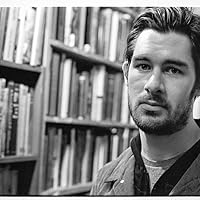
A stunning new collection of poetry from Shane McCrae, winner of the Whiting Writers' Award.
Shane McCrae, one of the most powerful voices in contemporary poetry, returns with The Many Hundreds of the Scent , an urgent new collection that brims with lyric force. He expands both the poetic and the personal mythologies that he has been constructing over the course of his career. In addition to introducing his readers to “the thin king / who eats the world,” McCrae invites them to bear witness to his tangle of childhood memories. In brutal, sorrowful lines, he recounts being kidnapped by his white supremacist maternal grandparents from his Black father as a boy. “O reader, listener, stay,” McCrae writes. “You are now evidence.”
In The Many Hundreds of the Scent , Homeric figures mingle with those who populate the poet’s world. Helen weighs Paris’s spear in her hand and bloodies a raging Achilles; Penelope burns her loom each night; Dido watches Aeneas’s ship burn on the horizon. A strikingly original and engaging poet, McCrae continually surprises―the collection includes a series of poems about the advent of post-rock and Hex , the debut album of the English band Bark Psychosis. With this collection, he has once more crafted an extraordinarily affecting book of poetry. As Kate Kellaway writes in The Guardian , “In McCrae’s hands, poetry is reclamation. It is also writing a way out and through.”
It was beautiful to be back in McCrae's prose, which shines more in his memoir as it allows more room for words to roam. Poem as container constricts some of the thoughts and feelings better expressed in narrative for McCrae. Nonetheless, a wonderful collection on the black body and how to move and get up and make sense of the world in its violent embrace. How does one live and love in a world that hurts them so much?
Finished "The Many Hundreds of the Scent" last night, poems that duck and weave, dance dance and then you are COLDCOCKED under the chin. “The Speech of the Thin King’s Minder” is the most playful poem I've read in a while. Another splendid collection. It will warp your mind in a beautifully damning way.
“McCrae shows us how we need new music and new ears and eyes.”
As the whole world asked, “Can anyone explain this strange feeling,” a poet raised his hand.
Shane McCrae is considered one of the most powerful voices in poetry today. As an award-winning poet and author, he has published more than a dozen poetry collections. His latest, The Many Hundreds of the Scent, follows the launch of a new memoir, Pulling the Chariot of the Sun: A Memoir of a Kidnapping, published by Simon & Schuster earlier this year.
The poetry collection also contains references to McCrae’s actual kidnapping by his maternal grandparents, which he explores in the new memoir. The book begins with an epigraph taken from a poem by the English Romantic poet John Clare. McCrae emerges from a foreshadowing, “That rocked thee like a cradle to thy root” with poems branching into themes of family, race, and identity.
From the very first word of the book, the poet entreats the reader. “Friend,” he begins, “I have turned the brambles back . . .” and as in a Grimm’s fairy tale, the poet opens a clearing, bringing into view all that was previously hidden. In the narrative throughout the poet is often present, appearing in childhood or as a father himself caught in the act of parenting.
McCrae creates a personal mythology on par with that of the Greeks, casting Achilles, Hector, Paris, Helen (and others) in battle scenes that begin to feel oddly and eerily domestic. This theme evolves into home as country—inhospitable, and deadly especially if you are American and Black.
In writing that “All comfort is decay” and “One’s opportunities to be unhappy are / One’s singlemost inheritance,” McCrae’s outlook is bleak. How can it not be, given a narrative tipping into recent history, fresh as the January 6 United States Capitol Attack and the persistent reports of Black men and women being killed in the streets? These poems with spare punctuation move quickly, barely slowing down for a closer look at injustice. Even the strangest details, a cartoon turkey leg or a glass-winged gerbil fly on by in a flash.
But this is a poet who is comfortable with the absurd, and presents it as stark reality, solid as a ladder hoisted from the underground by construction workers at night. In “Your Black Child” McCrae asks America—"how are you alive / When your black child is dead.”
I tell myself America she was Your life. I tell myself you knew she was Because I have to love you still, since you Are still alive and it’s a day since you Killed her— because I am your black child I raise my hands from the keys slowly because I am your black child
As is true for poetry, people often turn to music in order to cope. McCrae’s poetry actively listens and responds to music. It’s a score, really. The poems reference art and artists responding to McCrae’s refrain: “One’s opportunities to be unhappy are / Unlimited.” Proof is the pandemic, the “raw world” the windowless rooms in towers we have built hoping to reach forgiveness. McCrae laments: “Oh music / who will you make new?”
But what is a fitting soundtrack to an actual dystopia? Stare at the book’s cover while listening to “Dust Bowl” by Mogwai, one of the bands mentioned in “Hex,” one of McCrae’s longer poems, and that universal strange feeling fuses one’s identity to the times we’re living in. The impulse is to return to the beginning, the cleared path and “hundreds of the scent of oranges you’ve tasted / Newborn each time you tasted it . . .”
As speedy as some of McCrae’s poems are, others are in slow-motion matrix style, distorting time. In the book’s closing, the poet requires only seven lines of impeccable action to choreograph the stories of a rising number of dead. There is no comfort to be taken here. However, if fate is simply playing itself out there may still be hope for a reckoning. Patriots and poets alike have known what it is to be voiceless, though McCrae maintains the difference between the two.
It may seem obvious that injustice leads to unhappiness and a little less obvious that unhappiness is a privilege for anyone who survives injustice—who are not forced to assume the position, who are not flowers on a tree destined to become “strange fruit.” Those who are most vulnerable still have to consider all the ways they can be taken. It’s as clear as the footage from a bodycam.
As a Black American, McCrae seems to have moved past hope for a wake-up call. “But maybe the end of the world is ending,” he writes. “Maybe soon one will be in small ways sad again.” When this is the best-case scenario, we know we’re in trouble. McCrae shows us how we need new music and new ears and eyes. All the better if we are to live among the “many hundreds” who are following a different tune.
An exceptionally intimate collection, without the tenderness that one expects of intimacy. The reader is implored - demanded - to take responsibility as a witness to the way (a) Black life navigates itself in the face of American white supremacy. A confrontation with the too-closeness of unbearability -- whether of systemic racism, class disparity, or the various madnesses precipitated thereby -- McCrae's thematic work is given weight by the deceptively brief moments of reprieve his formal style opens in the text: inter-line breaks, gaps in the text, enjambment. All these breaks in continuity also syntactically restructure the sentences, carving new grooves for communication, separating clauses, whittling down and disguising meaning in the rhythm of transmission. It feels cliché to say, but orating these poems aloud and experimenting with what each of the types of breaks does for the poem's delivers is its own experience compared to reading and decrypting what's on the page.
Topically, I was also thrilled by McCrae's range. I'm not equipped to comment on the classical Greek retellings, other than to say that I found them compelling to read. The poems on music/sound ("Afterhex" and its successors; "As if its Prison") were spectacular, brain-restructuring, thrumming, teeming. What he does with reconfiguring refrains and returns to show both the motility and the ambiguity/ambivalence of experience and language is brilliant. I don't really have the words to describe how compelling the style is.
I had a difficult time with the selection of poems about his kidnapping. The trauma is palpable, but because it's such a personal recounting of the event, it is stripped of the usual sensationalisation of Black suffering. It simply lays it bare, in the language that it can afford, which in its gaps and elliptical pauses is sometimes no language at all. But, capturing more than a third of the book, I also found myself struggling with the repetition of the theme, without necessarily getting a new angle on it. Individual poems felt powerful, but together, it felt a bit like hashing out the same topic over and over. Perhaps this is the point, though (or *a* point), that these systemically ingrained traumas spiral inwards; that there isn't anything inherently novel or interesting about their continual invocation, and that's part of what makes them unbearable and ostensibly insurmountable. Surrounded by poems about working class life and the racialized bodies and languages that uphold much of it, these poems ask, what if underpinning much of getting around and getting on with life is precisely these moments of stasis or impasse, for and from which there really is no getting around or getting on?
the combination of metrical, punchy lines with these cold, repeating, interruptive blank spaces is so mesmerizing. few poems here I did not enjoy as much & the reinterpretations of iliad/odyssey/aeneid i found almost cursory to the project but then you reach these lines about listening to music that has within the span of your attention already receded into the world and it makes records of all wisps of air ever: "Listen / The songs are hits, but listening, the sure connections / Between all things become long clouds"
"A sphere in the space between two hands, a coin in the hand. Eventually, like bullets in America," (McCrane 63). A good poetry collection not many poems in this collection stood out but the ones that did were good. I loved: Your Black Child Construction Workers at Night The Staggering Man The Speech of thin King's Minder The Dead Negro in the Modernist Long Poem
Excellent, innovative, lush. I've been catching up on Shane's recent books and the more I read the more I'm sure he is one of our generational voices. Poems like "Hex" carry a gravitas like the great poems of history. Bravo.