Jump to ratings and reviews
Rate this book

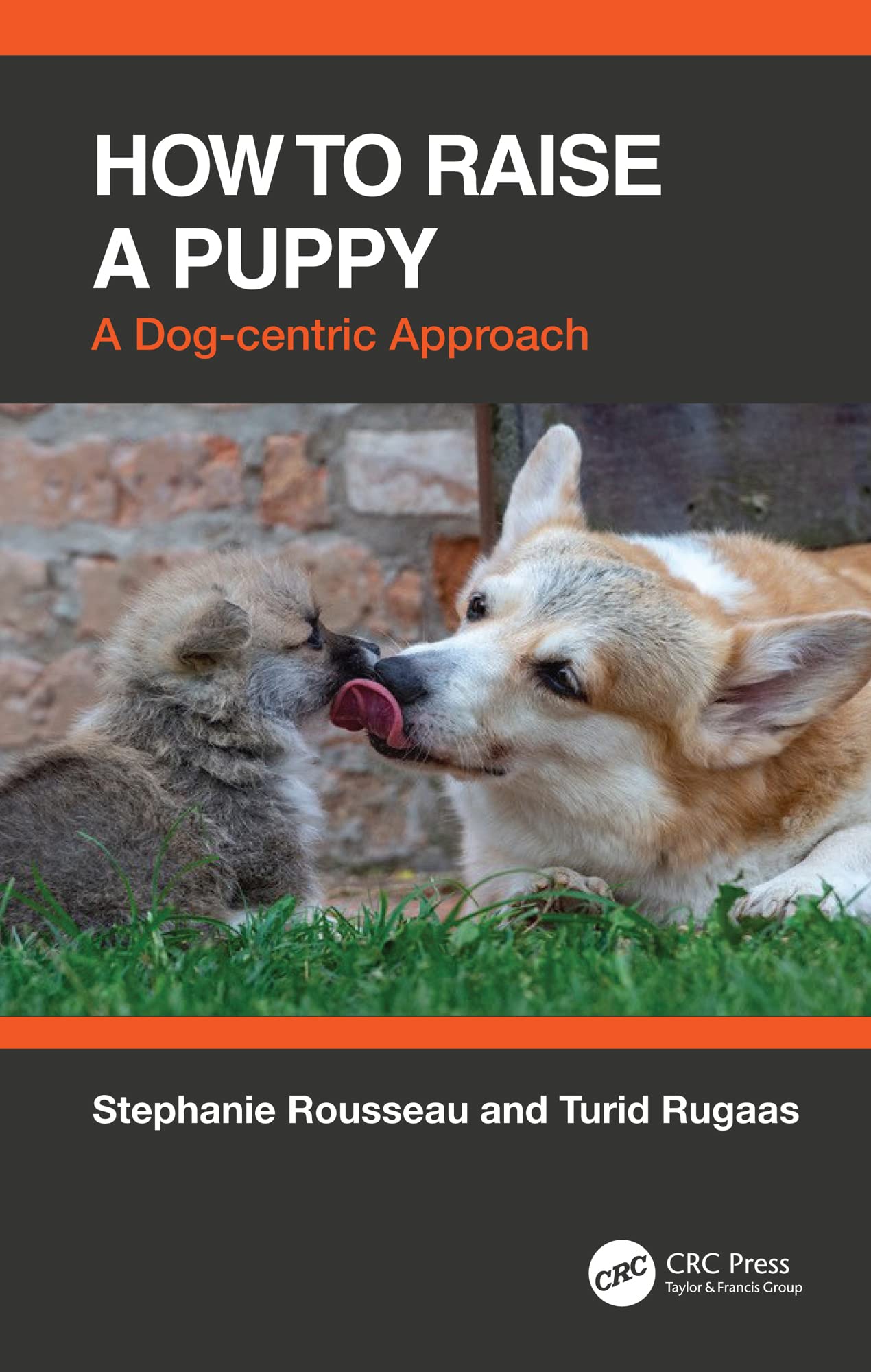
How to Raise a Puppy: A Dog-centric Approach

Rate this book
How to Raise a Puppy moves away from the traditional approach to raising puppies, focused on obedience and control, and instead takes an holistic, dog-centred approach. Drawing on research into how dogs naturally rear their young, and how dogs have evolved to behave and spend their time, it supports a new way of sharing our lives with our dogs. It also offers advice on dealing with some of the common challenges people experience with puppies, and tips for managing adolescence.

A much-needed resource for dog trainers, veterinarians and behaviourists to recommend to clients, this conveys a powerful message to help overcome all too common issues so many people have with their puppies. Packed with practical advice, it offers an overdue "puppy perspective", with respect for a dog as a sentient being at its core.

172 pages, Kindle Edition

Published October 11, 2022

Loading...
Loading...

About the author

Steph Rousseau studied in Trinity College Dublin and then Cambridge University before moving to London and adopting an ex-racing greyhound called Alife.

Alfie's numerous behavioural issues pulled her into the world of dog training, and she soon caught the bug. She began working as a dog trainer and canine behaviour consultant in 2013, and since then has been offering behaviour consults, social walks and puppy classes.

Her book on office dogs grew out of her final project for Turid Rugaas's International Dog Trainers' Education, and she has spoken internationally on the topic.

Ratings & Reviews

What do you think?
Rate this book

Friends & Following

Create a free account to discover what your friends think of this book!

Community Reviews

5 stars
31 (72%)
4 stars
10 (23%)
3 stars
2 (4%)
2 stars
0 (0%)
1 star
0 (0%)
Displaying 1 - 10 of 10 reviews
Profile Image for Laura Friis.
14 reviews1 follower
June 18, 2023
“It is our view that in order to grow into a great dog, your puppy does not need lots of training, he just needs love, understanding, some good habits and the chance to be a dog!” - Stephanie Rousseau and Turid Rugaas

Why did I get this book?
For a very long time I have been searching for a puppy book I could recommend with good conscience to new and experienced pet parents alike. The closest I have come so far has been Gwen Bailey’s “The perfect puppy”, but even with that I wasn’t entirely satisfied: it was a final compromise before giving up on my quest. But to my luck, this book dropped out of the sky when I was just about to give up. And I just had to read it. I did in fact end up getting two copies because my youngest dog loved it so much that she needed at taste. Of course that was my fault for leaving the book on the couch in the first place before I left for work.

What does this book do?
What is says on the tin. It teaches you how to successfully raise a puppy. And while many books claim this, what makes this book special is the approach. The book starts out with a chapter about what a dog is and how a dog would dog with no human intervention. From this introduction, the reader is brought on a journey into how we as humans can best mimic the natural care of puppies and help them grow happy and confident in our home. What truly sets this book apart from the masses though, is the complete absence of obedience focused approach. Instead we’re taught how to integrate our dogs into the household by giving them safety and love while meeting their needs and apply ever so gentle teaching techniques to help our puppies understand how the human world works. I grew particularly fond of this book when I saw that finally there’s a puppy book taking a stand against confinement. This book will teach you to cohabitate with your new family member without needing to use crates and it even is kind enough to highlight the potential downfalls to the practise. This book is great if you already have your puppy in your home, but also if you’re having thoughts about adding a new member to your household. A chapter in the book is dedicated to picking a puppy, talking to breeders, understanding breeds, and get ready to take your new puppy home. In short, this is so far the most complete and dog-compassionate puppy book I have read and I highly recommend it to anyone having or looking to have a puppy in their life, regardless of their experience level.

What does this book not do?
Obedience. If you’re looking for a book on how to teach your pup sit, stand, down, heel or any other trick, this is not the book. However, if you’re just starting out with a new puppy, you don’t need obedience anyway, so I’d suggest you’d go ahead and buy this book instead of what you were looking for. Obedience is super easy to teach if we have the foundation down and this book is just that: the foundation to a great relationship.
Profile Image for Salix.
5 reviews
March 28, 2026
Good starting point for first time dog owners, but strangely vague and unhelpful in other aspects. A book about how to use negative punishment - which I discourage.

· · ─ ·✶· ─ · ·· · ─ ·✶· ─ · ·· · ─ ·✶· ─ · ·· · ─ ·✶· ─ · ·· · ─ ·✶· ─ · ·· · ─ ·✶· ─ · ·· · ─ ·✶· ─ · ·

I enjoyed:

♦ Referencing how "free-range dogs" behave, instead of looking at wolves.
♦ Inclusion of Calming Signals, as would be expected of Turid Rugaas.
♦ Criticizing dogs with extreme features, such as a short snout or low backs.
♦ Repeatedly underlining the importance of sleep for a puppy and "sniffy walks".
♦ Encouraging nose work for mental stimulation.
♦ Talking about how you do not need to experience every single potential trigger in the socialization period.

· · ─ ·✶· ─ · ·· · ─ ·✶· ─ · ·· · ─ ·✶· ─ · ·· · ─ ·✶· ─ · ·· · ─ ·✶· ─ · ·· · ─ ·✶· ─ · ·· · ─ ·✶· ─ · ·

I disliked:

"(...) who would like a puppy but does not mind the breed of the dog".


To minimize the importance of breed selection is to ignore the reality of genetics. Highly specialized breeds - like those with intense herding or predatory drives - require owners with specific, prepared lifestyles. If a prospective owner has 'no preference' and no plan for these traits, they are effectively flying blind, completely unprepared for the reality of living with that animal. The authors should have mentioned that and not pretended like it is an acceptable stance to have.

(From a case study, where they ask 'Why did you choose the breed you did?')
"My wife is Portuguese, and we live here in Ireland, so we wanted to increase the number of Portuguese genes in the house! We also did some research and felt it was a good breed for us, as they don't shed, are supposed to be very family friendly and enjoy some exercise."


The reasoning in the quote is flawed because it prioritizes human sentiment and convenience over the biological requirements of the dog. Choosing a breed based on its "heritage" or "low-shedding" status ignores the intense working-drive, high-maintenance grooming, and complex mental stimulation needs inherent to breeds like the Portuguese Water Dog. This passive decision-making often leads to mismatched expectations, resulting in behavioral issues when the dog's actual needs - not just "some exercise" - remain unmet.

In short, these are not good enough reasons to get a specific dog breed, extremely vague and this should have been called out by the authors.

· · ─ ·✶· ─ · ·· · ─ ·✶· ─ · ·· · ─ ·✶· ─ · ·· · ─ ·✶· ─ · ·· · ─ ·✶· ─ · ·· · ─ ·✶· ─ · ·· · ─ ·✶· ─ · ·

Advising buyers to 'fake' an emergency to delay puppy pickup is a symptom of a larger, systemic problem. If a breeder is willing to compromise a puppy's critical neuro-developmental window by forcing an early release, they are inherently unethical. The logical conclusion is not to circumvent the breeder's rules, but to bypass the breeder entirely; one should not be financing the operations of a breeder who prioritizes convenience over biological welfare.

· · ─ ·✶· ─ · ·· · ─ ·✶· ─ · ·· · ─ ·✶· ─ · ·· · ─ ·✶· ─ · ·· · ─ ·✶· ─ · ·· · ─ ·✶· ─ · ·· · ─ ·✶· ─ · ·

"Allowing the puppy to move freely around the house and garden - all the time!"


While I acknowledge the opposition to crating, advocating for unrestricted household access is a fundamental failure of environmental management that sets both the owner and the puppy up for failure. A puppy does not possess the cognitive maturity to distinguish between an authorized chew toy and household property; they operate purely on sensory input and reinforcement.

Instead of 'free-roaming,' I recommend a managed puppy pen. This provides adequate space for physical movement and growth while limiting the puppy's environment to a space where most choices are inherently desirable for the human family. This creates a foundation of stimulus control, and a reinforcement history of desirable choices, allowing you to curate the puppy's experience. From there, you can systematically introduce household freedom, utilizing positive interruption and redirection only as a final safety net for the occasional error, rather than a constant, exhausting battle against the puppy's natural curiosity, you'd be up against with free-roaming.


· · ─ ·✶· ─ · ·· · ─ ·✶· ─ · ·· · ─ ·✶· ─ · ·· · ─ ·✶· ─ · ·· · ─ ·✶· ─ · ·· · ─ ·✶· ─ · ·· · ─ ·✶· ─ · ·

The training philosophy presented in this book is characterized by a reliance on Negative Punishment, disguised as 'force-free' guidance.

In behavioral psychology, "removing attention" or "putting the dog behind a gate" is known as Negative Punishment (removing a desirable stimulus to decrease a behavior). It tells the dog what not to do (don't jump, don't bite). However, this approach is fundamentally incomplete because it fails to utilize Differential Reinforcement of Incompatible Behavior (DRI) - in simple terms, telling the dog *what* to do.

Advising owners to simply avoid triggers, turn their body away and wait for the dog to give up, show the "magical hand sign" or wait for the dog to 'grow out of' instinctual drives like jumping is not training; it is passive management that fails to prepare the dog for the complexities of a human-centric environment. An educated training plan must be proactive, using antecedent arrangement and positive reinforcement to teach the dog what to do, rather than merely reacting to what they shouldn't.

The book also seems to be almost exclusively against using food for training purposes, which is why they rely on -P so much. Make of that what you will yourself.

"We don't recommend asking your dog to sit or wait before feeding, or making him 'work' throughout the day to earn his food as rewards."


"The grandmother repeatedly moving away or getting up to turn her back each time he bit was not feasible."


► Implying this would have been her training approach in a different setting, shows the reliance on -P again.

"If you find that your puppy is barking because they have learned that it is a great way to get your attention, try looking away and using the hand signal when they start barking, or better still, when you think they're about to start"


"If the puppy has been acknowledged and continues to jump up, you simply turn your back, look away and use the hand signal"


"Another common concern for puppy owners is that the puppy will jump up at strangers on the street." (They then say you should just avoid people by going around them) "However, most of the puppies naturally grew out of this behaviour".


· · ─ ·✶· ─ · ·· · ─ ·✶· ─ · ·· · ─ ·✶· ─ · ·· · ─ ·✶· ─ · ·· · ─ ·✶· ─ · ·· · ─ ·✶· ─ · ·· · ─ ·✶· ─ · ·

Claiming that showing a palm will stop everything from table-surfing to fear-reactivity is pure wishful thinking. If canine behavior were this easily modulated, dog trainers would be obsolete and aversive methods would have never existed. While this passive approach might suffice for low-drive, sedentary individuals, it is utterly ineffective for the majority of dogs - especially those with high working drives or complex temperaments. Relying on a 'magic hand signal' instead of active reinforcement and desensitization is an abdication of actual training responsibility.

The book also talks about "work that has been done" that seems to indicate a lower heart rate in dogs when the signal is shown before their owner leaves the room. Vague references to 'heart rate studies' without accompanying data or citations are scientifically invalid. In a field as nuanced as canine behavioral physiology, claiming a universal physical response to a hand gesture - without accounting for breed, individual temperament, or prior conditioning - is biologically reductive. Without a transparent evidence base, these assertions should be treated as marketing, not education.

"A relaxed showing of the palm of your hand, and the dog will stop trying o get on the table, reacting to something outside the window, feeling unsure about something scary, pestering you to let him out 50 times in an evening and many other situations that will undoubtedly pop up during his life."


· · ─ ·✶· ─ · ·· · ─ ·✶· ─ · ·· · ─ ·✶· ─ · ·· · ─ ·✶· ─ · ·· · ─ ·✶· ─ · ·· · ─ ·✶· ─ · ·· · ─ ·✶· ─ · ·

On a side note, they think teaching a dog a recall is as easy as just making a funny sound and running a few feet away, until the dog follows you. This 'Recall 101' methodology mistakes a simple 'following response' for a reliable, conditioned cue. In behavioral terms, a recall must be proofed against increasing levels of environmental stimuli to be functional. Relying on a puppy's natural inclination to follow its owner while ignoring the need for structured, high-value reinforcement in high-arousal contexts is a significant training oversight that compromises the dog's safety, if an owner thinks that Recall 101 will work in any and all circumstances.

· · ─ ·✶· ─ · ·· · ─ ·✶· ─ · ·· · ─ ·✶· ─ · ·· · ─ ·✶· ─ · ·· · ─ ·✶· ─ · ·· · ─ ·✶· ─ · ·· · ─ ·✶· ─ · ·

They also recommend to make a high-pitched yelping sound when a puppy bites, to imitate the mother dog. The sound will then startle your puppy. If a sound (the yelp) is used to stop a behavior (biting) by causing a startle response, it is, by definition, Positive Punishment (+P). You are adding a stimulus to decrease the frequency of a behavior.

By calling a startle "imitating the mother," these trainers soften the language to avoid the label of "punishment."These trainers invoke "nature" to justify the yelp (imitating the mother) but reject "nature" (scavenging/foraging) when it comes to earning a portion of their daily food during training.

· · ─ ·✶· ─ · ·· · ─ ·✶· ─ · ·· · ─ ·✶· ─ · ·· · ─ ·✶· ─ · ·· · ─ ·✶· ─ · ·· · ─ ·✶· ─ · ·· · ─ ·✶· ─ · ·

While "Enriched Environments" are a staple of early neurological development, the specific execution described in the book lacks an understanding of how dogs categorize the world.

"Take a selection of 10 to 15 items and spread them out so that the puppy can move around them and investigate them. Sit down somewhere silently, and leave your puppy to move around and investigate the items. Don't interfere (unless your puppy is in danger!), or praise or encourage."



They then list items to include in this environment, which also mentioned "other people's worn clothes" and a "stuffed toy".

If a puppy is reinforced (via the tactile pleasure of chewing or the scent of the owner) for interacting with "worn clothes" on the floor, they develop a conditioned preference for that texture and scent profile. The puppy learns that "fabric on the floor containing human scent = enrichment object." Scientifically, it is much harder to teach discrimination (this shirt is okay, that shirt is not) than it is to prevent the habit entirely by encouraging the dog to engage and chew on her toys and dedicated dog objects. Given that the authors also recommend letting the pupp roam the full house at all times, you set yourself up for destruction.
Profile Image for Aimz.
5 reviews3 followers
September 8, 2024
Best research-informed guidance on dogs since Zazie Todd’s Wag: The Science of Making Your Dog Happy. This is an empathetic, rigorous yet accessible book. I found it really helpful, even mind blowing at times. I’ll definitely be recommending this book to everyone with a dog or thinking of a life with one.
1 review
May 31, 2024
If you are considering getting this book, just get it!

I am currently studying to become a dog trainer and have found this book one of the best.

It is super clear to read and to the point. The paragraphs are short but covers all the basis for raising a puppy.

Being from a dog centric position is so progressive wnd I hope this is the way the world of dog care will go. The book explains puppy behaviour by addressing first the function. So many books do not cover the why, but this one does, so refreshing.

My brain is like a sponge right now and I most certainly have taken so much from this book. I particularly liked how the authors explained jumping up (no spoilers).

I will now be researching both authors now I have found a book I thoroughly resonate with.
1 review
November 14, 2022
Very informative book on puppies. Great insights and really highlights the latest research in the puppy training field. Would highly recommend.
Profile Image for Nancy Stock.
10 reviews
November 16, 2022
The book is fine if you have unlimited time to spend with a puppy and all you are going to do is have a pet.
I LOVE that they are not thrilled with Dog Parks and Dog Day care and Most puppy classes. They DO give advice on how to find good puppy class or dog day care.
Things I dislike are the recommendation of using a harness to walk/train your dog (harnesses lead to unclear communication IME). I LOVE that they are against anti-pull front clip harnesses and head halters.
I disagree with their universal hard "no" on dog crates as a management tool.

They say that a puppy should not come home with you until 10 weeks. That is fine BUT if the breeder insists you take a puppy at 8 weeks old the authors suggest you LIE to the breeder and fabricate a vacation or "something" so the puppy stays an extra two weeks. Lying to your puppy's breeder is a hard NO for me. A good breeder will stay involved in your puppy's life until the day the dog dies. Starting that relationship with a lie is a big NO in my mind.

A lot of the book is good for the first time puppy owner and it's very good of you have lots of time (and funds!) to devote to your puppy.
Profile Image for Kaiju.
3 reviews7 followers
February 20, 2024
Very educational book that covers everything about raising a puppy. The method is based on the latest scientific insights and is very animal-friendly. I would recommend this book to anyone considering a puppy. Read this book before purchasing a puppy, as it also contains information about purchasing and selecting a puppy.
Profile Image for Lana.
24 reviews
September 7, 2025
I adore everything Turid puts out and recommend her work to everyone who has a dog.

Even if you don’t have a puppy, this book has some incredible knowledge to share to make your life with an adult dog so much better, easier and filled with new understanding of situations you may have never even registered to be important.

Dog parents, read Turid Rugaas, you will love it 🩷

Profile Image for Evy Bbkey.
1 review
February 1, 2023
Raising a puppy with information based on the dog's natural behaviours backed up by scientific evidence, plus Turid and Stephanie's ethical philosophy is the best thing one can do for their dog.
Very analytical and covering every aspect of a dog's development and needs.
Highly recommended!
Displaying 1 - 10 of 10 reviews