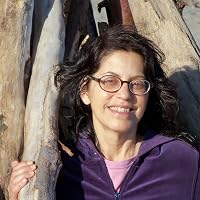
Geneen Roth's pioneering books were among the first to link compulsive eating and perpetual dieting with deeply personal and spiritual issues that go far beyond food, weight and body image. She believes that we eat the way we live, and that our relationship to food, money, love is an exact reflection of our deepest held beliefs about ourselves and the amount of joy, abundance, pain, scarcity, we believe we have (or are allowed) to have in our lives.
Rather than pushing away the "crazy" things we do, Geneen's work proceeds with the conviction that our actions and beliefs make exquisite sense, and that the way to transform our relationship with food is to be open, curious and kind with ourselves-instead of punishing, impatient and harsh. In the past thirty years, she has worked with hundreds of thousands of people using meditation, inquiry, and a set of seven eating guidelines that are the foundation of natural eating.
Geneen has appeared on many national television shows including: The Oprah Show, 20/20, The NBC Nightly News, The View and Good Morning America. Articles about Geneen and her work have appeared in numerous publications including: O: The Oprah Magazine, Cosmopolitan, Time, Elle, The New York Times, The Chicago Tribune, and The Philadelphia Inquirer. She has written monthly columns in Good Housekeeping Magazine and Prevention Magazine. Geneen is the author of eight books, including The New York Times bestsellers When Food is Love and Women Food and God: An Unexpected Path to Almost Everything. Her newest book, to be published in March 2011, is Lost and Found: Unexpected Revelations about Food and Money.
well holy crap. if you've got any kind of messed up relationship w/food, this book will blow your mind. I read it, then read three more by her, then flew to Santa Cruz to do a 5-day workshop with her that was just amazing. It's basically exploring Buddhism via your relationship with eating. She's funny, and clear, and I couldn't put any of her books down.
Geneen Roth GETS REAL AF on the complex relationship many people have with FOOD (and dieting, and exercise, and compulsive behaviors of all kinds) and INTIMACY.
GURL!
Roth additionally posits that WE (YOU&ME) FREQUENTLY use COMPULSIVE behaviors as a substitute for emotional FULFILLMENT or as a way to SUPPRESS difficult feelings. She also asserts that if we never STOP AND FEEL. We can’t HEAL.
That’s right!
FEELING IS HEALING.
Roth emphasizes the importance of self-awareness, self-acceptance, self-care and mindfulness to cultivate a healthier relationship with food and with oneself.
YES!
It’s hard to be a person.
This book makes it a little easier.
This book is FIRE 🔥.
This book is SHORT.
This book gets RIGHT ON DOWN TO IT.
The thing that you need to do to break your obsession with food, it’s the same thing you need to do to become more comfortable with intimacy SELF/OTHER/WORLD.
I really appreciated this book. While I don't have a problem with food, I felt that a lot of what Roth discusses was still applicable to me. The focus of the book is not food specifically, rather all the (unhealthy) things we do to cope with unresolved childhood pain. She discusses compulsive behaviors relative to food, but also relative to relationships. I could relate to Geneen's irrational fears about losing love and the way it made her react in extreme ways to fairly normal circumstances. What I took from the book is a) to become conscious and aware of these behaviors and to realize b) that it is possible to change them. Something I like about Geneen's story is that it shows that this kind of change doesn't come fast. It takes a lot of pain to realize you've had enough of perpetuating something that is no longer relevant and to come to trust that it is not necessary -- you can live without your pain. So, I guess this book is really about letting go of pain to allow adult love into your life.
I was hoping for a book on how to release emotional eating and all I’ve got was dissapointment. All the theory she talks in about 200 pages could have been comprised in a single essay. There are too many real stories and too little advice.
Clearly a book in which the author tried some sort of self therapy by recalling all of her unfortunate events and choices she made throughout life.
Disappointing because of so many reasons: no clear story line, everywhere and nowhere in the same time, and sometimes even depressingly repetitive.
This book is nominally addressing the issue of replacing love and security with over eating. However, its words are applicable to anybody who finds themselves lacking in an understanding of how to love and be love, feels or has been entirely out of control of the love expressed or withheld by those closes to them, and substitutes love/fulfills their need for love with something the CAN control whether that be food, sex, work, or emotional reclusion. It is honest, heart felt, and a very well written. The author share the most intimate moments of fear, love, vulnerability, and epiphany from her own experience allowing the reader to see a change of perspective that can, in turn, help them change the way they think and feel about love.
I was recommended this book by a nutritionist who finds the greatest hurdle for her clients in eating healthy are usually emotional hurdles. But once I read it, I sent copies to half a dozen people I love. I would recommend this book to anyone who feels uncomfortable or dissatisfied with their relationship to love and romance.
I saw Geneen give her first book talk at our local bookstore when she was an unknown doing small workshops for women here in her town. There were maybe 20 of us at that talk. Her ideas were mind-blowing, culture changing, and so new for the time. She's now of course helped hundreds of thousands if not millions of overeaters with her books, talks, courses, workshops. I have had two very close therapist pals help at her workshops and adore her. With the perspective of time and experience, I am not as taken with her approach as I once was. It's been a long time since I read her books, so I can't recall details to share more. However I do recall that she's a great writer, fun to read and very self-revealing. At this point I know she's been through the wringer with finances and health, and I wish her only the best.
Is okay...the information is good but the delivery is redundent...spending a dollar to save a dime. Meaning little meat and a lot of fluff...so yes the information is good but I is a pain in the boring butt to get it.
• There are many things in life beyond our control, but our eating is not one of them.
• Your body is good, your instincts are wise, you have many choices, you can rely on yourself for the information you need to live lovingly.
• The problem with blame is that it focuses our attention on the person with whom we are dealing instead of on ourselves. The more we focus on what the other person is doing, has done, can do, to make us feel better, the less powerful we feel. Revenge fantasies have their place in the healing process: wanting to hurt the person who hurt us can be an indication that we are willing to fight for and protect ourselves. But healing and growing whole eventually require focusing on ourselves and assuming responsibility for change.
• Victims stop being victims the moment they recognise their power to choose.
• I believed that making him feel bad would make me feel good.
• Hemingway says that the world breaks everyone and some of us are strong in the broken places. The purpose of healing is to be strong in the broken places.
As a child, I created a world of my own because the world I was living was not home to me. I wrote stories about planets with purple rings, poems about feathers and hummingbirds. I wrote my first book when I was twelve. I became a writer.
As a child, I learned to hear the unspoken, to climb behind my mother's face, my father's eyes. I learned to see where others only looked. I became a teacher.
I learned that nothing was as it seemed. I learned that money didn't make anyone happy. I learned about death and violence, cheating, lying, stealing, and I learned about humour, determination, endurance. I broke into ten thousand pieces. Who I am today is a result of the way I put the pieces together.
• The weakest places in me as a child are some of the strongest places in me as an adult. They are strong now because - not in spite of - being weak then.
It's not the wound that determines the quality of your life, it's what you do with the wound - how you hold it, carry it, dance with it or bury yourself under it.
• Life is what happens as you live with the wounds. Life is not a matter of getting the wounds out of the way so that you can finally live. Wounds are never permanently erased. We are fragile beings, and some days we break all over again.
• Wounds are never permanently erased. Being an abandonment person changes from year to year, depending on how conscious I am about that piece of myself. How much I am willing to risk, how patient I am willing to be, how much mercy I can give to the part of me that is forever frightened of being left. The way I work with my fear of abandonment shapes the curves and colours of my life the way a river shapes a canyon wall.
Healing is about opening our hearts, not closing them. It is about softening the places in us that won't let love in. Healing is a process. It is about rocking back and forth between the abuse of the past and the fullness of the present and being in the present more and more of the time. It is rocking that creates the healing, not staying in one place or another. The purpose of healing is not to be forever happy; that is impossible. The purpose of healing is to be awake. And to live while you are alive instead of dying while you are alive. Healing is about being broken and whole at the same time.
• I don't have to eat to make it bearable.
• I have been to so many kinds of weight loss programs, and whenever they get hard, I don't want to do the work. Then I start thinking that the program doesn't work. Then I go on the next one.
An alcoholic who smashes her car and gets arrested for driving while intoxicated doesn't have the luxury of rambling to the next program. Her addiction backs her into a corner where court appearances and shattered relationships follow her like a trail of dried blood until she has to do something about it and them - or die.
Compulsive eaters have no apparent urgency to provoke or inspire them. They don't choose between life and death; they choose between ice cream or drinking a liquid protein shake. Or so it appears.
And while the consequences of being ten or thirty pounds overweight are not the same as driving while intoxicated, compulsive eaters die a little every time they eat compulsively.
The choice is exactly the same for all of us- alcoholics, drug addicts, cigarette smokers, compulsive eaters: Do I want to live while I'm alive and embrace what sustain me or do I want to die while I'm alive and embrace what destroys me? If I choose life, where do I need to heal? What are my secrets? What pieces of me have I been unwilling to recognise? What images, what nightmares, what words am I most afraid to speak?
• Compulsive eating is the cast, not the wound. Losing the fat brings her to face with the wounds that created it.
But is not the wound that shapes our lives, it's the choice we make as adults between embracing our wounds or raging against them.
Openheartedness, not punishment.
• It is a difference between kicking a child who is in pain or rocking her.
Most people kick because they've been kicked and they don't know how to do anything else. They feel that being kind to themselves, using their pain as a guide, is self-indulgent and cannot possibly lead to change.
Most people rage against their eating. They hate it and themselves. They're tired of spending so much time thinking about their obsession with food. They want to be done, but their impatience to end their misery prolongs it. Hate does not heal anyone, ever.
• I hungered for something that couldn't be bought there - or anywhere. So I left the store with nothing. And with everything: my sense of self was intact.
• I didn't know that eating a meal was an act of kindness and would give my body the fuel it needed to think clearly, move fluidly. I thought it was naughty and therefore exciting to eat sugar-coated donuts for breakfast.
I ate to shove my feelings away. I ate to make myself disappear. I didn't know that I worth anything.
• Treating ourselves with kindness and gentleness and compassion. I still believe that all three of those are necessary parts of breaking free. But there is one ingredient that I didn't mention and it is the glue that holds the other parts together: effort and commitment. Not leaving when it gets hard.
Not a how-to guide, but more of a memoir about Roth's journey with compulsive eating, helping others to break free of compulsive eating, and unpacking the layers of trauma beneath the compulsion, which extended well past the point where she stopped dieting and started a career as a weight-loss guru. As she was helping others, she had to continue to find out the ways that she still was in need of healing herself. I like that she states that healing is really a never-ending process. I've grown suspicious of any path that suggests otherwise.
The basic message is that compulsions are a way to distance us from ourselves, and the hard but immensely rewarding work is to stay with yourself and not try to escape into food, love, or anything else. I agree.
I was reflecting as I read on how things have changed in the last years; when I was growing up the food obsessions mainly centered around gaining or losing weight, but now in addition to that there are all the health fads, the vegan, raw food, paleo, carnivore diets, the food sensitivities, and so forth. There is so much moralizing around that, the pressure to "eat clean" and so forth. Everyone seems to have their own idea of what is the one and only true way, and many of them are in direct opposition to each other. How can that be? It's just a new version of the religion wars. And as with religion, I believe that the real truth lies beyond all such superficial differences.
The "health-food" variety of obsession is more what I've been dealing with, because although I never got into the weight loss game, I was definitely a compulsive eater. And my guilt was more about eating things that were unhealthy, than things that were fattening. But even though I tried to be "good," to eat clean according to my best understanding of what that meant, I had urges to binge on things I knew were "bad," like cookies and potato chips and croissants -- and even to eat too much of healthy things, using them to distance myself from my feelings. But I shoved my awareness of the unhealthiness of these urges aside and tried to tell myself they didn't matter, I was good enough, I needed a little fun now and then.
Recently my body started saying "no" and throwing out symptoms that forced me to reconsider my habits. To continue ignoring and abusing my body further, I would have had to ignore really uncomfortable things, and really abandon my true self and its feelings, and I guess I just decided I didn't want to do that any more. I decided to do what Roth says, to make a commitment to staying with myself, instead of going with whatever false savior of the moment was calling for me. To start noticing how I feel, and having faith in my ability to heal, to be nourished, to be filled, instead of panicking that I can never be satisfied and reaching for the nearest comfort food.
Eliminating certain foods was necessary as a step to reduce their hold on me, but it couldn't be just about not eating gluten or sugar or whatever because the real issue was that I was using those things to escape from myself. I could have continued trying to escape from myself using carrots or almond milk and those would eventually have become problematic as well.
Anyway, I think it would be interesting to address those issues -- or maybe it's really just another version of the same thing. I am interested to read more on this topic from other angles. Food and psychological health are definitely intertwined and i want to know more about healing practices.
I struggled to finish this. I guess for those who have an actual eating problem, perhaps it would be helpful. Since I myself do not suffer from an abnormal relationship with food, I found this very challenging to read. I thought that it would help me understand others who suffer from such since I am studying nutrition and will have to help people regarding this topic. But the author just kept repeating the same issues and concepts chapter after chapter it didn't feel as if any progress was being made at all. It was as if I was reading someone's sporadic diary entries over a period of time with no connection to each other whatsoever. Couldn't finish it.
El libro que más me ha trascendido este año, realmente ha tocado una parte muy muy profunda (considerando un trastorno BED), altamente recomendado a todos aquellos que están luchando cada día con algo similar...
My therapist wanted me to read this. It was super short & relatable...made me realize some things about myself. Definitely worth the read if you have an eating disorder or any kind of food issues.
الكتاب مفيد للناس اللي عندها مشاكل مع الأكل أو food disorders ف بالنسبة لي مكنش مفيد اوي وف أمثلة كتير من حياة الكتابة + حياة أشخاص تانيه عندها نفس المشكلة ف ده كان ممل وبيخليني ف كنت بجري ف الصفحات
اخدت منه شويه افكار للفيديو اللي بحضره ل حلقة هنزلها قريب اوي ع قناة "فيلم عميق" ع اليوتيوب لو حد مهتم ممكن يعمل subscribe علشان يعرف اكتر 😍 👇
This book was absolutely excellent. I would recommend it for anyone struggling with an eating disorder, particularly compulsive overeating, and I would also recommend it to anyone who is getting sick of dieting (aren't we all?)
I really like how Roth gives us stories about herself and about people she has worked with. I find it much easier to read than just trying to read straight facts. Thankfully, Roth gives plenty of life to her book instead of just boring psychobabble.
The psychobabble part is awesome though. I found myself startled more than a couple of times with how much I could relate to what Roth was saying. I'm now making my husband read this book so that he can understand my thought processes better.
I'm not giving concrete examples of what I learned from this book because there is SO MUCH I learned that it would be impossible. Just read this excellent book - it is surely helping to free me from the shackles of constant dieting. What a relief. I'm onto Roth's over works next.
okay wow this book was so good. i just loved how much insight it gave me into why i do the things i do, surrounding my relationship with food. i have had a bad relationship with food & my body my whole life, and my recent therapist suggested i read this book. i cried a lot as things were said that just MADE SENSE to me & words flowed from the book that gave me new understanding as to why i do the things i do. i soaked it up & ended the book by writing a whole list of statements explaining my relationship with food, as found through this book.
This was ok. It was very, very focused on eating patterns for people who have experienced abuse or neglect. I was hoping to might have a broader audience and I felt like it was pretty focused specifically for people with a history of abuse.
Listen to this as audio while driving. It’s a WHOLE lot of calling me out, in a good way!! It’s a lot to take in so I’ll definitely be returning back to it at some point
In all honestly I actually only read half of this book. I struggled to relate at all to what Geneen Roth was saying most of the time, because the book focuses so much on traumatic childhood experiences as root causes for dysfunctional eating and relationship patterns. Certainly experiencing childhood abuse or neglect at the hands of your parents is not the only explanation for disordered eating, and I am looking for something that will speak to a more wide range of experiences, inclusive of mine.
This entire review has been hidden because of spoilers.
"The problem with fantasy is the greatest benefit of fantasy: it prevents us from living in the present moment. But the present now is different from the present then."
This book was a little better written than Roth's first book, and it contains so much wisdom it's almost unbelievable. There are a few points she made here that will stick with me for a long time.
This book brought up some good points. It felt more like a catharsis for the author and less like it was just for the reader but perhaps if I had gone through what she's gone through, I'd be happy to have someone tell "my" story and give me hope to break free. Worth a read, for sure.
Geneen Roth is vulnerable and honest. I was surprised by how easy it was to relate to her story even though it is so different from mine. Anyone with a troubling relationship to food should give this a go.
I read this book many years ago, and it was one of many that finally showed me that there was a way out of the trap of eating for emotional reasons. Some extra fluff, but the crux of the book is solid.
Muy redundante con el tema de la mala relación con sus padres, cada dos páginas lo repite. Sino creciste con malos padres, sino fuiste abusada o violentada de alguna forma, no veo que puedas encontrar el porque de tu mala relación con la comida (en mí caso por ejemplo).