What do you think?
Rate this book


352 pages, Paperback
First published January 1, 1999
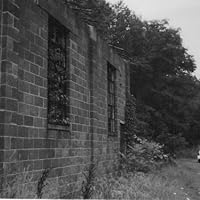
You may think, then, that the search has been fruitless. Just a series of unsubstantiated leaps of the imagination. But to me, it sums up the joy of historical research. I can't pretend that my long trawl through the documents and landscape history of these two South Yorkshire parishes has brought me much closer to understanding the dramatic events of the tenth century. But what it did do was illuminate a corner of the English landscape. What I carry with me from my search is a sense of the layers of our history — symbolized in concrete by the Roman road, the canal, the Victorian railways, and the motorway (itself destined to be ancient one day). And there are the layers of history in terms of people's lives, too: Arnkel, the Saxon farmer of Tinsley; the medieval colonists, like the Heryng family, grubbing the forest; the metalworkers, canal engineers and railway navvies; the miners' families 'scratting' for surface coal in Tinsley Wood in the strikes of 1893 and 1984; the newcomers on the post-war housing estate at Brinsworth; Reverend Gibson and his dwindling flock at Tinsley today. But on this particular journey through time, two things especially stick in my memory: the ancient chapel of Tinsley with its mysterious predecessors, whose Victorian ghost still stands under the viaduct; and above all, Tinsley Wood itself — the magnificent forest of the Domesday Book, whose origins must lie even before the Bronze Age, in the wild wood which covered Britain after the last Ice Age. The forest still seen by Joseph Hunter in the 1820s, with its glades and walks, 'where the grandeur of solitude may be felt'; now just a straggle of trees along a municipal golf-course, in earshot of the unceasing noise of the motorway.
(Chapter 11 - Tinsley Wood, 220-1)
Michael was talking about Bede in particular, and medieval people in general:
'Do you think you can ever know them?'
To me it seemed an irretrievable distance. You make a stab out of the fragments which have survived. Occasionally, with people like Alfred, you think you're getting through to their real feelings.
'No, not really,' I said.
But of course the truth was I didn't know them well enough to be able to begin to know them — if that doesn't sound too much of a contradiction. To know how Bede thinks, you have to start by sinking yourself into his beautiful, clear, simple Latin. A task beyond me. And a lifetime's work. That's what it means to be a true scholar.
'Do you?' I asked.
'Oh yes,' he replied. 'I dream of Bede.' He shook his head as if he had taken himself by surprise. 'He speaks to me. I feel as if I know him.'
(Chapter 13 - Peatling Magna: August 1265, 247-8)