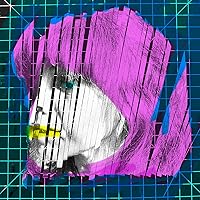
The sound of screen doors banging, evening lamplight; cold revolvers hidden in bureau drawers and a chair that is always falling over. These are the sounds and images that illuminate this brilliant collection of twelve short stories from one of Canada's finest writers. The stories range from the powerful, haunting "Lemonade",where a young boy's world is shattered by his mother's self destruction, to the title story, an unusual journey into the complexities of modern relationships, written especially for this collection
Timothy Irving Frederick Findley was a Canadian novelist and playwright. He was also informally known by the nickname Tiff or Tiffy, an acronym of his initials.
One of three sons, Findley was born in Toronto, Ontario, to Allan Gilmour Findley, a stockbroker, and his wife, the former Margaret Maude Bull. His paternal grandfather was president of Massey-Harris, the farm-machinery company. He was raised in the upper class Rosedale district of the city, attending boarding school at St. Andrew's College (although leaving during grade 10 for health reasons). He pursued a career in the arts, studying dance and acting, and had significant success as an actor before turning to writing. He was part of the original Stratford Festival company in the 1950s, acting alongside Alec Guinness, and appeared in the first production of Thornton Wilder's The Matchmaker at the Edinburgh Festival. He also played Peter Pupkin in Sunshine Sketches, the CBC Television adaptation of Stephen Leacock's Sunshine Sketches of a Little Town.
Though Findley had declared his homosexuality as a teenager, he married actress/photographer Janet Reid in 1959, but the union lasted only three months and was dissolved by divorce or annulment two years later. Eventually he became the domestic partner of writer Bill Whitehead, whom he met in 1962. Findley and Whitehead also collaborated on several documentary projects in the 1970s, including the television miniseries The National Dream and Dieppe 1942.
Through Wilder, Findley became a close friend of actress Ruth Gordon, whose work as a screenwriter and playwright inspired Findley to consider writing as well. After Findley published his first short story in the Tamarack Review, Gordon encouraged him to pursue writing more actively, and he eventually left acting in the 1960s.
Findley's first two novels, The Last of the Crazy People (1967) and The Butterfly Plague (1969), were originally published in Britain and the United States after having been rejected by Canadian publishers. Findley's third novel, The Wars, was published to great acclaim in 1977 and went on to win the Governor General's Award for English-language fiction. It was adapted for film in 1981.
Timothy Findley received a Governor General's Award, the Canadian Authors Association Award, an ACTRA Award, the Order of Ontario, the Ontario Trillium Award, and in 1985 he was appointed an Officer of the Order of Canada. He was a founding member and chair of the Writers' Union of Canada, and a president of the Canadian chapter of PEN International.
His writing was typical of the Southern Ontario Gothic style — Findley, in fact, first invented its name — and was heavily influenced by Jungian psychology. Mental illness, gender and sexuality were frequent recurring themes in his work. His characters often carried dark personal secrets, and were often conflicted — sometimes to the point of psychosis — by these burdens.
He publicly mentioned his homosexuality, passingly and perhaps for the first time, on a broadcast of the programme The Shulman File in the 1970s, taking flabbergasted host Morton Shulman completely by surprise.
Findley and Whitehead resided at Stone Orchard, a farm near Cannington, Ontario, and in the south of France. In 1996, Findley was honoured by the French government, who declared him a Chevalier de l'Ordre des arts et des lettres.
Findley was also the author of several dramas for television and stage. Elizabeth Rex, his most successful play, premiered at the Stratford Festival of Canada to rave reviews and won a Governor General's award. His 1993 play The Stillborn Lover was adapted by Shaftesbury Films into the television film External Affairs, which aired on CBC Television in 1999. Shadows, first performed in 2001, was his last completed work. Findley was also an active mentor to a number of young Canadian writers, including Marnie Woodrow and Elizabeth Ruth.
It starts out as classic Findley: stories about children, the lost, the ageing, all trapped in their nostalgia & regret, unable or unwilling to communicate what they truly feel. But then the collection descends into the style of writing & the type of character that put me off the very similar "Telling of Lies". Too abstract & too pseudo-Scott Fitzgerald for my taste. Luckily, the final story saves the book with a biting, fluid look at relationships & sex that Timothy Findley alwasy finds a way to play with in the most interesting of manners. Parts to savour, and (luckily, only a few) parts to pass over.
Some stories read just like my favourite Findley novels. But there were a few where either the plot or characters seemed to be a bit too loosely constructed. The good still outweighed the bad for me.
it was ok, some hit's, some misses. Started strong and by the end I was forcing myself to finish. it felt like there were good ideas that needed to be fleshed out into whole stories and books of their own. Left me wondering, but not in an inquisitive way.
Might be a god "book club" book, to unpack some of the short stories...
I enjoy Timothy Findley’s writing, but have struggled in the past with short stories. I always emerge with the sense I was just getting into something when it ends. So, although I keep trying to enjoy them, the effort is not always successful. It often affects my rating of a book, although I recognize the issue is my still growing ability to appreciate this form of fiction, rather than the ability of the author to write it.
In this, his first collection of short fiction which also includes stage scenes, Findley presents twelve short essays exploring the dynamics of human relationships. It marks his debut into another genre in the world of fiction where he has already experienced award winning success with his novels.
His writing flows well and readers will recognize themes that often occur in his work, including the brutality of war, the ability of the individual to persevere despite adversity, the ongoing struggle for acceptance, the role of memory and the legacy left behind by those who leave this world.
The following highlight the subjects of selected essays:
In “Lemonade”: Harper, a sensitive young boy, watches helplessly as his mother, an alcoholic, deteriorates physically and mentally and hoping to increase their income, sells lemonade with a difference, spiked with gin.
In “War”: Neil, a ten-year-old boy, learns from his brother that his father intends to join the army and tries to convince him to change his mind.
In “Sometime-Later, Not Now”: Neil from the previous story, watches from a distance as his childhood love, lives out her sad life.
“The People on the Shore” tells the story of a woman’s life and being remembered at your best.
“Daylight at Pisa” is a piece from Findley’s play in progress, featuring Ezra Pound, when after World War II, he was kept in a cage and almost went mad.
“Hello Cleveland, Goodbye”, describes an upwardly mobile couple, writers hoping to make it big in television who invite the author of a novel they want to make into a movie of the week, into their seaside home.
In “Losers, Finders, Strangers at the Door”, Findley describes how there are no beginnings, not even in stories, only places where you enter someone else’s life, choose to stay, or leave.
“Dinner Along the Amazon” is the last story and the longest in which Findley explores the hopeless longing for love just out of reach, the one you can never have.
These vignettes are all driven by Findley’s characters rather than by complex plots. He leaves that aspect of his fiction behind, more interested in exploring the inner psyche of his characters as they face some form of adversity, highlighting his ability as a story teller.
Those familiar with Findley’s work will recognize themes that are important in his world and often find their way into his work: the vulnerability and betrayal of children, abhorrence at the violence and brutality of war, the lingering effects of trauma, family dysfunction and the value of animals and nature displaced by our technologically obsessed western civilization.
I continue to be struck by Finley’s writing and his ability to capture truths about life in a few small words, such as: “Adult loneliness is the loneliness defined by remembrance”, and “Some lives are only seen through windows beyond which the appearance of laughter and of screaming is the same”.
His work is also marked by his determination to understand life’s complexities and relationships, by how others interpret their struggles and by his ability to see that different characters may see the same thing, although it may mean something different to each of them. He writes sympathetically about children trying to make their way in a world they do not understand. It is a world he describes through the senses, through the sights and sounds of dusty roads, evening lamplight, letters fingered on blue paper, birds on lawns grabbing worms, photographs shifted through in cardboard boxes, a chair that continues to fall over or the continual banging of a screen door.
This proved to be another interesting exploration into the world of short stories and though I still struggle with the genre, I applaud his chosen subject matter in theses short pieces.
Found at the Little Free Library near me - a strange and dated collection of short stories - some enrapturing, some unfinished or perhaps artfully chaotic- who knows. One story - The People On the Shore - would be a terrific movie I think.
I didn't like any of these stories. I'm not a fan of short stories really, and these are especially disjointed and seem half-finished. I gave this a two star rating when I finished because I was irritated with them, but the more I think about it the more I appreciate this book. If I think about it in terms of Timothy Findley's thoughts on life projected onto literary puppets it tells an entirely different story.
In the foreword he writes that creating this book revealed his little obsessions, and I think it's true. Not about birds and oceans (and heavy drinking) though, but about broken families and broken people, idyllic neighbourhoods that can't quite mask the existential struggles of the inhabitants, feelings of isolation and inability to establish real human connections, even (and probably much more closely related in his world) sexuality and sexual expression.
I enjoyed these stories, although occasionally I felt that I was missing something that was obliquely expressed. Still, it's a merit in a short story if you have to put the book down after you finish it and think hard about it for a few minutes instead of just ploughing on.
That may be why my favourite of the bunch, entitled "Losers, Finders, Strangers at the Door" is not only one of the shortest but one of the most straightforward. Clues are dropped throughout an awkward conversation, and eventually it becomes clear that the woman in the house is meeting and welcoming in (although welcoming may be a bit strong) her husband's gay lover.
Findley specializes in characters who are bizarre and unpredictable; he makes you pay attention to their slightest gestures and utterances as you try to figure them out. I like that.
This is a collection of Findley's short stories. I have never been a fan of short stories. But, I am a fan of Findley's writing and therefore tackled this book.
I think Findley is genius along side of being a bit of a weirdo. His books have a touch of the bizzare. It's uncanny how he writes with such accuracy, being able to relay such strong feelings in his characters without being too wordy. I really liked the first 2 stories in this book, "Lemonade" and "War." The rest of them, kind of went over my head. I didn't really get what it was all about. That is my fault!
So, this is not my favourite book of Findley's. I loved his "Not Wanted on the Voyague" - his interpretation of the Noah's Ark story.
Timothy Findley is so good, but I am not a big fan of short stories. They leave too much to the imagination so that you've either read a story that wasn't actually written or you didn't read the story that was! I did love "The People on the Shore". The last paragraph - the way he entwines the young character of Tiffy with the prescient dream of Mrs Lewis and her actual death fifteen years later - it's brilliantly done.
I am not a short story fan and these were no exception. I enjoy Timothy Findley's style so there I was. Some depressing, always interesting, daring to say what we really think. Raw, human, inspiring, damaging, riveting. War made me cry.
I am not a short story type of person either, but I like Timothy Findley. The first two stories, Lemonade and War were the best in the book."Lemonade" reminded me of "To Kill a Mockingbird". Findley continues the theme in "War" in a later book called "You Went Away".
Lemonade - 4 War - 3 Effie - 4 Sometime - Later - Not Now - 4 What Mrs. Felton Knew - 4 The People on the Shore - 4 Hello Cheeverland, Goodbye - 3 Losers, Finders, Strangers at the Door - 5 The Book of Pins - 4 Daybreak at Pisa - 4 Out of the Silence - 5 Dinner Along the Amazon - 3
Findlay is always interesting and a brilliant writer, but some of these short stories couldn't keep my attention. The ones I loved were Lemonade and War, because I could really sympathise with the main characters. I also liked the strangeness of Hello Cheeverland, Goodbye.
Good collection of short stories, but not my favourite. There were a couple I loved ("Lemonade" and "Effie"), some I enjoyed ("What Mrs. Felton Knew"), and a couple where I was glad they were short stories instead of novels ("The Book of Pins").
This was an unusual read. Some of the stories were great and captivating. Others I couldn't follow at all either too many characters or names or I didn't understand the story or the idea of what was suppose to carry the story through was so vague it was like a few of the authors thoughts randomly written down. I felt like this LEMONADE: **** WAR:***** ABOUT EFFIE:*** SOMETIME-LATER-NOT NOW:* WHAT MRS.FELTON KNEW:** THE PEOPLE ON THE SHORE: 0 HELLO CHEEVERLAND,GOODBYE:* LOSERS,FINDERS,STRANGERS AT THE DOOR:0 THE BOOK OF PINS:* DAY BREAK AT PISA:* OUT OF SILENCE:* DINNER ALONG THE AMAZON:**