

What do you think?
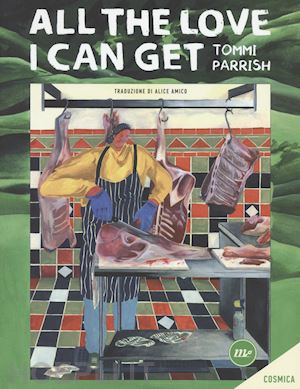
All The Love I Can Get
Con il tratto inconfondibile che l'ha resa ospite abituale del New Yorker e del New York Times, Tommi Parrish - una delle più giovani promesse del fumetto internazionale - dà vita a una storia struggente sull'incapacità contemporanea di stringere relazioni sincere. Al centro del racconto ci sono due donne, Sasha ed Eliza, diversissime ma unite dalla voglia di trovare un'ancora emotiva a cui aggrapparsi. Sasha vive con i genitori e a loro insaputa si prostituisce per noia, Eliza è una ragazza madre che cerca da sola di tenere insieme i pezzi della sua vita. Le loro fragilità e nevrosi descrivono in modo diverso la generazione a cui appartengono, quella dei ventenni e trentenni di oggi: più poveri dei loro genitori, intrappolati in un'infanzia senza fine, abitanti precari di città-alveare in cui la vicinanza fa da contrappasso alla solitudine. Questo libro è la storia del loro incontro, che le condurrà presto in una spirale di insicurezza e bugie. Ma è anche il racconto di come oggi un circolo vizioso di frustrazione e diffidenza nei confronti dell'altro rende sempre più difficile costruire legami genuini e disinteressati. Con «All the love I can get» Tommi Parrish mette a fuoco le dinamiche affettive più spietate e il motivo per cui finiamo sempre più spesso con l'accettarle e, unendo suggestioni sentimentali che ricordano i libri di Sally Rooney e il fascino per l'imperfezione alla maniera di Rachel Cusk, dimostra che un graphic novel può possedere la densità di un romanzo e riflettere la complessità del tempo in cui viviamo.
208 pages, Paperback
First published November 22, 2022
Ratings & Reviews
Friends & Following
Create a free account to discover what your friends think of this book!
Community Reviews
Displaying 1 - 30 of 156 reviews

December 15, 2022
The art style disagreed with me immensely. I was super distracted watching characters' hair and clothes change color from panel to panel as their heads swelled up to footballs and shrank down to tennis balls atop bulbous torsos and limbs that constantly shifted proportions. The best drawn panels in the book were the artist's renditions of Garfield, the comic strip cat.
I would have been happier reading Garfield than this sad slice of life featuring a couple of damaged people crossing paths as they flail about in their lives of quiet desperation. One's a 32-year-old recovering alcoholic, single mother, and aspiring poet. The other is an obsessive yet flighty 29-year-old who has recently moved back in with her parents after a break-up. In the end I cared more about how big or small their hands would be in the next panel than how they coped with their various challenges or developed their new friendship/relationship with one another.
Not for me.
I would have been happier reading Garfield than this sad slice of life featuring a couple of damaged people crossing paths as they flail about in their lives of quiet desperation. One's a 32-year-old recovering alcoholic, single mother, and aspiring poet. The other is an obsessive yet flighty 29-year-old who has recently moved back in with her parents after a break-up. In the end I cared more about how big or small their hands would be in the next panel than how they coped with their various challenges or developed their new friendship/relationship with one another.
Not for me.

November 13, 2022
Men I Trust is a beautiful book – the illustrations are rendered to perfection in full colour, making it feel more like an art book than a graphic novel. It's also a moving and intense story, one that might have you staring off into the distance in a while after you’ve finished.
My full review of Men I Trust is up now on Keeping Up With The Penguins.
My full review of Men I Trust is up now on Keeping Up With The Penguins.

October 7, 2022
Very proud to have worked on a book with such intelligent and poetic artwork.

December 11, 2023
Just finished this and still feel like I'm processing it. The art is a strange mix of surreal/abstract, with hyper realist backgrounds and people drawn with oddly out of proportionate heads and bodies and unnatural skin colours and changing hair. I felt like I didn't quite *get* what the art was doing.
The story is about two women who almost make a connection: one, Eliza, is a struggling 32-year-old single mom and poet who has a tendency to let people walk over her; the other is Sasha, living with her parents in her late 20s while dealing with a mental health crisis. Sasha pushes and pushes for an intimacy and Eliza sort of lets her until it gets too intense. Hmm. Lots to mull over here. I was happy to see Eliza possibly making a healthy connection at the very end? Watching Sasha try to connect was often cringe-worthy; be prepared if you don't like second hand embarrassment!
The story is about two women who almost make a connection: one, Eliza, is a struggling 32-year-old single mom and poet who has a tendency to let people walk over her; the other is Sasha, living with her parents in her late 20s while dealing with a mental health crisis. Sasha pushes and pushes for an intimacy and Eliza sort of lets her until it gets too intense. Hmm. Lots to mull over here. I was happy to see Eliza possibly making a healthy connection at the very end? Watching Sasha try to connect was often cringe-worthy; be prepared if you don't like second hand embarrassment!

May 12, 2023
an honest portrayal of how people struggle to form relationships in this age where it’s so easy to doubt someone’s intentions.
this graphic novel shows just how far people are willing to go to feel some semblance of love— even looking for it in the wrong places, and knowing full well it is unhealthy. due to desperation, some people can push themselves to the extremes just for an ounce of affection, and it doesn’t matter in what form it comes from. some settle for abusive and toxic relationships, but they stay nonetheless because they feel like it’s the only chance they have at “love.” this perspective promotes a skewed view of love, and one that can even affect others.
here, codependency is highlighted as something that can become a product of toxic relationships. it can stem from childhood trauma (neglect or abuse from parental/authority figures) or trauma that was acquired from a toxic partner. a victim will then have the tendency to codepend on others, and it becomes a vicious cycle in their lived if they do not learn to break free from it.
this book was so raw, and straight to the point, that i couldn’t help but gasp at how much truth a lot of lines held. i could actually pinpoint them in my life— may it be within myself, or i have observed these certain behaviors in others.
this simple, but heavy-laden story has given me much to think about, and it is definitely not one to be taken lightly.
i recommend this book to people who are interested in reading this exploration of codependency.
this graphic novel shows just how far people are willing to go to feel some semblance of love— even looking for it in the wrong places, and knowing full well it is unhealthy. due to desperation, some people can push themselves to the extremes just for an ounce of affection, and it doesn’t matter in what form it comes from. some settle for abusive and toxic relationships, but they stay nonetheless because they feel like it’s the only chance they have at “love.” this perspective promotes a skewed view of love, and one that can even affect others.
here, codependency is highlighted as something that can become a product of toxic relationships. it can stem from childhood trauma (neglect or abuse from parental/authority figures) or trauma that was acquired from a toxic partner. a victim will then have the tendency to codepend on others, and it becomes a vicious cycle in their lived if they do not learn to break free from it.
this book was so raw, and straight to the point, that i couldn’t help but gasp at how much truth a lot of lines held. i could actually pinpoint them in my life— may it be within myself, or i have observed these certain behaviors in others.
this simple, but heavy-laden story has given me much to think about, and it is definitely not one to be taken lightly.
i recommend this book to people who are interested in reading this exploration of codependency.

June 6, 2024
Super mixed on this. While the chaotic and inconsistent art in some ways fits the disordered feel of the story and characters, it was genuinely distracting and disruptive to having characters hair and skin change colors (and not part of mood lighting where everything would change color) panel to panel, making it hard to determine if I was seeing a new character or the same one again at times. While I found the art viscerally unpleasant, my issue was with it actively taking away from the story by making it harder to follow.
The element of community and support groups as a framing device and source of support was well-done. I like the open-ended almost intentional unfinished final panels.
I did not like weird random sketches of Garfield in the middle of the story for no clear reason.
The element of community and support groups as a framing device and source of support was well-done. I like the open-ended almost intentional unfinished final panels.
I did not like weird random sketches of Garfield in the middle of the story for no clear reason.
September 6, 2022
second book i've read this year by uk cartoonist tommi parrish. i read an advanced copy of this online at work. Parrish has impeccable graphic style--each of their panels can (and genuinely are) their own frame-able painting. i wasn't particularly moved for most of this book, and then was so abruptly and deeply disturbed by the concluding 10-20 pages. reminds me of Nick Drnaso's work. it didn't work for me entirely, but i was so surprised by the ending that I have to give it credit for burying the lede so convincingly.

December 4, 2023
3.75|5
Stunning art, one of the best I’ve ever seen in a graphic novel.
The story is, on the other hand, a bit particular. I’m not sure about the message it tried to convey. Maybe there even isn’t one…
Stunning art, one of the best I’ve ever seen in a graphic novel.
The story is, on the other hand, a bit particular. I’m not sure about the message it tried to convey. Maybe there even isn’t one…

October 27, 2022
This is an interesting graphic novel about a single mom and spoken word poet who seems to be a magnet for gaslighters. It's framed by her AA meetings. I liked it, but didn't feel much after reading it. The surreal/abstract art is lovely and frameable but facial expressions and emotions didn't always translate well. But I did like the story. Gonna keep mulling it over.

February 10, 2023
Tommi's hand-painted comics are always a joy to behold. There is something very alive and tangible in their art. I'm very appreciative that both this and their previous title, "The Lie and How We Told It" are both printed at such a large size. Any smaller and you wouldn't be able to fully appreciate the work.

July 6, 2025
I knew nothing about the premise of this graphic novel. Interesting exploration of the need for connection and the lengths one might go to get it. However, at no point was I invested in these characters, and the illustration style was not to may taste and rather distracting.
August 31, 2026
i usually enjoy the staff picks at my library but this was unfortunately just a book of corporate slop art that you’d see on a free google slides presentation template
December 27, 2022
So good. Tackles generational trauma, crippling loneliness, family dynamics, feeling lost in life, depression, and so many other relatable and too-often stigmatized themes with such delicate power. As a plus: the illustrations are absolutely gorgeous.
This is my type of coffee table book.
This is my type of coffee table book.

May 12, 2023
Loooots to unpack in this gorgeous graphic novel. What a beautiful, terrifying.... REAL story. I don't know who I love or who I dislike. The COMPLEXITY! Phew....

May 1, 2024
"Wszyscy, którym ufam", podobnie jak "Kłamstwo i jak to robimy", jest przede wszystkim komiksem o relacjach. Trochę mi się te historie kojarzą z filmami Almodovara, ale Parrish nie poświęca tyle miejsca samej fabule; całość opiera raczej na bardzo naturalnych dialogach i tym, co dzieje się pomiędzy poszczególnymi postaciami. Graficznie jest wspaniale, ale gdyby było zupełnie inaczej, sens zawsze pozostałby ten sam, bo cała ta opowieść stoi właśnie na wzajemnych zależnościach bohaterów. Delektuję się przestrzenią, którą autor zostawia odbiorcy, co sprawia, że czytelnik wiele kwestii musi sam uzupełnić i dookreślić. To świetnie oddaje rzeczywistość powiązań, do opisania których język nie wystarcza. Pociąga mnie niejednoznaczność postaci, fakt, że ostatecznie nie wiesz, kto tak naprawdę jest pozytywnym, a kto negatywnym bohaterem. Cenię za odcienie szarości i to coś, co każe mi do tej lektury wracać.

December 16, 2023
Il crudissimo realismo della vicenda comunica un dolore così limpido da lasciare una sensazione di stordimento: pagina dopo pagina, mi sembrava che l’ossigeno nella stanza, e nei miei polmoni, diminuisse. L’autrice condensa le immensità di Sasha ed Eliza senza ridurle, e l* lettor* non può esimersi dal vedere, per davvero, le due protagoniste. L’incredibile resa grafica delle illustrazioni (lo stile dei disegni è stupendo) consolida o, addirittura, accresce la densità della sensazione trasmessa, che le sole parole non bastano ad esprimere. La gestione impeccabile della contemporaneità è un altro elemento di pregio: Parrish restituisce delle tematiche attuali, che raramente vengono messe su carta, calandole perfettamente nel presente.
L’unica nota negativa che mi sentirei di riportare va alla cura dell’edizione italiana: il titolo originale, ovvero “Men I Trust”, era molto significativo - a che pro sostituirlo, mantenendo peraltro l’inglese, con una versione più didascalica e banale?
L’unica nota negativa che mi sentirei di riportare va alla cura dell’edizione italiana: il titolo originale, ovvero “Men I Trust”, era molto significativo - a che pro sostituirlo, mantenendo peraltro l’inglese, con una versione più didascalica e banale?

June 7, 2025
So emotionally salient - this story viscerally shows how loneliness looks from one day to the next. How do you form friendships as an adult when life is hard and a struggle? How do you maintain gratitude while also yearning for more? Where is the line between hope and delusion? Excellent dialogue and hyper realistic portrayal of how two people’s lives can desperately, intimately, fleetingly intersect.

January 28, 2023
This was a very sad and odd graphic novel about two women who start a friendship. Sasha is a lost soul who lives with her parents and has a low opinion of herself. Eliza is a single mom who has a rough relationship with her the father of her child. The two come together and have interesting interactions. The art style on this book was very strange but I kind of liked it.

Read
August 13, 2023celebrating this venus cazimi by drinking delicious coffee and reading brilliant comics, a quiet day with dogs

December 21, 2022
Uncomfortably great. Upped their game since the last book. I hope Parrish figures out how to produce work a little faster (not too fast) because I'm obsessed. Personally, I needed to read this type of narrative right now I think.

Read
January 1, 2024i can only describe the art style as kind of grotesque, but it mirrors the fucked up content of the story. sasha's red flags were obvious from the start and made the conclusion logical. the representation of eliza as a struggling single parent was visceral.
February 14, 2024
I really enjoyed the illustrations, but I wasn’t the biggest fan of the story. I didn’t like either of the MC’s and Sasha was really off putting (which I guess is the point). It just made me uncomfortable.
June 9, 2023
I had never heard of tommi parish before but i just LOVED the art in this book!

November 4, 2023
still not sure which men to trust
May 7, 2026
Trying to tidy up my Currently Reading list (and give the library some of their books back).
I read the first half of this many moons ago and then took a hiatus for reasons unknown even to me, picked this back up tonight, and blasted through the second half.
I don't what it is about me and reading female-centered slightly autobiographical graphic novels, but they just jump out to me from the shelves and I must read them. I think there's something about reading something where you don't see yourself in the text for a change. Fresh breath!
So many of Parrish's images evoke mood - 90s sax jazz, late nights, melancholy, loneliness, tiredness, depression (wait, I thought I wasn't seeing myself in the text?), where the story takes a passenger seat to these huge, deep moody images. Very poem-esque. The bodies are warped and unnatural, almost... grotesque (complimentary). Lots going on visually. I particularly liked when a segment would culminate in a full page solo image, or when the panels would fade to yellow or white. So cinematic and moody.
Also just realizing I picked this up a year ago to the day? Holy shit? That's... freaky. Totally unintentional.
I read the first half of this many moons ago and then took a hiatus for reasons unknown even to me, picked this back up tonight, and blasted through the second half.
I don't what it is about me and reading female-centered slightly autobiographical graphic novels, but they just jump out to me from the shelves and I must read them. I think there's something about reading something where you don't see yourself in the text for a change. Fresh breath!
So many of Parrish's images evoke mood - 90s sax jazz, late nights, melancholy, loneliness, tiredness, depression (wait, I thought I wasn't seeing myself in the text?), where the story takes a passenger seat to these huge, deep moody images. Very poem-esque. The bodies are warped and unnatural, almost... grotesque (complimentary). Lots going on visually. I particularly liked when a segment would culminate in a full page solo image, or when the panels would fade to yellow or white. So cinematic and moody.
Also just realizing I picked this up a year ago to the day? Holy shit? That's... freaky. Totally unintentional.

June 3, 2026
I'd only read their kuš mini comic, which was absolutely harrowingly real and relatable, with a really interesting visual art style.
This kind of expands of similar themes, broken people trying to mend themselves, and the ins and outs of human relationships. I didn't find it quite as hard hitting, but it's definitely worth the detour. They have this really naturalistic way of writing. More slice of life than most slice of life.
The art remains captivating. It kind of reminds me a little of Moa Romanova, with her big bodies and small heads, expect more painterly.
This kind of expands of similar themes, broken people trying to mend themselves, and the ins and outs of human relationships. I didn't find it quite as hard hitting, but it's definitely worth the detour. They have this really naturalistic way of writing. More slice of life than most slice of life.
The art remains captivating. It kind of reminds me a little of Moa Romanova, with her big bodies and small heads, expect more painterly.
May 12, 2025
Another graphic novel flooring me with it's art and characters - so intricate and detailed both in scenery and expressions. A very human portrayal of two women trying and failing to find comfort in pther people - so sad!!! but!!! such a hopeful reminder to try to find your place and your people!!! There's many pages i would've liked to rip out and frame.
December 28, 2024
Beautiful illustrations & excellent dialogue. Made me quite emotional in some places, although it resolves strangely and perhaps too quickly. About a few people in Denver with hard lives, just trying to get by. Felt real & true.

September 20, 2023
Painful and good

January 10, 2024
Molto commovente, emotivamente pesante. Il finale mi ha lasciata un po' in sospeso, ma il messaggio pare chiaro.
Displaying 1 - 30 of 156 reviews