

What do you think?

Russian Witches #2
The Witch's Daughter
An epic story of love, tragedy and the loss of innocence, set against the background of the Russian Revolution after the murder of Rasputin.
It is 1916 and Rasputin has finally been killed by those who have long feared his influence over Tsar Nicholas and Tsarina Alexandra. But for Princess Militza, famed as one of the 'Witches of St Petersburg', and her daughter Nadezhda, life is about to become extremely dangerous. Revolution is bubbling and with it will come the murder of the Romanov imperial family. Now the rest of the court is also on the run, fleeing from the mob.
Against this violent and turbulent backdrop, Nadezhda, the witch's daughter, finds in exile and captivity, an extraordinary and unlikely love. They say nothing heals like the heart, but as the Red Army marches south and the remnants of the Russian court finds itself trapped in the Crimea, with their backs to the sea, Nadezhda and her beloved Prince Orlov must take the gamble of their lives.
It is 1916 and Rasputin has finally been killed by those who have long feared his influence over Tsar Nicholas and Tsarina Alexandra. But for Princess Militza, famed as one of the 'Witches of St Petersburg', and her daughter Nadezhda, life is about to become extremely dangerous. Revolution is bubbling and with it will come the murder of the Romanov imperial family. Now the rest of the court is also on the run, fleeing from the mob.
Against this violent and turbulent backdrop, Nadezhda, the witch's daughter, finds in exile and captivity, an extraordinary and unlikely love. They say nothing heals like the heart, but as the Red Army marches south and the remnants of the Russian court finds itself trapped in the Crimea, with their backs to the sea, Nadezhda and her beloved Prince Orlov must take the gamble of their lives.
496 pages, Hardcover
First published December 7, 2023
Ratings & Reviews
Friends & Following
Create a free account to discover what your friends think of this book!
Community Reviews
Displaying 1 - 30 of 55 reviews

August 2, 2023
The Witch's Daughter is a sequel to The Witches of St. Petersburg, but can be read on its own. I didn't know these two books were connected when I requested the title, but I did manage to read book one before jumping into this one, and I think my reading experience was better for it.
If you have the chance to read The Witches of St. Petersburg first, then go for it!! You'll have a much better idea of the characters, how they're all connected, what Militza and Stana went through to get to where they are at the start of the book, and you'll also see Rasputin (who's already dead here).
Nadezhda is Militza's daughter and the book mainly follows her, but there are parts where the book still follows her mother, and other important women too.
There's a bit less witchcraft here, in favour of the revolution. I don't mind that, because the descriptions made me feel like I was living through it myself. It was so vivid, and the descriptions of their lives pre and post those events were too.
This book moves just as fast as the first, the writing is smooth (dare I say, even better than it was), the historical facts are there but not info dumpy, and we have a list of character names at the beginning to refer to if needed. It's long, but doesn't feel like it.
What I enjoyed most was the inclusion of romance, between Nadezhda and her husband. They were really cute together and a real love match. We didn't get to see those kinds of sweet scenes before with Militza or Stana, so I wasn't expecting to see them here, but it was a nice surprise.
And lastly, because I have to mention this again, these two books are the only ones where I saw my name!! Milica, but spelled like Militza. I don't know if I would've seen it if Milica Petrović-Njegoš wasn't a historical character worth writing about, but I'll take it. At least I can finally say that yes, I found my name in a book.
*Thank you to the publishers and Netgalley for providing me with an e-ARC in exchange for an honest review*
If you have the chance to read The Witches of St. Petersburg first, then go for it!! You'll have a much better idea of the characters, how they're all connected, what Militza and Stana went through to get to where they are at the start of the book, and you'll also see Rasputin (who's already dead here).
Nadezhda is Militza's daughter and the book mainly follows her, but there are parts where the book still follows her mother, and other important women too.
There's a bit less witchcraft here, in favour of the revolution. I don't mind that, because the descriptions made me feel like I was living through it myself. It was so vivid, and the descriptions of their lives pre and post those events were too.
This book moves just as fast as the first, the writing is smooth (dare I say, even better than it was), the historical facts are there but not info dumpy, and we have a list of character names at the beginning to refer to if needed. It's long, but doesn't feel like it.
What I enjoyed most was the inclusion of romance, between Nadezhda and her husband. They were really cute together and a real love match. We didn't get to see those kinds of sweet scenes before with Militza or Stana, so I wasn't expecting to see them here, but it was a nice surprise.
And lastly, because I have to mention this again, these two books are the only ones where I saw my name!! Milica, but spelled like Militza. I don't know if I would've seen it if Milica Petrović-Njegoš wasn't a historical character worth writing about, but I'll take it. At least I can finally say that yes, I found my name in a book.
*Thank you to the publishers and Netgalley for providing me with an e-ARC in exchange for an honest review*

November 16, 2023
I found the author very successful at evoking the feel and atmosphere of Revolutionary Russia. This has to be one of my favourite periods of history to read about. I would have loved more about Rasputin at the Russian court but this book begins with his murder. I didn’t realise this was a sequel so it may be that I need to go back and read the first book for those details. Despite my fascination with this era I found the book hard going and failed to connect with the characters. Many thanks to Netgalley for an arc of this book.

September 22, 2023
Imogen Edward-Jones' "The Witch's Daughter" is a captivating mix of history and magic set in the intriguing world of Russian witchcraft. Picture Russia during Rasputin's time and the Romanovs' era – it's a fresh and unique spin on fantasy.
What's cool about this book is the way it brings Russia to life with vivid descriptions. You can practically feel the opulence of the Romanov court and sense the chaos of the revolution. The story moves at a good clip, keeping you turning pages, and Nadezhda's journey of self-discovery adds depth to the plot.
The characters, especially strong females like Princess Militza and Nadezhda, steal the show. They're resourceful and resilient in a world gone crazy, making the story engaging.
Imogen Edward-Jones doesn't bog you down with too many historical facts, which is nice. She smoothly weaves in Russian history and culture, giving you the right dose to enjoy the story without feeling overwhelmed.
In a nutshell, "The Witch's Daughter" is a spellbinding mix of history and magic that's a must-read for anyone into Russian witchcraft and history. It's a journey that's both alluring and perilous, and it's bound to leave you eager for more.
What's cool about this book is the way it brings Russia to life with vivid descriptions. You can practically feel the opulence of the Romanov court and sense the chaos of the revolution. The story moves at a good clip, keeping you turning pages, and Nadezhda's journey of self-discovery adds depth to the plot.
The characters, especially strong females like Princess Militza and Nadezhda, steal the show. They're resourceful and resilient in a world gone crazy, making the story engaging.
Imogen Edward-Jones doesn't bog you down with too many historical facts, which is nice. She smoothly weaves in Russian history and culture, giving you the right dose to enjoy the story without feeling overwhelmed.
In a nutshell, "The Witch's Daughter" is a spellbinding mix of history and magic that's a must-read for anyone into Russian witchcraft and history. It's a journey that's both alluring and perilous, and it's bound to leave you eager for more.

October 10, 2024
I have a fascination for all things witchy at the moment, and a long held interest in Russian history, so I couldn't pass up this blog tour invite!
I was glad I realised it was a sequel, and I was able to fit in reading Book 1, as I think it helped to know the backstory. The author does fill in a lot of the information, but I enjoyed being fully knowledgeable beforehand.
I think my love of Russia and witchy books helped me engage with the story easier and gave me much more enjoyment.
This is a great combination of 2 of my favourite topics so I hope there is more to come!
I was glad I realised it was a sequel, and I was able to fit in reading Book 1, as I think it helped to know the backstory. The author does fill in a lot of the information, but I enjoyed being fully knowledgeable beforehand.
I think my love of Russia and witchy books helped me engage with the story easier and gave me much more enjoyment.
This is a great combination of 2 of my favourite topics so I hope there is more to come!
July 25, 2024
3.5⭐️s
This was really interesting! I’ve never read a Russian fantasy
This was really interesting! I’ve never read a Russian fantasy
December 16, 2024
⭐⭐⭐3.5 – Histórico, revolucionario y rebelde… pero no le llegó al nivel de Las Brujas de San Petersburgo (libro #1 de la serie)
Esta serie me encanta por su promesa de historias sobre la monarquía rusa, la brujería, secretos y un pasado que regresa a cobrar lo suyo a través de la revolución. El libro tiene esa vibra gótica que adoro: escenarios sombríos, mujeres fuertes marcadas por la historia, y una sensación constante de que algo está a punto de estallar.
Me gustó cómo se explora el poder femenino, la rabia contenida y la herencia de las mujeres que fueron silenciadas. Pero también sentí que, por ratos, se quedaba en la superficie. Como si tuviera todo para ser brutalmente poderosa… pero se contuviera justo antes de soltar el hechizo completo.
Aun así, me declaro completamente fanática de la historia rusa y este libro cumple con su propuesta de novela histórica. Si te gustan las historias con brujas, secretos y esa tensión que se arrastra como niebla, puede gustarte. Yo la disfruté, pero no me transformó.
____
⭐⭐⭐ 3.5 – Historical, revolutionary, and rebellious… but it didn’t quite reach the level of The Witches of St. Petersburg (book #1 in the series).
I love this series for its promise of stories about the Russian monarchy, witchcraft, secrets, and a past that comes back to collect its dues through revolution. The book has that gothic vibe I adore: dark settings, strong women shaped by history, and a constant feeling that something is about to explode.
I liked how it explores female power, restrained rage, and the legacy of silenced women. But I also felt that at times it stayed on the surface. As if it had everything to be brutally powerful… but held back right before unleashing its full spell.
Even so, I remain a full-on fan of Russian history, and this book delivers on its promise as a historical novel. If you like stories with witches, secrets, and that kind of tension that creeps in like fog, you might enjoy it. I did—just not in a life-changing way.
Esta serie me encanta por su promesa de historias sobre la monarquía rusa, la brujería, secretos y un pasado que regresa a cobrar lo suyo a través de la revolución. El libro tiene esa vibra gótica que adoro: escenarios sombríos, mujeres fuertes marcadas por la historia, y una sensación constante de que algo está a punto de estallar.
Me gustó cómo se explora el poder femenino, la rabia contenida y la herencia de las mujeres que fueron silenciadas. Pero también sentí que, por ratos, se quedaba en la superficie. Como si tuviera todo para ser brutalmente poderosa… pero se contuviera justo antes de soltar el hechizo completo.
Aun así, me declaro completamente fanática de la historia rusa y este libro cumple con su propuesta de novela histórica. Si te gustan las historias con brujas, secretos y esa tensión que se arrastra como niebla, puede gustarte. Yo la disfruté, pero no me transformó.
____
⭐⭐⭐ 3.5 – Historical, revolutionary, and rebellious… but it didn’t quite reach the level of The Witches of St. Petersburg (book #1 in the series).
I love this series for its promise of stories about the Russian monarchy, witchcraft, secrets, and a past that comes back to collect its dues through revolution. The book has that gothic vibe I adore: dark settings, strong women shaped by history, and a constant feeling that something is about to explode.
I liked how it explores female power, restrained rage, and the legacy of silenced women. But I also felt that at times it stayed on the surface. As if it had everything to be brutally powerful… but held back right before unleashing its full spell.
Even so, I remain a full-on fan of Russian history, and this book delivers on its promise as a historical novel. If you like stories with witches, secrets, and that kind of tension that creeps in like fog, you might enjoy it. I did—just not in a life-changing way.

August 2, 2023
*3
The murder of Rasputin opens the novel which follows the story of Nadezha. She is the daughter of Militza, who along with her sister Stana became known as the 'Black Princesses.' The sisters not only introduced Rasputin to the imperial Court but also the occult, magic and some claim the dark arts.
Now that the court is on the run and forced to escape from the ravages of revolution, Nadezha has to conceal and protect a book of magic.
I thought that there were some positive elements to the book like the detailed descriptions of Russia as it descended into bloody revolution. However, although the book is based on a true story I did find it a little far fetched at times with a lot of poetic licence used. I also found the book too long with some unnecessary detail and repetitive dialouge.
The murder of Rasputin opens the novel which follows the story of Nadezha. She is the daughter of Militza, who along with her sister Stana became known as the 'Black Princesses.' The sisters not only introduced Rasputin to the imperial Court but also the occult, magic and some claim the dark arts.
Now that the court is on the run and forced to escape from the ravages of revolution, Nadezha has to conceal and protect a book of magic.
I thought that there were some positive elements to the book like the detailed descriptions of Russia as it descended into bloody revolution. However, although the book is based on a true story I did find it a little far fetched at times with a lot of poetic licence used. I also found the book too long with some unnecessary detail and repetitive dialouge.

January 12, 2024
2.75/5 stars! I adore Rasputin...like not idolize him because he was human garbage. But...I love the time in history he came from and the Russian backdrop of stories featuring him. This book's premise had so much promise but it fell significantly short. The characters just weren't very likable which made it difficult to get into the story. It was adequate and historians who are a fan of magic and history interacting, will likely enjoy this story.
I received a free copy of this book via NetGalley and am voluntarily leaving a review
I received a free copy of this book via NetGalley and am voluntarily leaving a review

August 6, 2023
I felt a bit out of my depth with this one, I hadn't read the previous book (unfortunately I hadn't known there was one) so felt I'd missed a lot... this book seems to just continue the story.
I enjoyed the writing style, and the story of Russia at war, with itself and others.
Based on true story apparently , people I've never heard of, so I'll take it as a win I learnt a bit about history whilst reading it.
Enjoyable, but I'd say definitely read the first book.
I enjoyed the writing style, and the story of Russia at war, with itself and others.
Based on true story apparently , people I've never heard of, so I'll take it as a win I learnt a bit about history whilst reading it.
Enjoyable, but I'd say definitely read the first book.

Read
November 10, 2023dnf @ 33%

October 8, 2024
The Witch’s Daughter, by Imogen Edwards-Jones, continues the story of The Witches of St Petersburg. Having used their occult powers to manifest Rasputin, causing chaos beyond what they envisioned, regretful sister witches Militza and Stana have destroyed their creation, but he’s far from stuffed back into the bottle.
With the losses and privations of World War I becoming more and more acute, unrest among Russia’s peasants and proletariat escalates into revolution, and the ‘vices, crime and filth’ the Mad Monk predicted in the event of his death proliferate.
Nobles like Militza and Stana are no longer safe in Petrograd, and are forced to flee to their summer palaces in Crimea, where their presence is slightly better-tolerated by the locals – for now, at least.
Militza’s daughter Nadezhda is among their number. Considering herself modern and rational, Princess Nadezhda holds no truck with her mother and aunt’s unorthodox beliefs, but grudgingly agrees to help protect the one book they absolutely must hold on to. When her Montenegrin ancestors’ methods help her at peak times of need, though, she becomes far more open to the power of magic.
I found The Witch’s Daughter a really enjoyable read. Even though I hadn’t read The Witches of St Petersburg – but now plan to! – I found it relatively easy to get up to speed and absorb myself in the story.
Of course, this book was always going to be right up my street, as studying the Russian Revolution many years ago for my History A-Level piqued my interest, and I’ve enjoyed novels set in that time and place ever since. The Witch’s Daughter fulfilled my expectations in that respect, but also answered a question I’d never previously considered: we all know what became of the Tsar and his most immediate family, but what about his other relatives?
Despite their privilege and position on the wrong side of history, Edwards-Jones writes many of these characters in such a way that you care about what happens to them. Nadezhda is the most obvious example of this – and, as the central character, the most important for the author to get “right”.
She goes through intense experiences of love and loss that virtually anyone can empathise with, and understands the people’s plight, even if she abhors the extreme violence and senseless destruction that transpires (and I couldn’t blame her for that, whether she was personally affected by it – which she is – or not).
In fact, quite a few members of Nadezhda’s circle are surprisingly cognisant of the suffering around them, and can see why the masses hate them so much.
Even the older, more traditional aristocrats volunteer as nurses, set up hospitals, and travel to the front to aid wounded soldiers. While these are not purely selfless acts (optics are important, after all), they still made me feel warmer towards these characters than I might have done otherwise, especially when they were clearly affected by what they witnessed.
When particular dukes, duchesses, princes and princesses in this story aren’t so sympathetic, though, there are other things that keep you hooked. One is humour: there are continual laughs to be had from upper-class people complaining about having to do everyday things for themselves, the décor of the palace they’re occupying, or the lack of entertainment in Crimea in the off-season.
The other is intrigue: Militza and Stana often come across as cold and hard, but I want to know more about their supernatural powers, and what’s in the library they have to leave behind!
In fact, despite the title and blurb, while witchcraft is a USP of this novel, it fades into the background a lot of the time. The precious green velvet-bound book, meanwhile, spends a lot of the story not in the possession of Nadezhda, but Albert (Bertie) Stopford – an affable and entertaining British antiques dealer, diplomatic courier, and confidante of the glamorous Grand Duchess Vladimir.
It does feel, then, that the marketing of this book could make a little more of other reasons to read it: the fascinating, vividly-portrayed historical setting; the amount of research and attention to detail that’s gone into it; and the suspense as the characters repeatedly find themselves in mortal danger.
The Witch’s Daughter is fascinating and gripping, with well-drawn characters.
With the losses and privations of World War I becoming more and more acute, unrest among Russia’s peasants and proletariat escalates into revolution, and the ‘vices, crime and filth’ the Mad Monk predicted in the event of his death proliferate.
Nobles like Militza and Stana are no longer safe in Petrograd, and are forced to flee to their summer palaces in Crimea, where their presence is slightly better-tolerated by the locals – for now, at least.
Militza’s daughter Nadezhda is among their number. Considering herself modern and rational, Princess Nadezhda holds no truck with her mother and aunt’s unorthodox beliefs, but grudgingly agrees to help protect the one book they absolutely must hold on to. When her Montenegrin ancestors’ methods help her at peak times of need, though, she becomes far more open to the power of magic.
I found The Witch’s Daughter a really enjoyable read. Even though I hadn’t read The Witches of St Petersburg – but now plan to! – I found it relatively easy to get up to speed and absorb myself in the story.
Of course, this book was always going to be right up my street, as studying the Russian Revolution many years ago for my History A-Level piqued my interest, and I’ve enjoyed novels set in that time and place ever since. The Witch’s Daughter fulfilled my expectations in that respect, but also answered a question I’d never previously considered: we all know what became of the Tsar and his most immediate family, but what about his other relatives?
Despite their privilege and position on the wrong side of history, Edwards-Jones writes many of these characters in such a way that you care about what happens to them. Nadezhda is the most obvious example of this – and, as the central character, the most important for the author to get “right”.
She goes through intense experiences of love and loss that virtually anyone can empathise with, and understands the people’s plight, even if she abhors the extreme violence and senseless destruction that transpires (and I couldn’t blame her for that, whether she was personally affected by it – which she is – or not).
In fact, quite a few members of Nadezhda’s circle are surprisingly cognisant of the suffering around them, and can see why the masses hate them so much.
Even the older, more traditional aristocrats volunteer as nurses, set up hospitals, and travel to the front to aid wounded soldiers. While these are not purely selfless acts (optics are important, after all), they still made me feel warmer towards these characters than I might have done otherwise, especially when they were clearly affected by what they witnessed.
When particular dukes, duchesses, princes and princesses in this story aren’t so sympathetic, though, there are other things that keep you hooked. One is humour: there are continual laughs to be had from upper-class people complaining about having to do everyday things for themselves, the décor of the palace they’re occupying, or the lack of entertainment in Crimea in the off-season.
The other is intrigue: Militza and Stana often come across as cold and hard, but I want to know more about their supernatural powers, and what’s in the library they have to leave behind!
In fact, despite the title and blurb, while witchcraft is a USP of this novel, it fades into the background a lot of the time. The precious green velvet-bound book, meanwhile, spends a lot of the story not in the possession of Nadezhda, but Albert (Bertie) Stopford – an affable and entertaining British antiques dealer, diplomatic courier, and confidante of the glamorous Grand Duchess Vladimir.
It does feel, then, that the marketing of this book could make a little more of other reasons to read it: the fascinating, vividly-portrayed historical setting; the amount of research and attention to detail that’s gone into it; and the suspense as the characters repeatedly find themselves in mortal danger.
The Witch’s Daughter is fascinating and gripping, with well-drawn characters.

May 11, 2024
Novel set in early 20th Century PETROGRAD
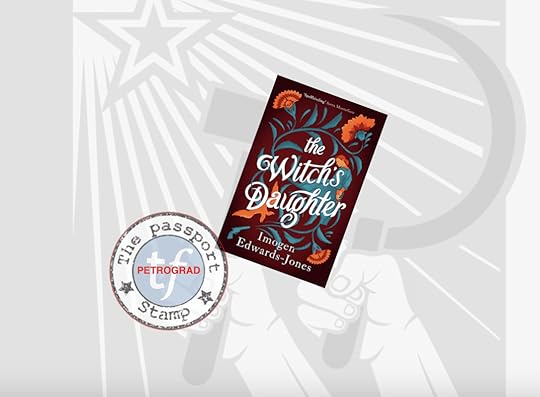
In The Witches of St Petersburg – the novel that precedes this one – the focus was on Grand Duchess Militza and her sister Anastasia, both queens of the Dark Arts. This is Nadezhda’s story, the younger daughter of Grand Duchess Militza and Grand Duke Peter. It delves into black magic at the Russian Court, with a touch of love and romance along the way, and the story is populated with strong women. The story is also packed with Russian history: “…it has taken me years to research…” says the author.
In the early pages of the novel, the murder of Rasputin takes place on 30 December 1916 and the story moves through the years to 1919. Rasputin has left behind a letter and in it – and depending who murdered him because he could clearly see his death coming – he sets out his prophesies about the future of the country. We discover who engineered his death, so there is some sense of how things will play out. The author is gifted at scene setting, conjuring up the opulence in the rich households of the aristocracy, starkly contrasted with the utter chaos and wanton destruction of revolution, overlaid with a sense of the supernatural. We discover the terrible cost of war on the country. The end of the bourgeois way of life was nigh, although naturally members of the aristocracy clung on to what they had.
“All around me there is treachery, cowardice and deceit” – Tsar Nicholas II, on the day of his abdication.
Much of the story is set against a Petrograd backdrop (having changed to Petrograd from its original St Petersburg in 1914 as the latter felt too German. It then reverted once again to St Petersburg in 1991, having passed through a period of being called Leningrad). There are multiple descriptions of the weather as the country froze “…minus twenty degrees and the wind stung like a Cossack’s whip...”, to descriptions of stifling Summer heat; these all add texture to the colourful story.
This is just one period in Russia’s tumultuous history, where the people were set against each other and where cruelty and death were the norm. The Russian Civil War gained momentum after Lenin took the lead in 1917, with escalating carnage as the revolutionaries wielded their new-found power, whilst, of course, WW2 was still raging across continents.
The focus on Nadezha and her determination to escape the massacres, with her rare and powerful book of magic, adds an original and novel dimension to a story that has been a popular subject for many authors over the years. Given the theme, it often reminded me of The Book of Perilous Dishes by Doina Rusti, (TR: James Christian Brown) set in later 18th Century Bucharest, a picaresque novel, the story of a slave cook who was in possession of a witch’s cookbook.
This novel is a surprising turn in genre for the author, as she has hitherto been well known for her Babylon series, where she goes behind the scenes of a hotel, beach resort, fashion house and more….all entertaining reads with some eye opening observations and facts.
The Witch’s Daughter is a satisfying and informative read.
In The Witches of St Petersburg – the novel that precedes this one – the focus was on Grand Duchess Militza and her sister Anastasia, both queens of the Dark Arts. This is Nadezhda’s story, the younger daughter of Grand Duchess Militza and Grand Duke Peter. It delves into black magic at the Russian Court, with a touch of love and romance along the way, and the story is populated with strong women. The story is also packed with Russian history: “…it has taken me years to research…” says the author.
In the early pages of the novel, the murder of Rasputin takes place on 30 December 1916 and the story moves through the years to 1919. Rasputin has left behind a letter and in it – and depending who murdered him because he could clearly see his death coming – he sets out his prophesies about the future of the country. We discover who engineered his death, so there is some sense of how things will play out. The author is gifted at scene setting, conjuring up the opulence in the rich households of the aristocracy, starkly contrasted with the utter chaos and wanton destruction of revolution, overlaid with a sense of the supernatural. We discover the terrible cost of war on the country. The end of the bourgeois way of life was nigh, although naturally members of the aristocracy clung on to what they had.
“All around me there is treachery, cowardice and deceit” – Tsar Nicholas II, on the day of his abdication.
Much of the story is set against a Petrograd backdrop (having changed to Petrograd from its original St Petersburg in 1914 as the latter felt too German. It then reverted once again to St Petersburg in 1991, having passed through a period of being called Leningrad). There are multiple descriptions of the weather as the country froze “…minus twenty degrees and the wind stung like a Cossack’s whip...”, to descriptions of stifling Summer heat; these all add texture to the colourful story.
This is just one period in Russia’s tumultuous history, where the people were set against each other and where cruelty and death were the norm. The Russian Civil War gained momentum after Lenin took the lead in 1917, with escalating carnage as the revolutionaries wielded their new-found power, whilst, of course, WW2 was still raging across continents.
The focus on Nadezha and her determination to escape the massacres, with her rare and powerful book of magic, adds an original and novel dimension to a story that has been a popular subject for many authors over the years. Given the theme, it often reminded me of The Book of Perilous Dishes by Doina Rusti, (TR: James Christian Brown) set in later 18th Century Bucharest, a picaresque novel, the story of a slave cook who was in possession of a witch’s cookbook.
This novel is a surprising turn in genre for the author, as she has hitherto been well known for her Babylon series, where she goes behind the scenes of a hotel, beach resort, fashion house and more….all entertaining reads with some eye opening observations and facts.
The Witch’s Daughter is a satisfying and informative read.

January 22, 2024
The Witch's Daughter by Imogen Edward-Jones, a Tarot book review, for readers.
A historical fantasy/tragedy set in St Petersburg around the time of the impending Russian Revolution.
What tarot cards represent the overriding message or central theme of the book?
The Emperor reversed + The Hermit reversed -
The Emperor and the Hermit (both reversals) relate to Tsar Nicholas as the autocratic (yet ultimately weak leader), and Rasputin as the problematic guru.
The lights are going out on a dissolving royal empire, history tells us that Tsar Nicholas II made poor decisions, unrelenting to compromise, ignoring the increasing demands for a constitutional government, he failed to consider reforms and ultimately was backed into the position of surrendering his crown in submission.
This was the era of mysticism, during the early 20th century Russia embraced esotericism and all things occult. Hailing from the Siberian wilds came Rasputin finding his footing as the charismatic 'mad monk' at the dark salons, he is permitted access into the Tsarist household, taking on the role of unconventional healer and holy guide.
With these two major arcana cards in reversal there is an indication of an imbalance of power, along with wisdom spurned. The Hermit reversed tells of a lack of meaning, and a struggle to find connection; Tsar Nicholas was unable to look within, to soul search, and failed to guide his people at a critical turning point.
My Initial thoughts and impressions of the book?
The Hierophant + The Nine of Wands -
I found the unyielding position of the Russian nobility troubling, taking the entrenched line of upholding the orthodoxy. The long procession of dukes, duchesses, and their spoilt progeny were hanging on with an impressive obstinacy to the status quo. Theirs was a blind assertion, determinedly loyal to the old faith, desperate to protect what they had accomplished, despite a growing call to change. The torch of revolution was beginning to ignite with increasing fever throughout St Petersburg, and yet the Tsar and his family maintained business as usual.
Which characters felt fully formed and resonated for me?
The Knight of Pentacles + The Eight of Pentacles
The mother-daughter relationship, that of Grand Duchess Militza and her headstrong daughter, Nadezhda, carried weight. They endured; Militza believed in the tactic bond - Nadezhda had her mother's spiritual fortitude, her mother's soul, and without saying too much, Nadezhda awakens in time to carry forth a precious matrilineal inheritance, and with the help of Bertie, save a magnificent book. I appreciated the well carved out voice of Bertie Stopford, (Albert Henry Stopford), a practically minded Englishman who always seemed to be in the right place at the right time. Bertie is a diplomatic courier skilled in smuggling, and well connected to the upper echelons. His real life autobiography written during a period of incarceration back in England sounds fascinating - The Russian diary of an Englishman: Petrograd 1915-1917 by A. Stopford.
Concluding thoughts, my reading experience and rating?
The Chariot + The Knight of Cups
The book is brimming with action from the get-go and the pace is swift. The author has their act together and is a convincing interpreter of Russian history, giving the reader a historical drama along with sufficient character motivation to see the reader through. The story does falter in parts, later in the book the movement stalls and there is a sense of repetition, which does not amount to productive tension building.
Ultimately, The Witch's Daughter offers passion and rebellion and is a captivating tale. I wanted to know what would become of this lineage of outcast nobles on a quest for their very survival, if their golden chariot would, or would not, still be waiting.
Four stars ****
A historical fantasy/tragedy set in St Petersburg around the time of the impending Russian Revolution.
What tarot cards represent the overriding message or central theme of the book?
The Emperor reversed + The Hermit reversed -
The Emperor and the Hermit (both reversals) relate to Tsar Nicholas as the autocratic (yet ultimately weak leader), and Rasputin as the problematic guru.
The lights are going out on a dissolving royal empire, history tells us that Tsar Nicholas II made poor decisions, unrelenting to compromise, ignoring the increasing demands for a constitutional government, he failed to consider reforms and ultimately was backed into the position of surrendering his crown in submission.
This was the era of mysticism, during the early 20th century Russia embraced esotericism and all things occult. Hailing from the Siberian wilds came Rasputin finding his footing as the charismatic 'mad monk' at the dark salons, he is permitted access into the Tsarist household, taking on the role of unconventional healer and holy guide.
With these two major arcana cards in reversal there is an indication of an imbalance of power, along with wisdom spurned. The Hermit reversed tells of a lack of meaning, and a struggle to find connection; Tsar Nicholas was unable to look within, to soul search, and failed to guide his people at a critical turning point.
My Initial thoughts and impressions of the book?
The Hierophant + The Nine of Wands -
I found the unyielding position of the Russian nobility troubling, taking the entrenched line of upholding the orthodoxy. The long procession of dukes, duchesses, and their spoilt progeny were hanging on with an impressive obstinacy to the status quo. Theirs was a blind assertion, determinedly loyal to the old faith, desperate to protect what they had accomplished, despite a growing call to change. The torch of revolution was beginning to ignite with increasing fever throughout St Petersburg, and yet the Tsar and his family maintained business as usual.
Which characters felt fully formed and resonated for me?
The Knight of Pentacles + The Eight of Pentacles
The mother-daughter relationship, that of Grand Duchess Militza and her headstrong daughter, Nadezhda, carried weight. They endured; Militza believed in the tactic bond - Nadezhda had her mother's spiritual fortitude, her mother's soul, and without saying too much, Nadezhda awakens in time to carry forth a precious matrilineal inheritance, and with the help of Bertie, save a magnificent book. I appreciated the well carved out voice of Bertie Stopford, (Albert Henry Stopford), a practically minded Englishman who always seemed to be in the right place at the right time. Bertie is a diplomatic courier skilled in smuggling, and well connected to the upper echelons. His real life autobiography written during a period of incarceration back in England sounds fascinating - The Russian diary of an Englishman: Petrograd 1915-1917 by A. Stopford.
Concluding thoughts, my reading experience and rating?
The Chariot + The Knight of Cups
The book is brimming with action from the get-go and the pace is swift. The author has their act together and is a convincing interpreter of Russian history, giving the reader a historical drama along with sufficient character motivation to see the reader through. The story does falter in parts, later in the book the movement stalls and there is a sense of repetition, which does not amount to productive tension building.
Ultimately, The Witch's Daughter offers passion and rebellion and is a captivating tale. I wanted to know what would become of this lineage of outcast nobles on a quest for their very survival, if their golden chariot would, or would not, still be waiting.
Four stars ****

March 24, 2024
*Provided by The Reading Agency and Head of Zeus*
"The Witch's Daughter" by Imogen Edward-Jones is like stepping into a time machine and landing smack dab in the middle of the Russian Revolution with a sprinkle of magic. The way Edward-Jones paints the picture of Russia during Rasputin's era and the reign of the Romanovs is simply enchanting. From the opulence of the Romanov court to the chaos of the revolution, every detail feels vivid and immersive. And while I was expecting more focus on witchcraft, the historical and magical elements blend seamlessly, adding layers of intrigue to the plot.
One thing that really stands out in this book is the cast of characters, particularly the strong women like Princess Militza and Nadezhda. They navigate a world gone mad with resourcefulness and resilience, making the story all the more engaging. However, I couldn't help but wish for fewer characters with more depth to each of them. Nonetheless, the journey of self-discovery that Nadezhda embarks on adds a compelling layer to the narrative, making it a gripping read from start to finish.
The book's portrayal of the Russian Revolution and the Romanov era is excellent, offering readers an immersive glimpse into a world on the brink of collapse. The vivid descriptions and fast-paced plot keep you turning pages, eager to uncover the fate of the characters amidst the chaos. And while the violence and gore may be unsettling for some, they add a gritty realism to the narrative, enhancing the overall atmosphere of danger and uncertainty.
In conclusion, "The Witch's Daughter" is a mesmerizing tapestry of history and magic that transports readers to the heart of revolutionary Russia. Imogen Edward-Jones skillfully brings to life the opulence of the Romanov court and the chaos of Petrograd, weaving a spellbinding narrative that keeps you captivated until the very last page. The strong female characters, particularly Princess Militza and Nadezhda, shine brightly amidst the turmoil, showcasing resilience and resourcefulness in the face of adversity. While the witching aspect could have been more prominent, the book's exploration of Russian witchcraft adds an intriguing layer to the story. Overall, "The Witch's Daughter" is a thrilling journey of self-discovery, resilience, sisterhood and the enduring power of love in a world in upheaval.
"The Witch's Daughter" by Imogen Edward-Jones is like stepping into a time machine and landing smack dab in the middle of the Russian Revolution with a sprinkle of magic. The way Edward-Jones paints the picture of Russia during Rasputin's era and the reign of the Romanovs is simply enchanting. From the opulence of the Romanov court to the chaos of the revolution, every detail feels vivid and immersive. And while I was expecting more focus on witchcraft, the historical and magical elements blend seamlessly, adding layers of intrigue to the plot.
One thing that really stands out in this book is the cast of characters, particularly the strong women like Princess Militza and Nadezhda. They navigate a world gone mad with resourcefulness and resilience, making the story all the more engaging. However, I couldn't help but wish for fewer characters with more depth to each of them. Nonetheless, the journey of self-discovery that Nadezhda embarks on adds a compelling layer to the narrative, making it a gripping read from start to finish.
The book's portrayal of the Russian Revolution and the Romanov era is excellent, offering readers an immersive glimpse into a world on the brink of collapse. The vivid descriptions and fast-paced plot keep you turning pages, eager to uncover the fate of the characters amidst the chaos. And while the violence and gore may be unsettling for some, they add a gritty realism to the narrative, enhancing the overall atmosphere of danger and uncertainty.
In conclusion, "The Witch's Daughter" is a mesmerizing tapestry of history and magic that transports readers to the heart of revolutionary Russia. Imogen Edward-Jones skillfully brings to life the opulence of the Romanov court and the chaos of Petrograd, weaving a spellbinding narrative that keeps you captivated until the very last page. The strong female characters, particularly Princess Militza and Nadezhda, shine brightly amidst the turmoil, showcasing resilience and resourcefulness in the face of adversity. While the witching aspect could have been more prominent, the book's exploration of Russian witchcraft adds an intriguing layer to the story. Overall, "The Witch's Daughter" is a thrilling journey of self-discovery, resilience, sisterhood and the enduring power of love in a world in upheaval.

December 17, 2023
“Tsar of the land of Russia, if you hear the sound of the bell, which will tell you that Grigory has been killed, you must know this: if it was your relations who have wrought my death, then none of your children will remain alive for more than two years. … The Russian Tsar, you will be killed by the Russian people and the people will be cursed.”
My thanks to Head of Zeus Aria & Aries for an eARC via NetGalley of ‘The Witch’s Daughter’ by Imogen Edwards-Jones.
This is a sequel to her 2018 novel, ‘The Witches of St. Petersburg’, and is based on the true story of the princesses of Montenegro, Militza and Stana, who were known in pre-revolutionary Russia for their dealings in the dark arts.
The daughter of the title is Nadezhda, whose mother is Militza. She has never wanted to be a witch yet it is in her blood. In the first book her mother had conjured Rasputin and introduced him into the Romanov court. Early in the novel Rasputin is assassinated though before this occurs he predicts a dire future for the Romanovs and Russia.
The first novel was brimming with the opulence that the aristocracy of pre-Revolutionary Russia experienced, which contrasted with the lives of its workers. Here the devastation of the Great War and the Revolution is depicted. It makes for grim reading and it amazed me that anyone survived.
While I did prefer the ‘The Witches of St. Petersburg’ though I felt that it was important that the author told the whole story of Militza and Stana. The esoteric/witchcraft aspects are less evident here though the women do at times draw upon incantations. It’s clear that their experiences with Rasputin and the following events changed them; especially Militza who is haunted by nightmares of Rasputin.
I appreciated that the novel opened with a cast of characters as there were a lot of them! In the Epilogue and Author’s Note, Imogen Edwards-Jones provides details of what happened to the Princesses and Nadezhda after this as well as details of her research and the reasons why she was drawn to write their story.
Overall, I found ‘The Witch’s Daughter’ an engaging work of historical fiction that shone a light on a fascinating snippet of Russian history and the occult aspects of the closing years of the Romanov dynasty.
My thanks to Head of Zeus Aria & Aries for an eARC via NetGalley of ‘The Witch’s Daughter’ by Imogen Edwards-Jones.
This is a sequel to her 2018 novel, ‘The Witches of St. Petersburg’, and is based on the true story of the princesses of Montenegro, Militza and Stana, who were known in pre-revolutionary Russia for their dealings in the dark arts.
The daughter of the title is Nadezhda, whose mother is Militza. She has never wanted to be a witch yet it is in her blood. In the first book her mother had conjured Rasputin and introduced him into the Romanov court. Early in the novel Rasputin is assassinated though before this occurs he predicts a dire future for the Romanovs and Russia.
The first novel was brimming with the opulence that the aristocracy of pre-Revolutionary Russia experienced, which contrasted with the lives of its workers. Here the devastation of the Great War and the Revolution is depicted. It makes for grim reading and it amazed me that anyone survived.
While I did prefer the ‘The Witches of St. Petersburg’ though I felt that it was important that the author told the whole story of Militza and Stana. The esoteric/witchcraft aspects are less evident here though the women do at times draw upon incantations. It’s clear that their experiences with Rasputin and the following events changed them; especially Militza who is haunted by nightmares of Rasputin.
I appreciated that the novel opened with a cast of characters as there were a lot of them! In the Epilogue and Author’s Note, Imogen Edwards-Jones provides details of what happened to the Princesses and Nadezhda after this as well as details of her research and the reasons why she was drawn to write their story.
Overall, I found ‘The Witch’s Daughter’ an engaging work of historical fiction that shone a light on a fascinating snippet of Russian history and the occult aspects of the closing years of the Romanov dynasty.
March 26, 2024
From the start to the end of this book I really enjoyed the key features which were carried throughout the book such as the underlying theme of death and decomposition of the Russian Tsar government. I have little to no knowledge of the Russian revolution or history, so this book was a great insight into what happened and to what extent it happened. My favourite things about the book include, finding out about the history of the revolution, I love how the author didn’t shy away from really portraying the brutality and inhumane treatment of the revolution to its people including the unique perspective of the aristocracy. This paired with the use of historical accuracy was really insightful and entertaining and I think she really nailed this part of the book. Similarly, I really enjoyed the depth of writing and thought that has gone into the scenes a lot of the scenes I can picture in my mind and I feel it takes a good writer to portray this onto their audience. Similarly, I was gripped in many parts due to the level of description and how the author conveys feelings for the reader to pick up and really feel when reading. I did like the pacing of the storyline, I could never predict what happens next, but I do however feel like some parts were rushed, especially the birth of Nadezhda’s child, which I thought needed more than just a page to cover this monumental scene, of a life being born into the deathliest revolution, this could have been done better in my opinion to really uncover the significant contrast of life vs death. Some critics, for me I feel as if the title of the book cat fished me in the end, I expected more supernatural stories, but I feel you don’t see enough of this throughout the book for the title to convey this. Secondly, as a non Russian speaker I found it really hard with the extended use of characters, I was confused in certain parts as the characters names are so similar. For me it was quite confusing at some points as the characters were sometimes briefly mentioned but had no depth, I felt I wanted more depth from the main characters and not use filler characters. Overall, I think it was a good book and I really enjoyed it, just some things made it hard for me to read but that may just be personal.

August 28, 2023
The Witch’s Daughter opens in 1916. Rasputin has just been killed by Princess Militza, famed as one of the 'Witches of St Petersburg', and, coincidentally (or maybe not), Russia descends into chaos and violence as revolution ignites. The ruling Romanov family find themselves fighting for their lives as the citizenry, formerly friendly nations and even their own servants turn against them.
Militza and her daughter Nadezhda (the titular Witch’s Daughter) are just two of the book’s lively characters. It’s great to see so many strong female characters. Whether nobility or revolutionary, they don’t simply just make the most of whatever agency has been given to them by their position, but also proactively manufacture opportunities from whatever situation they find themselves in.
The menfolk of the period are certainly present, but very much in the background. Lenin and Trotsky make an appearance, as do various members of the Romanov family. But the most rounded figure is the seemingly bombproof Bertie Stopford (antiques dealer/diplomatic courier/smuggler of valuables/spy). I would have very much liked to know him, though suspect, sadly, that I would have been far too lowly for his crowd.
Edwards-Jones’s familiarity with all things Russian is woven throughout the book, without hitting you over the head with a sledgehammer. This is a period that is completely new to me, and I didn’t feel like I was drowning in facts, nor all at sea in an unfamiliar historical landscape. Occasionally it feels like there is some telling rather than showing, but it does bring readers up to speed quickly and help move the story along.
And the story does rattle at a pace. I read the book on my kindle and was swiping through the pages quickly wanting to know what happened next.
This book follows on from The Witches of St Petersburg, but I didn’t realise this until I was about halfway through. It is completely not necessary to have read the first book before you tackle this one. Though, if you enjoy this one as much as I did, you might want to go back and read it afterwards!
Militza and her daughter Nadezhda (the titular Witch’s Daughter) are just two of the book’s lively characters. It’s great to see so many strong female characters. Whether nobility or revolutionary, they don’t simply just make the most of whatever agency has been given to them by their position, but also proactively manufacture opportunities from whatever situation they find themselves in.
The menfolk of the period are certainly present, but very much in the background. Lenin and Trotsky make an appearance, as do various members of the Romanov family. But the most rounded figure is the seemingly bombproof Bertie Stopford (antiques dealer/diplomatic courier/smuggler of valuables/spy). I would have very much liked to know him, though suspect, sadly, that I would have been far too lowly for his crowd.
Edwards-Jones’s familiarity with all things Russian is woven throughout the book, without hitting you over the head with a sledgehammer. This is a period that is completely new to me, and I didn’t feel like I was drowning in facts, nor all at sea in an unfamiliar historical landscape. Occasionally it feels like there is some telling rather than showing, but it does bring readers up to speed quickly and help move the story along.
And the story does rattle at a pace. I read the book on my kindle and was swiping through the pages quickly wanting to know what happened next.
This book follows on from The Witches of St Petersburg, but I didn’t realise this until I was about halfway through. It is completely not necessary to have read the first book before you tackle this one. Though, if you enjoy this one as much as I did, you might want to go back and read it afterwards!

July 18, 2024
Historical fiction which opens with the death of Rasputin and leads us through to the exile of the last Romanovs. When I started this book, I wasn’t aware that it was a sequel and for the first few chapters I was totally confused about who the characters were and where the witch/magic theme really slotted in to a narrative about the Russian Revolution. So I would definitely recommend reading The Witches of St. Petersburg first to understand who Militza and Stana are, before continuing to this book which focuses more on Militza’s daughter Nadezhda.
Having said that, once I was properly orientated into the narrative I enjoyed the depiction of the opulence of the Romanov court and its contrast with the brutality and hardship on the streets of Petrograd. The author has researched the era well, and she fits telling details neatly into the story. The parts I enjoyed most were those of the early days of the Revolution, where the violence and confusion was vividly brought to life, and some of the later scenes with the royal family in exile in the Crimea. The combination of arrogance and bewilderment in members of a deposed monarchy was totally convincing.
Nadezhda as a character didn’t really engage me and her story was a little too bland - again this may be because of reading the sequel first or maybe because the danger and violence were often related to the family from a distance or by others. There are brief flashes of drama, but generally events unroll quite steadily and the characters passively experience them. The one character who does grab the attention is the servant Brana, she was brilliantly drawn. The magic element wasn’t as prominent as I had expected, which will probably disappoint some readers, but it did fit with what I understand of the mystic atmosphere of the time.
Overall I found this entertaining and evocative, but slightly more low key than I was expecting.
Having said that, once I was properly orientated into the narrative I enjoyed the depiction of the opulence of the Romanov court and its contrast with the brutality and hardship on the streets of Petrograd. The author has researched the era well, and she fits telling details neatly into the story. The parts I enjoyed most were those of the early days of the Revolution, where the violence and confusion was vividly brought to life, and some of the later scenes with the royal family in exile in the Crimea. The combination of arrogance and bewilderment in members of a deposed monarchy was totally convincing.
Nadezhda as a character didn’t really engage me and her story was a little too bland - again this may be because of reading the sequel first or maybe because the danger and violence were often related to the family from a distance or by others. There are brief flashes of drama, but generally events unroll quite steadily and the characters passively experience them. The one character who does grab the attention is the servant Brana, she was brilliantly drawn. The magic element wasn’t as prominent as I had expected, which will probably disappoint some readers, but it did fit with what I understand of the mystic atmosphere of the time.
Overall I found this entertaining and evocative, but slightly more low key than I was expecting.

October 20, 2024
3.75/5
It's 1916 Russia, and things are about to get wild. Rasputin's just been killed, and the whole country's on edge. In the middle of all this chaos, we've got Princess Militza (yeah, she's one of those infamous "Witches of St. Petersburg") and her daughter Nadezhda trying to keep their heads above water.
So, the revolution's brewing, the Romanovs are in hot water, and everyone at court is scrambling like rats from a sinking ship. But here's where it gets interesting - our girl Nadezhda somehow manages to find love in all this mess. Talk about bad timing, right?
As the Red Army's marching south and what's left of the Russian bigwigs are backed into a corner in Crimea, Nadezhda and her new flame, Prince Orlov, have to make a crazy gamble. It's do or die time.
Now, Imogen Edward-Jones takes all this drama and spices it up with a dash of magic in her book "The Witch's Daughter". It's like historical fiction met fantasy and had a baby - and it's pretty awesome. This is the follow up to “The Witches of St. Petersburg”, which I haven’t read, but honestly I did not find any issues reading this one without having read the first to begin with.
With that said, what I really loved and enjoyed about this book is how it brings old-school Russia to life. This story very definitely keeps you on your toes, and watching Nadezhda figure herself out adds some nice depth to all the craziness going on. Some may find it a bit slow to start, but I promise you just push through and give it a chance, you won't be disappointed one bit.
Also, don't worry - Edward-Jones doesn't go all history teacher on us. She gives you just enough Russian flavour to make it interesting without boring you to tears. Thank goodness!
Overall, "The Witch's Daughter" is a wild ride through Russian history with a magical twist. If you're into witchy stuff or just dig a good historical romp, you're gonna want to check this out. It's the kind of book that'll have you itching for more once you're done.
It's 1916 Russia, and things are about to get wild. Rasputin's just been killed, and the whole country's on edge. In the middle of all this chaos, we've got Princess Militza (yeah, she's one of those infamous "Witches of St. Petersburg") and her daughter Nadezhda trying to keep their heads above water.
So, the revolution's brewing, the Romanovs are in hot water, and everyone at court is scrambling like rats from a sinking ship. But here's where it gets interesting - our girl Nadezhda somehow manages to find love in all this mess. Talk about bad timing, right?
As the Red Army's marching south and what's left of the Russian bigwigs are backed into a corner in Crimea, Nadezhda and her new flame, Prince Orlov, have to make a crazy gamble. It's do or die time.
Now, Imogen Edward-Jones takes all this drama and spices it up with a dash of magic in her book "The Witch's Daughter". It's like historical fiction met fantasy and had a baby - and it's pretty awesome. This is the follow up to “The Witches of St. Petersburg”, which I haven’t read, but honestly I did not find any issues reading this one without having read the first to begin with.
With that said, what I really loved and enjoyed about this book is how it brings old-school Russia to life. This story very definitely keeps you on your toes, and watching Nadezhda figure herself out adds some nice depth to all the craziness going on. Some may find it a bit slow to start, but I promise you just push through and give it a chance, you won't be disappointed one bit.
Also, don't worry - Edward-Jones doesn't go all history teacher on us. She gives you just enough Russian flavour to make it interesting without boring you to tears. Thank goodness!
Overall, "The Witch's Daughter" is a wild ride through Russian history with a magical twist. If you're into witchy stuff or just dig a good historical romp, you're gonna want to check this out. It's the kind of book that'll have you itching for more once you're done.

December 28, 2023
Imogen Edwards-Jones’ new novel, The Witch’s Daughter, is the sequel to 2018’s The Witches of St Petersburg, but I don’t think it’s essential to read them in order. The first book tells the story of Princesses Militza and Stana of Montenegro, who marry into the Russian aristocracy and introduce Rasputin to the Romanov court. This one begins with the murder of Rasputin, then moves on to follow Militza’s daughter, Nadezhda, throughout the Russian Revolution.
As the novel opens in December 1916, Tsar Nicholas II is preoccupied with Russia’s involvement in World War I when news breaks out in Petrograd of Rasputin’s murder. However, the war is soon going to be the least of the Tsar’s troubles because Rasputin has left behind a letter predicting the death and destruction of Nicholas himself and the entire Romanov family. As unrest and violence breaks out on the streets of Petrograd, it seems that the prophecy is starting to come true and Princess Nadezhda finds herself caught up in it all.
Unlike the first book, which took as its premise the idea that Militza and Stana were ‘witches’ who believe they have conjured up Rasputin through black magic, this one – despite the title – involves almost no magic at all. It could be misleading for those who pick it up specifically hoping for a story about witchcraft, but I preferred the more serious tone of this book. I can’t tell you whether everything that happens is historically accurate or not, because I don’t know – the Russian Revolution is not a period I’ve ever studied or read very much about – but I think it works well as a general overview of the situation and the feeling of the Russian people towards the Romanovs and the aristocracy. Edwards-Jones doesn’t shy away from describing the violence and brutality as tensions boil over on the streets and simple demands for ‘peace, land and bread’ spiral into a larger revolutionary movement.
Although the focus is on Nadezhda’s family, and the sequence of events that lead them to flee St Petersburg for the relative safety of the Crimea, The Witch’s Daughter has a large number of other characters and they are all listed at the front of the book in case you have trouble keeping track of the relationships between the various Princes and Princesses, Grand Dukes and Grand Duchesses. The character who interested me the most, however, was Bertie Stopford, a British antiques and art dealer who has some sort of unspecified connection with the War Office and engages in some spying and smuggling on behalf of his friend, the Grand Duchess Vladimir. Bertie was a real person, although I don’t think I’ve read about him before; he seems to have led a very eventful life and is the author of an anonymously published memoir, The Russian Diary of an Englishman: Petrograd 1915–1917, which I’m sure must be fascinating.
I’m not expecting a third book in this series as everything seemed to be tied up nicely at the end, but I’m pleased to have had the opportunity to learn a little bit about Nadezhda and her family.
As the novel opens in December 1916, Tsar Nicholas II is preoccupied with Russia’s involvement in World War I when news breaks out in Petrograd of Rasputin’s murder. However, the war is soon going to be the least of the Tsar’s troubles because Rasputin has left behind a letter predicting the death and destruction of Nicholas himself and the entire Romanov family. As unrest and violence breaks out on the streets of Petrograd, it seems that the prophecy is starting to come true and Princess Nadezhda finds herself caught up in it all.
Unlike the first book, which took as its premise the idea that Militza and Stana were ‘witches’ who believe they have conjured up Rasputin through black magic, this one – despite the title – involves almost no magic at all. It could be misleading for those who pick it up specifically hoping for a story about witchcraft, but I preferred the more serious tone of this book. I can’t tell you whether everything that happens is historically accurate or not, because I don’t know – the Russian Revolution is not a period I’ve ever studied or read very much about – but I think it works well as a general overview of the situation and the feeling of the Russian people towards the Romanovs and the aristocracy. Edwards-Jones doesn’t shy away from describing the violence and brutality as tensions boil over on the streets and simple demands for ‘peace, land and bread’ spiral into a larger revolutionary movement.
Although the focus is on Nadezhda’s family, and the sequence of events that lead them to flee St Petersburg for the relative safety of the Crimea, The Witch’s Daughter has a large number of other characters and they are all listed at the front of the book in case you have trouble keeping track of the relationships between the various Princes and Princesses, Grand Dukes and Grand Duchesses. The character who interested me the most, however, was Bertie Stopford, a British antiques and art dealer who has some sort of unspecified connection with the War Office and engages in some spying and smuggling on behalf of his friend, the Grand Duchess Vladimir. Bertie was a real person, although I don’t think I’ve read about him before; he seems to have led a very eventful life and is the author of an anonymously published memoir, The Russian Diary of an Englishman: Petrograd 1915–1917, which I’m sure must be fascinating.
I’m not expecting a third book in this series as everything seemed to be tied up nicely at the end, but I’m pleased to have had the opportunity to learn a little bit about Nadezhda and her family.

October 17, 2024
Revolution is brewing in Russia. With magic running through their veins can Militza and Nadezhda save everything that is dear to them before it is too late?
When I started this book I didn’t realise that it was the sequel to The Witches of St. Petersburg which I haven’t read. However, I was able to get up to speed very quickly with the events of the first book. The author helpfully gives the reader an insight into the events of the first book which led to the death of Rasputin and who the characters are. The first book centred on Militza and although this book is a sequel it centres on Militza’s daughter Nadezhda.
I found the storyline to be immersive and detailed but at times brutal and violent. From the beginning I was swept away to a different world and felt like I was on a journey with the characters that was at times dangerous and uncertain.
When we meet Nadezhda she's very young and not quite 18 and we follow her life from a youth to an adult. Despite being young she has to grow up very quickly. She loses her fiancée, the loss of others in her life and she lives in an ever changing world. I found Militza and Nadezhda to be both brave and courageous. They did what it took to keep their family and loved ones safe. One aspect of the story that I found intriguing was the magical aspect. Although both Militza and Nadezhda have magic running through them they both deal with it differently. It's clear that Militza has always accepted her heritage but Nadezhda hasn't. Part of the story is Nadezhda’s journey to accepting who she is and accepting her ancestral power. Nadezhda has to go through a lot before she embraces the power that is within her which she previously ignored and didn’t believe was real.
Although the first book ends with the death of Rasputin by the hands of Militza that aspect of the storyline does continue in this book. Militza is still dealing with what she did and it's something that she can't seem to escape from. She has visions and vivid dreams about Rasputin and at times believes he is still alive. It was interesting to see how Militza dealt with this secret which she had been keeping from those around her.
An intriguing read.
When I started this book I didn’t realise that it was the sequel to The Witches of St. Petersburg which I haven’t read. However, I was able to get up to speed very quickly with the events of the first book. The author helpfully gives the reader an insight into the events of the first book which led to the death of Rasputin and who the characters are. The first book centred on Militza and although this book is a sequel it centres on Militza’s daughter Nadezhda.
I found the storyline to be immersive and detailed but at times brutal and violent. From the beginning I was swept away to a different world and felt like I was on a journey with the characters that was at times dangerous and uncertain.
When we meet Nadezhda she's very young and not quite 18 and we follow her life from a youth to an adult. Despite being young she has to grow up very quickly. She loses her fiancée, the loss of others in her life and she lives in an ever changing world. I found Militza and Nadezhda to be both brave and courageous. They did what it took to keep their family and loved ones safe. One aspect of the story that I found intriguing was the magical aspect. Although both Militza and Nadezhda have magic running through them they both deal with it differently. It's clear that Militza has always accepted her heritage but Nadezhda hasn't. Part of the story is Nadezhda’s journey to accepting who she is and accepting her ancestral power. Nadezhda has to go through a lot before she embraces the power that is within her which she previously ignored and didn’t believe was real.
Although the first book ends with the death of Rasputin by the hands of Militza that aspect of the storyline does continue in this book. Militza is still dealing with what she did and it's something that she can't seem to escape from. She has visions and vivid dreams about Rasputin and at times believes he is still alive. It was interesting to see how Militza dealt with this secret which she had been keeping from those around her.
An intriguing read.
March 13, 2025
Russian Revolution.
Fortunately there was a list of characters at the front of the book, sometimes difficult to go back and forth on kindle, I took a pictures of character list to refer to.
Sisters Stana and Militza are the daughters of a woman who knew herbal cures and magic, they still refer to her book and have a powerful knowledge. They see that Russia is heading for trouble and help to bring Rasputin into being. Rasputin becomes too powerful and influential so there are various plots to kill him although he seems indestructible. Finally he is killed, most people are glad as his influence on the Russian Royalty was damaging. Rasputin sent a letter to the Tsar saying that if he is killed by a member of the Royal family, they will all be cursed and die and Russia will will be destroyed.
The class divide was worsening with the peasants starving while the upper classes continue to prosper. A revolution starts and the war continues with thousands killed and no supplies. Trains are sent by the nobility to bring troops home, some Princesses and other royalty work with nurses to nurse the wounded. There are food shortages and more horrific deaths with no one safe. Some of the royal families manage to leave the cities. The weather in winter makes freezing to death a strong possibility but in Summer when the ice melts, bodies are discovered and disease spreads.
The sisters are haunted by their past acts and Militza's daughter has to resort to magic to save her husband and help her baby survive.
A novel spanning years of misery and violence.
Thank you Imogen NetGalley and Aria for this ARC
Fortunately there was a list of characters at the front of the book, sometimes difficult to go back and forth on kindle, I took a pictures of character list to refer to.
Sisters Stana and Militza are the daughters of a woman who knew herbal cures and magic, they still refer to her book and have a powerful knowledge. They see that Russia is heading for trouble and help to bring Rasputin into being. Rasputin becomes too powerful and influential so there are various plots to kill him although he seems indestructible. Finally he is killed, most people are glad as his influence on the Russian Royalty was damaging. Rasputin sent a letter to the Tsar saying that if he is killed by a member of the Royal family, they will all be cursed and die and Russia will will be destroyed.
The class divide was worsening with the peasants starving while the upper classes continue to prosper. A revolution starts and the war continues with thousands killed and no supplies. Trains are sent by the nobility to bring troops home, some Princesses and other royalty work with nurses to nurse the wounded. There are food shortages and more horrific deaths with no one safe. Some of the royal families manage to leave the cities. The weather in winter makes freezing to death a strong possibility but in Summer when the ice melts, bodies are discovered and disease spreads.
The sisters are haunted by their past acts and Militza's daughter has to resort to magic to save her husband and help her baby survive.
A novel spanning years of misery and violence.
Thank you Imogen NetGalley and Aria for this ARC
December 7, 2023
The prologue of the book is dated 1914 describing the current situation of soldiers from Russia, sent to war.
Moving forward the story mentions the murder and death of Rasputin, 1916 St. Petersburg Russia, and of the ensuing ramifications of what unfolded in St. Petersburg, and further afield in Russia.
I didn’t realise until reading the authors acknowledgement at the end of the book that this was a sequel to her book The Witches of St. Petersburg, which I have not read, but now very much wish to do so. I feel because of that I read it and perceive it can be a stand alone.
Based loosely on a true story, the characters were real, with imagination weaved into a story.
For myself I learned such a lot that I hadn’t known about Russia, but it was a more palatable read and easier to understand woven into a story, as history books or documentaries have me zoning out. This said there were some horrific atrocities carried out to the rulers and people living during that awful period of time. An eye opener.
The Grand duchess Militza Nikolayevna, and her also titled sister Stana (Anastasia) who hailed from the impoverished kingdom of Montenegro before marriage, practiced black magic.
The story in this book is also told through Militza’s daughter Nadezhda.
A compelling read.
Many thanks to NetGalley and Publisher for an advanced e-book copy. Opinions about the book are entirely my own.
Moving forward the story mentions the murder and death of Rasputin, 1916 St. Petersburg Russia, and of the ensuing ramifications of what unfolded in St. Petersburg, and further afield in Russia.
I didn’t realise until reading the authors acknowledgement at the end of the book that this was a sequel to her book The Witches of St. Petersburg, which I have not read, but now very much wish to do so. I feel because of that I read it and perceive it can be a stand alone.
Based loosely on a true story, the characters were real, with imagination weaved into a story.
For myself I learned such a lot that I hadn’t known about Russia, but it was a more palatable read and easier to understand woven into a story, as history books or documentaries have me zoning out. This said there were some horrific atrocities carried out to the rulers and people living during that awful period of time. An eye opener.
The Grand duchess Militza Nikolayevna, and her also titled sister Stana (Anastasia) who hailed from the impoverished kingdom of Montenegro before marriage, practiced black magic.
The story in this book is also told through Militza’s daughter Nadezhda.
A compelling read.
Many thanks to NetGalley and Publisher for an advanced e-book copy. Opinions about the book are entirely my own.

April 3, 2024
‘Provided by The Reading Agency and Head of Zeus’
Usually historical fiction is not my genre, so i was a little apprehensive going into this but actually i had nothing to worry about. The main character is totally relatable as she struggles with issues of family loyalty vs who she is and wants to be whilst everything is falling apart around her. It was Nadezha that made me continue reading this story as i really wanted to find out what would become of her and her family. I also really liked the writing style which was a perfect balance of descriptive and plot progressive.
There were several lines of text that really shifted my perspective of what that era must have been like to live in. It also made me reflect on what i would do in the situation. Nadezha’s shifting view of Rasputin as she processes everything thats happening around her and within her is particularly interesting as it makes him seem more human despite the fact he’s widely known as the scandalous mad monk.
Ultimately I felt like this was a journey of survival, and the things/ part of ourselves we lose and gain on the way. It has really made me want to read by this author and also the genre as a whole. Would recommend for anybody looking for that something ‘extra’ to read.
Usually historical fiction is not my genre, so i was a little apprehensive going into this but actually i had nothing to worry about. The main character is totally relatable as she struggles with issues of family loyalty vs who she is and wants to be whilst everything is falling apart around her. It was Nadezha that made me continue reading this story as i really wanted to find out what would become of her and her family. I also really liked the writing style which was a perfect balance of descriptive and plot progressive.
There were several lines of text that really shifted my perspective of what that era must have been like to live in. It also made me reflect on what i would do in the situation. Nadezha’s shifting view of Rasputin as she processes everything thats happening around her and within her is particularly interesting as it makes him seem more human despite the fact he’s widely known as the scandalous mad monk.
Ultimately I felt like this was a journey of survival, and the things/ part of ourselves we lose and gain on the way. It has really made me want to read by this author and also the genre as a whole. Would recommend for anybody looking for that something ‘extra’ to read.
March 26, 2024
Provided by The Reading Agency and Head Of Zeus
I found this book very hard to read. The writing is inelegant, and much more "tell not show"; I lost count of how many time the author used "and little did s/he know..." which is a childish construction at best. I know that names within the Russian aristocracy at the time were similar, and full of pet names and therefore this isn't a fault of the author, however I found it very difficult to keep track of the characters, and who was related to whom.
My main problem with the book (other than it really wasn't about the witch's daughter, Nadezhda, but the witch herself, Militza) was that I had far more sympathy with the revolutionaries than those in exile. There was not a single sympathetic character among the Romanovs as written. They all came across as spoiled - they probably were in reality - which made it hard to like any of them. Indeed, I understood entirely why Brana would abandon the family without a second thought.
I'm afraid I will not be seeking out anything else written by the author.
I found this book very hard to read. The writing is inelegant, and much more "tell not show"; I lost count of how many time the author used "and little did s/he know..." which is a childish construction at best. I know that names within the Russian aristocracy at the time were similar, and full of pet names and therefore this isn't a fault of the author, however I found it very difficult to keep track of the characters, and who was related to whom.
My main problem with the book (other than it really wasn't about the witch's daughter, Nadezhda, but the witch herself, Militza) was that I had far more sympathy with the revolutionaries than those in exile. There was not a single sympathetic character among the Romanovs as written. They all came across as spoiled - they probably were in reality - which made it hard to like any of them. Indeed, I understood entirely why Brana would abandon the family without a second thought.
I'm afraid I will not be seeking out anything else written by the author.

August 18, 2023
Book Review 📚
The Witches Daughter by Imogen Edward-Jones - 4/5 ⭐
Well this was a breath of fresh air. It's not your typical fantasy set it a magical world with magical people. It's in Russia following the life and death of Rasputin. It was oddly wonderful. And to top it off, it's based off face. So your learning along the way.
There are some wonderful descriptions of Russia throughout the story and it really sets the scene for you. It follows straight from the first book without missing crucial information which I adore. Imogen has such a way with words that opens up the world around you, truly imaginative.
I thoroughly enjoyed the story line and the characters, old and new, were as amazing as they are in the first book. It's a beautiful story to follow and really does open your mind to the history of Russia.
Thank you to NetGalley and Aria and Aries for allowing me to read this ARC - this is an HONEST review from my own personal opinion.
The Witches Daughter by Imogen Edward-Jones - 4/5 ⭐
Well this was a breath of fresh air. It's not your typical fantasy set it a magical world with magical people. It's in Russia following the life and death of Rasputin. It was oddly wonderful. And to top it off, it's based off face. So your learning along the way.
There are some wonderful descriptions of Russia throughout the story and it really sets the scene for you. It follows straight from the first book without missing crucial information which I adore. Imogen has such a way with words that opens up the world around you, truly imaginative.
I thoroughly enjoyed the story line and the characters, old and new, were as amazing as they are in the first book. It's a beautiful story to follow and really does open your mind to the history of Russia.
Thank you to NetGalley and Aria and Aries for allowing me to read this ARC - this is an HONEST review from my own personal opinion.

October 10, 2024
I’ve recently been reading more historical fiction so was excited to try The Witch’s Daughter. I have to say I haven’t read much about the Russian Revolution but found this novel both interesting and beautifully written.
The writing is easy to follow but allows you to get an insight to the atmosphere that followed the revolution. The characters are all interesting, if not all likable. The amount of research and then love that has gone into crafting this piece is evident in the flow of the story and the passion with which it is told.
If you love historical fiction this will be one to read.
As always thank you to Random Book Tours for my copy. My review is always honest, truthful and freely given.
The writing is easy to follow but allows you to get an insight to the atmosphere that followed the revolution. The characters are all interesting, if not all likable. The amount of research and then love that has gone into crafting this piece is evident in the flow of the story and the passion with which it is told.
If you love historical fiction this will be one to read.
As always thank you to Random Book Tours for my copy. My review is always honest, truthful and freely given.
October 14, 2024
This being a sequel to Imogen's previous book The Witches of St Petersburg I was assuming I would of needed to read that book first but you can read this as a standalone. The main character is called Nadezhda and living in Russia where she has become a witch, which she never wanted anyway. Bad things are happening and Nadezhda has to find a way to escape and protect her family. I found it a little overwhelming, there is a lot going on and lots of information to keep up with. Needless to say the information that I did discover was interesting. Imogen as the author has done a good job of researching this era and Russian history. I liked the story though but I did feel it was a little heavy going.

October 22, 2024
The Witch's Daughter is the sequel to The Witches of St Petersburg In the Russian Witches series, but for me, can definitely be read as a standalone.
Set in Imperial Russia, it's a wonderfull, magical, spellbinding tale of love, passion, lust and betrayal.
It's a story rich in imagination, with great attention to detail in the vividly portrayed setting of the Russian Revolution.
The author obviously meticulously research this novel, which is clear to see from great descriptions of the period. You can really see the sights, hear the sounds and smell the smells of that time period and setting.
It's a story full to the brim with wonderful characters, each well developed and believable.
The storyline flows well and I read this in three sittings.
4 🌟 🌟 🌟 🌟 's from me.
Set in Imperial Russia, it's a wonderfull, magical, spellbinding tale of love, passion, lust and betrayal.
It's a story rich in imagination, with great attention to detail in the vividly portrayed setting of the Russian Revolution.
The author obviously meticulously research this novel, which is clear to see from great descriptions of the period. You can really see the sights, hear the sounds and smell the smells of that time period and setting.
It's a story full to the brim with wonderful characters, each well developed and believable.
The storyline flows well and I read this in three sittings.
4 🌟 🌟 🌟 🌟 's from me.
August 18, 2023
The beauty of this book is that it’s written in such a way that I didn’t realise it was a sequel until I read the author’s acknowledgments! This was a beautifully written story but also so informative, it really expresses the chaos and terror of the revolution. I also loved that the author focuses on so many strong female characters. I have now ordered the first book, The Witches of St Petersburg and look forward to reading more from this author.
Thank you to Netgalley, Imogen Edwards-Jones and Aria for this ARC.
Thank you to Netgalley, Imogen Edwards-Jones and Aria for this ARC.
Displaying 1 - 30 of 55 reviews