Where Are the Snows takes its title from the famous refrain of François Villon’s 15th Century poem “Ballad of the Ladies of Times Past.” Like that poem, the book functions, among other things, as an ubi sunt, Latin for “Where are they?” as in “Where are the ones who came before us?”—the beautiful, the strong, the virtuous, all of them? In keeping with that long tradition, these poems offer a way to think about life’s transience—its beauty, its absurdity, and of course its mortality. Allusive and associative, anti-capitalist and unapologetically political, aligned somewhere between comedy and anger, this poetry juxtaposes the triumphs and tragedies (mostly tragedies) of our current age with those of history, and—by wondering “Where are they?”—explores the questions of where we are now and where we might be going.
Kathleen Rooney is a founding editor of Rose Metal Press, a publisher of literary work in hybrid genres, and a founding member of Poems While You Wait, a team of poets and their typewriters who compose commissioned poetry on demand.
She is the author, most recently, of the novels Lillian Boxfish Takes a Walk and Cher Ami and Major Whittlesey. Her latest collection Where Are the Snows, winner of the XJ Kennedy Prize, was published by Texas Review Press in September 2022. Her novel from Dust to Stardust, was published by Lake Union Press in Fall of 2023, and her debut picture book--co-written with her sister Beth Rooney and illustrated by Betsy Bowen--was published by University of Minnesota Press in Fall of 2025.
Her fifth novel, Man Overboard!, is coming out with Gallery Books in July of 2026.
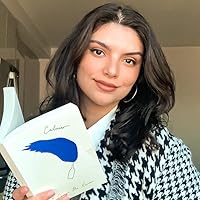
Having enjoyed several novels and one memoir by Kathleen Rooney — ….”Lillian Boxfish Takes a Walk” ….”Cher Ami and Major Whittlessey” ….”From Dust to Stardust” … “Live Nude Girl: My life as an Object”…. I picked a collection of poems — of Kathleen’s to read in honor of National Poetry month. They are funny, thought-provoking, tender, haunting, and hopeful…. impressive and brilliant.
There is a wide variety: poems about women, our bodies, children, animals, our country, the planet, faith, etc. I’m sure I didn’t understand everything—but I really enjoyed what I enjoyed!!
I loved that Kathleen dedicated these poems “To the future”
I have included ‘snippets’…. pulled out sentences … from a variety of many different poems (they are out of context: not complete poems by themselves), yet they resonated with me as is…
“She who wears a disguise hard is she who tries hard”.
“Although wearing a disguise is unlikely to fool friends, it might inspire laughter”.
“This year I gave up hope for lent “.
“It’s hard to be an atheist in such an age, so why not make up your own theology?”
“Sometimes a friend posts a photo of their newborn and it’s all I can do not to type, Welcome to Hell!”
“Sometimes you can get out a red pen and revise your mood. Maybe most times”.
“Can material loss yield spiritual gain? Probably so, but not automatically”.
“What would you make if you didn’t have to make money?”
“When I can’t visit nature, nature visits me: the fattest sparrow on the bare ash tree”.
“What is it that birds are chirping from trees? That there is no promises, no guarantees”.
“Silence approaches, and it’s gray felt cloak. Walk with it for as many blocks as possible without talking”.
“Someone said to me about a photo of Audrey Hepburn, she even looks glamorous reading. I said, ‘Now that you mention it, everyone looks glamorous reading’”.
“Many people who dismiss style as fabulous are jealous. Who does it hurt if I flounce around in my fanciest dress?”
“Space is abstract; place has meaning. Like, that since wouldn’t matter to me unless you were leaning on it.”
“According to Brian Eno, the secret of a good perfume ‘is that at the very middle, at the center of it, is a big stink. Because your nose is the most primitive sense, it’s what wakes you up. It’s what tells you there’s a fire in the forest. It alerts you if there’s a house burning down next door. Once you’re awake and then you can put in all the pretty smells, but not before”.
“You can’t have the moral of a story without a moral code. Can you have a moral code without other people around?”
“If calm were a tree, it would be deciduous—shedding its leaves, putting them forth again”.
“Evil walks among us on physical feet, and half the country is like, ‘Hell yeah’”.
“How to become a no-stats all-star, the player on the team, whose presence alone causes magical outcomes?”
“Sometimes I feel an emotion that I just can’t name. That’s when the poop emoji comes in to play”.
“‘No’ is a complete sentence and requires no explanation”.
“There’s no bitch on earth like a mother frightened for her kids, says Stephen King. Mothers are all slightly insane, says J.D. Salinger”.
“I don’t want to be a ‘mother’ per say; I just want to care for others, like any person should care”.
“I like it when kids run around crazy-craze and tell me they want to be paleontologists”.
“We should fly the flag at half-mask all the time because so much of America is spiritually dead”.
“Last October at a talk in Chicago, Patti Smith said to accept that mourning is a part of life. ‘Don’t be afraid to feel joy in the face of sorrow, or to be the bummer at a party’, she said. ‘Every minute, I am holding vigil’, she said”.
“Picture your worst fear, but with googly eyes glued on. Picture your worst fear, naked, wearing only black socks”.
“I hope that we’re all feeling better soon”.
“I’m still a regular embarrassing person, but if you need me, I’ll be over here trying to organize the chaos”.
“I must be getting old. I hope you are too.”
“‘A picture is worth a thousand words’—hard to think of a sillier saying. Dorothea Lange herself believed ‘there is no photograph that cannot be fortified by words’”.
“‘Turn to the first poetry book you see’, an exclusively online friend of mine tells me. ‘On the page of your birth month, use a word from the title to write your first line and improvised from there’”.
“I like to think I know my own mind, and my own mind likes a little outside guidance’.
“What do I remember the most about childhood? An intense and often thwarted desire to be understood. Also, struggling not to laugh with my sister in church, mint chocolate chip, ice cream in pale, green scoops, and calling milk, ‘moo juice’”.
“Don’t say ‘a star is born’ unless you’re talking about the movie. Don’t tell a woman her Books are her babies”.
“Earth is the solid footing formed of soil. Earth is the sphere of mortal life, as distinguished from the spears of spirits”.
“My friend, Sarah’s mom, sent her a lamb cake over Easter. ‘I thought it would be made of ground up Lamb’, she emailed me. ‘Really, it’s a very cute Lamb shaped vanilla cake with coconut frosting’”.
“The prospect of killing animals to be more disgusting”.
“A tomato is technically a fruit but functionally a vegetable. Rhubarb is technically a vegetable but functionally a fruit. I don’t find pedants particularly cute”.
WHERE ARE THE SNOWS by Kathleen Rooney Texas Review Press, 2022
If you are not an avid fan of poetry—maybe it’s too sentimental or cryptic or irrelevant or obscure—you have my sympathy. It can feel as if one must know the secret handshake to enter the world of verse. But here and there a great poet’s work is entirely accessible and moving, even to those who haven’t memorized the proclivities of the Greek gods or the geography of mythical realms. I’m thinking about Billy Collins and Bob Hicok, Marie Howe and Mary Oliver, whose poetry is for people, not only scholars.
With the publication of WHERE ARE THE SNOWS, Kathleen Rooney should be feted as a member of that rarified group: the accessible greats. This X. J. Kennedy Prize-winning volume from the Texas Review Press is not only funny and entertaining, it is packed with typically rare passages where a poet captures an experience or feeling that has hitherto gone unnamed. Let’s call that insight.
If a book’s value can be measured by the profusion of exclamation marks and underlines a reader makes, this volume is priceless. Who can resist smiling at a line like, “My childhood parish, St. Scholastica, was named for the patroness of book fairs.”? Who does not find an aha moment in, “To be alive is to feel as though we all arrived late and missed the beginning of the movie.”? And in her meditation, “A Power or Ability of the Kind Possessed by Superheroes,” Rooney’s observation, “Remember when the United States and the Soviet Union were superpowers?” sticks the landing, eliciting both a painful recognition and a weary nostalgia.
Rooney’s WHERE ARE THE SNOWS (a quote from François Villon’s Testament) alludes to the inferno our planet seems hellbent on becoming. In another writer’s hands, these might be gloomy poems. In Rooney’s they are by turns wry, brilliant and hilarious. The challenge in reviewing it is narrowing down the passages to quote. WHERE ARE THE SNOWS should be read, shared and celebrated. And finally, to serve as inspiration to acknowledge—and even do something about—our apparently snow-deprived, overheated destiny.
Kathleen. Rooney’s Where Are the Snows:Poems is a magnificent collection that pushes the envelope of what poetry can do. In pieces that seemingly function as either broken-line poems or prose poems, Rooney meditates and ruminates on the definition of words while simultaneously warming us of the failure of capitalism and the collapse of the world powers. She quotes from the Western canon and reflects upon growing up in the throes of Catholicism. Among these poems is an homage to Moby Dick, and the poems are titled in such a way as to allow the reader to attempt to see if the definition which serves as the title jibe with their vocabulary knowledge. Where Are the Snows is the perfect company to keep on the day after Christmas. And for all the days that lie ahead. A work of genius.
The most recent collection of poetry by Kathleen Rooney is an in-depth and modern exploration of the mundane in the digital age. With an almost ever-present feeling of impatience, the poems guide the reader through a series of highly ordinary images sprinkled with the intruding thoughts of the writer. Rooney has a distinct voice that echoes those of other writers in the past few decades, electing the domestic or suburban not to a higher status but to a surreal one, where mass-production and celebrity culture lead the way to the empowerment of the self that is both uncontrollable and undesirable. As in the poem "The Life of The Mind," the author casually mentions Wittgenstein, Audrey Hepburn, and Francis Fukuyama in four stanzas. The poem in question is about the language of timekeeping, and it arrives at a beautiful conclusion introduced in the 10th stanza: "In English we don't have a word for that which separates after from before." However, as a reader, I often found it hard to connect with the emotions at the center of the page. We are only given sanitized glimpses into the mind of the poet/ narrator. Even when we are shown their shocking thoughts, it is pretty easy to become detached from the text. The mundane becomes oppressive not because of its lack of beauty but because the author almost wraps every word in cellophane, making the poems glossy but plastic and superficial. Returning to the verse mentioned above, a great example of this nearly real quality of it all is how the author forces a particular preconceived background on the reader. One must be intimately familiar with both Hepburn and Wittgenstein, with the loud music and hot pavement of suburbia and the cold imposing halls of an Ivy. Ultimately this is a fault of what I see to be an aspiration towards Frank O'hara's or Sandra Cisnero's perspectives of the everyday world but fails to reach it because of a lack of intimacy. At many points, I wondered if the author ever felt many of the outrages in the page or if they just read about it.
As the collection evolves, Rooney takes us on an aesthetic journey of knowledge, leaning heavily on an almost academic manner of reference, citing that obfuscates the more deeply human themes at the root of each poem. Towards the latter section, the cosmos, supernatural, and nature take center stage regarding esoteric imagery compared to earthly landscapes. This, to me, is where the poet is at their strongest. There is a clear relationship where human limitations shine not as a barrier but as guidelines. The poem "The Special Organ of Breathing and Smelling" demonstrates the gripping power of Rooney's writing. Yet, throughout the rest of the collection, this same power is constantly represented in the form of potential, only a disembodied leg teasing the audience between velvet curtains that never open. This, in my opinion, is a recurrent problem among contemporary poets, a problem that I believe stems from the overt importance of flexing one's academic pedigree. This kind of self-validating habit generally is an attempt to emulate post-modern academics and try to virtue signal to the reader. These aren't necessarily bad things, but they become a problem when they sacrifice good writing and unique style, which is the case here. On that note, I feel it's important to highlight my favorite piece in the collection, "To replicate the sacrifice of christ's journey into the desert for 40 days" Inspire of its length, I find the title to be the first striking note here. But to me, the true beauty of this piece lies in the journey of re-discovering what the poet goes through. Starting with "This year I gave up hope for lent." we are immediately shot through the chest in what feels like an inherent contradiction of faith, and yet we now know so much with so little. We understand this person's doubts, background, and relationship with God. This almost cynical prayer has a dramatic peak as the poet, in a beautiful theatrical fashion, fails to succumb to either orthodoxy or modernity as they write: "It's hard to be an atheist in such an age, so why not make up your own religion?" As I read the rest of the collection, this line stuck with me, and I questioned why Rooney didn't bring out the incense and build an altar to themselves? Why are we still lighting candles at the foot of images of old gods and old institutions? Why don't more authors build entire worlds and new religions in the margins of their words?
DNF'd @ 16% - I think I could potentially try this poetry collection again at a later time, but right now it's just not working for me. It's crazy, the basic themes seem to be ones I'd connect with, but I haven't connected with anything I've read outside of a line here or there so far. Bummer! Maybe it's just not my time for this collection.
Funny! A lot of good puns and brilliant rhymes. Why are grasshoppers minty anyway? An adventure, a day in the life feel to the collection, in which the author maintains her “innocence.”
I took my time with this collection. I would read a couple poems a day. I didn't want to rush through so I could savor each one. Kathleen Rooney gives us a life experiences in an irreverent, humorous and uniquely real way.
I read these poems slowly until halfway through the book when I then devoured them. How pleased I am to finish today, reading on page 64: “Yesterday was Monday. Someday, when somebody reads this, that statement will be true.” Today, it was true!
"What are we going to do today? Go look at the water. Its blanket of whitecaps and mastless horizon. Go look at the past. Its forecast for the future."