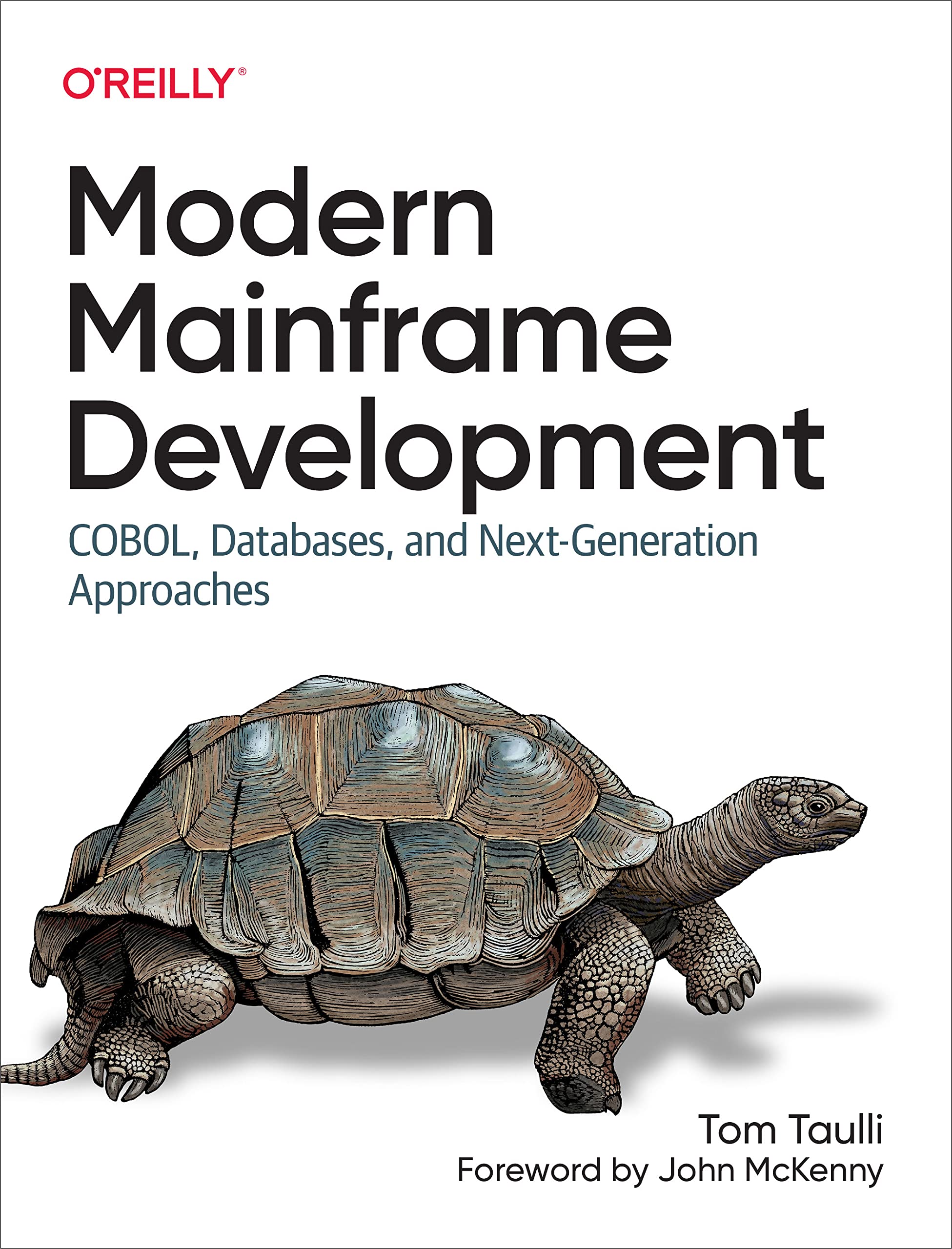
Even as spending on digital transformation continues to skyrocket, mainframes nevertheless have major advantages for global enterprises. These systems still process huge amounts of information and allow for highly secure processing. In this practical book, author Tom Taulli shows software developers how to pursue a hybrid approach by integrating traditional mainframes and applications with modern digital systems.
By the end of the book, you'll have a solid understanding of the mainframe architecture and ecosystem, including core concepts and technologies such as COBOL, JCL, DB2, VSAM, and CICS. You'll learn how to blend in newer technologies such as the cloud, AI and machine learning, and the use of microservices. This handbook is indispensable for enterprises looking to thrive in the new digital world.
Learn strategies and approaches for mainframe DevOpsUpdate and maintain existing mainframe code, and analyze and resolve common errorsApply modern approaches to the mainframe, including microservices, APIs, cloud, and AI and machine learningWork with datasets and databases and put together effective reportsUnderstand how to work with modern cloud systems, like AWS, for pursuing data migration
I'm the author of a variety of books on technology and finance, with the latest being How to Create the Next Facebook and High-Profit IPO Strategies. I also write for Forbes.com and the IPOPlaybook.com.
The book Modern Mainframe Development provides a very broad yet very shallow overview of the whole IBM mainframe ecosystem. It begins with a short survey of the current state and the history of mainframes. Next is a summary of the components of the OS and development environment, such as the ISPF user interface, data organizations and the Job Control Language (JCL). These concepts are explained in few words, with a brief example rather than an in-depth exposition. Though it helps getting an idea what to look for in a mainframe environment, it will hardly help using them. The only substantial part of the book is a 60-page long introduction to the COBOL programming language. Though ancient, COBOL is still the most important language on mainframes, due to the vast amount of legacy code running on them. The introduction in this book is a decent first course, covering the most-used language elements. It is also the only part in this book where the reader really learns something that can be applied later. However, on a mainframe environment, mastering a programming language alone is not enough, since running programs is tightly integrated with the rest of the OS, JCL and databases. Even though JCL is mentioned, it is never really explained in the book, and instead we are given some snippets without much of an explanation what they mean. Following COBOL comes a discussion of mainframe databases, again mostly surveying what exists rather than exploring how it works. There are a few sample snippets of SQL, but, as with JCL, no real explanations on the language itself. The final part of the book discusses future topics, which mainly comprise software development issues such as DevOps, automation and AI. Almost none of these are specifically related to mainframes, but rather apply to software engineering as a whole. Again, the level of granularity is so low that the reader will take away little more than knowing the existence of these items.