For this Bison Books edition, James Welch, the acclaimed author of Winter in the Blood (1986) and other novels, introduces Mildred Walker's vivid heroine, Ellen Webb, who lives in the dryland wheat country of central Montana during the early 1940s. He writes, "It is a story about growing up, becoming a woman, mentally, emotionally, spiritually, within the space of a year and a half. But what a year and a half it is!" Welch offers a brief biography of Walker, who wrote nine of her thirteen novels while living in Montana.
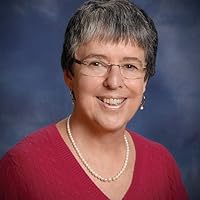
Mildred Schemm Walker (May 2, 1905 – May 27, 1998) was an American novelist who published 12 novels and was nominated for the National Book Award. She graduated from Wells College and from the University of Michigan. She was a faculty member at Wells College from 1955 to 1968. Walker died in 1998 in Portland, Oregon.
Written over sixty years ago about ranchers living in remote parts of Montana, this old fashioned coming of age novel has a surprising currency. Its bittersweet portrayal of human relationships has a deep ring of emotional truth, and its understanding of the constantly shifting nature of identity makes it almost postmodern. Meanwhile, it can be read with a kind of page-turning breathlessness that keeps readers hoping that everything - against all odds - will somehow turn out for the best.
Most remarkable for a reader growing up in a mid-century rural community, the novel evokes vividly the seasonal rounds of living and working on a farm circa 1940. Though Montana was her adopted home (Walker grew up in eastern Pennsylvania and attended Wells College), she writes with an intimate knowledge of farm work that is rare in literature. Also remarkable is the novel's wartime setting, as Walker writes of Pearl Harbor and the impact of entry into WWII on the lives of her characters, even while that war was still being fought (the novel was published in 1944).
I recommend this novel highly for its way of creating very individual characters leading quite plausible lives rooted firmly in very real physical and psychological worlds. Its lessons about hard work and survival, the bonds of love, living with insecurity, and the lifelong effects of choices made affirm a view of life that embraces both loss and reward. Thanks to the University of Nebraska Press for keeping this fine novel in print.
Very Willa Cather-esque novel of a young girl coming of age in Montana. At first I was frustrated with the pace of the novel, but later came to appreciate it. Amazing how great authors can take some ordinary people in ordinary circumstances and turn them into something beautiful. I was in tears through almost all of Part Three. Spoiler alert: I loved how Ellen came around to appreciating her parents, even with their flaws and fallibility. And who doesn't love a great opening sentence? "September is like a quiet day after a whole week of wind." Superb stuff!
This is a book that is meant to be owned, loved, read and re-read. As soon as I read the last lines I wanted to start all over again. It's beautifully written and I have never read anything that reminded me so much of the time when I was 18-19 years old. Many of my friends during high school worked and lived on farms and we spent many afternoons driving back country roads with nothing but corn fields and blue skies in sight. Walker's descriptions of the work and worry of farm life are at once vivid and simple. The metaphor of winter wheat is gently woven throughout the story and provides an excellent backdrop for the main character's struggle and growth.
I loved Ellen and her inner voice. Her experiences and emotions as she becomes more independent are articulated so well, I couldn't help but reflect on my own at that same phase. You are pulled along with her as she sees her parents and home in a new, harsh light when she returns from college and her beau comes to visit; as she searches to find herself and purpose when her circumstances change; as she endures heartbreak and learns to handle it on her own, and as she returns home to see things with a more grown-up, world-wise perspective.
I loved the relationships in this book and how they shifted over time, eventually returning to the same patterns but with a deeper connection and understanding between characters. I found that this mirrored my own relationship with my parents and is likely the reason I connected with this book so completely. Highly recommended, but read it slowly and be patient.
This was a beautiful, enjoyable read that I could not put down. The description (a girl from a dry-wheat ranch in Montana goes to college, can't afford to attend the next year, becomes a teacher) didn't prepare me to like it as much as I did, but Mildred Walker's writing is a treat. It's one of those books in which you pause to reread certain sentences purely for how beautiful they are.
I thought the end became a little earnest and precious, and that it went on for a bit too long, but don't let these minor issues prevent you from reading this. I've since reserved a second Mildred Walker book, Fireweed (set in Michigan's Upper Peninsula, where the author lived for a few years in the 1930s) at the library, so much did I enjoy this.
It's closer to 3.5 star and if you are in love with wheat country wide plains Montana solitude, it will be a 4 star plus for you.
Beautiful, lyrical- almost to mystic chapter upon chapter of the Wheat Ranchers' lives in the harrows- rut to rut. The daughter of this household is 19 and the year is 1940. The father (Vermont raised) is "old" (daughter's descriptive adjective) at 40 and her Mother is from Russia. The Mother married him when she was 17 while he was a soldier in the former war within her own country. The Dad moved her to Vermont and then to Montana eventually. He is war injured, with frequent shrapnel lesions.
It certainly is a beautiful time piece of the texture of the culture and mores that are nearly gone now within the USA, down to the one room schoolhouse for 8 in Part 2. Moral rectitude and roles young humans of every age are expected to model, gender roles, "work" definitions- all quite different. And rich is very differently defined, IMHO, as well. It's all a "just enough" to live environment for sustenance and all praise is saved for the sturdy.
You need patience for this book and it is a trilogy (no it is not, I found out they were not written). I will read the others eventually. And yet, as sturdy and solid as these Montana characters are, they hold a spell which, to me, does not push my urgency to want to know "what happens next". Not at all.
It's because the pace is so slow and also because the story holds too much minutia of bland sensibility for me to get a good grip to a connection with these people. This family style is all submersion and the worst parts of conflict and change are held in whispers. Whereas, I would rather a knock-down, drag-out yelling match- as long as there is some exposure of real feelings in the process.
Excellent writer who knows how to enchant a landscape!
4.3 coming of age, ranching, WWII era told in the first person
At first this reminded me of Margorie Morningstar (which I didn't care for), but then Tisha came to mind, and finally Willa Cather took over.
This fits my image of the time and place -- hard-working family, relationships, young love w/o sex, the relationship with the land, patriotism w some ambivalence when it comes to war.
This paragraph captures the thoughts of a young girl on her own for the first time. (Love of land is as important as love of other people.)
p 256: I had grown used to living alone by myself. Now I didn't want to go back to our house, where my room was so close to the folks. I had come to like the stillness that had seemed so empty and ghostly at first. Gil would say our ranch house was far enough away to suit anybody, but it was full of Mom's and Dad's living. The fields pushed up so close to the house with their crops and the need to worry about them. Here there was nothing. ... But it didn't seem like nothing to me. It seemed wide and sunny and wind-swept, and I loved it, ...
It took a while for this book to "grab" me, but once it did I was hooked. I loved the metaphor throughout the story of winter wheat and its comparisons to love and life. As Ellen's mom said, "That don't mean nothing. We get mad, sure! Like ice an' snow an' thunder an' lightning storm, but they don't hurt the wheat down in the ground any." (The strong, good wheat can still grow through the toughest of times.)
This novel has a descriptive quality that is truly remarkable. The story focuses on a young woman who grows up on a Montana wheat farm, goes off to college in Minnesota for one year where she falls in love. She gets engaged and brings her fiance home to Montana where she sees her roots through his eyes - stark, barren and without love. He breaks off their engagement.
Ellen then begins to see her past through her own eyes again and recognizes what she loved about it. She has many questions about her parents. Her mother is a Russian immigrant and her father is from Vermont. Do they hate each other? What is their bond? She makes assumptions based on overhearing one of their bedtime conversations.
The novel uses wheat as a metaphor - its seasons, colors, growth and the hopes, resignation and tenacity of wheat farmers - to describe life and experience.
This is a beautifully written book, rich in language and wisdom. Its heroine, Ellen, is someone to be loved and admired.
An interesting look at the life of a young girl in Montana and dry-land farming in the 1940's. I felt that the book was an ode to the land and lifestyle, and a coming of age story. There is a lot said about the beauty of the different seasons on the farm, and about the main character's (Ellen) struggle to decide if she wants to accept her parents (with all their perceived flaws) and her life there, or leave for love and a different life. In the end, she learns to see her parents as they really are and also becomes more comfortable with who she is.
Well paced and beautifully written, but the author didn't seem to trust the reader enough to not beat us over the head with the wheat/love metaphor. Also, Ellen's pining over Gil didn't make a lot of sense for her character... But maybe first loves never really make sense.
What a lovely story. Set in the 1940s, this is a coming of age story set in the wheatfields of central Montana. A young girl at the start of the story, Ellen Webb is the only child of a WWI veteran and his Russian immigrant wife. She's happy. She doesn't see her ramshackle house, the grinding poverty, or the tension between her parents. She loves her environment. She's a good girl. Her parents have a relatively good harvest, enough to send her to college. She makes a friend. She loves her classes. She learns, uses her common sense, and delights in growing up.
But then she falls in love and the boy, a senior at the same college, comes home to meet her parents, and everything changes. Seeing her beloved farm life through his eyes, Ellen's simple world is rocked. Then she learns some hard truths about her parents' relationship. Her perception of them changes, suffering ensues, but always, Ellen is resilient and evolves. When tragedy strikes, she must grow beyond the pain and learn to find joy again.
Always, the story unfolds in the context of the joy and frustration of dryland farming. The growing of wheat is such a rich metaphor for Ellen herself. And the descriptions! I could almost hear the Grain Market Broadcast in my head, as read every morning over the Webb's radio. The varieties of wheat are so beautifully named. "One heavy dark Northern Spring...fifty-two. One dark hard Winter...fifty-three." How dramatic.
The mother, Anna Petrovna, met Ellen's father when he was wounded while fighting in Russia in the winter. Anna, a child of war who'd seen her parents and brother slaughtered, latched on to the handsome young American immediately. The two fell in lust, and when he was well enough to return to America, she told him she was pregnant. An honorable man, he brought her home with him.
For Anna, being a wheat farmer in the heart of Montana was the ultimate freedom. She loved the openness, the solitude, and the land, and she passed that along to her daughter. However, Ben was an Easterner, a gentle man, well educated and destined for a more genteel life. In learning about their marital compromises, Ellen grows in her understanding of her parents and of human nature. In a subtle but gratifying character arc, she arrives at a more mature version of herself. Without an epilogue, the reader is allowed to let her imagination roam as to what next might have happened, as the story ends on a positive note.
Such a beautiful story. A classic equivalent to My Antonia by Willa Cather.
Well never mind that it took me so long to finish it. Takes place in a big barren land so far away but hits so very close to home. “First you talk about love and then you talk about wheat” “I get them mixed up…” Reminiscent of my mother and her mother before her.
I loved this book from the first page. The characters are so real and honest, you feel like you know them right away. Ellen takes us on a journey and we see the world through her eyes as she leaves her home and goes to college. When she returns, she sees things in a new light. Her home, her parents, her town, all that she came from seems different as she moves out of childhood and becomes an adult. I don't know that I've ever read a book that created such a clear picture of the people and the place. I'm sure that I could go to Montana and find this farm and meet Ellen's parents and know who they are. Mildred couldn't have invented them, they are real people and they exist.
**Spoiler alert** The part of the book that I keep going back to is the 6 months or so where she is completely happy. She's away at school, falling in love, and just sees a future of love and happiness ahead of her. I want to go back and read that part and close the book and not think of her purity and innocence ruined by the world, real life, war, rumors, death and everything that is waiting for her as she grows older. She is so good, so pure, open and easy and loving. Is happiness possible? For how long? Can we be happy without experiencing unhappiness? This makes me sad for my kids as I watch them grow up. I know some of what lays in store for them and it makes me sad to know about the heartache, failures and challenges that they'll face in life. Ellen takes us through the most significant 2 years of her life in Winter Wheat and I loved every word.
Mildred Walker's writing is deceptively simple. It moves at the pace of life, so slowly that it's almost imperceptible until we can look at it in hindsight. You have to keep reading and trust that the plot movement and character evolution will come. It will. Be patient.
Walker's writing reminds me of Willa Cather or Edith Wharton. Her imagery is haunting. She used the metaphor of winter wheat in ways I'd never think of. This coming-of-age story is of a young woman newly off to college in 1940, but it will still resonate with modern readers. I found myself daydreaming sometimes as I read, reliving my life as a young adult, and was actually a bit surprised as I recognized some very familiar elements of my own story.
The only drawbacks of this novel for me were that I felt about halfway through that it was moving so slowly that maybe I should stop reading, but I'm so glad I kept on. Also, Ellen harps on a few subjects, and the repetition gets old. But then I think Walker's portrayal is faithful to the way we get in repetitious and often erroneous thought patterns. All in all this was a lovely book and a true pleasure to read.
I really loved this book set in rural Montana in the 1940s, although I was unconvinced when I started and wondered if I should finish. I'm so glad I did. Walker has real talent for describing Ellen's coming of age, leaving home for college, falling in love, teaching in a small rural school, and becoming an independent young woman. Those who say "Nothing much happens," have failed to take the same journey that Ellen takes; I know of few writers who can cover so much internal, emotional territory in such a compelling and convincing way. I also loved the fact that this WASN'T a love story and there isn't a perfect little ending, something a lesser writer would have probably rushed into. The descriptions of the dry wheat country are beautiful, and so too are Ellen's slow understandings of herself and her delight in nourishing solitude. That said, this novel is NOT all cerebral; plenty happens in the lives of the ordinary, brave people in its pages. I highly recommend this novel and will seek out other books by the same author. What a treat!
Winter Wheat is the story of Ellen Webb, a young woman living on a dry-land wheat farm in Montana in the early 1940’s. This is a true coming-of-age story. Raised by her father, a wounded WWI vet from New England, and her quiet Russian mother, Ellen must come to understand her own parents in order to understand herself. She learns that love, like dark winter wheat, can grow and survive in harsh conditions.
Mildred Walker's writing has a wonderful simplicity that is to the land and to characters she describes. The world that she portrays is full of symbolism and meaning. Winter Wheat is a good story of growth, understanding, and love.
Winter Wheat ..by Mildred Walker.. The Author used many examples of growing Winter Wheat to 'Life's lessons'. A coming of age story of Ellen, told in the first person. Learning about family separation while going to a university and leaving the farm. She learned what love was all about. Things she thought about her parents weren't true at all. She did mature and become a happy woman. I loved all the detail the author brought out describing the land and people. She made the reader feel part of the story
A new favorite. Gorgeously written, with characters who are so real that they make you mad and make you cry and make you turn for a fresh look at the wonderful, difficult, beautiful people in your own life. Put Willa Cather in Montana at the start of WWII, and you might get something like this book--a rich, lyrical coming of age story in which the land itself is also a character.
A 3 star for the occasional lyricism and geographical description. Yes, like another reviewer, it strongly reminded me of Cather's My Antonia, which I could not like either. I will defer to Montanians, but I could not appreciate Ellen Webb's self-obsession.
What a lovely book! I don't keep many books, but this one I will as I think I will appreciate it again when I re-read it. The writer's prose on nature is lyrical and lovely. Nature is a major force in this book, and is almost another character. This book is a coming of age book about a young woman, Ellen, who goes off to college, falls in love, comes back to her home in Montana, and becomes a teacher. It is a slice of life--only 18 months--and yet she learns a lot about life and love. She's a principled young woman who makes for a wonderful narrator.
There is one flaw, in my opinion. This dings the review down by a 1/2 star, but I round up my reviews in these circumstances anyway.
Walker’s writing is beautiful and living in MT myself it was a realistic, moving and accurate description of the beauty, quiet, ever-changing and at times, harsh weather conditions here. Her descriptions of Ellen’s feelings as a young woman growing up in Montana are reflective of many I know who have grown up here. That said, the book moves slowly along in telling the story of Ellen’s challenges growing into her adulthood. Her naïveté perhaps was more indicative of the times when book was written. At times, I wanted just tell her to get over it, but maybe that’s just me as an older person;)
Wow. I think I’d like to read this book when I’m older — I related to Ellen in many ways, some of which made me sort of sad. Not so terrible; we’re the same age! A pretty timeless book about being someone’s child, falling in love, falling out of love, and with enough nature metaphors to bring a little light to every part of a scene. I loveddd the writing, even if so much description made it easy to subconsciously skip a paragraph. I liked the ending quite a bit, too.
Reminds me of an adult version of the Laura Ingalls Wilder stories, set at the cusp of the United States' entry into WWII. As such, it has much more nuance and focus on characters and their inner lives than just plot and adventure. But if you liked that setting, reading about the difficulty and triumph of their lives on the prairie, you might also enjoy this book.
The finely drawn characters, impeccable writing, deep insight into human nature, and perfect depiction of time and place are breathtaking at times in this raw and bleakly sad tale. It is very slow to develop but the small, exquisite blossoms of understanding and hope that appear at the end are worth the wait. All may seem dead under the snow, but the life is not gone.
The title makes this book sound very boring. However, the author is a pretty decent writer and makes an extremely boring book be a little more exciting. I would have given this book 3 stars if I were to base it on the writing, character development and descriptions. It reminded me of A Tree Grows in Brooklyn a little bit.
However, the story itself was quite uneventful. Not a whole lot happens. She loves a boy, he dies in the war. Another guy likes her, but she doesn't like him. She thinks her parents don't like each other, but realize they do. She teaches school for a bit, then doesn't. She goes to school for a bit, then doesn't. I felt like the book ended in the middle of a story. There was much more to be told.
“September is like a quiet day after a whole week of wind,” The opening line of Mildred Walker’s most popular novel, Winter Wheat, sets the tone for the metaphors of the farming and natural worlds that bring this book to life.
After selling the dry land wheat crop in the early 1940’s at a decent price, Ellen Webb’s parents can afford to send her away for her first year of college. She goes back east to school– Minnesota is east of Montana anyway, and falls in love with Gil, a wealthy and cultured senior. Ellen returns to the farm and is quickly back to helping with farm work, although she views everything differently now that she is in love. After much anticipation, Gil comes to visit, and then leaves again. When a storm brings hail, the wheat doesn’t bring enough money for Ellen to return to school, and she takes a solitary position living and teaching in a remote one-room school house. Ellen’s parents, a World War I veteran with shrapnel injuries and the Russian bride who has been nursing him since he was injured on Armistice Day, have a complicated relationship that Ellen has always misjudged. Unsure of where she fits in the world, Ellen struggles to understand her parents and herself, and to make sense of the past and her future. James Welch, as the editor of this reissued edition of Winter Wheat notes, “It is a story about growing up, becoming a woman, mentally, emotionally, spiritually, within the space of a year and a half. But what a year and a half it is!”
Mildred Walker, daughter of a teacher and a Baptist minister, wrote since her early teens. She married a surgeon-physician and achieved her Master’s degree while her husband practiced medicine in Michigan. When the family moved to Great Falls, Montana, Mildred Walker hired household help so she could pursue her writing career. She observed the lives of the people her husband treated, and absorbed the natural setting of Montana.
She wrote about her personal philosophy: “I feel strongly about the need to oppose materialism in both our national and individual life--the importance of the freedom of every individual, but the need for a better understanding of the nature of freedom--the need to dethrone success as the American ideal and substitute for it a creative quality in our daily living.”
As a college assignment in Winter Wheat, Ellen struggles to reflect on her life and write autobiographical essays in some of the most revealing and well written scenes I’ve ever read. In our book discussion, talk centered on the reality of hard manual labor, the changes that equipment like the combine have brought to farming, and the experience of life in tune with crops and weather and the natural world. We also speculated on what Ellen would do next – the book’s ended is satisfying, but somewhat open ended.
Dear Ellen, I miss you. I loved hearing about your struggles with understanding your parents, is that weird to say? I just mean that I connected. I went through a long period of misunderstanding my own mother, and knowing that others were the same is a comfort! I see that as you got older you understood better, as also was the case with me. I know that your mother must have been Orthodox, having come from Russia, and so being Orthodox in Montana, as has been my whole life experience, was your mothers as well. She had no church to attend, but perhaps would be interested to know that Orthodoxy would eventually make its way into Montana as well. I was sorry to hear about the moment you saw your beautiful home in Montana as a poor, isolated, wretched dry land wheat farm, instead of the free, wild, and breathtakingly stunning place you knew it to be as a child. That is one of the most horrible parts of growing up-realizing that your way of life and love is looked down upon by others, and what can you do about it? Above all I loved hearing of your time as the teacher in Pine Butte. Every day I read about was a dream, but also a harsh reality. Nothing can properly prepare a person for the kind of loneliness that comes from having only white walls as companions. When I moved away from home and this was the case for me, I found my heart could not contain the pit of loneliness there, and it was awful. I'm glad to have seen that you made friends despite everything, and found your place in that community. Love is truly like winter wheat, with the majority of it hidden out of sight, but impervious to the many storms of life. I'm sad to say goodbye to you, your mother, your father, and the others. With love, Ruby (From Montana)