

What do you think?

Conoscere se stessi. La nuova scienza dell'autoconsapevolezza
Dagli antichi greci al buddhismo, la nostra capacità di avere il controllo sulla realtà affascina i filosofi da migliaia di anni. Eppure, solo recentemente abbiamo elaborato una scienza rigorosa della consapevolezza di sé, che chiamiamo “metacognizione”. Attingendo alle proprie ricerche all’avanguardia nei campi della computer science, della psicologia e della biologia evoluzionistica, rese concrete con esempi attinti dalla vita reale, Fleming illustra come lo sviluppo della metacognizione può aiutarci a diventare più intelligenti e a prendere decisioni migliori. Benché sia stata presentata come il rimedio all’errore umano, l’intelligenza artificiale pecca di mancanza di consapevolezza di sé. Come un allenatore può migliorare significativamente la prestazione di un atleta, così "Conoscere se stessi" rivela come la metacognizione offre all’uomo un vantaggio cruciale nel mondo moderno. E potrebbe rivelarsi la nostra grazia salvifica.
300 pages, Paperback
First published April 27, 2021
Ratings & Reviews
Friends & Following
Create a free account to discover what your friends think of this book!
Community Reviews
Displaying 1 - 30 of 39 reviews

March 29, 2021
There is less and less in the way new fields of endeavor for psychologists, it seems. So a book on self-awareness holds promise. Stephen Fleming, who researches and teaches about it, has summed up the state of the art in Know Thyself. There is much to understand, but less to be excited about.
Self-awareness is called metacognition in the biz. It has been studied in animals (the famous mirror tests that elephants and dolphins pass, but cats and birds fail). It is most common in homo Sapiens, who is constantly introspective (a word which oddly does not show up in the book until ¾ of the way through). Man evaluates himself and others constantly, automatically and unconsciously. It’s called mindreading in the biz, but it is a learned appreciation of what others might be thinking or feeling.
We do this to avoid saying something stupid and looking foolish. We thereby seem to have insight, or at least be “with it”. We also have the ability, if not the obsession, with looking backward and criticizing ourselves for having done or said something stupid, or ignorantly, or just in error. Fleming says “We track uncertainty, monitor our actions, and continually update a model of our minds at work—allowing us to know when our memory or vision might be failing or to encode knowledge about skills, abilities, and personalities.” We are forever thinking about our thinking. This, possibly fortunately, is unique in the animal kingdom.
Metacognition is not fixed. It can be degraded, stuck, fixed or enhanced with practice. What is still not clear is if any of these states is desirable. So there’s lots of studying going on. The book is chock full of simple, complex and innovative psychological studies to measure the depth and effects of metacognition. Fleming does it for a living. If anyone knows, he does.
There are times and places where self-awareness is a liability. Fleming gives the examples of learned actions, like playing a piano piece or swinging a golf club. The very last thing anyone wants to do is have a crisis of self-confidence in the midst of swinging a bat or shooting alien attackers. These kinds of things must, of clear necessity, be devoid of self-awareness, and just rely totally on automatic action. So we can turn off metacognition when necessary.
Physically, metacognition takes place in several parts of the brain, but is headquartered in the frontal lobes, the newest parts of the brain, specifically the lateral frontopolar cortex. Those with higher metacognition have higher amounts prefrontal gray matter as well as greater white matter to connect that gray matter throughout the brain.
I happen to work with brain trauma injury victims, people who’ve been in car crashes or fallen off ladders, and I can tell you the first thing to go – because it is up front and right against the skull above the eyes – is self-awareness. Hit your head on the dashboard and you could lose self-awareness just like that.
Lack of it dramatically changes a person’s ability to appear normal, transact business or converse in a relaxed manner. Being considerate or selfless is no longer on the agenda. Fleming cites studies of tribal societies where people are not permitted to ask after each other’s health or emotions. They develop self-awareness far later and more weakly than those who live in complex societies where reading everyone else is critical. In most humans, development of self-awareness begins around age four, and is fully fledged by the end of high school. Though, as Fleming points out at the end, with effort it can still be improved throughout adulthood. (assuming the brain is not physically damaged).
The key to measuring self-awareness seems to be the confidence level (“Is that your final answer?”). Numerous psychological studies ask participants to re-evaluate their confidence in their initial answers. Higher self-awareness is associated with higher confidence levels. Middling confidence can be a self-fulfilling prophecy of failure. Lack of confidence means we didn’t read the other person correctly or enough – and we know it.
However. The thing about confidence levels is that no matter how self-aware someone might be, their evaluation might not be accurate. People can be totally confident in a statement, and still be totally wrong. This takes the potential for the employment of self-awareness down several notches.
Fleming’s best example is the eyewitness. Juries value the testimony of an eyewitness most highly. But eyewitnesses have proven to be wrong again and again, sending the innocent to prison or even execution. Sadly, whole organizations must dedicate their time and effort to overcoming wrongful convictions by unanimous juries and confident eyewitnesses. It is far too common, and a clear symptom of overconfidence by the both the witness and the jury. Overconfidence can be as bad as lack thereof.
Fleming has managed to see hope in this. He says “by recognizing that our confidence in our views is a construction, and prone to distortion, we can cultivate a more tolerant attitude toward others who may not agree with us.” That would indeed be a different society from what we have under management today.
Near the end, Fleming does come up with a potentially useful and practical application of self-awareness. If engineers busily working on artificial intelligence could just “simply” build in confidence levels, machines could tell us how they feel about a decision they are making. This would be especially valuable in, for example, self-driving cars. If the car were faced with a choice (imminently killing a dog vs. hitting another car), the dash could glow green or blue or yellow or red according to its level of confidence. The driver could then assume control, letting the car off the hook.
It would have been nice if Fleming could have written a whole chapter of useful applications for metacognition, but self-driving cars was the best of a very short list. So while Know Thyself is thorough and clinical, safely scientific in its approach, it is not at all inspirational. Metacognition seems to be a science in search of a mission. I don’t see readers dropping out of their day jobs to pursue it. Or even giving it a further thought. It is, after all is said and done, mildly interesting.
David Wineberg
Self-awareness is called metacognition in the biz. It has been studied in animals (the famous mirror tests that elephants and dolphins pass, but cats and birds fail). It is most common in homo Sapiens, who is constantly introspective (a word which oddly does not show up in the book until ¾ of the way through). Man evaluates himself and others constantly, automatically and unconsciously. It’s called mindreading in the biz, but it is a learned appreciation of what others might be thinking or feeling.
We do this to avoid saying something stupid and looking foolish. We thereby seem to have insight, or at least be “with it”. We also have the ability, if not the obsession, with looking backward and criticizing ourselves for having done or said something stupid, or ignorantly, or just in error. Fleming says “We track uncertainty, monitor our actions, and continually update a model of our minds at work—allowing us to know when our memory or vision might be failing or to encode knowledge about skills, abilities, and personalities.” We are forever thinking about our thinking. This, possibly fortunately, is unique in the animal kingdom.
Metacognition is not fixed. It can be degraded, stuck, fixed or enhanced with practice. What is still not clear is if any of these states is desirable. So there’s lots of studying going on. The book is chock full of simple, complex and innovative psychological studies to measure the depth and effects of metacognition. Fleming does it for a living. If anyone knows, he does.
There are times and places where self-awareness is a liability. Fleming gives the examples of learned actions, like playing a piano piece or swinging a golf club. The very last thing anyone wants to do is have a crisis of self-confidence in the midst of swinging a bat or shooting alien attackers. These kinds of things must, of clear necessity, be devoid of self-awareness, and just rely totally on automatic action. So we can turn off metacognition when necessary.
Physically, metacognition takes place in several parts of the brain, but is headquartered in the frontal lobes, the newest parts of the brain, specifically the lateral frontopolar cortex. Those with higher metacognition have higher amounts prefrontal gray matter as well as greater white matter to connect that gray matter throughout the brain.
I happen to work with brain trauma injury victims, people who’ve been in car crashes or fallen off ladders, and I can tell you the first thing to go – because it is up front and right against the skull above the eyes – is self-awareness. Hit your head on the dashboard and you could lose self-awareness just like that.
Lack of it dramatically changes a person’s ability to appear normal, transact business or converse in a relaxed manner. Being considerate or selfless is no longer on the agenda. Fleming cites studies of tribal societies where people are not permitted to ask after each other’s health or emotions. They develop self-awareness far later and more weakly than those who live in complex societies where reading everyone else is critical. In most humans, development of self-awareness begins around age four, and is fully fledged by the end of high school. Though, as Fleming points out at the end, with effort it can still be improved throughout adulthood. (assuming the brain is not physically damaged).
The key to measuring self-awareness seems to be the confidence level (“Is that your final answer?”). Numerous psychological studies ask participants to re-evaluate their confidence in their initial answers. Higher self-awareness is associated with higher confidence levels. Middling confidence can be a self-fulfilling prophecy of failure. Lack of confidence means we didn’t read the other person correctly or enough – and we know it.
However. The thing about confidence levels is that no matter how self-aware someone might be, their evaluation might not be accurate. People can be totally confident in a statement, and still be totally wrong. This takes the potential for the employment of self-awareness down several notches.
Fleming’s best example is the eyewitness. Juries value the testimony of an eyewitness most highly. But eyewitnesses have proven to be wrong again and again, sending the innocent to prison or even execution. Sadly, whole organizations must dedicate their time and effort to overcoming wrongful convictions by unanimous juries and confident eyewitnesses. It is far too common, and a clear symptom of overconfidence by the both the witness and the jury. Overconfidence can be as bad as lack thereof.
Fleming has managed to see hope in this. He says “by recognizing that our confidence in our views is a construction, and prone to distortion, we can cultivate a more tolerant attitude toward others who may not agree with us.” That would indeed be a different society from what we have under management today.
Near the end, Fleming does come up with a potentially useful and practical application of self-awareness. If engineers busily working on artificial intelligence could just “simply” build in confidence levels, machines could tell us how they feel about a decision they are making. This would be especially valuable in, for example, self-driving cars. If the car were faced with a choice (imminently killing a dog vs. hitting another car), the dash could glow green or blue or yellow or red according to its level of confidence. The driver could then assume control, letting the car off the hook.
It would have been nice if Fleming could have written a whole chapter of useful applications for metacognition, but self-driving cars was the best of a very short list. So while Know Thyself is thorough and clinical, safely scientific in its approach, it is not at all inspirational. Metacognition seems to be a science in search of a mission. I don’t see readers dropping out of their day jobs to pursue it. Or even giving it a further thought. It is, after all is said and done, mildly interesting.
David Wineberg

June 7, 2021
Nice for an introduction into the research that happens under the banner of metacognition. As somebody writing a thesis in the area the book served to patch some knowledge holes, but what I came for was more broad understanding and connections, and wild ideas and speculations that would engage me.
The obligatory "What does that mean for AI?" chapter felt a bit shallow and under-developed for its potential, something like "having AIs report confidence with their decision would be great" and "self-aware AIs might be problematic, maybe the Neuralink 'humans merge with AI' approach is better". Maybe I'm a bit disillusioned of my hope that metacognition will prove useful for coming transformative AI projects.
Fleming doesn't once mention dual process theories, which I found noteworthy. In literature metacognition is often separated into monitoring and control:
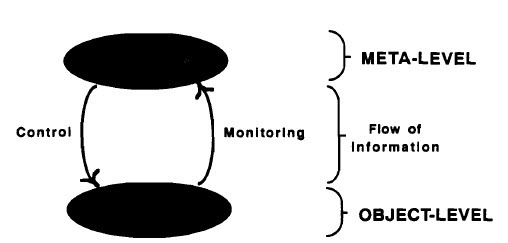
Fleming's research mostly resolves around the subarea concerned with our confidence in our judgements, memories and perceptions, i.e. monitoring. His research background might lead him to neglect the control angle. I'd for example be interested in what he thinks of the ideas in Keith Stanovich's Rationality and the Reflective Mind. In Stanovich's model of cognition metacognitive control has a much more central role and made me more enthusiastic about the role of metacognition in advanced AI systems.
Other notes:
- nice podcast interview about the book: https://braininspired.co/podcast/107/
- I finally found a concrete example of what kinds of experiments the controversial Würzburg school of psychology did around the birth of psychology at the end of the 19th century:
- this smelled like a "people back then were stupid" fallacy:
- as a quick check, I found the entry exam of Harvard of 1869, and it clearly is not only learning by heart (instead: Latin and Greek translation, historic facts but also "Compare Athens with Sparta", arithmetic and math proofs source) source
- ... maybe Mr. Gradgrind was supposed to be mocked?
- general observation: I wish popsci books would report effect sizes more often to give impression of relevance, case in point:
- „Illusory boosts in self-efficacy indeed lead people to perform better, and persist for longer, at challenging tasks, whereas drops in self-efficacy lead to the opposite“
- this one made me suspicious, reminded my of Scott Alexanders Beware the Man of One Study: education interventions seem similar to economics, you can always find a study supporting your pet hypothesis
- „That a short advice-giving intervention could achieve meaningful effects on school grades is testament to the power of virtuous interactions between teaching, self-awareness, and performance“
- and nice quote about the fear of losing capabilities by outsourcing to machines:
The obligatory "What does that mean for AI?" chapter felt a bit shallow and under-developed for its potential, something like "having AIs report confidence with their decision would be great" and "self-aware AIs might be problematic, maybe the Neuralink 'humans merge with AI' approach is better". Maybe I'm a bit disillusioned of my hope that metacognition will prove useful for coming transformative AI projects.
Fleming doesn't once mention dual process theories, which I found noteworthy. In literature metacognition is often separated into monitoring and control:
Fleming's research mostly resolves around the subarea concerned with our confidence in our judgements, memories and perceptions, i.e. monitoring. His research background might lead him to neglect the control angle. I'd for example be interested in what he thinks of the ideas in Keith Stanovich's Rationality and the Reflective Mind. In Stanovich's model of cognition metacognitive control has a much more central role and made me more enthusiastic about the role of metacognition in advanced AI systems.
Other notes:
- nice podcast interview about the book: https://braininspired.co/podcast/107/
- I finally found a concrete example of what kinds of experiments the controversial Würzburg school of psychology did around the birth of psychology at the end of the 19th century:
The Würzburgers, by contrast, designed experiments in which the experimental subject was presented with a complex stimulus (for example a Nietzschean aphorism or a logical problem) and after processing it for a time (for example interpreting the aphorism or solving the problem), retrospectively reported to the experimenter all that had passed through his consciousness during the interval. source
- this smelled like a "people back then were stupid" fallacy:
„From the Industrial Revolution onward, a dominant model in education was one of rote learning of facts and memorization—of capital cities, times tables, body parts, and chemical elements. In John Leslie’s 1817 book The Philosophy of Arithmetic, he argued that children should be encouraged to memorize multiplication tables all the way up to 50 times 50. The schoolteacher Mr. Gradgrind in Charles Dickens’s Hard Times agrees, telling us that “facts alone are wanted in life. Plant nothing else and root out everything else.” The assumption was that the goal of education was to create people who can think faster and squirrel away more knowledge.“
- as a quick check, I found the entry exam of Harvard of 1869, and it clearly is not only learning by heart (instead: Latin and Greek translation, historic facts but also "Compare Athens with Sparta", arithmetic and math proofs source) source
- ... maybe Mr. Gradgrind was supposed to be mocked?
- general observation: I wish popsci books would report effect sizes more often to give impression of relevance, case in point:
- „Illusory boosts in self-efficacy indeed lead people to perform better, and persist for longer, at challenging tasks, whereas drops in self-efficacy lead to the opposite“
- this one made me suspicious, reminded my of Scott Alexanders Beware the Man of One Study: education interventions seem similar to economics, you can always find a study supporting your pet hypothesis
- „That a short advice-giving intervention could achieve meaningful effects on school grades is testament to the power of virtuous interactions between teaching, self-awareness, and performance“
- and nice quote about the fear of losing capabilities by outsourcing to machines:
„Such worries about the consequences of offloading to technology are not new. Socrates tells the mythical story of Egyptian god Theuth, who is said to have discovered writing. When Theuth offered the gift to Thamus, king of Egypt, the king was not impressed and worried that it would herald the downfall of human memory, introducing a pandemic of forgetfulness. He complained that people who used it “will appear to be omniscient and will generally know nothing; they will be tiresome company, having the show of wisdom without the reality.“

April 30, 2021
تشير الأبحاث إلى أن التعديلات اللاواعية على نطاق واسع يتم إجراؤها باستمرار لضمان بقاء أفعالنا على المسار الصحيح. في بعض الأحيان ، تصبح عمليات المراقبة اللاواعية هذه مكشوفة ، على غرار الطريقة التي نكشف بها الأوهام البصرية . على سبيل المثال ، عندما أسافر للعمل في مترو أنفاق لندن ، يجب أن أخطو على سلسلة من السلالم المتحركة ، وأعتمد على جسدي لإجراء تعديلات سريعة على الوضع لمنعني من السقوط عندما أفعل ذلك. لكن في حالة تعطل السلم المتحرك وثباته ، فمن الصعب إيقاف نظام المحرك الخاص بي من التصحيح التلقائي لتأثير السلالم المتحركة عادةً - لدرجة أن لدي الآن توقعات عالية المستوى بأنني سأفعل ذلك. تتعثر قليلاً وأنت تصعد على سلم متحرك ثابت .
في تجربة كلاسيكية مصممة لتقدير هذا النوع من التصحيح التلقائي للخطأ السريع ، طلب بيير فورنيريت ومارك جانيرو من المتطوعين تحريك مؤشر الكمبيوتر إلى هدف على الشاشة. من خلال التأكد من إخفاء أيدي المشاركين (حتى يتمكنوا من رؤية المؤشر فقط) ، تمكن الباحثون من إدخال انحرافات صغيرة في موضع المؤشر ومراقبة ما حدث. وجدوا أنه عندما خرج المؤشر عن مساره ، قام الناس على الفور بتصحيحه دون أن يكونوا على علم بذلك. وخلصت ورقتهم البحثية إلى: "وجدنا أن الأشخاص قد تجاهلوا إلى حد كبير الحركات الفعلية التي كانت تؤديها أيديهم". بعبارة أخرى ، يراقب نظام المستوى المنخفض دون وعي كيفية قيامنا بالمهمة ويصحح - بأكبر قدر ممكن من الكفاءة - أي انحرافات بعيدة عن الهدف.
يُعرف جزء من الدماغ الذي يُعتقد أنه مهم لدعم هذه التعديلات باسم المخيخ - من اللاتينية "الدماغ الصغير". يشبه المخيخ دماغًا ثانويًا مثبتًا بمسامير ، يجلس أسفل الدماغ الرئيسي. لكنه في الواقع يحتوي على أكثر من 80 بالمائة من الخلايا العصبية ، حوالي تسعة وستين مليارًا من إجمالي خمسة وثمانين مليارًا. دوائره هي شيء من الجمال المنظم ، حيث تتقاطع ملايين ما يسمى بالألياف المتوازية في الزوايا اليمنى مع نوع آخر من خلايا الدماغ المعروفة باسم الخلايا العصبية Purkinje ، والتي تحتوي على أشجار شجيرية ضخمة ومتقنة. تأتي المدخلات من القشرة في سلسلة من الحلقات ، مع إسقاط مناطق في القشرة إلى نفس مناطق المخيخ التي تتلقى منها المدخلات. تتمثل إحدى الأفكار في أن المخيخ يتلقى نسخة من الأمر الحركي يتم إرساله إلى العضلات ، بدلاً من تلقي نسخة كربونية من رسالة بريد إلكتروني. ثم يولد النتائج الحسية المتوقعة للفعل ، مثل حقيقة أن يدي يجب أن تتقدم بسلاسة نحو الهدف. إذا كان هذا التوقع لا يتطابق مع البيانات الحسية حول مكان وجود يدي بالفعل ، فيمكن إجراء تعديلات سريعة لإعادتها إلى مسارها.
.
Stephen Fleming
Know Thyself
Translated By #Maher_Razouk
في تجربة كلاسيكية مصممة لتقدير هذا النوع من التصحيح التلقائي للخطأ السريع ، طلب بيير فورنيريت ومارك جانيرو من المتطوعين تحريك مؤشر الكمبيوتر إلى هدف على الشاشة. من خلال التأكد من إخفاء أيدي المشاركين (حتى يتمكنوا من رؤية المؤشر فقط) ، تمكن الباحثون من إدخال انحرافات صغيرة في موضع المؤشر ومراقبة ما حدث. وجدوا أنه عندما خرج المؤشر عن مساره ، قام الناس على الفور بتصحيحه دون أن يكونوا على علم بذلك. وخلصت ورقتهم البحثية إلى: "وجدنا أن الأشخاص قد تجاهلوا إلى حد كبير الحركات الفعلية التي كانت تؤديها أيديهم". بعبارة أخرى ، يراقب نظام المستوى المنخفض دون وعي كيفية قيامنا بالمهمة ويصحح - بأكبر قدر ممكن من الكفاءة - أي انحرافات بعيدة عن الهدف.
يُعرف جزء من الدماغ الذي يُعتقد أنه مهم لدعم هذه التعديلات باسم المخيخ - من اللاتينية "الدماغ الصغير". يشبه المخيخ دماغًا ثانويًا مثبتًا بمسامير ، يجلس أسفل الدماغ الرئيسي. لكنه في الواقع يحتوي على أكثر من 80 بالمائة من الخلايا العصبية ، حوالي تسعة وستين مليارًا من إجمالي خمسة وثمانين مليارًا. دوائره هي شيء من الجمال المنظم ، حيث تتقاطع ملايين ما يسمى بالألياف المتوازية في الزوايا اليمنى مع نوع آخر من خلايا الدماغ المعروفة باسم الخلايا العصبية Purkinje ، والتي تحتوي على أشجار شجيرية ضخمة ومتقنة. تأتي المدخلات من القشرة في سلسلة من الحلقات ، مع إسقاط مناطق في القشرة إلى نفس مناطق المخيخ التي تتلقى منها المدخلات. تتمثل إحدى الأفكار في أن المخيخ يتلقى نسخة من الأمر الحركي يتم إرساله إلى العضلات ، بدلاً من تلقي نسخة كربونية من رسالة بريد إلكتروني. ثم يولد النتائج الحسية المتوقعة للفعل ، مثل حقيقة أن يدي يجب أن تتقدم بسلاسة نحو الهدف. إذا كان هذا التوقع لا يتطابق مع البيانات الحسية حول مكان وجود يدي بالفعل ، فيمكن إجراء تعديلات سريعة لإعادتها إلى مسارها.
.
Stephen Fleming
Know Thyself
Translated By #Maher_Razouk

May 27, 2021
Not sure who this book is targeted at. Not me that’s for sure. OMG it was boring. You won’t learn a thing about “self awareness” in this book, an almost criminally mislabelled book, or at least a teeny tiny portion of that domain. The biggest shortcoming of this book is that like almost all psychological models that attempt to explain phenomena by referring to processes in the brain it is conceptually impoverished. There is no underlying conceptual model of the self or it’s relationship to itself and it’s goals or experience. Any intellectual endeavour that does not have a clear and well defined conceptual model is a waste of time. Anyway I have already wasted enough time on this book so I’m off to hopefully find a more interesting one.
I’ve come back to edit this review (later on the evening I wrote it) because I realise what annoyed me about the book. And that was that I invested all this time in reading it in the hope that it would better equip me in life to more robustly work towards what is important to me. In other words, it would have utility in my life. And failing that that I could see it perhaps have utility for other people. But my disappointment in this book, & all those other sub-3-or-4-star rated books, is that I am left no richer or well prepared for life and I can’t see how it has progressed humanity in any meaningful way.
What the f**k is the point about studying & then writing about self-awareness (or the teeny tiny portion of that he calls “meta cognition”) if a “tool” is not produced from this. A rule of thumb that helps someone in the everydayness of their life. A tool that can be shared. If knowledge doesn’t help someone move closer to what is important to them then it’s not knowledge; it’s noise. I’m sure there are some people for whom this book is knowledge but I lay odds it’s not you.
I’ve come back to edit this review (later on the evening I wrote it) because I realise what annoyed me about the book. And that was that I invested all this time in reading it in the hope that it would better equip me in life to more robustly work towards what is important to me. In other words, it would have utility in my life. And failing that that I could see it perhaps have utility for other people. But my disappointment in this book, & all those other sub-3-or-4-star rated books, is that I am left no richer or well prepared for life and I can’t see how it has progressed humanity in any meaningful way.
What the f**k is the point about studying & then writing about self-awareness (or the teeny tiny portion of that he calls “meta cognition”) if a “tool” is not produced from this. A rule of thumb that helps someone in the everydayness of their life. A tool that can be shared. If knowledge doesn’t help someone move closer to what is important to them then it’s not knowledge; it’s noise. I’m sure there are some people for whom this book is knowledge but I lay odds it’s not you.

August 6, 2021
Was bedeutet Bewusstsein des Selbst? Jeder zweite Ratgeber beschäftigt sich mit Phrasen, die genau dieses Thema "self-awareness" thematisieren.
Der kognitive Neurowissenschaftlicher Stephen Fleming zerbröselt dieses Schlagwort und zeigt was es neurowissenschaftlich auf sich hat. Wie können wir unsere Metakognition dafür nutzen, um reflektierte Entscheidungen zu treffen? Wie funktioniert unser Gehirn? Was sind Besonderheiten und was zeigen Verletzungen am Gehirn über funktionale Bereiche.
Auch nutzt er zur Visualisierung wie schnell wir in Denkfallen tappen & kognitive Verzerrungen von Daniel Kahnemann.
Der kognitive Neurowissenschaftlicher Stephen Fleming zerbröselt dieses Schlagwort und zeigt was es neurowissenschaftlich auf sich hat. Wie können wir unsere Metakognition dafür nutzen, um reflektierte Entscheidungen zu treffen? Wie funktioniert unser Gehirn? Was sind Besonderheiten und was zeigen Verletzungen am Gehirn über funktionale Bereiche.
Auch nutzt er zur Visualisierung wie schnell wir in Denkfallen tappen & kognitive Verzerrungen von Daniel Kahnemann.
September 10, 2026
Had to read it for my writing seminar. The book is an extremely worse version of Predictably Irrational. It tries to use science but it's just all pseudoscience

August 30, 2022
This book is a great introduction to Metacognition and its connection with other topics.
It absolutely improved my knowledge and helped me understand and give names to different situations that I couldn't explain before, it also helped me understand other people more. It was fun and interesting.
It absolutely improved my knowledge and helped me understand and give names to different situations that I couldn't explain before, it also helped me understand other people more. It was fun and interesting.

September 10, 2022
Start on the path to self-awareness.
In a world where artificial intelligence and neural networks are quickly learning how to think, speak, and act like we do, there’s still one crucial quality that sets humans apart from machines: our capacity for self-awareness. Since the days of the Greek thinker Socrates, philosophers and psychologists alike have been fascinated by our ability not just to think, but to interrogate how and why we think the things we do.
These days, this capacity for self-awareness is a field of neuroscientific study in its own right: the field of metacognition. Understanding metacognitive processes can actually help us think better, make sharper decisions, and avoid critical errors. Luckily, you don’t have to be a trained neuroscientist to apply some of the key principles of metacognition to your own thinking.
---
Your self-awareness is hardwired into your brain. But you can always sharpen it.
Let me ask you a question: What’s Elton John’s real name?
Now, there are three ways you might respond.
One: “I have absolutely no idea.”
Two: “Reginald Dwight, obviously!”
Three: “I know that I know that! It’s on the tip of my tongue, but I can’t seem to remember it.”
This third reaction is a great example of a process that cognitive neuroscientists call metacognition.
What’s metacognition? Well, cognition is thinking. And that prefix, meta-, comes from the Greek for beyond. So metacognition is thinking that goes beyond thinking. It’s having an awareness of how and why we’re thinking something at the same time that we’re thinking it. Someone who thinks metacognitively is self-aware – someone who doesn’t just think things, but interrogates and reflects on what they think.
In the eighteenth century, a Swedish botanist named Carl Linnaeus set himself a pretty big project. He wrote a book, Systema Naturae, where he began to outline a taxonomy of the natural world – in other words, labeling and categorizing every living thing. He wrote exhaustively long entries for all kinds of birds, insects, and plants. But when it came to humans, Linnaeus felt that three Latin words were enough. Nosce te ipsum. Meaning? Those that know themselves.
It’s been over 250 years since Linnaeus wrote that – but ask any cognitive scientist and they’ll tell you, Linnaeus wasn’t wrong. Our capacity for self-awareness is a key part of what makes us human. It drives our actions to a powerful degree – and, harnessed properly, it can help us achieve extraordinary things. Here’s an example:
Free divers are athletes who try to dive as deep underwater as possible without the use of any additional breathing apparatus, like an oxygen tank. During free diving tournaments, divers compete to reach the lowest depths. It’s a pretty dangerous undertaking. Go too deep, and divers risk passing out, sustaining lung injuries, and even drowning.
Successful free divers don’t just need physical stamina and a talent for diving; they rely on an exquisite level of metacognitive awareness of their abilities and limits. If they underestimate their abilities, they’ll stop before they need to, losing valuable inches from their final score. If they overshoot their limitations, the results can be catastrophic. The difference between a good free diver and a great one? Self-awareness.
We’re all self-aware to some degree. Our aptitude for metacognition is hardwired into our brains and many key metacognitive processes are actually performed automatically. If you’ve ever set a drink down on the table, missed the table by an inch or two, and reflexively caught your glass before it shatters on the floor – well, that was your ingrained metacognition at work. We perform a lot of simple tasks, like drinking a glass of water, automatically. At the same time, we’re constantly self-monitoring. If a task doesn’t progress as predicted, we instinctively self-correct.
We can build on the metacognitive instincts hardwired into our brain by cultivating more explicit metacognitive strategies. Research has shown that some people are more naturally prone to metacognition than others; neuropsychologists call these people “metacognitively gifted.” But we’re all capable of developing and refining our metacognitive skills. And, as the next few chapters will show, boosting metacognition can lead to enhanced learning outcomes, better decision-making, and a more flexible style of thinking.
---
For better learning outcomes, think about how you learn.
These days, we don’t stop learning the moment we graduate high school or college. In fact, we’re far more likely to be “life-long learners,” changing jobs and even careers multiple times in our lives, all while keeping up-to-date with advancing technologies and research.
TL;DR? We need to learn smarter, not harder. That’s where metacognition can give you the edge.
Compare two law students, Jane and Ibrahim. They’re equally studious and equally proficient in legal theory. But Jane is more metacognitively gifted. One day, their professor announces a pop quiz, scheduled for tomorrow. Ibrahim methodically goes through his notes – but he has a lot of notes, and not a lot of time to prepare. Jane, meanwhile, engages her metacognitive mode. She scans the material, judges which topics she knows well and where she needs to brush up, and focuses her study time accordingly. Jane aces the quiz.
See? Our educational outcomes don’t only have to do with what we learn, but how we learn, and where we apply our knowledge.
In the twentieth century, educators moved away from rote learning and started to pay attention to individuals' different learning styles. Theorists proposed everyone had a preferred learning style. Some students were pictorial learners who responded best to visual information. Others were kinetic learners, who learned through movement, and so on.
Want to know something interesting? There’s no evidence to show students who identify as pictorial learners actually perform worse at tasks geared toward, say, verbal or kinetic learners. But cognitive psychologists have observed that learners feel more confident learning in the style with which they identify.
When it comes to how we learn, confidence is key. If we feel confident in our ability to perform a task, we’re much more likely to pull it off. The psychologist Albert Bandura came up with a concept that niftily explains this – he calls it “self-efficacy.” Your self-efficacy is your overall belief in your talents and abilities. Learners with high self-efficacy tend to outperform their peers in a classroom context. But it goes further: high self-efficacy correlates with higher persistence as well as higher performance. In addition to performing well, students with high self-efficacy are less likely to give up when a task becomes tricky – which, in turn, enhances their performance.
Then again, it’s possible to have too much of a good thing – an abundance of confidence can create a metacognitive distortion, whereby learners overestimate their knowledge and ability. Luckily, educational psychologists have come up with a surefire strategy to keep confidence in check: the best way for learners to judge their own ability, they say, is to teach someone else.
Explaining a concept or articulating a process to someone else can make your own knowledge and limits explicit. There’s a phenomenon known as the illusion of explanatory depth – basically, we often think we know more than we actually do. So, you might think you know how a lightbulb works but when you try and explain it out loud to someone else, you might quickly realize there are some crucial gaps in your understanding. What’s more, we humans have a weird quirk – we’re much more likely to identify and correct mistakes when other people make them, even when we’ve unknowingly made that exact same mistake ourselves. This is why correcting another student might be the best way for learners to recognize their own mistakes.
To be a successful life-long learner, apply your metacognitive powers to how you learn: evaluate your abilities, cultivate confidence, and strategize to avoid metacognitive distortions.
---
A decision might feel right. That doesn’t mean it is.
In 2012, Mark Lynas was an environmental campaigner passionately opposed to genetically modified foods – he’d even illegally destroyed GM crops with the help of a machete. In 2013, Mark Lynas stood up in front of the Oxford Farming Conference and stated that, having engaged further with the science, he now believed GM farming was crucial for sustainable agriculture. He was no less a committed environmentalist – but, on this issue, he had done a complete 180.
Why is Mark’s story so remarkable?
Because changing our mind – particularly on an issue we’re passionate about – isn’t an easy thing to do.
Whether we’re taking a stand on GM crops, selecting an ice-cream flavor, or choosing a long-term romantic partner, if we enter into a decision with a high level of confidence, we’re more likely to feel we’ve made the right decision. After the decision is made, we double down with a dose of what’s called confirmation bias. Essentially, once we’ve made a decision our brain easily processes any further evidence that confirms our decision but is reluctant to process information that contradicts it.
Now, that’s not a problem if we really did make the right decision. The catch? We’re adept at convincing ourselves we’ve made the right decision, even when we haven’t. Psychologists conducted a little experiment across supermarkets. A stall offered two jam samples. Shoppers tasted both and were asked to choose their favorite. Then, they were given what they thought was another taste of their preferred jam and asked to explain why they liked it. Those shoppers talked about flavor, texture, and ingredients – without knowing that the second sample was, in fact, a spoonful of their non-preferred jam. Amazingly, they convinced themselves the flavor they initially rejected was superior!
And maybe that’s okay for a low-stakes decision about jam preference. But when it comes to bigger decisions like ending a relationship, changing a job, or adopting a political stance, our tendency to dig our heels in, decision-wise, can lead to painful consequences.
So, how do we find a balance between fixed and flexible thinking?
Once again, it all comes down to confidence. When we approach a decision with a high level of confidence that we’re correct, we tend to be assertive and efficient in our choices. Once they’re made, we’ll likely stick to them. When we approach a decision with a lower level of confidence in our choice, we’re likely to make slower, more judicious decisions and be more open to competing viewpoints and possibilities.
How does metacognition apply? It might come down to being conscious of how confident you are in your choices. Don’t automatically override doubts or misgivings; use them as tools to stress-test your decision.
Of course, tapping into low confidence is a hard feat to pull off in a society like ours that values overconfidence. One interesting study showed video footage of people making decisions to an audience. The audience rated those people who chose quickly and confidently as more appealing and trustworthy than those who “dithered,” talking through their choice and weighing up their options. This was true even when the more confident subjects were clearly making poor choices. No wonder politicians and CEOs are so keen to project decisiveness!
And there’s the paradox: cultivating low confidence can lead to better decision-making, but inspiring others to follow your lead requires an image of highly-confident assertiveness. To strike an optimal balance between projecting competence and making smart choices, try an old trick used by poker players – bluff! Truly successful leaders project outward confidence in their choices in order to inspire and persuade others – but, privately, they exercise caution and listen to their doubts.
---
What can you do when metacognition goes wrong?
In February 1987, the then eighteen-year-old Donte Booker was brought before a court on sexual-assault charges. His victim confidently picked him out of a line-up and her eyewitness testimony was convincing enough for the jury to find Booker guilty. He was sentenced to 25 years in jail.
The problem? As DNA evidence indisputably proved in 2005, Booker was completely innocent. And it’s not like this was an anomaly. The Innocence Project estimates that faulty eyewitness testimony has contributed to 70 percent of proven wrongful convictions in the US.
The witness whose testimony convicted Booker was almost certainly not giving a deliberately false account. More likely, her metacognition had overcorrected, leading her to ascribe accuracy and certainty to a recollection that was, in fact, faulty and uncertain. When an eyewitness wrongly convinces themselves that their memory of an event is accurate, somewhere along the line a metacognitive breakdown has occurred. As Booker’s case shows, these failures can have drastic consequences.
How, then, can we safeguard against these kinds of metacognitive failings?
Well, to start with, we can try and remember the so-called 2HBT1 effect. What’s 2HBT1? It’s just a fancy psychological term for an expression you’ve probably heard before: two heads are better than one. Turns out, that’s not just a platitude. When we collaborate on decision-making, we’re far likelier to achieve accurate results. A UK study asked individuals to observe pairs of flashes on a computer screen, then decide which flash was brighter. Then, they paired those individuals – any time they couldn’t agree, the pairs had to re-examine the evidence and come to a joint decision. Amazingly enough, even the lowest-scoring pair performed better than the highest scoring individual.
What happens when someone isn’t willing to engage with other people’s viewpoints? Log on to Twitter or Facebook and you’ll likely see for yourself. A skewed sense of self-awareness may be contributing to the increasingly extreme political content, at both ends of the spectrum, that is so prevalent online. Interestingly, it seems that those who are most dogmatic in their political beliefs – whether they identify as right-wing or left-wing – score low on tests for metacognitive aptitude. People with poor metacognition skills are more likely to believe that they are right and everyone else is wrong, less likely to change their minds when presented with information that contradicts their beliefs, and less likely to search out new information on topics where they’ve already formed a strong opinion. If you’ve ever engaged with political discussion online and felt like you were yelling at a brick wall, well, in a metacognitive sense, you kind of were.
The lesson? If you want to be a flexible, adaptive thinker, try and interact with people whose beliefs and opinions differ from yours. You don’t have to agree with everything they say – simply interacting with them will help boost your metacognitive sensitivity.
---
Metacognitively gifted people are more likely to think flexibly, make informed decisions, and succeed in learning new skills. Luckily, the more self-awareness you bring to your own metacognitive process, the more you boost your metacognitive skills.
And here’s some more actionable advice:
Bring self-awareness to new skills . . . up to a point.
Research shows metacognitively gifted students are likely to excel in the beginning stages of learning a new skill, for example, mastering tennis. At a certain point, though, the skill becomes automatic and self-awareness can throw them off course. When a new skill starts to feel fluid and automatic, try to shut down the metacognitive voice in your head and go with the flow.
In a world where artificial intelligence and neural networks are quickly learning how to think, speak, and act like we do, there’s still one crucial quality that sets humans apart from machines: our capacity for self-awareness. Since the days of the Greek thinker Socrates, philosophers and psychologists alike have been fascinated by our ability not just to think, but to interrogate how and why we think the things we do.
These days, this capacity for self-awareness is a field of neuroscientific study in its own right: the field of metacognition. Understanding metacognitive processes can actually help us think better, make sharper decisions, and avoid critical errors. Luckily, you don’t have to be a trained neuroscientist to apply some of the key principles of metacognition to your own thinking.
---
Your self-awareness is hardwired into your brain. But you can always sharpen it.
Let me ask you a question: What’s Elton John’s real name?
Now, there are three ways you might respond.
One: “I have absolutely no idea.”
Two: “Reginald Dwight, obviously!”
Three: “I know that I know that! It’s on the tip of my tongue, but I can’t seem to remember it.”
This third reaction is a great example of a process that cognitive neuroscientists call metacognition.
What’s metacognition? Well, cognition is thinking. And that prefix, meta-, comes from the Greek for beyond. So metacognition is thinking that goes beyond thinking. It’s having an awareness of how and why we’re thinking something at the same time that we’re thinking it. Someone who thinks metacognitively is self-aware – someone who doesn’t just think things, but interrogates and reflects on what they think.
In the eighteenth century, a Swedish botanist named Carl Linnaeus set himself a pretty big project. He wrote a book, Systema Naturae, where he began to outline a taxonomy of the natural world – in other words, labeling and categorizing every living thing. He wrote exhaustively long entries for all kinds of birds, insects, and plants. But when it came to humans, Linnaeus felt that three Latin words were enough. Nosce te ipsum. Meaning? Those that know themselves.
It’s been over 250 years since Linnaeus wrote that – but ask any cognitive scientist and they’ll tell you, Linnaeus wasn’t wrong. Our capacity for self-awareness is a key part of what makes us human. It drives our actions to a powerful degree – and, harnessed properly, it can help us achieve extraordinary things. Here’s an example:
Free divers are athletes who try to dive as deep underwater as possible without the use of any additional breathing apparatus, like an oxygen tank. During free diving tournaments, divers compete to reach the lowest depths. It’s a pretty dangerous undertaking. Go too deep, and divers risk passing out, sustaining lung injuries, and even drowning.
Successful free divers don’t just need physical stamina and a talent for diving; they rely on an exquisite level of metacognitive awareness of their abilities and limits. If they underestimate their abilities, they’ll stop before they need to, losing valuable inches from their final score. If they overshoot their limitations, the results can be catastrophic. The difference between a good free diver and a great one? Self-awareness.
We’re all self-aware to some degree. Our aptitude for metacognition is hardwired into our brains and many key metacognitive processes are actually performed automatically. If you’ve ever set a drink down on the table, missed the table by an inch or two, and reflexively caught your glass before it shatters on the floor – well, that was your ingrained metacognition at work. We perform a lot of simple tasks, like drinking a glass of water, automatically. At the same time, we’re constantly self-monitoring. If a task doesn’t progress as predicted, we instinctively self-correct.
We can build on the metacognitive instincts hardwired into our brain by cultivating more explicit metacognitive strategies. Research has shown that some people are more naturally prone to metacognition than others; neuropsychologists call these people “metacognitively gifted.” But we’re all capable of developing and refining our metacognitive skills. And, as the next few chapters will show, boosting metacognition can lead to enhanced learning outcomes, better decision-making, and a more flexible style of thinking.
---
For better learning outcomes, think about how you learn.
These days, we don’t stop learning the moment we graduate high school or college. In fact, we’re far more likely to be “life-long learners,” changing jobs and even careers multiple times in our lives, all while keeping up-to-date with advancing technologies and research.
TL;DR? We need to learn smarter, not harder. That’s where metacognition can give you the edge.
Compare two law students, Jane and Ibrahim. They’re equally studious and equally proficient in legal theory. But Jane is more metacognitively gifted. One day, their professor announces a pop quiz, scheduled for tomorrow. Ibrahim methodically goes through his notes – but he has a lot of notes, and not a lot of time to prepare. Jane, meanwhile, engages her metacognitive mode. She scans the material, judges which topics she knows well and where she needs to brush up, and focuses her study time accordingly. Jane aces the quiz.
See? Our educational outcomes don’t only have to do with what we learn, but how we learn, and where we apply our knowledge.
In the twentieth century, educators moved away from rote learning and started to pay attention to individuals' different learning styles. Theorists proposed everyone had a preferred learning style. Some students were pictorial learners who responded best to visual information. Others were kinetic learners, who learned through movement, and so on.
Want to know something interesting? There’s no evidence to show students who identify as pictorial learners actually perform worse at tasks geared toward, say, verbal or kinetic learners. But cognitive psychologists have observed that learners feel more confident learning in the style with which they identify.
When it comes to how we learn, confidence is key. If we feel confident in our ability to perform a task, we’re much more likely to pull it off. The psychologist Albert Bandura came up with a concept that niftily explains this – he calls it “self-efficacy.” Your self-efficacy is your overall belief in your talents and abilities. Learners with high self-efficacy tend to outperform their peers in a classroom context. But it goes further: high self-efficacy correlates with higher persistence as well as higher performance. In addition to performing well, students with high self-efficacy are less likely to give up when a task becomes tricky – which, in turn, enhances their performance.
Then again, it’s possible to have too much of a good thing – an abundance of confidence can create a metacognitive distortion, whereby learners overestimate their knowledge and ability. Luckily, educational psychologists have come up with a surefire strategy to keep confidence in check: the best way for learners to judge their own ability, they say, is to teach someone else.
Explaining a concept or articulating a process to someone else can make your own knowledge and limits explicit. There’s a phenomenon known as the illusion of explanatory depth – basically, we often think we know more than we actually do. So, you might think you know how a lightbulb works but when you try and explain it out loud to someone else, you might quickly realize there are some crucial gaps in your understanding. What’s more, we humans have a weird quirk – we’re much more likely to identify and correct mistakes when other people make them, even when we’ve unknowingly made that exact same mistake ourselves. This is why correcting another student might be the best way for learners to recognize their own mistakes.
To be a successful life-long learner, apply your metacognitive powers to how you learn: evaluate your abilities, cultivate confidence, and strategize to avoid metacognitive distortions.
---
A decision might feel right. That doesn’t mean it is.
In 2012, Mark Lynas was an environmental campaigner passionately opposed to genetically modified foods – he’d even illegally destroyed GM crops with the help of a machete. In 2013, Mark Lynas stood up in front of the Oxford Farming Conference and stated that, having engaged further with the science, he now believed GM farming was crucial for sustainable agriculture. He was no less a committed environmentalist – but, on this issue, he had done a complete 180.
Why is Mark’s story so remarkable?
Because changing our mind – particularly on an issue we’re passionate about – isn’t an easy thing to do.
Whether we’re taking a stand on GM crops, selecting an ice-cream flavor, or choosing a long-term romantic partner, if we enter into a decision with a high level of confidence, we’re more likely to feel we’ve made the right decision. After the decision is made, we double down with a dose of what’s called confirmation bias. Essentially, once we’ve made a decision our brain easily processes any further evidence that confirms our decision but is reluctant to process information that contradicts it.
Now, that’s not a problem if we really did make the right decision. The catch? We’re adept at convincing ourselves we’ve made the right decision, even when we haven’t. Psychologists conducted a little experiment across supermarkets. A stall offered two jam samples. Shoppers tasted both and were asked to choose their favorite. Then, they were given what they thought was another taste of their preferred jam and asked to explain why they liked it. Those shoppers talked about flavor, texture, and ingredients – without knowing that the second sample was, in fact, a spoonful of their non-preferred jam. Amazingly, they convinced themselves the flavor they initially rejected was superior!
And maybe that’s okay for a low-stakes decision about jam preference. But when it comes to bigger decisions like ending a relationship, changing a job, or adopting a political stance, our tendency to dig our heels in, decision-wise, can lead to painful consequences.
So, how do we find a balance between fixed and flexible thinking?
Once again, it all comes down to confidence. When we approach a decision with a high level of confidence that we’re correct, we tend to be assertive and efficient in our choices. Once they’re made, we’ll likely stick to them. When we approach a decision with a lower level of confidence in our choice, we’re likely to make slower, more judicious decisions and be more open to competing viewpoints and possibilities.
How does metacognition apply? It might come down to being conscious of how confident you are in your choices. Don’t automatically override doubts or misgivings; use them as tools to stress-test your decision.
Of course, tapping into low confidence is a hard feat to pull off in a society like ours that values overconfidence. One interesting study showed video footage of people making decisions to an audience. The audience rated those people who chose quickly and confidently as more appealing and trustworthy than those who “dithered,” talking through their choice and weighing up their options. This was true even when the more confident subjects were clearly making poor choices. No wonder politicians and CEOs are so keen to project decisiveness!
And there’s the paradox: cultivating low confidence can lead to better decision-making, but inspiring others to follow your lead requires an image of highly-confident assertiveness. To strike an optimal balance between projecting competence and making smart choices, try an old trick used by poker players – bluff! Truly successful leaders project outward confidence in their choices in order to inspire and persuade others – but, privately, they exercise caution and listen to their doubts.
---
What can you do when metacognition goes wrong?
In February 1987, the then eighteen-year-old Donte Booker was brought before a court on sexual-assault charges. His victim confidently picked him out of a line-up and her eyewitness testimony was convincing enough for the jury to find Booker guilty. He was sentenced to 25 years in jail.
The problem? As DNA evidence indisputably proved in 2005, Booker was completely innocent. And it’s not like this was an anomaly. The Innocence Project estimates that faulty eyewitness testimony has contributed to 70 percent of proven wrongful convictions in the US.
The witness whose testimony convicted Booker was almost certainly not giving a deliberately false account. More likely, her metacognition had overcorrected, leading her to ascribe accuracy and certainty to a recollection that was, in fact, faulty and uncertain. When an eyewitness wrongly convinces themselves that their memory of an event is accurate, somewhere along the line a metacognitive breakdown has occurred. As Booker’s case shows, these failures can have drastic consequences.
How, then, can we safeguard against these kinds of metacognitive failings?
Well, to start with, we can try and remember the so-called 2HBT1 effect. What’s 2HBT1? It’s just a fancy psychological term for an expression you’ve probably heard before: two heads are better than one. Turns out, that’s not just a platitude. When we collaborate on decision-making, we’re far likelier to achieve accurate results. A UK study asked individuals to observe pairs of flashes on a computer screen, then decide which flash was brighter. Then, they paired those individuals – any time they couldn’t agree, the pairs had to re-examine the evidence and come to a joint decision. Amazingly enough, even the lowest-scoring pair performed better than the highest scoring individual.
What happens when someone isn’t willing to engage with other people’s viewpoints? Log on to Twitter or Facebook and you’ll likely see for yourself. A skewed sense of self-awareness may be contributing to the increasingly extreme political content, at both ends of the spectrum, that is so prevalent online. Interestingly, it seems that those who are most dogmatic in their political beliefs – whether they identify as right-wing or left-wing – score low on tests for metacognitive aptitude. People with poor metacognition skills are more likely to believe that they are right and everyone else is wrong, less likely to change their minds when presented with information that contradicts their beliefs, and less likely to search out new information on topics where they’ve already formed a strong opinion. If you’ve ever engaged with political discussion online and felt like you were yelling at a brick wall, well, in a metacognitive sense, you kind of were.
The lesson? If you want to be a flexible, adaptive thinker, try and interact with people whose beliefs and opinions differ from yours. You don’t have to agree with everything they say – simply interacting with them will help boost your metacognitive sensitivity.
---
Metacognitively gifted people are more likely to think flexibly, make informed decisions, and succeed in learning new skills. Luckily, the more self-awareness you bring to your own metacognitive process, the more you boost your metacognitive skills.
And here’s some more actionable advice:
Bring self-awareness to new skills . . . up to a point.
Research shows metacognitively gifted students are likely to excel in the beginning stages of learning a new skill, for example, mastering tennis. At a certain point, though, the skill becomes automatic and self-awareness can throw them off course. When a new skill starts to feel fluid and automatic, try to shut down the metacognitive voice in your head and go with the flow.
June 11, 2023
Fleminh changed the way I thought about meta-cognition in a useful way; however, the entirety of part 1 was likely too much neurophysiological detail to be interesting for most non-experts.
The real reason I'm giving this work only 3 stars, is the entire chapter on meta-cognition in Machine Learning. I am a data scientist and have used many ANNs--as well as many other algorithms--to solve business problems. Unfortunately, a huge chunk of this chapter is just flat out wrong and ignores most of the explainability algorithms.
The real reason I'm giving this work only 3 stars, is the entire chapter on meta-cognition in Machine Learning. I am a data scientist and have used many ANNs--as well as many other algorithms--to solve business problems. Unfortunately, a huge chunk of this chapter is just flat out wrong and ignores most of the explainability algorithms.

May 23, 2026
In the search to know what little we know about what we know, what we know both the limits of what we don't know that we do in fact know, and what we do know what we don't know, and what we thought we knew...... this book says it all. You know?
One of those books that takes a little longer to read than usual because of how much time you'll spend practicing and reflecting on so much of the information outlined throughout.
Teaching AI to perform with adaptive metacognition is a bit concerning though.
A most excellent read.
One of those books that takes a little longer to read than usual because of how much time you'll spend practicing and reflecting on so much of the information outlined throughout.
Teaching AI to perform with adaptive metacognition is a bit concerning though.
A most excellent read.

May 25, 2021
At first, I would like to thank Netgalley and Basic Books for allowing me to review this book. Keep in mind that my review, however, is my true opinion on this book.
A book on health, mind and body by Stephen M Fleming is behind the interesting cover and the book “Know Thyself”.
The author, Stephen M Fleming, is a Wellcome Trust/Royal Society Sir Henry Dale Fellow at the Department of Experimental Psychology and Principal Investigator at the Wellcome Centre for Human Neuroimaging, University College London, where he leads the Metacognition Group. So he surely knows what he is talking about in the book!
In the book, Stephen M Fleming explores the human mind through science. He explains all about the brain's complexity, and how our brain determines everything in our lives. How do we know who we are? What is self awareness? What about depressions? In the book, you will learn about how to learn, and the decisions about decisions. You will learn about yourself, and you will learn about others. ANd all of it, leading back to the brain.
It is a very interesting topic, and I loved that everything in this book is based on science.
The book is written in a language that is easy to understand, even though the complexity and the science behind the book is difficult to understand. But in the book, it is presented so that everybody can understand it and learn from it.
There is no doubt that you will learn something about yourself, your brain, and other people just by reading “Know Thyself”.
A book on health, mind and body by Stephen M Fleming is behind the interesting cover and the book “Know Thyself”.
The author, Stephen M Fleming, is a Wellcome Trust/Royal Society Sir Henry Dale Fellow at the Department of Experimental Psychology and Principal Investigator at the Wellcome Centre for Human Neuroimaging, University College London, where he leads the Metacognition Group. So he surely knows what he is talking about in the book!
In the book, Stephen M Fleming explores the human mind through science. He explains all about the brain's complexity, and how our brain determines everything in our lives. How do we know who we are? What is self awareness? What about depressions? In the book, you will learn about how to learn, and the decisions about decisions. You will learn about yourself, and you will learn about others. ANd all of it, leading back to the brain.
It is a very interesting topic, and I loved that everything in this book is based on science.
The book is written in a language that is easy to understand, even though the complexity and the science behind the book is difficult to understand. But in the book, it is presented so that everybody can understand it and learn from it.
There is no doubt that you will learn something about yourself, your brain, and other people just by reading “Know Thyself”.

April 22, 2021
This is a book in essentially two halves. The first is a situation report from the present frontiers of neuroscience, or rather one of its frontiers. The central theme is that of metacognition. These are the processes in the brain that monitor our cognitive performance on any number of tasks from reaching to pick up a cup of coffee and then avoid spilling it, to assess the effects our actions have on those around us up to how we decide our own best strategy for cramming before an exam. The first half of the book gives us a quick tour of what's been going on in cognitive psychology labs with regard these cognitive functions lately.
The second part of the book looks at the implications of these latest findings on wider human affairs and they are indeed pervasive. IT has implications for the propagation of fake news to the reliability of witness testimony in courts, even to the point that a witness who appears confident with flimsy evidence could well influence a jury more than a hesitant witness with solid evidence. There is a diffuse argument about how forming awareness of our own metacognitive biases is the key to better 'knowing thyself', socratically speaking. It seems to me that introducing reflection on these issues at an early stage of education could well have broad social benefits.
The book is very clearly written and pitched well for the lay reader. If you like your neuroscience a little deeper you will probably find this treatment too shallow.
The second part of the book looks at the implications of these latest findings on wider human affairs and they are indeed pervasive. IT has implications for the propagation of fake news to the reliability of witness testimony in courts, even to the point that a witness who appears confident with flimsy evidence could well influence a jury more than a hesitant witness with solid evidence. There is a diffuse argument about how forming awareness of our own metacognitive biases is the key to better 'knowing thyself', socratically speaking. It seems to me that introducing reflection on these issues at an early stage of education could well have broad social benefits.
The book is very clearly written and pitched well for the lay reader. If you like your neuroscience a little deeper you will probably find this treatment too shallow.
August 10, 2026
Know Thyself: The New Science of Self-Awareness offers an engaging look at one of the most fascinating abilities of the human mind: our capacity to understand and evaluate ourselves. Stephen M. Fleming takes the familiar idea of self-awareness and explores it through psychology and neuroscience, showing how introspection influences memory, intelligence, learning, decision making, and conscious experience. The result is a thoughtful exploration of something we use every day without necessarily understanding how it works.
One of the book's strengths is the way Fleming connects scientific research with experiences that readers can immediately recognize. Moments such as forgetting a familiar name or questioning whether we truly understand something become useful examples of how the mind monitors its own knowledge. I also appreciated the discussion of how greater awareness of our strengths and limitations can influence the way we learn, make decisions, and respond to challenging situations.
Overall, this is an accessible and thought provoking book for anyone curious about psychology, neuroscience, cognition, or personal development. Fleming manages to make complex ideas about the mind approachable while still giving readers plenty to think about. It is especially interesting for readers who want to understand not only how the brain works, but also how self-awareness contributes to human learning, judgment, and potential.
One of the book's strengths is the way Fleming connects scientific research with experiences that readers can immediately recognize. Moments such as forgetting a familiar name or questioning whether we truly understand something become useful examples of how the mind monitors its own knowledge. I also appreciated the discussion of how greater awareness of our strengths and limitations can influence the way we learn, make decisions, and respond to challenging situations.
Overall, this is an accessible and thought provoking book for anyone curious about psychology, neuroscience, cognition, or personal development. Fleming manages to make complex ideas about the mind approachable while still giving readers plenty to think about. It is especially interesting for readers who want to understand not only how the brain works, but also how self-awareness contributes to human learning, judgment, and potential.

March 19, 2023
I’ve recently finished this incredibly interesting book. I was drawn to it because of its focus on #selfawareness, of course, but it wasn’t at all written from the perspective I expected!
This book talks about the neurology of #selfawareness – literally, what happens in the human #brain that makes us aware of “being aware of being aware of being” (pg 9)
It talks about the important discoveries that have been made using fMRI machines of the role of the brain’s prefrontal cortex in giving us that most human of awareness levels.
It shares experiment findings and talks about what happens when a human suffers damage or degeneration to the brain
It goes all the way to discussing #artificialintelligence and the potential and challenges of creating self aware #robots!
If like me, you’re interested in brain function, you’ll find this book super interesting. It’s one you’ll want to read once to know the story and read once again to really understand the technicalities!!
Brilliant book!!
This book talks about the neurology of #selfawareness – literally, what happens in the human #brain that makes us aware of “being aware of being aware of being” (pg 9)
It talks about the important discoveries that have been made using fMRI machines of the role of the brain’s prefrontal cortex in giving us that most human of awareness levels.
It shares experiment findings and talks about what happens when a human suffers damage or degeneration to the brain
It goes all the way to discussing #artificialintelligence and the potential and challenges of creating self aware #robots!
If like me, you’re interested in brain function, you’ll find this book super interesting. It’s one you’ll want to read once to know the story and read once again to really understand the technicalities!!
Brilliant book!!

September 9, 2022
Metacognitively gifted people are more likely to think flexibly, make informed decisions, and succeed in learning new skills. Luckily, the more self-awareness you bring to your own metacognitive process, the more you boost your metacognitive skills.
And here’s some more actionable advice:
Bring self-awareness to new skills . . . up to a point.
Research shows metacognitively gifted students are likely to excel in the beginning stages of learning a new skill, for example, mastering tennis. At a certain point, though, the skill becomes automatic and self-awareness can throw them off course. When a new skill starts to feel fluid and automatic, try to shut down the metacognitive voice in your head and go with the flow.
And here’s some more actionable advice:
Bring self-awareness to new skills . . . up to a point.
Research shows metacognitively gifted students are likely to excel in the beginning stages of learning a new skill, for example, mastering tennis. At a certain point, though, the skill becomes automatic and self-awareness can throw them off course. When a new skill starts to feel fluid and automatic, try to shut down the metacognitive voice in your head and go with the flow.

September 10, 2026
Interesting look at the latest theories of cognitive development and the neuroscience of self-awareness. A book about thinking about thinking. While the neuroscientific studies are interesting, they are of necessity very narrow in scope, and the author acknowledges the limitations when applying some of the theories to the complexities of our lives. However, he does end with a recommendation to spend more time meditating as a way to grow our own self-awareness. As AI becomes more human-like, we must become even more human, and building our self-awareness enhances how we react to and dwell within this world in meaningful ways.
August 5, 2021
I like to think of myself as someone who aspires to be self aware and I hope one day this will allow me to understand just a little what it is like to be someone else. This book gave me a new insight on what it means “to be human” and how realizing what we are is our first step to true self awareness. It was also nice to know that the endeavor to become more enlightened of who we are is very much possible and like anything else must be learned and practiced.
August 26, 2021
I was keen to learn more about a really interesting subject, but I have to say the book is a hard read.
I quite like more academic and scientific books, that wasn't the problem as some of the other reviews I've here mention. It's more the writing style that isn't great and hard to follow.
Still some really insightful parts to the book which I really enjoyed but I was expecting more on such an interesting subject.
I quite like more academic and scientific books, that wasn't the problem as some of the other reviews I've here mention. It's more the writing style that isn't great and hard to follow.
Still some really insightful parts to the book which I really enjoyed but I was expecting more on such an interesting subject.

June 20, 2021
This book makes you think about your thinking about your thinking? Confused? At times, I admit I was. However the book is written well, and in quite an engaging style; philosophical, neurological and psychological in equal parts.
I found it an interesting and thought-provoking read. I feel at the end I understand myself and my thinking a little better.
I found it an interesting and thought-provoking read. I feel at the end I understand myself and my thinking a little better.

August 25, 2021
Do not be deceived by the self-help title. This book is about the science of self-awareness and metacognition and does not give explicit instructions. It's written beautifully by a leading Neuroscientists in the subfield of Neuroscience of consciousness. The text is easy to read and provides great notes and references for diving deeper into the subject.

September 28, 2021
It’s interesting but I wonder to what extent Metacognition is “just” a structure or model for something similar: reflective thinking, the examined life or just activating System 2 in Kahneman’s model?
The stuff on emergent metacognition in AI systems at the end is a bit of a stretch, though. Wishful thinking without much data or theory underpinning it.
The stuff on emergent metacognition in AI systems at the end is a bit of a stretch, though. Wishful thinking without much data or theory underpinning it.

June 15, 2021
This is a really accessible overview of the science of metacognition by a leading expert in the field. I know a bit about this area but I still learned a lot and found the book incredibly thought-provoking. There are also a few laugh out loud anecdotes scattered throughout. Highly recommended.

August 20, 2021
There is a lot of information in this book.
Unfortunately, the writing style makes it difficult to absorb. The author should take a look at how authors like David Eagleman and Lisa Feldman Barrett communicate.
Unfortunately, the writing style makes it difficult to absorb. The author should take a look at how authors like David Eagleman and Lisa Feldman Barrett communicate.

December 17, 2025
RK AUDIBLE DMPL EXAMINED 251214
"TO CHECK OUT" FOR INTERTEXT REVIEW
Key reference in relating exposure to narrative and self-awareness
Chapter 9 Narrative
key role of metacognition in narrative, self, awareness, automomy
https://is.gd/REMgIu
https://is.gd/VoROoq
https://metacoglab.org/book
"TO CHECK OUT" FOR INTERTEXT REVIEW
Key reference in relating exposure to narrative and self-awareness
Chapter 9 Narrative
key role of metacognition in narrative, self, awareness, automomy
https://is.gd/REMgIu
https://is.gd/VoROoq
https://metacoglab.org/book

arcs
January 10, 2021Thanks to NetGalley and Basic Books for providing an ARC!

March 29, 2021
Really good exploration of metacognition--the human ability of self-awareness that enables us to know ourselves and understanding our thoughts and actions (forthcoming April 2021)

Read
June 20, 2021research about a little of meta cognition and self-awareness.


November 27, 2021
Awareness is key to move forward to enjoy the beauty of life with accepting day and night as it is

December 23, 2022
Fleming places scientific terms and meticulously studies the ego loop and the nature of human thought coined "metacognition".
Displaying 1 - 30 of 39 reviews