

What do you think?

傾城之戀
一個城陷落了,讓我們從此戀上張愛玲!
凡是中國人都應當閱讀張愛玲的作品!──【中央研究院院士】夏志清
張愛玲逝世15週年紀念
重新編輯‧全新改版
本書內容與舊版不同
一九四○年代,抗戰淪陷期的上海文壇出現了一位奇才──張愛玲,她發表了一系列描繪平凡男女的殘缺愛情故事,立刻掀起一陣狂熱!
這股張愛玲風潮從此不曾止歇過,因為她筆下中的角色、場景、氛圍鮮活得恍如進入我們的生活中:如果你讀過〈傾城之戀〉,一定忘不掉范柳原和白流蘇貼著冰冷鏡子、野火花燒上身的吻!〈金鎖記〉用戴著黃金枷劈殺人來描寫怨毒的曹七巧,更是歷歷如繪!還有〈第一爐香〉把相思比作風雨那樣緊一陣又緩一陣、冷冷的快樂的逆流;〈茉莉香片〉寫出嫁的女人像綉在悒鬱的紫色緞子屏風上的鳥;〈封鎖〉那段短暫到不近情理的電車戀愛夢……
每一篇看似真實的浮世情事,卻又帶著大時代驚心動魄的傳奇色彩,並拓展了女性批判的視野,也難怪會讓評論家們反覆鑽研、萬千讀者迷戀傳頌,果然是「傾城」的不朽經典
凡是中國人都應當閱讀張愛玲的作品!──【中央研究院院士】夏志清
張愛玲逝世15週年紀念
重新編輯‧全新改版
本書內容與舊版不同
一九四○年代,抗戰淪陷期的上海文壇出現了一位奇才──張愛玲,她發表了一系列描繪平凡男女的殘缺愛情故事,立刻掀起一陣狂熱!
這股張愛玲風潮從此不曾止歇過,因為她筆下中的角色、場景、氛圍鮮活得恍如進入我們的生活中:如果你讀過〈傾城之戀〉,一定忘不掉范柳原和白流蘇貼著冰冷鏡子、野火花燒上身的吻!〈金鎖記〉用戴著黃金枷劈殺人來描寫怨毒的曹七巧,更是歷歷如繪!還有〈第一爐香〉把相思比作風雨那樣緊一陣又緩一陣、冷冷的快樂的逆流;〈茉莉香片〉寫出嫁的女人像綉在悒鬱的紫色緞子屏風上的鳥;〈封鎖〉那段短暫到不近情理的電車戀愛夢……
每一篇看似真實的浮世情事,卻又帶著大時代驚心動魄的傳奇色彩,並拓展了女性批判的視野,也難怪會讓評論家們反覆鑽研、萬千讀者迷戀傳頌,果然是「傾城」的不朽經典
231 pages, Paperback
First published September 1, 1943
About the author
Eileen Chang
87 books729 followersEileen Chang is the English name for Chinese author 張愛玲, who was born to a prominent family in Shanghai (one of her great-grandfathers was Li Hongzhang) in 1920.
She went to a prestigious girls' school in Shanghai, where she changed her name from Chang Ying to Chang Ai-ling to match her English name, Eileen. Afterwards, she attended the University of Hong Kong, but had to go back to Shanghai when Hong Kong fell to Japan during WWII. While in Shanghai, she was briefly married to Hu Lancheng, the notorious Japanese collaborator, but later got a divorce.
After WWII ended, she returned to Hong Kong and later immigrated to the United States in 1955. She married a scriptwriter in 1956 and worked as a screenwriter herself for a Hong Kong film studio for a number of years, before her husband's death in 1967. She moved from New York to Los Angeles in 1972 and became a hermit of sorts during her last years. She passed away alone in her apartment in 1995.
She went to a prestigious girls' school in Shanghai, where she changed her name from Chang Ying to Chang Ai-ling to match her English name, Eileen. Afterwards, she attended the University of Hong Kong, but had to go back to Shanghai when Hong Kong fell to Japan during WWII. While in Shanghai, she was briefly married to Hu Lancheng, the notorious Japanese collaborator, but later got a divorce.
After WWII ended, she returned to Hong Kong and later immigrated to the United States in 1955. She married a scriptwriter in 1956 and worked as a screenwriter herself for a Hong Kong film studio for a number of years, before her husband's death in 1967. She moved from New York to Los Angeles in 1972 and became a hermit of sorts during her last years. She passed away alone in her apartment in 1995.
Ratings & Reviews
Friends & Following
Create a free account to discover what your friends think of this book!
Community Reviews
Displaying 1 - 30 of 651 reviews

January 15, 2017
I wanted to read this because it appeared on the Powell's list of 25 books to read before you die which also includes several of my favourite books. [See below for the full list]:
This is a collection of stories set in Hong Kong and Shanghai in the 30s and 40s. It is rich in local colour and period detail, but I found it a little difficult to warm to, perhaps because the culture Chang describes seems very alien to a modern western eye.
Appendix: Powell's 25 books to read before you die: world edition
Read:
Half of a Yellow Sun by Chimamanda Ngozi Adichie Nigeria
The Master and Margarita by Mikhail Bulgakov Russia
Invisible Cities by Italo Calvino Italy
Love in a Fallen City by Eileen Chang China
Life and Times of Michael K by J.M. Coetzee South Africa
Hopscotch by Julio Cortázar Argentina
The Summer Book by Tove Jansson Finland
Independent People by Halldór Laxness Iceland
A Heart So White by Javier Marías Spain
A Fine Balance by Rohinton Mistry India
A Wild Sheep Chase by Haruki Murakami Japan
Life: A User's Manual by Georges Perec France
Blindness by José Saramago Portugal
The Rings of Saturn by W.G. Sebald Germany
Unread:
Rashomon and Seventeen other Stories by Ryūnosuke Akutagawa Japan
Voices from Chernobyl: The Oral History of a Nuclear Disaster by Svetlana Alexievich Belarus
Gabriela, Clove and Cinnamon by Jorge Amado Brazil
My Brilliant Friend by Elena Ferrante Italy
Mirrors: Stories of Almost Everyone by Eduardo Galeano Uruguay
Too Loud a Solitude by Bohumil Hrabal Czech Republic
The Bone People by Keri Hulme New Zealand
Annie John by Jamaica Kincaid Antigua
Near to the Wild Heart by Clarice Lispector Brazil
Cities of Salt by Abdul Rahman Munif Saudi Arabia
The Street of Crocodiles and Other Stories by Bruno Schulz Poland
This is a collection of stories set in Hong Kong and Shanghai in the 30s and 40s. It is rich in local colour and period detail, but I found it a little difficult to warm to, perhaps because the culture Chang describes seems very alien to a modern western eye.
Appendix: Powell's 25 books to read before you die: world edition
Read:
Half of a Yellow Sun by Chimamanda Ngozi Adichie Nigeria
The Master and Margarita by Mikhail Bulgakov Russia
Invisible Cities by Italo Calvino Italy
Love in a Fallen City by Eileen Chang China
Life and Times of Michael K by J.M. Coetzee South Africa
Hopscotch by Julio Cortázar Argentina
The Summer Book by Tove Jansson Finland
Independent People by Halldór Laxness Iceland
A Heart So White by Javier Marías Spain
A Fine Balance by Rohinton Mistry India
A Wild Sheep Chase by Haruki Murakami Japan
Life: A User's Manual by Georges Perec France
Blindness by José Saramago Portugal
The Rings of Saturn by W.G. Sebald Germany
Unread:
Rashomon and Seventeen other Stories by Ryūnosuke Akutagawa Japan
Voices from Chernobyl: The Oral History of a Nuclear Disaster by Svetlana Alexievich Belarus
Gabriela, Clove and Cinnamon by Jorge Amado Brazil
My Brilliant Friend by Elena Ferrante Italy
Mirrors: Stories of Almost Everyone by Eduardo Galeano Uruguay
Too Loud a Solitude by Bohumil Hrabal Czech Republic
The Bone People by Keri Hulme New Zealand
Annie John by Jamaica Kincaid Antigua
Near to the Wild Heart by Clarice Lispector Brazil
Cities of Salt by Abdul Rahman Munif Saudi Arabia
The Street of Crocodiles and Other Stories by Bruno Schulz Poland

January 31, 2022
"I can't live in this house any longer," she whispered. "I just can't!" Her voice was faint and floating, like a trailing tendril of dust.
This is a gorgeous collection of novellas and stories by Chang, including one which she translated herself into English. Set in 1930s/1940s Shanghai and Hong Kong, they're located against a barely-mentioned backdrop of war (7 December 1941, the attack on Pearl Harbour, is one of the few dates to give us a foothold on external time) and chart a period of change, conflict and confusion.
The best stories, for me, focus on women's lives: the quiet desperation of family politics where legitimate wives and concubines struggle inaudibly for power, the fate of women divorced and returned to their families, a world where matchmakers are still in use and where love is elusive, troublesome and unstable.
There's a lovely combination of delicacy and ruthlessness about Chang's vision and prose, and I especially love the touches of Chinese culture that have a presence, so different from the overt 'orientalising' of Western writing about 'exotic' China: Chang's a 'plum-rain season', a woman likened to 'the inlaid flower' on a 'black lacquer tray', the axiom that 'people who marry for love are as foolish as the man with the cloud-filled jars'.
There's something deliciously elusive about these stories that makes them atmospheric but hard to pin down - they are not easily summarised as 'plot' and instead almost exist as a tangible feeling but more robust than that rather airy description implies.
Deceptively simple and simultaneously subtle, these are not quick-read pieces for commuting but invite and deserve a slower, more thoughtful readerly engagement. At her best, Chang makes my fingers tingle with literary excitement.

May 5, 2013

Eileen Chang's ( Ailing Zhang ) stories, first published collectively as Romances, recreate in Love in a Fallen City a view of Chinese culture and society of the 1940s through keen observations of a fading traditional world. Chang's anthology of Chinese life offers a bleak yet insightful analysis of male and female natures, domestic roles, moral values and self-centered relationships, masterfully depicting in elegant prose a past struggling to maintain control against a revolutionizing present.
The title story, Love in a Fallen City, is a tale of two cities in transition - old Shanghai and modern Hong Kong - with the Japanese invasion of 1941 as a subtly structured backdrop, and owns one of Chang's rare hopeful endings. Over the stale atmosphere of an oppressive household, a huqin wails its melancholic tune of a heroine who endures the stigma of divorce and the spiteful pettiness and jealousy of her relatives. Fealty and filial piety, chastity and righteousness fill the life that mundanely ticks away on the dry, wrinkled hands of the old clock. Bai Liusu's daily life, bowing to the ways of old, is a suffocating 'tale too desolate for words.' She grabs a chance to flee Shanghai to cosmopolitan Hong Kong, to explore freedom from the restrictions of an antiquated life, but steps in the diverting path of Liuyuan - a Western-educated man, refined, egotistic and traditionally chauvinistic. Old gender stereotypes distort a budding romance but, as long- established barriers crumble: a dutiful, prostrating woman might find love in the ashes of a razed city, if the game is played right.
Chang, a scholar of The Dream of The Red Chamber, sculpts her literary aesthetics with the sophisticated style of the Chinese classics whose heroines, bound by old feudal systems, pine idealistically for pure love while pessimism darkens their nature and desolation overshadows their existence. In The Golden Cangue - her most dismal story in contrast to LFC and more implicit in her denouncement of a degrading social system - Chang draws images of 'that -thing- around -your -neck' metaphor for the enslavement and control of its wearer, exploring how human nature degenerates when left in morally putrefied surroundings. Ch’i-ch’iao, sold by her brother into marriage to the paralyzed son of an upper-class family, shares the fate of many Chinese women forced into an overtly dehumanizing practice. Trapped under the roof of decadence and corruption, Ch'i-ch'iao sense of virtue deteriorates and, driven to madness, retaliates for her sad, pathetic life by cruelly victimizing her children.

Life is an exquisite gown riddled with lice - Eileen Chang
In A History of Modern Chinese Fiction, C. T. Hsia praises Eileen Chang as a literary genius, helping to steer newly critical appraisal of her work after decades of almost being forgotten. Chang enjoyed instant success with Love in a Fallen City and was popularly compared to Jane Austen for her probing psychological insights into society and love relationships. Why then did this stunning writer allow her star to fizzle; retreat into a self-imposed exile ; die a veritable recluse? The romantic in me imagines some unfulfilled passion parallel to the tragic heroine Lin Daiyu of The Dream of The Red Chamber. I'm excited that this renewed interest in Chang's work means flooding the Western market with English translations, among them, hopefully soon, her biography.
Other pending reads from Eileen Chang :
Naked Earth
The Fall of the Pagoda
The Rice Sprout Song
The Rouge of the North
Written on Water

June 9, 2017
4.5 stars
This comprises of four novellas and two short stories; written by Chang in the 1940s. They contain opposites in tension (spiritual and physical love, East against West, tradition clashing with modernity). The effects of war and western influences are never very far away. The settings revolve around Hong Kong and Shanghai. Chang was not immune to the tensions in her own country and despite initial success in her own country, when she was forced to move to the US she struggled to relaunch her career. She died a recluse in 1995.
There is an acidity to the writing which is delightful and Chang has a perceptive way of building and showing character. In the title story a young divorcee is falling in love with a wealthy playboy;
“Whenever they were in public, he made sure to give the impression of affectionate intimacy, so now there was no way to prove that they had not slept together”
When he gives her up and despair sets in her family’s response is telling;
“People who don’t have money can’t just give up, even if they want to. Shave your head, become a nun, and when you beg for alms, you’ll still have to deal with people.”
Chang’s powers of description are also very powerful; one of the stories begins;
“The tramcar driver drove his tram, the tramcar tracks, in the blazing sun, shimmered like two shiny worms oozing out from water: stretch, then shrink, stretch, then shrink. Soft and slippery, long old worms, slinking on and on and on ... the driver stared at the wriggling rails, and did not go mad.”
But most of all Chang looks at the role women in a changing world; trapped by social constraints and a very limited supply of options. Some of the characters fail, others succeed to an extent, but Chang creates memorable and convincing characters who command attention.
Although Chang is better known now; she still does not get the attention she deserves and she certainly does deserve a wider audience.
This comprises of four novellas and two short stories; written by Chang in the 1940s. They contain opposites in tension (spiritual and physical love, East against West, tradition clashing with modernity). The effects of war and western influences are never very far away. The settings revolve around Hong Kong and Shanghai. Chang was not immune to the tensions in her own country and despite initial success in her own country, when she was forced to move to the US she struggled to relaunch her career. She died a recluse in 1995.
There is an acidity to the writing which is delightful and Chang has a perceptive way of building and showing character. In the title story a young divorcee is falling in love with a wealthy playboy;
“Whenever they were in public, he made sure to give the impression of affectionate intimacy, so now there was no way to prove that they had not slept together”
When he gives her up and despair sets in her family’s response is telling;
“People who don’t have money can’t just give up, even if they want to. Shave your head, become a nun, and when you beg for alms, you’ll still have to deal with people.”
Chang’s powers of description are also very powerful; one of the stories begins;
“The tramcar driver drove his tram, the tramcar tracks, in the blazing sun, shimmered like two shiny worms oozing out from water: stretch, then shrink, stretch, then shrink. Soft and slippery, long old worms, slinking on and on and on ... the driver stared at the wriggling rails, and did not go mad.”
But most of all Chang looks at the role women in a changing world; trapped by social constraints and a very limited supply of options. Some of the characters fail, others succeed to an extent, but Chang creates memorable and convincing characters who command attention.
Although Chang is better known now; she still does not get the attention she deserves and she certainly does deserve a wider audience.
December 22, 2013
4.5/5
A bitter triumph both here and across the sea, for as an expatriate Chang was unjustly ignored, the only alternative to a home country banning. You'll find very little of such unsavory politickings here, an authorial choice that let her works alone before the government shifted and her wealthy background combined with lack of polemical interests chased her from Shanghai to Hong Kong and finally to LA to die alone in an apartment within my lifetime. It's a flavor of acrid living that she captured on paper even in her youthful twenties, as these stories are happiness of the trained sort, gilded robes and bound feet reminiscent of ruffled skirts and excised ribs in the land of Christians and their Boxer Rebellion. True, Shanghai is not Paris or London, Berlin or New York, but you don't need white people to play out the conflicts of modern life on a theme of hope and decadence, luxurious backdrops galore to the young choking on the old, women flying too far to forget the taste when time comes for men to clip their wings.
There's beauty, though, unfamiliar enough for me to spend a moment unraveling the colors and densities, landscapes heated to a different symphony of flora and fauna, living spaces enclosed within collections of wood and stone whose recognition comes only through many a visit to the houses of my friends, here in the Bay Area where the high school classes are 18% 'Caucasian' and the vernacular of ABC (American Born Chinese), banana (yellow on the out, white on the in), and egg (you get the picture) were the norm on campus grounds. This mix and meld of upbringing made me wish once to follow said friends on one of their summer retreats to kith and kin, a wish revitalized by what I knew within these pages and the far more that I didn't. I know my poor head for languages too well to ever hope to grasp the five thousand plus characters of the Chinese language, but the excursion would provide sorely needed grounding of contextual reality for my abstract intake, if nothing else. That, and reading The Story of the Stone, whose pervasive influence apparent even in this literature of the 20th century has shoved it forward a few hundred in the shelves.
In China, as elsewhere, the constraints imposed by the traditional moral code were originally constructed for the benefit of women: they made beautiful women even harder to obtain, so their value rose, and ugly women were spared the prospect of never-ending humiliation. Women nowadays don't have this kind of protective buffer, especially not mixed-blood girls, whose status is entirely undefined.I love Pearl S. Buck, I really do, but the way her written legacy interfered with that of Eileen Chang's is a tragedy. Readers introduced through the Nobel Prize Winner to China would expect exacting honor, high drama, sultry romance, any other conjunction of the profligating misnomer known as the 'East'; even more absurd a concept when said readers are US bound and must look to the west for their fill of fiction. They would not have been satisfied with these short and biting works, bred on an entirely different culture with strains more akin to Fitzgerald and O'Connor than anything the historical fiction trends of the States could conjure up. And so we left yet another author to their own devices, till when dead and gone we could sift through and lift up their works in as fitting a posthumous manner as we please.
A bitter triumph both here and across the sea, for as an expatriate Chang was unjustly ignored, the only alternative to a home country banning. You'll find very little of such unsavory politickings here, an authorial choice that let her works alone before the government shifted and her wealthy background combined with lack of polemical interests chased her from Shanghai to Hong Kong and finally to LA to die alone in an apartment within my lifetime. It's a flavor of acrid living that she captured on paper even in her youthful twenties, as these stories are happiness of the trained sort, gilded robes and bound feet reminiscent of ruffled skirts and excised ribs in the land of Christians and their Boxer Rebellion. True, Shanghai is not Paris or London, Berlin or New York, but you don't need white people to play out the conflicts of modern life on a theme of hope and decadence, luxurious backdrops galore to the young choking on the old, women flying too far to forget the taste when time comes for men to clip their wings.
There's beauty, though, unfamiliar enough for me to spend a moment unraveling the colors and densities, landscapes heated to a different symphony of flora and fauna, living spaces enclosed within collections of wood and stone whose recognition comes only through many a visit to the houses of my friends, here in the Bay Area where the high school classes are 18% 'Caucasian' and the vernacular of ABC (American Born Chinese), banana (yellow on the out, white on the in), and egg (you get the picture) were the norm on campus grounds. This mix and meld of upbringing made me wish once to follow said friends on one of their summer retreats to kith and kin, a wish revitalized by what I knew within these pages and the far more that I didn't. I know my poor head for languages too well to ever hope to grasp the five thousand plus characters of the Chinese language, but the excursion would provide sorely needed grounding of contextual reality for my abstract intake, if nothing else. That, and reading The Story of the Stone, whose pervasive influence apparent even in this literature of the 20th century has shoved it forward a few hundred in the shelves.
The white Liang mansion was melting viscously into the white mist, leaving only the greenish gleam of the lamplight shining through square after square of the green windowpanes, like ice cubes in peppermint schnapps. When the fog thickened, the ice cubes dissolved, and the lights went out.Keep an eye on that NYRB cover, Ah Xian's China, China: Bust 34 in profile. It conveys the book better than I ever could.
January 27, 2016
Eileen Chang’s “Love in a Fallen City” is an elegiac, cooly-written short story collection set against within a backdrop where it is a reflection of the comings and goings of a Chinese government reinventing themselves during the first 30 years of the 20th century.
Written in cold, sterile prose, the reader soon finds out that Ms. Chang’s stories are actually hot-blooded in sex, steeped in passion where her characters’ lives are often faced with indecision, and the inability to accept the changing norms of society.
Such notable stories are “Aloewood Incense”, about an ill-fated love story between George and Weilong, where class issues prevent them from leading a happy life together.
“Jasmine Tea” is a masochistic story of a weak-willed man named Chuanquing who abuses the woman who is poorer and beneath him societally, the sad Dangzu.
The finest story, “The Golden Cangue” is about an embittered widow who cannot decide to act upon the changing westernized ideals she is facing, or the traditions in which she is accustomed to. She takes out her confusion and anger towards her two children, especially forcing her daughter Chanigan into binding her feet.
Written in cold, sterile prose, the reader soon finds out that Ms. Chang’s stories are actually hot-blooded in sex, steeped in passion where her characters’ lives are often faced with indecision, and the inability to accept the changing norms of society.
Such notable stories are “Aloewood Incense”, about an ill-fated love story between George and Weilong, where class issues prevent them from leading a happy life together.
“Jasmine Tea” is a masochistic story of a weak-willed man named Chuanquing who abuses the woman who is poorer and beneath him societally, the sad Dangzu.
The finest story, “The Golden Cangue” is about an embittered widow who cannot decide to act upon the changing westernized ideals she is facing, or the traditions in which she is accustomed to. She takes out her confusion and anger towards her two children, especially forcing her daughter Chanigan into binding her feet.

December 10, 2014
Hong Kong in the 1940s. Chinese customs and English manners. Eileen Chang transported me to that fusion, helped me understand it in a way that a mere history would not. Chang looks for the symbols, not just for us, but for her characters too. There are recurrent images. A man clutches azaleas on a bus, the red coloring the window. A young man sees this and rests his head on his own cold window. Later he will see red azaleas outside the window at his home, and rest his head on a cool table top. In another story:
The wall was cool and rough, the color of death. Pressed against the wall, her face bloomed with the opposite hues: red lips, shining eyes--a face of flesh and blood, alive with thought and feeling.
You could read these stories as feminist tract. You could read it as life, everyday life of real people, while the War looms. You could read it as a search for love, tantalizingly just out of reach. Is it possible for us to ever understand one another?
Life was like the Bible, translated from Hebrew to Greek, from Greek to Latin, from Latin to English, from English to Mandarin Chinese. When Cuiyuan read it, she translated the Mandarin into Shanghainese. Some things did not come through.
There is a story called Red Rose, White Rose. It is not a story of adultery, not really, more a story of what might have been:
There were two women in Zhenbao's life: one he called his white rose, the other his red rose. ... Maybe every man has had two such women--at least two. Marry a red rose and eventually she'll be a mosquito-blood streak smeared on the wall, while the white one is "moonlight in front of my bed." Marry a white rose, and before long she'll be a grain of sticky rice that's gotten stuck to your clothes; the red one, by then, is a scarlet beauty mark just over your heart. (Hint: like the azaleas, the moonlight, here, should be followed.)
My favorite story was Sealed Off. A tramcar stops suddenly. Unspoken, that looming War is the cause. "Ding-ding-ding" rang the bell. Each "ding" was a small, cold dot: dot after dot, they formed a line that cut through space and time. Dots? Yes, the tram is full of people. Dots in a line. What do we do when the tramcar stops? People who had newspapers read newspapers; those who didn't have newspapers read receipts, or rules and regulations, or business cards. People who were stuck without a single scrap of printed matter read shop signs along the street. They simply had to fill this terrifying emptiness--otherwise, their brains might start working. Thinking is painful business. (That's why I always take a book.) Eventually one dot leaves the line. A man. He goes to talk to a woman. Small, cold dots.
Ding-ding-ding. Ding-ding-ding.
The wall was cool and rough, the color of death. Pressed against the wall, her face bloomed with the opposite hues: red lips, shining eyes--a face of flesh and blood, alive with thought and feeling.
You could read these stories as feminist tract. You could read it as life, everyday life of real people, while the War looms. You could read it as a search for love, tantalizingly just out of reach. Is it possible for us to ever understand one another?
Life was like the Bible, translated from Hebrew to Greek, from Greek to Latin, from Latin to English, from English to Mandarin Chinese. When Cuiyuan read it, she translated the Mandarin into Shanghainese. Some things did not come through.
There is a story called Red Rose, White Rose. It is not a story of adultery, not really, more a story of what might have been:
There were two women in Zhenbao's life: one he called his white rose, the other his red rose. ... Maybe every man has had two such women--at least two. Marry a red rose and eventually she'll be a mosquito-blood streak smeared on the wall, while the white one is "moonlight in front of my bed." Marry a white rose, and before long she'll be a grain of sticky rice that's gotten stuck to your clothes; the red one, by then, is a scarlet beauty mark just over your heart. (Hint: like the azaleas, the moonlight, here, should be followed.)
My favorite story was Sealed Off. A tramcar stops suddenly. Unspoken, that looming War is the cause. "Ding-ding-ding" rang the bell. Each "ding" was a small, cold dot: dot after dot, they formed a line that cut through space and time. Dots? Yes, the tram is full of people. Dots in a line. What do we do when the tramcar stops? People who had newspapers read newspapers; those who didn't have newspapers read receipts, or rules and regulations, or business cards. People who were stuck without a single scrap of printed matter read shop signs along the street. They simply had to fill this terrifying emptiness--otherwise, their brains might start working. Thinking is painful business. (That's why I always take a book.) Eventually one dot leaves the line. A man. He goes to talk to a woman. Small, cold dots.
Ding-ding-ding. Ding-ding-ding.

June 23, 2023
I have always harboured a profound fascination with the life of Eileen Chang, ever since I encountered a mention of her work, "Lust, Caution," although I have neither watched nor read it. The lives of authors, particularly those from the 20th century, have consistently captivated my interest. Perhaps it is just my personal inclination, but sometimes I find that authors' lives can at times be more enthralling than their stories themselves. Thus, my fascination with Eileen Chang and her existence immersed in the Western-Chinese lifestyle of the 20th century China was initiated.
To be truthful, I bought this book quite some time ago, and despite my yearning to read it for an extended period, I had continually postponed doing so. I did some extensive research, cautiously avoiding any spoilers, in order to secure a book by Eileen Chang that possessed a somewhat favourable conclusion. Unfortunately, I mistakenly believed that this was merely a solitary short story, and I, to my own chagrin, held the impression that it would contain one short story with a happy ending. In retrospect, I am relieved that my initial assumption was misguided, as I ended up encountering not just one exceptional literary piece by Eileen Chang, but rather a collection of six distinct works. Through this experience, I personally comprehended the immense talent and prolific nature of Chang as a writer.
One aspect of Asian literature that engrosses me is its capacity to transport us into alternate realms. Although I hesitate to make generalizations, I find myself possessing a rather inexplicable affinity towards Asian narratives. It is conceivable that this affinity arises from my own Asian background. Yet, as I immerse myself in these narratives, which represent vastly contrasting cultures, my fascination grows. Additionally, their ability to interweave reality with the historical atrocities we ourselves have endured facilitates a deeper understanding of these stories. An often overlooked element that remains prevalent within our societies is the enduring impact of colonization, which many fail to acknowledge. While some may argue that this period belongs to a bygone era and much has transpired since, it would be ignorant to assume that our lives and the world as a whole have been completely reshaped since that time. The wounds inflicted during colonization persist, even to this day. Personally, until recent times, I would listen to my grandfather's accounts of how British systems dictated life during his era and how they were compelled to conform to a lifestyle that catered to British preferences rather than embracing their own cultural heritage. Countless cultural identities were decimated, and in some cases, not even traces of these cultures remain. Such cultures were inherently rich and cannot be replicated by any other. Monarchies, despite my lack of fervor for monarchical systems, stand as remnants of our ancestors and were utterly obliterated. Yet, we now witness and cheer for individuals on television who bear the blood of those who destroyed these ancient civilizations, heralding them as some of the greatest rulers history has ever witnessed. While they may indeed be regarded as great by some, for most of us, they symbolize the memories of what we have lost, what our grandfathers and great-grandfathers lost. This extensive rumination is intended to elucidate how I feel a certain kinship with Asian novels. Although I believe this digression should rightfully pertain to the book I am currently reading, it is worth noting that remnants of British rule persist within Chang's world as well. The recurring presence of opium and its consequential effects, along with the imprint of Western modes of thought, are observable in nearly every story, influencing the thoughts and behaviours of our heroines and heroes.
Chang possesses an unparalleled mastery of language, enabling her to elicit in readers a sense of romance that defies conventional notions of happiness or sorrow. Upon concluding her narratives, we are left in a state of emotional ambivalence. It simply reflects life itself. By the time I reached the final short story, I found myself contemplating whether Chang had ever penned a tale with a genuinely happy ending. However, considering the historical context in which she lived, happiness may have been an elusive luxury. In times of adversity, even the smallest semblance of joy, whether morally upright or not, is cherished dearly. Perhaps my upbringing, despite my extensive discourse on culture, influences such a statement. One intriguing aspect I noticed was the prevalence of families from higher or working-class backgrounds achieving success within her stories. This is a noteworthy reflection of the society from which Chang emerged. It is undeniably intriguing that the literary works of Eileen Chang offer us, as readers situated in contemporary society, a remarkable opportunity to gain insights into the lives of individuals in that particular era. In my personal opinion, this can be regarded as the paramount contribution bestowed upon us by Chang.
For the first time, I feel as though I am composing a review that lacks coherence, merely pouring forth a torrent of thoughts. Therefore, I extend my apologies to anyone reading this review. Certain books have a propensity to leave one pondering over a myriad of topics. Such has been my experience as of late, as the recent books I have read have prompted me to reflect increasingly upon our collective past and how our present lives have been shaped by it. My predilection for delving into post-war regeneration literature has only exacerbated this inclination. The forthcoming book I am about to read will undoubtedly inspire me to expound upon unnecessary tangents related to the past even more than this current endeavour. I may appear to be an embittered individual anchored in the past (an inclination that can be partially ascribed to my present occupation as a history student), but there ought to be individuals who remember. It is not that I harbour a desire to perpetuate these acrimonious ruminations; rather, we must learn from our mistakes. Yet, it feels as though we are trapped in a perpetual limbo, where power-hungry individuals trample upon those who are incapable of defending themselves in their relentless pursuit of ambition.
To be truthful, I bought this book quite some time ago, and despite my yearning to read it for an extended period, I had continually postponed doing so. I did some extensive research, cautiously avoiding any spoilers, in order to secure a book by Eileen Chang that possessed a somewhat favourable conclusion. Unfortunately, I mistakenly believed that this was merely a solitary short story, and I, to my own chagrin, held the impression that it would contain one short story with a happy ending. In retrospect, I am relieved that my initial assumption was misguided, as I ended up encountering not just one exceptional literary piece by Eileen Chang, but rather a collection of six distinct works. Through this experience, I personally comprehended the immense talent and prolific nature of Chang as a writer.
One aspect of Asian literature that engrosses me is its capacity to transport us into alternate realms. Although I hesitate to make generalizations, I find myself possessing a rather inexplicable affinity towards Asian narratives. It is conceivable that this affinity arises from my own Asian background. Yet, as I immerse myself in these narratives, which represent vastly contrasting cultures, my fascination grows. Additionally, their ability to interweave reality with the historical atrocities we ourselves have endured facilitates a deeper understanding of these stories. An often overlooked element that remains prevalent within our societies is the enduring impact of colonization, which many fail to acknowledge. While some may argue that this period belongs to a bygone era and much has transpired since, it would be ignorant to assume that our lives and the world as a whole have been completely reshaped since that time. The wounds inflicted during colonization persist, even to this day. Personally, until recent times, I would listen to my grandfather's accounts of how British systems dictated life during his era and how they were compelled to conform to a lifestyle that catered to British preferences rather than embracing their own cultural heritage. Countless cultural identities were decimated, and in some cases, not even traces of these cultures remain. Such cultures were inherently rich and cannot be replicated by any other. Monarchies, despite my lack of fervor for monarchical systems, stand as remnants of our ancestors and were utterly obliterated. Yet, we now witness and cheer for individuals on television who bear the blood of those who destroyed these ancient civilizations, heralding them as some of the greatest rulers history has ever witnessed. While they may indeed be regarded as great by some, for most of us, they symbolize the memories of what we have lost, what our grandfathers and great-grandfathers lost. This extensive rumination is intended to elucidate how I feel a certain kinship with Asian novels. Although I believe this digression should rightfully pertain to the book I am currently reading, it is worth noting that remnants of British rule persist within Chang's world as well. The recurring presence of opium and its consequential effects, along with the imprint of Western modes of thought, are observable in nearly every story, influencing the thoughts and behaviours of our heroines and heroes.
Chang possesses an unparalleled mastery of language, enabling her to elicit in readers a sense of romance that defies conventional notions of happiness or sorrow. Upon concluding her narratives, we are left in a state of emotional ambivalence. It simply reflects life itself. By the time I reached the final short story, I found myself contemplating whether Chang had ever penned a tale with a genuinely happy ending. However, considering the historical context in which she lived, happiness may have been an elusive luxury. In times of adversity, even the smallest semblance of joy, whether morally upright or not, is cherished dearly. Perhaps my upbringing, despite my extensive discourse on culture, influences such a statement. One intriguing aspect I noticed was the prevalence of families from higher or working-class backgrounds achieving success within her stories. This is a noteworthy reflection of the society from which Chang emerged. It is undeniably intriguing that the literary works of Eileen Chang offer us, as readers situated in contemporary society, a remarkable opportunity to gain insights into the lives of individuals in that particular era. In my personal opinion, this can be regarded as the paramount contribution bestowed upon us by Chang.
For the first time, I feel as though I am composing a review that lacks coherence, merely pouring forth a torrent of thoughts. Therefore, I extend my apologies to anyone reading this review. Certain books have a propensity to leave one pondering over a myriad of topics. Such has been my experience as of late, as the recent books I have read have prompted me to reflect increasingly upon our collective past and how our present lives have been shaped by it. My predilection for delving into post-war regeneration literature has only exacerbated this inclination. The forthcoming book I am about to read will undoubtedly inspire me to expound upon unnecessary tangents related to the past even more than this current endeavour. I may appear to be an embittered individual anchored in the past (an inclination that can be partially ascribed to my present occupation as a history student), but there ought to be individuals who remember. It is not that I harbour a desire to perpetuate these acrimonious ruminations; rather, we must learn from our mistakes. Yet, it feels as though we are trapped in a perpetual limbo, where power-hungry individuals trample upon those who are incapable of defending themselves in their relentless pursuit of ambition.

December 13, 2025
‘The mountain was covered with stubby pines and little firs; the sky was filled with clouds of azurite. A sighing wind stirred both trees and clouds, gathering them here, dispersing them there, pushing and piling them up; now they coalesced in a black mass, now they became green vapor. In the woods, the wind howled like a mad dog, but when it came across the distance from the sea—.’
Can’t say I’m fully taken (let alone 'amazed') by Chang’s writing/work, but this was evidently a pretty decent introduction, wavering between a three and a four but not quite four? It lacks a certain something — probably a kind/level of intensity I was looking for or rather expecting, Didn’t find myself entertained or enlightened. Maybe it's the wrong timing, or maybe I’m just not the right reader? I’m far more impressed and moved by Shuang Xue Tao’s collection of stories, Hunter that I’ve read recently (but I’ve got a penchant for something more ‘southern’ (Chinese), which was why I was keen/interested to read Chang).
‘She was wearing pajamas made out of a sarong fabric often worn by overseas Chinese in Southeast Asia, and it looked like she had just come from her bath. The design on the fabric was so heavy and dark that he couldn’t tell whether it was snakes and dragons, or grasses and trees, the lines and vines all tangled up together, black and gold flecked with orange and green. Night deepened in the house. The dim lamp-lit hallway felt like a train car traveling from one strange place to another. On the train you meet a woman quite by accident—a woman who could be a friend—His heart hung in midair.’
‘He wasn’t particular about faces, but he liked girls who were dark and a little bit plump. He wanted them fleshy and ashamed, which was his way of taking revenge on Rose and Wang Jiaorui, though he wouldn’t let himself view it that way. If such a thing did enter his mind, he immediately reproached himself for desecrating treasured memories. For these two lovers, he reserved—a sacred corner of his heart. Wang Jiaorui and Rose gradually became so mixed up in his mind that they became one: a naive, passionate girl who had doted on him, a girl with no brains, or anything to cause him any trouble, though he—with his self-denying logic and steely, superhuman will—had left her.’
‘On a bitter-cold day, a person can be frozen numb and it won’t bother him, but a little warmth will make him feel so cold that his heart hurts and his bones ache.’
‘She wasn’t a bird in a cage. A bird in a cage, when the cage is opened, can still fly away. She was a bird embroidered onto a screen—a white bird in clouds of gold stitched onto a screen of melancholy purple satin.’
All in all, I found Chang’s stories (in this collection at least) to be tragically and almost wastefully anti-climactic (and somehow lacking — but I can’t quite say what really) , but the writing was sort of ‘beautiful’ I suppose (but what is beauty without substance? I don’t know, but I’m not interested either ) . The characters — women in particular, are also — how shall I put this — why did she have to make them seem so ‘weak’ and meek (and ever so ready to please men)? I know different time periods, etc., but having read Ling Ma’s Bliss Montage recently — made it hard for me to appreciate Chang more. But if I have to pick two in the collection that I lean/feel a little more about/towards than the rest — I would go with the titular story, ‘Love In A Fallen City’, and the concluding one, ‘Red Rose, White Rose’. I thought ‘Aloewood Incense’ had a promising start, and overall a very ‘pretty structure/style’ — but now that I’ve finished the entire thing, I can’t even recall what it was about — a smoky blur, beautiful is all.
‘There was only one person there who made his eyes grow fixed and brilliant. Weilong’s heart fizzed sourly, like a carbonated drink after a squirt of lemon—right at the start of the plum-rain season. The mountain slopes were velvet-black, and the dark, plush wind came in urgent bursts, squeezing the hot, white raindrops into a round, whirling mass as big as a cartwheel; lit up by the car’s headlights, it rolled on ahead of them like a white satin-covered ball. The thick trees on the mountainside leaned over and shrank together into another whirling mass, a green satin ball rolling behind the white one.’
‘Everything the average girl dreams of, she’d done. It was unlikely that all this would come free of charge—Madame Liang had a clear head, and she was unabashedly materialistic: as a young woman, she’d ignored the opinions of others and married a sixty-year-old tycoon, waiting for him to die. He died all right but, sad to say, a bit late—Madame Liang was old now, with a hungry heart that she could not fill. She needed love, she needed it from lots and lots of people, but to a young person, her way of looking for love seemed ridiculous—Weilong didn’t want to end up like that.’
“That kind of talk is for the rich, for people who don’t have to worry about food and clothing. People who don’t have money can’t just give up, even if they want to. Shave your head, become a nun, and when you beg for alms you’ll still have to deal with people—you can’t just leave the human race—For a person with your qualities, twenty-eight doesn’t matter. I’ll keep you in mind. But I really should scold you—you’ve been divorced for seven or eight years now. If only you’d made up your mind earlier, you could have set yourself free and saved yourself a lot of grief!”
‘Time grinds on, year after year, and the eyes grow dull, the minds grow dull, and then another round of children is born. The older ones are sucked into that obscure haze of crimson and gold, and the tiny flecks of glinting gold are the frightened eyes of their predecessors—Her face had always been as white as porcelain, but now it had changed from porcelain to jade—.’
Not really a fan of reading the author’s bio before reading their work, but having read Chang’s now — sort of makes a bit more sense (to me at least) . In a way (badly phrased but) Chang is overly ‘romantic’ for me. As in she doesn’t put enough of anything else to ‘balance’ out the ‘romance’ and it really felt cloying and overly (almost) mawkish (and slightly sickly) to me. And (subjective opinion, and hugely over-generalising here, but) ‘Chinese’ love is a little more practical (in like a considerate/logical-because-i-care-for-you kind of way) — and Chang sort of diverts from that? I think I wanted something more hard-hitting, and this was just a bit too ‘whimsical’ for my taste (to put it bluntly, it was so fucking ‘lite’ yet lacking so many details — like why aren’t any of the characters remotely political or having any feelings about the world at large (why are the historical/war references so lacking? Was Chang trying to avoid writing about it — but if so, it just feels so ‘sterilised’ otherwise? Maybe I’m just not suitable (reader) for writing that is simply so, very ‘subtle’ — I feel nothing (for it)) — how are they so obsessed with only themselves — and not even convincingly with one another? Is this just a plain portrayal of the privileged class? ).
But regardless of all my complaints, I’m still willing to read some more of her work. Have heard that ‘Lust, Caution’ packs more intensity. And I love Tang Wei — particularly her more recent work, Park Chan Wook’s ‘Decision To Leave’. And I adore that level of ‘intensity’ (but also the precision of it all), so if it’s anything like that, I think I can appreciate that (more). Brilliant, unforgettable film (which is a bit in contrast to my experience of Chang’s stories (this collection at least — don’t get me wrong, the vibes were wonderful, but the characters and plotlines just sort of bobbed about — as if ‘lost at sea’?)).
‘—he lived in Shanghai most of the time, returning to the family home in Guangzhou only when absolutely necessary. The unstable emotional environment of his early years had left its mark on him—he gambled, he gourmandised—The only pleasure he denied himself was married bliss.’
‘No matter how amazing a woman is, she won’t be respected by her own sex unless she’s loved by a member of the opposite one. Women are petty this way. Was it really true that he liked her? Not certain in the least—Puff after steady puff, the green smoke of the mosquito-repellent incense floated up, seeping into her brain.’
‘When they reached Repulse Bay, he helped her out of the taxi, then pointed to the dense copse alongside the road. “Do you see that tree? It’s a southern variety. The English call it ‘flame of the forest.’ In the darkness, Liusu couldn’t see the red, but she knew instinctively that it was the reddest red, red, beyond belief. Great masses of little red flowers, nestled in a huge tree that reached up to the sky, a riotous welter burning all the way up, staining the indigo sky with red. Leaning her head back, she gazed upward. “The Cantonese call it the ‘shadow tree,’ ” said Liuyuan. “Look at this leaf.”’
‘Of course she considered looking for a job, anything to earn a bowl of rice. No matter how rough it was, it would still be better than living with a hostile family—From her earliest youth, she’d lived in an overcrowded world. Pushing, squeezing, trampling, hugging, hauling, old people, young people, people everywhere—He was just a selfish man; she was a selfish woman. In this age of chaos and disorder, there is no place for those who stand on their own, but for an ordinary married couple, room can always be found.’
‘All at once, Zhenbao’s face really did begin to quiver; in the mirror he saw tears streaming down… he didn’t know why. Shouldn’t she have been the one to weep? It was all wrong, and yet he couldn’t stop. She should be weeping, he should be comforting her. But Jiaorui didn’t comfort him. She sat silently for a long time. Then she asked, “Is this your stop?”’
‘Dubao came, and Zhenbao casually brought the conversation round to Jiaorui. Dubao tapped his cigarette like a man of experience: “She’s gotten old, really old.” Which apparently meant, for a woman, that she was finished. Zhenbao reviewed the scene that morning: yes, she had grown old. But even this he envied. He looked at his wife, Yanli. Eight years of marriage and still no trace of experience. She was hollow and spotless. She always would be.’
‘On December 8, the bombing started. In between the explosions, the silvery winter mist slowly cleared, and on the peaks and in the valleys, all the people on the island looked toward the sea and said, “The war has started, the war has started.” No one could believe it, but the war had started.’
Despite my many dissatisfactions, objectively and undeniably, this is still a brilliantly written collection of stories (that are better suited to another reader). I am able to like it very much in fragments though. I just didn’t adore the plot(lines) or the characters, but lines taken out of certain narratives/context prove to be extremely pretty. No regrets reading it, just had much bigger expectations with regards to it/the author (considering their fame, etc.). So ultimately, confessedly, it’s a I-(single-handedly)-bruised-my-own-heart sort of situation. I might need to read her ‘essays’ — ‘Written on Water’. Not sure why, just felt keen to. But also she referenced H.G. Wells in the introduction/preface (of this collection) — and I found that interesting :
‘In the savage wilderness, the woman who comes to power is not, as most people imagine, a wild rose with big, black, burning eyes, stronger than a man, whip in hand, ready to strike at any moment. That’s just a fantasy made up by city-folk in need of new stimulation. In the wilderness that is coming, among the shards and rubble, only the painted-lady type from “Hop-Hop” opera, this kind of woman, can carry on with simple ease. Her home is everywhere, in any era, any society. So I feel an aching sadness. I often think about all of this, perhaps because of H. G. Wells’s predictions. It all used to seem far away, and now it seems not far at all. But it is autumn still, water-clear and mirror-bright: I ought be happy.’
Can’t say I’m fully taken (let alone 'amazed') by Chang’s writing/work, but this was evidently a pretty decent introduction, wavering between a three and a four but not quite four? It lacks a certain something — probably a kind/level of intensity I was looking for or rather expecting, Didn’t find myself entertained or enlightened. Maybe it's the wrong timing, or maybe I’m just not the right reader? I’m far more impressed and moved by Shuang Xue Tao’s collection of stories, Hunter that I’ve read recently (but I’ve got a penchant for something more ‘southern’ (Chinese), which was why I was keen/interested to read Chang).
‘She was wearing pajamas made out of a sarong fabric often worn by overseas Chinese in Southeast Asia, and it looked like she had just come from her bath. The design on the fabric was so heavy and dark that he couldn’t tell whether it was snakes and dragons, or grasses and trees, the lines and vines all tangled up together, black and gold flecked with orange and green. Night deepened in the house. The dim lamp-lit hallway felt like a train car traveling from one strange place to another. On the train you meet a woman quite by accident—a woman who could be a friend—His heart hung in midair.’
‘He wasn’t particular about faces, but he liked girls who were dark and a little bit plump. He wanted them fleshy and ashamed, which was his way of taking revenge on Rose and Wang Jiaorui, though he wouldn’t let himself view it that way. If such a thing did enter his mind, he immediately reproached himself for desecrating treasured memories. For these two lovers, he reserved—a sacred corner of his heart. Wang Jiaorui and Rose gradually became so mixed up in his mind that they became one: a naive, passionate girl who had doted on him, a girl with no brains, or anything to cause him any trouble, though he—with his self-denying logic and steely, superhuman will—had left her.’
‘On a bitter-cold day, a person can be frozen numb and it won’t bother him, but a little warmth will make him feel so cold that his heart hurts and his bones ache.’
‘She wasn’t a bird in a cage. A bird in a cage, when the cage is opened, can still fly away. She was a bird embroidered onto a screen—a white bird in clouds of gold stitched onto a screen of melancholy purple satin.’
All in all, I found Chang’s stories (in this collection at least) to be tragically and almost wastefully anti-climactic (and somehow lacking — but I can’t quite say what really) , but the writing was sort of ‘beautiful’ I suppose (but what is beauty without substance? I don’t know, but I’m not interested either ) . The characters — women in particular, are also — how shall I put this — why did she have to make them seem so ‘weak’ and meek (and ever so ready to please men)? I know different time periods, etc., but having read Ling Ma’s Bliss Montage recently — made it hard for me to appreciate Chang more. But if I have to pick two in the collection that I lean/feel a little more about/towards than the rest — I would go with the titular story, ‘Love In A Fallen City’, and the concluding one, ‘Red Rose, White Rose’. I thought ‘Aloewood Incense’ had a promising start, and overall a very ‘pretty structure/style’ — but now that I’ve finished the entire thing, I can’t even recall what it was about — a smoky blur, beautiful is all.
‘There was only one person there who made his eyes grow fixed and brilliant. Weilong’s heart fizzed sourly, like a carbonated drink after a squirt of lemon—right at the start of the plum-rain season. The mountain slopes were velvet-black, and the dark, plush wind came in urgent bursts, squeezing the hot, white raindrops into a round, whirling mass as big as a cartwheel; lit up by the car’s headlights, it rolled on ahead of them like a white satin-covered ball. The thick trees on the mountainside leaned over and shrank together into another whirling mass, a green satin ball rolling behind the white one.’
‘Everything the average girl dreams of, she’d done. It was unlikely that all this would come free of charge—Madame Liang had a clear head, and she was unabashedly materialistic: as a young woman, she’d ignored the opinions of others and married a sixty-year-old tycoon, waiting for him to die. He died all right but, sad to say, a bit late—Madame Liang was old now, with a hungry heart that she could not fill. She needed love, she needed it from lots and lots of people, but to a young person, her way of looking for love seemed ridiculous—Weilong didn’t want to end up like that.’
“That kind of talk is for the rich, for people who don’t have to worry about food and clothing. People who don’t have money can’t just give up, even if they want to. Shave your head, become a nun, and when you beg for alms you’ll still have to deal with people—you can’t just leave the human race—For a person with your qualities, twenty-eight doesn’t matter. I’ll keep you in mind. But I really should scold you—you’ve been divorced for seven or eight years now. If only you’d made up your mind earlier, you could have set yourself free and saved yourself a lot of grief!”
‘Time grinds on, year after year, and the eyes grow dull, the minds grow dull, and then another round of children is born. The older ones are sucked into that obscure haze of crimson and gold, and the tiny flecks of glinting gold are the frightened eyes of their predecessors—Her face had always been as white as porcelain, but now it had changed from porcelain to jade—.’
Not really a fan of reading the author’s bio before reading their work, but having read Chang’s now — sort of makes a bit more sense (to me at least) . In a way (badly phrased but) Chang is overly ‘romantic’ for me. As in she doesn’t put enough of anything else to ‘balance’ out the ‘romance’ and it really felt cloying and overly (almost) mawkish (and slightly sickly) to me. And (subjective opinion, and hugely over-generalising here, but) ‘Chinese’ love is a little more practical (in like a considerate/logical-because-i-care-for-you kind of way) — and Chang sort of diverts from that? I think I wanted something more hard-hitting, and this was just a bit too ‘whimsical’ for my taste (to put it bluntly, it was so fucking ‘lite’ yet lacking so many details — like why aren’t any of the characters remotely political or having any feelings about the world at large (why are the historical/war references so lacking? Was Chang trying to avoid writing about it — but if so, it just feels so ‘sterilised’ otherwise? Maybe I’m just not suitable (reader) for writing that is simply so, very ‘subtle’ — I feel nothing (for it)) — how are they so obsessed with only themselves — and not even convincingly with one another? Is this just a plain portrayal of the privileged class? ).
But regardless of all my complaints, I’m still willing to read some more of her work. Have heard that ‘Lust, Caution’ packs more intensity. And I love Tang Wei — particularly her more recent work, Park Chan Wook’s ‘Decision To Leave’. And I adore that level of ‘intensity’ (but also the precision of it all), so if it’s anything like that, I think I can appreciate that (more). Brilliant, unforgettable film (which is a bit in contrast to my experience of Chang’s stories (this collection at least — don’t get me wrong, the vibes were wonderful, but the characters and plotlines just sort of bobbed about — as if ‘lost at sea’?)).
‘—he lived in Shanghai most of the time, returning to the family home in Guangzhou only when absolutely necessary. The unstable emotional environment of his early years had left its mark on him—he gambled, he gourmandised—The only pleasure he denied himself was married bliss.’
‘No matter how amazing a woman is, she won’t be respected by her own sex unless she’s loved by a member of the opposite one. Women are petty this way. Was it really true that he liked her? Not certain in the least—Puff after steady puff, the green smoke of the mosquito-repellent incense floated up, seeping into her brain.’
‘When they reached Repulse Bay, he helped her out of the taxi, then pointed to the dense copse alongside the road. “Do you see that tree? It’s a southern variety. The English call it ‘flame of the forest.’ In the darkness, Liusu couldn’t see the red, but she knew instinctively that it was the reddest red, red, beyond belief. Great masses of little red flowers, nestled in a huge tree that reached up to the sky, a riotous welter burning all the way up, staining the indigo sky with red. Leaning her head back, she gazed upward. “The Cantonese call it the ‘shadow tree,’ ” said Liuyuan. “Look at this leaf.”’
‘Of course she considered looking for a job, anything to earn a bowl of rice. No matter how rough it was, it would still be better than living with a hostile family—From her earliest youth, she’d lived in an overcrowded world. Pushing, squeezing, trampling, hugging, hauling, old people, young people, people everywhere—He was just a selfish man; she was a selfish woman. In this age of chaos and disorder, there is no place for those who stand on their own, but for an ordinary married couple, room can always be found.’
‘All at once, Zhenbao’s face really did begin to quiver; in the mirror he saw tears streaming down… he didn’t know why. Shouldn’t she have been the one to weep? It was all wrong, and yet he couldn’t stop. She should be weeping, he should be comforting her. But Jiaorui didn’t comfort him. She sat silently for a long time. Then she asked, “Is this your stop?”’
‘Dubao came, and Zhenbao casually brought the conversation round to Jiaorui. Dubao tapped his cigarette like a man of experience: “She’s gotten old, really old.” Which apparently meant, for a woman, that she was finished. Zhenbao reviewed the scene that morning: yes, she had grown old. But even this he envied. He looked at his wife, Yanli. Eight years of marriage and still no trace of experience. She was hollow and spotless. She always would be.’
‘On December 8, the bombing started. In between the explosions, the silvery winter mist slowly cleared, and on the peaks and in the valleys, all the people on the island looked toward the sea and said, “The war has started, the war has started.” No one could believe it, but the war had started.’
Despite my many dissatisfactions, objectively and undeniably, this is still a brilliantly written collection of stories (that are better suited to another reader). I am able to like it very much in fragments though. I just didn’t adore the plot(lines) or the characters, but lines taken out of certain narratives/context prove to be extremely pretty. No regrets reading it, just had much bigger expectations with regards to it/the author (considering their fame, etc.). So ultimately, confessedly, it’s a I-(single-handedly)-bruised-my-own-heart sort of situation. I might need to read her ‘essays’ — ‘Written on Water’. Not sure why, just felt keen to. But also she referenced H.G. Wells in the introduction/preface (of this collection) — and I found that interesting :
‘In the savage wilderness, the woman who comes to power is not, as most people imagine, a wild rose with big, black, burning eyes, stronger than a man, whip in hand, ready to strike at any moment. That’s just a fantasy made up by city-folk in need of new stimulation. In the wilderness that is coming, among the shards and rubble, only the painted-lady type from “Hop-Hop” opera, this kind of woman, can carry on with simple ease. Her home is everywhere, in any era, any society. So I feel an aching sadness. I often think about all of this, perhaps because of H. G. Wells’s predictions. It all used to seem far away, and now it seems not far at all. But it is autumn still, water-clear and mirror-bright: I ought be happy.’

January 17, 2024
Although I’ve shelved this book as “short stories” it is actually a collection of 4 novellas and 2 short stories (maybe I need a “novellas” shelf). I chose it because last year I read the author’s novella Lust, Caution, which I thought was outstanding.
The collection, written in Japanese-occupied China in the 1940s, is translated from Chinese. The Introduction comments that Eileen Chang did sometimes try writing in English but that her attempts were unsuccessful due to the differences in language and culture. I kind of felt that in reverse with these stories. I sometimes found it hard to understand the motivations of the characters, who, in their interactions, seemed to leave a great deal unsaid.
In the first novella Aloeswood Incense, a 16 year-old girl from Shanghai goes to live with a wealthy aunt in Hong Kong. It’s common for Chang’s stories to feature characters who move between these two cities, something the author did herself. In this one, the aunt has made her money by having been a high class courtesan and the girl’s father thinks his daughter is at boarding school. I felt the characters featured in this story were rather cruel and hard-hearted, and the story itself was harsh and unsentimental.
In the short story, Jasmine Tea, a depressed and socially awkward young man finds out a detail about his deceased mother’s past, that leads him to retreat into “what if” scenarios. The “what if” question also features in the other short story Sealed Off. A Shanghai tram is brought to a halt when part of the city is sealed off by the Japanese military. The passengers have no choice but to wait until the road is re-opened, and two strangers start a conversation. This was an unusual story, but unusual in a good way.
In the title story, a divorced woman in her late twenties has an unexpected new suitor, but isn’t sure she can trust him. The novella is about 70 pages long and I found the first half quite strange. The conversations between the protagonists seemed stilted to me, but perhaps in 1940s China this is how unmarried men and women interacted. I enjoyed the second half, even though it’s not normally the type of story I would choose.
The Golden Cangue is set in the 1910s. I wasn’t familiar with the word “cangue” and had to look it up. It turns out it was a sort of heavy yoke placed over the neck and shoulders of criminals in early 20th century China. The main character, Ch’i-ch’iao, is from a lowly background, but has married into an upper class family. Her husband is disabled with a long-term illness, and was unable to find a wife from his own social class. Ch’i-ch’iao has gained financial stability from the marriage, but is looked down on by her husband’s family. This and her loveless marriage are the “golden cangue” she must wear. The Golden Cangue isn’t a very likeable tale, but it is a very memorable one. After finishing I spent some time thinking about it, always the sign of a story that’s had an impact.
Red Rose, White Rose is the only one of the 4 novellas to feature a male protagonist. As with the other stories, it is centred around relationships, which in this tale tend to be somewhat dysfunctional.
I suspect these stories might grow on me a bit, as time passes.
The collection, written in Japanese-occupied China in the 1940s, is translated from Chinese. The Introduction comments that Eileen Chang did sometimes try writing in English but that her attempts were unsuccessful due to the differences in language and culture. I kind of felt that in reverse with these stories. I sometimes found it hard to understand the motivations of the characters, who, in their interactions, seemed to leave a great deal unsaid.
In the first novella Aloeswood Incense, a 16 year-old girl from Shanghai goes to live with a wealthy aunt in Hong Kong. It’s common for Chang’s stories to feature characters who move between these two cities, something the author did herself. In this one, the aunt has made her money by having been a high class courtesan and the girl’s father thinks his daughter is at boarding school. I felt the characters featured in this story were rather cruel and hard-hearted, and the story itself was harsh and unsentimental.
In the short story, Jasmine Tea, a depressed and socially awkward young man finds out a detail about his deceased mother’s past, that leads him to retreat into “what if” scenarios. The “what if” question also features in the other short story Sealed Off. A Shanghai tram is brought to a halt when part of the city is sealed off by the Japanese military. The passengers have no choice but to wait until the road is re-opened, and two strangers start a conversation. This was an unusual story, but unusual in a good way.
In the title story, a divorced woman in her late twenties has an unexpected new suitor, but isn’t sure she can trust him. The novella is about 70 pages long and I found the first half quite strange. The conversations between the protagonists seemed stilted to me, but perhaps in 1940s China this is how unmarried men and women interacted. I enjoyed the second half, even though it’s not normally the type of story I would choose.
The Golden Cangue is set in the 1910s. I wasn’t familiar with the word “cangue” and had to look it up. It turns out it was a sort of heavy yoke placed over the neck and shoulders of criminals in early 20th century China. The main character, Ch’i-ch’iao, is from a lowly background, but has married into an upper class family. Her husband is disabled with a long-term illness, and was unable to find a wife from his own social class. Ch’i-ch’iao has gained financial stability from the marriage, but is looked down on by her husband’s family. This and her loveless marriage are the “golden cangue” she must wear. The Golden Cangue isn’t a very likeable tale, but it is a very memorable one. After finishing I spent some time thinking about it, always the sign of a story that’s had an impact.
Red Rose, White Rose is the only one of the 4 novellas to feature a male protagonist. As with the other stories, it is centred around relationships, which in this tale tend to be somewhat dysfunctional.
I suspect these stories might grow on me a bit, as time passes.

October 1, 2024
What an extraordinary story. It captures something saga-like in the space of a novella. In the beginning the story is mired in the machinations of petty people trapped in long-static relationships, and then, somehow, with the help of aerial bombardment, the story breaks free and spirals into an ever more remarkable and ever more intimate love story. The story captures a moment in history that's too large to imagine, and clarifies it, by bringing the focus onto to the most intimate human level imaginable. Well. In the beginning I thought: "I'll never understand this." By the end I was thinking: "oh gosh we humans are all the same, after all, aren't we."

February 17, 2013
Edited@23/01/2015: I made some new discoveries during the re-reading of this book, I feel for a few time the author had overdone her beautiful writing, but outside of this, it's still a worthy collection of short stories.
Love In a Fallen City is a collection of Chang's most well known novella: Aloeswood Incense: The First Brazier, Love In a Fallen City, The Golden Cangue, Sealed Off and Red Rose, White Rose. So fine are these stories, I suggest that if you planned to read only one single book by Chinese female author for once in your entire life, read Love In the Fallen City. This book is no doubt the best of the very best which had ever been penned by a Chinese female author. Although I admit some readers might need time to grow fond of Miss Chang's novellas.
Miss Chang's works would also give you much insight on ordinary Chinese people, their everyday affairs and the modern Chinese middle class society in the 1940 era. (PS: Miss Chang was a young lady in her 20s when she published her most successful short stories in the wartime Shanghai)
Many readers might mistake Miss Chang's short stories as 'romance' because most of them deal with relationship between Chinese men and women in the 1940s Shanghai city, and Miss Chang's works shows a heavy influence from Chinese romance classic such as Story Of the Stone (also named Dream In the Red Chamber). But in fact disillusion of romantic love, family relationship and friendship seem to be a more common and dominating theme for Miss Chang's novellas.
The titled act Love In a Fallen City, considered by many as one of Miss Chang's masterpieces, is also one of the few Chang's stories to have a slightly happier ending. The heroine was the divorced daughter from a decaying Shanghai family, her 'love interest' a wealthy playboy who refused to settle down. The author told us: "She was but a selfish woman, he was just a selfish man". She was looking for a way out from her family and a meal ticket, he only wanted good company and a good time in Hong Kong, but as Hong Kong came under Japanese army's attack, their feeling toward each other started to change. In my opinion, Love In a Fallen City is a 'game of love' in every sense, the author successfully created a heroine who was down-to-earth, clever, calculative, fragile and sympathetic at the same time.
Some other reader might also mistake Miss Chang for a feminist author, but please make no mistake here. Although Miss Chang would no doubt agree with many things feminists have to say about gender equality, but readers must bear in mind that many, if not most female characters in Chang's novellas are no feminists. Although many of Chang's female characters are determined and strong-willed, still hardly any of them show awareness or try to fight against the social and cultural inequality. Instead of showing awareness or independence, Miss Chang's female characters display different levels of mental and/or material dependence, on their male counterparts. From time to time, such kind of male and female's relationship is pretty painful to look at, but there's no denying Miss Chang's description of relationship is quite a realistic one.
Therefore it's refreshing to see among the crew of suppressed, struggling female characters, Wang Jiaorui, a married woman in Red Rose, White Rose, who was cruelly abandoned by the lover of her extra-marital affair, eventually raised up from humiliation and became a stronger person in the end.
Miss Chang's works always show a deep understanding on human nature and relationships, which helps to put insight into her novellas and help them raised from mere romance to worthy literature which are still widely admired and recognized decades after her passing.
Love In a Fallen City is a collection of Chang's most well known novella: Aloeswood Incense: The First Brazier, Love In a Fallen City, The Golden Cangue, Sealed Off and Red Rose, White Rose. So fine are these stories, I suggest that if you planned to read only one single book by Chinese female author for once in your entire life, read Love In the Fallen City. This book is no doubt the best of the very best which had ever been penned by a Chinese female author. Although I admit some readers might need time to grow fond of Miss Chang's novellas.
Miss Chang's works would also give you much insight on ordinary Chinese people, their everyday affairs and the modern Chinese middle class society in the 1940 era. (PS: Miss Chang was a young lady in her 20s when she published her most successful short stories in the wartime Shanghai)
Many readers might mistake Miss Chang's short stories as 'romance' because most of them deal with relationship between Chinese men and women in the 1940s Shanghai city, and Miss Chang's works shows a heavy influence from Chinese romance classic such as Story Of the Stone (also named Dream In the Red Chamber). But in fact disillusion of romantic love, family relationship and friendship seem to be a more common and dominating theme for Miss Chang's novellas.
The titled act Love In a Fallen City, considered by many as one of Miss Chang's masterpieces, is also one of the few Chang's stories to have a slightly happier ending. The heroine was the divorced daughter from a decaying Shanghai family, her 'love interest' a wealthy playboy who refused to settle down. The author told us: "She was but a selfish woman, he was just a selfish man". She was looking for a way out from her family and a meal ticket, he only wanted good company and a good time in Hong Kong, but as Hong Kong came under Japanese army's attack, their feeling toward each other started to change. In my opinion, Love In a Fallen City is a 'game of love' in every sense, the author successfully created a heroine who was down-to-earth, clever, calculative, fragile and sympathetic at the same time.
Some other reader might also mistake Miss Chang for a feminist author, but please make no mistake here. Although Miss Chang would no doubt agree with many things feminists have to say about gender equality, but readers must bear in mind that many, if not most female characters in Chang's novellas are no feminists. Although many of Chang's female characters are determined and strong-willed, still hardly any of them show awareness or try to fight against the social and cultural inequality. Instead of showing awareness or independence, Miss Chang's female characters display different levels of mental and/or material dependence, on their male counterparts. From time to time, such kind of male and female's relationship is pretty painful to look at, but there's no denying Miss Chang's description of relationship is quite a realistic one.
Therefore it's refreshing to see among the crew of suppressed, struggling female characters, Wang Jiaorui, a married woman in Red Rose, White Rose, who was cruelly abandoned by the lover of her extra-marital affair, eventually raised up from humiliation and became a stronger person in the end.
Miss Chang's works always show a deep understanding on human nature and relationships, which helps to put insight into her novellas and help them raised from mere romance to worthy literature which are still widely admired and recognized decades after her passing.

August 7, 2022
Eileen Chang’s writing is gorgeous--full of intricate little details.
“The moon had just risen; it was dark and yellow, like the scorch mark left on jade-green satin when a burning ash of incense falls into someone’s needlework.”
These are mostly about women’s troubles in 1940’s Hong Kong and Shanghai. The people are unhappy for the most part, but the stories aren’t maudlin. Chang’s characters are strong, but often lost or confused--which made for an interesting combination.
Story collections can be troublesome though, and I didn’t like all of these. At times as I was reading, the characters seemed out of reach. I could grasp them for a short stint, but then, as if they were covered in soap suds, they’d slip through my hands, and by the end of the story, I wasn’t sure who they were or what had happened to them.
In Aloeswood Incense: The First Brazier, a young girl grapples with a bad decision. Chang takes a long time setting this up, making it very atmospheric.
Jasmine Tea was quite compelling. We go inside the mind of a troubled and unpopular young man and see his drives and fantasies.
“She wasn’t a bird in a cage. A bird in a cage, when the cage is opened, can still fly away. She was a bird embroidered onto a screen …”
The title story, Love in a Fallen City, didn’t work so well for me. I just couldn’t connect with the characters. Beautifully written though.
The Golden Cangue was the heaviest. It’s about how oppression leads to destructive tendencies. I think. This involved a big family, and I got a little lost in the names, but the end was dazzling.
In Sealed Off, we are reminded it is war time. An intimate communication occurs during an air raid. Short and stunning. My favorite of the bunch.
“Usually Zongzhen was an accountant, a father, a head of household, a passenger on the tram, a customer in the store, a local citizen. But to this woman who knew nothing about him, he was only and entirely a man.”
Red Rose, White Rose provides a very unique take on adultery. Beautiful, but it left a disturbing aftertaste.
“Her whiteness, like a portable hospital screen, separated her from the bad things in her environment.”
Eileen Chang is a very subtle writer--maybe too much for me. But the beauty of her words and astuteness of her perceptions is a delight I’m glad I experienced.
“A man in love likes to talk; a woman in love changes her ways and doesn’t want to talk. She knows, without even knowing that she knows, that after a man really understands a woman, he won’t love her anymore."
“The moon had just risen; it was dark and yellow, like the scorch mark left on jade-green satin when a burning ash of incense falls into someone’s needlework.”
These are mostly about women’s troubles in 1940’s Hong Kong and Shanghai. The people are unhappy for the most part, but the stories aren’t maudlin. Chang’s characters are strong, but often lost or confused--which made for an interesting combination.
Story collections can be troublesome though, and I didn’t like all of these. At times as I was reading, the characters seemed out of reach. I could grasp them for a short stint, but then, as if they were covered in soap suds, they’d slip through my hands, and by the end of the story, I wasn’t sure who they were or what had happened to them.
In Aloeswood Incense: The First Brazier, a young girl grapples with a bad decision. Chang takes a long time setting this up, making it very atmospheric.
Jasmine Tea was quite compelling. We go inside the mind of a troubled and unpopular young man and see his drives and fantasies.
“She wasn’t a bird in a cage. A bird in a cage, when the cage is opened, can still fly away. She was a bird embroidered onto a screen …”
The title story, Love in a Fallen City, didn’t work so well for me. I just couldn’t connect with the characters. Beautifully written though.
The Golden Cangue was the heaviest. It’s about how oppression leads to destructive tendencies. I think. This involved a big family, and I got a little lost in the names, but the end was dazzling.
In Sealed Off, we are reminded it is war time. An intimate communication occurs during an air raid. Short and stunning. My favorite of the bunch.
“Usually Zongzhen was an accountant, a father, a head of household, a passenger on the tram, a customer in the store, a local citizen. But to this woman who knew nothing about him, he was only and entirely a man.”
Red Rose, White Rose provides a very unique take on adultery. Beautiful, but it left a disturbing aftertaste.
“Her whiteness, like a portable hospital screen, separated her from the bad things in her environment.”
Eileen Chang is a very subtle writer--maybe too much for me. But the beauty of her words and astuteness of her perceptions is a delight I’m glad I experienced.
“A man in love likes to talk; a woman in love changes her ways and doesn’t want to talk. She knows, without even knowing that she knows, that after a man really understands a woman, he won’t love her anymore."

November 21, 2025
Come, will you please, let us light "pungent chips of aloeswood" in a "copper incense brazier." I wasn't prepared for the strange starts, the calls to action in some of these stories. But I became intrigued by "Aloeswood Incense," that ephemeral and delicate scent, which symbolizes Ge Weilong's delicate situation and her brief attempt at gaining social stratum. She is doomed from the start, choosing to live with her aunt in a harem, or concubinage, so that she can have somewhere to live as she completes her schooling. The narration does not spare her, shows every emotional strife, and yet, like the incense brazier does to aloeswood, the narration softens her, makes her likeable. I enjoyed this novella for its surprises, sharp dialogue, and the way the storytelling unfolded.
Come, have some "Jasmine Tea," where the tea is brewed bitter, and the mood is laced with opium and azaleas. A teenaged boy is an emotional hostage in a haze of smoke with a father and stepmother who berate and ridicule him daily. Turns out, this boy has traces of Eileen Chang's life; she had a father addicted to opium and he had to spend his time in a hospital due to morphine overdose. The ending to this story is surprisingly tragic.
She wasn't a bird in a cage. A bird in a cage when the cage is opened, can still fly away. She was a bird embroidered onto a screen—a white bird in clouds of gold stitched onto a screen of melancholy purple satin. The years passed: the bird's feathers darkened, mildewed, and were eaten by moths, but the bird stayed on the screen even in death.
Come, let's listen to the huqin, a bowed stringed instrument and spiked fiddle used in Chinese music, which "should be performed by a radiant entertainer, two long streaks of rouge pointing to her exquisite nose as she sings,...but here it was just Fourth Master Bai sunk in darkness, sitting alone on a ramshackle balcony and playing the huqin." In "Love in a Fallen City,"Sixth Sister, Bai Liusu, has bravely escaped an abusive marriage, only to be scorned by her family for daring to divorce. She finds love in a fallen city, as the Japanese attack Shanghai, but even as the rubble of war dirty the streets, her love and social status is only clean if she remarries and marries well.
I'm exploring NYRB classics again due to the recent book sale, and I'm remembering why I love their printing. The notes bring me back to literary history. I learned a bit more about Eileen Chang, and in some way, I'm drawn to her story like I was to Clarice Lispector's after reading Aqua viva. Like Emily Dickinson, Chang withdrew from the public but continued to write. Her family had been wealthy and were part of the Qing elite in pre-Communist China. Due to her family's background, even though she was poor at the time, she could not stay in Communist China. She left Shanghai at age thirty-two and became a banned writer in her homeland. She came to the U.S. in 1955, was married twice, had no children, struggled to be published in a western world that did not understand the ebb and flow of her storytelling, and by the time her stories gained publicity, she had withdrawn from the social scene. This collection is broken into four novellas that form the foundation (including one that was translated to English by Chang herself) and stories added in between. Chang wrote atmospherically about Shanghai and Hong Kong, where she lived and attended university. Her stories are about breaking the rules of social structures and conventions, of women deserving love and agency, of despair and regret.
Come, have some "Jasmine Tea," where the tea is brewed bitter, and the mood is laced with opium and azaleas. A teenaged boy is an emotional hostage in a haze of smoke with a father and stepmother who berate and ridicule him daily. Turns out, this boy has traces of Eileen Chang's life; she had a father addicted to opium and he had to spend his time in a hospital due to morphine overdose. The ending to this story is surprisingly tragic.
She wasn't a bird in a cage. A bird in a cage when the cage is opened, can still fly away. She was a bird embroidered onto a screen—a white bird in clouds of gold stitched onto a screen of melancholy purple satin. The years passed: the bird's feathers darkened, mildewed, and were eaten by moths, but the bird stayed on the screen even in death.
Come, let's listen to the huqin, a bowed stringed instrument and spiked fiddle used in Chinese music, which "should be performed by a radiant entertainer, two long streaks of rouge pointing to her exquisite nose as she sings,...but here it was just Fourth Master Bai sunk in darkness, sitting alone on a ramshackle balcony and playing the huqin." In "Love in a Fallen City,"Sixth Sister, Bai Liusu, has bravely escaped an abusive marriage, only to be scorned by her family for daring to divorce. She finds love in a fallen city, as the Japanese attack Shanghai, but even as the rubble of war dirty the streets, her love and social status is only clean if she remarries and marries well.
I'm exploring NYRB classics again due to the recent book sale, and I'm remembering why I love their printing. The notes bring me back to literary history. I learned a bit more about Eileen Chang, and in some way, I'm drawn to her story like I was to Clarice Lispector's after reading Aqua viva. Like Emily Dickinson, Chang withdrew from the public but continued to write. Her family had been wealthy and were part of the Qing elite in pre-Communist China. Due to her family's background, even though she was poor at the time, she could not stay in Communist China. She left Shanghai at age thirty-two and became a banned writer in her homeland. She came to the U.S. in 1955, was married twice, had no children, struggled to be published in a western world that did not understand the ebb and flow of her storytelling, and by the time her stories gained publicity, she had withdrawn from the social scene. This collection is broken into four novellas that form the foundation (including one that was translated to English by Chang herself) and stories added in between. Chang wrote atmospherically about Shanghai and Hong Kong, where she lived and attended university. Her stories are about breaking the rules of social structures and conventions, of women deserving love and agency, of despair and regret.

November 3, 2017
Part of my Fall 2017 Best Of Chinese Literature project; more here, and a cool list of books here.
Eileen Chang, "arguably China’s most influential female writer," was a scholar of English literature, which gives Love in a Fallen City an interesting kind of familiarity. The setting is different, but we've seen the plot before. This is the one about the seducer and the fallen woman.
Liusu is divorced - used goods. When a wealthy playboy flirts with her, she's torn: flattered but wary. But she agrees to go with him to Hong Kong, where, soon enough, she finds herself ensnared. He casually creates the perception that she's his mistress, so her reputation is done for anyway; she can now keep her honor but only to herself, or become a mistress in fact as well and at least get some temporary financial benefit.
Chang was writing in the 1940s, and what you hear is Victorian novels. The rake is an invention of Victorian prudishness; this sort of scenario was already unfashionable. So the big twist in this one is welcome, and it's the only sort of twist that could really have surprised me: So that makes this a strange and beautiful little story; it's packed with subtlety and ambiguity and it isn't what you thought it was. The Millions says Chang "combined [Joan] Didion’s glamor and sensibility with the terrific wit of Evelyn Waugh. She could, with a single phrase, take you hostage." That doesn't quite ring it for me - I'm not really sure where we got Didion, other than glamour. (I mean, look at her:

Glamour indeed.) But I've only read the one thing. Maybe she's got more up her sleeve.
Eileen Chang, "arguably China’s most influential female writer," was a scholar of English literature, which gives Love in a Fallen City an interesting kind of familiarity. The setting is different, but we've seen the plot before. This is the one about the seducer and the fallen woman.
Liusu is divorced - used goods. When a wealthy playboy flirts with her, she's torn: flattered but wary. But she agrees to go with him to Hong Kong, where, soon enough, she finds herself ensnared. He casually creates the perception that she's his mistress, so her reputation is done for anyway; she can now keep her honor but only to herself, or become a mistress in fact as well and at least get some temporary financial benefit.
Chang was writing in the 1940s, and what you hear is Victorian novels. The rake is an invention of Victorian prudishness; this sort of scenario was already unfashionable. So the big twist in this one is welcome, and it's the only sort of twist that could really have surprised me: So that makes this a strange and beautiful little story; it's packed with subtlety and ambiguity and it isn't what you thought it was. The Millions says Chang "combined [Joan] Didion’s glamor and sensibility with the terrific wit of Evelyn Waugh. She could, with a single phrase, take you hostage." That doesn't quite ring it for me - I'm not really sure where we got Didion, other than glamour. (I mean, look at her:
Glamour indeed.) But I've only read the one thing. Maybe she's got more up her sleeve.

November 29, 2014
The incandescence of moonlight permeates Eileen Chang’s prose, her stories tinged with the half-light of heartbreak and centred upon the lives of mainly upper or middle class Chinese women in the mid 20th century. Although it would be disingenuous to label Chang as a writer whose novels are centred on feminism, she certainly actively explores the role of women in what was a patriarchal society-from the stifling nature of social conventions surrounding a woman’s role in Chinese society, to all of the prejudices and inhibitions which women faced, Chang’s female characters have rich and well-developed emotional lives. Not that all of them are positive-in fact few, if any, of the characters in any of the stories could be considered positive or likeable, instead they all seem to be trapped in their selfishness or self-absorption-as in the case of the ‘Mistresses’ in ‘The Golden Cangue’ or naive and weak as in the case of Weilong in ‘Aloeswood Incense’. Yet, trapped within the narrow confines of a woman’s position in Chinese society at the time, it is easy to understand why the Mistresses-who have little to no outside life outside of their homes are so insular and why Weilong, who has had no chance to encounter romance before meeting the conniving playboy George Qiao can seem to naive and emotionally underdeveloped. Her physical descriptions of the female character brings out the ephemeral beauty they radiate;
“One of Madame Liang’s delicate hands held the banana leaf by the stem. As she twirled around, thin rays of light shone through the slits in the leaf, spinning across her face.”
On the other hand, the male characters, who come from positions of power, often come across as narrow-minded bullies or, in the case of Chaunjing malevolent and deeply insecure. Chang actively tries to explore the more negative aspect of the human condition, her stories tinged with sadness and the sorrows of love and human relationships.
“To young people the moon of thirty years ago should be a reddish-yellow wet stain the size of a copper coin., like a teardrop on a letter...In the old people’s memory the moon of thirty years ago was gay, larger and white than the moon now. But looked back after thirty years of on a rough road, the best of moons is apt to be tinged with sadness.”
Chang writes beautifully, her metaphors, such as the following are unusual and beautiful and obviously influenced by the poets of the Chinese Tang Dynasty;
“The moon had just risen; it was dark and yellow, like the scorch mark left on jade-green satin when a burning ash of incense falls on somebody’s needlework”
In addition to this, Chang is able to give the world in which her stories take place depth, via her painterly descriptions of the natural world;
“It was almost dawn. The flat waning moon got lower, lower and large and by the time it sank, it was like a red gold basin. The sky was a cold bleak crab-shell blue. At the horizon the morning colours were a layer of green, a layer of yellow and a layer of red like a watermelon cut open-the sun was coming up.”
Chang’s stories are visually stunning explorations of the lives of upper and middle class Chinese society, often from the point of view of women and represent a unique synthesis of Chinese poetry and Western narrative styles. She easily stands with other great short story writers of the 20th century, such as Katherine Mansfield, Salinger and Alice Munro and should really be read more widely.
“One of Madame Liang’s delicate hands held the banana leaf by the stem. As she twirled around, thin rays of light shone through the slits in the leaf, spinning across her face.”
On the other hand, the male characters, who come from positions of power, often come across as narrow-minded bullies or, in the case of Chaunjing malevolent and deeply insecure. Chang actively tries to explore the more negative aspect of the human condition, her stories tinged with sadness and the sorrows of love and human relationships.
“To young people the moon of thirty years ago should be a reddish-yellow wet stain the size of a copper coin., like a teardrop on a letter...In the old people’s memory the moon of thirty years ago was gay, larger and white than the moon now. But looked back after thirty years of on a rough road, the best of moons is apt to be tinged with sadness.”
Chang writes beautifully, her metaphors, such as the following are unusual and beautiful and obviously influenced by the poets of the Chinese Tang Dynasty;
“The moon had just risen; it was dark and yellow, like the scorch mark left on jade-green satin when a burning ash of incense falls on somebody’s needlework”
In addition to this, Chang is able to give the world in which her stories take place depth, via her painterly descriptions of the natural world;
“It was almost dawn. The flat waning moon got lower, lower and large and by the time it sank, it was like a red gold basin. The sky was a cold bleak crab-shell blue. At the horizon the morning colours were a layer of green, a layer of yellow and a layer of red like a watermelon cut open-the sun was coming up.”
Chang’s stories are visually stunning explorations of the lives of upper and middle class Chinese society, often from the point of view of women and represent a unique synthesis of Chinese poetry and Western narrative styles. She easily stands with other great short story writers of the 20th century, such as Katherine Mansfield, Salinger and Alice Munro and should really be read more widely.

June 3, 2011
I wanted to like this book more than I actually did because a) she’s a female Chinese writer b) writing during the first half of the 20th century c) while China was under Japanese rule and Shanghai and Hong Kong are crumbling around her. But her writing style was too halting and abrupt for my taste (I don’t know how much of it is in the translation). All I know is events and plot move too quickly with little time for character development. A lot of people die very quickly and as the body count rises, I’m trying to remember who is who. “The Golden Cangue” was trying to do too much too quickly and as a result felt way too long if that makes sense.
Her portrayal of women doesn’t sit well with me. They’re either dragon ladies ruthless in their pursuits, silent pretty young things, or very petty and ignorant. Perhaps this was her reality but I couldn’t help but feel she was sensationalizing a little. Quotes like this got my ire up: “No matter how amazing a woman is, she won’t be respected by her own sex unless she’s loved by a member of the opposite one. Women are petty this way” (127). Not that I’m faulting her for not being more feminist but it was hard for me to swallow. The best stories are “Aloeswood Incense” and “Love in a Fallen City”. The female protagonists were the least objectionable and there was more character development and the love story seemed more plausible.
For me, the most interesting parts of the book are the struggles between East and West which almost always means Traditional vs. Modern. And it was also fascinating to learn about race restrictions in colonial Hong Kong and to see that tension between Chinese people who were able to live abroad versus those that never left, and the view of mixed race women. At first, I thought Chang was assuming West/Modern > East/Traditional but then I read something like this: “She was a good daughter, a good student. All the people in her family were good people. They took baths every day; they read the newspaper every day. When they turned on the radio, they never listened to local folk opera, comic opera, that sort of thing, just symphonies by Beethoven or Wagner; they didn’t understand what they were listening to, but they listened anyway. In this world, there are more good people than real people…Cuiyuan wasn’t very happy” (241).
The common theme among the stories is people want to be loved but don’t know how to love. Sometimes they’re thwarted by familial obligations or lack of agency and most relationships seem loveless and for the sake of propriety. She seemed a bit of a moralist and was really critiquing the lives of the upper and upper middle-classes. They have pretty messed up lives. Or it may have even been a critique of traditional upper class households. Those houses seemed to be full of drug addicts, womanizers, indolent men, and gamblers and their legacies (money, genes, social status) are evaporating like so much opium smoke.
Her portrayal of women doesn’t sit well with me. They’re either dragon ladies ruthless in their pursuits, silent pretty young things, or very petty and ignorant. Perhaps this was her reality but I couldn’t help but feel she was sensationalizing a little. Quotes like this got my ire up: “No matter how amazing a woman is, she won’t be respected by her own sex unless she’s loved by a member of the opposite one. Women are petty this way” (127). Not that I’m faulting her for not being more feminist but it was hard for me to swallow. The best stories are “Aloeswood Incense” and “Love in a Fallen City”. The female protagonists were the least objectionable and there was more character development and the love story seemed more plausible.
For me, the most interesting parts of the book are the struggles between East and West which almost always means Traditional vs. Modern. And it was also fascinating to learn about race restrictions in colonial Hong Kong and to see that tension between Chinese people who were able to live abroad versus those that never left, and the view of mixed race women. At first, I thought Chang was assuming West/Modern > East/Traditional but then I read something like this: “She was a good daughter, a good student. All the people in her family were good people. They took baths every day; they read the newspaper every day. When they turned on the radio, they never listened to local folk opera, comic opera, that sort of thing, just symphonies by Beethoven or Wagner; they didn’t understand what they were listening to, but they listened anyway. In this world, there are more good people than real people…Cuiyuan wasn’t very happy” (241).
The common theme among the stories is people want to be loved but don’t know how to love. Sometimes they’re thwarted by familial obligations or lack of agency and most relationships seem loveless and for the sake of propriety. She seemed a bit of a moralist and was really critiquing the lives of the upper and upper middle-classes. They have pretty messed up lives. Or it may have even been a critique of traditional upper class households. Those houses seemed to be full of drug addicts, womanizers, indolent men, and gamblers and their legacies (money, genes, social status) are evaporating like so much opium smoke.

September 1, 2014
Currently spinning:
Li Xianglan
Old-Shanghai-Mix
Before Amy Tan, there was Eileen Chang. Chang did in the early 20th century what Tan wants to do today - write stories that convey the relationships between men and women, old traditions vs. new, traditional vs. modernity. Chang did it with substantial grace. I've liked Tan, but I realize now what I was missing. (Not that it's fair to make comparisons, so I won't here.)
These six stories included in this collection are hard at times to read due to their poignancy; but at other times, the prose is so heartbreakingly beautiful that it's hard to turn away. I purposely read this collection slowly so I could savor each phrase as it felt (evident even through the translations) that Chang chose each word with such precision. It's a strong collection, but it also feels fragile, delicate, cold, like something that belongs in a museum.
There's more of Chang's writing out there, and I hope to one day read more of it. She and her brother were the last in their family and they are both dead now - I don't often wish there was a next generation that might choose to take up writing, but in this case, I did.
Li Xianglan
Old-Shanghai-Mix
Before Amy Tan, there was Eileen Chang. Chang did in the early 20th century what Tan wants to do today - write stories that convey the relationships between men and women, old traditions vs. new, traditional vs. modernity. Chang did it with substantial grace. I've liked Tan, but I realize now what I was missing. (Not that it's fair to make comparisons, so I won't here.)
These six stories included in this collection are hard at times to read due to their poignancy; but at other times, the prose is so heartbreakingly beautiful that it's hard to turn away. I purposely read this collection slowly so I could savor each phrase as it felt (evident even through the translations) that Chang chose each word with such precision. It's a strong collection, but it also feels fragile, delicate, cold, like something that belongs in a museum.
Upon the translucent blue silk umbrella myriad raindrops twinkled blue like a skyful of stars that would follow them about later on the taxi's glistening front window of crushed silver and, as the car ran through red and green lights, a nestful of red stars would fly humming outside the window and a nestful of green stars.
(p224, The Golden Cangue)
There's more of Chang's writing out there, and I hope to one day read more of it. She and her brother were the last in their family and they are both dead now - I don't often wish there was a next generation that might choose to take up writing, but in this case, I did.

February 12, 2015
I'm always fascinated by customs that are different to my own and I found the old family structures expressed in Chang's short stories very interesting. I sometimes feel like there is more of a slow beauty in Chinese writing, longer descriptions, which are so different to the cliches I'm used to and a focus on beauty in a different way, especially when it comes to those of colours, or people's features.
It's interesting to see how the difficulties faced by women in history have strong similarities, transcending culture or country. Chang's female characters face issues mainly revolving around a lack of control of their own lives and a need to marry and marry well (and thus fall under the control of someone new). The short stories also explore issues of class, and the difficulty of moving "up" in society during these times. The short stories offer the escapism of romance, but also a lesson on many issues of an older China (and new? I have no idea, but would be most interested to learn more about the changes in China since this time).
At the same time, when reading Chang's book I often wondered whether I grasped everything or whether my vastly different upbringing left me distanced from the messages within it. All the same, I thoroughly enjoyed this book.
It's interesting to see how the difficulties faced by women in history have strong similarities, transcending culture or country. Chang's female characters face issues mainly revolving around a lack of control of their own lives and a need to marry and marry well (and thus fall under the control of someone new). The short stories also explore issues of class, and the difficulty of moving "up" in society during these times. The short stories offer the escapism of romance, but also a lesson on many issues of an older China (and new? I have no idea, but would be most interested to learn more about the changes in China since this time).
At the same time, when reading Chang's book I often wondered whether I grasped everything or whether my vastly different upbringing left me distanced from the messages within it. All the same, I thoroughly enjoyed this book.
July 8, 2019
Eileen Chang's career must be one of the most remarkable of the twentieth century. She began in the forties as the most popular writer in 1940s Shanghai but fled to Hong Kong after the Maoist triumph and began writing in English (there are allegations that her work there, critical of the new regime, was funded by the U.S. Information Service). She came to the United States, working in academic research programs before turning into a recluse. After death, her work returned to acclaim: her translation of the late 19th century novel "The Sing Song Girls of Shanghai" was published and Ang Lee filmed one of her stories, "Lust, Caution". Now now her work sells briskly in both Taiwan and the mainland.
Chang's early work, from which the novellas and stories in this selection are taken, reflect the Shanghai caught between the feudal China it was trying to escape, the corrupt, disorganized China of its present, and the doctrinaire Maoism of the future. Chang's fiction reflects that that failing effort to modernize and its discontents: in "Aloeswood Incense", a country girl's naiveté is exploited by her cosmopolitan aunt; in "Sealed Off", a married man flirts with a young woman; "Jasmine Tea" is the story of a student whose sense of inferiority leads to disaster; in "The Golden Cangue", which is considered a major work of modern Chinese fiction, the arranged marriage and frustrated emotions of a Chinese woman lead her to become a family tyrant, ruining the lives of her children. Even in those stories that end on a marginally more cheerful note, it comes at a terrible price: the title story is of a divorcee and a roué whose negotiation of lust and commitment is wrenched awry by Japanese bombing. Chang's Shanghai is a place where the old, ossified corruption has been transformed by modernity into the new, cosmopolitan corruption, where love is an out-of-reach luxury and the truth is dangerous. Chang's is skill is impressive, and one can only mourn what she might have achieved in the decades of silence caused by changing politics and a provincial American reading public.
Chang's early work, from which the novellas and stories in this selection are taken, reflect the Shanghai caught between the feudal China it was trying to escape, the corrupt, disorganized China of its present, and the doctrinaire Maoism of the future. Chang's fiction reflects that that failing effort to modernize and its discontents: in "Aloeswood Incense", a country girl's naiveté is exploited by her cosmopolitan aunt; in "Sealed Off", a married man flirts with a young woman; "Jasmine Tea" is the story of a student whose sense of inferiority leads to disaster; in "The Golden Cangue", which is considered a major work of modern Chinese fiction, the arranged marriage and frustrated emotions of a Chinese woman lead her to become a family tyrant, ruining the lives of her children. Even in those stories that end on a marginally more cheerful note, it comes at a terrible price: the title story is of a divorcee and a roué whose negotiation of lust and commitment is wrenched awry by Japanese bombing. Chang's Shanghai is a place where the old, ossified corruption has been transformed by modernity into the new, cosmopolitan corruption, where love is an out-of-reach luxury and the truth is dangerous. Chang's is skill is impressive, and one can only mourn what she might have achieved in the decades of silence caused by changing politics and a provincial American reading public.

December 5, 2015
I am always interested in worlds that are different to my own and so I started to read my first book written by a Chinese author. The collection of stories by Eileen Chang set in Shanghai and Hong Kong in the 1940s.
These are tales of love, loss and longing. On a wider cover, they deal with conflicts between tradition and modernity, old and new China, ancient customs and foreign manners. Men and particularly women never find happiness, women have to overcome hundred troubles before they can get married (and marry well), separation from another human being is a fact, people lack control of their own lives. Such is life in these stories. Pretty universal, isn’ it? Yet I wonder if I got everything, if I caught all the subtleties. Maybe it is my lack of knowledge about China that keeps me distanced. Maybe it is my warm southern upbringing mixed with my Nordic pragmatic adult reality, which is very different from customs in the book, maybe it is the mystery of Far East. Whatever the reason is, I can’t say that I got the whole picture. On the other hand, I really, really
love the writing. It reminds me of Edith Wharton in its precision and love for details, and sometimes it is so beautiful that it hurts. Four stars I give to the book for the gorgeous writing but Eileen Chung deserves a better reader than I am at the moment.
The last will probably only my fellow ex-YU GR members understand: I didn’t understand men and women in the book in the same way I have never truly understood why Hasanaginica could not pay a visit to the wounded Hasanaga in his white tent.

June 23, 2009
Eileen Chang connects this collection of short stories together by the common theme of troubled relationships. The turmoil of the relationships in these stories mirror the changes taking part in China during that time.
While I always felt a sense of dread when starting each new story, knowing that it'll never end in happily ever after, I was also eager to see what twists and turns the characters would go through in their quest for love.
While I always felt a sense of dread when starting each new story, knowing that it'll never end in happily ever after, I was also eager to see what twists and turns the characters would go through in their quest for love.

July 15, 2019
"Hong Kong's defeat had brought Liusu victory. But in this unreasonable world, who can distinguish cause from effect? Who knows which is which? Did a great city fall so that she could be vindicated? Countless thousands of people dead, countless thousands of people suffering ... Liusu didn't feel there was anything subtle about her place in history. She stood up, smiling, and kicked the pan of mosquito-repellant incense under the table.
Those legendary beauties who felled cities and kingdoms were probably all like that."
Two pages into the first novella, Aloeswood Incense, I was reminded of the Original Feminists panel at the Penguin Classics pop-up in London last spring. Paraphrasing rather poorly, but: it really is a special kind of heartache to love so fiercely books that don't love you back. Did that make sense? Stay with me.
Moving on to the titular story, Love in a Fallen City, my heart was so full it was near bursting. Revealing my address on the Internet is perhaps not the wisest course of action; nevertheless, it was so incredibly surreal to see a Penguin Modern Classic take place just a street over from where I live, and celebrating my home city with such palpable, understated lucidity. 🇭🇰
Going back to that paraphrase, younger me was besotted with Austen, Orinda and Gaskell, but in each author was always confronted with a Single Story disconnect (see: Chimamanda Ngozi Adichie). I wish she had found this collection sooner.
Thank you, Penguin Books and Karen S. Kingsbury for this translation. I can't wait to see our canon continue to broaden.
December 23, 2019
These stories are a rough departure from the previous Chang novel I read, Naked Earth. Whereas that was a more smeary, epic kind of love story, the ones featured here are taut, succinct, and of a less velveteen prose. Some of these selections were some of Chang's earliest writings, and that is reflected, I think, in their frank naivete as to composition: these are safe, terse stories that focus on love and its illusory counterparts among various young women and men in the first part of the 20th century. A recurrent theme is the deterministic horror of the arranged marriage and the vagaries with which older matrons subdue their young female charges, using them as veritable social pawns. Because of the theme, the stories and style tend to be a little more conservative than Earth, but they aren't bad. In fact, their startling and fresh negativity are a fine panacea to the usual sort of utopian love-dross that we're force fed on a nearly daily basis. Love can be had, but it's pretty horrible half the time.

September 20, 2011
This is my first experience with Ms. Eileen Chang. I would recommend others to experience Ms. Chang too.
By far the most intriguing elements of these stories were her descriptive terms. From "chicken fat yellow" to the "small, solid gold pendants of her earrings like two brass nails nailing her to the door, a butterfly specimen in a glass box, bright-colored and desolate," the essence of her powers of attribution is worth study.
In her own introduction to the text, Chang explains that "In the savage wilderness, the woman who comes to power is not, as most people imagine, a wild rose with big, black, burning eyes, stronger than a man, whip in hand, ready to strike at any moment. That's just a fantasy made up by city-fold in need of new stimulation. In the wilderness that is coming, among the shards and rubble, only the painted-lady type from "Hop Hop" opera, this kind of woman, can carry on with simple ease. Her home is everywhere, in any era, in any society."
The double thread of woman-as-seen and woman-as-is [or, perhaps, women-who-can-be] permeate the stories in this text. Most have a dark, if silky, underlining. Indeed, the first two stories are about the coming of age of a young woman, in Aloeswood Incense, and young man, in Jasmine Tea. While detailed with images like "But her heart had slipped away from Liang and Lu as lightly as a dragonfly grazes the water, before carelessly flying off somewhere. Aunt and niece had each invited an invisible guest: since there really were four at table, it was a most companionable meal[.]", the relationships fettered out in all these narratives are best described by the young protagonist from Aloeswood: "Fair? There's no such thing as 'fair' in relationships between people."
Indeed, by highlighting the emotional history of each character alongside future desires, the ability to overcome personal qualms and honestly connect with another person requires a war [literally in Love in a Fallen City]. In this way Chang is a brilliant representation of the ways which family, society and desires of wealth leave almost insurmountable blocks to love. Even between children and parents, as exemplified in Jasmine Tea and The Golden Cangue, these relationships should not be taken as a given. Chang even finds ways to describe the experience of self-crippling in Red Rose, White Rose.
Such descriptions of love as pain leave me wondering how such vivid inspirations were drawn from the author's own experience.
Now I need a biography of Eileen Chang.
By far the most intriguing elements of these stories were her descriptive terms. From "chicken fat yellow" to the "small, solid gold pendants of her earrings like two brass nails nailing her to the door, a butterfly specimen in a glass box, bright-colored and desolate," the essence of her powers of attribution is worth study.
In her own introduction to the text, Chang explains that "In the savage wilderness, the woman who comes to power is not, as most people imagine, a wild rose with big, black, burning eyes, stronger than a man, whip in hand, ready to strike at any moment. That's just a fantasy made up by city-fold in need of new stimulation. In the wilderness that is coming, among the shards and rubble, only the painted-lady type from "Hop Hop" opera, this kind of woman, can carry on with simple ease. Her home is everywhere, in any era, in any society."
The double thread of woman-as-seen and woman-as-is [or, perhaps, women-who-can-be] permeate the stories in this text. Most have a dark, if silky, underlining. Indeed, the first two stories are about the coming of age of a young woman, in Aloeswood Incense, and young man, in Jasmine Tea. While detailed with images like "But her heart had slipped away from Liang and Lu as lightly as a dragonfly grazes the water, before carelessly flying off somewhere. Aunt and niece had each invited an invisible guest: since there really were four at table, it was a most companionable meal[.]", the relationships fettered out in all these narratives are best described by the young protagonist from Aloeswood: "Fair? There's no such thing as 'fair' in relationships between people."
Indeed, by highlighting the emotional history of each character alongside future desires, the ability to overcome personal qualms and honestly connect with another person requires a war [literally in Love in a Fallen City]. In this way Chang is a brilliant representation of the ways which family, society and desires of wealth leave almost insurmountable blocks to love. Even between children and parents, as exemplified in Jasmine Tea and The Golden Cangue, these relationships should not be taken as a given. Chang even finds ways to describe the experience of self-crippling in Red Rose, White Rose.
Such descriptions of love as pain leave me wondering how such vivid inspirations were drawn from the author's own experience.
Now I need a biography of Eileen Chang.

November 25, 2021
השתתפתי פעם בהגרלה של בלוג ספרים באינטרנט. נתבקשנו לבחור ספר מתנה מרשימה נתונה למקרה שנעלה בגורל. בחרתי בספר הזה (ובדיעבד התוודעתי דרך כך להוצאת nyrb המצוינת). לא זכיתי. לפני מספר חודשים, בעודי צועד ברחוב בדרך מהמכונית לעבודה, נתקלתי בספר בצוותא עם ספרים אחרים על ספסל נתינה. כנראה שמישהו שם למעלה רמז לי שאקרא את הספר. ובכלל להיתקל ברחוב בספר של nyrb זו בכלל מציאה.
הספר מכיל נובלות וסיפורים קצרים מראשית כתיבתה של אי-לין צ'אנג (שנות העשרים והשלושים של המאה ה-20) טרם היגרה לארצות הברית. לפי מה שקראתי המיטב שלה הוא דווקא משנים מאוחרות יותר וגם כתוב בסגנון שונה. הריאליזם שולט כאן. על רובם המוחלט של הסיפורים משוך דוק טראגי. המוקד כאן הוא הדמויות הנשיות (גם אם בנובלה האחרונה ובסיפור אחד הגיבור הוא גבר). החיים עבור הנשים כאן הם תמיד מלכודת הסוגרת עליהן. בדומה לצ'אנג, שגדלה חלק מילדותה אצל אב קשוח ומסורתי וחלק מאוחר יותר אצל אם עצמאית ומודרנית, הנשים נתונות בתווך בין מלתעות המודרנה והמסורת. בעוד שהגברים כבר שברו את גבולות המסורת מן הנשים עדין מצופה להתנהל על-פי חוקים נוקשים ולהתחתן באמצעות שידוך. מכאן שכל דרך שתבחר בה האישה, תוביל לאומללות או לסוף טראגי. כמו שאומרת אחת הדמויות: "אישה שפותתה בידי גבר ראויה למות, אישה שפיתתה גבר נחשבת לזונה". אך אישה אינה יכולה לחיות לבדה חיים שיחשבו למהוגנים ונגזר עליה להיות אשת איש או פילגש. ולעומת זאת, כפי שמעידה המספרת בסיפור האחרון, "ורד אדום - ורד לבן": "גבר בעל ערך אינו צריך לדאוג אם אין לו אישה והמחמאה הגדולה ביותר של גבר לאישה היא הצעת נישואין," (מחמאה שאפשר להציע כלאחר יד).
החברה והגברים כופים את עצמם על הנשים, שוברים אותן או מעוותים את רוחן, ממש כגיבורת הסיפור "הסד הזהוב" ההורסת את חיי כל הדמויות במשפחתה ומתמכרת לאופיום. בחברה שכבר השתנתה למחצה בידי המודרנה האפשרות של האישה המסורתית לזכות באושר ובאהבה היא נדירה ביותר ומשולה לנס. בסיום הנובלה ששמה כשם הספר, הגיבורה זוכה באהבה רק בזכות קריסתה של הונג-קונג ונפילתה בידי היפנים. מצד אחד דרוש אסון בקנה מידה לאומי בכדי לאפשר את האהבה ומצד שני זהו מאורע מהפכני כל-כך, שכפי שכותבת המספרת בסוף הסיפור, לא ברור האם בעצם המאורע הקטן של התממשות האהבה לא הוא שמוטט את העיר.
ישנו עוד מוטיב משני שראוי לציין כאן והוא ריבוי הדמויות של בני תערובת או סינים שחיו במערב תקופה מסוימת ומתקשים להתקבל או להתאקלם בחברה הסינית. גם הם קרועים בין אורח חיים מודרני מערבי להשתוקקות אל סין רומנטית שכל שנותר ממנה היא מסורת מסרסת.
מוטיב מעצב שחוזר ברוב הסיפורים הוא הדימוי של המראה. המראה מדמה עולם אחר שאי אפשר לחצות את גבולו. היא משקפת ומכפילה את המציאות אך היא רק אשליה של פתח מילוט ולא יותר.
הסיפורים יפים. יש כאן ניצוצות של איכות גבוהה ובהחלט הסתקרנתי לקרוא את הסיפורים המאוחרים יותר שלה. אולי אדגום אותם בעתיד.
הספר מכיל נובלות וסיפורים קצרים מראשית כתיבתה של אי-לין צ'אנג (שנות העשרים והשלושים של המאה ה-20) טרם היגרה לארצות הברית. לפי מה שקראתי המיטב שלה הוא דווקא משנים מאוחרות יותר וגם כתוב בסגנון שונה. הריאליזם שולט כאן. על רובם המוחלט של הסיפורים משוך דוק טראגי. המוקד כאן הוא הדמויות הנשיות (גם אם בנובלה האחרונה ובסיפור אחד הגיבור הוא גבר). החיים עבור הנשים כאן הם תמיד מלכודת הסוגרת עליהן. בדומה לצ'אנג, שגדלה חלק מילדותה אצל אב קשוח ומסורתי וחלק מאוחר יותר אצל אם עצמאית ומודרנית, הנשים נתונות בתווך בין מלתעות המודרנה והמסורת. בעוד שהגברים כבר שברו את גבולות המסורת מן הנשים עדין מצופה להתנהל על-פי חוקים נוקשים ולהתחתן באמצעות שידוך. מכאן שכל דרך שתבחר בה האישה, תוביל לאומללות או לסוף טראגי. כמו שאומרת אחת הדמויות: "אישה שפותתה בידי גבר ראויה למות, אישה שפיתתה גבר נחשבת לזונה". אך אישה אינה יכולה לחיות לבדה חיים שיחשבו למהוגנים ונגזר עליה להיות אשת איש או פילגש. ולעומת זאת, כפי שמעידה המספרת בסיפור האחרון, "ורד אדום - ורד לבן": "גבר בעל ערך אינו צריך לדאוג אם אין לו אישה והמחמאה הגדולה ביותר של גבר לאישה היא הצעת נישואין," (מחמאה שאפשר להציע כלאחר יד).
החברה והגברים כופים את עצמם על הנשים, שוברים אותן או מעוותים את רוחן, ממש כגיבורת הסיפור "הסד הזהוב" ההורסת את חיי כל הדמויות במשפחתה ומתמכרת לאופיום. בחברה שכבר השתנתה למחצה בידי המודרנה האפשרות של האישה המסורתית לזכות באושר ובאהבה היא נדירה ביותר ומשולה לנס. בסיום הנובלה ששמה כשם הספר, הגיבורה זוכה באהבה רק בזכות קריסתה של הונג-קונג ונפילתה בידי היפנים. מצד אחד דרוש אסון בקנה מידה לאומי בכדי לאפשר את האהבה ומצד שני זהו מאורע מהפכני כל-כך, שכפי שכותבת המספרת בסוף הסיפור, לא ברור האם בעצם המאורע הקטן של התממשות האהבה לא הוא שמוטט את העיר.
ישנו עוד מוטיב משני שראוי לציין כאן והוא ריבוי הדמויות של בני תערובת או סינים שחיו במערב תקופה מסוימת ומתקשים להתקבל או להתאקלם בחברה הסינית. גם הם קרועים בין אורח חיים מודרני מערבי להשתוקקות אל סין רומנטית שכל שנותר ממנה היא מסורת מסרסת.
מוטיב מעצב שחוזר ברוב הסיפורים הוא הדימוי של המראה. המראה מדמה עולם אחר שאי אפשר לחצות את גבולו. היא משקפת ומכפילה את המציאות אך היא רק אשליה של פתח מילוט ולא יותר.
הסיפורים יפים. יש כאן ניצוצות של איכות גבוהה ובהחלט הסתקרנתי לקרוא את הסיפורים המאוחרים יותר שלה. אולי אדגום אותם בעתיד.

March 20, 2018
A collection of six brilliant novellas and stories by the great Chinese author.
Book Review: Love in a Fallen City is so obviously good that it tests the limits of translated fiction. Written when Chinese culture was changing, traditions were failing, war and revolution threatening. Eileen Chang explored universal human emotions in a time and milieu almost completely foreign to Western readers. That she could present real, credible human beings in such a setting is a testament to her wonderful ability as a writer. These stories make me conclude that any difficulties I had stem more from my cultural ignorance than any flaw in the writing. How much am I missing because I don't know Chinese literary traditions, history, and culture? The themes are of the conflicts of romance and marriage in a changing society, like a latter-day Jane Austen, only with concubines, opium, and inevitable desolation. A world inevitably difficult for women, leading to family trouble and various forms of self-destruction. Each story in Love in a Fallen City is individual, with Chang trying different techniques and approaches. In "The Golden Cangue" she makes the story real through vivid description and fantastic colors: "The sky was a cold bleak crab-shell blue" (a "cangue" is an unmoored pillory). "Sealed Off" still seems modern while being subversive and metaphorical. All the stories delve deep into examination of thoughts, feelings, fears, motivations, emotions. Plot is secondary. The stories in Love in a Fallen City reward slow reading, even re-reading, yet the reader wants to skim ahead to find what happens because we care about these people. Chang packs so much into each scene, each sentence, the reading is almost too rich. [4★]
Book Review: Love in a Fallen City is so obviously good that it tests the limits of translated fiction. Written when Chinese culture was changing, traditions were failing, war and revolution threatening. Eileen Chang explored universal human emotions in a time and milieu almost completely foreign to Western readers. That she could present real, credible human beings in such a setting is a testament to her wonderful ability as a writer. These stories make me conclude that any difficulties I had stem more from my cultural ignorance than any flaw in the writing. How much am I missing because I don't know Chinese literary traditions, history, and culture? The themes are of the conflicts of romance and marriage in a changing society, like a latter-day Jane Austen, only with concubines, opium, and inevitable desolation. A world inevitably difficult for women, leading to family trouble and various forms of self-destruction. Each story in Love in a Fallen City is individual, with Chang trying different techniques and approaches. In "The Golden Cangue" she makes the story real through vivid description and fantastic colors: "The sky was a cold bleak crab-shell blue" (a "cangue" is an unmoored pillory). "Sealed Off" still seems modern while being subversive and metaphorical. All the stories delve deep into examination of thoughts, feelings, fears, motivations, emotions. Plot is secondary. The stories in Love in a Fallen City reward slow reading, even re-reading, yet the reader wants to skim ahead to find what happens because we care about these people. Chang packs so much into each scene, each sentence, the reading is almost too rich. [4★]

January 9, 2019
I am trying to recover from the sheer brilliance of Eileen Chang’s writing: it is evocative in its mood settings, lush with emotions and layered with sub texts that pulls in readers to a world so different and long ago but all the while, making readers relate to the characters, the situations and the time period. ‘Love in a Fallen City and Other Stories’ is a collection of four novellas and two short stories, written by Eileen Chang in the 1940s and set around Hong Kong and Shanghai. Published in 1943, the translated version was only published in 2006. All translations are by Karen S Kingsbury except for The Golden Cangue, which Eileen has translated.
Eileen Chang’s personal background of being born to a more old world father and a modern mother, her subsequent education and move to Hong Kong and then the US in the wake of the Second World War may well be the reason her writings reflect the push and pull between the old and the new: the friction and conflict, the moral obligations versus the need for greed, the sense of a changing past to an unknown and different future, old traditional moorings and fraught present. Each story in this collection addresses the socio cultural turmoil fraught in Hong Kong and Shanghai society with an eerie calm. Each story has characters and situations that keeps the story poised to take startling leaps or lay trapped under the weight of traditions and broken dreams.
Each story bears Chang’s mastery over the art of story telling: the back drops and the mood, the desires of people running awry and the possibilities of which way the story and characters can turn to. I am definitely going to look up more of the author!
Eileen Chang’s personal background of being born to a more old world father and a modern mother, her subsequent education and move to Hong Kong and then the US in the wake of the Second World War may well be the reason her writings reflect the push and pull between the old and the new: the friction and conflict, the moral obligations versus the need for greed, the sense of a changing past to an unknown and different future, old traditional moorings and fraught present. Each story in this collection addresses the socio cultural turmoil fraught in Hong Kong and Shanghai society with an eerie calm. Each story has characters and situations that keeps the story poised to take startling leaps or lay trapped under the weight of traditions and broken dreams.
Each story bears Chang’s mastery over the art of story telling: the back drops and the mood, the desires of people running awry and the possibilities of which way the story and characters can turn to. I am definitely going to look up more of the author!

May 19, 2018
Contents:
3*Jasmine Tea
4*Love in a Fallen City
3*The Golden Cangue
2*Sealed Off
3*Red Rose, White Rose
This is my first book that I've read by this author and I really liked it. See my ratings for each story.
3* Love in Fallen City
TR Little Reunions
3*Jasmine Tea
4*Love in a Fallen City
3*The Golden Cangue
2*Sealed Off
3*Red Rose, White Rose
This is my first book that I've read by this author and I really liked it. See my ratings for each story.
3* Love in Fallen City
TR Little Reunions

August 3, 2010
Mee's rating: 4.5/5
Review first published at: http://www.meexia.com/bookie/2010/07/...
Love in a Fallen City was picked for our Asian Book Group. It's a perfect selection after The Good Earth, because both women wrote in the same era, both about China. Buck is even mentioned in the Introduction by Karen S. Kingsbury, the translator.
Don't you find it ironic that the real Chinese was less accepted? Once I started, I could sort of see why. While Buck concentrated on the poor rural life, Chang wrote about the middle to high class Chinese society. From Westerners perspective, the tale of misery from a third world country might be more exotic than the intricacies of ordinary Chinese life and relationships.
The first story, Aloeswood Incense: The First Brazier, quickly set an image in my head as Pride and Prejudice in Hong Kong. There are parties and courtships, and people are measuring someone's worth from how much he/she owns or earns. But unlike P&P, it's not a feel-good romantic story, a pattern that will follow throughout the rest of the book.
Chang's stories may be about love, but it may be love you're not familiar with. The stories are essentially--borrowing words from the Introduction--"anti-romance". Every single character is calculative--a very Chinese trait I think. I likened it to watching a game of chess, or a game whose rules I'm not very familiar with, so it's required of me to pay attention to details, to what is said between the lines, to things they say and not say, to little gestures. I love the intricacies, the power play, and complexity of the relationships. This is almost unheard of for short story collection, but I loved all the stories in the book. The more I read the more I love Chang's writing and the more I appreciate her skills in building these tales of life.
Chang wrote film scripts apart from short stories and novels, so it's little wonder that her strength in this aspect shines through. Her writing is often cinematic, it's almost like she wrote with a big screen in mind. Jasmine Tea, her second story in the book started with a cup of tea:
In Jasmine Tea, we follow a young man who grows up in family with little love. Frustrated with his own father and stepmother, he starts to contemplate having a different father. He indulges in possibilities if her dead mother had married another man. All leads to dire consequences. The story is probably my least favorite because it's quite disturbing at the end.
 Next is the title story, Love in a Fallen City, which was made into a movie with the same name in 1984, played by Chow Yun Fat (The King and I, Pirates of the Caribbean). I really wanted to see the movie, but it's an old movie and it's so hard to find with proper subtitle so I gave up looking. But I searched some clips on youtube and watched some to have a feel of the atmosphere during the time as I don't think I've ever watched a Chinese or Hong Kong movie from this era. I was especially intrigued by the clothes. During the time of reading, I had a hard time imagining the clothes they were wearing, so it was nice to see the clips and learned what they actually might look like. The story itself is one that most resembles a love story, with a man and a woman who find love in each other in the middle of turbulence and chaos.
In The Golden Cangue, we are faced with the epitome of evil mother and mother-in-law. She's a very strong character, but I almost couldn't stand to read on. Several times I needed to close my eyes and take a deep breath before continuing. Do you know what cangue is? Google it and check it out. It often appears in Chinese movies and only now I know the name of it. The title has great meaning in connection with the story.
My favorite stories happened to be the last two: Sealed Off and Red Rose, White Rose. In Sealed Off, the city is sealed off for unexplained reason and everybody is stuck at where they are until city is "re-opened" again. Camera pans to a tram, to the people in it, then is focused to a man and a woman. Two people meet by chance, forced to interact by circumstances. From the footnote of Sealed Off:
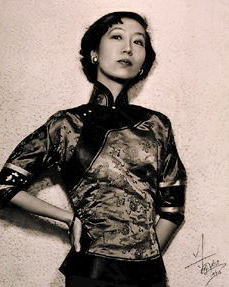 Interesting insight into the political situation of that time. Chang left China when she was 32 and for the next three decades was a banned writer in her homeland, though still much loved by loyal readers in Hong Kong, Taiwan, and the overseas Chinese communities. Sealed Off is told to be one of the stories that impressed Hu Lancheng, an influential man of the time, that "he looked her up, swept her off her feet, and became her husband" (from the Introduction).
Last, another favorite of mine, is Red Rose, White Rose. It has such a great opening:
Just brilliant.
This is the short story that was picked by Jeffrey Eugenides to be included in anthology he edited: My Mistress's Sparrow is Dead, whose short stories I've been reading and talking about here several times before.
Like Hong Kong the city, the recurrent theme in the book is fusion or clash between the East and the West. There are many mixed blood people make appearances or Chinese people who have spent a lot of time overseas. That and the progressive nature of the place and time, there bounds to be confusion and tension between the old and the new ways.
Love in a Fallen City contains 6 short stories, 4 of which are sort of novella length, and I think they worked really well for me exactly because of that. The short stories are not too short, so there's time to develop the characters and the plot and there's time for you to get immersed in them. They're not perfect, as I found the dialogues sound a bit odd at times, but it's understandable as Chinese is a very sharp and short language (though sing-songy), so it must be hell to translate to a wordy language like English. Then the behaviours of the characters can sometimes be very abrupt which I didn't quite get. But all in all, what a great find. Thanks to Claire for picking this up, otherwise I may not have found it by myself. I will definitely look for more Chang's works in the future. She is a gem of the East.
Quotes
"No matter how amazing a woman is, she won't be respected by her own sex unless she's loved by a member of the opposite one. Women are petty this way." ~ Love in a Fallen City, p127
"Basically a woman who was tricked by a man deserved to die, while a woman who tricked a man was a whore. If a woman tried to trick a man but failed then was tricked by him, that was whoredom twice over. Kill her, and you'd only dirty the knife." ~ Love in a Fallen City, p152
"Even though status wasn't something you could eat, losing it would be a pity." ~ Love in a Fallen City, p153
"We were way too busy falling in love--how could we have found time to really love each other?" ~ Love in a Fallen City, p166
Review first published at: http://www.meexia.com/bookie/2010/07/...
Love in a Fallen City was picked for our Asian Book Group. It's a perfect selection after The Good Earth, because both women wrote in the same era, both about China. Buck is even mentioned in the Introduction by Karen S. Kingsbury, the translator.
"[Chang] tried , with little success, to break into the English-language fiction market... But the cultural and linguistic gaps were to wide to cross. As C. T. Hsia, one of her earliest and most perceptive advocates, remarked, mid-century American readers' views of China were greatly influenced by writers like Pearl S. Buck, which left them unprepared for Chang's melancholy incisiveness and insider's perspective."
Don't you find it ironic that the real Chinese was less accepted? Once I started, I could sort of see why. While Buck concentrated on the poor rural life, Chang wrote about the middle to high class Chinese society. From Westerners perspective, the tale of misery from a third world country might be more exotic than the intricacies of ordinary Chinese life and relationships.
The first story, Aloeswood Incense: The First Brazier, quickly set an image in my head as Pride and Prejudice in Hong Kong. There are parties and courtships, and people are measuring someone's worth from how much he/she owns or earns. But unlike P&P, it's not a feel-good romantic story, a pattern that will follow throughout the rest of the book.
Chang's stories may be about love, but it may be love you're not familiar with. The stories are essentially--borrowing words from the Introduction--"anti-romance". Every single character is calculative--a very Chinese trait I think. I likened it to watching a game of chess, or a game whose rules I'm not very familiar with, so it's required of me to pay attention to details, to what is said between the lines, to things they say and not say, to little gestures. I love the intricacies, the power play, and complexity of the relationships. This is almost unheard of for short story collection, but I loved all the stories in the book. The more I read the more I love Chang's writing and the more I appreciate her skills in building these tales of life.
Chang wrote film scripts apart from short stories and novels, so it's little wonder that her strength in this aspect shines through. Her writing is often cinematic, it's almost like she wrote with a big screen in mind. Jasmine Tea, her second story in the book started with a cup of tea:
"This pot of jasmine tea that I've brewed for you may be somewhat bitter; this Hong Kong tale that I'm about to tall you may be, I'm afraid, just as bitter. Hong Kong is a splendid city, but a sad one too.
First pour yourself a cup of tea, but be careful--it's hot! Blow on it gently. In the tea's curling steam you can see... a Hong Kong public bus on a paved road, slowly driving down a hill. A passenger stands behind the driver, a big bunch of azaleas in his arms. The passenger leans against an open window, the azaleas stream out in a twiggy thicket, and the windowpane behind becomes a flat sheet of red."
In Jasmine Tea, we follow a young man who grows up in family with little love. Frustrated with his own father and stepmother, he starts to contemplate having a different father. He indulges in possibilities if her dead mother had married another man. All leads to dire consequences. The story is probably my least favorite because it's quite disturbing at the end.
Next is the title story, Love in a Fallen City, which was made into a movie with the same name in 1984, played by Chow Yun Fat (The King and I, Pirates of the Caribbean). I really wanted to see the movie, but it's an old movie and it's so hard to find with proper subtitle so I gave up looking. But I searched some clips on youtube and watched some to have a feel of the atmosphere during the time as I don't think I've ever watched a Chinese or Hong Kong movie from this era. I was especially intrigued by the clothes. During the time of reading, I had a hard time imagining the clothes they were wearing, so it was nice to see the clips and learned what they actually might look like. The story itself is one that most resembles a love story, with a man and a woman who find love in each other in the middle of turbulence and chaos.In The Golden Cangue, we are faced with the epitome of evil mother and mother-in-law. She's a very strong character, but I almost couldn't stand to read on. Several times I needed to close my eyes and take a deep breath before continuing. Do you know what cangue is? Google it and check it out. It often appears in Chinese movies and only now I know the name of it. The title has great meaning in connection with the story.
My favorite stories happened to be the last two: Sealed Off and Red Rose, White Rose. In Sealed Off, the city is sealed off for unexplained reason and everybody is stuck at where they are until city is "re-opened" again. Camera pans to a tram, to the people in it, then is focused to a man and a woman. Two people meet by chance, forced to interact by circumstances. From the footnote of Sealed Off:
The military situation that creates this interlude is presented very obliquely; all that we know is that the authorities have shut down, or condoned off, all or part of the city. The authorities, in this case, are probably the Japanese occupiers or (more likely) the Chinese puppet government that answered to them. Chang made a point of never directly referring to the political or military situation in Shanghai prior to the defeat of the Japanese, and thus she usually escaped censorship and was never thrown in prison (as did befall those of her associates who took a more aggressive stance).
Interesting insight into the political situation of that time. Chang left China when she was 32 and for the next three decades was a banned writer in her homeland, though still much loved by loyal readers in Hong Kong, Taiwan, and the overseas Chinese communities. Sealed Off is told to be one of the stories that impressed Hu Lancheng, an influential man of the time, that "he looked her up, swept her off her feet, and became her husband" (from the Introduction).Last, another favorite of mine, is Red Rose, White Rose. It has such a great opening:
"There were two women in Zhenbao's life: one he called his white rose, the other his red rose. One was a spotless wife, the other a passionate mistress. Isn't that just how the average man describes a chaste widow's devotion to her husband's memory--as spotless, and passionate too?
Maybe every man has had two such women--at least two. Marry a red rose and eventually she'll be a mosquito-blood streak smeared on the wall, while the white one is "moonlight in front of my bed." Marry a white rose, and before long she'll be a grain of sticky rice that's gotten stuck to your clothes; the red one, by then, is a scarlet beauty mark just over your heart."
Just brilliant.
This is the short story that was picked by Jeffrey Eugenides to be included in anthology he edited: My Mistress's Sparrow is Dead, whose short stories I've been reading and talking about here several times before.
Like Hong Kong the city, the recurrent theme in the book is fusion or clash between the East and the West. There are many mixed blood people make appearances or Chinese people who have spent a lot of time overseas. That and the progressive nature of the place and time, there bounds to be confusion and tension between the old and the new ways.
"Yanli rarely spoke or raised her head and always walked a little behind him. She knew very well that according to modern etiquette she should walk in front, left him help her put on her coat and wait on her, but she was uncomfortable exercising her new rights. She hesitated, and this made her seem even slower and more awkward." ~ Red Rose, White Rose, p294
Love in a Fallen City contains 6 short stories, 4 of which are sort of novella length, and I think they worked really well for me exactly because of that. The short stories are not too short, so there's time to develop the characters and the plot and there's time for you to get immersed in them. They're not perfect, as I found the dialogues sound a bit odd at times, but it's understandable as Chinese is a very sharp and short language (though sing-songy), so it must be hell to translate to a wordy language like English. Then the behaviours of the characters can sometimes be very abrupt which I didn't quite get. But all in all, what a great find. Thanks to Claire for picking this up, otherwise I may not have found it by myself. I will definitely look for more Chang's works in the future. She is a gem of the East.
Quotes
"No matter how amazing a woman is, she won't be respected by her own sex unless she's loved by a member of the opposite one. Women are petty this way." ~ Love in a Fallen City, p127
"Basically a woman who was tricked by a man deserved to die, while a woman who tricked a man was a whore. If a woman tried to trick a man but failed then was tricked by him, that was whoredom twice over. Kill her, and you'd only dirty the knife." ~ Love in a Fallen City, p152
"Even though status wasn't something you could eat, losing it would be a pity." ~ Love in a Fallen City, p153
"We were way too busy falling in love--how could we have found time to really love each other?" ~ Love in a Fallen City, p166
Displaying 1 - 30 of 651 reviews