Jake is a Zen master and expert bicycle repairman who fixes flats and teaches meditation out of a shop in Bar Harbor, Maine. Hank is his long-time student. The aging Jake hopes that Hank will take over teaching for him. But the commitment-phobic Hank doesn’t feel up to the job, and Jake is beginning to exhibit behavior that looks suspiciously like Alzheimer’s disease. Is a guy with as many “issues” as Hank even capable of being a Zen teacher? And are those paradoxical things Jake keeps doing some kind of koan-like wisdom . . . or just dementia?
These and other hard questions confront Hank, Jake, and the colorful cast of characters they meet during a week-long trip to the funky neighborhood of Central Square in Cambridge, Massachusetts. As they trek back and forth from bar to restaurant to YMCA to Zen Center to doughnut shop, answers arise—in the usual unexpected ways.
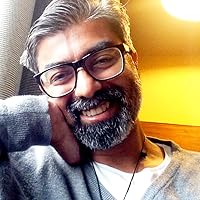
I was born and raised in Pittsburgh, Pennsylvania, which in some way still seems like home, though I haven’t lived there for years. I attended Shady Side Academy, graduating in 1966, and enrolled from there in Duke University, where I studied with Reynolds Price and Wallace Fowlie, earning a BA and eventually an MAT. My first job was as an English teacher at Forsyth Country Day School in Winston-Salem. I moved back to Durham in 1976, and have lived here ever since, except for a two-year stay in Cambridge while my wife was in graduate school.
I was eleven years old when I first saw that there was something about language that fascinated me, fifteen when I decided—God help me—that I wanted to be a writer. Though I have worked in libraries and taught at various schools and in different capacities, writing has been my true vocation. I have sometimes thought of it as the work I do, other times as a pastime, but it has always been the activity I most enjoy. In the decade beginning when I was 32, I published four novels, Football Dreams (1980), The Man Who Loved Dirty Books (1983), Second Brother (1985), and The Autobiography of My Body (1990). I also published articles in various publications during those years, and was active as a book reviewer.
In 1991, when my wife dragged me to a class at the Cambridge Insight Meditation Center, I discovered the spiritual practice that became central to my life, and grew interested in Buddhism. I think of myself as a “householder yogin” (in the words of Reginald Ray, quoting Chogyam Trungpa) and see “the sitting practice of meditation” as my “primary life commitment.” I have practiced in the Vipassana, Tibetan, and Zen traditions, but don’t consider those distinctions important. Since 1995 I have practiced with Josho Pat Phelan at the Chapel Hill Zen Center, with regular forays back to the Insight Meditation Society.
I worked with my first meditation teacher, Larry Rosenberg, on two books, Breath by Breath: The Liberating Practice of Insight Meditation (1994) and Living in the Light of Death: On the Art of Being Truly Alive (2001). I wrote for various Buddhist publications during those years, and published The Red Thread of Passion: Spirituality and the Paradox of Sex (1999).
In 2001 I began working at Duke’s Sanford School of Public Policy, teaching in both the MPP and Hart Leadership Programs. I retired in 2014, though I still work part-time for Hart Leadership. Working at Duke freed me to get back to narrative writing, and in 2007 I published Jake Fades: A Novel of Impermanence. I currently live part of the year in Durham and part in Asheville, and spend my time writing, reading, sitting, swimming at various pools, taking long walks, and getting together with friends.
There aren't a lot of good realistic novels about Zen practice. There are "zenoirs," my nickname for autobiographies by Zen practitioners, but not many novels and no really good ones.
The challenge for a Zen novel, of course, is to make Zen practice clear to the uninitiated reader. The author has to do this without intruding too much on the story.
So Guy gives us Hank, a narrator who is a long-time Zen student, telling the story as if to someone new or unfamiliar to practice, explaining things as he goes. For the most part, the device works, and we are able to focus on the characters and their interactions without getting bogged down in long passages about Zen philosophy.
The portrait of Cambridge, Massachusetts -- where most of this novel takes place - is very accurate and makes a nice treat for any reader who has lived there.
The central character, Jake the American Zen master, is very well done, a living presence evoked with very little work, like a good Zen ink painting that creates a moving figure with just a few lines. Narrator Hank could have used less explanation, too. Interspersed with the dialogue (the book is dominated by dialogue) are unnecessary comments by Hank. We get it, Hank. You already told us.
The book moves along sweetly and wistfully, right up to its inevitable and inescapable conclusion, and then hits us in the face with a final final revelation about Jake that feels a bit contrived and useless, especially considering the novel's major theme. It wasn't necessary. It was already enough.
I was hoping for a good novel. I would have settled for an ok one. This was neither. The plot is pretty simple. It's a little obvious, as well: what happens when Buddhist meditation teacher ages and approaches death. If it had just been that, it might have been ok. What I did not like about the book was the women characters. They are always described by appearance: "dumpy" or big breasted. The main male character could probably be described as dumpy, but he's not. None of the women are close to enlightenment, let alone awareness. The men are the teachers. The female character Jess seems to be rather a male fantasy--a really young attractive woman who is wild to have sex with an older man for no apparent reason--except maybe 100 bucks. I found her actions to really test the edges of belief. The narrator is the dharma heir of the dying teacher. He tries to control his relationship with Jess by refusing to have sex with her. He is so noble for not lapsing and having sex. But she continues to be a temptation only because of her body and pretty much nothing else. The male characters have at least have 2 dimensiones--the women only one. It's also homophobic. It is sadly obvious to me the author doesn't know much about half the human race. Makes me wonder if he knows anything about men either. What could he really know about dharma?
Another wonderful work by my patient. Great twist. Loved getting to see how Hank was in his previous life with Jake. Highly recommend along with Hank Heals.
I was a little skeptical of this one, but selected it from the Faculty section of the Gothic Bookstore at Duke University while waiting for a Nutcracker performance. I picked it up and put it down a few times, ultimately buying it primarily because it was set in Maine and Boston, two places I know well. I liked the characters, enjoyed the settings, and appreciated the interpretation of Buddhism. Several times, it made me laugh out loud. I’m glad it made its way home with me.
Sometimes the quiet understated mood of a book makes me think I should put it aside and pick up another. This is such a book but as I moved into the last third I became caught up in the relationship between Jake, his assistant, Hank, and Madeliene, who designs a center in which Jake can be the guru of Buddhism and teach others. Unfortunately, Jake has episodes during which he forgets what he is saying, where he is, where he should go and who is with him. Hank who has been as rootless as Jake, is the storyteller, Jake's friend, student and, yes, caretaker. Perhaps for these reasons Jake is determined that Hank will replace him as a teacher of Buddhism when he dies. Jake studied long in Japan and has traveled a good deal. Everyone loves Jake who has an amazing understanding of people and their problems. He loves chocolate donuts, greasy food and talking with just about anyone. This may be the secret of his success as a teacher. Yet to support himself, he has been a bicycle repairman because teaching others about Buddhism just doesn't pay much. As the story unfolds one wants to help Hank cope with both Jake and the temperamental Madeliene who refuses to accept that Jake may not teach in the center she designed for him. The ending has a surprise twist that makes one smile and say: "I'm glad I read this book."
A wonderful and curious book about a Zen master, as told by his long-time student. Jake, the Zen master, has already advised Hank, his protege, that Hank's time has come to begin teaching and leading others. Hank, uncertain of his ability to rise to this demanding position, demurs, while caring for the failing man he has accompanied for many, many years. Through their wonderfully specific and even corporal odyssey through Cambridge's Central Square - dives and donut shops and book stores and a rancid YMCA - Hank begins to accept. He accepts not only Jake's failing state, but begins to demonstrate that he is, indeed, ready to assume the mantle of teacher.
I am not a student of Zen or meditation, but the power and importance of these practices to their followers is presented simply, with insight and clarity, and a dollop of introduction to the casual observer who is not a practitioner.
The tale of caring for Jake, facing one's own long-deferred destiny, and resolving your place in the world - David Guy keeps all of these balls in the air with ease and elegance. It's a highly enjoyable, highly particular tale of keenly specific people. It took me into a world quite outside my own, and held me rapt for the duration of my visit.
One of the finest books on the Buddhist / Spiritual Fiction shelf, right up there with Ruth Ozeki's "A Tale For The Time Being" in my opinion.
Saw a trade critic who called it "low-key" but I think she missed the point - that is the beauty of this book! Like Zen, it is simple, ordinary and yet flowing perfectly, as if without a doer. The writer does not write to impress. And that takes many, many years of practice - both spiritual and literary. The language is commonplace but the insights profound. The plot is simple, but the layers are complex. I really enjoyed it - as one would enjoy watching a bird who makes flight look so effortless.
An extra star for the way the book doesn't shy away from frank observations about sexuality while writing about spiritual awakening. Looking forward to any more books coming from David Guy.
David Guy captures much of the beauty, intimacy and unknowingness of zen practice and especially of the teacher/student relationship. I especially love how -- like all authentic zen teaching -- the story contains the heart essence of the dharma as expressed in the simplest gesture, act or human exchange. The final three chapters evoke all the sweetbitterness of zen practice and sesshin. I've never experienced the desire to sit while reading a novel before! In fact, still in the throes of this delightful story, once I finish writing this up, I'm going to light some incense, and just sit for awhile.
Too much pejorative language for me to enjoy the book. "Bar maid" "Bar girl" "Slutty bar girl" "Bulldog dykes". Demeaning portrayls of different ethnic and class groups. I thought Buddhism teaches us about our oneness not age old stereotypical classifications. Ouch. Reading this book hurt.
A flawless blend of Zen simplicity and literary richness
As a practice, Zen has always confounded me because it is so simple and yet so complex at the same time. Now I understand the principles better after seeing them played out so beautifully in the characters of Jake and Hank in "Jake Fades" by David Guy. You can read this short literary novel quickly, but you'll want to take it slow and savor every insight.
Spiritual/metaphysical content: High. Ever wondered what a Zen retreat is like? In addition to basic Zen principles, the novel explores sesshin, a five- to seven-day retreat at which you do nothing but sit zazen and stare at a wall in the Soto Zen tradition. "On the one hand, it is a great relief to stop being yourself for eighteen hours a day. That was hard work. At the same time, it was that abandonment of self that was so fearful. When you can't talk, can't write, can't read, give up everything that makes you you, who are you? It's terrifying."
My take: There is so much wisdom in this book; it illuminates Zen principles that cannot be easily captured with mere words through action and characterization. Paradoxically, Zen appears to be both the simplest and most complex form of Buddhism. You sit. That's it. It's that hard, and it's that simple. As a non-Buddhist, that's what struck me first as I was reading "Jake Fades."
This spiritual novel perfectly reflects that principle of simplicity. The story is simple and plainly told, and yet there is so much going on beneath the surface. Guy's writing style is plain, concise, multi-layered--prose haiku, in a way. In addition, Guy's character development is superb, as shown in these examples: "Jake saw the person you deeply wanted to be. He treated you like that. Never failed to." Later in the story, Hank notes that he had long since stopped of thinking of Jake as perfect. "It was because he was so human that I admired him: He had taken the raw materials of humanity and made something wonderful, with no tools other than sitting and watching it all, learning to accept."
An interesting core notion in Zen Buddhism is that "once you started on the path, you never got off. You could neglect it all you wanted, quit altogether. You were still there." I feel the same way about writing in general. "Jake Fades" delivers such rich rewards to the reader, it makes me glad I'm still on the path.
I'm a practicing Buddhist, and it was fun to read a buddhist fiction book. I enjoyed this lovely book very much. It was very well-written, funny (at one point hysterically hilarious), and touching; and the author only lapsed into the realm of preachy, my eyes are glazing over, dharma talk 2 times for just a couple paragraphs. I thought that showed great restraint on his part, especially since he writes for Tricycle magazine LOL!
Mostly the book was about life, the universal teacher. It beautifully captured the essence of what it's like to keep working at making yourself a better human being, buddhist-style. The plot twists added to this effect brilliantly, and like Hank, I didn't see the ending coming!
I got a feeling of being connected to a wider community of buddhists which was very refreshing and comforting. There are really millions and millions of us out there in the U.S. alone, even though it often feels like you are the only one :-)
I recommend it for for all flavors of Buddhist. I'm a student of a Tibetan teacher and the book features a Zen lineage but of course, the essence of what it is to practice buddhism is the same.
The book tells a great story and features very human, fully developed characters. The Buddhism does not get into great depth and will be easy to understand even to the novice. Jake is a very wise person and depending on your life experience you will definitely have some moments which are very applicable to your life. Jake always gives his full attention to whatever is in front of him, from fixing bikes during the day, teaching at his retreats, or interacting with various people in the community. If everyone could apply this view and take a genuine interest in everything they do the world would be a better place.
Instead of "Jake Fades", this should have been called "Jake's Assistant Rises", since most of this book is about the assistant's sex addiction. If you're looking for something about Alzheimer's, forget it. Jake fades gently and fast. If you're looking for something about Buddhism and Zen, there is a little worth reading towards the end. But mostly it was a disappointment because of all the sexual anxiety. Gotta love Jake though, and the last couple chapters make the book worth reading.
Second reading, two years later. Same reaction. Wish this book had less sex and more Buddhism. But there are many wonderful nuggets of Buddhism if you look carefully.
The story seemed contrived,as did much of the dialog. Although I enjoyed some of the insights about life and impermance, I never could get past the feeling that what I was reading was a novelistic version of a Hollywood screenplay. The characters just felt like stock movie characters, the plot felt like a movie plot -- it was as though Guy really hoped his story will be picked up by some producer and made into a film. Actually, I think it could be made into a fine movie -- a movie better than the book.
I can see that my reading enjoyment is closely paralleling my current interests, and for that reason I am willing to overlook a stunningly boring first chapter to this book. Once I got past the bad first chapter, at Paul's suggestion, I really got into the story of the two main characters and enjoyed the journey. Buddhist in orientation, the author seamlessly folds in Buddhist beliefs and how they apply to real life situations via his characters and the unfolding of their lives.
The most salient aspect of this book, from my point of view, is that it presents the dilemma regarding sex between student and teacher from the teacher's point of view and shows how the teacher is tempted but resolves the temptation.
There are, however, many fine things about this book. I liked the surprise ending. It's not a "great" book in the sense of something I'll think about for the rest of my life but it certainly holds its own as Buddhist fiction.
A story of passing the zen something (baton? mantle?) from dying Jake to a long-term follower. Touching. Not too idealized. Jake does like to eat, a good thing for a zen teacher. I entertained a couple in Albuquerque who liked baseball and strip clubs. Wearing the robes to Dukes game was OK, but I made them change for the solid gold.
I thought this was a sweet story. The main character learns that his teacher (a Zen priest) wants him to take over, since he's getting old and doesn't feel he can do it anymore. Although Zen is central to the story, most of the overall theme deals with the relationships between the different characters.
Jake is an elderly Zen master and expert bicycle repairman who fixes flats and teaches meditation out of a shop in Bar Harbor, Maine. Hank is his long-time student, whom Jake hopes will be his successor, but Hank questions his abilities and Jake exhibits signs of dementia…or is it koan-like wisdom? A quiet and deceivingly simple novel that explores the depths of Zen.
A great book for anyone who is interested in or practices zen. It's a very quick and easy read driven wholly by character development. For those with no background knowledge of zen meditation and Buddhism, there are a few terms used that probably need to be looked up, as definitions aren't always provided within the text.
i loved this book because of my interest in zen meditation, but also because of the affection the author creates for the zen master. the honesty of the protagonist is convincing and engaging.