

What do you think?
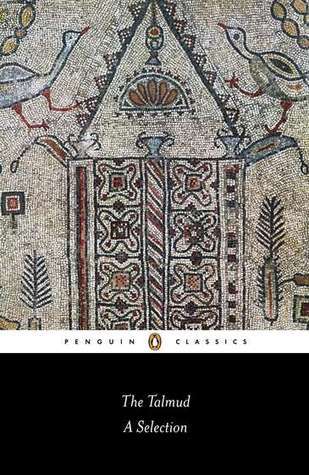
The Talmud: A Selection
The most important text in Judaism after the Old Testament- available for the first time in Penguin Classics
One of the most significant religious texts in the world, The Talmud is a compilation of the teachings of major Jewish scholars from the classic period of rabbinic Judaism. In a range of styles, including commentary, parables, proverbs, and anecdotes, it provides guidance on all aspects of everyday life. This selection of its most illuminating passages makes accessible to modern readers the centuries of Jewish thought contained within.
Norman Solomon's lucid translation from the Bavli (Babylonian) is accompanied by an introduction on The Talmud's arrangement, social and historical background, reception, and authors.
One of the most significant religious texts in the world, The Talmud is a compilation of the teachings of major Jewish scholars from the classic period of rabbinic Judaism. In a range of styles, including commentary, parables, proverbs, and anecdotes, it provides guidance on all aspects of everyday life. This selection of its most illuminating passages makes accessible to modern readers the centuries of Jewish thought contained within.
Norman Solomon's lucid translation from the Bavli (Babylonian) is accompanied by an introduction on The Talmud's arrangement, social and historical background, reception, and authors.
896 pages, Paperback
First published March 24, 2009
About the author
Norman Solomon
11 books8 followersNorman Solomon is a British rabbi, professor, and scholar in the field of Jewish studies and Jewish-Christian relations. He was born in Cardiff, South Wales in 1933 and attended Cardiff High School and St. John’s College, Cambridge. He attained rabbinic ordination at Jews' College (London School of Jewish Studies) in London, England and a Ph.D. at the University of Manchester. He served Orthodox congregations in Manchester, Liverpool, London and Birmingham, England. He was later director of the Centre for the Study of Judaism and Jewish-Christian Relations at the Selly Oak Colleges, Birmingham and a Fellow in Modern Jewish Thought at the Oxford Centre for Hebrew and Jewish Studies. He was also lecturer in Theology at the University of Oxford. He currently holds the position of Professor of Judaica at the Graduate Theological Foundation. A former Vice President of the World Congress of Faiths, a Patron of the International Interfaith Centre and an Adviser to the International Council of Christians and Jews, he has been actively involved in interfaith dialogue with Christians and Muslims. He has written five books and over seventy articles on a wide range of issues in the fields of Jewish studies and Jewish-Christian relations. He has also edited a number of volumes in these fields. His major works include his books Judaism and World Religion, The Analytic Movement: Hayyim Soloveitchik and His School, The Talmud: A Selection and Torah from Heaven.
Ratings & Reviews
Friends & Following
Create a free account to discover what your friends think of this book!
Community Reviews
Displaying 1 - 17 of 17 reviews

January 29, 2017
Bizarre. And funny in a confusing way. Start with the premise that the Almighty is the Great Auditor intent on discovering whether you have screwed up in even the most innocent, minor way. Wham! He got you. At least that's what two rabbinical schools seem to have invented after the destruction of the Temple. One faction was in Palestine, the other in Babylon. Each throughout the ensuing 800 year history, tried to dominate the other. They alienated much of the Jewish world by their precise requirements - according to the editor - and considered them better than the rest. It got so convoluted, that I had to laugh at the argument over a hypothetical man not yet home when the Sabbath began. What could he do? Traveling was considered wrong. Well, they came up with an arbitrary distance from his house where the man could be considered home, to where each man could pool this allowance and line up through the town to the spot where the latecomer was standing! But what if a fence intervened? Do we count in the measurement the height of the fence? What if he is at sea? Can he see land? Then they discus the height of a palm tree as some sort of measure. But which kind? The one in Palestine or the one in Babylon? These schools occasionally even curse their rivals!

September 23, 2014
A Monument of Ancient Thought Made Accessible
To help students of the Torah better understand the work that stands at the center of Judaism, scholars started a commentary; over the years, this commentary included commentaries on itself, and so the Talmud came into being, a work in importance to the Jewish faithful second only to the Bible itself.
The Talmud includes commentary, proverbs, anecdotes, and histories, along with legal interpretation on the meaning of God's commandments in the Torah and the rest of the Bible.
It's a monumental work, comprising thousands of pages. For someone who wants to grasp the essence of the Talmud, an abridged edition is the best choice. Norman Solomon provides the excellent and reliable translation readers of the Penguin Classics have come to expect. Selections are representative of all six orders: Zeraim (Seeds), Mo'ed (Appointed Times), Nashim (Women), Neziquin (Damages), Qodashim (Holy Things), and Tohorot (Purities), with most of the 12 tractates of each order. My only misgiving is that the selection represents the first orders much more thoroughly than the later orders, leaving the impression that publishing constraints more than content dictated what was included and what had to be left out.
That said, this volume is a monument of scholarship, both in the very detailed commentary, extensive appendices, and - most important - detailed introduction. With this fine book, one comes away with a very good understanding of the fundamentals of the Talmud.
To help students of the Torah better understand the work that stands at the center of Judaism, scholars started a commentary; over the years, this commentary included commentaries on itself, and so the Talmud came into being, a work in importance to the Jewish faithful second only to the Bible itself.
The Talmud includes commentary, proverbs, anecdotes, and histories, along with legal interpretation on the meaning of God's commandments in the Torah and the rest of the Bible.
It's a monumental work, comprising thousands of pages. For someone who wants to grasp the essence of the Talmud, an abridged edition is the best choice. Norman Solomon provides the excellent and reliable translation readers of the Penguin Classics have come to expect. Selections are representative of all six orders: Zeraim (Seeds), Mo'ed (Appointed Times), Nashim (Women), Neziquin (Damages), Qodashim (Holy Things), and Tohorot (Purities), with most of the 12 tractates of each order. My only misgiving is that the selection represents the first orders much more thoroughly than the later orders, leaving the impression that publishing constraints more than content dictated what was included and what had to be left out.
That said, this volume is a monument of scholarship, both in the very detailed commentary, extensive appendices, and - most important - detailed introduction. With this fine book, one comes away with a very good understanding of the fundamentals of the Talmud.

October 23, 2025
The Talmud: A Selection, Penguin Classics
1. Incense can help you meditate or study.
2. Chapter Two: Rabbi Eleazar said: What is the meaning of the verse: I bless you all my life, I lift up my hands, invoking your name.
3. I am sated as with a rich feast. I sing praises with joyful lips.
4. 'Praises' is plural: one who does this praises God here, and will praise him again in the world to come.
5. When he had completed his prayer, he used to say this: May it be your will, Lord our God, to grant us long life, a life of goodness, of blessing, of sustenance, of good health, a sin-fearing life, a life free from shame and embarrassment, a life of wealth of honour, a life of love of Torah and fear of heaven, a life in which you fulfil our desires for good.
6. When he had completed his Prayer, Rabbi Judah the Patriarch used to say this: May it be your will, Lord our God, to protect us from insolence and insolent people, from malicious people and accidents, from the evil inclination, from bad company and neighbors, from Satan the destroyer and from harsh litigation and litigants, whether or not of the covenant.
7. Rav Safra used to say this: May it be your will, Lord our God, to set peace in the family above and in the family below, and among the disciples who engage in the study of your Torah, whether they do so out of pure or improper motives; as to those who study out of improper motives, may their motives be pure!
8. Rabbi Alexandri used to say this: May it be your will...that the place where we stand be a place of light, not darkness; let us not despair nor our eyes become dim.
9. Government should be able to help people.
10. Save me from evil inclination, evil women and all the troubles that occur in the world; frustrate the plans and intentions of those who plot evil against me. May the words of my mouth and the prayer of my heart be acceptable to you.
11. If someone is preoccupied with one thing, then they would be unable to focus their mind properly.
12. In the course of the discussion the Gemara considers how to show respect in the presence of a corpse, and enquires whether the dead are aware of what the living do. While the doctrine of life after death is accepted without question, there is no agreement as to whether communication between the living and the dead is possible.
13. When a person dies, you are supposed to be respectful to their corpse.
14. On what do Ben Azzai and the anonymous Mishna differ? Ravina said, they differ as to whether we need to allow for the possibility that rats might attack the corpse if the watchers move away; the anonymous Mishna is concerned about this, Ben Azzai is not.
15. The rabbis taught: Someone who is taking bones from one place to another should not put them in a bag, place it on his donkey and ride sitting on them, for that would be treating them disrespectfully. However, if he was afraid that non-Jews or robbers might otherwise take them, it is permitted. The same applies to a Torah scroll as to bones...it is obvious - surely a Torah scroll is no less demanding of respect than bones! So it must refer to the latter part, namely that it is permitted to place the scroll in a bag on a donkey and sit on the bag in order to protect the scroll from non-Jews or robbers.
16. Try to respect the dead in a funeral.
17. Try to respect the dead in a cemetery.
18. In a funeral, make a speech to honor the good deeds of the deceased.
19. In a society, determine what the consequences of negative actions should be.
20. This is literal. Translators expand; for instance, 'the one who is condemned to die'.
21. Rabbi Hiyya's sons went out to the villages to attend to their father's estate after his death; it was hard for them to study, and they struggled to remember what they had learnt. One said to the other, Is our father aware of our distress? The other replied, How can he know?
22. The other said to him, But doesn;t he know? He feels only the pain of his flesh, and his spirit mourns in him, and Rabbi Isaac said, Worms are as painful to the dead as a needle in the flesh of the living.
23. They say, The dead know their own suffering, but they don't know the suffering of others.
24. Don't the dead know what happens among the living? Surely it was taught: A Hasid once gave a denarius to a poor man on the eve of the New Year festival in a period of famine.
25. His wife was annoyed with him so he went and spent the night in the cemetery. He heard two spirits conversing. One said to the other, 'Come! Let's hear from behind the curtain what disasters are to befall the world! ' The other replied, 'I can't as I was buried in a reed mat. You go, and tell me what you hear.' She went about the world, and returned. 'What did you find out from behind the curtain?' asked her friend. She replied, 'I heard that if anyone sows at the first rains, hail will destroy his crops.' The Hasid went and sowed at the second rains; everybody else's crops were ruined, but his were not.
26. Various groups are known as hasidim (pious ones, or lovers of God). There is no connection with the contemporary Hasidic movement, which originated in the eighteenth century, here the term simply denotes a holy man.
27. The partition separating them from the Shekhina (divine presence) - Rashi.
28. The Hasid went and sowed his crops at the first rains; everybody else's crops were struck by hail, but his were not. His wife asked him why, and he told her the whole story.
29. The next year he went and spent a night in the cemetery...The other said to her, 'Leave off! Our conversation has been heard among the living.'
30. He said, 'I want Abba son of Abba!' They said, 'There are plenty of Abba son of Abbas here.' He said 'I want Abba son of Abba, the father of Shmuel! Where is he?' They said, 'He has ascended to the heavenly yeshiva.'
31. The man tried unsuccessfully to change his father.
32. Some people have scary names.
33. When handling money in school, be careful, because children are known to steal.
34. Some people's names reflect their appearance or their occupation.
35. The school's treasury has thousands if not millions of dollars.
36. The old police officer was up against a younger, more athletic man.
37. There was a governing body of three or four treasurers.
38. All important government offices were run by a group of governing officials, instead of just one person.
39. The families of Rabban Gamaliel and Rabbi Hanina the high priest used to bow in fourteen places, the xtra one being near the wood store; they had a tradition that that was where the ark was concealed.
40. A priest was once busy in the area and noticed that the floor was different from the adjoining areas. He went to tell his friend, but fell down dead before he managed to complete his statement; then they were sure that that was where the Ark was concealed.
41. Before a court case begins the attorney should know what the judge wants and have a clear strategy.
42. He is responsible for any harm that may accrue to himself.
43. Literally, 'see the street'.
44. Rav Yosef says, A king may break down fences to make a road for himself and no one can stop him.
45. Third Tractate, people should be clean and presentable.
46. Discusses how to mediate disputes between husbands and wives.
47. The rod of the wicked shall not rest upon the lot of the righteous (Psalm 125:3 KJV).
48. Since foreigners have different language and ways, they should be treated differently than natural born citizens in court.
4/7/2025 - 7:30am
1. sicarii -Latin sicarius, 'dagger man,' 'murderer' - used here of terrorists who appropriated land by threatening to kill, or more specifically of the Zealots.
2. Chapter 5 - In the time of the war slain, there were no sicarii in Judaea; since the time of the war slain, there have been sicarii in Judaea.
How does the law operate? If someone purchased land from a sicarius and then from the rightful owner, the sale is void; if he purchased from the rightful owner and then from the sicarius, the sale is valid.
3. This was the original Mishna. A later court decreed that if someone buys land from a sicarius, he must pay the rightful owner a quarter of its value by way of compensation. This is only if the rightful owner is not in a position to buy back the land himself, but if he is in the position to do so, he has priority over anyone else.
4. Rabbi Judah ha-Nasi convened a court that voted that if land had remained in the possession of the sicarius for twelve years, whoever then purchased it had the right to retain it, on condition that he pay the rightful owner a quarter of its value.
5. When soldiers are killed in war, the military should be held liable in court and offer compensation to these families.
6. Gemara - If there were no sicarii during the time of the war slain, how come there were sicarii after the time of the war slain? Rav Yehuda said, The Mishna means that during the time of the war slain, the law regarding sicarii did not operate, but after the time of the war slain, it became operative. As Rabbi Assi said, There were three successive decrees: The first was whoever does not kill a Jew will be killed; the middle was whoever kills a Jew will receive four zuz; the last was whoever kills a Jew will be killed. Under the first and iddle decrees, a Jew would agree to relinquish his property rather than lose his life; under the final decree he would think, let him take the land now, but then I will sue him in court.
7. Reference uncertain. Rashi says it refers to 'the war of Titus,' i.e. the First Revolt.
8. This is because the rightful owner may not have agreed to the sale.
9. She may not have agreed to the sale of the land mortgaged to her ketuba or land to which she had a personal claim.
4/17/2025 - 10:00am
10. Since people from different cultures are different than American citizens, foreigners from different cultures should be treated differently in American court cases.
11. During different time periods, certain crimes are more frequent.
12. During drug epidemics, the drugs get flooded into the community, then citizens sell the drugs, and then get arrested, and are still doing time. This is not fair or right.
13. During the 60s and 70s, revolution and protests defined America, and the American citizens’ crimes reflected this, and many of them were imprisoned, but this was no fault of theirs, so they should be forgiven.
14. A human being’s life involves many elements (biological, cultural, economic, racial, religious, sociological, biological), which can influence their behavior, but since all human beings are good people, they should not be punished, and should be forgiven
15. Please visit my blog, www.scholarlyinformation.com for more university-level book reviews, food ideas, and more.
Thank you,
🌹🌹Toren Spencer-Gray
1. Incense can help you meditate or study.
2. Chapter Two: Rabbi Eleazar said: What is the meaning of the verse: I bless you all my life, I lift up my hands, invoking your name.
3. I am sated as with a rich feast. I sing praises with joyful lips.
4. 'Praises' is plural: one who does this praises God here, and will praise him again in the world to come.
5. When he had completed his prayer, he used to say this: May it be your will, Lord our God, to grant us long life, a life of goodness, of blessing, of sustenance, of good health, a sin-fearing life, a life free from shame and embarrassment, a life of wealth of honour, a life of love of Torah and fear of heaven, a life in which you fulfil our desires for good.
6. When he had completed his Prayer, Rabbi Judah the Patriarch used to say this: May it be your will, Lord our God, to protect us from insolence and insolent people, from malicious people and accidents, from the evil inclination, from bad company and neighbors, from Satan the destroyer and from harsh litigation and litigants, whether or not of the covenant.
7. Rav Safra used to say this: May it be your will, Lord our God, to set peace in the family above and in the family below, and among the disciples who engage in the study of your Torah, whether they do so out of pure or improper motives; as to those who study out of improper motives, may their motives be pure!
8. Rabbi Alexandri used to say this: May it be your will...that the place where we stand be a place of light, not darkness; let us not despair nor our eyes become dim.
9. Government should be able to help people.
10. Save me from evil inclination, evil women and all the troubles that occur in the world; frustrate the plans and intentions of those who plot evil against me. May the words of my mouth and the prayer of my heart be acceptable to you.
11. If someone is preoccupied with one thing, then they would be unable to focus their mind properly.
12. In the course of the discussion the Gemara considers how to show respect in the presence of a corpse, and enquires whether the dead are aware of what the living do. While the doctrine of life after death is accepted without question, there is no agreement as to whether communication between the living and the dead is possible.
13. When a person dies, you are supposed to be respectful to their corpse.
14. On what do Ben Azzai and the anonymous Mishna differ? Ravina said, they differ as to whether we need to allow for the possibility that rats might attack the corpse if the watchers move away; the anonymous Mishna is concerned about this, Ben Azzai is not.
15. The rabbis taught: Someone who is taking bones from one place to another should not put them in a bag, place it on his donkey and ride sitting on them, for that would be treating them disrespectfully. However, if he was afraid that non-Jews or robbers might otherwise take them, it is permitted. The same applies to a Torah scroll as to bones...it is obvious - surely a Torah scroll is no less demanding of respect than bones! So it must refer to the latter part, namely that it is permitted to place the scroll in a bag on a donkey and sit on the bag in order to protect the scroll from non-Jews or robbers.
16. Try to respect the dead in a funeral.
17. Try to respect the dead in a cemetery.
18. In a funeral, make a speech to honor the good deeds of the deceased.
19. In a society, determine what the consequences of negative actions should be.
20. This is literal. Translators expand; for instance, 'the one who is condemned to die'.
21. Rabbi Hiyya's sons went out to the villages to attend to their father's estate after his death; it was hard for them to study, and they struggled to remember what they had learnt. One said to the other, Is our father aware of our distress? The other replied, How can he know?
22. The other said to him, But doesn;t he know? He feels only the pain of his flesh, and his spirit mourns in him, and Rabbi Isaac said, Worms are as painful to the dead as a needle in the flesh of the living.
23. They say, The dead know their own suffering, but they don't know the suffering of others.
24. Don't the dead know what happens among the living? Surely it was taught: A Hasid once gave a denarius to a poor man on the eve of the New Year festival in a period of famine.
25. His wife was annoyed with him so he went and spent the night in the cemetery. He heard two spirits conversing. One said to the other, 'Come! Let's hear from behind the curtain what disasters are to befall the world! ' The other replied, 'I can't as I was buried in a reed mat. You go, and tell me what you hear.' She went about the world, and returned. 'What did you find out from behind the curtain?' asked her friend. She replied, 'I heard that if anyone sows at the first rains, hail will destroy his crops.' The Hasid went and sowed at the second rains; everybody else's crops were ruined, but his were not.
26. Various groups are known as hasidim (pious ones, or lovers of God). There is no connection with the contemporary Hasidic movement, which originated in the eighteenth century, here the term simply denotes a holy man.
27. The partition separating them from the Shekhina (divine presence) - Rashi.
28. The Hasid went and sowed his crops at the first rains; everybody else's crops were struck by hail, but his were not. His wife asked him why, and he told her the whole story.
29. The next year he went and spent a night in the cemetery...The other said to her, 'Leave off! Our conversation has been heard among the living.'
30. He said, 'I want Abba son of Abba!' They said, 'There are plenty of Abba son of Abbas here.' He said 'I want Abba son of Abba, the father of Shmuel! Where is he?' They said, 'He has ascended to the heavenly yeshiva.'
31. The man tried unsuccessfully to change his father.
32. Some people have scary names.
33. When handling money in school, be careful, because children are known to steal.
34. Some people's names reflect their appearance or their occupation.
35. The school's treasury has thousands if not millions of dollars.
36. The old police officer was up against a younger, more athletic man.
37. There was a governing body of three or four treasurers.
38. All important government offices were run by a group of governing officials, instead of just one person.
39. The families of Rabban Gamaliel and Rabbi Hanina the high priest used to bow in fourteen places, the xtra one being near the wood store; they had a tradition that that was where the ark was concealed.
40. A priest was once busy in the area and noticed that the floor was different from the adjoining areas. He went to tell his friend, but fell down dead before he managed to complete his statement; then they were sure that that was where the Ark was concealed.
41. Before a court case begins the attorney should know what the judge wants and have a clear strategy.
42. He is responsible for any harm that may accrue to himself.
43. Literally, 'see the street'.
44. Rav Yosef says, A king may break down fences to make a road for himself and no one can stop him.
45. Third Tractate, people should be clean and presentable.
46. Discusses how to mediate disputes between husbands and wives.
47. The rod of the wicked shall not rest upon the lot of the righteous (Psalm 125:3 KJV).
48. Since foreigners have different language and ways, they should be treated differently than natural born citizens in court.
4/7/2025 - 7:30am
1. sicarii -Latin sicarius, 'dagger man,' 'murderer' - used here of terrorists who appropriated land by threatening to kill, or more specifically of the Zealots.
2. Chapter 5 - In the time of the war slain, there were no sicarii in Judaea; since the time of the war slain, there have been sicarii in Judaea.
How does the law operate? If someone purchased land from a sicarius and then from the rightful owner, the sale is void; if he purchased from the rightful owner and then from the sicarius, the sale is valid.
3. This was the original Mishna. A later court decreed that if someone buys land from a sicarius, he must pay the rightful owner a quarter of its value by way of compensation. This is only if the rightful owner is not in a position to buy back the land himself, but if he is in the position to do so, he has priority over anyone else.
4. Rabbi Judah ha-Nasi convened a court that voted that if land had remained in the possession of the sicarius for twelve years, whoever then purchased it had the right to retain it, on condition that he pay the rightful owner a quarter of its value.
5. When soldiers are killed in war, the military should be held liable in court and offer compensation to these families.
6. Gemara - If there were no sicarii during the time of the war slain, how come there were sicarii after the time of the war slain? Rav Yehuda said, The Mishna means that during the time of the war slain, the law regarding sicarii did not operate, but after the time of the war slain, it became operative. As Rabbi Assi said, There were three successive decrees: The first was whoever does not kill a Jew will be killed; the middle was whoever kills a Jew will receive four zuz; the last was whoever kills a Jew will be killed. Under the first and iddle decrees, a Jew would agree to relinquish his property rather than lose his life; under the final decree he would think, let him take the land now, but then I will sue him in court.
7. Reference uncertain. Rashi says it refers to 'the war of Titus,' i.e. the First Revolt.
8. This is because the rightful owner may not have agreed to the sale.
9. She may not have agreed to the sale of the land mortgaged to her ketuba or land to which she had a personal claim.
4/17/2025 - 10:00am
10. Since people from different cultures are different than American citizens, foreigners from different cultures should be treated differently in American court cases.
11. During different time periods, certain crimes are more frequent.
12. During drug epidemics, the drugs get flooded into the community, then citizens sell the drugs, and then get arrested, and are still doing time. This is not fair or right.
13. During the 60s and 70s, revolution and protests defined America, and the American citizens’ crimes reflected this, and many of them were imprisoned, but this was no fault of theirs, so they should be forgiven.
14. A human being’s life involves many elements (biological, cultural, economic, racial, religious, sociological, biological), which can influence their behavior, but since all human beings are good people, they should not be punished, and should be forgiven
15. Please visit my blog, www.scholarlyinformation.com for more university-level book reviews, food ideas, and more.
Thank you,
🌹🌹Toren Spencer-Gray

March 17, 2024
An excellent selection from the Babylonian Talmud. The translator gives various introductions to each section with specific notes for the more difficult passages. The book also differentiates between the parts that are Mishnah (original commentary on the Bible), Gemara (commentary on the commentary), or commentary on those commentaries (it is a very complicated document). Although most of the points would seem like minor quibbles on the Torah, in fact they are very interesting debates that seek to find the hidden meanings of the Bible verses, and often the personalities of the Rabbis seem to show through in the way they all interpret the verses in a slightly different way. This is a very important work for trying to understand the Hebrew scriptures and modern Jewish faith.

October 19, 2021
when i read the bible earlier this year i was surprised by the amount of it dedicated to detailed rules and measurements, this takes it to the nth degree. it's fascinating to see brilliant minds grappling with almost intractable problems: how do we take the rules laid down by these sacred texts and actually live with them in our own lives? this has of course only become ever more complicated, but the approach is almost always generous, tender, and open to humour, as we should be

August 31, 2013
اسمع يا اسرائيل الهنا واحد. قلتُ للرب و الحق أقول فلتكن مشيئتك ،لتسبق رحمتك غضبك, و لتسبق مغفرتك عذابك ارحمنى با اله الجنود فى الاعالى و المجد للسماء و على الارض السلام و بالناس المسرة. أتقرب أليك بكل عمل طيب و أعوذ بك من كل فعل شرير يؤذى اسرائيل شعبك فأجعل لى ملكوت السماء. أمين

May 21, 2010
Good addition to talmudic literature with a lot of material that I've never found in other selections of the talmud

July 2, 2017
The rating here is for the editor's thoughtful introduction and annotations. The text itself - well, it's the Talmud...

Read
July 19, 2023La Agenda 2030 es el Talmud punto a punto y letra a letra.

Read
March 21, 2023" Some time later, Rabbi Nathan met the prophet Elijah and asked him: “What did the Holy One, blessed be He, do when rebuked by Rabbi Joshua?” Elijah replied: “He laughed with joy saying ‘My children have defeated me, my children have defeated me.’"
Goodman did God's work with his incredible introduction and appendixes. Made the Talmud as accessible as possible. A collection of just the aggadic material would have been a page turner.
Goodman did God's work with his incredible introduction and appendixes. Made the Talmud as accessible as possible. A collection of just the aggadic material would have been a page turner.

June 19, 2022
Oof. I'm working through two much more compelling editions of the Talmud and appreciating it's richness. This group of selections just isn't doing it for me.

pause
November 3, 2023First Order Zeraim: 2/11/23 - 4/11/23

May 27, 2025
Even reading a book about the Talmud can feel like a lifetime to finish
July 28, 2026
Oral torah is super interesting. Love seeing rabbis I recognize

November 26, 2009
Anyone who wants to engage with rabbinic literature should use this book as a starting place, and you can pick your spot to go further in this ocean. This book serves as a much better introduction than some of the older, denser attempts at topic summaries (A. Cohen) or some of the other things that pop up on that kind of reading list.
The translations are good. For the price, you can't get your hands on more of the Talmud. Though I prefer bilingual facing-page versions of texts like that, the only English one I know of is Artscroll's 73-volume set, which is cost prohibitive for almost everyone to completely own.
The translations are good. For the price, you can't get your hands on more of the Talmud. Though I prefer bilingual facing-page versions of texts like that, the only English one I know of is Artscroll's 73-volume set, which is cost prohibitive for almost everyone to completely own.

Read
November 2, 2016I only read selections from this Selection. A surprisingly fun read!

Read
April 14, 2019Talmud slutar aldrig att leverera roligt extramaterial till Bibeln och finurliga små levnadsregler. Tyvärr är 90% väldigt tråkigt.
Abraham's father, Terah, was both an idolater, a manufacturer of idols, and a dealer in them. Once when Terah had some engagement elsewhere he left his son Abraham to attend to his business. When a customer came to purchase an idol, Abraham asked him, "How old art thou?" "Lo! so many years," was the ready reply. "What," exclaimed Abraham, "is it possible that a man of so many years should desire to worship a thing only a day old?" The customer, being ashamed of himself, went his way; {50} and so did all other customers, who underwent a similar inquisition. Once an old woman brought a measure of fine flour and wished to present it as an offering to the gods. This so enraged Abraham that he took a staff and broke all the images, excepting the largest, into whose hands he fixed the staff. When his father came and questioned him about the destruction of the gods, he replied, "An old woman placed an offering of flour before them, which immediately set them all by the ears, for every one was hungrier than another, but the biggest god killed all the rest with this staff which thou now seest he still holds in his hands." Superstition, especially when combined with mercenary motives, knows neither reason nor human affection, therefore the father handed over his son Abraham to the inquisition of Nimrod, who threw him into the fiery furnace, as recorded elsewhere in this Miscellany. This is an historical fact, to the truth of which the whole orthodox Jewish world will bear testimony, and is solemnly recorded in Shalsheleth Hakkabalah fol. 2, col 1.
Abraham's father, Terah, was both an idolater, a manufacturer of idols, and a dealer in them. Once when Terah had some engagement elsewhere he left his son Abraham to attend to his business. When a customer came to purchase an idol, Abraham asked him, "How old art thou?" "Lo! so many years," was the ready reply. "What," exclaimed Abraham, "is it possible that a man of so many years should desire to worship a thing only a day old?" The customer, being ashamed of himself, went his way; {50} and so did all other customers, who underwent a similar inquisition. Once an old woman brought a measure of fine flour and wished to present it as an offering to the gods. This so enraged Abraham that he took a staff and broke all the images, excepting the largest, into whose hands he fixed the staff. When his father came and questioned him about the destruction of the gods, he replied, "An old woman placed an offering of flour before them, which immediately set them all by the ears, for every one was hungrier than another, but the biggest god killed all the rest with this staff which thou now seest he still holds in his hands." Superstition, especially when combined with mercenary motives, knows neither reason nor human affection, therefore the father handed over his son Abraham to the inquisition of Nimrod, who threw him into the fiery furnace, as recorded elsewhere in this Miscellany. This is an historical fact, to the truth of which the whole orthodox Jewish world will bear testimony, and is solemnly recorded in Shalsheleth Hakkabalah fol. 2, col 1.
Displaying 1 - 17 of 17 reviews