The year is 2016, and President Kennedy is being murdered - again and again and again...
The Director has come to the charred ruins of New York to re-enact a mad dream from the past - the assassination of President Kennedy. As actors, he has the primitive race who inhabit the city. With them and his glamorous, dark-haired lover, he rehearses everything - the motorcade, the shots, the panic.
But at the last moment it all goes wrong. When the flower-filled limousine rounds the bend, the passenger is not Kennedy - but the Director himself.
I always thought that David Goodis was the bleakest, most doom-fatal American writer there ever was when it came to classic genre work, but this was before I crossed paths with Barry Malzberg. Here in his off-centered follow-up to 'Beyond Apollo', dysfunction and disorder run rampant in first-person narratives that evoke the wild urban entropy of fellow New York writers, Gilbert Sorrentino and Stanley Elkin. Malzberg had clearly stated that he wasn't a spokesperson for science fiction -- even stated that he was ready to retire from the genre in the late 1970s, but bills beckon and pages need to be filled. And thank god for that. He is the misanthropian Emperor of SF, a lewd loudspeaker who in dual functions belittles the world while exposing the patterns of an illogical and perhaps murderous mindset. He's funny, morbid and cruel, and stylistically, as messy as a Keith Moon drum solo, but all said and done, I'm not sure any other author rivaled his anti-establishment journals/novels on such a consistent fuck-you basis.
Here, Malzberg takes on the Assassination Era in America. It reads like a cut-up novel with less veneer or praise than Burroughs, a guttural grinding that not only delves into split personalities, but a future where a lone film director from The Institute gets his wish granted: to lense a docu-drama reel reenacting the JFK assassination in NYC. And get this, his actors are not stock players or promising thespians, but 'lumpen' - vagrant and sick New Yorkers living in the ruins after the great 'Sweeps' turned the city inside out. And that's just the main narrative. Other narratives are split with fevered abandon: one moment we're in Malcolm X's last mortal thoughts, then we're in the mind and body of famed white-power racist (George Lincoln) before a sidewalk hit outside a laundromat. In the blink of an eye, we're in the panic-ridden Lee Harvey Oswald on his disastrous road trip south, before lingering in the head of JFK forecasting his own assassination as he argues with his wife, who no longer trusts his leadership due to his all-consuming panic attacks.
Most hard SF fans would despise this novel due to its lack of cohesion and empathy. Also, that there's not one lick of optimism and future-forward shenanigans here. Instead it's a burning flag disguised as an alternative history novel, and a very important one despite an ending that feels like Malzberg hit his word count for the week.
Classic American New Wave Angst.
Where are the New Malzbergs when we need them most?
The Destruction of the Temple is one of Malzberg's most claustrophobic, obsessive, paranoid, (pick your own word for the insecurity of insular Future Shock) satiric novels. It takes the theme that J.G. Ballard presented in The Assassination of John Fitzgerald Kennedy Considered As a Downhill Motor Race and adds a bit more of a speculative element, a lot more of peculiarly American pop culture, and turns it into a New Wave monument. It's very depressing, but thought provoking, with perhaps just a bit of a hopeful slant at the end. I like the blurb from Harlan Ellison on the cover: "There are perhaps a dozen genius writers in this genre and Barry is at least eight of them..."
What i like doing with this book sometimes is to read a single page or two
three times in a single week and see what new interpretations, dilemmas, paradoxes, questions come up
---
If you could imagine Faulker and JG Ballard mixing up JFK, Blowout and Planet of the Apes all in one or was it Hemingway and the Omega Man with William S. Burroughs
oh no matter, i told you yesterday that this is the book to read tomorrow. but i forgot to tell you
Of all the novels I have read by Malzberg, The Destruction of the Temple is by far his most fractured and dream-like. As the title implies, the novel is largely a postmodern literary exercise in deconstructing narrative. An excerpt establishes intention:
Chronology is not vital; it is only results that count, the meaning that can be wrenched from the agglomeration of incidents.
The excavation of the mid-20th-century American psyche and landscape is explored by Malzberg through a series of vignettes. These nightmarish visions largely revolve around some of the most spectacular acts of violence of the period: the assassinations of Kennedy, MLK, and Malcolm X, the murder of liberals during segregation, police brutality during the Harlem riot of 1964, and even the killing of George Rockwell.
Malzberg’s perspective on a decaying America—a violent and poisoned culture—feels somewhat aged, but one cannot blame the writer for feeling that way at the time, and his documentation of the actual events is sound. The writing is clad in bloodstreams, like the snapping of veins, rivers of anger in fiery gestalt pollute most sentences like napalm.
The novel withholds all effective storytelling devices—this is, of course, deliberate by the author and will either garner a response of brilliance or feel like a waste of time. I find myself falling towards the latter. The Cross of Fire, one of Malzberg’s masterpieces, is a similar exercise but executed with astounding intelligence and emotional grip—and, in my estimation, is the far superior novel.
Ultimately, the strong point here is Malzberg’s writing—it’s like an incendiary device, grenades of language that maul limbs apart. Yet, the weak point also lies in Malzberg’s writing. The depiction of violence is largely exhibitionist, without decoding. Malzberg usually finds a way out of this tendency with flair, but here, I find little literary evidence that he stuck the landing.
When I read this, I didn’t know I would be getting the author back on the Dickheads Podcast, I just selected it randomly off the shelf as a Malzberg novel I hadn’t yet read and was eager to give it a shot. Just after I finished it Barry reached out to me about a not super favorable review of his novel The Last Transaction. Despite my review, he was excited that I wrote about it, and we had a cool exchange over e-mail about this old book. Let's face it an author who wrote as much as Barry did in his day is not going to have a perfect batting record.
Barry Malzberg is a science fiction writer who wrote under multiple names publishing more SF stories and novels in the 60s and 70s than entire basketball teams’ worth of writers. He also held jobs at several major publishers, agents, and more. His position in the community is unique. His book of essays about the genre is a must-read for sure.
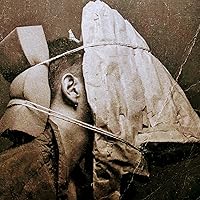
Reviewing a book that is essentially a fever dream commenting on a cultural-political experience from a decade fifty years in the rearview mirror is an interesting task for a science reader. DOTT is a thought experiment using science fictional concepts to explore the craziness in a culture that had multiple powerful leaders assassinated in the public eye in a short period. While the JFK assassination gets the most attention in this novel, the cover has Lee Harvey Oswald, Martin Luther King, and a clown-faced President Johnson in the image. The themes are pretty clear.
DOTT is everything I read Malzberg for. It is a very post-New Wave work of Science Fiction. Strange almost to the point of bizarro, the narrative is somewhat confusing in the opening act, if you don’t read the back and go in cold it will be confusing. This might be different for others but that is how I felt. That said I was never bored. I wanted to understand what was happening so I kept reading. Set in post-war New York we are thrown into the middle of a stage play recreating the JFK assassination over and over again. Our point of view character is the director but at some point realizes he is suddenly in the play, maybe he has traveled through time, and he is reliving the events. The surreal events of the novel highlight the chaos of the era expanded into an alternate future.
This narrative is chaos itself in many ways, but when Malzberg drills down on the driving scenes or the news narrative there are entire chapters of incredible prose. It makes you think this guy had all the chops of a PKD or a Ballard but without the Hollywood attention, his genius is recognized by serious fans and scholars.
“In the abscess of a dreaming space of America: taking the night roads out of the city, opening up the car to eighty-five on the straightaways, dodging the curves at a cutback to fifty-five, other cars approaching and disappearing like half-hunks of image skewered in dreams. Nothing else. If we and other cars meet- explosion, impaction, terrific wrenching, and then nothing else, ever but the cars seem to have no more existence than the speed which I push out of the vehicle, lunging it finally into a straight careening dive from the rise on which we have momentarily looked at America.
Looked at America and now fall to merge with it: Wonder Waffles and Sam’s Super bar, Dick’s drive in and Killer cars hitting out their great spokes of light toward the land, the spokes of that great wheel called the land, knifing out the plains and darkness in their colors, the wheel like a knife in the hands, the old car failing in thrusts of power on those turns, but giving all it has left: three cylinders, forty-five horse powers on the open roads.”
I love this moment of prose but if you are looking for a mission statement. On page 134…
“This country is going to blow up. Something opens in my mind like curtains parting, I see fires, hear the sounds of shooting, the still doomed sense of panic rising and in this vision, I see only the death of my country but my own as well, the two intermingled; it must always be this way because driving the interstate I am the county.”
DOTT is a surreal rage directed at the fragile nature of a country that did survive, and in wave after wave fell victim to cultural violence. It might seem like the novel would not have the same impact but it is a science fictional lens worth looking into. The issues are dated but the theme of a fragile democracy is sadly still a thing. Malzberg should be respected as any of the masters writing in that era.
Science fiction is released from the standards of framed storytelling. Still, the author needs to tell a good story and allow the reader to be invested in the characters. This book failed in both of these areas. Often, the genre is used to make statements about current society or project a vision for the future that mankind will inherit. However, story must always come first.
What a disjointed beautiful mess of a book - I already want to read it again.
Ostensibly about a ‘director' restaging the Kennedy assassination in the ruins of New York. His urban ‘lumpen’ actors tire of the exercise and imprison him, attaching electrodes to his head and subjecting him to visions of 60s USA to ‘make him understand’. Flashbacks to the ‘Institute’ punctuate these, where the director’s cryptic mission was set in motion.
The reality of the framing story slowly unravels while moving through a series of vignettes that culminate in a fragmentary ode to 60s US decadence: donut and coffee franchises, struggling used car dealerships, racism and civil action, electroshock therapy, and high-profile assassinations. And no one can write depressing sex scenes like Barry. Oh lord.
A man tries to buy a used open-roofed limousine, saying it's for a presidential assassination. (Anyone else might have done this slapstick, but Malzberg plays out the scene with a slow-building terror.) Later: a solo overnight car journey through the middle of nowhere with only inane radio chat for company, until even that fizzles out in the early hours, the words ‘this country is going to blow up’ swirling round the driver's head.
Malzberg gives us POVs of the killings of Malcolm X, Kennedy, and interestingly, american fascist George Lincoln Rockwell, who is struggling not be consumed by his anti-semitism, but then predictably blames Jews for his shooting as he dies (it was actually a disgruntled fascist he’d kicked out of his party years prior). The book’s title presumably is a nod to this same theme.
This a horrible and obscurant book in the best way, with frequent passages of incredible quality. From what I've read, that seems to be Malzberg's MO. The strange route of the narrative kept me pondering for days and the sign off at the end recontextualized the whole story.
Just like Overlay, this is a book masquerading as SF, using the genre as an excuse to employ a disorientating narrative technique to explore a troubled psyche.
I had my review all worked out in advance after the first 50 or 60 pages. "This is one of those rare books that you can't put down but are glad you can when it finally ends", I would have said. You know, it goes nowhere but fast.
But Malzberg comes up with a decent conclusion and the whole thing ties together quite well after all in a "New Wave" Science Fiction kind of way.
I once heard Barry Malzberg speak in Northern New Jersey at a congregation of some Science Fiction club or the other. Fascinating guy but somewhat downbeat on just about everything. At least, that's my aged recollection. However (depending on your point of view), the denouement of The Destruction of the Temple could actually be considered optimistic.
This is a fever dream of a book, and usually I love obscure and fascinating stories that one can’t quite decipher but engulfs them in intrigue and suspense, but unfortunately, this was not one of them. This is a manic, psychotic, and hallucinatory tale that never quite hits the profound depths of which I was hoping. A mess, but not a beautiful mess. Missed the mark for me, nothing captivated or grabbed me in any meaningful or fascinating way. Maybe if it went full-on strange I would’ve enjoyed it more. I do however enjoy his writing, and loved Beyond Apollo, but this was a big miss for me.
Some questionable stylistic slips on the description of women notwithstanding, this book has some incredible prose. I am not well-versed enough in SFF and neither in American politics, but the surreal rage driving the narrative is galvanising enough on its own.
The Destruction of the Temple is one of the easier five-star reviews I've ever given. This book is perfect, and definitely my favorite Malzberg thusfar. It tackles the redlining and racist systems around urban development with a club, but never loses sight of the message through the metaphors. The fears of an America that was obsessed with conspiracy theories and focusing on historical acts of political violence instead of the very real systemic violence being inflicted on the minority population within their cities is the focal point of this story. I am, as always, blown away by the prose that Malzberg deploys to tell his stories. One of the greatest to ever do it. Onto the next one!
A little blast from my past. Malzberg is an interesting mixture of influences from the "New Wave" (now old wave) of science fiction. Paranoid, obsessive, culturally pessimistic...all of which is to say that I enjoyed it thoroughly :-)
Hi, my name is James. I read this book a while back. I like Malzberg's Sci Fi a lot. I liked this book. It is really focused around the murder of JFK in Dallas in the 1960's. It sort of is a retelling of it and there is this loop where it returns to the scene. I don't think I've given any spoilers yet. I'm giving a summary. I suggest you read it. It is dense and full of cool Malzberg type stuff. I suggest you read it. Read it cover-to-cover to get the full "Malzberg-effect", if you will. I really think Malzberg was a master of Science Fiction. He is sort of given a low rating and is not well-known or a best seller. I love his Science Fiction. I have maybe nine, or ten of his works. I have some Sci Fi novels and two volumes of Sci Fi short stories maybe double if you count the two used copies of short stories I have. I think virtually none of the short stories are repeated in these volumes. They are really pretty good. I like his novels best, the Science Fiction. I mention Sci Fi because he wrote in a lot of genres.
Very strange book. I want to say experimental. I think the story is tole in a very nonlinear kind of way which gives it this strange dreamlike feel to it. This book washed over me, but I was getting into it. Every scene is so well told with really great characters. It has great prose. Damn. This is weird, without being hippie shit. I feel like it left a lot open, I feel like it had a very unreliable narration that murks everything even further. It feels like a puzzle where you're trying to make all the pieces fit. Very strange book. I might revisit this book later because it's so wild and out there.
This was a hard book to assign a rating to. The plot is ludicrous, but then one doesn't Malzberg's novels for their plots. More of a fever dream meditation on the civic turmoil and assassinations of the 60s than a novel, this book contains some brilliant stretches of writing, which make it worth reading.
First Malzberg, first time reading a deconstructed narrative, felt like I was missing out on parts due not being American but damn there was some really good prose, the beetle assassination vignette bit totally rocked me, extremely enjoyable, utterly bleak, disappointingly current.
Barry Malzberg was a talented, natural prose stylist. Barry Malzberg is not much of an ideas guy. I also get the impression that he was lazy. He’ll essentially tell you as much, bragging about how quickly he could churn out a novel and how little editing his works underwent.
At his best (Beyond Apollo, The Falling Astronauts), his knack for prose turns his own personal shortcomings, bizarrely projected onto the space program, into a few interesting/unique observations. At his worst, you get a bland/nothing special or borderline nonexistent plot wrapped in unreliable narrator tropes.
A cursory plot summary would make this story appear to be the exception regarding plot: a man in an abandoned city using its vagrant population of survivors to re-enact the JFK assassination sounds both novel and exciting. The book as written is neither.
Literally nothing happens. Maybe ten percent of the story is even remotely related to the supposed premise.
There is a tendency, even in his best works, to write like someone coasting off natural talent and trying to hit a word count. This book is the poster child for this tendency and the worst example of the worst excesses of an author who could’ve been great if he’d only tried.