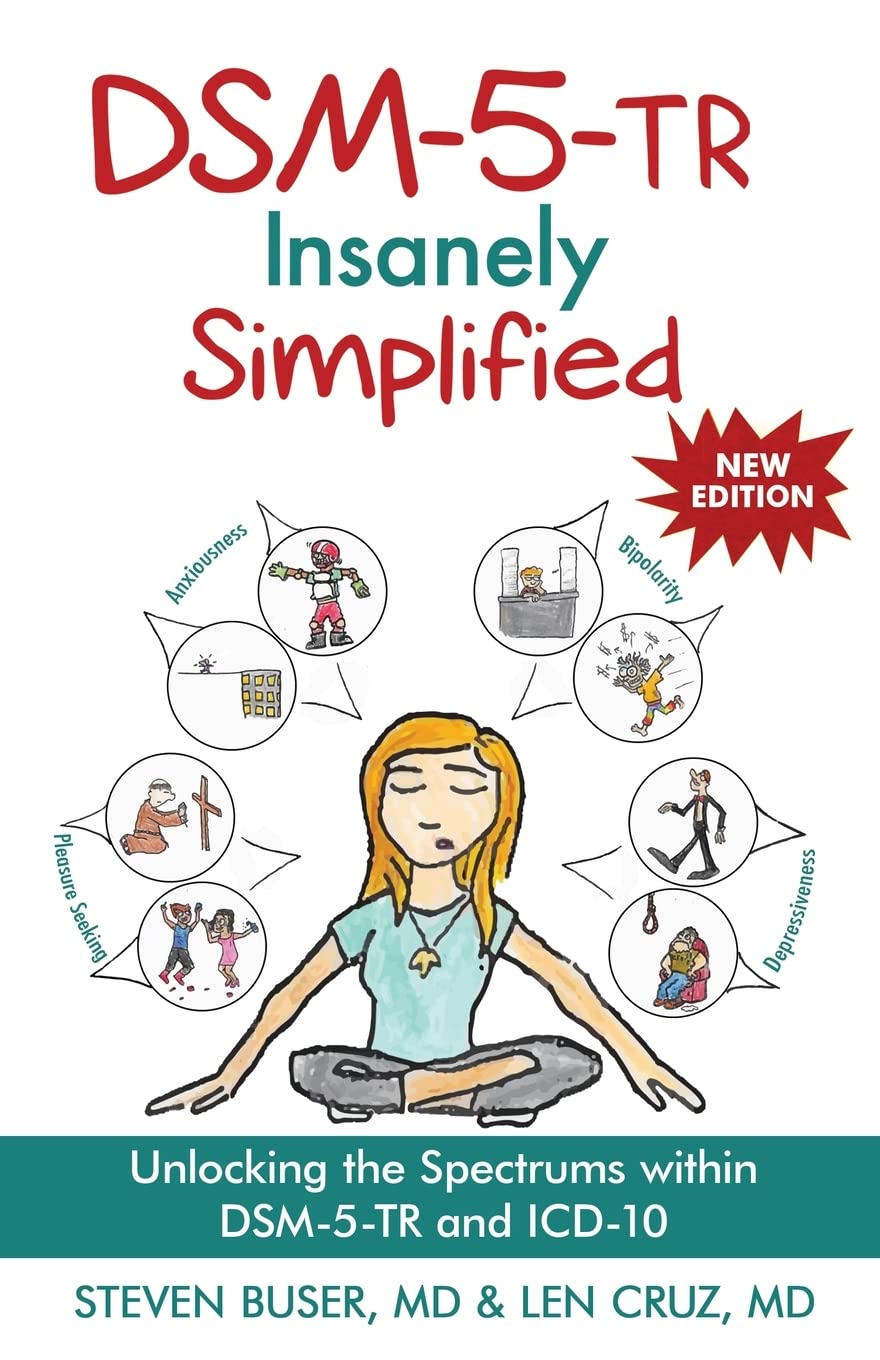
The publication of the Diagnostic and Statistical Manual Version 5 (DSM-5, 2013) and the more recent Diagnostic and Statistical Manual Version 5 - Text Revision edition(DSM-5-TR, 2022), together ushered in a major change to the field of mental health diagnosis. DSM-5-TR Insanely Simplified provides a summary of key concepts of the new diagnostic schema introduced in DSM-5 as well as the updated DSM-5-TR. It utilizes a variety of techniques to help clinicians master the new spectrum approach to diagnosis and its complex criteria. Cartoons, mnemonic devices, and summary tables allow clinicians and students to quickly grasp and retain broad concepts and subtle nuances related to psychiatric diagnosis.
DSM-5-TR Insanely Simplified fosters quick mastery of the most important concepts introduced in DSM-5 and continued in DSM-5-TR, whileoffering anentirely new way of looking at mental health along a continuum. This new approach goes beyond simply "labeling" clients with various diagnoses, but rather places them along spectrums that range from normal to problematic symptoms. Mental health professionals and laypeople will appreciate the synthesis of deep psychology and modern approaches to the diagnosis of mental illness.
Table of Contents
DSM-5-TR Summary Pages
Section Overview
1. Introduction
2. History of the DSM
3. What is new in DSM-5-TR
4. What was new in DSM-5
5. The 8 Primary Psychiatric Spectrums of Mental Illness
Section The 8 Primary Spectrums of Psychiatry
6. The Depression Shallowness vs. Despair
7. The Mania Boring vs. Bipolar
8. The Anxiety Carelessness vs. Anxiousness
9. The Psychosis Visionless vs. Psychotic
10. The Focus Attention Deficit Disorder vs. Obsessive Compulsive Disorders
11. The Substance Abuse Ascetic vs. Addicted
12. The Autism Codependent vs. Autistic
13. The Personality Neurotic vs. Obnoxious
Section The Secondary Areas of Diagnosis
14. The Specialty Areas (Trauma, Neurodevelopmental, Neurocognitive, Behavioral, Dissociative, Somatic, Eating, Elimination, Sleep, Sexual, Gender, Paraphilia)
This book helped my understanding of the DSW specifiers. I was able to grasp the information which was helpful while studying for the LMSW exam. Add this to my study material allowed me t answer the DSM questions with ease.