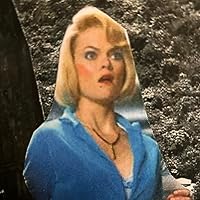
Featuring over 80 interviews with original cast members, creatives, crew and audience members, Out For Blood pieces together the surprising, hilarious and often-moving inside story of Carrie The Musical to discover how this 'horror of a Broadway musical' lived, died and was subsequently resurrected as a mainstream success story.
In 1988, following the success of its production of Les Misérables and in the wake of the commercial success of mega-musicals such as Cats, Phantom of the Opera and Chess, the Royal Shakespeare Company agreed to co-produce a musical based on Stephen King's Carrie, written by the team behind Fame. The result was one of Broadway's most infamous disasters. Plagued by technical problems, on-stage chaos and a critical savaging, Carrie would soon become the by-word for musical theatre flops. But thanks to the efforts of a vocal army of fans and the impact of bootleg trading and emerging online communities, the show reinvented itself as a mainstream success story with thousands of productions worldwide.
Patching together memories, archive material and contemporary reports, Out For Blood dives into the origins and development of this infamous show and examines how a promising entertainment product can swiftly become a byword for disaster, what makes or breaks a Broadway show, and how even the most unlikely of musicals can find its place in the hearts of fans around the world.
Based on the hit 10-part podcast, Out For Blood will delight theatregoers, flop aficionados and 'Friends of Carrie' alike.
This book was as addictive as its subject. I wanted to know everything about the infamous “flop,” and this just injected the full and glorious Carrie lore straight into my musical-theatre-loving veins.
I’ve always been fascinated by the show, partly because I grew up around Stratford-upon-Avon and went to the RSC from an early age, where the musical originally premiered to scathing reviews. And I can vouch that after working with the RSC and in-and-around London’s West End, this 1988 flop is still very much a hot topic. I'm not surprised at ALL that I loved this so much...!
Chris does a sublime job weaving together interviews and meticulous research, charting the show’s journey from the 80's to today. I absolutely devoured this book.
Revival with Linzi Hateley as Margaret White when, please?!
I really, really, really wanted to like this book. It's been on my radar since it was announced, and I checked my email multiple times a day while the library hold was in transit, eager to get started. And though I've been fascinated by the Carrie musical since I was a teen--I engaged in the underground bootleg trades mentioned in the book, back when you'd send strangers cash in the mail and hope they actually sent you something back--but this book was simply a slog to get through for me.
I did find out that it began life as a podcast, and I'm sure the podcast is absolutely engaging and I plan to add it to my list as soon as possible. But in book form, it's tedious to be greeted with block after block of quoted text, page after page, chapter after chapter.
Another issue with the constant blocks of interview quotes is that they sometimes don't provide much context. Sometimes a bit of context comes up in later quotes, sometimes a bit is provided by Adams' text, and sometimes the quotes are just presented as-is and you're left to wonder.
The best parts of the book were the bits where Adams himself wrote about the show, its production history, the bootleg trades, the legacy, etc. There were a lot of elements of the production history I had no idea about, and I was really engaged during these bits of the book where it felt like an actual cultural history. But far too much of the book is taken up with these large quoted recollections, printed in full with blocks of quoted text, and it's simply not fun to read at all.
I'm sure it works wonderfully as a podcast, but as a book, not so much.
That said... I would still like to buy a copy in the future for my collection. I can't resist adding anything *Carrie* to my book collection, I guess!
My housemate texted me a picture of this book while at the queer bookstore on a whim while I was out of town, to which I sent her back a paragraph of bolded text of how badly I needed her to buy me this book.
I'm familiar with Chris Adam's podcast of the same name, and when I heard it was getting adapted into a book I was intrigued but also concerned it would just be a very similar retread of the podcast. I was pleasantly surprised to see it was a much more expanded and in-depth view of the musical, and imo served as a great companion piece to the podcast. It's chock full of information, interviews, anecdotes, and images that help as a visual aid that wasn't possible on the podcast.
My only gripe with the book is that it gets some very basic facts about wrong. For example in page 14 it says that the character of Carrie White was inspired by two of Stephen King's students, when in reality she was inspired by two of his fellow classmates when he was in highschool. And secondly in image 8.1 the caption identifies the statuette in the image as one depicting "Jesus Christ" even though it's very clearly one of the Virgin Mary (as an ex-Catholic, the distinction is important to me). These are small fact flubs in the grand scheme of things, but it does make me a bit concerned about some of the other facts being not wholly accurate, which is a shame, considering how many people Adams interviewed for this book and how much research was done. It just seems like there's some facts tat could have been more thoroughly double- checked. I suppose it goes to show how important it is to be thorough in one's fact checking, and also for readers and the things they read.
Overall though, it was a really fun read. Again, would really recommend it giving it a read even if you've listened through the podcast already, and doubly so if you haven't and are interested about Musical Theatre/Stephen King history.
I'm so glad I read this after finally seeing a production. I'm not sure how it would have hit if I hadn't had the genuine, surprised reaction I did, which was to turn to my mom at intermission and say "oh my God - it's good!". My primary exposure before had been to the "Not Since Carrie" book of flops and a few songs on Spotify (notably none of the Margaret/Carrie ones which would have made me a fan a lot faster).
This is such an interesting history, and Chris Adams has done a remarkable job documenting it, especially considering the lack of a cast album or official recording of the original. There are quotes from so many of the performers and creatives but also from audience members. Occasionally, in the breakdown of the show, there are nods to things overheard on bootlegs, which are very fun.
It's not just the original production, though. There are chapters dedicated to the revisal and small revivals as well, including the immersive one. It's really interesting to read about the changes that were made to the show, especially after reading about the original in such depth.
I think it's admirable that Chris Adams doesn't really place blame in any one corner, though I did draw some conclusions from the writing. I also think it's nice that Adams discusses the blood and the practical challenges of doing that because it's been such a sore spot for some productions.
I do wish there were more quotes from critics regarding the revisal and more recent productions. We get so many of the horrible ones from the 1980s, and they are almost unbelievable, but we don't really get to see new critical opinions. We just generally hear they were more positive or mixed.
All this to say, if you're a fan of Carrie, you need to read this, and you probably already have. Even if you aren't a fan, it might have you reconsidering your opinion. It's fascinating.
Reading this book was a start to finish delight. Like many fans interviewed within it, I cherished a cassette audio bootleg I received in high school 25 years ago and devoured it with with the same devotion as so many of the couple CD cast albums that were common at the time. This book provided so much incredible insight on things I never thought I'd know (like that the recording I knew so well likely came from the soundboard to monitor feed). The visual synopsis of the original production pieced together from existing videos and the memories of audience/cast was an unexpected section to the oral history format that gave so much context to the things I only knew as the sounds of props I couldn't see. It was particularly satisfying to read Linzi Hately's evolution of how she looks back on the show itself, her time within in, and it's legacy - also to find out again in her recollections that Betty Buckley is the consummate class act professional we perceive her to be. If you're a theater fan and have even the most passing awareness of this show or interest in how something could start from such love and intention, seemingly go wrong, but endure beyond what many shows with hit runs could ever hope you will enjoy this book immensely.
This book was so fun! Part oral history, part narrative, it is so much more than an account of one of the most legendary Broadway "flops." You get a front row seat to the complexities of mounting a new show, differences between British and American theater, how creative functions work together (or don't). You get the lavishness of 80s theater and chasing the success of West End imports. You get a taste of what fandom was like before the internet - and after. You get how something can transition from poor taste to high camp through the passage of time. Laughed out loud several times when reading it and thoroughly enjoyed every moment.
An excellent read, incorporating interviews with most of the main players in the story. I expected a schadenfreude-style delve into what went wrong with one of Broadway's most famous flops, but got much more than that - an illuminating insight into the process of how theatre is made, and a real feel for the passion of the people involved (especially the cast members at the starts of their careers) and just how high the emotional stakes are in this industry.
I saw the original Broadway production, and unlike most of the witnesses quoted in this book, I truly hated the show. This unmitigated disaster has over time attained mythic status, and this excellent book covers the show's history with rich attention to detail and genuine sensitivity. Anyone interested in learning about Carrie will relish this. Highly recommended!
i’m a forever fan of carrie the musical, sue me. carrie is one of my favorite horror stories of all time period, so obviously i bought this as soon as i saw it. reading the oral history of this show through the people who experienced it firsthand in every area you possibly could was FASCINATING. i loved this.
3.5 rounded up. Always a fascinating genre, but didn’t hold my attention the way other books in the genre have in the past. Maybe that’s unfair. Also to be clear I am a die hard Carrie-head