

What do you think?

Hayat Romanlardan Daha Tuhaf #2
Farewell Fountain Street
Ziya Adlan kırk yıldır akademisyenlik yaptığı Cenevre’den dönüp, Ayrılık Çeşmesi Sokağı’ndaki bakımsız konağına sığınır. Osmanlı hanedanına mensup bu gizemli adam hastadır. Artvin hayatta en büyük tutkusu saksafon çalmak olan bir doktora öğrencisidir. Tanımadığı bir adam sol elinin iki parmağını kestirir ve bu olay onun hayatına damgasını vurur. Artvin’in yeni görevi Ziya Bey’in bakıcılığıdır.
Selçuk Altun romanlarının bildiğimiz muzip ve gizemli atmosferine kör bir Osmanlı çeşmesinin tanıklığında davet ediliyoruz. Romanın iki ana karakterini bekleyen büyük sırra doğru yaklaşırken, ustaca aktarılan ilginç yan hikâyelerle pek çok tarihi olaya, kişiye, sanat yapıtına kısacası hayata dair bilgilerle de donanıyoruz.
Selçuk Altun romanlarının bildiğimiz muzip ve gizemli atmosferine kör bir Osmanlı çeşmesinin tanıklığında davet ediliyoruz. Romanın iki ana karakterini bekleyen büyük sırra doğru yaklaşırken, ustaca aktarılan ilginç yan hikâyelerle pek çok tarihi olaya, kişiye, sanat yapıtına kısacası hayata dair bilgilerle de donanıyoruz.
224 pages, Paperback
First published June 3, 2020
About the author
Selçuk Altun
18 books71 followersSelçuk Altun (born 1950) is a Turkish writer, publisher and retired banking executive.
Born in Artvin, Turkey in 1950, he graduated from the Management Department of Boğaziçi University. He began work in the finance sector in 1974 and was chairman of Yapi Kredi Bank and executive board director of the YKY (Yapı Kredi Publications), where he amassed a personal library of 9,000 volumes and published works by Louise Glück and John Ashbery, before he retired in 2004 to pursue his full timewriting career.
“My goal was to write a book by the age of 50,” he says. “Before that, I knew I needed to read, so I read some 4,000 books before I sat down to write. That, more than anything, gave me the confidence I needed.” His first novel Yalnızlık Gittiğin Yoldan Gelir (Loneliness Comes from the Road You Go Down) was published in 2001 and has been subsequently followed by four further novels, a book of essays and a regular monthly column titled Kitap İçin (For the Love of Books) in the Cumhuriyet.
“I regard myself as a ‘person who writes’ rather than a ‘writer,’”, “I do not make a living on what I receive from my books. I transfer all royalties from my books to a scholarship fund I've founded at the university I graduated from. It provides scholarships to successful university students who study literature.” “In any case, whenever I want to write, I feel the urge to read first.”
“I believe that in both Turkish and world literature, bibliophilic protagonists and narrators in particular do not appear as much as they should,” states the self confessed bibliophile, who maintains he reads far more than he writes, “Besides, these characters do not like showing up in trashy novels that sweep the book market. Yet I believe the elite group called ‘literary readers’ do embrace them.” “In my novels, the setting is as important as the central characters. For this reason, I go on special voyages. These voyages nurture me; each time, I set on the road wondering how that particular voyage will nurture me.”
In order to bring his books to an international audience, the author himself paid for the English translation of his fourth novel Songs My Mother Never Taught Me. This translation, by Ruth Christie and Selçuk Berilgen, was published by Telegram Books in 2008 and sold 3,000 copies in the UK, but while the English publisher opted to follow it with Many and Many a Year Ago in 2009 and various German, Swiss, Spanish and Portuguese houses have expressed an interested in buying rights, “the global economic crisis seems to have stopped the process,” and, “Three foreign publishing houses acquired the rights to publish Songs My Mother Never Taught Me, but that was it!”
“There are many reasons for the limited number of Turkish authors and poets translated into English,” Altun stated in an interview with The Guardian, “Sadly Nobel prize-winner Orhan Pamuk's success hasn't yet increased Anglo-American interest in Turkish authors and poets,” before going on to list works by Feyyaz Kayacan Fergar, Oktay Rifat, Yaşar Kemal, Sait Faik, Bilge Karasu, Ahmet Hamdi Tanpınar, Nazım Hikmet as well as Pamuk among his top 10 Turkish books.
Born in Artvin, Turkey in 1950, he graduated from the Management Department of Boğaziçi University. He began work in the finance sector in 1974 and was chairman of Yapi Kredi Bank and executive board director of the YKY (Yapı Kredi Publications), where he amassed a personal library of 9,000 volumes and published works by Louise Glück and John Ashbery, before he retired in 2004 to pursue his full timewriting career.
“My goal was to write a book by the age of 50,” he says. “Before that, I knew I needed to read, so I read some 4,000 books before I sat down to write. That, more than anything, gave me the confidence I needed.” His first novel Yalnızlık Gittiğin Yoldan Gelir (Loneliness Comes from the Road You Go Down) was published in 2001 and has been subsequently followed by four further novels, a book of essays and a regular monthly column titled Kitap İçin (For the Love of Books) in the Cumhuriyet.
“I regard myself as a ‘person who writes’ rather than a ‘writer,’”, “I do not make a living on what I receive from my books. I transfer all royalties from my books to a scholarship fund I've founded at the university I graduated from. It provides scholarships to successful university students who study literature.” “In any case, whenever I want to write, I feel the urge to read first.”
“I believe that in both Turkish and world literature, bibliophilic protagonists and narrators in particular do not appear as much as they should,” states the self confessed bibliophile, who maintains he reads far more than he writes, “Besides, these characters do not like showing up in trashy novels that sweep the book market. Yet I believe the elite group called ‘literary readers’ do embrace them.” “In my novels, the setting is as important as the central characters. For this reason, I go on special voyages. These voyages nurture me; each time, I set on the road wondering how that particular voyage will nurture me.”
In order to bring his books to an international audience, the author himself paid for the English translation of his fourth novel Songs My Mother Never Taught Me. This translation, by Ruth Christie and Selçuk Berilgen, was published by Telegram Books in 2008 and sold 3,000 copies in the UK, but while the English publisher opted to follow it with Many and Many a Year Ago in 2009 and various German, Swiss, Spanish and Portuguese houses have expressed an interested in buying rights, “the global economic crisis seems to have stopped the process,” and, “Three foreign publishing houses acquired the rights to publish Songs My Mother Never Taught Me, but that was it!”
“There are many reasons for the limited number of Turkish authors and poets translated into English,” Altun stated in an interview with The Guardian, “Sadly Nobel prize-winner Orhan Pamuk's success hasn't yet increased Anglo-American interest in Turkish authors and poets,” before going on to list works by Feyyaz Kayacan Fergar, Oktay Rifat, Yaşar Kemal, Sait Faik, Bilge Karasu, Ahmet Hamdi Tanpınar, Nazım Hikmet as well as Pamuk among his top 10 Turkish books.
Ratings & Reviews
Friends & Following
Create a free account to discover what your friends think of this book!
Community Reviews
Displaying 1 - 30 of 77 reviews

July 10, 2020
Her seferinde "Artık yeter" deyip yeni kitabı çıktığında dayanamayıp okuduğum yazar Selçuk Altun. Aslında tüm kitapların konuları birbirinin aynı neredeyse, aynı gizemler, üst düzey aile ya da beklenmedik bir şekilde gelen servet, fakir kız çocukları, estetler, bibliyofiller ve kahramanlardaki bir şekilde kendini hissettiren kibir. Ama sizi okumaya zorlayan bir şey var, tüm kitaplarının içinde bir sürü başka kitap var. Ali Baba'nın mağarası gibi, bir sürü şey keşfediyorsunuz. O nedenle bir kitap tutkunuysanız eliniz ister istemez gidiyor, bu defaki takıntılı yazarımız Samuel Beckett. Konu diğerlerinin çok benzeri ama kitap bence diğerlerinden daha zayıf. Selçuk Altun okuruysanız, düşünceniz benzer olacaktır, ilk kez okuyacaksanız bununla başlamayınb İlk kitap, en güzel kitap: "Yalnızlık Gittiğin Yoldan Gelir".
Okumak isterseniz, bir vakitler dahil olduğum bir kitap blogunda Selçuk Altun için yazdığım blog yazısı:
https://bibliyomanyaklar.wordpress.co...
Okumak isterseniz, bir vakitler dahil olduğum bir kitap blogunda Selçuk Altun için yazdığım blog yazısı:
https://bibliyomanyaklar.wordpress.co...

October 6, 2020
Kırk yıldır akademisyenlik yaptığı Cenevre’den dönüp bakımsız konağa sığınan ve hastalığından dolayı bakıma muhtaç olan bir adamla, hayatta en büyük tutkusu saksafon çalmak olan ve bir olay yüzünden sol elinin iki parmağını kaybeden bir çocuğun sırlar dolu hikâyesinin anlatıldığı kitap.
Konu Selçuk Altun olunca tabi ki bir solukta okudum. İki karakterden ziyade romanda bilmediğimiz başka bir karakter de var; Osmanlı Padişahlarından II. Mahmut. O dönem yaptıklarıyla veya yapamadıklarıyla ve iç pişmanlıklarıyla bütünüyle kitaba girmiş. Kitabın başındaki Cevat Şakir hikâyesiyle de birleşince mükemmel bir kurgu olmuş. Bir de romanın ortalarda görünmeyen başka bir kahramanı daha var; Samuel Beckett. Bütün bunların bir arada nasıl kurgulandığını merak ediyorsanız sizin için harika bir kitap.
Hele o final yok mu?
‘Siz beni bulun, ben ararsam herkes anlar.’
Konu Selçuk Altun olunca tabi ki bir solukta okudum. İki karakterden ziyade romanda bilmediğimiz başka bir karakter de var; Osmanlı Padişahlarından II. Mahmut. O dönem yaptıklarıyla veya yapamadıklarıyla ve iç pişmanlıklarıyla bütünüyle kitaba girmiş. Kitabın başındaki Cevat Şakir hikâyesiyle de birleşince mükemmel bir kurgu olmuş. Bir de romanın ortalarda görünmeyen başka bir kahramanı daha var; Samuel Beckett. Bütün bunların bir arada nasıl kurgulandığını merak ediyorsanız sizin için harika bir kitap.
Hele o final yok mu?
‘Siz beni bulun, ben ararsam herkes anlar.’

July 22, 2020
II.Mahmut ekseninde, bir yandan İstanbul ve Avrupa kültürlerinin, diğer yandan incelikli zevkler ve sokağın harmanlaması ile seyreden, sofistike bir zihnin ustaca kurguladığı bir eser, severek okuyup öğrendim.
***
"Zamanımızda anlam ifade edecek tek eser, diğer kitaplardan alıntı ve yankıların bir kolajıdır (W Benjamin)"
"...caddedeki dinginlik huzur veriyordu ve vitrinlerdeki ürünlerin günceli takip etmemesi ne onurlu bir davranıştı."
"Hüzün ki en çok yakışandır bize
Belki de en çok anladığımız (H Yavuz)."
"Bir insanın anavatanı çocukluğudur (Epiktetos)."
"Güne başlarken herkesin 24 saati vardır."
"Gölge yalnız ışıkta yaşar (Jules Ranard)."
"Bir nehrin kenarında sabırla oturursan, önünden düşmanının cesedinin de geçtiğini görürsün (Çin atasözü)."
"Her şey bir symbiosis'ten ibaret (SBeckett)
[God-(idi)ot]"
"Doğruyu kimin söylediği de önemlidir."
"Bukalemun gibi sürekli renk değiştiren İstiklâl Caddesi..."
"Wittgenstein'a göre felsefe, insanların 2500 yıldır birbirlerini anlayamaması sonucu doğmuş, Hawking'e göreyse o artık ölmüştü. Bence felsefenin olanakları internet olgusunda konsolide edilmiş, yapay zekânın emrine girmek için gün sayıyor."
"Dünyanın en zor işi kişinin kendini bilmesidir (Thales)."
*
"II.MAHMUT performansı açısından Osmanlı imparatorları arasında ilk beşe girer, tarih kitaplarının onu unutması affedilemez.
...yeniliklere açıktı, Fransızlara sempatisi vardı; devlet yapısını reorganize etti, eğitime önem verdi, modern okullar açtı, ilköğretimi parasız ve zorunlu kıldı, kadın haklarına saygıyı başlattı, ilk resmi gazeteyi çıkarttı, posta idaresini kurdu, pasaport uygulamasını başlattı, Yeniçerileri yok ederken tarikatların etkisini kırdı, devlet memurlarına kavuk, şarık, şalvar ve çarığı yasaklarken yerine fes, pantolon ve ceket giyilecekti, personel sistemine liyakat unsurunu soktu, sabahları kendi traş olurdu, yemek masada yenecekti (bunlardan dolayı kendisine "Gavur Padişah" dediler), nüfus sayımını başlattı, sanata, sosyal kurumlara ve adalete önem verdi, şair, hattat ve bestekârdı, ney ve tambur çalardı, alçakgönüllüydü, ...yaşama sevinci dolu, katıksız bir reformcuydu."
"Osmanlı'nın sonunu hizipçi paşalar getirmişti. Hanedan parasız, pulsuz yurt dışına gönderilirken, paşa sınıfı silah tacirlerinden rüşvet almış, asker tayınından çalmış, daha sürgün başlamadan sarayı talana girişmişlerdi."
"II.Mahmut ağabeyi IV.Mustafa'yı boğdurmuş, diğer padişahlar aileden 61 kişinin ölümüne neden olmuş, 41 veziriazam kellesinden olmuştur."
***
"Zamanımızda anlam ifade edecek tek eser, diğer kitaplardan alıntı ve yankıların bir kolajıdır (W Benjamin)"
"...caddedeki dinginlik huzur veriyordu ve vitrinlerdeki ürünlerin günceli takip etmemesi ne onurlu bir davranıştı."
"Hüzün ki en çok yakışandır bize
Belki de en çok anladığımız (H Yavuz)."
"Bir insanın anavatanı çocukluğudur (Epiktetos)."
"Güne başlarken herkesin 24 saati vardır."
"Gölge yalnız ışıkta yaşar (Jules Ranard)."
"Bir nehrin kenarında sabırla oturursan, önünden düşmanının cesedinin de geçtiğini görürsün (Çin atasözü)."
"Her şey bir symbiosis'ten ibaret (SBeckett)
[God-(idi)ot]"
"Doğruyu kimin söylediği de önemlidir."
"Bukalemun gibi sürekli renk değiştiren İstiklâl Caddesi..."
"Wittgenstein'a göre felsefe, insanların 2500 yıldır birbirlerini anlayamaması sonucu doğmuş, Hawking'e göreyse o artık ölmüştü. Bence felsefenin olanakları internet olgusunda konsolide edilmiş, yapay zekânın emrine girmek için gün sayıyor."
"Dünyanın en zor işi kişinin kendini bilmesidir (Thales)."
*
"II.MAHMUT performansı açısından Osmanlı imparatorları arasında ilk beşe girer, tarih kitaplarının onu unutması affedilemez.
...yeniliklere açıktı, Fransızlara sempatisi vardı; devlet yapısını reorganize etti, eğitime önem verdi, modern okullar açtı, ilköğretimi parasız ve zorunlu kıldı, kadın haklarına saygıyı başlattı, ilk resmi gazeteyi çıkarttı, posta idaresini kurdu, pasaport uygulamasını başlattı, Yeniçerileri yok ederken tarikatların etkisini kırdı, devlet memurlarına kavuk, şarık, şalvar ve çarığı yasaklarken yerine fes, pantolon ve ceket giyilecekti, personel sistemine liyakat unsurunu soktu, sabahları kendi traş olurdu, yemek masada yenecekti (bunlardan dolayı kendisine "Gavur Padişah" dediler), nüfus sayımını başlattı, sanata, sosyal kurumlara ve adalete önem verdi, şair, hattat ve bestekârdı, ney ve tambur çalardı, alçakgönüllüydü, ...yaşama sevinci dolu, katıksız bir reformcuydu."
"Osmanlı'nın sonunu hizipçi paşalar getirmişti. Hanedan parasız, pulsuz yurt dışına gönderilirken, paşa sınıfı silah tacirlerinden rüşvet almış, asker tayınından çalmış, daha sürgün başlamadan sarayı talana girişmişlerdi."
"II.Mahmut ağabeyi IV.Mustafa'yı boğdurmuş, diğer padişahlar aileden 61 kişinin ölümüne neden olmuş, 41 veziriazam kellesinden olmuştur."

July 11, 2020
Selçuk Altun’un kitaplarını ayrı severim, konuları birbirine benzese de her seferinde kendimi çılgın bir dünyanın içinde bulurum ve bu beni tarifsiz mutlu eder. Tarihi kişiler, onların uzak yakın akrabaları, sanatçılar, düşünürler, estetler, bibliyofiller, farklı ülkeler, şehirler, sanat eserleri ve kitaplar satırların arasında harmanlanır; her seferinde bana bir sürü başka kitabın, yeni bilgilerin, farklı perspektiflerin kapısını açan notlar almış olurum.
“İyi bir insan olmaya çalışmış, doğru olduğunu düşündüklerimi yapmıştım. Evet, yeryüzü nöbetimi hakkıyla tamamlamış sayılırdım.”
Ayrılık Çeşmesi Sokağı’nda ise Osmanlı hanedanına mensup gizemli bir akademisyenle hayatta en büyük tutkusu saksafon çalmak olan bir doktora öğrencinin hikayesi anlatılıyor. Bu hikayenin içinden kimler ve hangi şehirler geçmiyor ki II. Mahmut, Samuel Beckett, Jacques Derrida, Epiktetos, İstanbul, Cenevre, Londra... Bu isimler Selçuk Altun’un zeki ve muzip kalemi ile birleşince ortaya keyifli, sürükleyici ve meraklı bir hikaye çıkmış... Fırsat bulursanız okuyun derim...
“İyi bir insan olmaya çalışmış, doğru olduğunu düşündüklerimi yapmıştım. Evet, yeryüzü nöbetimi hakkıyla tamamlamış sayılırdım.”
Ayrılık Çeşmesi Sokağı’nda ise Osmanlı hanedanına mensup gizemli bir akademisyenle hayatta en büyük tutkusu saksafon çalmak olan bir doktora öğrencinin hikayesi anlatılıyor. Bu hikayenin içinden kimler ve hangi şehirler geçmiyor ki II. Mahmut, Samuel Beckett, Jacques Derrida, Epiktetos, İstanbul, Cenevre, Londra... Bu isimler Selçuk Altun’un zeki ve muzip kalemi ile birleşince ortaya keyifli, sürükleyici ve meraklı bir hikaye çıkmış... Fırsat bulursanız okuyun derim...

July 1, 2020
İki parmağını kaybetmiş bir saksafon virtüözü ile Sultan 2. Mahmut'un soyundan gelen bir felsefe profesörünün hayatı, hayatta kaybettikleri ve kazandıkları vesilesiyle bir araya gelir. Sonrası, Beckett'ın da başköşede yer edindiği, edebiyatın felsefeye, müziğin polisiyeye, Cenevre'nin İstanbul'a, tarihin makus talihe göz kırptığı nefis bir roman olarak akmaya başlar.
Selçuk Altun zaten beğenerek, hayranlık duyarak, kıskanarak okuduğum bir yazar ama bu romanı, tesadüfen tam da Osmanlı'nın en reformist padişahı 2. Mahmut'un ölüm yıldönümü olan bugün okumuş olmam çok ikircikli bir durum değil de nedir sevgili okur yazar kitle?! Okuyun, seversiniz.
Selçuk Altun zaten beğenerek, hayranlık duyarak, kıskanarak okuduğum bir yazar ama bu romanı, tesadüfen tam da Osmanlı'nın en reformist padişahı 2. Mahmut'un ölüm yıldönümü olan bugün okumuş olmam çok ikircikli bir durum değil de nedir sevgili okur yazar kitle?! Okuyun, seversiniz.
December 19, 2021
Çok fazla söylemi, bilgiyi nasıl söylediğin bir işi orijinal kılan husustur okuruna göre, emek kutsaldır ama yazın tarzı açısından çok keyif alamadım. Güzel anekdotlar okumak okumamı sürdürülebilir kıldı.
February 8, 2024
3.5 stars. Ziya Bey, an aristocrat and professor, has six months to live. He employs Artvin to keep him company and help him sort out various matters. The book explores both men’s stories as they spend time together; the ups and downs, hopes and lost dreams, revenge served to others and that wish they would want to carry out.
This was an unusual book in that it contrasted the dark subject of revenge with very gentle writing. This made for some interesting reading and the slow pace of the plot and narrative style perhaps reflected revenge itself in that there can be a lot of build up and ruminating before it is carried out cold and calculating. I disliked both main characters but I was drawn into the story, wanting to know what would happen in the end. Sadly the final few pages were a little too predictable in their twist but did clear everything up well.
This was an unusual book in that it contrasted the dark subject of revenge with very gentle writing. This made for some interesting reading and the slow pace of the plot and narrative style perhaps reflected revenge itself in that there can be a lot of build up and ruminating before it is carried out cold and calculating. I disliked both main characters but I was drawn into the story, wanting to know what would happen in the end. Sadly the final few pages were a little too predictable in their twist but did clear everything up well.
August 10, 2020
Selçuk bey' in üstün entelektüel, bir şekilde miras vs yoluyla para ve çalışma derdi olmayan, bir şekilde kökleri gizemli veya bilinir şekilde Osmanlı' ya dayanan aynı karakteri pişirip pişirip tekrar tekrar yazmaktan başka bir kerameti olmadığına artık inandığım için, bu okuduğum son kitabı olacak. Hızlı hızlı ve sürekli, kendini tanıtmak halinde olan 2 boyutlu karakterlerden oluşan, klişe ötesi sonu ve neden bu kadar dağıtıp sonra toparlayamadığını anlayamadığım zayıf ve basit bir roman olmuş yine. Yazım hayatında başarılar.
February 18, 2024
Started off slow for me and didn’t pick up until the last two chapters- in my opinion.
Loved the ending (I had a feeling that was the case), a twist of events.
Not something I’d recommend or really remember, as for me nothing really stood out tremendously.
I guess the take away for me, is things are never what they seem.
Loved the ending (I had a feeling that was the case), a twist of events.
Not something I’d recommend or really remember, as for me nothing really stood out tremendously.
I guess the take away for me, is things are never what they seem.

July 9, 2020
Özlediğim “Kitap İçin” leri roman halinde okudum. Geri kalanı klasik Selçuk Altun

December 27, 2020
Günlük yaşamında Ayrılık Çeşmesi’nde özellikle inip, mezarlık boyunca aynı adlı sokaktan Kadıköy’e yürüyen bana bu isimli bir kitabı okumamak yakışmazdı diye düşünüyorum. Okudum. Üstelik zaten evde otururken yasaklar da gelince vakti böyle öldürmek pek de keyifli oldu. Önünden her geçişimde artık aklıma mutlaka gelecek bir hikayeye de sahip olmuş oldum.
Gezdim gördüm, yedim içtim, sevdim, dinledim, okudum yazdım sizinle de bir kolajla - romanla- paylaşıyorum demiş Altun. Birbirini tanımayan iki insan yanyana geldi mi ‘nerelisin?’ sorusunu es geçmeyiz ya yazar da doğduğu yerden başlayarak anlatmış. Seceresini de unutmadan. Evet çoğunlukla böyle de yazıyor. Kitap bitince kim kimdir, nerelidir pek aklımda kalmasa da bahsi geçen müzikleri oturdum bir güzel dinledim. Şavşatlı Nedret Ural’dan Şavşat Türküleri albümünü dinleyerek de günüme devam edeceğim:)
Gezdim gördüm, yedim içtim, sevdim, dinledim, okudum yazdım sizinle de bir kolajla - romanla- paylaşıyorum demiş Altun. Birbirini tanımayan iki insan yanyana geldi mi ‘nerelisin?’ sorusunu es geçmeyiz ya yazar da doğduğu yerden başlayarak anlatmış. Seceresini de unutmadan. Evet çoğunlukla böyle de yazıyor. Kitap bitince kim kimdir, nerelidir pek aklımda kalmasa da bahsi geçen müzikleri oturdum bir güzel dinledim. Şavşatlı Nedret Ural’dan Şavşat Türküleri albümünü dinleyerek de günüme devam edeceğim:)

January 29, 2024
This book just wasn’t for me. It doesn’t necessarily make it a bad book, just that I really didn’t like it.
It’s not a thriller, even though it’s pitched as one. It is 90% backstory, told in a rambling way with lots of tangents, and 10% random violence with a twist at the end that I didn’t see coming and rescued this book from a 1 star review from me.
I didn’t like the writing style. It read as a dry history book for the most part. Ziya Bey is conveying his life story to his newly employed & much younger companion, Artvin. He only has 6 months to live so employs Artvin to read his favourite books (by Beckett) to him & accompany him to dinners, theatre, etc.
Ziya Bey is very proud of his Ottoman heritage, being the grandson of a Sultan. In fact, he’s very proud about a lot of things to the point of being a bit pompous and a show off. He reels off his history like a series of facts with no emotion. There’s no time really spent on key events, with equal time spent on some quite mundane details. There’s time spent relaying conversations, he said, she said, style. There’s time spent giving the history & family trees of other people that he’s met along the way. It’s not always entirely coherent, going off at tangents regularly. I think the aim was to make him sound philosophical, as that was his field of interest, but it just came across as a rambling old man.
The chapters told from Artvin’s point of view were better and had a little more clarity. They still lacked emotion and the style was still the same. His history was told quickly in the first two chapters and then brought to more recent/present day in the final two chapters, charting events after he left the employ of Ziya Bey.
The reveal of how the characters were linked did surprise me and please me, but overall, I didn't enjoy following these unlikeable men through their privileged lives.
I wouldn’t recommend it.
It’s not a thriller, even though it’s pitched as one. It is 90% backstory, told in a rambling way with lots of tangents, and 10% random violence with a twist at the end that I didn’t see coming and rescued this book from a 1 star review from me.
I didn’t like the writing style. It read as a dry history book for the most part. Ziya Bey is conveying his life story to his newly employed & much younger companion, Artvin. He only has 6 months to live so employs Artvin to read his favourite books (by Beckett) to him & accompany him to dinners, theatre, etc.
Ziya Bey is very proud of his Ottoman heritage, being the grandson of a Sultan. In fact, he’s very proud about a lot of things to the point of being a bit pompous and a show off. He reels off his history like a series of facts with no emotion. There’s no time really spent on key events, with equal time spent on some quite mundane details. There’s time spent relaying conversations, he said, she said, style. There’s time spent giving the history & family trees of other people that he’s met along the way. It’s not always entirely coherent, going off at tangents regularly. I think the aim was to make him sound philosophical, as that was his field of interest, but it just came across as a rambling old man.
The chapters told from Artvin’s point of view were better and had a little more clarity. They still lacked emotion and the style was still the same. His history was told quickly in the first two chapters and then brought to more recent/present day in the final two chapters, charting events after he left the employ of Ziya Bey.
The reveal of how the characters were linked did surprise me and please me, but overall, I didn't enjoy following these unlikeable men through their privileged lives.
I wouldn’t recommend it.
This entire review has been hidden because of spoilers.
Read
December 3, 2020Roman okumak yerine daha bilgi odaklı incelemeler ya da tarihsel düşünce anlatıları sevdiğimden zaman zaman sakinleşmek ve kafamı boşaltmak adına roman okuma ihtiyacı duymuyor değilim.. İşte bu anların en sevdiğim yazarı Selçuk Altun. Benimle aynı zaman diliminde yaşayan ve sıkı bir entelektüel olduğunu kabul ettiğim yazarın kitaplarında anlattığı karakterleri, yaşamlarını, düşünce yapılarını ve tüm bunların arasına serpilmiş "Selçuk Altun'un bizzat kendisine ait kültürel bilgi kırıntılarına" bayılıyorum... Ayrılık Çeşmesi Sokağı da yine daha önceki okumalarımı destekler nitelikte keyifli bir kurguydu. Çoğu zaman, gidiş yolundan karşıma çıkacakları önceden sezmiş olsam da merakla, ilgiyle ve bir çırpıda okudum kendisini.. II.Mahmut'u ıskalamış bir dünyanın parçası olmadığımı bilmek de iyi geliyor şu an ;) Nitelikli roman peşinde olanlara Selçuk Altun dünyasını öneririm.. ;)

August 12, 2020
Kitapta acayip bir bilgi yığını var, kafaya süperşarj etmeye çalışıyor. Baya da şarkılara atıf var. Bunlardan en güzellerinden bir tanesi Branford Marsalis'ten The Ruby and The Pearl bu şarkı aslında Nat King Cole'un eski bir şarkısı.
https://www.youtube.com/watch?v=4ZHOo...
Bir de kahramanımızı sax çalmaya iten Candy Dulfer - Lily was here var. Bu da 90 ların ilk yarısında meşhur olmuş enstrümantal bir şarkı. Ha evet hatırlıyorum diyip adı bilinmeyenlerden. Ben de o dönemde bunu dinlemiştim ama saksofon değil gitarına merak salmıştım.
https://www.youtube.com/watch?v=3SfSQ...
Bütün bunlar ne alaka onu bilmiyorum sadece not etmek istedim.
https://www.youtube.com/watch?v=4ZHOo...
Bir de kahramanımızı sax çalmaya iten Candy Dulfer - Lily was here var. Bu da 90 ların ilk yarısında meşhur olmuş enstrümantal bir şarkı. Ha evet hatırlıyorum diyip adı bilinmeyenlerden. Ben de o dönemde bunu dinlemiştim ama saksofon değil gitarına merak salmıştım.
https://www.youtube.com/watch?v=3SfSQ...
Bütün bunlar ne alaka onu bilmiyorum sadece not etmek istedim.
January 30, 2024
A journey of self discovery. Beautifully written and translated. One not to be rushed

October 16, 2025
I was surprised to see so many negative reviews of this book, because I found it completely absorbing. Then I realised I probably relate to it in a particular way. Part of it comes from recognising the Turkish culture and nuances that shape the characters, and part from my experience of living abroad among Europe’s elites, surrounded by travel, literature, and philosophy, which I studied myself.
What impressed me most was the depth of literary and philosophical references. I later learned that the author had read thousands of books before beginning to write, and it shows. The allusions are dense at times, but they feel right for the thoughtful and intellectual character of Ziya Adlan. One line stayed with me: “I read Montano’s Malady. In the novel, the overrated critic Walter Benjamin declared in an aphorism, ‘The only meaningful work in our time is a collage of quotations and echoes from other books.’” That idea could easily describe this novel, which feels like a living collage of cultural and philosophical echoes.
I also loved the moments when the story becomes self-aware and the author steps into the book:
“I was also chewing gum and humming Van Morrison’s ‘Days Like This’ to stay calm. I focused on the narrow building right across the way with its main entrance door outlined by tiles that had been made to look like book covers. When I had asked about it earlier, a local grocery store owner said it belonged to the Aziz Nesin Foundation. Noticing just then a dim light on the first floor, I imagined, sitting inside it, a writer scribbling in a lined notebook, in pencil, a novel with the title Farewell Fountain Street. The protagonist was the philosopher Ziya Adlan, but the writer was unable to come up with a suitable role in the story for Artvin Taner, who, after losing two of his fingers, lacked even the ability to make jokes with a waiter.”
It made me wonder whether the resemblance between the names Adlan and Altun was intentional, as if the author was quietly playing with the boundary between fiction and self. As he writes elsewhere, “I presented a proposal to the New Yorkers: we would tell our life stories, blending them with fiction.”
Although it’s often described as a thriller, I think that label does the book a disservice. To me, it is about self-discovery: “I wanted to ask Ziya Bey what he had done with his notebook – I wanted to find it and add my own aphorisms. I remembered a quote ascribed to Thales of Miletus 2,500 years ago, ‘The most difficult thing in life is to know yourself.’”
This quiet reflection captures the true essence of the book. It is less about suspense than about understanding oneself and one’s place in the world. I don’t think I have ever felt such kinship with another Turkish character in literature. I already want to reread it, noting every reference and hidden thread, to follow the literary path of this remarkable work.
Note: close to the end of the novel, I partook in a protest in Brussels involving the Turkish community abroad when I noted a Frenchman watching the protest, holding a book of Proust. He approached me and asked what I was reading. In the end, we agreed to swap our books and I had to order myself an entirely new copy as I was only 60 pages away from the end.
My only regret was to not read it in the original Turkish as the translation can be a bit awkward at times. With my newly ordered copy, I hope to redeem this mistake.
What impressed me most was the depth of literary and philosophical references. I later learned that the author had read thousands of books before beginning to write, and it shows. The allusions are dense at times, but they feel right for the thoughtful and intellectual character of Ziya Adlan. One line stayed with me: “I read Montano’s Malady. In the novel, the overrated critic Walter Benjamin declared in an aphorism, ‘The only meaningful work in our time is a collage of quotations and echoes from other books.’” That idea could easily describe this novel, which feels like a living collage of cultural and philosophical echoes.
I also loved the moments when the story becomes self-aware and the author steps into the book:
“I was also chewing gum and humming Van Morrison’s ‘Days Like This’ to stay calm. I focused on the narrow building right across the way with its main entrance door outlined by tiles that had been made to look like book covers. When I had asked about it earlier, a local grocery store owner said it belonged to the Aziz Nesin Foundation. Noticing just then a dim light on the first floor, I imagined, sitting inside it, a writer scribbling in a lined notebook, in pencil, a novel with the title Farewell Fountain Street. The protagonist was the philosopher Ziya Adlan, but the writer was unable to come up with a suitable role in the story for Artvin Taner, who, after losing two of his fingers, lacked even the ability to make jokes with a waiter.”
It made me wonder whether the resemblance between the names Adlan and Altun was intentional, as if the author was quietly playing with the boundary between fiction and self. As he writes elsewhere, “I presented a proposal to the New Yorkers: we would tell our life stories, blending them with fiction.”
Although it’s often described as a thriller, I think that label does the book a disservice. To me, it is about self-discovery: “I wanted to ask Ziya Bey what he had done with his notebook – I wanted to find it and add my own aphorisms. I remembered a quote ascribed to Thales of Miletus 2,500 years ago, ‘The most difficult thing in life is to know yourself.’”
This quiet reflection captures the true essence of the book. It is less about suspense than about understanding oneself and one’s place in the world. I don’t think I have ever felt such kinship with another Turkish character in literature. I already want to reread it, noting every reference and hidden thread, to follow the literary path of this remarkable work.
Note: close to the end of the novel, I partook in a protest in Brussels involving the Turkish community abroad when I noted a Frenchman watching the protest, holding a book of Proust. He approached me and asked what I was reading. In the end, we agreed to swap our books and I had to order myself an entirely new copy as I was only 60 pages away from the end.
My only regret was to not read it in the original Turkish as the translation can be a bit awkward at times. With my newly ordered copy, I hope to redeem this mistake.
This entire review has been hidden because of spoilers.

February 6, 2024
Just didn’t work for me, the story is told mostly as nostalgic retellings of personal histories/fabrications so there isn’t much real emotion & definitely no tension.
I think more of a Gentleman in Moscow longform would have worked better, I just didn’t care about these men at all.
I think more of a Gentleman in Moscow longform would have worked better, I just didn’t care about these men at all.
January 29, 2024
Interesting mix of history, culture and fable. On older man hires a companion to share stories with in his final months, stories which flow thanks to the fluid writing style

May 17, 2025
Omg dinguerie
February 27, 2024
The first half of the book really grabbed me with its descriptions of Istanbul and Geneva. I particularly loved all the literary and artistic references, so many great quotes and writers mentioned. The second half wasn't as engaging for me, though still easy to read. I found the violence quite random and seemingly out of nowhere for these two characters. But overall an interesting style of storytelling with great literary mentions
December 28, 2020
Kitabın kendisi ayrı, bana hediye edilişi ayrı aklımda kalacak.
February 20, 2024
I didn’t enjoy this book as much as I thought I would. The pacing was uneven, with some sections feeling slow, time jumps and flashbacks were slightly confusing. It was a fairly dry and convoluted academic history for the most part with unsympathetic main characters.
I found the plethora of characters, events, relationships many of whom were underdeveloped and perhaps irrelevant confusing, particularly the side characters and antagonists.
Not knowing the history of the Ottoman Empire and Mahmud II in particular was a disadvantage. I wonder therefore, whether this was a book for the Turkish market primarily; the translation sadly didn’t really help matters.
The book was described as a thriller, which I thought a little misleading.
Overall, I was disappointed, as my expectations had been high. I read this as part of Shelterbox book club whose selections are usually good. 2.5 *
I found the plethora of characters, events, relationships many of whom were underdeveloped and perhaps irrelevant confusing, particularly the side characters and antagonists.
Not knowing the history of the Ottoman Empire and Mahmud II in particular was a disadvantage. I wonder therefore, whether this was a book for the Turkish market primarily; the translation sadly didn’t really help matters.
The book was described as a thriller, which I thought a little misleading.
Overall, I was disappointed, as my expectations had been high. I read this as part of Shelterbox book club whose selections are usually good. 2.5 *

February 25, 2024
Another Shelterbox book club read. I didn’t enjoy the chapters about Zia bey, but loved the story of the main character Artvin. I also learnt a lot about the Ottoman Empire.

February 16, 2024
For a book described as a 'thriller' it wasn't at all thrilling. It's not especially pacey or emotive. I do like the writing style but it's not a thriller!!

February 23, 2024
Set in Istanbul, this novel has the potential to be fascinating. Philosopher Professor Ziya Bey is coming to the end of his life and wishes to share his memories. He chooses Artvin, a brilliant but very troubled academic.
Bey is from an aristocratic family with connections historically to royalty, so we learn a lot about Istanbul’s rich history and culture and its upper classes.
Sharing such personal confidences bring the men close together; and the final unravelling is an epiphany for the reader.
The only other memorable incident though, is when Artvin is the victim of a horrendous and life changing event early on in the novel.
The main issues for me, and which puzzled me are that this is not in the thriller genre, though that is how it’s ‘sold’ to us. There is hardly a moment of tension. But even worse, is the flat, pedestrian writing style. There is no variety of pace or exploration of feeling and little poetic language. And the lack of narrative structure, as Bey gets sidetracked, gives us interminable and irrelevant back stories and family trees of endless characters, whom we never meet and who disappear without further relevance.
Very disappointing. Could’ve been so rich.
But the follow up discussion with the writer really helped. Thank you, @ShelterBox.
Bey is from an aristocratic family with connections historically to royalty, so we learn a lot about Istanbul’s rich history and culture and its upper classes.
Sharing such personal confidences bring the men close together; and the final unravelling is an epiphany for the reader.
The only other memorable incident though, is when Artvin is the victim of a horrendous and life changing event early on in the novel.
The main issues for me, and which puzzled me are that this is not in the thriller genre, though that is how it’s ‘sold’ to us. There is hardly a moment of tension. But even worse, is the flat, pedestrian writing style. There is no variety of pace or exploration of feeling and little poetic language. And the lack of narrative structure, as Bey gets sidetracked, gives us interminable and irrelevant back stories and family trees of endless characters, whom we never meet and who disappear without further relevance.
Very disappointing. Could’ve been so rich.
But the follow up discussion with the writer really helped. Thank you, @ShelterBox.
September 10, 2021
Selçuk Altun'un okuduğum ilk kitabı. Tanışmış oldum kendisiyle. Edebiyat hayatında belli başlı temaları işleyip tekrara düştüğünü de anlıyorum. Galiba temasım bu kitapla sınırlı kalacak. Ne kadar yakın durduğu edebiyat anlayışını sevsem ve çok sevdiğim yazarlara benzer bir tarza sahip olsa da sıkıcı bir okumaydı. Karakterler çok yüzeysel kalmış. Dünyası çok sınırlı. Bazı kelime seçimleri ve belli başlı sahneler beni fazlasıyla irite etti. Kitabın çok eril bir dili yazarının da eskimiş bir zihniyete sahip olduğunu düşünüyorum.
April 22, 2024
What a rambling book this is. Thriller it most certainly is not. Could the writer have name dropped more philosophers, artists, poets, playwrights into the narrative? No! A very disappointing shelterbox bookclub choice.

September 10, 2022
Fictional memoir set in ISTANBUL and GENEVA
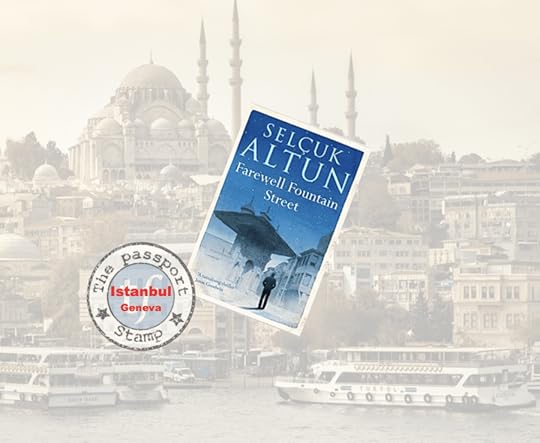
Farewell Fountain Street is billed as a thriller. It isn’t. It is the story of the lives of two men. Ziya Bay is an aging Ottoman aristocrat. He has been an academic in Geneva for many years but has now returned to Istanbul to die. He has cancer and has been given six months to live. Artvin, a disillusioned professor with a troubled past, is hired as his companion for the last days of his life. They reminisce and swap tales of their lives. Tales of Ziya’s life and loves in Istanbul and Geneva, tales of Arvin’s experiences. Artvin had been a talented young saxophone player whose career had been terminated prematurely and cruelly when, as a gangster’s revenge for dating a girl the gangster thought was his, Artvin had been bundled into a car and then shot through the hand. An incident that resulted in the amputation of two of his fingers and the end of his saxophone playing. As they talk over their pasts, the two men form a close bond.
Artvin is relieved of his duties a little while before Ziya’s death, and becomes somewhat lost and finds himself floundering. Purpose has gone from his life, until he manages to track down the person who actually had fired the shots into his hand. The book ends in a dramatic and then somewhat bizarre (but positive) way. This, I guess, explains the billing of the book as a thriller. But for me it is so much more.
Farewell Fountain Street is a really good and absorbing read. It is beautifully and gently written (and beautifully translated). It is set in pretty much the present day, but looks back over the decades in both Istanbul and Geneva. Both cities are clearly recognisable and offer contextual background to the plot.
Very much recommended.
Farewell Fountain Street is billed as a thriller. It isn’t. It is the story of the lives of two men. Ziya Bay is an aging Ottoman aristocrat. He has been an academic in Geneva for many years but has now returned to Istanbul to die. He has cancer and has been given six months to live. Artvin, a disillusioned professor with a troubled past, is hired as his companion for the last days of his life. They reminisce and swap tales of their lives. Tales of Ziya’s life and loves in Istanbul and Geneva, tales of Arvin’s experiences. Artvin had been a talented young saxophone player whose career had been terminated prematurely and cruelly when, as a gangster’s revenge for dating a girl the gangster thought was his, Artvin had been bundled into a car and then shot through the hand. An incident that resulted in the amputation of two of his fingers and the end of his saxophone playing. As they talk over their pasts, the two men form a close bond.
Artvin is relieved of his duties a little while before Ziya’s death, and becomes somewhat lost and finds himself floundering. Purpose has gone from his life, until he manages to track down the person who actually had fired the shots into his hand. The book ends in a dramatic and then somewhat bizarre (but positive) way. This, I guess, explains the billing of the book as a thriller. But for me it is so much more.
Farewell Fountain Street is a really good and absorbing read. It is beautifully and gently written (and beautifully translated). It is set in pretty much the present day, but looks back over the decades in both Istanbul and Geneva. Both cities are clearly recognisable and offer contextual background to the plot.
Very much recommended.
Read
May 19, 20241/5 (I'm not going to list it as one star because I do not want to bring down the overall rating for the book)
To say that this book is not good would be inaccurate, but to say that it is not for me is true. I listened to Selçuk Altun speak at the 2024 European Writers' Conference and when asked about his relationship with his nationality, Altun gave the entire history, from its conception to present, of Istanbul--he did not avoid the question, rather, he taught about the nation itself through its historical background. The entirety of Farewell Fountain Street felt like this answer. Not much happens during this: a man is assaulted, gets a job, attempts to confront his assaulters; however the majority of the book, almost all of it, is filled with origin, background, history, identity. Each character has to be fully developed from birth. Every room described in every detail. And this takes time. A lot of space. A lot of words. And, in my opinion, a lot of writing that doesn't mean much.
But that may be because I have a Western way of thinking, or that I have moved around so much throughout my life that I don't feel any particular affection to the locations I've lived in, etc. So, no, I did not like this book. I read it all in one day because Altun has another lecture this Monday--and although he is an extremely extremely intelligent man, who has done a lot for the world of literature in regards to translation and publication, I don't think I'll attend. Also, outside of the dense heritage tangled in this book, I also felt that the story was a backdrop to geek out on Samuel Beckett--the ending did not convince me otherwise--and that is fine, but like another bibliophile who I felt is similar to Altun in speech and even appearance (Jorge Louis Borges), the literary references are not handled with as much care.
To say that this book is not good would be inaccurate, but to say that it is not for me is true. I listened to Selçuk Altun speak at the 2024 European Writers' Conference and when asked about his relationship with his nationality, Altun gave the entire history, from its conception to present, of Istanbul--he did not avoid the question, rather, he taught about the nation itself through its historical background. The entirety of Farewell Fountain Street felt like this answer. Not much happens during this: a man is assaulted, gets a job, attempts to confront his assaulters; however the majority of the book, almost all of it, is filled with origin, background, history, identity. Each character has to be fully developed from birth. Every room described in every detail. And this takes time. A lot of space. A lot of words. And, in my opinion, a lot of writing that doesn't mean much.
But that may be because I have a Western way of thinking, or that I have moved around so much throughout my life that I don't feel any particular affection to the locations I've lived in, etc. So, no, I did not like this book. I read it all in one day because Altun has another lecture this Monday--and although he is an extremely extremely intelligent man, who has done a lot for the world of literature in regards to translation and publication, I don't think I'll attend. Also, outside of the dense heritage tangled in this book, I also felt that the story was a backdrop to geek out on Samuel Beckett--the ending did not convince me otherwise--and that is fine, but like another bibliophile who I felt is similar to Altun in speech and even appearance (Jorge Louis Borges), the literary references are not handled with as much care.
January 31, 2024
This short but rambling and very overcrowded book describes the encounter between a dying academic philosopher who wants a companion, Ziya Bey, and Artvin, former sax player and also later a translator and maybe academic. It is a series of life stories, including stories within stories.
I found the lead characters’ thirst for revenge unlikeable and their misogyny unappealing. “Vindictiveness is a noble trait ”. There are vivid descriptions of the rough back streets of Istanbul, that reminded me of my only visit over 50 years ago. Back then, it seemed violent with street fights in daytime. Maybe little has changed.
Though contemporary, there is no mention of the political tensions in modern Turkey, despite many references to the Ottoman history that Ziya is so proud of.
The translation may be accurate but for those unfamiliar with Turkish geography some additional information would be helpful. There are dozens of peripheral characters left undeveloped, that add little or nothing to the narrative.
I was often confused and had to check back. The reveal at the end isn’t much of a surprise.
I had this from Shelterbox Book Group, a UK disaster relief charity. This was for me the least successful of their usually most interesting books.
I found the lead characters’ thirst for revenge unlikeable and their misogyny unappealing. “Vindictiveness is a noble trait ”. There are vivid descriptions of the rough back streets of Istanbul, that reminded me of my only visit over 50 years ago. Back then, it seemed violent with street fights in daytime. Maybe little has changed.
Though contemporary, there is no mention of the political tensions in modern Turkey, despite many references to the Ottoman history that Ziya is so proud of.
The translation may be accurate but for those unfamiliar with Turkish geography some additional information would be helpful. There are dozens of peripheral characters left undeveloped, that add little or nothing to the narrative.
I was often confused and had to check back. The reveal at the end isn’t much of a surprise.
I had this from Shelterbox Book Group, a UK disaster relief charity. This was for me the least successful of their usually most interesting books.
Displaying 1 - 30 of 77 reviews