

What do you think?
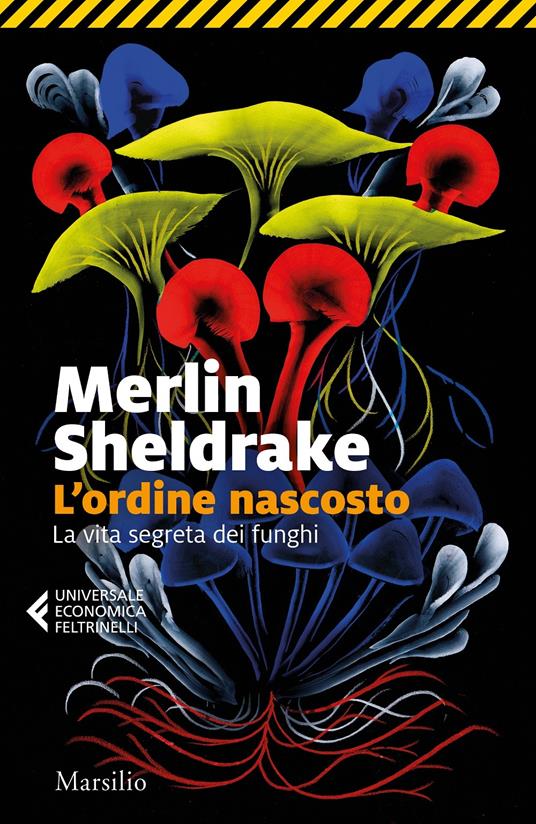
L'ordine nascosto: La vita segreta dei funghi
Goodreads Choice Award
Nominee for Readers' Favorite Science & Technology (2020)«I funghi sono ovunque, ma è facile non notarli. Sono dentro e fuori di noi. Anche mentre leggete questo libro, stanno modificando il flusso della vita, come fanno da milioni di anni.»
Mescolando capacità narrativa e rigore investigativo, Merlin Sheldrake ci accompagna in un viaggio alla scoperta degli organismi più misteriosi del pianeta e ci aiuta a comprendere appieno la meraviglia e l'importanza degli ecosistemi naturali di cui facciamo parte. Combinando storia della scienza e nature writing, il biologo ci guida tra gli sciamani dell'Amazzonia, i cercatori di tartufi in Piemonte e gli esponenti della controcultura e della psichedelica come Timothy Leary, spaziando dai cibi fermentati alle reti sotterranee attraverso cui gli alberi si scambiano informazioni fino alla capacità dei funghi di digerire plastica e pesticidi. Sono solo alcuni dei tasselli di un percorso affascinante che solleva domande fondamentali su cosa siano la vita, l'intelligenza e l'identità, e che ci spinge a cambiare punto di vista e osservare il mondo abbandonando uno sguardo antropocentrico. Sheldrake tratteggia un grandioso affresco di un regno della natura maestoso ma quasi invisibile, capace di mettere in discussione le nostre certezze e condurci sulle strade dell'immaginazione verso la progettazione di un futuro sostenibile grazie a tecnologie prima impensabili.
Mescolando capacità narrativa e rigore investigativo, Merlin Sheldrake ci accompagna in un viaggio alla scoperta degli organismi più misteriosi del pianeta e ci aiuta a comprendere appieno la meraviglia e l'importanza degli ecosistemi naturali di cui facciamo parte. Combinando storia della scienza e nature writing, il biologo ci guida tra gli sciamani dell'Amazzonia, i cercatori di tartufi in Piemonte e gli esponenti della controcultura e della psichedelica come Timothy Leary, spaziando dai cibi fermentati alle reti sotterranee attraverso cui gli alberi si scambiano informazioni fino alla capacità dei funghi di digerire plastica e pesticidi. Sono solo alcuni dei tasselli di un percorso affascinante che solleva domande fondamentali su cosa siano la vita, l'intelligenza e l'identità, e che ci spinge a cambiare punto di vista e osservare il mondo abbandonando uno sguardo antropocentrico. Sheldrake tratteggia un grandioso affresco di un regno della natura maestoso ma quasi invisibile, capace di mettere in discussione le nostre certezze e condurci sulle strade dell'immaginazione verso la progettazione di un futuro sostenibile grazie a tecnologie prima impensabili.
384 pages, Paperback
First published May 12, 2020
About the author
Merlin Sheldrake
11 books1,523 followersMerlin is the author of Entangled Life: How Fungi Make Our Worlds, Change Our Minds, and Shape Our Futures. Merlin received a Ph.D. in tropical ecology from Cambridge University for his work on underground fungal networks in tropical forests in Panama, where he was a predoctoral research fellow of the Smithsonian Tropical Research Institute. He is a research associate of the Vrije University, Amsterdam, and sits on the advisory board of the Fungi Foundation and the Society for the Protection of Underground Networks.
Entangled Life is an international bestseller, winner of the Wainwright Prize 2021, and has been nominated for a host of other prizes, including the British Book Awards Book of the Year 2021 for Narrative Non-Fiction and the Rathbones Folio Prize 2021. Entangled Life was also featured as Radio 4’s Book of the Week and selected as a Book of the Year in The Times, Daily Telegraph, Sunday Times, New Statesman and Time, among others. It has been translated into twenty languages.
Entangled Life is an international bestseller, winner of the Wainwright Prize 2021, and has been nominated for a host of other prizes, including the British Book Awards Book of the Year 2021 for Narrative Non-Fiction and the Rathbones Folio Prize 2021. Entangled Life was also featured as Radio 4’s Book of the Week and selected as a Book of the Year in The Times, Daily Telegraph, Sunday Times, New Statesman and Time, among others. It has been translated into twenty languages.
Ratings & Reviews
Friends & Following
Create a free account to discover what your friends think of this book!
Community Reviews
Displaying 1 - 30 of 7,372 reviews

August 9, 2020
Yeah, I'm married to a professor, so if I want to have someone tell me the same thing seventeen different ways for hours on end, I will just have dinner with my husband.
November 22, 2020
4.5 This book is a perfect length for the content - just enough to feel sated - and it’s organized into sections of thought, from:
1) how mushroom trips can rewire the neural pathways in your brain to alleviate depression, anxiety and addiction, and inspire creativity and new ways to solve problems; to:
2) a section on the environment and how fungi could save our planet by both decomposing toxic waste, and composing organic materials to replace leather and wood, in addition to possibly saving our bees; to
3) a chapter on a species of fungi that bursts open the skull of an ant and uses its body to perform acts that benefit the fungus, but that it can’t perform in its original form (straight up science feels like science fiction here).
It is well written and wonderfully entertaining. Oh, and did I say? It blew my mind.
1) how mushroom trips can rewire the neural pathways in your brain to alleviate depression, anxiety and addiction, and inspire creativity and new ways to solve problems; to:
2) a section on the environment and how fungi could save our planet by both decomposing toxic waste, and composing organic materials to replace leather and wood, in addition to possibly saving our bees; to
3) a chapter on a species of fungi that bursts open the skull of an ant and uses its body to perform acts that benefit the fungus, but that it can’t perform in its original form (straight up science feels like science fiction here).
It is well written and wonderfully entertaining. Oh, and did I say? It blew my mind.


June 16, 2020
I have always found mushrooms magical. The way they suddenly appear overnight after a rainstorm amazes me. Walk down a forest path one day and see nothing. The next morning, suddenly you encounter hundreds of them. Bright or dull, colourful or drab, they are everywhere you look.
But where do they come from and how do they burst through the ground, fully formed, overnight?
What I didn't know before reading this book, aside from how they appear like magic, is that mushrooms are the fruit of fungi. Like an apple which lies on an orchard floor waiting to be eaten and its seeds dispersed through the intestines of a bird, the mushroom is full of spores that need to be distributed farther afield.
Entangled Life: How Fungi Make Our Worlds, Change Our Minds & Shape Our Futures is a fascinating glimpse into the world of all things fungi. A world that is intimately entangled with just about everything else on earth.
I made so many highlights in this book that it would take pages to share with you everything I learned. It is full of the most alluring details about fungi. Life as we know it would not exist if it wasn't for fungi. We have fungi living inside us and all around us. They even seed clouds and stimulate the formation of raindrops or snowflakes!
Fungi inhabited the earth long before plants made their way onto the scene. And it was because of fungi that plants were able to move onto land. Fungi acted as the roots of water plants until they were able to evolve roots of their own, which took some fifty million years.
Fungi continue to have a symbiotic relationship with plants. Of course, there are some species which are detrimental to certain plants, and yet they could not live without the help of fungi. Fungi connect plants and trees through the "world wide wood", providing them nutrients and making their fruits more or less juicier and sweeter.
The mycelial networks in the ground “compute” information encoded in spikes of electrical activity, allowing plants to communicate with each other. When an aphid begins eating the leaves of a plant, it can send out an alarm to others of its kind through the mycelial network, prompting them to put off chemicals that will keep the aphids away.
But it's not just plants whose lives are made possible by fungi. It is also our own. They live in our guts and help us get nutrients from food. Food that wouldn't even exist if it wasn't for fungi! They nourish us with their mushroom "fruit".... as long as we know which to avoid! Eat the wrong mushroom and it's bye bye to you. Psilocybin found in certain "magic mushrooms" help alleviate depression and break addiction.
Merlin Sheldrake (isn't his name the coolest!?) talks about these things and so much more. Bunches and bundles and gobs and heaps of fungi facts!
Here are a few of my highlights:
❇︎ "Like plants, fungi can “see” color across the spectrum using receptors sensitive to blue light and red light—unlike plants, fungi also have opsins, the light-sensitive pigments present in the rods and cones of animal eyes."
❇︎ "Most fungi are able to detect and respond to light (its direction, intensity, or color), temperature, moisture, nutrients, toxins, and electrical fields."
❇︎ Some fungi can be taught to break down radioactive material, cigarette butts, and dirty diapers and use it for their energy.
❇︎ There are between "2.2 and 3.8 million species of fungi in the world—six to ten times the estimated number of plant species", of which over 90% remain undocumented.
❇︎ Fungi are more like animals than plants.
❇︎ Fungi not only give us penicillin, they also give us statins to lower cholesterol and many powerful antiviral and anticancer compounds
(Because certain species of fungi are so good at fighting viruses, I hope that somewhere in the world, a mycologist is in her lab trying to find one which can extirpate Covid19.)
Mr. Sheldrake has so much more information and so many more facts in this book. It's impossible for me to do justice in a review.
This book is very accessible even if one doesn't have a background in biology (which I do not) and is highly readable. I was enrapt through the entirety of the book. How could I not be when I learned new things on every single page of this book!? Fungi are incredible!
They make our lives possible, and they make our lives better.... as long as we know which ones to avoid.
The author also discusses the use of fungi for fabricating new materials, such as "leather" and a material that replaces brick, particle boards, and concrete. I found this fascinating ... and yet couldn't help but consider the ethicality of killing fungi for "microfabrics". I know, I know, this is going to make some people scoff, and that's OK. For me though, because fungi display an array of intelligent characteristics, I can't help but worry that perhaps they are intelligent and sentient. However, unless and until we learn that they are, it is more ethical to make "leather" from these fungi than from animal skins.
It is also better for the environment, as "Hundreds of square feet of mycelial leather can be grown in less than a week on materials that would otherwise be disposed of."
Mr. Sheldrake discusses climate change as well as the effect intensive farming practices have on fungal species. "A combination of plowing and application of chemical fertilizers or fungicides—reduce the abundance of mycorrhizal fungi." This poses a worry to future food production because a plant seed that cannot find suitable fungi is unlikely to survive.
It is apparent throughout the book that life on earth owes much of its thanks to fungi, and yet fungi is perhaps the least understood life form on earth.
Kudos to Merlin Sheldrake for writing such an engrossing and educational book. I highly recommend it!
But where do they come from and how do they burst through the ground, fully formed, overnight?
What I didn't know before reading this book, aside from how they appear like magic, is that mushrooms are the fruit of fungi. Like an apple which lies on an orchard floor waiting to be eaten and its seeds dispersed through the intestines of a bird, the mushroom is full of spores that need to be distributed farther afield.
Entangled Life: How Fungi Make Our Worlds, Change Our Minds & Shape Our Futures is a fascinating glimpse into the world of all things fungi. A world that is intimately entangled with just about everything else on earth.
I made so many highlights in this book that it would take pages to share with you everything I learned. It is full of the most alluring details about fungi. Life as we know it would not exist if it wasn't for fungi. We have fungi living inside us and all around us. They even seed clouds and stimulate the formation of raindrops or snowflakes!
Fungi inhabited the earth long before plants made their way onto the scene. And it was because of fungi that plants were able to move onto land. Fungi acted as the roots of water plants until they were able to evolve roots of their own, which took some fifty million years.
Fungi continue to have a symbiotic relationship with plants. Of course, there are some species which are detrimental to certain plants, and yet they could not live without the help of fungi. Fungi connect plants and trees through the "world wide wood", providing them nutrients and making their fruits more or less juicier and sweeter.
The mycelial networks in the ground “compute” information encoded in spikes of electrical activity, allowing plants to communicate with each other. When an aphid begins eating the leaves of a plant, it can send out an alarm to others of its kind through the mycelial network, prompting them to put off chemicals that will keep the aphids away.
But it's not just plants whose lives are made possible by fungi. It is also our own. They live in our guts and help us get nutrients from food. Food that wouldn't even exist if it wasn't for fungi! They nourish us with their mushroom "fruit".... as long as we know which to avoid! Eat the wrong mushroom and it's bye bye to you. Psilocybin found in certain "magic mushrooms" help alleviate depression and break addiction.
Merlin Sheldrake (isn't his name the coolest!?) talks about these things and so much more. Bunches and bundles and gobs and heaps of fungi facts!
Here are a few of my highlights:
❇︎ "Like plants, fungi can “see” color across the spectrum using receptors sensitive to blue light and red light—unlike plants, fungi also have opsins, the light-sensitive pigments present in the rods and cones of animal eyes."
❇︎ "Most fungi are able to detect and respond to light (its direction, intensity, or color), temperature, moisture, nutrients, toxins, and electrical fields."
❇︎ Some fungi can be taught to break down radioactive material, cigarette butts, and dirty diapers and use it for their energy.
❇︎ There are between "2.2 and 3.8 million species of fungi in the world—six to ten times the estimated number of plant species", of which over 90% remain undocumented.
❇︎ Fungi are more like animals than plants.
❇︎ Fungi not only give us penicillin, they also give us statins to lower cholesterol and many powerful antiviral and anticancer compounds
(Because certain species of fungi are so good at fighting viruses, I hope that somewhere in the world, a mycologist is in her lab trying to find one which can extirpate Covid19.)
Mr. Sheldrake has so much more information and so many more facts in this book. It's impossible for me to do justice in a review.
This book is very accessible even if one doesn't have a background in biology (which I do not) and is highly readable. I was enrapt through the entirety of the book. How could I not be when I learned new things on every single page of this book!? Fungi are incredible!
They make our lives possible, and they make our lives better.... as long as we know which ones to avoid.
The author also discusses the use of fungi for fabricating new materials, such as "leather" and a material that replaces brick, particle boards, and concrete. I found this fascinating ... and yet couldn't help but consider the ethicality of killing fungi for "microfabrics". I know, I know, this is going to make some people scoff, and that's OK. For me though, because fungi display an array of intelligent characteristics, I can't help but worry that perhaps they are intelligent and sentient. However, unless and until we learn that they are, it is more ethical to make "leather" from these fungi than from animal skins.
It is also better for the environment, as "Hundreds of square feet of mycelial leather can be grown in less than a week on materials that would otherwise be disposed of."
Mr. Sheldrake discusses climate change as well as the effect intensive farming practices have on fungal species. "A combination of plowing and application of chemical fertilizers or fungicides—reduce the abundance of mycorrhizal fungi." This poses a worry to future food production because a plant seed that cannot find suitable fungi is unlikely to survive.
It is apparent throughout the book that life on earth owes much of its thanks to fungi, and yet fungi is perhaps the least understood life form on earth.
Kudos to Merlin Sheldrake for writing such an engrossing and educational book. I highly recommend it!

May 19, 2021
Entangled Life would be better if it discussed fungi biology more and Merlin Sheldrake less. I did learn some worthwhile, interesting tidbits, but ended up skimming a lot of sections where Sheldrake was just going on some meandering philosophical journey of what fungi might mean or things that could be. I just don't like him much. He seems like a nice guy, but it's difficult for me to relate to him or what he cares about.
And to be brutally honest, I think he wasn't being quite open with the reader in this book. There was very little discussion, for example, of how his father, Rupert Sheldrake, may have played a role in gaining Merlin access to his education and subsequent ... oh, I don't know ... freedom to wander around talking to people about how mushrooms can change the world? For example, Merlin mentions at one point how he's known Paul Stamets since he was a teenager. Well, why is that, exactly? Because Stamets, I strongly suspect, is likely friends with his parents, or a friend of his parents' friends.
To put my hesitation here in crude, probably unfair terms ... Entangled Life reminded me a bit of that kid in high school whose winning science fair project just happens to be closely related to what mommy and daddy do for work.
And it seems likely that Sheldrake wrote much of Entangled Life while microdosing on psilocybin, which probably accounts for the meandering, unfocused writing style lots of other reviews note. If he was more honest about the fact that his fascination with fungi is strongly inspired by its psychedelic properties, I would have respected that more. But as it is, he seems to just be ... pretending to be a mainstream scientist, while probably more interested in pursuing the spiritual implications of 'shrooms? Obviously, I don't personally know him, but this was the impression I got from the book.
Also, the story he told at the end of the book about stealing apples from the Newton tree at Cambridge was juvenile and hypocritical. After musing about how the story was likely apocryphal and how the tree was just something for tourists to gape at for its performative purposes, he decides these just HAVE the be the apples he gets for fermentation. So after being told he can't pick some, yeah, he just goes back and night and steals them all for his cider. Honestly, this is the behavior of a privileged American fraternity brother, not a professional scientist. Not cool.
Admittedly, a lot of these criticisms are just my own personal prejudices, and other readers may not be bothered by them. Entangled Life was written well enough, even if it wandered, and if you're a reader interested in the more philosophical side of fungi, you will likely LOVE this. But I really just wanted the biology with a few side stories thrown in, so this wasn't my cup of tea.
Last Gripe: This is now the second review I've written where I find myself riding to the defense of Beatrix Potter. But I was very annoyed when Sheldrake mentions only about how she was wrong concerning lichen, without otherwise giving her any credit for the correct theories about mushrooms she DID develop, which were ignored at the time because she was a woman. I found it dismissive, unfair, and just plain bad manners. Potter was unfairly denied opportunities and diminished while alive ... no reason at all for Sheldrake to continue doing so nowadays.
And to be brutally honest, I think he wasn't being quite open with the reader in this book. There was very little discussion, for example, of how his father, Rupert Sheldrake, may have played a role in gaining Merlin access to his education and subsequent ... oh, I don't know ... freedom to wander around talking to people about how mushrooms can change the world? For example, Merlin mentions at one point how he's known Paul Stamets since he was a teenager. Well, why is that, exactly? Because Stamets, I strongly suspect, is likely friends with his parents, or a friend of his parents' friends.
To put my hesitation here in crude, probably unfair terms ... Entangled Life reminded me a bit of that kid in high school whose winning science fair project just happens to be closely related to what mommy and daddy do for work.
And it seems likely that Sheldrake wrote much of Entangled Life while microdosing on psilocybin, which probably accounts for the meandering, unfocused writing style lots of other reviews note. If he was more honest about the fact that his fascination with fungi is strongly inspired by its psychedelic properties, I would have respected that more. But as it is, he seems to just be ... pretending to be a mainstream scientist, while probably more interested in pursuing the spiritual implications of 'shrooms? Obviously, I don't personally know him, but this was the impression I got from the book.
Also, the story he told at the end of the book about stealing apples from the Newton tree at Cambridge was juvenile and hypocritical. After musing about how the story was likely apocryphal and how the tree was just something for tourists to gape at for its performative purposes, he decides these just HAVE the be the apples he gets for fermentation. So after being told he can't pick some, yeah, he just goes back and night and steals them all for his cider. Honestly, this is the behavior of a privileged American fraternity brother, not a professional scientist. Not cool.
Admittedly, a lot of these criticisms are just my own personal prejudices, and other readers may not be bothered by them. Entangled Life was written well enough, even if it wandered, and if you're a reader interested in the more philosophical side of fungi, you will likely LOVE this. But I really just wanted the biology with a few side stories thrown in, so this wasn't my cup of tea.
Last Gripe: This is now the second review I've written where I find myself riding to the defense of Beatrix Potter. But I was very annoyed when Sheldrake mentions only about how she was wrong concerning lichen, without otherwise giving her any credit for the correct theories about mushrooms she DID develop, which were ignored at the time because she was a woman. I found it dismissive, unfair, and just plain bad manners. Potter was unfairly denied opportunities and diminished while alive ... no reason at all for Sheldrake to continue doing so nowadays.

December 13, 2020
Some books deserve all the stars in the world, Entangled Life being one of them. I’ve read quite a few science books so far, and in each of them I have found something to fascinate me. But none of them managed to immerse me so deeply into it like this one.
Fungi must be the most incredible subject out there, along with universe and brain, due to their similar structure.* The book has 229 pages (the rest are notes and bibliography) and it took me more than two weeks to finish it. And that’s because every few pages I’ve put it aside and searched the net for all kinds of references, talks, interviews, articles, and so on. I had no idea how useful the fungi are and how many new fields are now studying them.
Among their myriad useful purposes, they can be ‘trained’ to decompose almost anything, even heavy metals. That is the case of Pleurotus, which can break down crude oil, cigarette butts or used diapers, among other pollutants.
Fungi have highly powerful antiviral properties, the most stunning effect being when added to bees’ sugar water: “Adding a one percent extract of amadou (or Fomes) and reishi (Ganoderma, the species used to grow materials at Ecovative) to bees’ sugar water reduced deformed wings virus eighty-fold. Fomes extracts reduced levels of Lake Sinai virus nearly ninety-fold, and Ganoderma extracts reduced it forty-five thousand fold. Steve Sheppard, a professor of entomology at Washington State University and one of Stamets’s collaborators on the study, observed that he had not encountered any other substance that could extend the life of bees to this extent.”
The book is so well structured and written: chapters are grouped by topics, and the author describes a lot of experiments conducted by himself or others, many quite humorous, and all sooooo captivating! There are so many awe moments in the book, and I think I’ve saved at least 10% of the book as quotes, but there are plenty of them in the other reviews, and so I won’t add any others here. The book being so short and so incredibly fascinating, it would be a pity not to read it all.
However, I will leave below some links, the most interesting I have found in my net wanderings:
* TED: 6 ways mushrooms can save the world | Paul Stamets: https://www.youtube.com/watch?v=XI5fr...
Joe Rogan Experience #1035 - Paul Stamets: https://www.youtube.com/watch?v=mPqWs...
As a fun fact: the amadou hat Paul Stamets wears was made in Corund, Romania: https://www.slowtours.travel/shop/ama...
About the Wood Wide Web: https://www.youtube.com/watch?v=vYoRM...
More the Wood Wide Web - how trees talk to each other! (Suzanne Simard) forest trees documentary: https://www.youtube.com/watch?v=oVK9T...
Fantastic Fungi trailer: https://www.youtube.com/watch?v=bxABO...
Fantastic Fungi wiki: https://en.wikipedia.org/wiki/Fantast...
About biocomputing, a conversation between Andrew Adamatzky, Professor in Unconventional Computing in the Department of Computer Science and Director of the Unconventional Computing Laboratory, University of the West of England, Bristol, UK, and Merlin Sheldrake, the author: https://www.youtube.com/watch?v=c-LIV...
Psilocybin Treatment for Mental Health Gets Legal Framework: https://www.scientificamerican.com/ar...
More about the book: https://www.merlinsheldrake.com/entan...
An Amazing Letter From a Cultivator in Syria: https://fungi.com/blogs/articles/an-a...
Chernobyl fungus could shield astronauts from cosmic radiation: https://bigthink.com/surprising-scien...
Fungal architectures: https://www.fungar.eu/
Ecovative Design, packaging: https://mushroompackaging.com/
2020 Mushlume lightning collection: https://static1.squarespace.com/stati...
Some stunning mushroom pictures: https://mymodernmet.com/ryan-grastorf...
Also, Kindle Notes & Highlights by Merlin Sheldrake: https://www.goodreads.com/notes/50664...
Give it a try, you won't regret it!
Fungi must be the most incredible subject out there, along with universe and brain, due to their similar structure.* The book has 229 pages (the rest are notes and bibliography) and it took me more than two weeks to finish it. And that’s because every few pages I’ve put it aside and searched the net for all kinds of references, talks, interviews, articles, and so on. I had no idea how useful the fungi are and how many new fields are now studying them.
Among their myriad useful purposes, they can be ‘trained’ to decompose almost anything, even heavy metals. That is the case of Pleurotus, which can break down crude oil, cigarette butts or used diapers, among other pollutants.
Fungi have highly powerful antiviral properties, the most stunning effect being when added to bees’ sugar water: “Adding a one percent extract of amadou (or Fomes) and reishi (Ganoderma, the species used to grow materials at Ecovative) to bees’ sugar water reduced deformed wings virus eighty-fold. Fomes extracts reduced levels of Lake Sinai virus nearly ninety-fold, and Ganoderma extracts reduced it forty-five thousand fold. Steve Sheppard, a professor of entomology at Washington State University and one of Stamets’s collaborators on the study, observed that he had not encountered any other substance that could extend the life of bees to this extent.”
The book is so well structured and written: chapters are grouped by topics, and the author describes a lot of experiments conducted by himself or others, many quite humorous, and all sooooo captivating! There are so many awe moments in the book, and I think I’ve saved at least 10% of the book as quotes, but there are plenty of them in the other reviews, and so I won’t add any others here. The book being so short and so incredibly fascinating, it would be a pity not to read it all.
However, I will leave below some links, the most interesting I have found in my net wanderings:
* TED: 6 ways mushrooms can save the world | Paul Stamets: https://www.youtube.com/watch?v=XI5fr...
Joe Rogan Experience #1035 - Paul Stamets: https://www.youtube.com/watch?v=mPqWs...
As a fun fact: the amadou hat Paul Stamets wears was made in Corund, Romania: https://www.slowtours.travel/shop/ama...
About the Wood Wide Web: https://www.youtube.com/watch?v=vYoRM...
More the Wood Wide Web - how trees talk to each other! (Suzanne Simard) forest trees documentary: https://www.youtube.com/watch?v=oVK9T...
Fantastic Fungi trailer: https://www.youtube.com/watch?v=bxABO...
Fantastic Fungi wiki: https://en.wikipedia.org/wiki/Fantast...
About biocomputing, a conversation between Andrew Adamatzky, Professor in Unconventional Computing in the Department of Computer Science and Director of the Unconventional Computing Laboratory, University of the West of England, Bristol, UK, and Merlin Sheldrake, the author: https://www.youtube.com/watch?v=c-LIV...
Psilocybin Treatment for Mental Health Gets Legal Framework: https://www.scientificamerican.com/ar...
More about the book: https://www.merlinsheldrake.com/entan...
An Amazing Letter From a Cultivator in Syria: https://fungi.com/blogs/articles/an-a...
Chernobyl fungus could shield astronauts from cosmic radiation: https://bigthink.com/surprising-scien...
Fungal architectures: https://www.fungar.eu/
Ecovative Design, packaging: https://mushroompackaging.com/
2020 Mushlume lightning collection: https://static1.squarespace.com/stati...
Some stunning mushroom pictures: https://mymodernmet.com/ryan-grastorf...
Also, Kindle Notes & Highlights by Merlin Sheldrake: https://www.goodreads.com/notes/50664...
Give it a try, you won't regret it!

June 13, 2025
“The difference between animals and fungi is simple: Animals put food in their bodies, whereas fungi put their bodies in the food.”
UPDATE 6-20-25: See below.
When this was dropped off as a donation to my Little Free Library Shed, I wasn’t sure if this was the book for me. But since I am always looking for healthy ways to live my life as a cancer watch and monitor patient, I was up for the reading challenge.
The author is a known biologist who received his Ph.D. in tropical ecology from the University of Cambridge for his work on underground fungal networks in tropical forests in Panama. This book talks about his work. And, thankfully he talks from a layman’s point of view.
For me, his book opened my mind to the many uses of fungi. Actually, a universe of possibilities. What we know and don’t know about fungi is fascinating. What we can learn about them can guide us in how we can take care of ourselves and our world.
Much of what the author discusses is offered through footnotes and references. He wants us to think, question and consider the complexities of our world. So much about science can be messy and imprecise, which allows us to contemplate and explore our world.
“Fungi make worlds. They also unmake them.”
This is a thoughtful, informative and fascinating resource for anyone interested in exploring the topic. There are also beautiful color photographs, illustrations, footnotes, notes, bibliography and an index supporting the author’s research and discussion. I have a feeling I will continue to peruse and review this book over and over again.
4.5 stars
UPDATE: Fun personal facts. This is my 2500th full review! My husband, shared that in a sense I have written more than 600,000+words by writing 2500 reviews. With an average review being about 240 words. He said that an average novel is about 85,000 words which is the equivalent of about 7 novels.
(He is musing that is about how many novels I would have written in this same time period, had I written novels, instead of reviews!)😳
He shares this with me because he knows how much time and thought and editing I put into my reviews. Thank you dear, husband for these fun facts.
UPDATE 6-20-25: See below.
When this was dropped off as a donation to my Little Free Library Shed, I wasn’t sure if this was the book for me. But since I am always looking for healthy ways to live my life as a cancer watch and monitor patient, I was up for the reading challenge.
The author is a known biologist who received his Ph.D. in tropical ecology from the University of Cambridge for his work on underground fungal networks in tropical forests in Panama. This book talks about his work. And, thankfully he talks from a layman’s point of view.
For me, his book opened my mind to the many uses of fungi. Actually, a universe of possibilities. What we know and don’t know about fungi is fascinating. What we can learn about them can guide us in how we can take care of ourselves and our world.
Much of what the author discusses is offered through footnotes and references. He wants us to think, question and consider the complexities of our world. So much about science can be messy and imprecise, which allows us to contemplate and explore our world.
“Fungi make worlds. They also unmake them.”
This is a thoughtful, informative and fascinating resource for anyone interested in exploring the topic. There are also beautiful color photographs, illustrations, footnotes, notes, bibliography and an index supporting the author’s research and discussion. I have a feeling I will continue to peruse and review this book over and over again.
4.5 stars
UPDATE: Fun personal facts. This is my 2500th full review! My husband, shared that in a sense I have written more than 600,000+words by writing 2500 reviews. With an average review being about 240 words. He said that an average novel is about 85,000 words which is the equivalent of about 7 novels.
(He is musing that is about how many novels I would have written in this same time period, had I written novels, instead of reviews!)😳
He shares this with me because he knows how much time and thought and editing I put into my reviews. Thank you dear, husband for these fun facts.

September 4, 2020
I have a life-long love for and fascination with mushrooms. Partially because they are delicious, but I also remember finding them almost magical when I was a kid: they could appear overnight, had the strangest shapes, colors and textures. In my mind, they were almost like alien plants. Later, I learned a little bit about their complex interconnectedness, their adaptability and strange reproduction method – and that only made them more fascinating!
Merlin Sheldrake’s book is an engrossing, entertaining and very informative read on all things fungi. Take note, Jeff VanderMeer fans: reading this will only freak you out more about the Grey Caps and the Ambergris mythology!
I knew a few things about the so-called wood wide web, that fungi is closer to animal than to vegetal, and that the mushrooms we see are only the metaphorical tip of a very large and complex fungi iceberg, but “Entangled Life” took me much deeper – mushrooms, as it turns out, are even more fascinating than I had thought!
While this book is certainly a wonderfully accessible work on the science of fungi, Sheldrake goes an extra step to also be thought-provoking. He wants the readers to question certain things, like the definition of intelligence, see if they can shift their perspective on the world and its structure – all that by looking at how fungi grow, feed, mate and communicate.
From problem-solving intelligence and hijacking insect bodies to get to the ideal fruiting location, to healing human illness or just giving us really weird hallucinations, mycology shows that fungus are a varied and complex class of organisms, and that without the delicate symbiotic balance between fungus and vegetation, life on the planet would not have been possible. Sheldrake explores all these topics, putting concepts like evolution, collaboration and even consciousness in a different and very interesting perspective. Studying mushrooms could potentially help us understand how to adapt more effectively to our environment, grow healthier and stronger crops, and maybe one day find effective ways of managing pollution and replacing plastic and other wasteful matter with mycelium.
I was very struck by the passage on how organic agriculture respects the mycelial relationship between the fungus in the ground and the crops, and Sheldrake’s thoughts on how hallucinogenic mushrooms might actually be showing us how mushrooms themselves perceive the world – as interconnected.
Sheldrake’s prose is very readable, and he explains complex scientific processes in simple and accessible language, which makes the whole book fun to read and easy to process. He is also clearly passionate about his topic, verging on the mythical fascination. A lot of science books have an extremely grounded tone, and his (ironically, considering he studies stuff that’s literally in the ground) is almost spiritual, which is surprising, but not unpleasant.
Overall, a great book on an absolutely fascinating subject. Thank you Camelia Rose, for putting this wonderful book on my radar!
Additional food for thought: https://getpocket.com/explore/item/th...
Merlin Sheldrake’s book is an engrossing, entertaining and very informative read on all things fungi. Take note, Jeff VanderMeer fans: reading this will only freak you out more about the Grey Caps and the Ambergris mythology!
I knew a few things about the so-called wood wide web, that fungi is closer to animal than to vegetal, and that the mushrooms we see are only the metaphorical tip of a very large and complex fungi iceberg, but “Entangled Life” took me much deeper – mushrooms, as it turns out, are even more fascinating than I had thought!
While this book is certainly a wonderfully accessible work on the science of fungi, Sheldrake goes an extra step to also be thought-provoking. He wants the readers to question certain things, like the definition of intelligence, see if they can shift their perspective on the world and its structure – all that by looking at how fungi grow, feed, mate and communicate.
From problem-solving intelligence and hijacking insect bodies to get to the ideal fruiting location, to healing human illness or just giving us really weird hallucinations, mycology shows that fungus are a varied and complex class of organisms, and that without the delicate symbiotic balance between fungus and vegetation, life on the planet would not have been possible. Sheldrake explores all these topics, putting concepts like evolution, collaboration and even consciousness in a different and very interesting perspective. Studying mushrooms could potentially help us understand how to adapt more effectively to our environment, grow healthier and stronger crops, and maybe one day find effective ways of managing pollution and replacing plastic and other wasteful matter with mycelium.
I was very struck by the passage on how organic agriculture respects the mycelial relationship between the fungus in the ground and the crops, and Sheldrake’s thoughts on how hallucinogenic mushrooms might actually be showing us how mushrooms themselves perceive the world – as interconnected.
Sheldrake’s prose is very readable, and he explains complex scientific processes in simple and accessible language, which makes the whole book fun to read and easy to process. He is also clearly passionate about his topic, verging on the mythical fascination. A lot of science books have an extremely grounded tone, and his (ironically, considering he studies stuff that’s literally in the ground) is almost spiritual, which is surprising, but not unpleasant.
Overall, a great book on an absolutely fascinating subject. Thank you Camelia Rose, for putting this wonderful book on my radar!
Additional food for thought: https://getpocket.com/explore/item/th...

July 14, 2021
Entangled Life is a well-chosen title. These two words perfectly describe this book. While it is about fungi, Sheldrake delivers a much broader message. One about relationships and the perspectives we adopt to see those relationships. These are not relationships between people but relationships between different forms of life: Fungi, microbes, plants and animals including humans. We see how the world we know depends on these relationships, and the critical role fungi play in these relationships.
Fungi can be microscopic specks or behemoths that weigh hundreds of tons spreading kilometers underground and living for thousands of years. The spreading is done by fine threads of material that make up the fungi called mycelium. Mycelial fungi are a network of threads that branch and interconnect. This network entangles plant roots, other fungi and food sources. The threads can converge to produce fruit to spread spores. Mushrooms and truffles are fungal fruit composed of the same mycelium that that comprise the fungi. Sheldrake spends a chapter on hunting truffles in Italy. The book is filled with such stories to engage the reader as he makes his points about the role of fungi in the chain of life.
Symbiotic relationships with fungi are everywhere. Lichens consisting of fungi and green algae or photosynthesizing bacteria are widespread throughout the world. They do well outside of the world too. Put outside the space station for six months, the lichens quickly revived when brought back in. Sheldrake notes some lichens can withstand 1200 times the radiation that would kill a person. In addition to the bacteria and algae in lichens fungi form mutually beneficial relationships with plants. Fungi can grab nutrients from just about anything. With their prolific use of enzymes and acids they decompose wood and even break down rock for nutrients. They provide plants nutrients, such a phosphorous, nitrogen, zinc and copper in exchange for sugars and lipids the plants produce. Sheldrake claims plant life would never have made it to land without fungi. In forests and other lands not ruined by human intervention fungi form what Sheldrake calls the “wood wide web.” He likens it to a natural underground internet over which nutrients are exchanged and signals transmitted.
Take two bean plants. One is attacked by aphids. It sends out a chemical signal to attract wasps that eat aphids. The bean plants are linked by a mycelial fungus entangled with their roots. The chemical signal enters the fungal threads and is picked up by the other bean plant which now prepares its defense against aphids sending out its own signal to attract wasps. This is where it gets interesting. Which organism is in charge of this relationship? Is it the first bean plant sending out the signal altruistically warning its neighbors? Or does the chemical signal just inadvertently get carried into the mycelial network along with sugars and other chemicals? Is the second bean plant eavesdropping on its neighbor to find out what’s happening in the hood? Or is the fungus in charge? It’s involved with both bean plants. Does it transfer the chemical signal to make sure all its symbionts stay informed and healthy? Sheldrake is not implying that these organisms are operating with motives, just that these are possible ways they evolved. When you add in bacteria and viruses that may also be involved, the complexity becomes even greater. So rather than think of individuals, we need to think in terms of systems. Today we understand that we are also systems with as many cells in our body that are not our own as there are human ones. We are just learning about the critical role these microbes play in our lives.
Fungi challenge our notion of what it takes to be intelligent or at least to calculate, solve problems and remember. Mycelial fungi don’t have a head, brain, nervous system or any center of activity. Yet these fungi work their way around obstacles and find the best route to food sources changing strategies as necessary. Take a wood rotting fungus. It will send its mycelial threads out in all directions to locate a new food source. If one thread finds a piece of wood, immediately the fungus will begin to thicken those threads. Simultaneously it will shorten the other threads. Yet the entire fungus is just a network of threads. There is no central command. Yet it quickly communicates to all parts of the network, makes decisions and changes behavior based on circumstances. Once it finishes with the new wood it will move on to another. Going from food source to food source, it can migrate far from where it started, just by lengthening some threads and shortening others. In experiments a block of wood already being devoured by fungus is placed near a clean second block of wood. The fungus spreads in all directions and some threads find the new wood. The fungus reinforces the threads to the new wood and shortens others. Now, take away the first piece of wood, cut off all the threads extending out of it and put it on a dish by itself. It will grow in the direction in which it had found the new wood. The fungus remembers where the threads found food.
This is a wonderful book. It shakes you out of the torpor of conventional thinking. It elicits a sense of wonder about just how strange the fabric of life is. Very highly recommended.
Fungi can be microscopic specks or behemoths that weigh hundreds of tons spreading kilometers underground and living for thousands of years. The spreading is done by fine threads of material that make up the fungi called mycelium. Mycelial fungi are a network of threads that branch and interconnect. This network entangles plant roots, other fungi and food sources. The threads can converge to produce fruit to spread spores. Mushrooms and truffles are fungal fruit composed of the same mycelium that that comprise the fungi. Sheldrake spends a chapter on hunting truffles in Italy. The book is filled with such stories to engage the reader as he makes his points about the role of fungi in the chain of life.
Symbiotic relationships with fungi are everywhere. Lichens consisting of fungi and green algae or photosynthesizing bacteria are widespread throughout the world. They do well outside of the world too. Put outside the space station for six months, the lichens quickly revived when brought back in. Sheldrake notes some lichens can withstand 1200 times the radiation that would kill a person. In addition to the bacteria and algae in lichens fungi form mutually beneficial relationships with plants. Fungi can grab nutrients from just about anything. With their prolific use of enzymes and acids they decompose wood and even break down rock for nutrients. They provide plants nutrients, such a phosphorous, nitrogen, zinc and copper in exchange for sugars and lipids the plants produce. Sheldrake claims plant life would never have made it to land without fungi. In forests and other lands not ruined by human intervention fungi form what Sheldrake calls the “wood wide web.” He likens it to a natural underground internet over which nutrients are exchanged and signals transmitted.
Take two bean plants. One is attacked by aphids. It sends out a chemical signal to attract wasps that eat aphids. The bean plants are linked by a mycelial fungus entangled with their roots. The chemical signal enters the fungal threads and is picked up by the other bean plant which now prepares its defense against aphids sending out its own signal to attract wasps. This is where it gets interesting. Which organism is in charge of this relationship? Is it the first bean plant sending out the signal altruistically warning its neighbors? Or does the chemical signal just inadvertently get carried into the mycelial network along with sugars and other chemicals? Is the second bean plant eavesdropping on its neighbor to find out what’s happening in the hood? Or is the fungus in charge? It’s involved with both bean plants. Does it transfer the chemical signal to make sure all its symbionts stay informed and healthy? Sheldrake is not implying that these organisms are operating with motives, just that these are possible ways they evolved. When you add in bacteria and viruses that may also be involved, the complexity becomes even greater. So rather than think of individuals, we need to think in terms of systems. Today we understand that we are also systems with as many cells in our body that are not our own as there are human ones. We are just learning about the critical role these microbes play in our lives.
Fungi challenge our notion of what it takes to be intelligent or at least to calculate, solve problems and remember. Mycelial fungi don’t have a head, brain, nervous system or any center of activity. Yet these fungi work their way around obstacles and find the best route to food sources changing strategies as necessary. Take a wood rotting fungus. It will send its mycelial threads out in all directions to locate a new food source. If one thread finds a piece of wood, immediately the fungus will begin to thicken those threads. Simultaneously it will shorten the other threads. Yet the entire fungus is just a network of threads. There is no central command. Yet it quickly communicates to all parts of the network, makes decisions and changes behavior based on circumstances. Once it finishes with the new wood it will move on to another. Going from food source to food source, it can migrate far from where it started, just by lengthening some threads and shortening others. In experiments a block of wood already being devoured by fungus is placed near a clean second block of wood. The fungus spreads in all directions and some threads find the new wood. The fungus reinforces the threads to the new wood and shortens others. Now, take away the first piece of wood, cut off all the threads extending out of it and put it on a dish by itself. It will grow in the direction in which it had found the new wood. The fungus remembers where the threads found food.
This is a wonderful book. It shakes you out of the torpor of conventional thinking. It elicits a sense of wonder about just how strange the fabric of life is. Very highly recommended.

February 26, 2022
I love mushrooms (maybe I’ll upload the beautiful ones I’ve seen in the woods) Anyway, I leaned things I thought was cool and never could have believed. Some was not so cool 😬
For me, this isn’t a book I could just sit down and plow through as I have a tiny brain, but I did enjoy it. I’m going to put it on my shelf in my mushroom booksleeve

Mel 🖤🐶🐺🐾
For me, this isn’t a book I could just sit down and plow through as I have a tiny brain, but I did enjoy it. I’m going to put it on my shelf in my mushroom booksleeve
Mel 🖤🐶🐺🐾

June 4, 2020
Lots of drawn-out writing, especially about anthropomorphization and linguistic issues. Not so much science. Do we have the wrong metaphors for fungi and plants? I couldn't care less. It is easy to write about, but not very scientifically productive.
Furthermore, even when it comes to science, every point is drawn out excessively, and the author gives a completely non-critical summary of lots of well-known phenomena. For example, fungal networks for computation. This is something that should be looked at carefully and critically, not just accepted with a "gee whiz" like a Wired magazine article. The chapter on psychedelics is a retread of Michael Pollan.
I really would have liked to have seen the author's own work be much more emphasized. Sheldrake is a biologist, or at least he has a Ph.D., but much of this book is just shallow interviews with other scientists, like you'd get from any journalist.
On the plus side, there was some good science. The most interesting parts to me, were the stories about fungal parasites, which are much more common than I had heard of. Also I was quite interested to hear about the plants that parasites on mycelial networks, ultimately getting their nutrition from other plants. I liked the author's perspective that mycelial networks are not just links between trees, but facilitate links between trees, possibly to help themselves. Allowing nutrients to flow from some trees to other trees and possibly back, helps the fungi keep a stable host ecosystem.
The illustrations, originally drawn with ink from Shaggy ink cap mushrooms, were also great.
> besides penicillin: cyclosporine (an immunosuppressant drug that makes organ transplants possible), cholesterol-lowering statins, a host of powerful antiviral and anticancer compounds (including the multibillion-dollar drug Taxol, originally extracted from the fungi that live within yew trees), not to mention alcohol (fermented by a yeast) and psilocybin (the active component in psychedelic mushrooms
> Some fungi have tens of thousands of mating types, approximately equivalent to our sexes (the record holder is the split gill fungus, Schizophyllum commune, which has more than twenty-three thousand mating types, each of which is sexually compatible with nearly every one of the others). The mycelium of many fungi can fuse with other mycelial networks if they are genetically similar enough, even if they aren't sexually compatible
> One partner plays a paternal role, providing genetic material only. The other plays a maternal role, providing genetic material and growing the flesh that matures into truffles and spores. Truffles differ from humans in that either + or - mating types can be maternal or paternal
> Fungi produce plant growth hormones that manipulate roots, causing them to proliferate into masses of feathery branches—with a greater surface area, the chances of an encounter between root tips and fungal hyphae become more likely.
> nematode-eating fungi only produce worm-hunting organs and issue a chemical summons when they sense nematodes are close by. If there is plenty of material to rot, they don't bother, even if worms abound
> The methods fungi use to hunt nematodes are grisly and diverse. It is a habit that has evolved multiple times—many fungal lineages have reached a similar conclusion but in different ways. Some fungi grow adhesive nets, or branches to which nematodes stick. Some use mechanical means, producing hyphal nooses that inflate in a tenth of a second when touched, ensnaring their prey. Some—including the commonly cultivated oyster mushroom (Pleurotus ostreatus)—produce hyphal stalks capped with a single toxic droplet that paralyzes nematodes, giving the hypha enough time to grow through their mouth and digest the worm from the inside. Others produce spores that can swim through the soil, chemically drawn toward nematodes, to which they bind. Once attached, the spores sprout and the fungus harpoons the worm with specialized hyphae known as "gun cells."
> Olsson and Adamatzky have shown that mycelium can be electrically sensitive, but they haven't shown that electrical impulses can link a stimulus to a response.
> they describe fossilized mycelium preserved in the fractures of ancient lava flows. The fossils show branching filaments that "touch and entangle each other." The "tangled network" they form, the dimensions of the hyphae, the dimensions of spore-like structures, and the pattern of its growth all closely resemble modern-day fungal mycelium. It is an extraordinary discovery because the fossils date from 2.4 billion years ago, more than a billion years before fungi were thought to have branched off the tree of life.
> Lichens encrust as much as eight percent of the planet's surface, an area larger than that covered by tropical rainforests. They clad rocks, trees, roofs, fences, cliffs, and the surface of deserts … Most rocky shorelines are rimmed with lichen. Lichens start where the seaweeds stop, and some extend down into the water.
> The names used to describe lichens sound like afflictions, words that get stuck in your teeth: crustose (crusty), foliose (leafy), squamulose (scaly), leprose (dusty), fruticose (branched). Fruticose lichens drape and tuft; crustose and squamulose lichens creep and seep; foliose lichens layer and flake
> In some situations, lichens reproduce without breaking up their relationship—fragments of a lichen containing all the symbiotic partners can travel as one to a new location and grow into a new lichen. In other situations, lichen fungi produce spores that travel alone. Upon arrival in a new place, the fungus must meet a compatible photobiont
> Lichens have evolved independently between nine and twelve times since. Today, one in five of all known fungal species form lichens, or "lichenize." Some fungi (such as Penicillium molds) used to lichenize but don't anymore; they have de-lichenized. Some fungi have switched to different types of photosynthetic partner
> The 'basic set' of partners is different for every lichen group. Some have more bacteria, some fewer; some have one yeast species, some have two, or none. Interestingly, we have yet to find any lichen that matches the traditional definition of one fungus and one alga."
> Abram Hoffer, a Canadian psychiatrist and researcher into the effects of LSD in the 1950s, remarked that "from the first, we considered not the chemical, but the experience as a key factor in therapy." … psychedelics like psilocybin "dope-slap people out of their story. It's literally a reboot of the system
> Layers of dead and un-rotted forest built up, storing so much carbon that atmospheric carbon dioxide levels crashed, and the planet entered a period of global cooling. Plants had caused the climate crisis, and plants were hit the hardest by it: Huge areas of tropical forest were wiped out in an extinction event known as the Carboniferous rainforest collapse.
> African Macrotermes termites are some of the more striking examples. Macrotermes, like most termites, spend much of their lives foraging for wood, although they aren't able to eat it. Instead, the termites cultivate a white rot fungus—Termitomyces—that digests it for them. The termites chew wood into a slurry that they regurgitate in fungal gardens, known as the "fungus comb," by contrast with bees' honeycomb. The fungus uses radical chemistry to decompose the wood.
> Mycoheterotrophs—"hackers" of the wood wide web—have lost the ability to photosynthesize and draw their nutrients from mycorrhizal fungal networks that lace their way through soil.
Furthermore, even when it comes to science, every point is drawn out excessively, and the author gives a completely non-critical summary of lots of well-known phenomena. For example, fungal networks for computation. This is something that should be looked at carefully and critically, not just accepted with a "gee whiz" like a Wired magazine article. The chapter on psychedelics is a retread of Michael Pollan.
I really would have liked to have seen the author's own work be much more emphasized. Sheldrake is a biologist, or at least he has a Ph.D., but much of this book is just shallow interviews with other scientists, like you'd get from any journalist.
On the plus side, there was some good science. The most interesting parts to me, were the stories about fungal parasites, which are much more common than I had heard of. Also I was quite interested to hear about the plants that parasites on mycelial networks, ultimately getting their nutrition from other plants. I liked the author's perspective that mycelial networks are not just links between trees, but facilitate links between trees, possibly to help themselves. Allowing nutrients to flow from some trees to other trees and possibly back, helps the fungi keep a stable host ecosystem.
The illustrations, originally drawn with ink from Shaggy ink cap mushrooms, were also great.
> besides penicillin: cyclosporine (an immunosuppressant drug that makes organ transplants possible), cholesterol-lowering statins, a host of powerful antiviral and anticancer compounds (including the multibillion-dollar drug Taxol, originally extracted from the fungi that live within yew trees), not to mention alcohol (fermented by a yeast) and psilocybin (the active component in psychedelic mushrooms
> Some fungi have tens of thousands of mating types, approximately equivalent to our sexes (the record holder is the split gill fungus, Schizophyllum commune, which has more than twenty-three thousand mating types, each of which is sexually compatible with nearly every one of the others). The mycelium of many fungi can fuse with other mycelial networks if they are genetically similar enough, even if they aren't sexually compatible
> One partner plays a paternal role, providing genetic material only. The other plays a maternal role, providing genetic material and growing the flesh that matures into truffles and spores. Truffles differ from humans in that either + or - mating types can be maternal or paternal
> Fungi produce plant growth hormones that manipulate roots, causing them to proliferate into masses of feathery branches—with a greater surface area, the chances of an encounter between root tips and fungal hyphae become more likely.
> nematode-eating fungi only produce worm-hunting organs and issue a chemical summons when they sense nematodes are close by. If there is plenty of material to rot, they don't bother, even if worms abound
> The methods fungi use to hunt nematodes are grisly and diverse. It is a habit that has evolved multiple times—many fungal lineages have reached a similar conclusion but in different ways. Some fungi grow adhesive nets, or branches to which nematodes stick. Some use mechanical means, producing hyphal nooses that inflate in a tenth of a second when touched, ensnaring their prey. Some—including the commonly cultivated oyster mushroom (Pleurotus ostreatus)—produce hyphal stalks capped with a single toxic droplet that paralyzes nematodes, giving the hypha enough time to grow through their mouth and digest the worm from the inside. Others produce spores that can swim through the soil, chemically drawn toward nematodes, to which they bind. Once attached, the spores sprout and the fungus harpoons the worm with specialized hyphae known as "gun cells."
> Olsson and Adamatzky have shown that mycelium can be electrically sensitive, but they haven't shown that electrical impulses can link a stimulus to a response.
> they describe fossilized mycelium preserved in the fractures of ancient lava flows. The fossils show branching filaments that "touch and entangle each other." The "tangled network" they form, the dimensions of the hyphae, the dimensions of spore-like structures, and the pattern of its growth all closely resemble modern-day fungal mycelium. It is an extraordinary discovery because the fossils date from 2.4 billion years ago, more than a billion years before fungi were thought to have branched off the tree of life.
> Lichens encrust as much as eight percent of the planet's surface, an area larger than that covered by tropical rainforests. They clad rocks, trees, roofs, fences, cliffs, and the surface of deserts … Most rocky shorelines are rimmed with lichen. Lichens start where the seaweeds stop, and some extend down into the water.
> The names used to describe lichens sound like afflictions, words that get stuck in your teeth: crustose (crusty), foliose (leafy), squamulose (scaly), leprose (dusty), fruticose (branched). Fruticose lichens drape and tuft; crustose and squamulose lichens creep and seep; foliose lichens layer and flake
> In some situations, lichens reproduce without breaking up their relationship—fragments of a lichen containing all the symbiotic partners can travel as one to a new location and grow into a new lichen. In other situations, lichen fungi produce spores that travel alone. Upon arrival in a new place, the fungus must meet a compatible photobiont
> Lichens have evolved independently between nine and twelve times since. Today, one in five of all known fungal species form lichens, or "lichenize." Some fungi (such as Penicillium molds) used to lichenize but don't anymore; they have de-lichenized. Some fungi have switched to different types of photosynthetic partner
> The 'basic set' of partners is different for every lichen group. Some have more bacteria, some fewer; some have one yeast species, some have two, or none. Interestingly, we have yet to find any lichen that matches the traditional definition of one fungus and one alga."
> Abram Hoffer, a Canadian psychiatrist and researcher into the effects of LSD in the 1950s, remarked that "from the first, we considered not the chemical, but the experience as a key factor in therapy." … psychedelics like psilocybin "dope-slap people out of their story. It's literally a reboot of the system
> Layers of dead and un-rotted forest built up, storing so much carbon that atmospheric carbon dioxide levels crashed, and the planet entered a period of global cooling. Plants had caused the climate crisis, and plants were hit the hardest by it: Huge areas of tropical forest were wiped out in an extinction event known as the Carboniferous rainforest collapse.
> African Macrotermes termites are some of the more striking examples. Macrotermes, like most termites, spend much of their lives foraging for wood, although they aren't able to eat it. Instead, the termites cultivate a white rot fungus—Termitomyces—that digests it for them. The termites chew wood into a slurry that they regurgitate in fungal gardens, known as the "fungus comb," by contrast with bees' honeycomb. The fungus uses radical chemistry to decompose the wood.
> Mycoheterotrophs—"hackers" of the wood wide web—have lost the ability to photosynthesize and draw their nutrients from mycorrhizal fungal networks that lace their way through soil.

March 4, 2020
"We commonly think of animals and plants as matter, but they are really systems through which matter is constantly passing."
Things that delighted me:
– 2 citations from Braiding Sweetgrass by Robin Wall Kimmerer, which everyone should also read
– a quoted passage from Galadriel in LOTR and the newfound knowledge that J.R.R. Tolkein was a consumer of mycelial research
– illustrations rendered in ink made of mushrooms
"Our descriptions warp and deform the phenomena we describe, but sometimes this is the only way to talk about features of the world: to say what they are like but what they are not."
Things I learned: so much!
– Fungal spores trigger the formation of water droplets in clouds—they trigger the weather!
– Fungi can reconfigure their digestion to consume all sorts of toxic things people produce: cigarette butts, used diapers, radioactive particles, even plastic!
– Fungi are ingenious beings wholly consumed by consuming.
"Once more, a global crisis is turning into a suite of fungal opportunities."
Why everyone should read this book:
– It will change the way you think, not only about fungi, but how you approach thinking about anything that is a given.
– There is hope sourced in mycelial bodies; this book gives just a few tastes of all the ways fungi can help save the world.
"If you say that a plant 'learns,' 'decides,' 'communicates,' or 'remembers,' are you humanizing the plant or vegetalizing a set of human concepts?"
Takeaways: I want to know more! This book enchanted me, took me on an entangled journey, demonstrated earth-shifting realizations, and showed me just how much I still have no inkling of. It left me in a mood that rhymes with our mycelial friends: I’ve just eaten a mouthful, a stomachful, but I want more, more, more.
ARC provided by Random House via novel. memphis
Youtube | Instagram | StoryGraph
Things that delighted me:
– 2 citations from Braiding Sweetgrass by Robin Wall Kimmerer, which everyone should also read
– a quoted passage from Galadriel in LOTR and the newfound knowledge that J.R.R. Tolkein was a consumer of mycelial research
– illustrations rendered in ink made of mushrooms
"Our descriptions warp and deform the phenomena we describe, but sometimes this is the only way to talk about features of the world: to say what they are like but what they are not."
Things I learned: so much!
– Fungal spores trigger the formation of water droplets in clouds—they trigger the weather!
– Fungi can reconfigure their digestion to consume all sorts of toxic things people produce: cigarette butts, used diapers, radioactive particles, even plastic!
– Fungi are ingenious beings wholly consumed by consuming.
"Once more, a global crisis is turning into a suite of fungal opportunities."
Why everyone should read this book:
– It will change the way you think, not only about fungi, but how you approach thinking about anything that is a given.
– There is hope sourced in mycelial bodies; this book gives just a few tastes of all the ways fungi can help save the world.
"If you say that a plant 'learns,' 'decides,' 'communicates,' or 'remembers,' are you humanizing the plant or vegetalizing a set of human concepts?"
Takeaways: I want to know more! This book enchanted me, took me on an entangled journey, demonstrated earth-shifting realizations, and showed me just how much I still have no inkling of. It left me in a mood that rhymes with our mycelial friends: I’ve just eaten a mouthful, a stomachful, but I want more, more, more.
ARC provided by Random House via novel. memphis
Youtube | Instagram | StoryGraph

February 16, 2021
[15 Feb 2021]
This is a rambling but fascinating paean to fungi. The author is very enthusiastic about the subject, especially mycorrhizal networks, and makes them interesting to the reader. His style is accessible and clear. But the organization of the book is somewhat lacking. It's as though you were sitting with an expert on a subject and just talking. He moves from one topic to another, with interspersed personal anecdotes, but without clear logic. I enjoyed the book on the whole but there were a couple of holes that bothered me.
One, he doesn't really explain what a fungus is. He doesn't even try and in fact in the last chapter refuses to address the issue, saying it's impossible to categorize fungi. That may be true, but I would like to have seen some discussion, for instance, of how yeasts, mushrooms, and toe fungus are related. How do you know they're all fungi? Because they seem very different. He spends a lot of time on the behavior of fungi, but not on their basic characteristics.
Also, he discusses fungi as if they are all miraculous and beneficial, but hardly even mentions the less than beneficial side. What about all the fungal diseases of plants, animals, and humans. As someone who has dealt with both toe fungus and yeast infections, I would like to have seen some coverage of the less wonderful aspects of fungi.
Still, I would recommend reading this book if you are at all interested in this strange family of lifeforms.
This is a rambling but fascinating paean to fungi. The author is very enthusiastic about the subject, especially mycorrhizal networks, and makes them interesting to the reader. His style is accessible and clear. But the organization of the book is somewhat lacking. It's as though you were sitting with an expert on a subject and just talking. He moves from one topic to another, with interspersed personal anecdotes, but without clear logic. I enjoyed the book on the whole but there were a couple of holes that bothered me.
One, he doesn't really explain what a fungus is. He doesn't even try and in fact in the last chapter refuses to address the issue, saying it's impossible to categorize fungi. That may be true, but I would like to have seen some discussion, for instance, of how yeasts, mushrooms, and toe fungus are related. How do you know they're all fungi? Because they seem very different. He spends a lot of time on the behavior of fungi, but not on their basic characteristics.
Also, he discusses fungi as if they are all miraculous and beneficial, but hardly even mentions the less than beneficial side. What about all the fungal diseases of plants, animals, and humans. As someone who has dealt with both toe fungus and yeast infections, I would like to have seen some coverage of the less wonderful aspects of fungi.
Still, I would recommend reading this book if you are at all interested in this strange family of lifeforms.

June 7, 2023
“The more we learn about fungi, the less makes sense without them.”
A traipse through the wonderful world of fungi with surprisingly lyrical writing that is as dense as it is engaging, Entangled Life was fascinating from the first page to the last!
I already knew fungi were fantastic, but Merlin Sheldrake has reinvigorated my love for this strange and largely unknown kingdom of organisms. From ancient fungi as tall as a two-story building to the largest organisms on modern-day earth, down to the tiniest hyphae that make up a mycelial network, Sheldrake explores what we know and what we don't about fungi and all the wild and wonderful possibilities just out of reach on the horizon.
I learned so much from this book and had a lovely time reading the elegant prose and lush descriptions, following along as the author asked more questions than he answered on a quest for knowledge and enlightenment.
“Are we able to release ourselves from these metaphors, think out side the skull, and learn to talk about wood wide webs without leaning on one of our well-worn human totems? Are we able to let shared mycorrhizal networks be questions, rather than answers known in advance?”
There is so much love and passion and awe seeping out of these pages, and I sincerely enjoyed the ride. I can't wait to see what scientific discoveries mycologists will be making over the next decade - I genuinely believe we're on the cusp of something truly transformative!
You can find me on...
Youtube | Instagram | TikTok
You can join our book club over on Patreon...
PBB Book Club
A traipse through the wonderful world of fungi with surprisingly lyrical writing that is as dense as it is engaging, Entangled Life was fascinating from the first page to the last!
I already knew fungi were fantastic, but Merlin Sheldrake has reinvigorated my love for this strange and largely unknown kingdom of organisms. From ancient fungi as tall as a two-story building to the largest organisms on modern-day earth, down to the tiniest hyphae that make up a mycelial network, Sheldrake explores what we know and what we don't about fungi and all the wild and wonderful possibilities just out of reach on the horizon.
I learned so much from this book and had a lovely time reading the elegant prose and lush descriptions, following along as the author asked more questions than he answered on a quest for knowledge and enlightenment.
“Are we able to release ourselves from these metaphors, think out side the skull, and learn to talk about wood wide webs without leaning on one of our well-worn human totems? Are we able to let shared mycorrhizal networks be questions, rather than answers known in advance?”
There is so much love and passion and awe seeping out of these pages, and I sincerely enjoyed the ride. I can't wait to see what scientific discoveries mycologists will be making over the next decade - I genuinely believe we're on the cusp of something truly transformative!
You can find me on...
Youtube | Instagram | TikTok
You can join our book club over on Patreon...
PBB Book Club

January 24, 2021
I read through 6 chapters and decided to stop. I’m just not enjoying this book. I teach biology and love the subject of fungi. Some parts (factual information) was interesting but the majority wasn’t. It was mostly pseudoscientific and uncritical speculation mixed in with philosophical ramblings and overly flowery writing. Overall I found the book to be tedious and boring.

November 18, 2020
Let's start with some music, appropriately "Women Gathering Mushrooms", a recording of the Aka people living in the forests of the Central African Republic. It's an example of musical polyphony. Polyphony is singing more than one part, or telling more than one story, at the same time. Unlike the harmonies in a barbershop quartet, the voices of the women never weld into a unified front. No voice surrenders its individual identity. Nor does any one voice steal the show. There is no front woman, no soloist, no leader. . . . The many songs coalesce to make one song that doesn't exist in any one of the voices alone.
Fungi are like that, polyphony in bodily form. They are connecting networks, connected to each other, to plants, and, well, to us. Here's an example:

That's Monotropa uniflora, a plant species that long ago lost the ability to photosynthesize. Instead, Monotropa receives the carbon and nutrients that it needs from other plants, but through a fungal network. Researchers in the field call this the Wood Wide Web.
This book was fascinating; informative and extremely well-written. The author is a biologist specializing in the study of underground fungal networks in tropical forests, so he knows his way around a microscope, but he's also a full participant. He volunteered as a patient in a controlled LSD experiment, submerged himself - naked - in decomposing wood chips for hours, and fermented brew from apples fallen from an offspring of Isaac Newton's famous, if apocryphal, tree.
I learned about zombie fungus :

It's a long, unpleasant story, but the takeaway is that the fungus gets the carpenter ant to climb to a height where the fungus can then essentially take over its body. The author suggests that this mind-control is what's happening when humans take psilocybin (magic mushrooms or LSD).
You will learn here how to grow oyster mushrooms out of baby poop (removing the plastic from the diapers first, of course), how mushrooms can 'consume' Saddam Hussein's VX gas, degrade pesticides and remove infectious diseases like E. coli.
In principle, fungi are some of the best-qualified organisms for environmental remediation. And did I mention that the material made from the outer layer of the portabella mushroom shows promise in replacing the graphite in lithium batteries and white rot fungi has been used to reduce bee mortality dramatically?
Sex? Well There's the Stinkhorn, which, I now know, does indeed stink terribly. Yet its Latin name - Phallus impudicus - has been known to make some genteel souls blush:

And, in the Native American Language of Potawotomi, the word puhpowee translates as "the force which causes mushrooms to push up from the earth overnight" or, really, "any other shaft rising mysteriously in the night."
There are poisonous mushrooms, of course, ones that blow out the rear ends of cicadas, and ones that spread the most deadly disease ever recorded, threatening all amphibians. Yet, fungi often find the cure to sickness first, and pass it along through that network.
It's a beautiful book, too, from its cover to multiple drawings to very helpful pictures. If it might bother you, be advised there are 225 pages of text, and 125 pages of acknowledgements, bibliography, endnotes and index.
I will never look at a mushroom the same way ever again.
Fungi are like that, polyphony in bodily form. They are connecting networks, connected to each other, to plants, and, well, to us. Here's an example:
That's Monotropa uniflora, a plant species that long ago lost the ability to photosynthesize. Instead, Monotropa receives the carbon and nutrients that it needs from other plants, but through a fungal network. Researchers in the field call this the Wood Wide Web.
This book was fascinating; informative and extremely well-written. The author is a biologist specializing in the study of underground fungal networks in tropical forests, so he knows his way around a microscope, but he's also a full participant. He volunteered as a patient in a controlled LSD experiment, submerged himself - naked - in decomposing wood chips for hours, and fermented brew from apples fallen from an offspring of Isaac Newton's famous, if apocryphal, tree.
I learned about zombie fungus :
It's a long, unpleasant story, but the takeaway is that the fungus gets the carpenter ant to climb to a height where the fungus can then essentially take over its body. The author suggests that this mind-control is what's happening when humans take psilocybin (magic mushrooms or LSD).
You will learn here how to grow oyster mushrooms out of baby poop (removing the plastic from the diapers first, of course), how mushrooms can 'consume' Saddam Hussein's VX gas, degrade pesticides and remove infectious diseases like E. coli.
In principle, fungi are some of the best-qualified organisms for environmental remediation. And did I mention that the material made from the outer layer of the portabella mushroom shows promise in replacing the graphite in lithium batteries and white rot fungi has been used to reduce bee mortality dramatically?
Sex? Well There's the Stinkhorn, which, I now know, does indeed stink terribly. Yet its Latin name - Phallus impudicus - has been known to make some genteel souls blush:
And, in the Native American Language of Potawotomi, the word puhpowee translates as "the force which causes mushrooms to push up from the earth overnight" or, really, "any other shaft rising mysteriously in the night."
There are poisonous mushrooms, of course, ones that blow out the rear ends of cicadas, and ones that spread the most deadly disease ever recorded, threatening all amphibians. Yet, fungi often find the cure to sickness first, and pass it along through that network.
It's a beautiful book, too, from its cover to multiple drawings to very helpful pictures. If it might bother you, be advised there are 225 pages of text, and 125 pages of acknowledgements, bibliography, endnotes and index.
I will never look at a mushroom the same way ever again.

February 24, 2022
This book was very interesting and has basically changed my overall outlook of the living world. 🍄
It's well written and full of insights into the diverse lives of fungi.
I never thought that fungi could be so fascinating.
One of those fascinating things was, there's zombie fungi, that can take control of insect minds. Yea really.
I implore you to go and read this mesmerising book.
For what this book sets out to do, it fulfills all criteria and that's why I've given it...⭐️⭐️⭐️⭐️⭐️
It's well written and full of insights into the diverse lives of fungi.
I never thought that fungi could be so fascinating.
One of those fascinating things was, there's zombie fungi, that can take control of insect minds. Yea really.
I implore you to go and read this mesmerising book.
For what this book sets out to do, it fulfills all criteria and that's why I've given it...⭐️⭐️⭐️⭐️⭐️

December 14, 2020
I cannot stop talking to people about this book--it's fascinating! I did not realize how much I needed to read a book about a species other than humans until I read this. It's the perfect antidote to this year's human disasters. The book is well-written and at times pretty mind-blowing.

November 14, 2021
Winner of the 2021 Wainwright Prize for Writing on Global Conservation
A fascinating exploration of fungi with chapters on:
Truffles/mushrooms – as the edible fruiting bodies but also most obvious manifestations of fungi
Mycelium – the living labyrinths of fungi
Lichens – a fascinating chapter which explores their existence as a symbiotic relationship (now often called mutualism) between a fungus and an alga
Mycelial minds – which explores the halluceogenic properties of fungi
Before roots – which describes how fungi were the early root networks of the first plants and even now have often complex relationships with plants – relationships we often view with a very plant-centric worldview. One fascinating comparison here draws a parallel between modern agriculture and its implicit assumption that the life of the soil and the role of fungi is somewhere between irrelevant and unhelpful and the attitude (until recently) of modern medicine to gut bacteria
Wood wide webs – further exploring the relationships between plants/trees and fungi
Radical mycology – which looks at those who advocate for a crucial role for fungi in solving world issues
Making sense of fungi – which is mainly based around yeasts
These are all simplistic descriptions – the book is wide ranging, often more interested in posing questions or giving alternative views than giving simple answers or go for straight explanation.
Overall a fascinating book which has added to my appreciation of the wood floor on my daily walks through woods – even today I spotted many different types of visible fungi, the copious evidence of fungal decomposition and the downside of fungi/tree interaction – Ash Dieback.
A fascinating exploration of fungi with chapters on:
Truffles/mushrooms – as the edible fruiting bodies but also most obvious manifestations of fungi
Mycelium – the living labyrinths of fungi
Lichens – a fascinating chapter which explores their existence as a symbiotic relationship (now often called mutualism) between a fungus and an alga
Mycelial minds – which explores the halluceogenic properties of fungi
Before roots – which describes how fungi were the early root networks of the first plants and even now have often complex relationships with plants – relationships we often view with a very plant-centric worldview. One fascinating comparison here draws a parallel between modern agriculture and its implicit assumption that the life of the soil and the role of fungi is somewhere between irrelevant and unhelpful and the attitude (until recently) of modern medicine to gut bacteria
Wood wide webs – further exploring the relationships between plants/trees and fungi
Radical mycology – which looks at those who advocate for a crucial role for fungi in solving world issues
Making sense of fungi – which is mainly based around yeasts
These are all simplistic descriptions – the book is wide ranging, often more interested in posing questions or giving alternative views than giving simple answers or go for straight explanation.
Overall a fascinating book which has added to my appreciation of the wood floor on my daily walks through woods – even today I spotted many different types of visible fungi, the copious evidence of fungal decomposition and the downside of fungi/tree interaction – Ash Dieback.

March 17, 2024
When I first got this book home and noticed that the author's name was 'Merlin Sheldrake,' I was afraid I had gotten hold of 350 pages of this guy's philosophy:

But no. Dr. Sheldrake is actually young, hip and a product of what he calls, with ill-concealed contempt, the Cambridge University Department of Plant Science. Because, of course, fungi are not plants. Molecularly speaking, they are closer to animals. This is just one of the ways that fungi have been systematically under-respected by both the public and the scientific community -- something that drives young Dr. Sheldrake nuts.
Well, that and some combination of LSD (derived originally from mushrooms) and the whole concept of the mycelium. The common image of fungi that springs to mind is the mushroom, but a mushroom is to a fungus as a peach blossom is to a tree -- just a little penile-looking reproductive thingie that one should, well, lick with caution. The real action is underground, where the mycelium lies. It's easy to think of the mycelim as the "root system," but it is in fact the entire organism. It serves as the sense organ; the digestive tract and even, if such a thing can be said, as the nervous system. Like Sheldrake, I will refrain from calling this network the "brain," though it does seem to drive adaptive behaviors.
The man knows his science, and I learned an enormous amount about a subject I'd never really thought about before:
-Many of us have seen horrible videos of ants and wasps acting in odd and irrational ways, shortly before a giant fungal eruption springs from their heads. Most popular science accounts say the fungus has taken over the insect's mind, but this is not true: Instead, they infiltrate the musculature and take over their bodies. This is, on balance, even more horrifying. (p. 97)
-Plants are a relatively recent innovation, having first arisen about six hundred million years ago. (Hollywood images of dinosaurs roaming around on huge prairies are complete crap -- grasses didn't evolve until dinosaurs were long gone.) Plants now make up 80% of the planet's biomass, and they could never have moved onto land unless fungi had colonized land first, converting rocks into soil and taking up residence inside plants' roots. (p. 123)
-Much of what is currently known about fungus has been due to the efforts of dedicated amateurs -- the status of fungal research today is almost that of Victorian Gentlemen collecting fossils on the beaches of Kent in the 1800s. (chapter 7)
Where Sheldrake kind of left me behind was the whole "Holy Holistics, Batman!" musings. Scientifically literate humans of the twenty-first century have learned to be comfortable with the idea that we are less organisms than colonies; more of the cells in our body are foreign than "us," so if we go to prison for tax evasion, our microbiome, which is blameless, goes to prison with us. It isn't fair, but it's also something we don't lose a lot of sleep over. This book, on the other hand, spends a lot of time pondering the isness of usness, or where the fungus ends and the plant (or planet) begins, and how this whole interconnected thing just....it's mind-blowing, man. If you have that sort of mind, which apparently I don't.
I enjoyed this book, learned a lot, and except for a very small percentage of people who already know a lot about fungi, you'd probably learn a lot, too.
Oooops! Forgot to thank Jennifer for the recommendation! Oversight corrected.
But no. Dr. Sheldrake is actually young, hip and a product of what he calls, with ill-concealed contempt, the Cambridge University Department of Plant Science. Because, of course, fungi are not plants. Molecularly speaking, they are closer to animals. This is just one of the ways that fungi have been systematically under-respected by both the public and the scientific community -- something that drives young Dr. Sheldrake nuts.
Well, that and some combination of LSD (derived originally from mushrooms) and the whole concept of the mycelium. The common image of fungi that springs to mind is the mushroom, but a mushroom is to a fungus as a peach blossom is to a tree -- just a little penile-looking reproductive thingie that one should, well, lick with caution. The real action is underground, where the mycelium lies. It's easy to think of the mycelim as the "root system," but it is in fact the entire organism. It serves as the sense organ; the digestive tract and even, if such a thing can be said, as the nervous system. Like Sheldrake, I will refrain from calling this network the "brain," though it does seem to drive adaptive behaviors.
The man knows his science, and I learned an enormous amount about a subject I'd never really thought about before:
-Many of us have seen horrible videos of ants and wasps acting in odd and irrational ways, shortly before a giant fungal eruption springs from their heads. Most popular science accounts say the fungus has taken over the insect's mind, but this is not true: Instead, they infiltrate the musculature and take over their bodies. This is, on balance, even more horrifying. (p. 97)
-Plants are a relatively recent innovation, having first arisen about six hundred million years ago. (Hollywood images of dinosaurs roaming around on huge prairies are complete crap -- grasses didn't evolve until dinosaurs were long gone.) Plants now make up 80% of the planet's biomass, and they could never have moved onto land unless fungi had colonized land first, converting rocks into soil and taking up residence inside plants' roots. (p. 123)
-Much of what is currently known about fungus has been due to the efforts of dedicated amateurs -- the status of fungal research today is almost that of Victorian Gentlemen collecting fossils on the beaches of Kent in the 1800s. (chapter 7)
Where Sheldrake kind of left me behind was the whole "Holy Holistics, Batman!" musings. Scientifically literate humans of the twenty-first century have learned to be comfortable with the idea that we are less organisms than colonies; more of the cells in our body are foreign than "us," so if we go to prison for tax evasion, our microbiome, which is blameless, goes to prison with us. It isn't fair, but it's also something we don't lose a lot of sleep over. This book, on the other hand, spends a lot of time pondering the isness of usness, or where the fungus ends and the plant (or planet) begins, and how this whole interconnected thing just....it's mind-blowing, man. If you have that sort of mind, which apparently I don't.
I enjoyed this book, learned a lot, and except for a very small percentage of people who already know a lot about fungi, you'd probably learn a lot, too.
Oooops! Forgot to thank Jennifer for the recommendation! Oversight corrected.

January 16, 2026
Review in German below. Packed with information, well-written, mind-blowing. Also, made me understand where the issues in some other texts lie.
Ich habe im letzten Jahr zwei Bücher gelesen bzw. gehört, die man einem Genre namens "Pilzhorror" zuordnen könnte. Eines hat mir gefallen (The Ghost Woods von C. J. Cooke), das andere nicht (Mexican Gothic von Silvia Moreno Garcia). Passend dazu hatte ich das vorliegende Sachbuch auf dem SuB, das in englischsprachigen Booktube-Kreisen absolut gefeiert wird, dementsprechend neugierig war ich darauf. In "The Ghost Woods" wird unter anderem von Zombiepilzen berichtet, die Ameisen "übernehmen" und per deren Ableben ihre Verbreitung mittels Sporen erreichen. Auf das entsprechende Kapitel in "Entangled Life" war ich daher besonders gespannt (ja, voll eklig, aber nicht so eklig wie "Mexican Gothic"...). Doch ich ahnte ja nicht, welche Theorien sich aus dem Vorgehen der Zombiepilze entspinnen können!
Überhaupt, Pilze wurden und werden maßlos unterschätzt. Schon, dass man sie landläufig unter Pflanzen einordnet, ist ein Witz. Pilze stellen im Grunde eine dritte Lebensform auf unserem Planeten dar und sollten daher gleichberechtigt neben Flora und Fauna stehen (tatsächlich gibt es ein Wort dafür, die "Funga"). Wie Sheldrake schon in der Einführung schreibt, die Anzahl der Pilzarten ist 6- bis 10-mal so hoch wie die der Pflanzenarten! Sheldrakes Buch ist prall gefüllt mit solchen Informationen, die ich nur als mind-blowing (oder auf gut Deutsch überwältigend) bezeichnen kann. Das bringt auch mit sich, dass das Buch sehr dicht ist. Auch wenn es narrative Non-Fiction ist, das ist kein Buch, das man schnell runterliest (jedenfalls nicht, wenn man eine Leserin meines Modells ist). Ich habe an manchen Abenden nur 20, 30 Seiten geschafft, habe aber jede einzelne genossen. So vieles, was auf ihnen steht, wusste ich nicht, etwa, dass mehr als 90 Prozent der Pflanzenarten von Mykorrhiza-Pilzen abhängig sind und dass schon, bevor Pflanzen in der Evolution überhaupt Wurzeln entwickelt haben, die Nährstoffversorgung mithilfe von Pilzen vonstatten ging.
Eine weitere Erkenntnis, die das Buch mir mitgegeben hat, ist, warum die "Vermenschlichung" von Pflanzen, insbesondere Bäumen, so wie wir sie etwa in Peter Wohllebens Büchern finden, problematisch ist. Das heißt, mir war natürlich bewusst, dass es entsprechende Kritik gibt, aber Merlin Sheldrake hat es so erklärt, dass ich sie besser verstehen und akzeptieren kann. (Mind you, das ändert nichts daran, dass ich Wohllebens Bücher mag und der Meinung bin, dass insbesondere die Forstwirtschaft auf ihn hören sollte.)
Ebenfalls superspannend ist die Pilzchemie, LSD ist ja beispielsweise ein Produkt des Mutterkornpilzes. Und nicht zu vernachlässigen, was wir alles Hefepilzen zu verdanken haben oder wie wichtig Pilze in der Medizin sind. Am liebsten würde ich jetzt wie Sheldrake anfangen, aus allem Möglichen abgefahrene Biersorten zu brauen. Wo wir gerade bei Kulinarik sind, ich bin als Fast-Veganerin und begeisterte Pilzesserin wirklich erleichtert, dass auch, wenn Pilze Tieren näher stehen als Pflanzen, das, was wir als "Pilz" bezeichnen, ein reiner Fruchtkörper ist, der zwecks Verbreitung durchaus gegessen werden soll (weshalb z. B. Trüffel mit ihrem Duft auf sich aufmerksam machen)!
Ihr seht: Ich bin begeistert. Wenn ihr äh, euren Mind blowen lassen und beispielsweise wissen wollt, welche Theorien sich um Zombiepilze entspinnen, lest dieses tolle Buch!
Ich habe im letzten Jahr zwei Bücher gelesen bzw. gehört, die man einem Genre namens "Pilzhorror" zuordnen könnte. Eines hat mir gefallen (The Ghost Woods von C. J. Cooke), das andere nicht (Mexican Gothic von Silvia Moreno Garcia). Passend dazu hatte ich das vorliegende Sachbuch auf dem SuB, das in englischsprachigen Booktube-Kreisen absolut gefeiert wird, dementsprechend neugierig war ich darauf. In "The Ghost Woods" wird unter anderem von Zombiepilzen berichtet, die Ameisen "übernehmen" und per deren Ableben ihre Verbreitung mittels Sporen erreichen. Auf das entsprechende Kapitel in "Entangled Life" war ich daher besonders gespannt (ja, voll eklig, aber nicht so eklig wie "Mexican Gothic"...). Doch ich ahnte ja nicht, welche Theorien sich aus dem Vorgehen der Zombiepilze entspinnen können!
Überhaupt, Pilze wurden und werden maßlos unterschätzt. Schon, dass man sie landläufig unter Pflanzen einordnet, ist ein Witz. Pilze stellen im Grunde eine dritte Lebensform auf unserem Planeten dar und sollten daher gleichberechtigt neben Flora und Fauna stehen (tatsächlich gibt es ein Wort dafür, die "Funga"). Wie Sheldrake schon in der Einführung schreibt, die Anzahl der Pilzarten ist 6- bis 10-mal so hoch wie die der Pflanzenarten! Sheldrakes Buch ist prall gefüllt mit solchen Informationen, die ich nur als mind-blowing (oder auf gut Deutsch überwältigend) bezeichnen kann. Das bringt auch mit sich, dass das Buch sehr dicht ist. Auch wenn es narrative Non-Fiction ist, das ist kein Buch, das man schnell runterliest (jedenfalls nicht, wenn man eine Leserin meines Modells ist). Ich habe an manchen Abenden nur 20, 30 Seiten geschafft, habe aber jede einzelne genossen. So vieles, was auf ihnen steht, wusste ich nicht, etwa, dass mehr als 90 Prozent der Pflanzenarten von Mykorrhiza-Pilzen abhängig sind und dass schon, bevor Pflanzen in der Evolution überhaupt Wurzeln entwickelt haben, die Nährstoffversorgung mithilfe von Pilzen vonstatten ging.
Eine weitere Erkenntnis, die das Buch mir mitgegeben hat, ist, warum die "Vermenschlichung" von Pflanzen, insbesondere Bäumen, so wie wir sie etwa in Peter Wohllebens Büchern finden, problematisch ist. Das heißt, mir war natürlich bewusst, dass es entsprechende Kritik gibt, aber Merlin Sheldrake hat es so erklärt, dass ich sie besser verstehen und akzeptieren kann. (Mind you, das ändert nichts daran, dass ich Wohllebens Bücher mag und der Meinung bin, dass insbesondere die Forstwirtschaft auf ihn hören sollte.)
Ebenfalls superspannend ist die Pilzchemie, LSD ist ja beispielsweise ein Produkt des Mutterkornpilzes. Und nicht zu vernachlässigen, was wir alles Hefepilzen zu verdanken haben oder wie wichtig Pilze in der Medizin sind. Am liebsten würde ich jetzt wie Sheldrake anfangen, aus allem Möglichen abgefahrene Biersorten zu brauen. Wo wir gerade bei Kulinarik sind, ich bin als Fast-Veganerin und begeisterte Pilzesserin wirklich erleichtert, dass auch, wenn Pilze Tieren näher stehen als Pflanzen, das, was wir als "Pilz" bezeichnen, ein reiner Fruchtkörper ist, der zwecks Verbreitung durchaus gegessen werden soll (weshalb z. B. Trüffel mit ihrem Duft auf sich aufmerksam machen)!
Ihr seht: Ich bin begeistert. Wenn ihr äh, euren Mind blowen lassen und beispielsweise wissen wollt, welche Theorien sich um Zombiepilze entspinnen, lest dieses tolle Buch!

May 18, 2020
I had fun with this one — even though there were a couple of saggy spots, and I noticed a couple of errors. It is his first book. Overall, a contender for best popular science book of the year, and a welcome relief from a string of weak ones for me. Overall, 4.5 stars.
Now, let’s see what I can make of my 6 pages of notes…. Gosh, way more cool stuff here than will fit. And the book is due back shortly. Might have to do a re-read not too far down the line. See notes for a bit more.
For me, first-rate pop-science is almost always written by working scientists in their field. They know their stuff, they know the key players. Ideally, they know how to write entertainingly for non-specialists. Sheldrake is young, enthusiastic, and brings a nerdy sense of fun to his book. We’re off to a great start!
Fungal mind control of ants! (pp. 97-98, hc ed). Carpenter ants are forced to climb to the top of a nearby plant, at high noon, at a height of 25 cm above the forest floor: "summit disease". This is the ideal height and orientation for the fungus to fruit, and to shower spores on other potential zombie-ants below. Fossil evidence of zombie ants extends back into the Eocene, 48 million years ago. So the fungus has had lots of time to perfect its technique! Creepy photos included. Yuck.
Fungal decomposition of lignin in woody plants. This is hard, and not many fungi have mastered it: the so-called “white-rot” fungi. They found a way to unleash nonspecific peroxidase enzymes, which generate lots of free radicals to do the job, 'slashing' & 'burning' the almost-impervious lignin. In the Carboniferous Period, 360 to 290 million years ago, great thicknesses of woody plants accumulated, perhaps before this enzymatic pathway developed. These are the “Coal Measures” that fueled the Industrial Revolution, and these plants sucked so much carbon out of the atmosphere to create (it’s thought) a Global Cooling event. Now it’s payback time? Except: the wood-rot fungus and others decompose plant matter nowadays to the tune of releasing 85 gigatonnes of carbon (as CO2) per year, compared to the 10 gigatonnes of CO2 we release from burning fossil fuels. Whether the latter is enough to create a serious hazard is (to my mind) an open question.
Coda: Sheldrake’s Gravitational Uncertainty 'Principle': the legendary apple tree in Cambridge, whence a falling apple may (or may not) have inspired Newton in 1726. There is a clone of the original tree in the Cambridge Botanical Gardens, at least 2 more in Cambridge, another at MIT in the US, and more elsewhere. Sheldrake riffs on this botanical theater: the apple tree’s (alleged) involvement in one of the Most Significant Scientific Advances in the history of Western thought was “being affirmed and denied at the same time.” Whoa.
Sheldrake decides to make some apple cider from Newton’s (supposed) apples. He asks the garden director if he can pick some apples and is politely rebuffed: the tourists want to see the apples fall! Undeterred, he returns after dark and "scrumps" most of them. He borrows an apple press,
makes 30 liters of juice, and ferments it for two weeks. It was delicious! “The taste was dry and delicate, with a gentle fizz. … It elicited elation and mild euphoria.” Bravo!
Best published review is likely Jennifer Szalai’s at the NY Times: https://www.nytimes.com/2020/05/27/bo...
"Finishing the manuscript for a book is usually the consummation of years of work, and when writers emerge on the other side, they often try to do something appropriately celebratory. For his new book …., the young fungal biologist Merlin Sheldrake decided on a ritual I had never heard of…. He dampened a copy of the book and seeded it with spores, eating the oyster mushrooms that sprouted from its pages. Taking another copy, he tore up the pages, mashed them up to release their sugars and fermented the solution into beer. …. Here is an author who marked the completion of his book by ingesting it."
Rave review at Science magazine (AAAS), https://blogs.sciencemag.org/books/20... Their reviewer Rob Dunn wrote "Never Home Alone: From Microbes to Millipedes...," which I liked a lot in 2019: https://www.goodreads.com/review/show...
Now, let’s see what I can make of my 6 pages of notes…. Gosh, way more cool stuff here than will fit. And the book is due back shortly. Might have to do a re-read not too far down the line. See notes for a bit more.
For me, first-rate pop-science is almost always written by working scientists in their field. They know their stuff, they know the key players. Ideally, they know how to write entertainingly for non-specialists. Sheldrake is young, enthusiastic, and brings a nerdy sense of fun to his book. We’re off to a great start!
Fungal mind control of ants! (pp. 97-98, hc ed). Carpenter ants are forced to climb to the top of a nearby plant, at high noon, at a height of 25 cm above the forest floor: "summit disease". This is the ideal height and orientation for the fungus to fruit, and to shower spores on other potential zombie-ants below. Fossil evidence of zombie ants extends back into the Eocene, 48 million years ago. So the fungus has had lots of time to perfect its technique! Creepy photos included. Yuck.
Fungal decomposition of lignin in woody plants. This is hard, and not many fungi have mastered it: the so-called “white-rot” fungi. They found a way to unleash nonspecific peroxidase enzymes, which generate lots of free radicals to do the job, 'slashing' & 'burning' the almost-impervious lignin. In the Carboniferous Period, 360 to 290 million years ago, great thicknesses of woody plants accumulated, perhaps before this enzymatic pathway developed. These are the “Coal Measures” that fueled the Industrial Revolution, and these plants sucked so much carbon out of the atmosphere to create (it’s thought) a Global Cooling event. Now it’s payback time? Except: the wood-rot fungus and others decompose plant matter nowadays to the tune of releasing 85 gigatonnes of carbon (as CO2) per year, compared to the 10 gigatonnes of CO2 we release from burning fossil fuels. Whether the latter is enough to create a serious hazard is (to my mind) an open question.
Coda: Sheldrake’s Gravitational Uncertainty 'Principle': the legendary apple tree in Cambridge, whence a falling apple may (or may not) have inspired Newton in 1726. There is a clone of the original tree in the Cambridge Botanical Gardens, at least 2 more in Cambridge, another at MIT in the US, and more elsewhere. Sheldrake riffs on this botanical theater: the apple tree’s (alleged) involvement in one of the Most Significant Scientific Advances in the history of Western thought was “being affirmed and denied at the same time.” Whoa.
Sheldrake decides to make some apple cider from Newton’s (supposed) apples. He asks the garden director if he can pick some apples and is politely rebuffed: the tourists want to see the apples fall! Undeterred, he returns after dark and "scrumps" most of them. He borrows an apple press,
makes 30 liters of juice, and ferments it for two weeks. It was delicious! “The taste was dry and delicate, with a gentle fizz. … It elicited elation and mild euphoria.” Bravo!
Best published review is likely Jennifer Szalai’s at the NY Times: https://www.nytimes.com/2020/05/27/bo...
"Finishing the manuscript for a book is usually the consummation of years of work, and when writers emerge on the other side, they often try to do something appropriately celebratory. For his new book …., the young fungal biologist Merlin Sheldrake decided on a ritual I had never heard of…. He dampened a copy of the book and seeded it with spores, eating the oyster mushrooms that sprouted from its pages. Taking another copy, he tore up the pages, mashed them up to release their sugars and fermented the solution into beer. …. Here is an author who marked the completion of his book by ingesting it."
Rave review at Science magazine (AAAS), https://blogs.sciencemag.org/books/20... Their reviewer Rob Dunn wrote "Never Home Alone: From Microbes to Millipedes...," which I liked a lot in 2019: https://www.goodreads.com/review/show...
April 3, 2020
Merlin Sheldrake, the author of Entangled Life: How Fungi Make Our Worlds, Change Our Minds, and Shape Our Future, kindly sent me an advance copy and asked for comment. It is due to be published this May by Random House.
One might naturally be inclined to form certain assumptions about someone named Merlin. That they are a wizard, perhaps, or at least capable of casting spells. I don’t know if he is a wizard, but what I can tell you is that he has written an enchanting book. It has had me spell-bound for many hours, as Merlin invited me to tag along on his explorations of the mycosphere, the invisible fungal kingdom that is everywhere in nature and yet only rarely noticed. Merlin Sheldrake has obviously noticed, and his knowledge of his specialty (mycology) and his enthusiasm and erudition shines through on every page. Much as a foray in the woods might turn up many beautiful wild mushrooms, Merlin invites us into the fecund forest of his mind to introduce a few of his fungal friends. Each chapter focuses on different facets of fungal biology. In one we learn of the incredible chemical capabilities of truffles, which produce an array of complex volatile compounds that appeal to olfactory sensibilities like nothing else in nature, and as a result, truffles are among of the most valuable and sought after fungi known, often fetching thousands of dollars per kilo. In another, he discusses mycelial networks, the hyperconnected hyphal matrices that permeate ecosystems and sustain and regulate them, that are everywhere and yet unseen, and through their growth patterns, adaptive strategies and symbiotic interactions with plants, demonstrate an inherent intelligence that does not require a brain or nervous system, yet is every bit as complex and clever as any mammalian brain. Another chapter introduces us to lichens, bizarre super-organisms that are really ecosystems unto themselves, symbiotic associations between fungi, algae and bacteria that are able to thrive in some of the most extreme environments on Earth, from blasted deserts to Antarctic glaciers, and (as research is showing) quite able to adapt to extraterrestrial environments. He does not neglect, of course, to discuss the psychoactive fungi that make neurotransmitter analogs like psilocybin that happen to activate receptors in the brain that mediate the deepest human experiences of awe and wonder. But Sheldrake puts this into context by discussing other fungal species that have evolved clever strategies for invading the nervous systems of insects and programming their behavior to optimize their reproductive cycles and spore distribution. Humans may be the most complex organisms whose behavior is affected by fungi, but it is in principle no different than the behavioral engineering they unleash on ants and other insects to entice them to do their bidding.
All of this and more does Merlin Sheldrake share with us in his garden of fungal marvels. But readers should not worry that his book may be too dense to comprehend, or accessible only to scientists and specialists. That is not the case at all. Sheldrake has a gift, found among the best science writers, of explaining very complex concepts, identifying the connections that link different disciplines, and serving it all up in such an engaging way that the reader forgets that they are not supposed to understand this stuff. Instead, the reader is carried away on a fantastic fungal foray that’s as hard to put down as a thrilling detective novel. This book is one of the best works of popular science writing that I have enjoyed in years, and I hope that it, and Mr. Sheldrake, receive the attention and accolades that they deserve.
One might naturally be inclined to form certain assumptions about someone named Merlin. That they are a wizard, perhaps, or at least capable of casting spells. I don’t know if he is a wizard, but what I can tell you is that he has written an enchanting book. It has had me spell-bound for many hours, as Merlin invited me to tag along on his explorations of the mycosphere, the invisible fungal kingdom that is everywhere in nature and yet only rarely noticed. Merlin Sheldrake has obviously noticed, and his knowledge of his specialty (mycology) and his enthusiasm and erudition shines through on every page. Much as a foray in the woods might turn up many beautiful wild mushrooms, Merlin invites us into the fecund forest of his mind to introduce a few of his fungal friends. Each chapter focuses on different facets of fungal biology. In one we learn of the incredible chemical capabilities of truffles, which produce an array of complex volatile compounds that appeal to olfactory sensibilities like nothing else in nature, and as a result, truffles are among of the most valuable and sought after fungi known, often fetching thousands of dollars per kilo. In another, he discusses mycelial networks, the hyperconnected hyphal matrices that permeate ecosystems and sustain and regulate them, that are everywhere and yet unseen, and through their growth patterns, adaptive strategies and symbiotic interactions with plants, demonstrate an inherent intelligence that does not require a brain or nervous system, yet is every bit as complex and clever as any mammalian brain. Another chapter introduces us to lichens, bizarre super-organisms that are really ecosystems unto themselves, symbiotic associations between fungi, algae and bacteria that are able to thrive in some of the most extreme environments on Earth, from blasted deserts to Antarctic glaciers, and (as research is showing) quite able to adapt to extraterrestrial environments. He does not neglect, of course, to discuss the psychoactive fungi that make neurotransmitter analogs like psilocybin that happen to activate receptors in the brain that mediate the deepest human experiences of awe and wonder. But Sheldrake puts this into context by discussing other fungal species that have evolved clever strategies for invading the nervous systems of insects and programming their behavior to optimize their reproductive cycles and spore distribution. Humans may be the most complex organisms whose behavior is affected by fungi, but it is in principle no different than the behavioral engineering they unleash on ants and other insects to entice them to do their bidding.
All of this and more does Merlin Sheldrake share with us in his garden of fungal marvels. But readers should not worry that his book may be too dense to comprehend, or accessible only to scientists and specialists. That is not the case at all. Sheldrake has a gift, found among the best science writers, of explaining very complex concepts, identifying the connections that link different disciplines, and serving it all up in such an engaging way that the reader forgets that they are not supposed to understand this stuff. Instead, the reader is carried away on a fantastic fungal foray that’s as hard to put down as a thrilling detective novel. This book is one of the best works of popular science writing that I have enjoyed in years, and I hope that it, and Mr. Sheldrake, receive the attention and accolades that they deserve.

Read
February 6, 2021Giving up on this, it's slow going and spends a lot of time going over the same ground, and so far what we've gone over isn't grabbing me as I'd hoped. Possibly I had excessive expectations for a book about mushrooms. Feels like an expert trying to write popular science and not quite hitting the sweet spot.

March 26, 2021
Who knew the world of fungus could be so wild and wacky?
Sheldrake opened my eyes to a world where mushrooms could influence human and animal behaviour alike, just from their scent, like our entire truffle industry. When mature, they release an aroma/chemical so intoxicating that mammals cannot refuse, recruiting us to spread their spores across otherwise impossible distances. There are fungi that eat radiation, that live kilometres underground or in an immense network connecting the roots of trees in a forest, directly influencing their survival and allowing chemicals and nutrients to flow from one tree to another. Some implant themselves in the brains of ants, forcing their physical body to climb up a tree, clamp their jaws around a branch at a height that is optimal for humidity and light, then sprout out of the ant to drop spores on its brothers below. And of course, there are mushrooms that have been used for thousands of years for medicine and recreation.
This book is an incredibly interesting read, though at times I did feel that my biochemistry degree helped me easily understand some of the concepts.
Sheldrake opened my eyes to a world where mushrooms could influence human and animal behaviour alike, just from their scent, like our entire truffle industry. When mature, they release an aroma/chemical so intoxicating that mammals cannot refuse, recruiting us to spread their spores across otherwise impossible distances. There are fungi that eat radiation, that live kilometres underground or in an immense network connecting the roots of trees in a forest, directly influencing their survival and allowing chemicals and nutrients to flow from one tree to another. Some implant themselves in the brains of ants, forcing their physical body to climb up a tree, clamp their jaws around a branch at a height that is optimal for humidity and light, then sprout out of the ant to drop spores on its brothers below. And of course, there are mushrooms that have been used for thousands of years for medicine and recreation.
This book is an incredibly interesting read, though at times I did feel that my biochemistry degree helped me easily understand some of the concepts.

October 4, 2025
This is a fascinating read that explores fungi and their hidden role in shaping life. A mix of science, history, and philosophy, author Merlin Sheldrake explains how fungi connect ecosystems, influence evolution, and even alter human culture. The strange intelligence of the fungal world had me wondering “Who knew?” chapter after chapter.
Take cutter ants that cultivate fungi as their primary food source, feeding it freshly cut leaves. The fungus breaks down plant material the ants can’t digest, creating nutrient rich food for the colony. In turn, the ants protect and nurture the fungus, forming a perfect symbiotic relationship. I had seen film of these creatures without looking too deeply and always thought it was their food. Who knew! Not me.
When I was young, the magic mushroom was a boom drug in Brisbane, just head to a river paddock after a bit of rain and find them. Sheldrake covers this by saying that some think that Psilocybe mushrooms are gateways to understanding the deep interconnections between mind and nature. Australia is home to several native magic mushroom species. These fungi contain psilocybin, a psychoactive compound known for its hallucinogenic effects. I think as a late teen, my mates and I may have eaten the wrong mushrooms we found, as not much happened. At the time of writing this review, I was personally bored senseless by a murder case in Victoria that involved the use of poisonous mushrooms, but it sure caught the media and the public imagination. Good old fungi! (I did not read this book because of the murder case. I found it in a neighbourhood swap library, and it seemed very interesting, as it turned out to be.)
Sheldrake discusses the Homo sapiens mind and anthropomorphism. My online dictionary says that is “the attribution of human characteristics or behaviour to a god, animal, or object.” In my opinion, his thinking is that he urges us to understand ecological relationships not just through observation but through embodied experience, to see the planet as a living body. That allows us to grasp how species adapt, communicate, and defend themselves within ecosystems. These are survival strategies that are rational and shaped by both environment and interaction. All very nice, but in my opinion, we hardly understand each other, let alone other species and fungi! If we are going to mistreat others of our species who follow the wrong football team as examples of lower end tribalism, we are hardly going to care about other species and the land they require to survive.
As to fungi, based on this book, it is the most important thing on Earth for survival. Think yeast, think beer!
Recommended to all lovers of a good Stout.
Take cutter ants that cultivate fungi as their primary food source, feeding it freshly cut leaves. The fungus breaks down plant material the ants can’t digest, creating nutrient rich food for the colony. In turn, the ants protect and nurture the fungus, forming a perfect symbiotic relationship. I had seen film of these creatures without looking too deeply and always thought it was their food. Who knew! Not me.
When I was young, the magic mushroom was a boom drug in Brisbane, just head to a river paddock after a bit of rain and find them. Sheldrake covers this by saying that some think that Psilocybe mushrooms are gateways to understanding the deep interconnections between mind and nature. Australia is home to several native magic mushroom species. These fungi contain psilocybin, a psychoactive compound known for its hallucinogenic effects. I think as a late teen, my mates and I may have eaten the wrong mushrooms we found, as not much happened. At the time of writing this review, I was personally bored senseless by a murder case in Victoria that involved the use of poisonous mushrooms, but it sure caught the media and the public imagination. Good old fungi! (I did not read this book because of the murder case. I found it in a neighbourhood swap library, and it seemed very interesting, as it turned out to be.)
Sheldrake discusses the Homo sapiens mind and anthropomorphism. My online dictionary says that is “the attribution of human characteristics or behaviour to a god, animal, or object.” In my opinion, his thinking is that he urges us to understand ecological relationships not just through observation but through embodied experience, to see the planet as a living body. That allows us to grasp how species adapt, communicate, and defend themselves within ecosystems. These are survival strategies that are rational and shaped by both environment and interaction. All very nice, but in my opinion, we hardly understand each other, let alone other species and fungi! If we are going to mistreat others of our species who follow the wrong football team as examples of lower end tribalism, we are hardly going to care about other species and the land they require to survive.
As to fungi, based on this book, it is the most important thing on Earth for survival. Think yeast, think beer!
Recommended to all lovers of a good Stout.

November 26, 2023
“Of course, biologists often destroy the organisms they hope to understand. I was used to this idea, as much as it's possible to get used to it. But severing the connections in a network to study the network felt unusually absurd.”
Quite unfortunate that I read this so soon after Ed Yong's I Contain Multitudes because the latter covered a lot of the same material but was overall a much more interesting, more compellingly written read. I also expected this to focus a bit more on different types of fungi than it did, but it ended up spending quite a bit of page-time on the author's life and his fungi-related experiences (like getting high for a study at a hospital).
Quite unfortunate that I read this so soon after Ed Yong's I Contain Multitudes because the latter covered a lot of the same material but was overall a much more interesting, more compellingly written read. I also expected this to focus a bit more on different types of fungi than it did, but it ended up spending quite a bit of page-time on the author's life and his fungi-related experiences (like getting high for a study at a hospital).
April 11, 2023
Mushrooms are amazing. Merlin Sheldrake knows it and wants to make sure we know it, too. You can bask in his nerdiness and the otherworldly nature of mushrooms when you take this book for a spin! 🍄
Click here to hear more of my thoughts on this book over on my Booktube channel, abookolive!

Click here to hear more of my thoughts on this book over on my Booktube channel, abookolive!

July 2, 2023
Egyre inkább úgy látom, hogy a működő ismeretterjesztő irodalom kulcsa az, hogy szerzője milyen eredményesen tudja „kiszervezni” saját lelkesedését az olvasóba. Sheldrake ebből a szempontból kiválóan teljesít – az a fajta gombabolond ő, aki még a doh bűzét is képes „élettel teli szagként” érzékelni, mi több, képes elérni, hogy mi magunk is elfogadjuk ezt a megközelítést*. Mikológiai olvasókönyve ilyen értelemben úgy működik, mint amikor egy hiperaktív, ezer fokon égő idegenvezető visz minket végig valami világvégi skanzenben: hiába pici és koszlott, hiába béna a büféje, mégis ideig-óráig elhisszük, hogy ez Föld Anya köldöke.
Különben meg sietve leszögezem: a gombák univerzuma legkevésbé sem pici és koszlott, hanem objektíve baromi érdekes és kvázi határtalan. Mert ugye a gomba nem csak gyanús szürke folt, ami a nedves vakolaton virágzik, vagy piros kalpag fehér lábon, ami eső után nő ki az erdőben – nem, ez utóbbi például csak a termőtest. (Úgy képzeljük el, mintha egy alma volna, amihez tartozik egy jobbára láthatatlan almafa is, ami elrejtőzött a föld alatt.) No most ezek a gombák bizony tudnak fura dolgokat. A fenn említett piros kalpag például hajlamos kinyírni azt, aki megeszi, mértékkel fogyasztva pedig téren és időn átívelő hallucinatív utazásokkal lepi meg a szibériai sámánokat. Egyes fajok sört készítenek nekünk, mások megeszik előlünk a sajtot, megint mások meg camembert-rel kedveskednek a sajtkészítőknek. Olyan is akad, ami megunta, hogy nincsen lába, ezért lenyúlja egy hangyáét**. Ami amúgy tényleg creepy. De ne belőle induljunk ki, hanem higgyük el: a gombák zöme a barátunk. Megkerülhetetlen szerepük van a földi élet kialakulásában és fenntartásában – hogy mást ne mondjak, nélkülük a tengeri algák képtelenek lettek volna meghódítani a szárazulatokat.

(Íme az ember előtti kor Kolumbusz Kristófja, a zuzmó. Ami nem más, mint egy szoros partnerkapcsolat egy gombafaj és egy algafaj között. Az alga ebben a viszonyban képes fotoszintetizálni, a gomba viszont segíti az algát abban, hogy a kőzetből ásványi anyagokat nyerjen ki, és olyan kültakarót növesszen, ami megvédi szervezetüket a szélsőséges körülményektől. Együttműködésük pedig igazi sikertörténet: ők vetették meg a lábukat az akkor még terméketlen szárazföldön, és alakították át a csupasz kőzetet talajjá. Köszi, zuzmók.)
De a legfontosabb, hogy a gombák arra késztetnek minket, hogy az életet egy teljesen más perspektívából szemléljük. A növény- és állatvilág a többsejtűvé válás során azt az utat választotta, hogy sejtjeit halmozni kezdte, majd hagyta őket specializálódni – így születtek a szervek. A gombák ezzel szemben nem halmozódnak, hanem kiterjednek, fonalakat növesztenek mindenfelé, amelyek szétválnak, később újra összekapcsolódnak, valamiféle átláthatatlan szövedéket hozva létre. Kicsit mintha egy focipálya méretű idegsejt-hálózatot látnánk, a központi agy nélkül. A növények és az állatok határai általában világosak. Tudjuk, hogy hol kezdődik a szarvas és hol végződik a szarvas, mondhatjuk tehát, hogy ez szarvas, ez meg már nem szarvas. Szóval a szarvast tekinthetjük individuumnak. A gombáknál ez a bináris szemlélet egyszerűen nem működik. Merthogy a gombák végtelenül nyitott kapcsolatokban élnek. Nem csak arról van szó, hogy képesek tartósan szimbióta lényekké alakulni, mint amilyenek a fenn említett zuzmók. Hanem olyan elképesztő hálózatokat alakítanak ki az erdő talajszintjében, összekapcsolódva más gombafajokkal, összenőve a fák gyökérzetével, hogy ott már egyszerűen lehetetlen megmondani, melyik az egyik gomba és melyik a másik, hol végződik a fa gyökérzete, és hol kezdődnek a gombák mikorrhiza-szövedékei. Egyetlen fa akár száz gombafajjal is kapcsolatot építhet ki, egyetlen gombafaj pedig akár száz különböző fásszárúval. És ez az összefonódás egészen eszméletlen következményekkel járhat, amelyeknek bizonyos aspektusait még ma sem értik a mikológusok***.
Ám a legfontosabb, amire a gombák megtaníthatnak minket, az az élet átfogó, ökológiai szemlélete. Darwin után az élővilágot egyfajta versengésként írták le, ahol a fajok egymással harcolnak, az erősebb pedig győz – és sajnos ez a gondolkodásmód átterjedt az üzlet és a politika szférájába is. Holott a gombák pont azt bizonyítják, hogy az élet kulcsa sokkal inkább az együttműködés, a „hálózatosodás” (by Barabási Albert László): a készség arra, hogy minél több kapcsolódási pontunk legyen a minket körülvevő világgal. Nem az izoláció, hanem a kooperáció a sikeres stratégia. Ezt mondják a gombák. És én hiszek nekik, mert akkor is itt éltek, amikor mi még pajzán gondolat se voltunk valami eukarióta fejében. És itt lesznek akkor is, amikor mi már egyáltalán nem leszünk.

* A gombamánia néha elég extrém viselkedési vadhajtásokat is szülhet. Néha például az volt a benyomásom, hogy mikológus csak az lehet, aki élete (minimum) egy pontján alávetette magát egy igazi varacskos LSD-tripnek.
** Ezek a hírhedt „zombigombák”, amelyek megfertőznek egyes hangyafajokat, átveszik idegrendszerük fölött az irányítást, majd ráveszik őket, hogy felmásszanak egy növény szárán, és a megfelelő magasságban lehorgonyozzanak. Itt aztán szerencsétlen jószág fejéből kinő egy hercig kis gomba, ami szétszórja spóráit a többi hangya nagy örömére. Ez a horrorisztikus eseménysor ihlette például a Last of Us c. sorozatot is, ami tán a legrosszabb gombamarketing, ami csak elképzelhető.
*** Hihetetlen, de a gombahálózat tulajdonképpen létrehozott egyfajta szabadpiacot az erdő talaja alatt. Megfigyelték például, hogy a foszfort azokra a foszforhiányos területekre áramoltatja, ahol több szént kap érte, mint az erdő más részein. (Hogy honnan „tudja”, hol van szükség foszforra, nem világos.) Az is tény, hogy egyes fák szénfeleslegét eljuttatja más fákhoz: kora tavasszal, amikor a nyírfák még nem lombosodtak ki, az örökzöld fenyőkből szállítja nekik a nélkülözhetetlen anyagot. Nyáron pedig, amikor a nyírfák már zöldben pompáznak, visszafizetik a kölcsönt. Hogy ebből mi a gombák haszna, azt nem tudni – talán kamatot szednek. Akárhogy is, gondoskodnak arról, hogy az erdő egészséges maradjon.
Különben meg sietve leszögezem: a gombák univerzuma legkevésbé sem pici és koszlott, hanem objektíve baromi érdekes és kvázi határtalan. Mert ugye a gomba nem csak gyanús szürke folt, ami a nedves vakolaton virágzik, vagy piros kalpag fehér lábon, ami eső után nő ki az erdőben – nem, ez utóbbi például csak a termőtest. (Úgy képzeljük el, mintha egy alma volna, amihez tartozik egy jobbára láthatatlan almafa is, ami elrejtőzött a föld alatt.) No most ezek a gombák bizony tudnak fura dolgokat. A fenn említett piros kalpag például hajlamos kinyírni azt, aki megeszi, mértékkel fogyasztva pedig téren és időn átívelő hallucinatív utazásokkal lepi meg a szibériai sámánokat. Egyes fajok sört készítenek nekünk, mások megeszik előlünk a sajtot, megint mások meg camembert-rel kedveskednek a sajtkészítőknek. Olyan is akad, ami megunta, hogy nincsen lába, ezért lenyúlja egy hangyáét**. Ami amúgy tényleg creepy. De ne belőle induljunk ki, hanem higgyük el: a gombák zöme a barátunk. Megkerülhetetlen szerepük van a földi élet kialakulásában és fenntartásában – hogy mást ne mondjak, nélkülük a tengeri algák képtelenek lettek volna meghódítani a szárazulatokat.
(Íme az ember előtti kor Kolumbusz Kristófja, a zuzmó. Ami nem más, mint egy szoros partnerkapcsolat egy gombafaj és egy algafaj között. Az alga ebben a viszonyban képes fotoszintetizálni, a gomba viszont segíti az algát abban, hogy a kőzetből ásványi anyagokat nyerjen ki, és olyan kültakarót növesszen, ami megvédi szervezetüket a szélsőséges körülményektől. Együttműködésük pedig igazi sikertörténet: ők vetették meg a lábukat az akkor még terméketlen szárazföldön, és alakították át a csupasz kőzetet talajjá. Köszi, zuzmók.)
De a legfontosabb, hogy a gombák arra késztetnek minket, hogy az életet egy teljesen más perspektívából szemléljük. A növény- és állatvilág a többsejtűvé válás során azt az utat választotta, hogy sejtjeit halmozni kezdte, majd hagyta őket specializálódni – így születtek a szervek. A gombák ezzel szemben nem halmozódnak, hanem kiterjednek, fonalakat növesztenek mindenfelé, amelyek szétválnak, később újra összekapcsolódnak, valamiféle átláthatatlan szövedéket hozva létre. Kicsit mintha egy focipálya méretű idegsejt-hálózatot látnánk, a központi agy nélkül. A növények és az állatok határai általában világosak. Tudjuk, hogy hol kezdődik a szarvas és hol végződik a szarvas, mondhatjuk tehát, hogy ez szarvas, ez meg már nem szarvas. Szóval a szarvast tekinthetjük individuumnak. A gombáknál ez a bináris szemlélet egyszerűen nem működik. Merthogy a gombák végtelenül nyitott kapcsolatokban élnek. Nem csak arról van szó, hogy képesek tartósan szimbióta lényekké alakulni, mint amilyenek a fenn említett zuzmók. Hanem olyan elképesztő hálózatokat alakítanak ki az erdő talajszintjében, összekapcsolódva más gombafajokkal, összenőve a fák gyökérzetével, hogy ott már egyszerűen lehetetlen megmondani, melyik az egyik gomba és melyik a másik, hol végződik a fa gyökérzete, és hol kezdődnek a gombák mikorrhiza-szövedékei. Egyetlen fa akár száz gombafajjal is kapcsolatot építhet ki, egyetlen gombafaj pedig akár száz különböző fásszárúval. És ez az összefonódás egészen eszméletlen következményekkel járhat, amelyeknek bizonyos aspektusait még ma sem értik a mikológusok***.
Ám a legfontosabb, amire a gombák megtaníthatnak minket, az az élet átfogó, ökológiai szemlélete. Darwin után az élővilágot egyfajta versengésként írták le, ahol a fajok egymással harcolnak, az erősebb pedig győz – és sajnos ez a gondolkodásmód átterjedt az üzlet és a politika szférájába is. Holott a gombák pont azt bizonyítják, hogy az élet kulcsa sokkal inkább az együttműködés, a „hálózatosodás” (by Barabási Albert László): a készség arra, hogy minél több kapcsolódási pontunk legyen a minket körülvevő világgal. Nem az izoláció, hanem a kooperáció a sikeres stratégia. Ezt mondják a gombák. És én hiszek nekik, mert akkor is itt éltek, amikor mi még pajzán gondolat se voltunk valami eukarióta fejében. És itt lesznek akkor is, amikor mi már egyáltalán nem leszünk.
* A gombamánia néha elég extrém viselkedési vadhajtásokat is szülhet. Néha például az volt a benyomásom, hogy mikológus csak az lehet, aki élete (minimum) egy pontján alávetette magát egy igazi varacskos LSD-tripnek.
** Ezek a hírhedt „zombigombák”, amelyek megfertőznek egyes hangyafajokat, átveszik idegrendszerük fölött az irányítást, majd ráveszik őket, hogy felmásszanak egy növény szárán, és a megfelelő magasságban lehorgonyozzanak. Itt aztán szerencsétlen jószág fejéből kinő egy hercig kis gomba, ami szétszórja spóráit a többi hangya nagy örömére. Ez a horrorisztikus eseménysor ihlette például a Last of Us c. sorozatot is, ami tán a legrosszabb gombamarketing, ami csak elképzelhető.
*** Hihetetlen, de a gombahálózat tulajdonképpen létrehozott egyfajta szabadpiacot az erdő talaja alatt. Megfigyelték például, hogy a foszfort azokra a foszforhiányos területekre áramoltatja, ahol több szént kap érte, mint az erdő más részein. (Hogy honnan „tudja”, hol van szükség foszforra, nem világos.) Az is tény, hogy egyes fák szénfeleslegét eljuttatja más fákhoz: kora tavasszal, amikor a nyírfák még nem lombosodtak ki, az örökzöld fenyőkből szállítja nekik a nélkülözhetetlen anyagot. Nyáron pedig, amikor a nyírfák már zöldben pompáznak, visszafizetik a kölcsönt. Hogy ebből mi a gombák haszna, azt nem tudni – talán kamatot szednek. Akárhogy is, gondoskodnak arról, hogy az erdő egészséges maradjon.

September 11, 2020
I remember reading Ed Yong's I contain multitudes and, even though I had already read so much about the role of microbes in the human body, I was captivated and steeped in a world of tiny microbes that came alive to me and helped me see things in a whole new way. I had a similar experience when reading this book.
Fungi are inside of you and all around you. They eat rock and turn it into the soil in which plants grow and provide the nutrients for animal life. They ingest pollutants and help the earth maintain its lively surface, much like plants that take in carbon do. Fungi made it possible for plants to make the transition from water to land and continue to evolve by creating root systems until plants could make their own. Even then, fungi have been an essential component of root systems. More than 90% of plants today depend on fungi to remain alive. In fact, fungi helped give rise to all life on Earth by being the first species to establish themselves in the soil so that plants grow and sustain animal growth, and altogether build an ecosystem. It is the fungal tissue that holds the soil together, so that it does not wash away. I loved visualizing the fungal tissue. How amazing.
Fungi have some serious staying power. They can survive in extreme environments from the frozen tundra to dry deserts. They can certainly do damage, but they also have special healing powers. Fungi nestle themselves between the cells in plant leaves and stems to seal and protect plants against disease. No plant grown in natural conditions would exist without the aid of fungi. Indeed, they are as much a part of the plant as the roots and leaves.
The reason why fungi can live in such diverse and extreme environments is because they are highly adaptive. IMO, this was probably the best part of the book. Sheldrake boiled down adaptability to how an organism metabolizes. That is it. You are not going to be fit enough to produce offspring if you can't intake enough energy to do so. Whatever adaptations the species makes to be able to take in enough nutrients, are going to be the best adaptations. Think about the Great Potato Famine in Ireland. Now picture humans adapting to a situation like that by creating descendants that could eat whole new materials that we never thought of as food. Fungi are the ultimate metabolizers. They can ingest crude oil, plastic, rocks, and even nuclear waste. Just as plants use the energy they gain from ingesting sunlight, fungi are able to use energy from radioactive materials. To think that any species alive could not only survive when ingesting radioactive materials, but could thrive, is just incredible.
Sheldrake provided an overview of what fungi are. Most, but not all, are mushrooms. Their goal is to disperse spores as widely around the globe as possible. Some fungi expel their spores explosively, 10 times faster than a space shuttle directly after launch. Fungi produce 50 megatons of spores each year. That is equivalent to the weight of 500,000 blue whales, making spores the greatest source of living particles in the air.
Spores are found in clouds and can influence the weather by triggering the formation of water droplets that fall down as rain or snow. Fungi make intricate (and beautiful!!!) networks, made of mycelium, that carry water through ecosystems. The mycelium in some fungal species is electrically excitable and conducts waves of electrical activity along hyphae, analogous to the electrical impulses of animal nerve cells.
If you like reading about leaf cutter ants, and who doesn't, you will love Sheldrake's focus on how important fungi is to the ants' network. Fungi are interwoven all around their cities, providing both structure and food for the colony. Termites similarly depend on fungi.
Fungi are terrifically destructive, capable of creating billions of dollars worth of damage or creating famine. They can ruin enough rice that would have fed 60 million people. But just try to get rid of them. If you kill fungus, you will probably kill the very plant you are trying to save. Just as they can harm humans, they can save humans. Fungi gave rise to the wonder drug penicillin, which changed the face of medicine. Medicines are developed that mimic mechanisms in fungi, which have achieved many positive outcomes, such as creating drugs that make organ transplants possible because it stops the body from rejecting the new, life saving organ. Fungi derived drugs help fight cancer, depression, anxiety, and viruses. Fungi can be used to filter dangerous water, purifying it. Fungi are being used to replace plastic building materials. And, since they can eat crude oil and radioactive substances, they can be used to help clean the environment.
Considering all the above, it's no surprise that Merlin Sheldrake asks his reader to consider if humans really are the most intelligent species on Earth or perhaps fungi might be as good or better architects, medical doctors, therapists, farmers, etc than we humans. (Sheldrake included a brilliant and amusing experiment that involved fungi shopping at Ikea. definitely worth reading).
Sheldrake also went into detail about the role of fungi in and on the human body-- where it likes to live, what it likes to control (including human behavior).
Really delightful read. Through the entire first half of the book, I was in a constant state of awe. This is a book that I will probably read again.
Fungi are inside of you and all around you. They eat rock and turn it into the soil in which plants grow and provide the nutrients for animal life. They ingest pollutants and help the earth maintain its lively surface, much like plants that take in carbon do. Fungi made it possible for plants to make the transition from water to land and continue to evolve by creating root systems until plants could make their own. Even then, fungi have been an essential component of root systems. More than 90% of plants today depend on fungi to remain alive. In fact, fungi helped give rise to all life on Earth by being the first species to establish themselves in the soil so that plants grow and sustain animal growth, and altogether build an ecosystem. It is the fungal tissue that holds the soil together, so that it does not wash away. I loved visualizing the fungal tissue. How amazing.
Fungi have some serious staying power. They can survive in extreme environments from the frozen tundra to dry deserts. They can certainly do damage, but they also have special healing powers. Fungi nestle themselves between the cells in plant leaves and stems to seal and protect plants against disease. No plant grown in natural conditions would exist without the aid of fungi. Indeed, they are as much a part of the plant as the roots and leaves.
The reason why fungi can live in such diverse and extreme environments is because they are highly adaptive. IMO, this was probably the best part of the book. Sheldrake boiled down adaptability to how an organism metabolizes. That is it. You are not going to be fit enough to produce offspring if you can't intake enough energy to do so. Whatever adaptations the species makes to be able to take in enough nutrients, are going to be the best adaptations. Think about the Great Potato Famine in Ireland. Now picture humans adapting to a situation like that by creating descendants that could eat whole new materials that we never thought of as food. Fungi are the ultimate metabolizers. They can ingest crude oil, plastic, rocks, and even nuclear waste. Just as plants use the energy they gain from ingesting sunlight, fungi are able to use energy from radioactive materials. To think that any species alive could not only survive when ingesting radioactive materials, but could thrive, is just incredible.
Sheldrake provided an overview of what fungi are. Most, but not all, are mushrooms. Their goal is to disperse spores as widely around the globe as possible. Some fungi expel their spores explosively, 10 times faster than a space shuttle directly after launch. Fungi produce 50 megatons of spores each year. That is equivalent to the weight of 500,000 blue whales, making spores the greatest source of living particles in the air.
Spores are found in clouds and can influence the weather by triggering the formation of water droplets that fall down as rain or snow. Fungi make intricate (and beautiful!!!) networks, made of mycelium, that carry water through ecosystems. The mycelium in some fungal species is electrically excitable and conducts waves of electrical activity along hyphae, analogous to the electrical impulses of animal nerve cells.
If you like reading about leaf cutter ants, and who doesn't, you will love Sheldrake's focus on how important fungi is to the ants' network. Fungi are interwoven all around their cities, providing both structure and food for the colony. Termites similarly depend on fungi.
Fungi are terrifically destructive, capable of creating billions of dollars worth of damage or creating famine. They can ruin enough rice that would have fed 60 million people. But just try to get rid of them. If you kill fungus, you will probably kill the very plant you are trying to save. Just as they can harm humans, they can save humans. Fungi gave rise to the wonder drug penicillin, which changed the face of medicine. Medicines are developed that mimic mechanisms in fungi, which have achieved many positive outcomes, such as creating drugs that make organ transplants possible because it stops the body from rejecting the new, life saving organ. Fungi derived drugs help fight cancer, depression, anxiety, and viruses. Fungi can be used to filter dangerous water, purifying it. Fungi are being used to replace plastic building materials. And, since they can eat crude oil and radioactive substances, they can be used to help clean the environment.
Considering all the above, it's no surprise that Merlin Sheldrake asks his reader to consider if humans really are the most intelligent species on Earth or perhaps fungi might be as good or better architects, medical doctors, therapists, farmers, etc than we humans. (Sheldrake included a brilliant and amusing experiment that involved fungi shopping at Ikea. definitely worth reading).
Sheldrake also went into detail about the role of fungi in and on the human body-- where it likes to live, what it likes to control (including human behavior).
Really delightful read. Through the entire first half of the book, I was in a constant state of awe. This is a book that I will probably read again.
Displaying 1 - 30 of 7,372 reviews