In the summer of 1877, a small band of Nez Perce warriors held off four converging armies while their families escaped to Canada. Inspired by true events, Bone Necklace captures the intensity, violence, and unexpected conclusion of America's final "Indian War," told from the perspectives of a Nez Perce warrior, an Idaho militiaman, and an English painter who gets caught up in the violence. Combining heart-thumping action with an unforgettable cast, the novel explores the relationship between two fighters, who are both enemies and allies in this war. Bone Necklace is a tale of survival in which the Nez Perce not only overcome staggering odds but also win the grudging respect of a war-weary nation. While deeply rooted in American history, this remarkable story continues to resonate, illuminating modern debates around institutional racism, journalistic bias, and the call for courage in times of moral crisis.
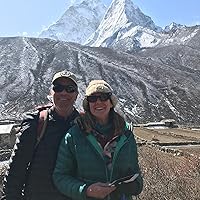
Julia is an American lawyer, an English solicitor, an international arbitrator, an author, a pilot, a reiner, and a grandma. She lives in Hamilton, Montana and Annapolis, Maryland with her husband and a golden retriever named Riley.
Bone Necklace by Julia Sullivan is a gripping fictional story of the Nez Perce War of 1877. The map of locations in the story is an excellent reference tool. Sullivan tells the story from the perspectives of an Idaho militiaman, a Nez Perce warrior, and an English kidnap victim. This allows readers to get a firsthand look into the different viewpoints on how personal lives are affected by the war brought about by the elimination of a harmonious relationship between the Nez Perce Tribe and the United States Government. Hostilities reach a boiling point due to the Nez Perce being forced to leave their ancestral homeland. The calvary engages the Nez Perce in battles as they flee over 1200 miles to try and reach Canada and freedom, as they do not want to live on a reservation or be prisoners of war.
The vivid descriptions of battle scenes give readers an insight into the horrors of a war in which both sides suffer a loss of lives and where women and children are not immune from appalling attacks. The story includes unbearable losses, brutal murders, retaliatory actions, the fallout from overindulging in alcohol, ill-treatment of people and animals, surprising revelations, kidnappings, thievery, and indomitable spirits even under crushing circumstances.
Bone Necklace is an extraordinary and eye-opening story that brings readers deep into the armed conflict between the Nez Perce Tribe and the United States Government. Readers will experience what characters on both sides of the conflict are going through as the Nez Perce desire freedom from a government that feels threatened by the Native Americans.
Sullivan has done an excellent job of writing a story that pulls readers in and keeps their attention. The story is put together with an expertly crafted writing style and seamless shifts in handling point-of-view changes. The book is exceptionally well-researched, with some characters based on historical figures and some of the events rooted in a historical basis. The poems and songs included in the story are a fantastic addition, as are newspaper articles and communications between military personnel.
The author’s note is full of fascinating information, such as a brief account of actual figures from history, black and white photos of figures who impacted a war filled with tragedy, and excerpts from various newspapers that covered a significant period in American history. The author has provided a list of books for anyone interested in learning more about the Nez Perce War.
Excellent read! The author did a masterful job researching and detailing the historical setting and content of this story, even providing photographs and historical details of some of the more important characters depicted. She was able to accurately portray the cultural settings of both the whites and the Nez Perce for the time, without falling into the current “political correctness” or revisionist history rhetoric so common in our day. In reading this story, one is able to experience the mistakes and heinous crimes committed by actors on both sides. One feels frustration with the ineptitude, arrogance, and simple antipathy exhibited by officials of the US government, yet one sees also the terrible acts committed by individuals on both sides against innocents and understands the the anguish, fear, and hate the white settlers had for the Indians tribes and the tribes for the white settlers. Sullivan was able to present both sides of the war on equal and accurate terms, telling both the bad and the good. It is a heart-wrenching story of war and suffering, yet there is beauty in it as well.
The story is told through the eyes of two individuals on opposite sides of the war, both of whom have great reason to hate the people of the other, yet who come to find a connection and a change of heart between themselves. It is a story of corruption, heinous crime, evil, regret, sorrow, and change. There are multiple levels of meaning embedded deep within the pages of this book. More than just a meaningful historical novel, I found it to be a powerful story of repentance, change, and redemption with a useful message for life in our world today.
A very worthy read. It left a lasting impression on me.
As a long-time resident of Montana, I am well-acquainted with the story of Nez Perce Chief Joseph and his tribe’s 1200-mile flight from Idaho through Montana toward the Canadian border. Julia Sullivan has written a novel that is true in historical details, but she embellishes history to draw the reader into the turmoil experienced by the U.S. cavalry soldiers, the tribe’s warriors, and the families of those men.
None of the characters are painted in black and white. Many are good people who lose sight of their humanity while trying to survive a brutal campaign. Wars have illustrated that frailty of character repeatedly since man began to walk upright on earth.
Sullivan’s command of language is expert, with dialogue that matches the novel’s characters well. Battle scenes are gut-wrenchingly described, exposing horrors that cannot be ignored in the telling of the story. There is no sugar-coating of the reality of war.
I highly recommend Bone Necklace to anyone who wants to delve deeper into a chapter in the story of America’s push to expand ever-westward.
First, I have to say how impressed I am by the amount of research that went into this book. There is so much historical detail about the time, and I learned so much by reading this book. It is about the Nez Perce vs. US government conflict in 1877. Copies of actual photos and newspaper clippings from the time are included for added authenticity.
The author tells the story using multiple points of view, so the reader can see both sides through the views of the characters. She also shares that both sides did some pretty terrible things. (Trigger warning: some of the horrible things are hard to read about. But they are historically accurate and appropriate given the subject matter.) Again, I learned a lot about this less-well-known part of history, while also reading an interesting story.
I enjoy historical fiction and this book caught my eye. I had never heard of Nez Perce tribe nor the final war, but this was an interesting book! The viewpoints from the Nez Perce warrior, English painter, and an Idaho militiaman made this for a riveting read. Not only was I engrossed within the pages, but I learned about the Nez Perce. Julia set the pace and made the plot gripping, so I had to finish it! I would definitely recommend this book!
There are some periods of American history that are steeped in controversy and Julia Sullivan has chosen one of these as the framework of her really very good historical novel: the Idaho wars between the government's army and the Nez Perce Tribe in the late 19th century.
Sullivan does much to ground it in the facts and reportage of the day with the extensive inclusion of pictures and contemporary accounts to be found at the rear of the book.
But what she effectively does within these pages is bring the events alive in a way that no reading of an historical text can do - through her description and her characterisation, focusing on her created key characters to show the impact of these events on the individuals who make up the tribes and the "white" men who are desperate to control them. It is a tale full of misery and loss in so many ways; however, there is the goodness of humanity here too and it makes for a balanced read.
We follow the lives of Running Bird, a young warrior of the Nez Perce, who has all of the impetuosity of youth and feels keenly the unfairness of the way his people have been treated: this is exacerbated by him having experienced a severe personal loss, which has affected him deeply; and Jack Peniel, drunken son of the local sheriff who has lost his way and is trying to find it again but with no beacon of light to follow, he is struggling. Becoming a soldier out of guilt and with the chance of redemption, he may just find this in the most unlikely of places.
What Sullivan is successful at presenting in her book is a human struggle in the face of prejudice and government expectation. Both sides are represented here but the focus is on the fight of the Nez Perce in the face of enduring prejudice, ignorance and the bad mishandling of events which lead to unnecessary escalation.
One particularly memorable part of the book that I liked was the inclusion of the tourists at Yellowstone, caught up in a conflict far from their world but destined to change it and them forever. This perspective provided an outside window into the conflict that really made me think: how would I have reacted if faced with people who I have been told are savages?
Great historical fiction.
This review was first published on Reedsy Discovery where I was privileged to read it as an ARC.
I really enjoyed this book. It is a historical novel that describes one of the last chapters of the existence of the Nez Perce tribe of indigenous people. I have spent some time in Joseph, Oregon, named after the Nez Perce chief, Joseph, and I have read a number of non-fiction books about this topic. I have hiked and explored a lot of the area where this book is set. The Nez Perce initially tried to interact peacefully with the invading white population. But, a number of incidents where both sides committed some horrible acts, resulted in war. The Nez Perce were vastly outnumbered, but fought fiercely and gained the respect of the attacking US army. This book is told through the eyes of a Nez Perce warrior and an Idaho militiaman. Both characters have their flaws and both are very interesting. The book sets the historical scene well and is very well written. I recommend this book highly to anyone that is interested in the history of the Pacific Northwest.
Hard to put down. It was truly eye-opening. Although the characters are fictional, they are based on real people who fought in the tragic war in 1877 between the Nez Perce and the U.S. Army. The author brings that all together in the end. It’s a reminder of the confirmation bias that can blind us from the real truth. I loved it from start to finish and look forward to her next book.
Eloquently written and meticulously researched, this historically based novel recounts the 1877 last stand against all odds of the Nez Perce Tribe in the American West, told through a host of marvelous characters.
A very good historical novel about the Nez Perce War of 1877, which was one of the most terrible stains on the reputation of the United States. The story is largely told from the standpoint of the Indians. It was interesting how the author related the true stories that inspired key episodes in the book.
This was a very good read! All the things the Nez Perces went through I am so glad this has a mostly happy ending! Though our leaders of the past had done wrongs.
I've read the numbers, the timelines, the generals' names, etc but this book made these events feel real in a way that I've been looking for
should probably warn people that it's extremely sad and graphic. it's a true part of american history though and the author does a good job of weaving in hope and pulling the reader through
What an incredible story woven into this fictional novel! The book is probably more history than fiction based on what little I have read of the Nez Perce tribe and Chief Joseph. I highly recommended this!
I want to thank Julia Sullivan for the copy of this book, ever since I moved to the Southwest my interest to learn more about Indigenous culture and the people sparked, this book about the Indigenous people known as Nez Perce Tribe is brilliant.. I am blown away with all the research that went into writing this book, to say Julia has a passion for this story and the history behind it is an understatement. She has written a fictional story based off of true events superbly..
In 1877 there was a war between the Nez Perce tribe and the US Army - the story is told from two perspectives - 𝐑𝐮𝐧𝐧𝐢𝐧𝐠 𝐁𝐢𝐫𝐝 is a young warrior of the Nez Perce Tribe, he has been though a lot and is tired of the injustice his people suffer at the hands of the "white" men who want to control this tribe and their land. 𝐉𝐚𝐜𝐤 𝐏𝐞𝐧𝐢𝐞𝐥 is the son of the sheriff, has a drinking problem and has no direction with his life, in what seems like a chance to make something of himself he joins the Army. While reading the book all the emotions of these men comes through beautifully- I feel that both sides were explained and told fairly, giving readers a lot of facts of what had occurred and a lot of history of this Tribe and the US military they were up against. I always struggle with how many Indigenous lives have been lost and it will always break my heart.. I enjoyed at the end of the book Julia has added pictures of actually tires members and members of the Army- looking back at this historical pictures just gave me more appreciation for this story- putting faces together with the events- this is a brilliant addition to the book.. I had no idea of this war that occurred but reading of the injustice and suffering was not just heartbreaking it was so educational and it piqued my interest to google and learn a little more about the history of the Nez Perce Tribe and how they were trying to flee America to go to Canada for freedom.. If you love history or if you are familiar with The Nez Perce Tribe this book is one not to pass by..
When the Lewis and Clark expedition passed through Idaho to the pacific coast in 1805, they encountered the Nez Perce Indians, the Nimiipuu (True People), who treated them well. On their way home in 1806 they found them again and were yet again treated well. Of all the indigenous tribes they encountered on their long journey, they spent the most time with the Nez Perce. However, by 1877, gold miners, loggers, settlers and the usual white scum had flooded their lands and a long period of peaceful relations with whites had ended. They were attacked by the military as well as settlers, attacked in return, and eventually the young and old, the sick and healthy, men and women fled the army across 1800 miles of rough mountainous terrain through Wyoming and Montana hoping to reach Canada. They were led by the famous Chief Joseph who surrendered with the weak and sick in Yellowstone Park, but 300 of them miraculously managed to make it to Canada. While the history of this arrival is covered in several of the many books on this last Indian war, the mere history tends toward dryness. The author, Julia Child, has brought thee story of these people alive and fascinating through a novel, Bone Necklace. She has worked through the historical documents and invented plausible characters, the most important being two brothers from a Nez Perce mother, one of whom was taken from their mother and raised as white and who became an increasingly reluctant soldier and a drunk. His gradual understanding of his identity is a crucial part of his resolve to aid the Nez Perce in their successful flight to Canada. Sullivan's book is a great read, a mastery of the subject, the violence and the society. She is a skillful author and I ended this book with a much greater understanding of the war, its tragic effects on the Nez Perce and a huge respect for Sullivan.
Bone Necklace by the author Julia Sullivan is a tale of survival. This story is told from the perspectives of a drunken Idaho militiaman. Jack Peniel was too drunk to save his step-mother Sally from the fire. His father had given him the responsibility to drive Sally's carriage to Fort Lapwai. But Jack was drunk at that time. His father asked him to join a militia unit as Jack owes it to Sally.
A man named Running Bird was persuaded to follow the white man's law. He along with his brother delivered their father's killer in the hands of the law just to hear that an Indian couldn't testify against whites. Nicole Lowsley was captured and her husband was shot in front of her.
This book inspires the readers to be courageous in times of crisis. I loved Jack's character. Julia has done great work in this debut novel. The story is gripping and I couldn't put this book down once I started reading it. It kept me on the edge of my seat as I read it. Those who love reading historical stories should get their hands on this one.
I honestly had never heard of this tribe or final war before, so this book taught me a lot. Because the author makes use of multiple points of view, I got to see it all through the eyes of both sides (and even through the eyes of a woman who wasn’t supposed to witness it at all). Even though there was a lot of information to process, it was all fairly easy to follow. There wasn’t a moment I didn’t understand who was who or what was going on. I do have to admit that it wasn’t always easy to read about the gruesome things that happened, but that of course, did make it more accurate. I applaud the author for this wonderfully written book and highly recommend it to anyone who’s into historical fiction!
Bone Necklace is a historical fiction inspired by true events. Hence , the story was blended with raw emotions till the end. The writing style was such that , I felt as if I was spectating the incidents . The story is told in three points of view so that the readers could grab the essence of the story within different angles and perspectives. This book made me emotional till the end because of the twisted characters. At the end , one can study the appendix as well as real pictures related to the story. Overall , I believe that the author's endeavor in bringing forward the story has become a success.
The Bone Necklace is a thoroughly researched historical fiction novel of the last war of the Nez Pearce. Ms Sullivan knows her subject well. Told from three different perspectives, the reader becomes part of the battle. Her descriptions of people, places and events transport you into the book. Even though you know the outcome of the story the story to get there is well worth reading. Even her author notes at the end should be read. Highly recommended to everyone who likes history, Indians or just good reading!
I Love the Truth of this book and of the Nez Perce Tribe. I am continually disgusted with the way Our Government has treated the first Americans. When the truth of all the injustices done to these Americans is proven as described in this book by author Julia Sullivan, and the research she has shared, We not only need to apologize, but to financially restore what was stolen. This is a book I will always remember, and recommend.
Well written and the basic facts are well documented. Fictional characters reflect real participants. I am very familiar with the heart wrenching story of how the Nez Perce were treated. Genocide on the part of our government is not pretty. We owe the Nez Perce and many other tribes more than we could ever pay. Perhaps we could start with a written apology and go from there?
Loved the ending. Wow, your character development is superb! Sad but true portrayal of horrible human behavior. I'm one who does not like reading foul language, even if it's an accurate depiction of the historical dialog. That and something else made me give it 4 stars. Otherwise, great book.
But oh so hard to read! This is the history in disappointing realism of how we treated the Nez Pierce. While understanding, it was a tragic and horrific tale. But the story is a good one and has a satisfying ending! Good read!
Historical fiction is one of my favorite genres and this book caught my eye immediately. This is a historical fiction book that is based on real-world events. This story follows the Nez Perce tribe and the war that took place in 1877.
This is my first time hearing about the Nez Perce vs US war and I think that Julia did an amazing job of not only simplifying and explaining what happened during the war but also managing to make the story so interesting and gripping that she keeps us as readers, so fully engaged and on the edge of our seats throughout this book.
I really liked that the author shared more than just one point of view throughout the story. We get to see three different POV's; a Nez Perce warrior, a kidnapped English victim and an Idaho militiaman and witness their thoughts and experiences throughout this journey and how they were each affected differently by this war/conflict. There was no good side or bad side. We got to see the tragedies of both sides along with all the damage each side inflicted upon the other and even some innocents caught in the way, which I think makes it an even more interesting read.
I'm impressed by the amount of research that Julia did before writing this book. You can see the amount of effort that was taken to make sure that everything was historically accurate. She had also added newspaper clippings and photos from 1877. Julia has managed to describe this story in an eye-opening and heartbreaking yet beautiful way.
Highly recommend for all history lovers and anyone who wants to learn more about America's history and the Nez Perce tribe. I will definitely be picking up Julia Sullivan's next book!
It is a story in American history that holds relevance today also on the grounds of racism and the need to fight for your own rights.
The story starts with narration by Jack, whose mother has died, and then he meets Motsqueh at an orphanage. It's the story of an Idaho militant and his contribution to the formation of the Nez Perce. It's an inspirational story of a boy who gets caught up in violence, contributes to the army, fights against the US army, and finally emerges victorious against all the odds.
The plot of the story is intriguing, with a vivid narrative of tension during times of war. The story is divided into four parts across 37 chapters. The way events are arranged between them is exciting.
The story delves deeper into people's lives in 1877. I liked the way the author captured every minute detail right from the start while discussing Jack and her mother, Sally.
The writing style is gripping and captivating. It's a fast-paced story with well-built characters readers can connect to.
It might seem like a heavy read, but it is actually a true gem. The way the author has put forth the plot, the narration, and the characters is commendable. There is also a map at the beginning that marks the region under them. It is intriguing to see how the story unfolds and the climax at the end.
A fascinating description of the arrogance of the U.S. in initiating and fighting the wars against Native Americans, taking their land and murdering their people without mercy or shame. The characters felt so true-to-life, in large part because the author based them on composites of real people. The book portrays the heartbreak our country brought to a peaceful people, and the myriad ways they were forced to protect themselves, often at the expense of their own values. A real and well-researched history lesson, as well as a love story -- not only the love (platonic and otherwise) of the Native Americans for each other, but also for the country that was theirs and that we stole.
Heartfelt and suspenseful, Bone Necklace conveys the brutal reality of the U.S. military’s campaign against the Nez Perce people, whom they chased for over 1,000 miles from Oregon to Canada during the summer of 1877. Told from multiple perspectives and interlaced with real news articles that appeared at the time, the novel brings the reader inside the harrowing experience of those fighting on both sides, and highlights the shifting sentiments of the press and American public. This is a great book, a must read for anyone interested in Native American or U.S. history.