Since the death of her best friend Grace, twenty-six-year-old Eve has learned to keep everything and everyone at arm's length. Safe in her detachment, she scrapes along waiting tables and cleaning her shared flat in exchange for cheap rent, finding solace in her small routines.
But when a chance encounter at work brings her past thundering into her present, Eve becomes consumed by painful memories of Grace. And soon her precariously maintained life begins to unravel: she loses her job, gets thrown out of her flat, and risks pushing away the one decent man who cares about her.
Taking up life-modelling to pay the bills, Eve lays bare her body but keeps hidden the mounting chaos inside her head. When her self-destructive urges spiral out of control, she's forced to confront the traumatic event that changed the course of her life, and to finally face her grief and guilt.
Chloë Ashby is an author and arts critic. She writes and reviews for publications including The Times, the Guardian, Harper’s Bazaar, and the TLS.
She is the author of the novels Wet Paint (2022), Second Self (2023), and Family Friends (2026).
She is also the author of two non-fiction books on art history: Look At This If You Love Great Art (2021); and Colours of Art: The Story of Art in 80 Palettes (2022), a Times best book of 2022.
“Max closes his eyes. ‘Eve, I’m sorry.’ As he reopens them, he reaches across the table to hold my hand. ‘I wish you’d told me.’ ‘Telling you doesn’t change anything.” - This story is about a woman who's falling apart while simultaneously losing her mind and self-worth.
The book was well thought-out and in my opinion, executed perfectly. This book has countless layers, but it leaves room for interpretation. It was incredibly detailed, with fleshed out characters. I was sobbing by the end of it, and when I woke up the next day, this book was the first thing I thought about.
There are many reasons why I loved this book, but most of all, I loved the title. You can only understand the meaning after going through the entire journey, and the journey my friends, was not an easy one.
That being said, if you've lost a friend to suicide, this book could either be a source of comfort or rub more salt into the wound, and for me, it did both.
4.5 stars - Needed to come back to my review of this one because this book still hasn't left my head after all these months and so I'd like to say once again: Oof.
For a book that spent paragraphs on multiple metaphors for one thing, and gave so much unneeded information on small conversations or what the main character was eating, the ending, characters, and the main backstory were all wrapped up in 5 pages. No thank you.
I received this book from the publishers via NetGalley in exchange for honest review.
Eve is a struggling 26-year-old with a dead end job and a tricky living situation, she starts finding herself struggling with delayed grief over her friend's death in college. Soon Eve loses her job, and finds a new gig as a life model. But as her mental health spirals, Eve begins to lose control of reality and things get darker.
This is definitely something I'd classify as 'sad girl fiction' with a story following a millennial young woman struggling with the expectations of life, the death of her friend and her father's alcoholism. I did enjoy following Eve go about her life, though at times it was hard watching her spiral and things getting worse and worse for her. I liked the writing style, and there were times the emotions and feelings of the story were so strong, I felt for Eve so much. She is a character who is very much alone in the world - her family consists of a dead-beat dad, her relationship with her flatmates who are like a family crumbles during the course of the story and then she has her maybe-boyfriend Max who thankfully is a really decent guy.
One of the problems I had with this book is the troubling way a sexual assault case is handled during the course of the novel. It's very clear a rape occurs on page - at least to the readers - and we see the character struggle with what has happened and blame herself but at no point during the rest of the story does she tell herself or others that what happened was wrong and it was rape. I would have liked this to have been explored more in terms of the character opening up about what had happened, acknowledging it wasn't her fault and the perpetrator getting some kind of punishment for what he did - none of which happens which I felt very disappointed in,
Again one of these books that I went into completely blind, which is my favorite way to start a book. Chloe Ashby really has a way with words, I absolutely loved her writing in this book. It really helped me to get into the story and really feel like I was there with the main character, right there by her side. Also I think that the way she wrote the book really helped to get the story across without being too triggering, at least for me BUT please still check the trigger warnings before starting this book. It‘s about a woman in her mid/late twenties that had to deal with a some trauma in the past and talks about how she copes with it and honestly it felt like such a real presentation of how people can deal with stuff like that. It felt like she didn‘t really „cope“ with anything at the start of the book which is the truth for so many people out there because we sometimes don‘t know how to cope, so we just continue to live on and function without addressing the trauma and help we actually need. I don‘t want to say much more since I don‘t want to spoil to much about this BUT I really related to the main character in some ways and I think stories like these are important to write to maybe start a conversation even though I still would‘ve liked the end to be different or at least longer because I just wanted to see how it continues with her. It was also a little confusing at the time but that‘s because I feel like in her head it must be confusing for her a lot and that’s what made it so believable, at least for me if that makes sense. Anyway, I‘d recommend this book to anyone that can handle the triggers in the book. Triggers: suicide, suicide attempt, alcoholism, rape
the writing was mediocre. the plot was typical. it was all very predictable, really. the mid-text flashbacks were fine but i did not really feel the depth and complexity of their friendship, which, in some ways, is the heart of the novel. i like the symbolism of the painting and what Molly meant to her. i also like that getting therapy was put importance and i greatly enjoyed the execution of the series of events that made her end up in Oxford, spiraling. though really, i must warn everybody that there is a rather graphic depiction of suicide here that may be triggering.
it's not an awful book but it's not that good either, which is disappointing considering i've been looking everywhere for this novel since its release. i just found it quite lacking and not up to par with my expectations, but maybe that's on me.
I had a feeling this book would be my kind of read, so bumped it up to the top of my TBR list when it dropped through my letterbox on Thursday. It didn’t disappoint. I like books that explore the harsh realities of life, and Chloe does this through the character of Eve. In the first few pages, I knew I was in safe hands as Chloe’s writing is full of honesty and dry wit. Eve is struggling, spiralling, self-destructing and making bad choices but doesn’t seem to care. I believe all readers can empathise with her in some way as she struggles with grief, trauma, guilt, depression but there’s hope at the end. A ‘pack a punch’ debut by Chloe. Highly recommend.
This book was a bit boring. I'll probably write more about it later but it took some work finishing this. I like the ending and how things wrapped up nicely but beyond that, it just didn't hold my attention. Trigger warnings for on-page rape by the way. I think there was a lot of say about the art world and how sexually exploitative it can be but it was hard being in this main character's head because she's pretty drained of her energy. I get that's the point but still. I think the saving grace for me is the fact that it honestly captures what it's like being depressed.
This hit me harder than I expected. I started the novel before going to bed, thinking I’d read a few chapters, but I couldn’t put it down. After finishing it, I was so emotionally overwhelmed that I couldn’t sleep. The way the book portrays grief is deeply affecting. It’s something many people may experience in life, but the way it’s explored here feels especially raw and intense. The pain of losing someone under such circumstances is handled with a depth that makes you feel how overwhelming and complicated that kind of grief can be. Writing about a subject like this takes courage, and I think the author handled it beautifully. Part of why this story resonated with me is that I care deeply about people and their mental health, and I also deal with my own struggles on a daily basis. That made the emotional weight of the story feel even more personal.The messy, unpredictable nature of the characters’ lives, along with the use of flashbacks, was also very effective in showing how grief lingers and resurfaces over time. It also felt triggering for me at times, especially toward the end. I found myself thinking about people who have gone through similar experiences, which made it even more heartbreaking. It’s devastating, but it also feels very real. In that sense, I think the book portrays this part of life with honesty and care.
This book is written in a really interesting style, as we have a first person narrator and are continually going back and forth in time. Through Eves thoughts we get to understand her irrational behaviour and her emotions. However, this book would have been better with half of the pages. It is straight up boring until the last 100 pages and the ending was absolutely unsatisfying und plump. It really felt as though the author just wanted to quickly rep up the book and purged the plot onto the last pages. I was really disappointed and would not recommend this book.
“But I don’t have much else to show for my lack of an upbringing. My upbringing brought low. My downbringing.”
Gosh this book was so good. It follows a woman named Eve who’s in her late twenties, struggling with life while grieving the loss of her best friend.
I’ve always loved books where the narrator is struggling, simply because I see glimpses of myself within the characters, wanting to reach out, immerse myself into the book to give them the biggest hug. To let them know that they’re not alone in their feelings of solitude, sadness or loneliness.
It’s quite hard to describe why I loved this book as it’s not very plot heavy, it’s what I would describe as a quiet novel. But it makes you feel so much, and that’s the beauty of this book.
If you have ever lost a friend to suicide, I think this book will give you some comfort, and if you have a complicated relationship with your parents, this will be the perfect book for you.
26-year-old Eve struggles to keep herself financially afloat and deals with unprocessed grief caused by the death of her best friend Grace. She has some people in her life who truly care about her, but she keeps them at an arm’s length and has some slightly self-destructive tendencies.
Overall I feel very neutral about this book, though I have more criticisms than positive things to say.
The story is fairly mundane and plotless. Some passages bored me; e.g. elaborate descriptions of Eve doing the dishes. In some cases it may be functional, but in this book I didn’t feel like it added much.
The writing style also wasn’t my thing. I found it messy, chaotic and sometimes there were loads of uninteresting details about the surroundings, someone’s clothes or food that added nothing to the atmosphere, story, nor tone, making the prose even messier, unnecessarily long-winded and tedious. The tone seemed to be somewhat childish at times. I can imagine these were all conscious choices made by the author, but I personally didn’t like it.
However, the story and characters didn’t leave me entirely unmoved. Especially the second half had me more engaged -- I think because of the different relationships Eve has and the rhythm of her life being well established by then, which allowed further exploration of it. I also think the second half of the book has a nice emotional arc and climax. Eve regularly has flashbacks to moments with Grace, which come to her more often as the story progresses, and these add to the build to the climax.
All in all I didn’t particularly like nor dislike the book and some parts interested me more than others. Though I don’t think it’s for everyone, I do think it has a certain merit. If it sounds interesting to you I’d give it a chance! I think the first 30 pages or so will give you a good idea of whether you’ll enjoy the writing style or not.
Wet Paint is centred around Eve, who is trying to live her life as best as she can after the devastating death of her best friend, except now the past is merging with the present and her carefully built up bubble around her is starting to crack and it doesn’t take long for it to come down around her completely.
This one is about avoiding or burying grief and not dealing with it so that eventually when you’re forced to deal with it you just implode entirely, I related with Eve on that much, it’s exactly what happened with me after I lost my grandma in 2019. The trouble is no matter what Eve does, nothing will ever keep her mind off of her loss, and she’ll spiral until she learns coping mechanisms to try and halt the spiralling before she loses it completely.
The pacing was a bit slow for me and I ended the book not really knowing if I liked Eve or not as a person, trauma and loss aside, she had a hard upbringing but that doesn’t entitle you to act out or use it as an excuse for behaving badly.
Definitely worth a read if this one crosses your path! Thank you Orion Publishing for sending me a copy in exchange for my review.
There's a lot of promise in the writing, which made it frustrating when on the whole this book didn't deliver. Lots of unnecessary adjectives and similes especially in the first half, as if the author was trying to impress her English teacher in creative writing class. They could have been really good, if they were incorporated more fluidly.
The protagonist herself lacks much depth (despite the events of her life) and there's also a real lack of questioning of the world, or anything particularly insightful conveyed by her story. She constantly mentions gender, without having anything interesting to say. This is all either unintentional and unimaginative from Ashby, or an incredibly well-executed but questionably founded deliberate decision.
This review sounds really harsh - I actually did want to keep reading, all the way through, and I thought the descriptions of all the mundanities of Eve's day were really effective in building a portrait of her life - and her dissociation.
raakte mij emotioneel niet zo hard als zou moeten, eve bleef distant voor mij en omg girl stop met stelen wtf en ja molly was wel leuk maar ja ben ik niet alles mee oeps. wel zeer interessant hoe life model lessen werken. de love interest had niks maar dan ook werkelijk niks van inhoud?? het plot geraakte precies gewoon niet af en hij was de oplossing?? ook hoe snel kreeg eve altijd jobs??? das niet de echte wereld hoor. de schrijfster had ook kunstgeschiedenis gestudeerd, dus ik vond het jammer dat er minder daarover werd gezegd. wel mooie cover en soms leuk! leek helaas een beetje alsof alles draaide om de mannen in het stuk, die vrij zwart-wit waren. schrijfstijl was ook te langdradig en uitgebreid.
Eve has lost her mother when she left the 5-year-old and her father and never made contact again. Even though she somehow managed to cope with this experience, losing her best friend Grace totally throws her off the track. At 26, she is waiting in a bar despite having studied art at Oxford. Yet, she does not keep that job for long, just like any other job or the flat she shares. Nothing seems to linger in her life except for the painting she visits over and over again in a London museum and Max, a teenage friend. But even for Max it becomes increasingly harder to see how Eve throws away her life and does not accept any help.
Chloë Ashby’s debut novel brilliantly captures the protagonist’s being lost in the world after the death of a beloved friend that she has never gotten over. “Wet Paint” shows a young woman in survival mode who is far from unleashing her potential as she is straying in her life without aim or goal, from time to time colliding with reality but more often lost in thought and locked away in herself.
Eve is incapable of good relationships as she is far from being at ease with herself. Connecting with other people, being honest and really caring for them is impossible for her in state she is in. The only other being she shows real affection for is the young girl she babysits, but here, too, she is too lost in her thoughts and puts herself and the girl in danger.
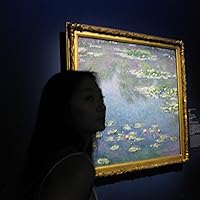
The only constant in her life is a painting she observes closely and which calms her. Just the thought of the museum closing for a holiday makes her get nervous and when the museum loans her beloved pieces of art to another one, she almost freaks out, losing the last straw in her life.
It is not easy to watch how a young woman, lovable despite the way she treats others, is going down the abyss, yet, you can only help those that want to be helped. That’s what some characters also experience, they really care for her but can’t do anything to as long as she refuses to acknowledge her situation and to take necessary measures to improve her situation.
Not an easy read but in my opinion an authentic representation of the protagonist’s state of emergency.