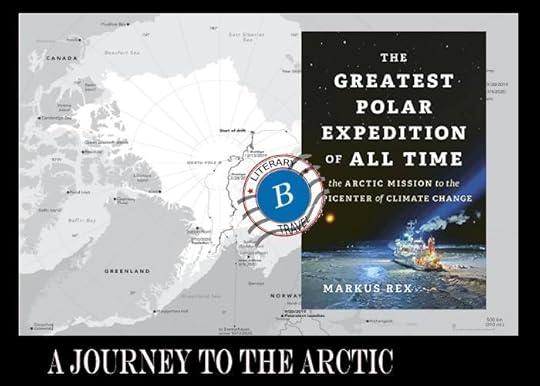
A captain's tell-all about the world's largest Arctic expedition--an illuminating account of seafaring adventure, Arctic natural history, and cutting-edge climate science
Atmospheric scientist Markus Rex recounts the monumental Arctic expedition he captained for one year in this gripping and authoritative audiobook. A groundbreaking step towards understanding the climate crisis, the MOSAiC expedition--launched in 2019 by the Alfred Wegener Institute for Polar and Marine Research--was the first of its kind, journeying deep into the epicenter of climate change, the Arctic, to seek hard-to-find and potentially world-changing scientific data.
Rex begins with life aboard the Polarstern, a powerful icebreaker ship that is frozen into fragile ice and carried across the Arctic by the Transpolar Drift. Away from the rest of the world, the team prepares for life under brutal conditions, constructing cities and towns on the ice where they will study the Arctic ecosystem, its atmosphere, ocean, sea ice, and more. A terrifying feat that had never been attempted before, the team of hundreds of scientists perform their research during terrifying storms, cracking ice floes, frostbite, and even quarantines as Covid-19 sweeps the globe.
But there are heartwarming moments, too, as Markus Rex describes Christmas parties on the ice and polar bears playing with scientific equipment like puppies. He muses on expeditions past, such as the ill-fated Franklin Expedition, and Fridtjof Nansen's Fram expedition, which he follows as a guide. And he explores answers to the pressing questions facing the Arctic today: How will climate change impact this precious ecosystem--and therefore the rest of the world? What is the best way to protect the Arctic? Interweaving history, science, and memoir, The Greatest Polar Expedition of All Time is about the teamwork it takes to complete a risky goal, all in the name of understanding--and responding to--the climate crisis.
Have you ever wondered how scientists come up with the data on climate change? Then this book is for you! This book describes the year long MOSAIC expedition, launched by the Alfred Wegener Institute for Polar and Marine Research. The institute sent the Polarstern maritime research ship into the Arctic Ocean to be frozen in for a whole year, following in the footsteps of Norwegian explorer Fridtjof Nansen, who did the same in a wooden ship in 1897. The Polarstern is a modern icebreaker ship and built for sailing in the polar regions. The measurements taken included sea ice thickness, water temperatures, air temperatures, (using a tethered weather balloon), and much more. The ship zigzag route covered over two thousand miles. Expedition members came from thirty-seven countries. There were eighty partner institutions and scientific institutes from twenty different countries. The translation was excellent. I recommend this book to anyone interested in the process of climate change. I read it in 3 days. There are black and white pictures in my advanced reader copy. The published copy will have color pictures and an index. Thanks to Greystone Books for sending me this book through LibraryThing. I rate it 4.5 stars rounded down.
Disclaimer: ARC via Librarything giveaway. Markus Rex’s account of the MOASiC group’s polar expedition reads more like a diary or a brief journal of the expedition. Rex details the various changes that have occurred in the North Pole because of climate, including a very interesting discussion of sea ice. Rex clearly conveys the risks to the Arctic as well as to the Earth general because of climate change. Additionally, his passion for the science and belief in the importance of his expedition are clearly conveyed.
While the science part of the book is interesting, and is important because of climate change, there really isn’t a sense of the people or even expedition itself. The reader gets the whys and wherefores but there is not a real sense of place. Rex conveys his love for what he is doing, the importance of the science, but what doesn’t appear is the sense of being at the North Pole. There is also a strange lack of other people. There are over 100 people on the mission, and while Rex, eventually, gets around to naming some of them, there is little sense of who they are as people. This is weirdness is furthered at various points in the book - for instance “the captain” is mentioned several times before Rex gives the man’s name or when in a nice little bit about cuisine on the ship, Rex applauds the kitchen staff, but never mentions their names. It is a strange thing.
That said, why the book does feel very much like his journal so he didn’t forget what happened at places, I am still glad I read it.
Ich bin so froh, dieses Buch gelesen zu haben! Nicht nur berichtet es von einer der wichtigsten Expeditionen überhaupt, ich habe dadurch auch richtig viel gelernt. Ich hatte Befürchtung, dass es etwas „trocken“ werden könnte, aber das war überhaupt nicht der Fall. Es liest sich wie ein Abenteuerroman mit viel Spannung und einem bildgewaltigen Schreibstil. Außerdem war es sehr emotional beschrieben, wodurch ich häufig die Stimmung an Bord richtig greifen konnte. Ein unglaubliches Erlebnis, das ich jedem empfehlen kann.
Markus Rex war Expeditionsleiter der Mosaic Expedition auf der Polarstern. Der deutsche Eisbrecher lies sich für ein Jahr im Eis der Arktis einschließen, um umfassend Daten zu sammeln, insbesondere mit dem Hintergrund den Klimawandel besser zu verstehen und den Datensatz für Simulationen zu erweitern. Markus Rex kann wunderbar erzählen und macht die Forschungsarbeit dem breiten Publikum zugänglich. Er erzählt episodenhaft von den Vorbereitungen, der Durchführung und Geschehnissen an Bord. Da die Expedition 2019 begann, musste sich auch die Mannschaft mit den Geschehnissen rund um SARS-CoV-2 herumschlagen und lange Zeit sah es so aus, als würde die Expedition frühzeitig ein Ende finden. Markus Rex ist bei seinen Schilderungen sehr respektvoll gegenüber seinen Mitstreitern, was mir sehr positiv auffiel. Als Wissenschafterin hätte ich mir mehr Einsicht in die Forschungsarbeit gewünscht und den Alltag der Forscher, das wurde nur am Rand erwähnt und eher grob abgehandelt. Wie ich auch oben schon beschrieb, hat es Markus Rex geschafft, die Expedition unglaublich zugänglich in Worte zu fassen, die Bedeutung für die Klimaforschung herauszustellen und auf die Dringlichkeit hinzuweisen, Maßnahmen gegen den Klimawandel vorzunehmen. Entsprechend ein sehr wertvolles Buch, dass Forschung im allgemeinen als auch Klimaforschung im Speziellen der Gesellschaft näherbringt, ohne durch zu viele wissenschaftliche Details unnahbar zu wirken. Als wissenschaftlich interessierter Leser/Leserin sollte man dann zusätzlich auf die Website von Mosaic gehen, denn dort findet man die ganzen Forschungsdetails, die Markus Rex nicht in sein Buch integriert hat. Lesenswert!
Ein wirklich gelungenes Sachbuch! Ein gewisses Interesse für die Arktis und/oder das Weltklima vor dem Lesen ist von Vorteil, weil der Text inhaltlich doch eher versiert und nicht populärwissenschaftlich aufgebaut ist. Der Autor und Expeditionsleiter weiß wovon er schreibt und gibt sich viel Mühe alles verständlich, aber auch detailreich an seine LeserInnen weiter zu geben. Besonders eindrücklich fand ich auch die vielen tollen Bilder, die so zahlreich zwischen den Seiten treiben wie die Eisschollen im arktischen Sommer. Dabei fehlt es dem Inhalt weder an Witz noch an Ernsthaftigkeit. Und letztere wird bei einem aktuellen Buch über die Arktis gebraucht, denn...sie schmilzt! Zwar muss man sich nicht mit einem Eisbrecher im arktischen Winter einfrieren lassen um diese Faktenlage endlich einzusehen, aber dieses Buch liefert dank der vorgenommenen Forschung akkurate Details dazu warum genau, wie genau und wie schnell eigentlich die Veränderung vonstatten geht. Wer dieses Buch auch lesen möchte dem seien ermutigend die Worte Ingeborg Bachmanns mitgegeben: "Die Wahrheit ist dem Menschen zumutbar."
“Our generation may be the last to experience an Arctic that is covered in ice year round,” Markus Rex states. To understand what is happening and ascertain the impact of climate change, someone had to study the Arctic ice. And the best way was to trap an icebreaker into a stable ice flow, set up camps with scientific equipment, and travel with the ice…for a year!
Over a hundred years ago, intrepid Arctic explorer Fridtjof Nansen first accomplished this feat. In 2019, a team with hundreds of scientists from across the world went into the Arctic ice. Markus Rex tells their story day by day. With beautiful descriptions of the Arctic world, thrilling stories of the challenges of life on shifting ice, and continual threats from Polar bears, the book is a thrilling quick read. Rex includes stories that humanize the scientists, and offers easily understood scientific insight. It also includes a multitude of photographs.
Rex warns that immediate action must be taken to avoid the loss of Arctic ice and avoid the inevitable results, The expedition was made possible by cooperation across nations. That cooperation is imperative to meet the threat of climate change. Our only hope, he warns, is to embrace multilateralism.
I enjoyed the book and appreciate it’s message. I personally would have enjoyed an appendix chapter with some of the knowledge gained from the experiments taken during the expedition. Perhaps that is another book!
I received a free ARC from the publisher through LibraryThing. My review is fair and unbiased.
🇬🇧 English review below ⬇ ........................................................................................
Weiter geht’s in meinem Sachbuch Leseplan. Nach all den Büchern mit feministischen Themen, hatte ich Lust mich mal in einem gänzlich anderen Thema zu belesen und als ich dann diesen Expeditionsbericht entdeckte, war meine Neugierde sofort geweckt. An die Rückkehr der Polarstern erinnerte ich mich wage aus den Nachrichten, sonst wusste ich aber bis dato kaum etwas über die MOSAIC Expedition und beschloss, dass es höchste Zeit war, dies zu ändern.
Ein Jahr Arktis Der Bericht gleicht mehr einem Tagebuch, denn eines richtigen Logbuchs, aber das ist auch gut so, denn wer will schon die ganzen nautischen Einträge wissen, die zu einem echten Logbuch gehören? Nein, es ist viel interessanter zu lesen, was Expeditionsleiter Markus Rex und sein Forschungsteam in den Weiten der Arktis erleben. So begeben wir uns an der Seite der Polarstern auf die Suche nach einer passenden Scholle (schon gleich schwieriger, als zuerst angenommen), bauen das Forschungscamp auf, treffen und verjagen Eisbären, erleben Stürme und Eisverschiebungen und erforschen das Klima der Welt.
Das Alles mitzuverfolgen macht vor allem deshalb Spaß, weil Markus Rex einen wirklich angenehmen Schreib- und Erzählstil hat. Er trifft genau die Balance zwischen Wissenschaft und Abenteuer. Auf der einen Seite erzählt er relativ ausführlich, was genau die Forscher da auf ihrer Scholle eigentlich tun, bleibt dabei aber immer für den Laien verständlich. Auf der anderen Seite lässt der Polarforscher auch sehr viel Zwischenmenschliches durchblicken. So erzählt er auch von der Belastung monatelang in absoluter Dunkelheit zu leben, aber auch von dem Zusammenhalt des Teams und wie die Forscher zusammen spielen, lachen und feiern. Diesen Einblick in das Alltagsleben der Expeditionsteilnehmer fand ich ebenso interessant wie die Forschungsarbeit. Tatsächlich wurde die ganze Expedition so facettenreich beschrieben, dass ich eine unbändige Lust empfand, ebenfalls an solch einem internationalen Forschungsprojekt in der Arktis teilzunehmen und das, wo ich eigentlich der totale Sommermensch bin! Ich fürchte nur, wenn man in Zukunft nicht plant am nördlichsten Punkt der Erde ein Museum zu eröffnen, wird es für eine Museologin wie mich keinen Bedarf auf der Polarstern geben 😅.
Aktuell wie nie Was mir weiterhin an dem Buch sehr gefallen hat, ist die Aktualität und damit meine ich nicht, dass die MOSAIC Expedition erst vor kurzem beendet wurde, sondern vor allem die Erkenntnisse, die schon jetzt daraus gewonnen wurden. Nirgendwo sonst erwärmt sich die Erde schneller, als in der Arktis, irgendwo sonst lässt sich der Klimawandel deutlicher mit bloßem Auge beobachten, dass macht Markus Rex deutlich und anschaulich klar. Dabei hat er es nicht nötig mahnend oder belehrend auf den*die Leser*in einzureden, nein, die schlichte Schilderung von dem, was das Team in der Arktis vorfand, reicht aus, dass einem das Herz schwer wird. Ob nun dann, wenn die Expedition schon kaum zu Beginn kaum eine Scholle findet, die dick genug für ihr Vorhaben ist, oder wenn ihnen im Sommer die Scholle schneller wegschmilzt, als das Team arbeiten kann. Diesem einzigartigen Lebensraum rennt in erschreckendem Tempo die Zeit davon und der einmalige Datensatz, den die Polarstern gesammelt hat, unterstreicht dies nochmal mit einem dicken Rotstrich. Die Wissenschaft hat geliefert, jetzt ist die Politik dran und es bleibt nur zu hoffen, dass die Warnrufe nicht ungehört verhallen. Doch nicht nur im Thema Klimawandel zeigt sich die Aktualität des Buches, auch von die Auswirkungen von Corona für die Expedition, erzählt uns der Polarforscher.
Informativ und toll anzuschauen Als Letztes möchte ich noch auf die Ausstattung und Gestaltung des Buches eingehen und auch hier kann ich nur Worte des Lobes finden. Auf dem vorderen Vorsatzpapier finden wir eine Karte der Region mit der Route der Polarstern eingezeichnet. Die ist sehr hilfreich, wenn z.B. von den zwei großen Driftmöglichkeiten die Rede ist. Was mir als Leserin aber noch viel mehr beim Visualisieren des Geschildertem geholfen hat ist, was sich auf dem hinteren Vorsatzpapier befindet, nämlich ein (etwas schematisierte) Plan des Forschungscamps. Wenn Markus Rex von den diversen Forschungsstationen spricht (die vom Team liebevolle Namen, wie Ballon Town oder Ocean City bekamen), die zusammen fast eine ganze kleine Forschungsstadt bilden, hat es mir sehr geholfen ein ungefähres Bild vor Augen zu haben. Aber auch sonst kann sich das Buch optisch sehen lassen. Das Papier ist dicker und farbintensiv, dadurch kommen die zahlreichen Farbfotos gut zur Geltung. Unter diesen Fotos befinden sich u.a. tolle Aufnahmen von Eisbären, faszinierende Fotos von “Eis Fata Morganas” und viele viele weitere Fotos, die das, was uns der Expeditionsleiter erzählt deutlich greifbarer machen. Und last but not least ein letztes Lob für die zahlreichen Infoboxen im Buch, die manche Sachverhältnisse nochmal kurz, knapp und aufschlussreich intensiver erklären. Super lehrreich und sehr spannend.
Fazit: Mit Eingefroren am Nordpol liefert uns Markus Rex einen faszinierenden Einblick in die größte Arktis Mission der Geschichte. Informativ und doch unglaublich nahbar erzählt und mit einem Thema, das aktueller nicht sein könnte, ist dies ein Sachbuch, das ich jedem ans Herz legen kann.
◾◾◾◾◾◾◾◾◾◾◾◾◾◾◾◾◾◾◾◾◾◾◾◾◾◾◾◾◾◾◾◾◾◾◾◾◾◾◾◾◾◾◾◾◾◾◾◾◾◾◾◾◾◾◾◾◾◾◾◾◾◾◾◾ ❗Important note: English is not my first language. So that English-speaking community members can still read my review, my review has been translated with the help of a translation program (since I don't have the time to translate it myself every time). I therefore apologize for any mistakes and strange phrasing.
I'll continue with my non-fiction reading plan. After all the books with feminist themes, I felt like reading about a completely different topic and when I discovered this expedition report, my curiosity was immediately aroused. I vaguely remembered the return of the Polarstern from the news, but otherwise I knew little about the MOSAIC expedition and decided it was high time to change that.
One Year Arctic The report is more like a diary than a real logbook, but that's good, because who wants to know all the nautical entries that belong in a real logbook? No, it is much more interesting to read what expedition leader Markus Rex and his research team experience in the vastness of the Arctic. So we set off alongside the Polarstern in search of a suitable floe (already more difficult than first assumed), set up the research camp, meet and scare off polar bears, experience storms and ice shifts and investigate the world's climate.
Following all this is fun, especially because Markus Rex has a really pleasant writing and narrative style. He strikes the right balance between science and adventure. On the one hand, he tells in relative detail what exactly the researchers are actually doing on their floe, but always remains comprehensible to the layman. On the other hand, the polar explorer also reveals a lot about interpersonal relationships. He talks about the strain of living in total darkness for months, but also about the team spirit and how the researchers play, laugh and celebrate together. I found this insight into the everyday life of the expedition members just as interesting as the research work. In fact, the whole expedition was described in such a multi-faceted way that I felt an irrepressible desire to also take part in such an international research project in the Arctic and this when I am actually a total summer person! I'm just afraid that if they don't plan to open a museum at the northernmost point of the earth in the future, there will be no need for a museologist like me on the Polarstern 😅.
More up to date than ever. What I continued to like very much about the book is its topicality, and by that I don't mean that the MOSAIC expedition was only recently completed, but above all the insights that have already been gained from it. Nowhere else is the earth warming faster than in the Arctic, nowhere else can climate change be observed more clearly with the naked eye, Markus Rex makes this clear and vivid. He does not need to admonish or lecture the reader, no, the simple description of what the team found in the Arctic is enough to make your heart heavy. Whether it is when the expedition hardly finds a floe thick enough for their project at the beginning, or when the floe melts away faster than the team can work in summer. Time is running out for this unique habitat at an alarming rate and the unique data set collected by Polarstern underlines this again with a thick red line. Science has delivered, now it's the politicians' turn and we can only hope that the warning cries will not go unheard. But the book's topicality is not only evident in the topic of climate change; the polar researcher also tells us about the effects of Corona on the expedition.
Informative and great to look at. Lastly, I would like to comment on the book's layout and design, and here too I can only find words of praise. On the front endpaper we find a map of the region with the route of the Polarstern drawn in. This is very helpful, for example, when talking about the two large drifting possibilities. But what helped me as a reader even more in visualising what was described is what is on the back endpaper, namely a (somewhat schematised) plan of the research camp. When Markus Rex talks about the various research stations (which were given affectionate names by the team, such as Balloon Town or Ocean City), which together form almost a whole small research city, it helped me a lot to have an approximate picture before my eyes. But the book is also visually impressive in other respects. The paper is thicker and colour-intensive, which makes the numerous colour photos stand out well. Among these photos are great shots of polar bears, fascinating photos of "ice mirages" and many many more photos that make what the expedition leader tells us much more tangible. And last but not least, praise for the numerous info boxes in the book, which explain some facts briefly, concisely and informatively. Super informative and very interesting.
Conclusion: With "The Greatest Polar Expedition of All Time", Markus Rex provides us with a fascinating insight into the largest Arctic mission in history. Informative yet incredibly accessible, and with a topic that could not be more relevant, this is a non-fiction book that I can recommend to everyone.
Das Buch “Eingefroren am Nordpol” von Markus Rex erzählt die Geschichte von der Arktisexpedtion an Bord der Polarstern. Das Schiff brach im September 2019 auf um sich in der Arktis einfrieren zu lassen und sich mit dem Drift inmitten des arktischen Winters durch die Arktis treiben zu lassen. Ein Unterfangen, was Jahre an Vorbereitung gebraucht hat und die Zusammenarbeit vieler Nationen benötigt hat um überhaupt stattfinden zu können.
Zu Beginn des Buches bezieht sich der Autor oft auf den Polarforscher Fridtjof Nansen, der sich bereits vor über 100 Jahren auf der Fram-Expedition im Packeis einschließen hat lassen, um den Drift zu erforschen. 2019 versucht das Team von Markus Rex sich im Eis einschließen zu lassen und muss mit Hindernissen kämpfen, die unterschiedlicher nicht sein könnten.
Eins der wichtigsten Punkte ist es die geeignete Eisscholle auszuwählen, mit welcher sich die Polarstern einfrieren soll. Dabei muss das Forschungsteam feststellen, dass sich kaum eine geeignete Scholle finden lässt, da der Großteil viel zu dünn ist, um ein sicherer Ort für das Schiff und die Forschungsausrüstung zu sein. Hierbei wird dem Leser schnell klar, dass es mit dem Klimawandel, in der Arktis bereits viel gravierendere Folgen als in unseren Breiten gibt. Das Eis schmilzt jedes Jahr schneller und der Autor muss sich mehrmals fragen, ob er eine der wenigen Leute ist, die die Arktis noch erleben dürfen, während sie das ganze Jahr über eingefroren ist.
Das Buch ist in fünf verschiedene Abschnitte eingeteilt darunter die vier Jahreszeiten und der Abschnitt “An Land”. Insgesamt umfasst das Buch circa dreihundert Seiten. “Eingefroren am Nordpol” lässt sich auch als Laie sehr angenehm lesen und es wird kein Vorwissen erwartet. So muss man auch keine Angst haben über unbekannte Fachtermini zu stolpern. Außerdem gibt es zu Beginn eine Karte, die die Route der Polarstern aufzeigt, so dass man während des Buches nachsehen kann, wo genau sich das Schiff gerade befindet. Zudem findet man am Ende des Buches eine Seite, die den Aufbau des Forschungscamps zeigt.
Mir persönlich hat die erste Hälfte des Buches am Besten gefallen, da hier die Tage noch sehr detailliert beschrieben werden und man sehr viel dazu lernt. Die Crew muss sich täglich anderen Herausforderungen stellen, von Eisbären, bis zu Stürmen und Rissen im Eis ist wirklich alles vertreten. Nach dem Abschnitt “Winter” geht der Autor vom Schiff und es gibt einen Abschnitt, bei dem er in wenigen Seiten zusammenfasst, was für Schwierigkeiten die Pandemie für solch eine Expedition mit sich bringt. Hierbei fand ich es Schade, dass man die Geschehnisse an Bord nicht mehr so genau mitbekommen, wie es für ein “Logbuch” der Fall sein sollte. Natürlich wird auch angerissen, was gerade in der Arktis passiert, doch ich persönlich hätte mir mehr Details erwartet.
Insgesamt hat mir das Buch wirklich gut gefallen. Die Geschichte der Expedition mit der Polarstern ist beeindruckend und lesenswert. Was hier bei Minusgraden in der ewigen Dunkelheit des arktischen Winter geleistet wurde ist schwer in Worte zu fassen und jeder sollte selbst die Möglichkeit ergreifen mehr zu erfahren.
Ein tolles und wichtiges Buch! Schon lange lese ich gerne Bücher über die Antarktis und Arktis. Dieses Buch ist angelehnt an die lange Tradition von Tagebüchern von Polarexpeditionen und zeigt, dass dieses Format auch heute noch spannend gestaltet sein kann. Angereichert mit zusätzlichen Informationen und vielen Fotos und Grafiken, ist dieses Buch ein tolles Beispiel für gelungene Wissenschaftskommunikation. Leider kommen nur die Personen im Buch viel zu kurz, der Fokus ist stark auf der Logistik der Expedition und den Inhalten der Forschung (und natürlich wundervolle Beschreibungen der überhaupt nicht eintönigen Arktislandschaft). Aber man erfährt wenig über die Personen, die auf dem Schiff leben und was sie antreibt. Nichtsdestotrotz ein großes Buch!
Absolut empfehlenswert. Markus Rex hat es geschafft mich mitzunehmen auf diese wichtige und interessante Expedition. Ich habe viel gelernt und das Buch innerhalb kürzester Zeit zu Ende gelesen (leider viel zu schnell, was perse das größte Kompliment an ein Buch sein kann).
Der Bericht zur Mosaic Expedition vom Expeditionsleiter. Für mich sehr spannend, da ich neben dem AWI aufgewachsen bin und die Polarforschung immer einen Platz in meinem Wissenschaftsherz haben wird. Aber wie war das Buch? Manchmal musste ich etwas in mich hinein grinsen, weil Rex kleine - für die Forschung bestimmt wichtige - Details bis zum Get No erklärt, da hätte ich mir mehr Tempo gewünscht. Ansonsten fand ich das Buch sehr gut geschrieben und interessant, die Bilder machen es sehr anschaulich und beeindruckend. Fand es schade, dass gar nicht von der Zeit Januar-März 2020 auf dem Schiff berichtet wurde, weil Rex da an Land war, das kann ich aber verschmerzen. Alles in allem ein sehr lesenswerter Bericht.
Markus Rex led the Mosaic expedition to the North Pole in the dead of winter in 2019 - 2020. Fascinating account of an international research expedition to understand global warming's impacts on Arctic ecosystems and ice scapes, and by extension, how Arctic breakdown influences global climate change. Rex is an Arctic researcher and atmospheric scientist, not a writer or journalist, so his diary-style narrative was a slog at times. Translated from the original German, the English version maintains a very professional German sensibility throughout. No deep insights into the human psyche here. But it was especially interesting to read how he and others salvaged the mission as pandemic lockdowns closed ports and threatened their fuel supplies. And there's plenty of other media online about Mosaic, which helped visualize things when Rex's writing fell short.
Markus Rex was the man to write this book. Not only is he head of the Alfred Wegener Institute for Polar and Marine Research but he’s also got a great deal of experience in going on missions to the Arctic and the Antarctica. He goes to many other remote regions around the world studying the effects of climate change. If that weren’t enough, he is head of a unique research collaboration of around 90 institutions from more than 20 countries.
I found this book both illuminating and insightful. What a way of getting to experience this kind of expedition go to the far-flung countries of the world and see it all through the eyes of a captain?
There’s passion and insight of course in the book but what impressed me most was the level of science and relevance to our world as well as the sense of adventure. The fire that every serious adventurer or traveller has within them comes out loud and clear in this read. It was gripping and even felt a little dangerous as it was so vividly described.
I am not a science person but find facts about science and how it affects our world really interesting. Apparently, there was a documentary on Canadian TV about the Mosaic expedition an this is now something I would like to see.
But do you know what? Apart from the science, where this book really excels is how it shows you, involves you and fully immerses you in the daily lives of those on the expedition. The rough conditions at sea, the harsh coldness and the long dark days and nights. The way the team had to practically build camps, villages even. This would be home whilst they did their experiments. And wait until you experience the other challenges they faced – the weather, the storms, the animal predators….
The climate crisis might be the central them here but it was the human angle for me that really made the book shine.
This is a fantastic book and is so close to being 5 stars for me, maybe a 4.75 but it can’t be a full 5 because the writing is just not the best. But more on that later. The subject matter of this book is incredibly interesting on its own. Reading this reminded me why I’m passionate about scientific research, and maybe opened a previously unexplored interest in Arctic research. I loved learning about their experiments, the goals of MOSAiC, and the outcomes of their research. I will certainly be doing some Google scholar searches to learn more about their results. One thing that really made this book great was that it described the science, but also focused on life on the Polarstern, the logistics of running the expedition, and the ad hoc concerns that come with living in the Arctic. These details made it an enjoyable read and an even more fascinating one. I also really enjoyed the voice that it was written in. It sounded like a scientist who was passionate about sharing his work, and who was also just a kind and fun-loving person. He was always mentioning how happy he was to be in the Arctic and small fun things that the crew did to stay positive. The translation seemed to be very good too, i think the only issue for me is that it’s a book originally written by a scientist, and then translated. So the reading experience just wasn’t as artful as you’d want it to be (although maybe that’s standard for nonfiction? I’m not a nonfiction reader). That’s my only very minor issue, but it didn’t even stop the book from being super readable. Overall I loved it and I highly recommend to anyone with a curiosity about scientific research, climate change, or just a crazy year in the Arctic.
Wow, this book was wonderful! Written by Markus Rex, the head of the MOSAIC project, the book chronicles the daily happenings of the MOSAIC expedition, the world's largest Arctic expedition, designed to get to the heart of climate change.
Rex is a wonderful writer! (And kudos to his translator Sarah Pybus, as well!) His captain's log - which is essentially what this book is - reads like a thrilling adventure novel. The wonder and awe and excitement he feels are palpable; his emotions jump out of the page and engage the reader as surely as if the reader were there him/herself. The book covers everything - how Rex's icebreaking research ship, the Polarstern, works; how they determine what ice floe is appropriate for "docking" the ship to float to the North Pole; how they set up the different research stations on ice floes; how they deal with polar bears; how they work in social activities when in such isolation from the rest of the world; how the Arctic seasons behave. It is all incredibly fascinating! And, on top of it all, Rex describes how they cope with the COVID-19 pandemic, which was hitting the world while MOSAIC was still in blissful isolation.
This book was a treatise to the absolute dire need for humans to combat climate change. It was incredibly sobering to learn about the frighteningly rapid changes in the Arctic and what that means for the rest of the world. Ultimately, Rex pleas for humans to come together and work together to heal the earth. The MOSAIC expedition provided much-needed scientific data. Now we just have to apply it to save our world.
I will start with what I didn't like about the book. I rated it a 4 and others rated it 4+, so clearly it's a good read.
The voyage and journal take place over a year from 2019 to 2020. Do read the book but depending on your 'arctic' interests, you can easily skip much of the middle. Brief synopsis: - the Arctic is magical - polar bears can be dangerous; cubs are cute - the Arctic is magical - Rex has a great team and a most wonderful job working in the magical Arctic with his wonderful team - Covid exploded on the world scene in the middle of the project but their isolation plus extraordinary precautions during team and supply exchanges enabled the project to meet its goals.
The book was written in 2020 and translated (Rex is German) into English in 2022, so his optimism in the Epilogue that we are rational people and will address the climate crisis comes across as naive or wishful thinking in 2023. My experience/impressions of many dedicated research scientists is that they are completely obsessed and immersed in their work, career, and sometimes recognition. His team's important contribution to arctic ice cycles will indeed help climate modeling, but do we really need more information to know that we're headed for an environmental disaster?
Good or interesting points: some history of the Arctic, some science, descriptions of ice-breakers, cooperation among the countries who all have claims on the Arctic, the 'heartbeat' of freezing and thawing polar caps.
Wer hätte gedacht, dass ein Logbuch so fesselnd sein kann? Expeditionsleiter Markus Rex erzählt vom Forschungseisbrecher “Polarstern”, der sich ein Jahr in der Arktis an einer Eisscholle hat festfrieren lassen, um Klima und Klimawandel dort zu erforschen – eine unfassbare logistische Meisterleistung. Die Schilderungen sind atemberaubend. Wie die Forscher auf sich aktiv bewegendem Eis unterwegs waren, bei gefühlten -65°C und der ständigen Gefahr von Eisbärenangriffen in der tiefen Schwärze der Polarnacht, liest sich fesselnd und respekteinflößend gleichermaßen. Ergänzt werden die Schilderungen durch tolle Fotographien, Erläuterungen verschiedener Fakten und geschichtliche Abrisse. Absolut lesenswert!
Bei dieser Reise wäre ich gerne dabei gewesen, aber zum Glück hat das Buch es ermöglicht und mich mit auf die Reise mitgenommen. Das Tagebuch der Polarstern gibt tiefe Einblicke in die Forschung der Polarstern. Ich hatte das gefühl dabei zu sein, konnte jede entscheidung nachvollziehen z.B. welche Scholle ausgewählt wird und an welchen Plätzen die Messstationen aufgebaut werden sollen. Die Landschaft wird detailliert beschrieben und alle Messstationen erklärt. Trotz das die Expedition 1Jahr andauert wird es nicht langweilig zu lesen, dass Hörbuch ist sehr zu empfehlen. Wer neugierig ist wie modernste Forschung auf und um die Polarstern abläuftdem lege ich dieses Buch sehr ans Herz.
Ein Buch über die größte Arktisexpedition aller Zeiten, die über ein Jahr im Eis verbrachte, um die Arktis und die Auswirkungen des Klimawandels besser zu verstehen. Das Buch ist sprachlich nicht zu wissenschaftlich gehalten, sondern für die/den etwas unbedarftere/n Leser:in wie mich problemlos zu verstehen, aber das macht es nicht weniger fesselnd oder eindringlich. Die Probleme und Vorgänge des Aufenthalts und der Forschung im Eis sind ebenso verständlich wie die ratio der Expedition. Die teilweise erschreckenden Erkenntnisse zu klimatechnischen Prozessen und Veränderungen machen dieses Buch zu einem wichtigen, interessanten und jedem zu empfehlenden Werk.
A wonderful book! I learned a lot about the Arctic, about the life of scientists, about science, about our planet. The book shows once again how important it is to take climate issues serious, but also how difficult it is. It also shows: you can't do it on your own, countries and organisations of the world must work together.
In some parts I would have liked to learn more about other people on board, there are hardly any names, other points of views, other stories, only the POV of Markus Rex. He stresses the importance of the team but there are no individuals. Maybe scientific report/ adventure books are like this? A bit weird.
Ein besseres Gefühl für die Arktis bringt dieses Buch, Klarheit um den ungefähren Zustand. Hier und da hätte ich mir tiefere Einblicke in die Arbeit auf dem Eis gewünscht, vor allem weil sich viele geschilderten Abläufe über die Expedition wiederholen. Was ich von dem Buch mitnehme ist, dass die Arktis weiter schmilzt, es bald kein mehrjähriges Eis mehr geben könnte und die Arktis ein wunderschönes weiträumiges Gemälde ist, das es im Norden echt gibt. Die Arktis ist im Wandel und es wird schwierig Klimaschutz gesellschaftlich umzusetzen. Ehrlich gesagt habe ich sogar das Gefühl, dass es der Weltgemeinschaft dieses Jahrhundert nicht richtig gelingen wird einig zu sein.
This book offered a unique glimpse of a stark environment that I will never experience firsthand -- that's the upside. However, it was overly concerned with the logistics of the expedition and weirdly vague about the science that the team traveled to the Arctic to do. There were hundreds of scientists involved in the expedition, and the detached, impersonal way this story is told makes it feel like Rex, who was on the ship with them for most of a year, never bothered to learn any of their names.
Gerade den Epilog fand ich sehr spannend, insgesamt war es ein guter „Reisebericht“, aber ohne wirkliche „Highlights“ in der Erzählung.
Es war gut geschrieben als Tagebuch und gut zu Lesen, wenngleich die vielen Orte und Personen ad hoc schwer zuortenbar sind, wenn man nicht im Thema drin ist.
Die Bilder waren ein Highlight, insgesamt für mich gute 3.5 Punkte abgerundet.
Ein sehr interessantes Buch über die größte Arktis Expedition aller Zeiten. Der Autor verpackt die Reise in spannende Kapitel und vor allem die Auswirkungen des Klimawandels werden detailiert erklärt und veranschaulicht. Dies passiert in einfachen Worten, denen man leicht folgen kann. Absolute Leseempfehlung.
Sehr interessant zu Lesen. Markus Rex nimmt einen mit in den Alltag an Bord der Polarstern - man taucht ein in die arktische Einsamkeit und meint die atemberaubende Schönheit dieser unwirklichen Landschaft geradezu selbst zu erleben. Mit vielen Anekdoten von Bord und ausführlichen Schilderungen und Berichten aus dem Forschungsalltag macht er dieses Buch lehrreich und abwechslungsreich zugleich.