

What do you think?

Under Alien Skies: A Sightseer's Guide to the Universe
A rip-roaring tour of the cosmos with the Bad Astronomer, bringing you up close and personal with the universe like never before.
Have you ever wondered what it would be like to travel the universe? How would Saturn’s rings look from a spaceship sailing just above them? If you were falling into a black hole, what’s the last thing you’d see before getting spaghettified? While traveling in person to most of these amazing worlds may not be possible—yet—the would-be space traveler need not despair: you can still take the scenic route through the galaxy with renowned astronomer and science communicator Philip Plait.
On this lively, immersive adventure through the cosmos, Plait draws ingeniously on both the latest scientific research and his prodigious imagination to transport you to ten of the most spectacular sights outer space has to offer. In vivid, inventive scenes informed by rigorous science—injected with a dose of Plait’s trademark humor—Under Alien Skies places you on the surface of alien worlds, from our own familiar Moon to the far reaches of our solar system and beyond. Try launching yourself onto a two-hundred-meter asteroid, or stargazing from the rim of an ancient volcano on a planet where, from the place you stand, it is eternally late afternoon. Experience the sudden onset of lunar nightfall, the disorientation of walking—or, rather, shuffling—when you weigh almost nothing, the irritation of jagged regolith dust. Glimpse the frigid mountains and plains of Pluto and the cake-like exterior of a comet called 67P. On a planet trillions of miles from Earth, glance down to see the strange, beautiful shadows cast by a hundred thousand stars.
For the aspiring extraterrestrial citizen, casual space tourist, or curious armchair traveler, Plait is an illuminating, always-entertaining guide to the most otherworldly views in our universe.
Have you ever wondered what it would be like to travel the universe? How would Saturn’s rings look from a spaceship sailing just above them? If you were falling into a black hole, what’s the last thing you’d see before getting spaghettified? While traveling in person to most of these amazing worlds may not be possible—yet—the would-be space traveler need not despair: you can still take the scenic route through the galaxy with renowned astronomer and science communicator Philip Plait.
On this lively, immersive adventure through the cosmos, Plait draws ingeniously on both the latest scientific research and his prodigious imagination to transport you to ten of the most spectacular sights outer space has to offer. In vivid, inventive scenes informed by rigorous science—injected with a dose of Plait’s trademark humor—Under Alien Skies places you on the surface of alien worlds, from our own familiar Moon to the far reaches of our solar system and beyond. Try launching yourself onto a two-hundred-meter asteroid, or stargazing from the rim of an ancient volcano on a planet where, from the place you stand, it is eternally late afternoon. Experience the sudden onset of lunar nightfall, the disorientation of walking—or, rather, shuffling—when you weigh almost nothing, the irritation of jagged regolith dust. Glimpse the frigid mountains and plains of Pluto and the cake-like exterior of a comet called 67P. On a planet trillions of miles from Earth, glance down to see the strange, beautiful shadows cast by a hundred thousand stars.
For the aspiring extraterrestrial citizen, casual space tourist, or curious armchair traveler, Plait is an illuminating, always-entertaining guide to the most otherworldly views in our universe.
336 pages, Hardcover
First published April 18, 2023
About the author
Philip Plait
6 books317 followersPhilip Cary Plait, Ph.D. (aka "The Bad Astronomer") is a US astronomer, skeptic, writer and popular science blogger. He is a well known author and public figure in the fields of astronomy and science.
Plait gained his Ph.D. in astronomy from the University of Virginia in 1994. He began his career with the NASA Goddard Space Flight Center. His first foray into public life was with his blog that described "bad astronomy" in movies and in public perception in general. This led to Plait's first book Bad Astronomy: Misconceptions and Misuses Revealed, from Astrology to the Moon Landing "Hoax" (2002). In 2008, he became President of the James Randi Educational Foundation, serving in that position until January 1, 2010.
Dr Phil Plait remains a popular and well known figure popularising science and astronomy.
Plait gained his Ph.D. in astronomy from the University of Virginia in 1994. He began his career with the NASA Goddard Space Flight Center. His first foray into public life was with his blog that described "bad astronomy" in movies and in public perception in general. This led to Plait's first book Bad Astronomy: Misconceptions and Misuses Revealed, from Astrology to the Moon Landing "Hoax" (2002). In 2008, he became President of the James Randi Educational Foundation, serving in that position until January 1, 2010.
Dr Phil Plait remains a popular and well known figure popularising science and astronomy.
Ratings & Reviews
Friends & Following
Create a free account to discover what your friends think of this book!
Community Reviews
Displaying 1 - 30 of 276 reviews

April 20, 2023
It almost feels like blasphemy to say it, but I think I may actually slightly prefer Phil Plait’s books even to those of Neil deGrasse Tyson. I’ve been a fan of Plait since I first found his “Bad Astronomy” blog and then the eponymous book, and this latest offering from him cemented my sincere love of his writing. He’s not only enthusiastic and knowledgeable, but has a knack for making astronomy accessible and engaging, and is excellent at adding just the right amount of levity and humor to it to make it really enjoyable.
In Under Alien Skies Plait describes - and imagines - what you’d see looking up at the skies from an alien world. From our neighborhood Moon (illuminated by the shine of the full Earth!) to Mars (butterscotch skies and dust devils) to asteroids and comets (hey, did you know that you would basically fall INTO a rubble asteroid? Me neither) to staring at those majestic rings through the atmosphere of Saturn (I agree, Saturn IS a “gateway planet”) to tiny frozen Pluto overlooked by ever-present Charon (planet or not, it’s still pretty cool) — and imagining what the exoplanets of TRAPPIST-1 would be like, and the sights of globular clusters and nebulae and even black holes.
The universe is a majestic place, but stay away from black holes if you don’t want to get spaghettified —but if you find a sufficiently large black hole you may skip pastafication altogether. (You’ll still meet your end though, but it will be spectacular).
Oh, and I do love his footnotes. I’ve always been partial to funny footnotes done well, and if you share my love of these then this book will not disappoint.
5 stars. Loved every page of it.
——————
Thanks to NetGalley and W. W. Norton & Company for providing me with a digital ARC in exchange for an honest review.
——————
Also posted on my blog.
“That’s more or less been my modus operandi ever since: talk science, but have fun doing it.”
In Under Alien Skies Plait describes - and imagines - what you’d see looking up at the skies from an alien world. From our neighborhood Moon (illuminated by the shine of the full Earth!) to Mars (butterscotch skies and dust devils) to asteroids and comets (hey, did you know that you would basically fall INTO a rubble asteroid? Me neither) to staring at those majestic rings through the atmosphere of Saturn (I agree, Saturn IS a “gateway planet”) to tiny frozen Pluto overlooked by ever-present Charon (planet or not, it’s still pretty cool) — and imagining what the exoplanets of TRAPPIST-1 would be like, and the sights of globular clusters and nebulae and even black holes.
“When it comes to Saturn, there’s nowhere bad to look. In fact, it’s so stunningly gorgeous that many astronomers—myself included—say that seeing Saturn through a telescope when they were young was what inspired them to make science a lifelong pursuit. Saturn is a gateway planet.”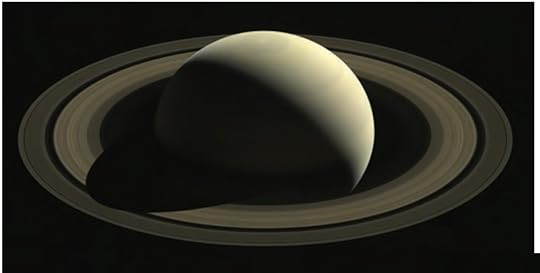
The universe is a majestic place, but stay away from black holes if you don’t want to get spaghettified —but if you find a sufficiently large black hole you may skip pastafication altogether. (You’ll still meet your end though, but it will be spectacular).
“Canyons on Charon are unofficially named after famous ships in fiction, so there is Serenity Chasma (Firefly), Argo Chasma (from the myth of Jason and the Argonauts), Nostromo Chasma (Alien), and my favorite, Tardis Chasma (Doctor Who).”
Oh, and I do love his footnotes. I’ve always been partial to funny footnotes done well, and if you share my love of these then this book will not disappoint.
“To calibrate early observations, astronomers needed to use a small chamber filled with hydrogen fluoride gas, which is extremely—and I do mean extremely—dangerous. It can cause severe skin and tissue damage, especially if breathed in. It’s so awful that the government has guidelines on what to do if terrorists use it in an attack. But astronomers used it to find planets. Go on, make fun of science nerds. I dare you.”
5 stars. Loved every page of it.
“The universe is a puzzle that never ends. The more pieces you find, the more there are. There is always more of it to discover. More events to witness, more places to explore.
More things to see.
We will never run out of alien skies to understand and, perhaps one day, to stand under.”
——————
Thanks to NetGalley and W. W. Norton & Company for providing me with a digital ARC in exchange for an honest review.
——————
Also posted on my blog.

December 3, 2025
Yes, I was and will always be dreaming of standing on the bridge of a starship (preferably mine) looking out into the universe. Oh the possibilities and the beauty.

January 28, 2024
This book takes us on a tour of the Universe, or at least our Galaxy, using the concept of future space tourism. The author clearly wants to convey his own wonder at the sights the Galaxy has to offer, but the book is actually quite science heavy whilst still being aimed at the general reader. I hadn’t heard of Dr Plait before choosing the book, but it seems he is quite well-known as a science communicator. I can see why he is a success in that role.
We start with a tour of the author’s choice of locations in the Solar System, namely The Moon, Mars, asteroids and comets, Saturn, and Pluto. After that we head off into interstellar space to visit, inter alia, exoplanets orbiting red dwarfs, exoplanets with two or more suns, the Orion Nebula, and lastly black holes. This last chapter was one of the most interesting, as the properties of these phenomena appear distinctly weird to us. Some of the descriptions of exoplanets are obviously more speculative than those relating to our own Solar System.
For the journey to the outer Solar System, the author envisages a spacecraft travelling at 1% of the speed of light. He notes this is well beyond our current technology, but there’s no reason to suppose it won’t be possible in a century or two (at that speed it would still take nine days to reach Saturn, never mind Pluto). For interstellar tourism, faster than light travel would be required, which is impossible under the Laws of Physics as we presently understand them. The author comments that “for the purposes of this book I’ll ease up on my science dork pedantry somewhat.”
The book provides some really good explanations of things like the formation of stars and planets, the death of stars, the creation of white dwarfs, neutron stars, black holes etc. How long I will retain that information is another question.
This isn’t a book to be read quickly, not if you have a brain like mine anyway. Careful reading is required to understand a lot of the information, especially once the book takes us beyond our own Solar System. Still a really enjoyable read though, for those with an interest in the subject.
We start with a tour of the author’s choice of locations in the Solar System, namely The Moon, Mars, asteroids and comets, Saturn, and Pluto. After that we head off into interstellar space to visit, inter alia, exoplanets orbiting red dwarfs, exoplanets with two or more suns, the Orion Nebula, and lastly black holes. This last chapter was one of the most interesting, as the properties of these phenomena appear distinctly weird to us. Some of the descriptions of exoplanets are obviously more speculative than those relating to our own Solar System.
For the journey to the outer Solar System, the author envisages a spacecraft travelling at 1% of the speed of light. He notes this is well beyond our current technology, but there’s no reason to suppose it won’t be possible in a century or two (at that speed it would still take nine days to reach Saturn, never mind Pluto). For interstellar tourism, faster than light travel would be required, which is impossible under the Laws of Physics as we presently understand them. The author comments that “for the purposes of this book I’ll ease up on my science dork pedantry somewhat.”
The book provides some really good explanations of things like the formation of stars and planets, the death of stars, the creation of white dwarfs, neutron stars, black holes etc. How long I will retain that information is another question.
This isn’t a book to be read quickly, not if you have a brain like mine anyway. Careful reading is required to understand a lot of the information, especially once the book takes us beyond our own Solar System. Still a really enjoyable read though, for those with an interest in the subject.

March 23, 2023
A spectacular and extremely accessible whistle-stop tour of the cosmos.
I am usually quite reserved when reviewing these types of books, but this simply ticked all the boxes for me.
It is hard to find a book about astronomy which straddles the thin line between being highly detailed and yet still remaining incredibly accessible. This book does that in a fashion that makes the subject matter extremely relatable and human. Not only do you get plenty of scientific theories and facts but there is also plenty of humour thrown in for good measure.
Phillip Plait takes us on a tour of some of the most spectacular, and almost unimaginably beautiful sights and occurrences in our universe, This tour takes us to our closest neighbours, our Moon and Mars, detailing their origins and some of their most astonishing features. From there we travel to the farthest reaches of our solar system, visiting Pluto and its remote and icy brothers and sisters. From there the journey takes in many weird and wonderful sights including worlds straight out of science fiction and the giants of the universe, stars, nebulae and possibly the strangest objects of all, black holes.
This was one thrilling journey, just don't get too close to those black holes they may be the last thing you ever get to see.
I simply loved this book and would recommend it within a heartbeat.
Many thanks to W. W. Norton & Company and Netgalley for providing an ARC copy for me to review.
I am usually quite reserved when reviewing these types of books, but this simply ticked all the boxes for me.
It is hard to find a book about astronomy which straddles the thin line between being highly detailed and yet still remaining incredibly accessible. This book does that in a fashion that makes the subject matter extremely relatable and human. Not only do you get plenty of scientific theories and facts but there is also plenty of humour thrown in for good measure.
Phillip Plait takes us on a tour of some of the most spectacular, and almost unimaginably beautiful sights and occurrences in our universe, This tour takes us to our closest neighbours, our Moon and Mars, detailing their origins and some of their most astonishing features. From there we travel to the farthest reaches of our solar system, visiting Pluto and its remote and icy brothers and sisters. From there the journey takes in many weird and wonderful sights including worlds straight out of science fiction and the giants of the universe, stars, nebulae and possibly the strangest objects of all, black holes.
This was one thrilling journey, just don't get too close to those black holes they may be the last thing you ever get to see.
I simply loved this book and would recommend it within a heartbeat.
Many thanks to W. W. Norton & Company and Netgalley for providing an ARC copy for me to review.

November 18, 2024
I bought this book on the basis that I have watched Philip Plait (and many other scientists) on the eleven-season "How the Universe Works", and have enjoyed his explanations, comments, enthusiasm and humour for all things space - I also follow him on LinkedIn.
In Under Alien Skies, Plait takes his ability to explain complex subjects and theories in a [written] language that gives the reader lots of information in a clear yet entertaining way. Starting with the Moon, and then moving onto Mars [in separate chapters], we learn about their formation, history - including how their size, the sun and other aspects affect their place and position in the solar system. In both cases, Plait provides a viewpoint on future exploration and how these two celestial bodies will impact each other as humans seek to return to the Moon and set our first steps on Mars.
Continuing, the book covers Asteroids and Comets, and again we learn about their place(s) in the solar system and what they are made up of and how this has impacted Earth, and other planets and moons. The information here on the probes sent to investigate is fascinating, and explained simply and well.
Saturn and Pluto follow in two chapters that cover moons, and place in the solar system, as well as history of their formation and their discovery from Earth. Again, we have unmanned probes and survey ships to thank for much of this information, data and photographs. I had read something of Saturn's rings and seen the photos of Pluto taken by Voyager, Cassini/Huygens and New Horizon but the detail Plait gives about these missions and what they found is excellent and, yes, fun.
Next, the book heads out of the solar system and into deeper space. It is here that one needs to concentrate as the subjects are complicated; although Plait once again is able to explain the theories, physics and maths simply (granted this reader had to read some sections twice).
The chapters are: Planets Around Red Dwarf Stars; Planets with Two Suns; Globular Clusters; and Nebulae. The final chapter is on Black Holes, and building on the previous two, we take a journey up to, around and into these life-giving and life-taking powerful cosmic entities. Again, the reader needs to read carefully as the current known and educated knowledge is explained; this was particularly the case for me, in reading about how gravity, pressure and physics bends light by/around Black Holes.
The diagrams, as throughout the book, really help. There are also accompanying colour photos to highlight each chapter's main subject.
The author's space traveller vignettes, populated throughout each chapter, where he provides a scientifically educated but light view of what you would experience as a tourist visiting all subjects within the book (if you, as he wishes you to do, to accept humans can travel at lightspeed, and have craft that can withstand deep space travel and its dangers), is a great way to lead the reader to each subject.
A solid 4-stars for a book that covers so many exciting aspects of the solar system and deeper space that educates and challenges in a fun, lively way.
In Under Alien Skies, Plait takes his ability to explain complex subjects and theories in a [written] language that gives the reader lots of information in a clear yet entertaining way. Starting with the Moon, and then moving onto Mars [in separate chapters], we learn about their formation, history - including how their size, the sun and other aspects affect their place and position in the solar system. In both cases, Plait provides a viewpoint on future exploration and how these two celestial bodies will impact each other as humans seek to return to the Moon and set our first steps on Mars.
Continuing, the book covers Asteroids and Comets, and again we learn about their place(s) in the solar system and what they are made up of and how this has impacted Earth, and other planets and moons. The information here on the probes sent to investigate is fascinating, and explained simply and well.
Saturn and Pluto follow in two chapters that cover moons, and place in the solar system, as well as history of their formation and their discovery from Earth. Again, we have unmanned probes and survey ships to thank for much of this information, data and photographs. I had read something of Saturn's rings and seen the photos of Pluto taken by Voyager, Cassini/Huygens and New Horizon but the detail Plait gives about these missions and what they found is excellent and, yes, fun.
Next, the book heads out of the solar system and into deeper space. It is here that one needs to concentrate as the subjects are complicated; although Plait once again is able to explain the theories, physics and maths simply (granted this reader had to read some sections twice).
The chapters are: Planets Around Red Dwarf Stars; Planets with Two Suns; Globular Clusters; and Nebulae. The final chapter is on Black Holes, and building on the previous two, we take a journey up to, around and into these life-giving and life-taking powerful cosmic entities. Again, the reader needs to read carefully as the current known and educated knowledge is explained; this was particularly the case for me, in reading about how gravity, pressure and physics bends light by/around Black Holes.
The diagrams, as throughout the book, really help. There are also accompanying colour photos to highlight each chapter's main subject.
The author's space traveller vignettes, populated throughout each chapter, where he provides a scientifically educated but light view of what you would experience as a tourist visiting all subjects within the book (if you, as he wishes you to do, to accept humans can travel at lightspeed, and have craft that can withstand deep space travel and its dangers), is a great way to lead the reader to each subject.
A solid 4-stars for a book that covers so many exciting aspects of the solar system and deeper space that educates and challenges in a fun, lively way.

December 28, 2022
Interesting and educational book that kept the attention of myself and my kids alike. Really enjoyed the chapter about Saturn and its rings.

April 21, 2023
My GR friend Nataliya gave it a 5-star review nearby:
"In Under Alien Skies Plait describes - and imagines - what you’d see looking up at the skies from an alien world. From our neighborhood Moon (illuminated by the shine of the full Earth!) to Mars (butterscotch skies and dust devils) to asteroids and comets (hey, did you know that you would basically fall INTO a rubble asteroid? Me neither) to staring at those majestic rings through the atmosphere of Saturn (I agree, Saturn IS a “gateway planet”) to tiny frozen Pluto overlooked by ever-present Charon (planet or not, it’s still pretty cool) — and imagining what the exoplanets of TRAPPIST-1 would be like, and the sights of globular clusters and nebulae and even black holes."
I liked it less than she did, but it's still a first-rate book, and blessedly short. Plait's enthusiasm is fun, even if he goes overboard at times. I found the Moon chapter ho-hum, and the Mars chapter was kinda old hat for me, as I've followed the robot exploration of Mars pretty closely over the years. Here's one of my favorite Mars photos: https://www.flickr.com/photos/2905046... Which is worth close study. It's a remarkably convincing optical illusion, and a good story too. Your tax dollars at work!
And if you are a fellow SF fan, you might want to read or reread Kim Stanley Robertson's Mars trilogy, which holds up pretty well thirty years on. I got to see the legendary fly-over Mars video on the wide screen 10 years ago or thereabouts, at the University of Arizona, which was wonderful. In a different life, I might have been a planetary scientist.
Plait's asteroids and comets chapter moves into less-familiar territory. The rubble-pile asteroids! I know the Osiris-Rex guy slightly, from my many years of living in Tucson, and his story of the over-filled sample-return capsule is great. I also discovered a good reading strategy, since Plait's book is somewhat under-illustrated, particularly the ebook I read: go to the Wikipedia article that covers that section, which will have better illustrations, and usually good stuff in the text too. Try it.
Saturn and its rings! And moons. A great chapter, and you will also want to browse Wikipedia in parallel to Plait's tale. Wow, just all sorts of cool stuff. The polar hexagon! You'll have fun here.
Now I'm trying to find a hard-SF story set on Titan for you . . . The classic is Michael Swanwick's "Slow Life" (2002), which won a Hugo: https://www.lightspeedmagazine.com/fi...
Wow. I'd forgotten what a great story this is. "... the robofish accelerated, so quickly that Lizzie almost lost her grip. The dark waters were whirling around her, and unseen flecks of frozen material were bouncing from her helmet. She laughed wildly. Suddenly, she felt great!
“Bring it on,” she said. “I’ll take everything you’ve got.” 5 star story. Don't miss it!
Pluto! A good chapter and a very interesting story. Pluto and Charon! Is Pluto really a planet? Yes, a minor one, as is Ceres back in the asteroid belt, with its remarkable cryovolcanic peak Ahuna Mons: a Devil's Tower lookalike in space! https://en.wikipedia.org/wiki/Ahuna_Mons And lots more minor planets in our solar system, known and yet to be discovered!
Plait's exoplanet chapter is good, and it's a fascinating story. This is another topic I know well, but I wasn't up to speed on the TRAPPIST red-dwarf planetary system. Cool stuff: https://en.wikipedia.org/wiki/TRAPPIST-1
With so many exoplanets, hard to believe there won't be some inhabited by smart aliens. Where is everybody, anyway? The Fermi paradox! https://en.wikipedia.org/wiki/Fermi_p... Ominous stuff, maybe. But it's a BIG galaxy, and an even bigger universe. . .
Planets with two suns (Tatooine), not his best effort. But still some good stuff, in the sheer variety our galaxy offers! Globular clusters: another weaker effort, but still cool. Orion Nebula as a nearby star factory: more goodies. And Black Holes! Fatal attractions. "Of course you're still about to die -- you're falling into a black hole! What will you see? . . . Very, very weird stuff." Heh.
So. For me, even with my carping, an easy 4-star book. Recommended reading. Especially with my supplemental stuff thrown in. Have fun!
"In Under Alien Skies Plait describes - and imagines - what you’d see looking up at the skies from an alien world. From our neighborhood Moon (illuminated by the shine of the full Earth!) to Mars (butterscotch skies and dust devils) to asteroids and comets (hey, did you know that you would basically fall INTO a rubble asteroid? Me neither) to staring at those majestic rings through the atmosphere of Saturn (I agree, Saturn IS a “gateway planet”) to tiny frozen Pluto overlooked by ever-present Charon (planet or not, it’s still pretty cool) — and imagining what the exoplanets of TRAPPIST-1 would be like, and the sights of globular clusters and nebulae and even black holes."
I liked it less than she did, but it's still a first-rate book, and blessedly short. Plait's enthusiasm is fun, even if he goes overboard at times. I found the Moon chapter ho-hum, and the Mars chapter was kinda old hat for me, as I've followed the robot exploration of Mars pretty closely over the years. Here's one of my favorite Mars photos: https://www.flickr.com/photos/2905046... Which is worth close study. It's a remarkably convincing optical illusion, and a good story too. Your tax dollars at work!
And if you are a fellow SF fan, you might want to read or reread Kim Stanley Robertson's Mars trilogy, which holds up pretty well thirty years on. I got to see the legendary fly-over Mars video on the wide screen 10 years ago or thereabouts, at the University of Arizona, which was wonderful. In a different life, I might have been a planetary scientist.
Plait's asteroids and comets chapter moves into less-familiar territory. The rubble-pile asteroids! I know the Osiris-Rex guy slightly, from my many years of living in Tucson, and his story of the over-filled sample-return capsule is great. I also discovered a good reading strategy, since Plait's book is somewhat under-illustrated, particularly the ebook I read: go to the Wikipedia article that covers that section, which will have better illustrations, and usually good stuff in the text too. Try it.
Saturn and its rings! And moons. A great chapter, and you will also want to browse Wikipedia in parallel to Plait's tale. Wow, just all sorts of cool stuff. The polar hexagon! You'll have fun here.
Now I'm trying to find a hard-SF story set on Titan for you . . . The classic is Michael Swanwick's "Slow Life" (2002), which won a Hugo: https://www.lightspeedmagazine.com/fi...
Wow. I'd forgotten what a great story this is. "... the robofish accelerated, so quickly that Lizzie almost lost her grip. The dark waters were whirling around her, and unseen flecks of frozen material were bouncing from her helmet. She laughed wildly. Suddenly, she felt great!
“Bring it on,” she said. “I’ll take everything you’ve got.” 5 star story. Don't miss it!
Pluto! A good chapter and a very interesting story. Pluto and Charon! Is Pluto really a planet? Yes, a minor one, as is Ceres back in the asteroid belt, with its remarkable cryovolcanic peak Ahuna Mons: a Devil's Tower lookalike in space! https://en.wikipedia.org/wiki/Ahuna_Mons And lots more minor planets in our solar system, known and yet to be discovered!
Plait's exoplanet chapter is good, and it's a fascinating story. This is another topic I know well, but I wasn't up to speed on the TRAPPIST red-dwarf planetary system. Cool stuff: https://en.wikipedia.org/wiki/TRAPPIST-1
With so many exoplanets, hard to believe there won't be some inhabited by smart aliens. Where is everybody, anyway? The Fermi paradox! https://en.wikipedia.org/wiki/Fermi_p... Ominous stuff, maybe. But it's a BIG galaxy, and an even bigger universe. . .
Planets with two suns (Tatooine), not his best effort. But still some good stuff, in the sheer variety our galaxy offers! Globular clusters: another weaker effort, but still cool. Orion Nebula as a nearby star factory: more goodies. And Black Holes! Fatal attractions. "Of course you're still about to die -- you're falling into a black hole! What will you see? . . . Very, very weird stuff." Heh.
So. For me, even with my carping, an easy 4-star book. Recommended reading. Especially with my supplemental stuff thrown in. Have fun!

December 27, 2024
I am recommending to the highest degree the science book ‘Under Alien Skies: A Sightseer’s Guide to the Universe’ by Philip Plait. The book is written with the general reader in mind, yet it is at heart a science-love ballad by a total astronomy nerd who has a great visual imagination. How can I tell? Every chapter begins with a couple of paragraphs where the author is on an imaginary space-travel vacation trip, either standing on a planet, for instance, like Mars, or he is in a spaceship viewing astronomical objects, like a black hole or a binary star system. Of course, he admits to being in love with idea of traveling to distant galaxies, but he says he partially wrote the book hoping that those who make science fiction movies call him in order to get the science right. Yeah, sure. All science fiction movie producers, like those who made the Star Wars shows, really worry about getting the science correct. Well, it turns out some of those Hollywood guys do call Plait!
In any case, I am extremely happy he loves studying astronomy! And he is obviously someone who enjoys his avocation to write about what he studies. He often uses footnotes to share his joy and sense of fun, feeling the feels of delight in imagining himself actually seeing with his eyes what the cold hard mathematical facts of physics, and space telescope and probe visuals show. He is excellent at translating scientific instrument readouts, charts and photos into visual effects as they would be seen by a human being.
I have copied the book blurb:
”A rip-roaring tour of the cosmos with the Bad Astronomer, revealing the sky as never seen before—from everywhere but Earth.
How would Saturn’s rings look from a spaceship sailing just above them? If you were falling into a black hole, what’s the last thing you’d see before your spaghettification? What would it be like to visit the faraway places we currently experience only through high-powered telescopes and robotic emissaries? Faster-than-light travel may never be invented, but we can still take the scenic route through the universe with renowned astronomer and science communicator Philip Plait.
On this lively, immersive adventure through the cosmos, Plait draws ingeniously on the latest scientific research to transport readers to ten spectacular sites, from our own familiar Moon to the outer reaches of our solar system and far beyond. Whether strolling through a dust storm under Mars’ butterscotch sky, witnessing the birth of a star, or getting dizzy in a technicolor nebula, Plait is an illuminating, entertaining guide to the most otherworldly views in our universe.”
Plait really does create a lively excitement in this book! Oooooo, I want to be a spacer! Maybe in my next reincarnation….
The chapters are:
-One Small Step: The Moon
-Red Sky at Night: Mars
-Vermin of the Sky: Asteroids and Comets
-One Ringed World to Rule Them All: Saturn
-At the Solar System’s Edge: Pluto
-A Mini-Solar System: Planets Around Red Dwarf Stars
-Tatooine’s Sky: Planets with Two Suns
-A Planet with a Million Suns: Globular Clusters
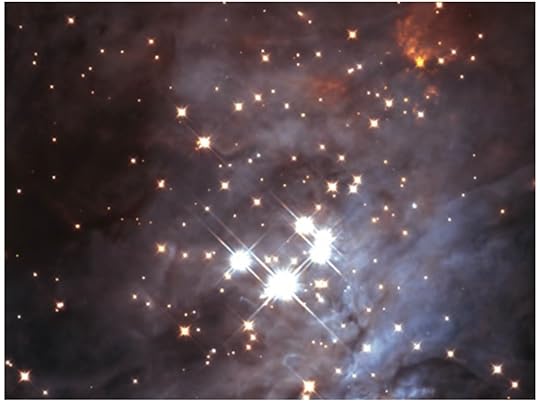
-Inside Star Factories: Nebulae
-The Last Sky You’ll Ever See: Black Holes
There are photographs and illustrations, as well as an Index and recommendations for further reading. I recommend the NASA.gov website and app, too.
https://youtu.be/t365MuktYQs?si=CXTyu...
In any case, I am extremely happy he loves studying astronomy! And he is obviously someone who enjoys his avocation to write about what he studies. He often uses footnotes to share his joy and sense of fun, feeling the feels of delight in imagining himself actually seeing with his eyes what the cold hard mathematical facts of physics, and space telescope and probe visuals show. He is excellent at translating scientific instrument readouts, charts and photos into visual effects as they would be seen by a human being.
I have copied the book blurb:
”A rip-roaring tour of the cosmos with the Bad Astronomer, revealing the sky as never seen before—from everywhere but Earth.
How would Saturn’s rings look from a spaceship sailing just above them? If you were falling into a black hole, what’s the last thing you’d see before your spaghettification? What would it be like to visit the faraway places we currently experience only through high-powered telescopes and robotic emissaries? Faster-than-light travel may never be invented, but we can still take the scenic route through the universe with renowned astronomer and science communicator Philip Plait.
On this lively, immersive adventure through the cosmos, Plait draws ingeniously on the latest scientific research to transport readers to ten spectacular sites, from our own familiar Moon to the outer reaches of our solar system and far beyond. Whether strolling through a dust storm under Mars’ butterscotch sky, witnessing the birth of a star, or getting dizzy in a technicolor nebula, Plait is an illuminating, entertaining guide to the most otherworldly views in our universe.”
Plait really does create a lively excitement in this book! Oooooo, I want to be a spacer! Maybe in my next reincarnation….
The chapters are:
-One Small Step: The Moon
-Red Sky at Night: Mars
-Vermin of the Sky: Asteroids and Comets
-One Ringed World to Rule Them All: Saturn
-At the Solar System’s Edge: Pluto
-A Mini-Solar System: Planets Around Red Dwarf Stars
-Tatooine’s Sky: Planets with Two Suns
-A Planet with a Million Suns: Globular Clusters
-Inside Star Factories: Nebulae
-The Last Sky You’ll Ever See: Black Holes
There are photographs and illustrations, as well as an Index and recommendations for further reading. I recommend the NASA.gov website and app, too.
https://youtu.be/t365MuktYQs?si=CXTyu...

August 19, 2023
2.5⭐
This is a book by a nerd, for nerds.
Science blogger and popularizer (and self described nerd) Phillip Plait has written an armchair space tourist's guide to the solar system and beyond. He starts with the "alien skies" you would see from the Moon, Mars, asteroids, Saturn, Pluto. This was the strongest part of the book for me because it describes things we know a lot about through years of observation and exploration. Each chapter has a little science fiction story, where you imagine yourself as a traveler or researcher in these places and the more detailed the scenario was, the better the story, imo.
As Plait moves farther afield, to a planet encircling a red dwarf star, or a binary star or the edge of a black hole etc, things become more esoteric and to me, less convincing, though no doubt Plait does his best, with the latest available information at hand. The astronomy and planetary science is serious and is presented in a cheerful " Gosh! Golly! Gee Whiz" style intended to keep the reader engaged but that I found, after a while, to be off putting. Some of his descriptions also seemed repetitive, likely because there are only so many ways to explain airless, lifeless, space rocks; low gravity; solar transits, etc.
This book is probably fine for serious astronomy fans. I being a mere dilettante in the subject, found it a hard slog in a heavy space suit. -30-
This is a book by a nerd, for nerds.
Science blogger and popularizer (and self described nerd) Phillip Plait has written an armchair space tourist's guide to the solar system and beyond. He starts with the "alien skies" you would see from the Moon, Mars, asteroids, Saturn, Pluto. This was the strongest part of the book for me because it describes things we know a lot about through years of observation and exploration. Each chapter has a little science fiction story, where you imagine yourself as a traveler or researcher in these places and the more detailed the scenario was, the better the story, imo.
As Plait moves farther afield, to a planet encircling a red dwarf star, or a binary star or the edge of a black hole etc, things become more esoteric and to me, less convincing, though no doubt Plait does his best, with the latest available information at hand. The astronomy and planetary science is serious and is presented in a cheerful " Gosh! Golly! Gee Whiz" style intended to keep the reader engaged but that I found, after a while, to be off putting. Some of his descriptions also seemed repetitive, likely because there are only so many ways to explain airless, lifeless, space rocks; low gravity; solar transits, etc.
This book is probably fine for serious astronomy fans. I being a mere dilettante in the subject, found it a hard slog in a heavy space suit. -30-

July 31, 2023
One of my favorite memories is from a field trip I took with a college Astronomy class to a mountain-top observatory. Somehow or other the professor had been able to arrange for us to get time using one of the older, smaller telescopes, and a group of us stayed awake all night to take advantage of the opportunity. Simultaneously exhausted and exhilarated from the experience, we emerged in the early morning to find the sun rising over a ‘sea’ of white – a layer of clouds briefly transforming the mountain peak into an island. That image, in combination with the metallic domes of the observatory, so unlike typical architecture of everyday life, forever impressed itself in my mind along with the thought, ‘this is probably the closest I will ever come to the experience of standing on another planet.’
Under Alien Skies utilizes an unusual combination of storytelling and nonfiction to create similar moments in the minds of its readers. Beginning on the Moon and progressing further and further through our Solar System and beyond, Dr. Plait leverages current scientific knowledge to draw scenes of what we might experience in visiting each site. As he himself notes at one point, though it applies to the book more generally, “Consider this all an educated guess with a dash of fun thrown in.” He later elaborates, “We may not know precisely what it’s like to fall into a black hole or visit a star as it’s forming, but our understanding of astronomy, physics, mathematics, and more can feed our minds, allowing us to imagine with great accuracy and remarkable detail what it would be like if we were there.”
Dr. Plait is a fantastic science writer (this is his third book after Bad Astronomy: Misconceptions and Misuses Revealed, from Astrology to the Moon Landing "Hoax" and Death from the Skies!: These Are the Ways the World Will End . . .), and in clear language explains not only what things would look like, but why they are the way they are. However, the bits and pieces of 2nd person fiction inserted throughout (e.g. “You’re not exactly comfortable, but it’s not too bad. The guides adjusted everyone’s seats beforehand…”) do not display nearly the same level of polish. That said, it’s not enough to detract from enjoyment of the book, and it is easy to see why these bits are there, so fair enough. I wholeheartedly recommend for anyone who has ever dreamed of standing somewhere – anywhere – that is not on Earth.
Find this book and other titles within our catalog.
Under Alien Skies utilizes an unusual combination of storytelling and nonfiction to create similar moments in the minds of its readers. Beginning on the Moon and progressing further and further through our Solar System and beyond, Dr. Plait leverages current scientific knowledge to draw scenes of what we might experience in visiting each site. As he himself notes at one point, though it applies to the book more generally, “Consider this all an educated guess with a dash of fun thrown in.” He later elaborates, “We may not know precisely what it’s like to fall into a black hole or visit a star as it’s forming, but our understanding of astronomy, physics, mathematics, and more can feed our minds, allowing us to imagine with great accuracy and remarkable detail what it would be like if we were there.”
Dr. Plait is a fantastic science writer (this is his third book after Bad Astronomy: Misconceptions and Misuses Revealed, from Astrology to the Moon Landing "Hoax" and Death from the Skies!: These Are the Ways the World Will End . . .), and in clear language explains not only what things would look like, but why they are the way they are. However, the bits and pieces of 2nd person fiction inserted throughout (e.g. “You’re not exactly comfortable, but it’s not too bad. The guides adjusted everyone’s seats beforehand…”) do not display nearly the same level of polish. That said, it’s not enough to detract from enjoyment of the book, and it is easy to see why these bits are there, so fair enough. I wholeheartedly recommend for anyone who has ever dreamed of standing somewhere – anywhere – that is not on Earth.
Find this book and other titles within our catalog.

August 3, 2023
This was such fun:) The author narrates it himself (doing a good job) and puts some humor into the story as well as giving us info to download into our 🧠 brains :).
The format of a tour through outer space was clever and a nice way to takes through the cosmos .I would love to see some things close up in outer space but wouldn't happen probably for two reasons: I get motion sickness and my anxiety monster would have a field day most likely seeing the vastness of everything.
Are we the only ones out there with a planet like Earth 🌎 ? Is something out there that's too far to travel to yet? There's so much out there to discover see that we'll be finding new things for many many years to come.
This is an informative book without feeling heavy/dry, and no talking down to the reader.
Definitely want a copy for my shelves. Would recommend this one!
The format of a tour through outer space was clever and a nice way to takes through the cosmos .I would love to see some things close up in outer space but wouldn't happen probably for two reasons: I get motion sickness and my anxiety monster would have a field day most likely seeing the vastness of everything.
Are we the only ones out there with a planet like Earth 🌎 ? Is something out there that's too far to travel to yet? There's so much out there to discover see that we'll be finding new things for many many years to come.
This is an informative book without feeling heavy/dry, and no talking down to the reader.
Definitely want a copy for my shelves. Would recommend this one!

November 6, 2023
From blue sunrises on Mars to the rings of Saturn
Ever found yourself wondering on how it would be to stroll through the lunar craters or witness the majestic rings of Saturn from Saturn itself? Or how the sky would look like from an Earth-like planet, orbiting around two or more suns. In this book, astronomist Philip Plait transports you to the alien landscapes of the Moon, Mars, Saturn, Pluto and beyond, to planets orbiting a binary star system, a cluster or even orbitring a black hole.
It is an interstellar journey offering a lot of captivating facts that you read about, but perhaps never imagined. For me, having read a fair share of astronomy books, Plait's exploration made me realise a lot of things that I previously unconsidered – from the blue sunrises on Mars to the rings of Saturn. And then there is the enigma of black holes. How much darker can it get? According to the words of the philosopher-musician Nigel Tufnel: none more black.
What really made this book interesting was that Plait doesn't just lay out the facts: he also explains the "why." Yes, sunrises on Mars are blue, but now I know also why they are blue. Yes, a Tatooine like planet orbiting mulitple suns will experience many eclipses, but how will this influence life on that planet? I never imagined the impact this would have on the planet, from suddenly dropping temperatures to the chilling winds it will produce. A winter that will last for only 1 hour. Details that even a movie in a galaxy far, far away might overlook.
Ever found yourself wondering on how it would be to stroll through the lunar craters or witness the majestic rings of Saturn from Saturn itself? Or how the sky would look like from an Earth-like planet, orbiting around two or more suns. In this book, astronomist Philip Plait transports you to the alien landscapes of the Moon, Mars, Saturn, Pluto and beyond, to planets orbiting a binary star system, a cluster or even orbitring a black hole.
It is an interstellar journey offering a lot of captivating facts that you read about, but perhaps never imagined. For me, having read a fair share of astronomy books, Plait's exploration made me realise a lot of things that I previously unconsidered – from the blue sunrises on Mars to the rings of Saturn. And then there is the enigma of black holes. How much darker can it get? According to the words of the philosopher-musician Nigel Tufnel: none more black.
What really made this book interesting was that Plait doesn't just lay out the facts: he also explains the "why." Yes, sunrises on Mars are blue, but now I know also why they are blue. Yes, a Tatooine like planet orbiting mulitple suns will experience many eclipses, but how will this influence life on that planet? I never imagined the impact this would have on the planet, from suddenly dropping temperatures to the chilling winds it will produce. A winter that will last for only 1 hour. Details that even a movie in a galaxy far, far away might overlook.
June 6, 2023
"When I was a kid, I loved science, and I loved science fiction. I ate up every science book I could get my hands on, especially on astronomy, learning as much as I could about it. And when science didn’t have an answer for me—because one didn’t exist yet or I couldn’t understand it— sci-fi was there to expand my imagination..."
Under Alien Skies contained a ton of super-interesting information, but the writing fell flat for me...
Author Philip Cary Plait, Ph.D. (aka "The Bad Astronomer") is a US astronomer, skeptic, writer and popular science blogger. He is a well known author and public figure in the fields of astronomy and science.
Philip Plait:

Plait covers quite a lot of ground here, but unfortunately, the formatting and finished product fell short of my expectations. I do enjoy reading books about astronomy, but the overall presentation of this one struck me as dry and long-winded, despite the author's best efforts. Sadly, this seemed to get worse as the book went on. I was close to putting this one down a few times.
The audiobook version I have was read by the author, which was a nice touch. He did do a good job with the narration; delivering the material in a high-energy fashion.
The book is presented in a dualistic format. At the start of every chapter, he narrates the writing as if you were traveling in a spaceship, to the destination talked about. After this brief blurb, he proceeds to expand upon the known science around each subject. Although this formatting should have resonated well with me, it didn't. I ended up getting irritated with it, tbh.
The material covered in the book includes:
• ONE SMALL STEP: THE MOON
• RED SKY AT NIGHT: MARS
• VERMIN OF THE SKY: ASTEROIDS AND COMETS
• ONE RINGED WORLD TO RULE THEM ALL: SATURN
• AT THE SOLAR SYSTEM’S EDGE: PLUTO
• A MINI-SOLAR SYSTEM: PLANETS AROUND RED DWARF STARS
• TATOOINE’S SKY: PLANETS WITH TWO SUNS
• A PLANET WITH A MILLION SUNS: GLOBULAR CLUSTERS
• INSIDE STAR FACTORIES: NEBULAE
• THE LAST SKY YOU’LL EVER SEE: BLACK HOLES
***********************
So, I am admittedly very particular about how readable I find a book, and sadly, this one fell short for me in that department.
There was still a lot of interesting information presented here, however.
So, 4.5 stars for the content, but 2 stars for the presentation.
2.5 stars.
Under Alien Skies contained a ton of super-interesting information, but the writing fell flat for me...
Author Philip Cary Plait, Ph.D. (aka "The Bad Astronomer") is a US astronomer, skeptic, writer and popular science blogger. He is a well known author and public figure in the fields of astronomy and science.
Philip Plait:
Plait covers quite a lot of ground here, but unfortunately, the formatting and finished product fell short of my expectations. I do enjoy reading books about astronomy, but the overall presentation of this one struck me as dry and long-winded, despite the author's best efforts. Sadly, this seemed to get worse as the book went on. I was close to putting this one down a few times.
The audiobook version I have was read by the author, which was a nice touch. He did do a good job with the narration; delivering the material in a high-energy fashion.
The book is presented in a dualistic format. At the start of every chapter, he narrates the writing as if you were traveling in a spaceship, to the destination talked about. After this brief blurb, he proceeds to expand upon the known science around each subject. Although this formatting should have resonated well with me, it didn't. I ended up getting irritated with it, tbh.
The material covered in the book includes:
• ONE SMALL STEP: THE MOON
• RED SKY AT NIGHT: MARS
• VERMIN OF THE SKY: ASTEROIDS AND COMETS
• ONE RINGED WORLD TO RULE THEM ALL: SATURN
• AT THE SOLAR SYSTEM’S EDGE: PLUTO
• A MINI-SOLAR SYSTEM: PLANETS AROUND RED DWARF STARS
• TATOOINE’S SKY: PLANETS WITH TWO SUNS
• A PLANET WITH A MILLION SUNS: GLOBULAR CLUSTERS
• INSIDE STAR FACTORIES: NEBULAE
• THE LAST SKY YOU’LL EVER SEE: BLACK HOLES
***********************
So, I am admittedly very particular about how readable I find a book, and sadly, this one fell short for me in that department.
There was still a lot of interesting information presented here, however.
So, 4.5 stars for the content, but 2 stars for the presentation.
2.5 stars.

November 25, 2022
Fascinating! (to quote a famous Vulcan--though the exclamation point effectively takes it out of Vulcan parlance)
I very much enjoyed Under Alien Skies: A Sightseer's Guide to the Universe by Philip Plait. I was already familiar with him from his previous work and his participation in The Skeptics Guide to the Universe podcast. His expertise, wit, and ability to communicate science in an approachable fashion all shine in this book. As an example, there is no other science book that I am aware of that compares the breathtaking views of the night sky to warm pajamas. I also find myself much better equipped to properly use "spaghettification" in a sentence.
All joking aside, this book will take you on a journey that, science would suggest, may never be possible otherwise. It will allow you to virtually sand on multiple planets in our own solar system and then explore systems and bodies millions of light years away. I left the book with not only a greater appreciation for the vastness and grandeur of the world we live in but also with greatly increased knowledge of how that world works.
Dr. Plait summed it up pretty well: "The universe is a spectacularly beautiful place. There is certainly a lot to see, and it's awfully interesting, too."
Highly recommended.
I very much enjoyed Under Alien Skies: A Sightseer's Guide to the Universe by Philip Plait. I was already familiar with him from his previous work and his participation in The Skeptics Guide to the Universe podcast. His expertise, wit, and ability to communicate science in an approachable fashion all shine in this book. As an example, there is no other science book that I am aware of that compares the breathtaking views of the night sky to warm pajamas. I also find myself much better equipped to properly use "spaghettification" in a sentence.
All joking aside, this book will take you on a journey that, science would suggest, may never be possible otherwise. It will allow you to virtually sand on multiple planets in our own solar system and then explore systems and bodies millions of light years away. I left the book with not only a greater appreciation for the vastness and grandeur of the world we live in but also with greatly increased knowledge of how that world works.
Dr. Plait summed it up pretty well: "The universe is a spectacularly beautiful place. There is certainly a lot to see, and it's awfully interesting, too."
Highly recommended.

March 16, 2024
Got to almost 70% of the audiobook, but I'm sorry - I just could NOT finish this thing. Despite a fascinating-sounding concept (that I hoped would get better when they finally got out of the Solar System and into deep space), this was from start to...well, close-to-finish just WAY too much math and physics, with WAY too little "ooh!" and "ah!"
Admittedly, this is a tough subject to focus on in the car - so maybe the paper book would have been better. But I've already got a large pile of those to work through; what I need are a few solid audiobook wins. Anyway, a much better choices on the same - or at least pretty similar - topic is .Exoplanets: Diamond Worlds, Super Earths, Pulsar Planets, and the New Search for Life beyond Our Solar System
Admittedly, this is a tough subject to focus on in the car - so maybe the paper book would have been better. But I've already got a large pile of those to work through; what I need are a few solid audiobook wins. Anyway, a much better choices on the same - or at least pretty similar - topic is .Exoplanets: Diamond Worlds, Super Earths, Pulsar Planets, and the New Search for Life beyond Our Solar System

February 6, 2024
Love the premise, lots of great information at a popular science level, and great for a Sci-fi writer. I love the mix of speculation and solid facts. I'd have preferred spending more time in the book in our solar system, but I understand why there was a limit there and we moved quickly into more theoretical science.
Mostly, though, I have to give it 5 stars because the author's love for science, space, and exploration absolutely bleeds through the pages. Even the "you will die" parts were fun, cheesy, and filled with infectious excitement. The author clearly loves what he does and loves sharing it with others. I felt like I was having a dinner conversation with someone is just truly enjoying their life.
Mostly, though, I have to give it 5 stars because the author's love for science, space, and exploration absolutely bleeds through the pages. Even the "you will die" parts were fun, cheesy, and filled with infectious excitement. The author clearly loves what he does and loves sharing it with others. I felt like I was having a dinner conversation with someone is just truly enjoying their life.

March 8, 2023
As a lifelong science fiction fan and general science nerd, I have often wondered what the cosmos would look like if viewed from somewhere other than Earth. Although I will never be an astronaut (thanks, eyeballs), this book gave me a close enough idea that my curiosity is sated at least a little bit.
The scenarios discussed in this book range from wholly plausible to far off dreams. While all of them are ultimately grounded in science, I gravitated toward the chapters dedicated to our own solar system because, for the most part, we can actually get there. That being said, every chapter offered evocative descriptions about what all these distant worlds may look like. Throughout the book, I was filled with wonder and awe.
I appreciated that the book explained not only how things would appear from other planets, but why. I learned a lot, including about the resonance of orbits. The astronomy presented in this book is easily digestible for general audiences - my background is not in physics and I understood everything just fine. The casual, conversational tone ensures that even the information dense sections are fairly easy to read.
The second person stories at the beginning of each chapter also drew me in and sparked my curiosity. I think fellow science fiction fans would appreciate them. Overall, I recommend this book to sci-fi lovers, budding astronomers, and anyone else curious about intergalactic sightseeing.
Thank you to W. W. Norton & Company and Netgalley for providing me with an ARC in exchange for my honest review.
The scenarios discussed in this book range from wholly plausible to far off dreams. While all of them are ultimately grounded in science, I gravitated toward the chapters dedicated to our own solar system because, for the most part, we can actually get there. That being said, every chapter offered evocative descriptions about what all these distant worlds may look like. Throughout the book, I was filled with wonder and awe.
I appreciated that the book explained not only how things would appear from other planets, but why. I learned a lot, including about the resonance of orbits. The astronomy presented in this book is easily digestible for general audiences - my background is not in physics and I understood everything just fine. The casual, conversational tone ensures that even the information dense sections are fairly easy to read.
The second person stories at the beginning of each chapter also drew me in and sparked my curiosity. I think fellow science fiction fans would appreciate them. Overall, I recommend this book to sci-fi lovers, budding astronomers, and anyone else curious about intergalactic sightseeing.
Thank you to W. W. Norton & Company and Netgalley for providing me with an ARC in exchange for my honest review.

August 9, 2023
A wonderful and imaginative trip through the Solar System and beyond as the author, using what we know from astronomy, along with some help from the 'ship of the imagination', to transport the reader to see what the sky would look like on non-Earth like worlds.
Starting with the moon, the author then brings the reader to Mars, the asteroids and comets, Saturn and Pluto. Moving beyond the solar system, the author shows what the sky would look like to an observer on a planet with two suns (like Star Wars' Tatooine), in a globular cluster with millions of closely packed stars and inside a nebula creating new stars. The final journey would be to a mind-twisting look at the last sky you would see if you were to go near and then enter the event horizon of a black hole.
If you ever wondered how alien skies could look like, this is the book to read. It is also a good book for writers who want to get the details of how the skies in their worlds would look like under alien skies correct.
Starting with the moon, the author then brings the reader to Mars, the asteroids and comets, Saturn and Pluto. Moving beyond the solar system, the author shows what the sky would look like to an observer on a planet with two suns (like Star Wars' Tatooine), in a globular cluster with millions of closely packed stars and inside a nebula creating new stars. The final journey would be to a mind-twisting look at the last sky you would see if you were to go near and then enter the event horizon of a black hole.
If you ever wondered how alien skies could look like, this is the book to read. It is also a good book for writers who want to get the details of how the skies in their worlds would look like under alien skies correct.

2023
June 14, 2024Non-fiction November TBR
📱 Thank you to NetGalley and W. W. Norton & Company
📱 Thank you to NetGalley and W. W. Norton & Company

quit-dnf
March 12, 2023DNF @ 32%. While I enjoy Philip Plait's work as a science communicator and find his tweets entertaining, Under Alien Skies is proving a bit too dry and repetitive for me. It does have some truly striking photography, but the text itself isn't really firing up my imagination as much as I'd hoped. Sorry, Philip!

August 27, 2024
An excellent book! What a great premise: "Bad" astronomer Phil Plait takes you on a tour of the universe to visit various locations, and explains what it would look like and feel like to BE there. Along the way, he explains the related physics and discoveries that came with our observations. This is one of those books that could have replaced (or certainly supplemented) my high school physics book, and I would have learned and retained a lot more. Plait's enthusiasm is infectious, and he proudly carries his nerdiness, pedantry and wordplay with good humor. I read the physical book while listening to the audio book, which is an ideal combo: you get Plait's passionate delivery and hear his pronunciations, but also get to take in the various spellings and diagrams. It's also fun to see how he incorporates the frequent footnotes into the reading, or modifies the text for a listening audience. I recommend either experience.
I had originally written a much longer review with extensive details and examples, but Goodreads is a buggy piece of refuse and deleted it.
I had originally written a much longer review with extensive details and examples, but Goodreads is a buggy piece of refuse and deleted it.

July 5, 2023
under alien skies takes you on a sightseeing tour of the universe by making you imagine what it would be like standing on distant worlds and viewing firsthand the strangest most stunning sights the galaxies have to offer.
not only is the author talented at making astronomy entertaining and accessible, he's also a great writer and is able to sketch out beautiful visions with his words - and also insert levity, humor and anecdotes at the right times. for anyone who loves learning about space (and who may not be well-versed in the science behind it all), this will be a joy to read.
not only is the author talented at making astronomy entertaining and accessible, he's also a great writer and is able to sketch out beautiful visions with his words - and also insert levity, humor and anecdotes at the right times. for anyone who loves learning about space (and who may not be well-versed in the science behind it all), this will be a joy to read.
“The universe is a puzzle that never ends. The more pieces you find, the more there are. There is always more of it to discover. More events to witness, more places to explore.
More things to see.
We will never run out of alien skies to understand and, perhaps one day, to stand under.”

May 1, 2023
Plait describes what it looks like to be here, there, any every where in the universe like a cosmic Roy Kent. He overuses words like "maw" and "agape" but this is excusable due to the (literally) awesome subject.
By far the best line of the book comes last: "We will never run out of alien skies to understand. And, perhaps one day, to stand under."
By far the best line of the book comes last: "We will never run out of alien skies to understand. And, perhaps one day, to stand under."
June 8, 2023
I always love Phillip Plait but this runs too long. I know he’s doing the majesty of space but he waxes a little too hyperbolic. The fair is mine not his. Goodish read.

December 15, 2023
Plait's pro-science project here is praiseworthy! “ yet. And that’s one of my favorite words in science: yet. It promises that a great deal still lies ahead.… There is always more to know. Always. And we can know it.… You start with a question, and then find ways to answer it. But when you do, you find you have more questions, more answers to seek. The universe is a puzzle that never ends. The more pieces you find the more there are. There is always more of it to discover. “ (p287)
This book’s middle third feels to me much longer than it is in page numbers. That section maybe needs more science fiction and less orbital mechanical details.
I appreciate these cool new-to-me facts:
Many asteroids (including Bennu) are "rubble rock piles" into which one would sink with inertia. Just loosely collected heaps.
Ceres has an underground saline ocean.
Saturn has nearly the same gravity as earth! Being 100x as massive but in a 9x greater diameter, cancels out. With a volume of 750 earths, The density of Saturn's mass is less than water, making it the only planet that would float. (p110)
The first exoplanet was found in 1995 at 51 Pegasi, just 50 light years away. By 2022, over 5000 had been confirmed.(p150)
Astronomy approaches some existential questions: are we the only life in the universe, our origin story and whether aliens were part of it, and how our earth developed and continues to evolve. And tremendous technological development in materials, robotics, etc accrues from space exploration. This book could do much much more on these topics.
The Nebulae chapter is astonishing, and a lot of terminology is introduced throughout, like the scrabble treasure syzygy. Wow, the orion nebula diameter is ~50,000 times larger our the solar system. (p246, and my own calculations) Our air at sea level is 10^10 more dense than a typical bok globule dust cloud, yet these still block all visible light though not infrared.
Sgr A* the 4m solar mass black hole at the center of the milky way was definitively identified only in the 1990s! And it is relatively small compared to other galaxies, and less than 1/1000th of a percent of our galaxy’s mass, mostly irrelevant to its rotation. (p270-74)
But basically, this was written for people who really want to explore a lot of technical astronomy. so for them, it would definitely be four stars, and I can see that point of view.
This book’s middle third feels to me much longer than it is in page numbers. That section maybe needs more science fiction and less orbital mechanical details.
I appreciate these cool new-to-me facts:
Many asteroids (including Bennu) are "rubble rock piles" into which one would sink with inertia. Just loosely collected heaps.
Ceres has an underground saline ocean.
Saturn has nearly the same gravity as earth! Being 100x as massive but in a 9x greater diameter, cancels out. With a volume of 750 earths, The density of Saturn's mass is less than water, making it the only planet that would float. (p110)
The first exoplanet was found in 1995 at 51 Pegasi, just 50 light years away. By 2022, over 5000 had been confirmed.(p150)
Astronomy approaches some existential questions: are we the only life in the universe, our origin story and whether aliens were part of it, and how our earth developed and continues to evolve. And tremendous technological development in materials, robotics, etc accrues from space exploration. This book could do much much more on these topics.
The Nebulae chapter is astonishing, and a lot of terminology is introduced throughout, like the scrabble treasure syzygy. Wow, the orion nebula diameter is ~50,000 times larger our the solar system. (p246, and my own calculations) Our air at sea level is 10^10 more dense than a typical bok globule dust cloud, yet these still block all visible light though not infrared.
Sgr A* the 4m solar mass black hole at the center of the milky way was definitively identified only in the 1990s! And it is relatively small compared to other galaxies, and less than 1/1000th of a percent of our galaxy’s mass, mostly irrelevant to its rotation. (p270-74)
But basically, this was written for people who really want to explore a lot of technical astronomy. so for them, it would definitely be four stars, and I can see that point of view.


September 22, 2023
After reading Plait’s other two books, I already knew how much I enjoyed his humor and writing style. This newest book by him is his best yet. I was absolutely hooked on the idea of what it would be like to visit these alien worlds, and his descriptions were perfection and pulled me right in. I even ended up down the YouTube vortex a few times for more visuals about the worlds and astronomical things he was detailing in the book. It was absolutely fascinating!

October 28, 2023
In between the explanations of astronomical phenomena, this book occasionally had a science fiction feel to it. Of course, all the science fictiony parts were based on hard science. I loved it! More than once, at the end of a chapter, I would pick my head up from the book and realize that my brain had been somewhere else. I will probably read it again at some point.
Dec 29,2024
I did indeed read it again and enjoyed it once again. There is a lot of info in this book and I slowed down to let it sink in and make a note here and there. I'm glad I have my own copy.
Dec 29,2024
I did indeed read it again and enjoyed it once again. There is a lot of info in this book and I slowed down to let it sink in and make a note here and there. I'm glad I have my own copy.

May 7, 2023
Really fascinating descriptions of what we might see if we were able to travel to other planets. Plait is an excellent writer and manages to explain the science of astronomy to us non-astronomers is ways that make it understandable. He also adds fun asides throughout the book, so it isn't dry reading at all.

May 3, 2023
Really interesting explanations of how stars and black holes are formed, what different planets would look like close up, etc. as told from a perspective of someone traveling the galaxy on a futuristic commercial voyage.
Displaying 1 - 30 of 276 reviews