Depuis la forêt enchantée de son enfance, habitée par la sorcière Murasaki et gardée par une divinité kami, en passant par l’Académie où il apprend le métier des armes, à travers les deuils, les trahisons et les déceptions amoureuses, jusqu’aux joutes littéraires dans lesquelles il concourt, Matsuo apprend à vivre et à combattre en rédigeant des wakas. Ces poèmes traditionnels japonais, auxquels l’a initié sa mère dès son plus jeune âge, constituent le trait d’union, le langage commun l’unissant au monde et aux êtres.
Denis Thériault, romancier et scénariste, est diplômé en psychologie. Il a été quatre fois finaliste aux prix Gémeaux. Son premier roman, L’iguane (XYZ, 2001), a remporté le prix France-Québec 2001, le prix Anne-Hébert 2002, l’Odyssée 2002 et le Combat des livres 2007 de Radio-Canada. Son deuxième roman, Le facteur émotif (XYZ, 2005), a remporté le Prix littéraire Canada-Japon 2006. Ses romans sont publiés au Canada anglais, en Allemagne, en Chine et en France.
I'm afraid this wasn't for me. I foolishly thought there would be more of the samurai and less of the red carnation ie more fighting and less poetry.
There is a lot of poetry including a poetry contest nearing the end which is very clever but not to my taste.
I normally love Japanese literary fiction but the story of Matsuo was just too heavy on the poetry for my tastes.
The story is about Matsuo who is trained to be a samurai warrior but wants to be a poet. He finally finds a teacher who will show him how to be a warrior poetry who could kill with his words. But the teacher betrays him with the girl Matsuo has fallen in love with and so he goes wandering again and, after falling in love again, he becomes a bandit.
For me there was much too poetry and I must have misread the synopsis.
Thanks to Netgalley and Pushkin Press for the advance review copy.
Theriault put me down in medieval Japan among the samurai, the warriors, the warrior code, the poets, their poetry contests and then he tied it all in with an epic love and all the drama that that creates.
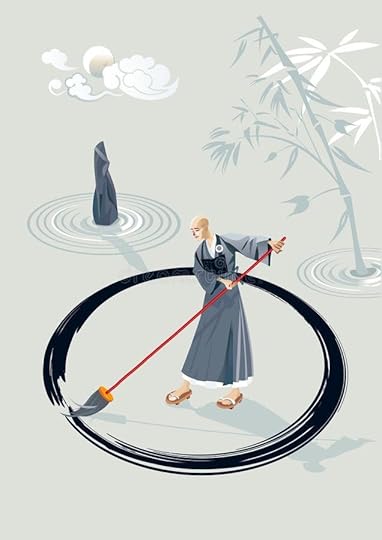
Enjoyably rich in drama and poetry. Not as introspective as his postman books. That being said I did feel that the 'enso' resonated a lot with me. I went and did my research and thought about it and saw where I can find it in my own life. The 'enso' is all in the moment when the brush hits the paper and then the circle is just a mirror of where and how we are at that moment in our lives. So I just have to concentrate on that moment of connection with the paper, with life, and then the rest will flow one way or another.........
An ARC kindly give by author/publisher via Netgalley and Edelweiss.
As someone who studied Japanese literature and loved uta-awase (imperial poetry contests), this book immediately piqued my interest. Poetry, history, and tragedy? Instantly hooked.
Set in 12th-century Japan, The Samurai of Red Carnation follows Matsuo as he abandons his ancestral samurai ties to embrace a poet’s life. What unfolds is not only a tale of rivalry and desire but also a world where poetry itself becomes both an art form and a weapon. In many ways, the story delivered, but not without some flaws.
The first 30% nearly killed me. It was flat, disengaging, and sluggish, mostly because conversations were summarized instead of shown through dialogue. I don’t understand why the author went for this stylistic choice, but it drained the characters of life, leaving relationships feel distant. At one point, I almost tossed it onto the DNF pile. Sure, the prose was beautiful, but pretty prose can’t carry lifeless characters.
And then there’s the portrayal of women. Aside from Matsuo’s mother and one elderly contestant, nearly every female character existed solely to orbit the protagonist. All of them were in love with him. And in most cases, it didn’t serve any purpose to the plot or character development. It was exhausting. A dated, lazy trope.
But just as I was ready to give up, the book transformed. The second half is alive, suspenseful, and so gripping it nearly killed me. The poetry contest scenes were the PEAK moments of this novel. I never thought I’d bite my nails over who would “out-haiku” the other, but here we are.
The real game-changer, though, was Yoko. Sharp, magnetic, unforgettable, and absolute baddie. She lit up every scene she entered. Written (and also often referred to in the novel) as a “modern woman,” she also highlighted how underdeveloped the rest of the female cast was, but she was so compelling that [minor spoiler]
From the moment Yosai and Yoko appeared, it felt like the book finally found its focus, with real momentum and heart. I simply could not put it down.
And beyond plot and characters, I have to give credit to the cultural and historical depth. The author’s research shows, and the poetry wasn’t just aesthetic: it expressed identity, with each voice distinct and authentic. That richness gave the story weight and beauty.
So, should you read The Samurai of Red Carnation? It depends on your patience. The opening is a slog, but if you push through, the second half offers real rewards: a tense, brilliant poetry contest, cultural depth, and Yoko -- one of the best fictional characters I’ve met this year. I definitely recommend this to fans of Japanese poetry and readers who like slow-burn narratives.
------------------------
ROCKY'S JUDGMENT
-> He was napping on my belly and judging me. Rocky is very popular with both women and female cats, so he did not understand my complains on Matsuo having all them ladies after him. Rocky's rating:🌟4/5 (-1 for the too loud Yoko hype)
This novel really spoke to me. The writing, translation, poetry were all bang on and with a ton of heart. The poetry alone captivated me, reaching deep to find that silent poet inside me, giving me a new respect for the art. This book was a rare find.
I'm glad I read it . However, not really the way I wanted the book to go, so not really my vibe - too much classic, Japanese poetry and that story thread was a bit..meh. Still a good read and... spoilers! loved when he became an outlaw and the bond he made with the other members of his crew. I also loved his love interest, would have enjoyed learning more about her. So wanted to see him being a poet within the war. However the story centred around his journey to finding his true poetic self and the big poetry competition.
This entire review has been hidden because of spoilers.
A wonderfully accurate and poignant Historical Fiction tale about Endo Japan. Littered with beautiful verses it’s is a story of love, honour and literature. A truly gorgeous story.
My thanks to NetGalley and Pushkin Press for an advance copy of this book of historical fiction that takes place in the far distant past of the nation of Japan, and deals with a warrior with the soul of a poet, and his adventures to find himself.
When I was young I loved stories about samurai. I also cared very little for poetry. I was a fan of AM radio so knew that words could rhyme and create images in the mind, but that did not interest me. Samurai, ninja, superheroes and Jedis, that was my thing. As I got older, my interest in samurai changed moving from movies shown on Saturday afternoons, to reading books about Japanese culture and history, where I learned more about the samurai, for better or for worse. Also music was starting to take a hold of me, and as I tried to figure out why certain songs had such an effect on me, I began to notice the power of words. Haikus were something I found myself writing in class, or manning the cash wrap at a chain bookstore. Even tanka poems if I was doing a double. Most were bad, really bad, but I enjoy the process, and sometimes I can look at it and go, that's not bad. A story dealing with a samurai warrior using words as his weapon, well that is a book that I could not miss. And one I enjoyed quite a lot. The Samurai of the Red Carnation is by French Canadian author and playwright Denis Thériault translated by Louise Rogers Lalaurie and tells of a man who spends his time warring with both weapons and words, as he tries to find the proper balance in his life, one of peace, beauty and honor.
The story begins with a city on fire, watched from a hilltop by a man who has started the conflagration for reasons unknown to us. The book then goes back into the past, where we meet Matsuo a young boy who is quite good at writing, and very close to his mother. She teaches him poetry, and young Matsuo writes to her constantly, falling in love with words, the way the can be presented, and the power they have. Matsuo's father is a samurai, and he wants the same for his sun. Matsuo is sent to academy where he is to learn the ways of the sword, the spear and the bow. Matsuo is an indifferent student, not looking for friends, not looking for anything but the occasional letter from his mother. A chance meeting shows him a future as a samurai he never thought of. A warrior poet, one who takes all the martial discipline of war, and uses this to create works that touch minds and souls. Matsuo soon begins to excel in the academy, even making friends with another poet, one who cares little for war, or even for the conventional life. Soon Matsuo will be fighting in real wars, dealing with bloodshed, betrayal and even entering a tournament for poets to try and find not only inner peace, but a sense of purpose.
A wonderful work of historical fiction that is small in size, but offers a really large story. There are battles, poems, inner doubts, love, fire, betrayal and more. The book is written in the style of an all-seeing narrator telling the story of a man with two different kinds of parents, and the life he tries to lead. The story is well written, and in some places quite beautiful. The translation is quite good, not blocky like some translations can be. In a book about poems the words are probably the most important thing, and the author has done a very good job with that. The story flows well, the characters shows a lot of growth, and the book really moves along well. A different kind of samurai novel, but one I quite enjoyed.
“Deep inside your heart, Said the master to his boy, I behold your choice: A finely honed blade of steel Or the cutting edge of words?”
“The verse was a tanka…a ‘short song’ in the tradition of waka poetry, composed of alternating lines of five and seven syllables. It was Mother who had introduced Matsuo to…this exquisite art…Nothing, it seemed to (Matsuo) could better express the beauty that inhabited all things.” Father was a tsunamono, “a gentleman warrior…commanding officer, public servant and keeper of the law” in the Medieval Japanese Province of Aki. Honor was everything to Father. Matsuo seemed destined to complete five years of training leading to a military career.
Military school for Matsuo lacked “intellectual stimulation” and he felt surrounded by a “climate of mediocrity.” Although he would uphold the warrior code, when his parents died, he pursued a battle of words, not swords. Matsuo, warrior-poet, sought the tutelage of Yosai, a raggedly clothed Buddhist monk. His tenure with Yosai elevated his tankas to new heights, however, betrayal caused Matsuo to rethink this association. The Equinox Contest at the Royal Palace in Kyoto, an uta-awase tournament of tankas, as described by Yosai, became Masuo’s quest.
The tanka contest would consist of elimination rounds where contestants would immediately author and perform tankas based upon topics randomly selected. Topics reflected nature (especially the moon), love and longing, and human emotion. The competitors came from all walks of life. The winner would captain a team of poets at His Majesty’s Birthday.
Matsuo’s rocky route to Kyoto was filled with poor choices and rumbles with a criminal gang. His life was spared by demonstrating expertise in archery and swordplay. His reputation as a weaver of words would precede him as he visited inns and festivals performing heartfelt and/or bawdy tankas. His most endearing stint was as a gardener, a job he cherry picked in order to communicate, incognito by tanka, with his unrequited love. Daily, he would hide a tanka, enclosed with a red carnation or red ribbon, in the Moon Garden. She, in turn, would compose a tanka in response. The moniker “Red Carnation” was born.
“The Samurai of the Red Carnation” by Denis Theriault depicts an intellectual battle of poetic wits as well as war on the battlefield. There were warrior-monks, bandits and thievery, masters of disguise and tales of love and the lovelorn. The read was heavier on thought provoking poetry; the tome an absolute delight!
“Walking to the well The small boy sticks out his tongue In the snow-filled air A flake alights as water Another melts on his nose.”
“My love laughs out loud Like a child in summer rain A pearl of dew dropped Into a red carnation Such is my true love’s nature.”
Thank you Pushkin Press and Net Galley for the ARC in exchange for an honest review.
⭐3.25 - This was a unique and contemplative novel that blended the rich Japanese cultural heritage, while chronicling Matsuo's journey as a warrior-poet whose life was shaped by family, love, loss, mentorship and betrayal.
The early chapters laid the foundation for the infleunces that shaped him as a warrior and a poet. It gave insight into his values, sense of duty, and interests that led him forward on his journey, as well as rooted him through various challenges and experiences in life. Family foundations and values serve to ground us, and give us something to come back to even if we lose our way. That is what I felt the story showed in the case of Matsuo who lost his way many times, and commited acts that he wasn't proud of. The story exhibited certain harsh realities of life that we undergo at different stages, and the internal struggles that arise, creating a shift in who we are. Guilt, heartbreak, grief are heavy burdens to carry and they fundamentally change us.
There were philosophical undertones in this book, and I thrououghly enjoyed the realistic exposition it presented when it came to the observations and complexities of human behavior, self-reflection, and emotional transformation.
It was interesting to see how Matsuo's growth as a warrior was fuelled when he first came across the writings of a warrior-poet. It highlighted the fact that various interests have the potential to come together in unique ways, and all skills we cultivate in our life serve their purpose.
The last third of the book was quite active in it's plot, the pacing and tension picked up with the events that unfolded - I found it engaging and fascinating. I loved all the poetic battles in the end, they were quite creative and artistic. The final chapters of the book were impactful in how they showcased the forging of one's identity through the choices we make throughout our lives, and the rough journey's that can lead us down unexpected roads - to eventually achieve our purposes.
The narrative style of this book is quite different, there were hardlly any dialogues. Sometimes I felt emotionally disconnected from parts of the story as it felt like I was looking in from the outside, rather than being immersed in those scenes. More dialogues in some sections could have helped, but overall I enojyed trying out a different writing style, and I thought it suited the story well.
My biggest issue were all the "humorous" poems and certain writings related to specific phases of Matsuo's journey that were too crude in their presentation and language for my taste. It felt jarring and detracted from the otherwise thoughtful tone of the story.
Overall, this was an enjoyable and unique read in the realm of Asian/Eastern cultural fiction.
Thank you to NetGalley and the publisher for the ARC of this book in exchange for an honest review.
The Publisher Says: Matsuo is born to be a samurai, but as he is being trained in the art of war he realises he was meant for a different art altogether.
Turning his back on his future as a warrior of the sword, he decides instead to do battle with words, as a poet. Thus begins a story of romance and adventure, love and betrayal, that takes Matsuo across medieval Japan, through bloody battlefields and burning cities, culminating in his ultimate test at the uta awase—where Japan's greatest poets engage in fierce verbal combat for the honour of victory.
I RECEIVED A DRC FROM THE PUBLISHER VIA EDELWEISS+. THANK YOU.
My Review: Warrior turns poet, author tells his story complete with the poetry he writes.
Not my thing. At. All. I was expecting more warrior...the first third was focused on that...and lots less on-the-page poetry, and I got the reverse. I'm reviewing it because it was a solid work of historical evocation that gave me a more intense experience of medieval Japan's ethos than I've had since Sanō Ichiro of the 17th century. Like Sanō, Matsuo, who lives in Heian Japan in the 12th century, has battle experiences that mark him for life. They lead Matsuo to the very Japanese world pf poetry as a high art.
It should tell you all you need to know about this book's writing that I did not abandon it forthwith after the first poem. Translator Lalaurie did as well as anyone could in presenting poems not written in English to their best advantage. Of course they were not originally written in Japanese, so there is that. I understand Japanese poetry feels different from Western stuff but I could not tell you why or how to save my life.
While Author Thériault is French, he did assume a very Japanese manner of not using dialogue to tell his story. It is almost all narration. That will not sit well with some, so be aware of it. I found myself wondering if the Japanese of the Heian were mute and communicated solely in glances, gestures, and writing. It's not my favorite way to tell a story, TBH.
In the end I wanted to bring a full review to it because it is a remarkable feat of writing to convince my poemphobic self to sit through a whole novel of poetry, thinking about poetry, valorizing poets, etc etc, without causing me to hurl either my cookies or my Kindle across the room.
Bravo to author and translator. Those enamored of poetry...hi y'all, how the heck did you find me?...should not hesitate a moment to pick this story right up and savor its pleasures.
Let the book's title, cover & description below not lead you into thinking this's a translation from Japanese. The Samurai of the Red Carnation by Denis Thériault, tr from French by Louise Rogers Lalaurie is an excellent work of historical fiction with poetry, romance and valour at its core.
The year is 1177 CE, the final year of the Heian era and Kyoto, the capital city, site of power is an effervescent crucible of culture, its glowing vista painted in words by the author. Though Heian meant peace, the period isn't marked by sophistication in Buddhist teachings, cultural refinement - poetry and spirit of poetry competitions (tanka, renku and uta-awase) alone but violent fights for the throne, bloody civil war (Genpei war) & clashes between Taira and Minomoto clans.
Born to a brave warrior father & a mother, deeply passionate about poetry & gardening, young Matsuo has to decide if he would become a warrior who wrote tankas/poems or a poet who wielded the sword, bow and arrow, what had fate ordained for him?
Matsuo's journey to identify himself is fraught with beautiful and tense moments, has all elements befitting a thrilling movie - love, friendship tragedy, betrayal, even travelling to the realm of death. His heart beats only for one woman, Yoko, a consummate poet herself with whom his union is not just impossible but one that gets him nearly dead. Evading death by a slender fiber, he realises there are many wars to wage, many poems to write before he breathes his last.
Like in his novel The Peculiar Life of a Lonely Postman, the author lays the foundation of this book in tanka poetry, Enso, the circle of life & beliefs of Zen Buddhism.
Though brilliantly written, there are places where we feel the author's pen slid carelessly resulting in more pages. The poems and songs (tanka and imayō) are extremely beautiful, but instead of interleaving the prose, they feel dominant many times. These quibbles aside, The Samurai of Red Carnation takes you back in time to the era of bushi warriors, shogun wars and beautiful poetry. Loved reading it!
Thank you @netgalley & @pushkin_press for the copy.
One thing to note before anyone dives into this story, is it does seem to be written with poetic prose in mind. The author is telling us the story of Matsuo so we do get a great deal of tell and not show because we are in a third person perspective watching as things seems to happen to him. It is also translated from French but I do think it was translated well as it still seems to retain very prose-like flow.
The story starts as Matsuo is a child and is trading tanka ,a form of poetry, with his mother. However, his father is a bushi, or warrior, and Matsuo is expected to follow in his father's footsteps. So when he is of age, he is sent to school to trade. At first, he does not do well but one of his masters shows him a book of tanka which inspires Matsuo because he sees the correlation between the strict form of the poetry and it's grace with that of training to be a warrior. While in school, Matsuo learns of his father falling in battle and he rushes home only to also be confronted by the passing of his mother as well.
Heartbroken, he seeks a witch to allow him to enter the spirit world and he is able to speak to his mother one last time and she tells him to follow the path of the red carnation. He does not return to school but rather takes to the road, writing tanka and trying to make it as a poet. I did think the story was well done but a bit slow. The ending chapter suggests some inspiration may have come from lore about a samurai with red armor and a red carnation banner.
A young samurai warrior leaves his life behind for a life of adventure across medieval Japan to fulfill his dreams of becoming a poet. He experiences love, loss and betrayal along the way and his story culminates with his participation in the uta awase - the ultimate competition where Japan's greatest poets battle for the honour of being crowned the best in the land.
A unique and elegant story of a young man torn between his father's expectations that he follows on his footsteps to become a samurai, and his mother's love of poetry, which he also carries within him. The story is filled with beautiful poetry and is unlike anything I've read before. I was fascinated reading a story about medieval Japanese culture and was engaged with the story throughout. I've read a number of translated stories of late which haven't read well but this one did not disappoint - the translation was smooth, and made for a well-flowing and wonderful read.
Thank you to NetGalley and Pushkin Press for the opportunity to read and review this book. Publication date is 24 June 2025.
This is a difficult book for me to rate as essentially it simply wasn’t one for me. This doesn’t reflect on its quality. I could see that it is a well-written and very well-researched, a picaresque tale set in medieval Japan which tells the story of Matsuo who it seems is destined to be a Samurai warrior but who discovers that his true calling is to be a poet. So he discards convention and sets off on an adventure to do just that. As poetry is his true calling there is a lot, and I mean a lot, of poetry in the book, culminating in a poetry contest towards the end - where there is even more. Now this will appeal to many readers, but unfortunately it didn’t appeal to me. I enjoyed learning about medieval Japanese culture, and about the importance of poetry within that culture, but the picaresque side of things just didn’t work for me and I couldn’t relate to either Matsuo or the other characters. However, I would recommend trying it to discover if it’s a book for you.
An Emotional Roller Coaster of Dreams and Determination
"The Samurai of the Red Carnation" is an emotional roller coaster that took me on a journey through beautifully written haiku's and well-paced storytelling. The author masterfully conveys the life of the protagonist, making it feel as if I were living it alongside them.
Without giving too much away, I'll say there are some characters in this book who seem to get off way too easily, which left me wanting some more karma for their actions. The story left me with the thought that while the path to our dreams is often uncertain and full of challenges, the journey is what shapes us. The people we meet and the things we love are ephemeral but the memory is forever we must never give up the search or fight for our own "red carnations."
If you're looking for a book that will make you reflect on your own journey and the meaning of perseverance, "The Samurai of the Red Carnation" is a must-read.
One of the best books I've read this year. The book is about a young Matsuo who trains as a samurai but hopes to be a poet. His father, a samurai and his mother, a poet herself, both reflected in his character and his life long battle. He compares the art of war to the art of poetry a lot and the whole books follows that theme. Matsuo ends up in various poetry, love and war battles during his time constantly threading between poet and samurai. In my opinion, the book is a perfect example of an everyday struggle we face in choosing whether to pursue a thing we are great at and a thing we love the most.
The plot is very interesting, perfectly executed and there was not a page too many or a line too boring. I didn't see the twists coming and I most certainly didn't see the ending coming. A lot of books that were "bestsellers" this year have disappointed me in the ending, this one CERTAINLY does not. It actually made me cry.
I really enjoyed this story. Not only is it a great immersion into feudal Japan, it's also a deep exploration of traditional Japanese poetry. I really enjoyed Matsuo's journey, both in poetry and in life. While I wasn't hugely enamoured by the romance (obsession?) as the driver, the path it led Matsuo on was compelling and emotional.
The storytelling was punchy, made gentle by the lyrical, poetic writing style. I found the ending satisfying and enjoyed spending time in Thériault's imagined world.
The story reminded me of Ghost of Tsushima crossed with elements of Red Dead Redemption 2 with the art of waka poetry at its core. A refreshingly original tale and not like anything else I've read to date.
Thank you to Pushkin Press for making this title available to review on NetGalley.
The story of young Matsuo, torn between his admiration of art and beauty and his duties as a samurai, is a captivating blend of well-researched history, picturesque poetry, and a pinch of magic. This love letter to Japanese culture is not an easy read, but it rewards the reader with a solid dose of emotion and reflection. Mostly unhurried like the Zen meditation that the main character tries to learn, and at times violent like a precise cut of his katana. The bittersweet ending leaves a lot of questions, but also a little bit of hope.
Definitely not for everyone, but I highly recommend giving it a try.
It's late 12th century Japan and our hero Matsuo is on a journey. We meet him as a child and follow the influences of his parents, his teachers and acquaintances as he goes through life. Particularly, we see his love for poetry and there are numerous examples in the novel. It's written with an omnipresent narrator and little dialogue asides from the spoken poetry "slams". As the novel ends, we see Matsuo in action in the Genpei war.
Read this for a novel set in an unusual time period with an unusual narrative style. I received an advance review copy for free, and I am leaving this review voluntarily.
I will be honest, when I went into this read saw Samurai and blindly assumed that this would be action packed. Instead this is more of an journey of discovery, a love of the arts (poetry) and romance. Where this novel lacked excitement it did make up for in poetic prose. If your looking for a a lyrically written romance about finding ones true self and life Japanese historical culture, then this is the book for you.
Over all this was very well written but just not for me.
A fascinating, well researched and indeed poetic novel of mediaeval Japan. I enjoyed the hero's early life , but it was acts 3, 4 and 5 that blew me away. Such a romantic tale. I loved the haiku battle in particular, really clever. The book explored the soul of Japanese honour and culture. A wonderful HF read. I will be recommending to friends, especially the poets among them!
An interesting, historical novel set in 12th century Japan. It tells the story of a warrior poet who desires to participate in a renowned poetry competition. The book is sprinkled throughout with tanka poetry and makes an interesting backdrop to a great story.
Thank you NetGalley and Pushkin Press for the chance to read The Samurai of the Red Carnation.
This book wasn't my cup of tea but I did learn a lot about Waka (traditional Japanese poetry).
I was disappointed by the writing style of Denis Thériault. Perhaps my expectations were too high. I usually enjoy books written by Japanese authors as they have a unique way of combining lyrical writing with a quiet reverence for life's fleeting moments. I know that this wasn't written by a Japanese author but I figured that this was still set in Japan and the premise of the story sounded intriguing. I have previously read other books set in Japan written by foreigners and these books often stilI manage to capture the essence of Japan and Japanese writers. Perhaps the original French version of The Samurai of the Red Carnation captured this essence but what I read definitely didn't. It felt as if this tale could be taking place anywhere. Apart from the Japanese poetry there was little to no immersion into Japanese culture or the time period.
I will say that I enjoyed learning about Japanese poetry styles and how they evolved. The uta awase (poetry battles) were intriguing.
Matsuo, the main character, had a tragic life partly though circumstance but also through poor judgment on his part. This made him easy to relate to but also caused me to feel frustrated with him.
The romance was probably meant to be beautifully profound but it ended up being dull and frustrating. Matsuo's "love" was an inexplicable obsession with a woman that he knew was forbidden.
Don't let the blurb fool you. There was a distinct lack of samurai, bloodly battles, and romance. Instead there was a whole anthology of poetry.