

What do you think?

Brittle with Relics: A History of Wales, 1962–97
Brittle with Relics is a landmark history of the people of Wales during a period of great national change.
'Richly humane, viscerally political, generously multi-voiced, Brittle with Relics is oral history at its revelatory best.'
DAVID KYNASTON
'Fascinating.' OBSERVER
'Powerful.' LITERARY REVIEW
'Inspired.' GUARDIAN
Brittle with Relics is a vital history of Wales undergoing some of the country's most seismic and traumatic events: the disasters of Aberfan and Tryweryn; the rise of the Welsh language movement; the Miners' Strike and its aftermath; and the narrow vote in favour of partial devolution.
Drawing upon the voices of its inhabitants - includin Neil Kinnock, Rowan Williams, Leanne Wood, Gruff Rhys, Michael Sheen, Nicky Wire, Sian James, language activists, members of former mining communities and many more - this is a vivid portrait of a nation determined to survive, while maintaining the hope that Wales will one day thrive on its own terms.
'Passionate.' HISTORY TODAY
'Compels attention.' IRISH TIMES
'Superb.' DAILY TELEGRAPH
'A testament to the brutal circumstances that bonded the communities of Wales into a new polity for the 21st century.'
GRUFF RHYS
'This book is a guide to remembering who we can be when we work together.'
GWENNO SAUNDERS
'An essential telling of Welshness that contains a powerful reflection of Englishness, too.'
EMMA WARREN
'Richly humane, viscerally political, generously multi-voiced, Brittle with Relics is oral history at its revelatory best.'
DAVID KYNASTON
'Fascinating.' OBSERVER
'Powerful.' LITERARY REVIEW
'Inspired.' GUARDIAN
Brittle with Relics is a vital history of Wales undergoing some of the country's most seismic and traumatic events: the disasters of Aberfan and Tryweryn; the rise of the Welsh language movement; the Miners' Strike and its aftermath; and the narrow vote in favour of partial devolution.
Drawing upon the voices of its inhabitants - includin Neil Kinnock, Rowan Williams, Leanne Wood, Gruff Rhys, Michael Sheen, Nicky Wire, Sian James, language activists, members of former mining communities and many more - this is a vivid portrait of a nation determined to survive, while maintaining the hope that Wales will one day thrive on its own terms.
'Passionate.' HISTORY TODAY
'Compels attention.' IRISH TIMES
'Superb.' DAILY TELEGRAPH
'A testament to the brutal circumstances that bonded the communities of Wales into a new polity for the 21st century.'
GRUFF RHYS
'This book is a guide to remembering who we can be when we work together.'
GWENNO SAUNDERS
'An essential telling of Welshness that contains a powerful reflection of Englishness, too.'
EMMA WARREN
544 pages, Paperback
First published January 1, 2022
Ratings & Reviews
Friends & Following
Create a free account to discover what your friends think of this book!
Community Reviews
Displaying 1 - 22 of 22 reviews

April 23, 2022
Brittle With Relics – This is a book I wish I could write
This is a wonderful book built on the oral history of the Welsh from the 1960s to the formation of the Welsh referendum which brought them an elected Assembly and a semblance of some freedom for London. This book really is about the history of the people of Wales and how they have had to overcome some brutal circumstances which bonded the many communities of the Principality.
Opening with the two man-made disasters one that killed so many children and the other which wiped a community from the map so an English city can ‘steal’ its water resources. This is such a beautifully written book that is multi-layered and multi-voiced one cannot help guilty for the crimes committed against the Welsh in the name of ‘progress’.
The first disaster was the flooding of the Tryweryn Valley in North Wales. This was to create a reservoir that would supply water to Liverpool, something that can only ever be described as an arrogant act that destroyed the Welsh-speaking community of Capel Celyn. The other disaster occurred in October 1966 in Aberfan, the south Wales pit village where, despite warnings of danger, a vast spoil tip slid down a hillside behind Pantglas Junior School, killing 144 people, 116 of them children. Both these catastrophises show the arrogance of the English towards their neighbours.
While the two disasters helped to reignite the campaign for the Welsh language and reignited Welsh nationalism, it also showed how the English bullied their neighbour and was quite happy to ruin Welsh communities without much thought. Which helps to explain the very long campaign of sabotage and disobedience during the 1970s and 80s, which are vividly written about.
We then see during the Miners Strike of 1984-85 the destroying of many industrial communities in the south of the country. Even today when one speaks of the coal fields it is today of the economic and public health disadvantages that these areas are forced to face.
This is a beautiful and visceral book, as someone who has lived in Wales, still makes me side with the Welsh in their anger at the English arrogance of destroying and stealing their country. But with 1997 came new hope. Let’s hope things improve for Wales and the English realise it is a country in its own right.
This is a wonderful book built on the oral history of the Welsh from the 1960s to the formation of the Welsh referendum which brought them an elected Assembly and a semblance of some freedom for London. This book really is about the history of the people of Wales and how they have had to overcome some brutal circumstances which bonded the many communities of the Principality.
Opening with the two man-made disasters one that killed so many children and the other which wiped a community from the map so an English city can ‘steal’ its water resources. This is such a beautifully written book that is multi-layered and multi-voiced one cannot help guilty for the crimes committed against the Welsh in the name of ‘progress’.
The first disaster was the flooding of the Tryweryn Valley in North Wales. This was to create a reservoir that would supply water to Liverpool, something that can only ever be described as an arrogant act that destroyed the Welsh-speaking community of Capel Celyn. The other disaster occurred in October 1966 in Aberfan, the south Wales pit village where, despite warnings of danger, a vast spoil tip slid down a hillside behind Pantglas Junior School, killing 144 people, 116 of them children. Both these catastrophises show the arrogance of the English towards their neighbours.
While the two disasters helped to reignite the campaign for the Welsh language and reignited Welsh nationalism, it also showed how the English bullied their neighbour and was quite happy to ruin Welsh communities without much thought. Which helps to explain the very long campaign of sabotage and disobedience during the 1970s and 80s, which are vividly written about.
We then see during the Miners Strike of 1984-85 the destroying of many industrial communities in the south of the country. Even today when one speaks of the coal fields it is today of the economic and public health disadvantages that these areas are forced to face.
This is a beautiful and visceral book, as someone who has lived in Wales, still makes me side with the Welsh in their anger at the English arrogance of destroying and stealing their country. But with 1997 came new hope. Let’s hope things improve for Wales and the English realise it is a country in its own right.
December 28, 2023
This is the history of Wales that every Welsh person should know. It's a rough around the edges history of failings, results and a nation torn in two by its identity and history. A wide range of voices share their tales of Wales.

April 18, 2022
This is a fascinating and vibrant history of modern Wales, thought provoking and immediate.
I loved the myriad of different voices as the book moved from the Welsh language campaign, Welsh music, and the struggle for Welsh independence, through the miners strike and on to the campaign for devolution. As someone who grew up in Wales during most of this period it brought back a lot of memories, but it also dealt with much that was unfamiliar.
And that seems to me to also be the major weakness of this book. During this period I lived in Newport, Cardiff and Swansea, attended a Welsh university and worked in cultural heritage, and much of this book was in no way my 'lived experience'.
An oral history works best when the people interviewed are those most closely involved in the events described. However, by concentrating on those most closely involved in events the story of the majority is rather overlooked. This doesn't lessen the impact of the events being described, but it does skew the perspective of the relative importance of some of those events and movements.
The majority of people in Wales were not members of Cymdeithas, were not listening to Datblygu and were more concerned with sport than politics. I remember that in my village the campaign for a Welsh language channel was met with a certain amount of amusement. We couldn't even get BBC Wales and had to point our TV aerials over the channel and get our news from Points West!
This was still a thoroughly enjoyable read that has got me tracking down obscure music and finding out more about the events described, but it does ignore the lived reality of so many of us who lived in Wales at this time.
I loved the myriad of different voices as the book moved from the Welsh language campaign, Welsh music, and the struggle for Welsh independence, through the miners strike and on to the campaign for devolution. As someone who grew up in Wales during most of this period it brought back a lot of memories, but it also dealt with much that was unfamiliar.
And that seems to me to also be the major weakness of this book. During this period I lived in Newport, Cardiff and Swansea, attended a Welsh university and worked in cultural heritage, and much of this book was in no way my 'lived experience'.
An oral history works best when the people interviewed are those most closely involved in the events described. However, by concentrating on those most closely involved in events the story of the majority is rather overlooked. This doesn't lessen the impact of the events being described, but it does skew the perspective of the relative importance of some of those events and movements.
The majority of people in Wales were not members of Cymdeithas, were not listening to Datblygu and were more concerned with sport than politics. I remember that in my village the campaign for a Welsh language channel was met with a certain amount of amusement. We couldn't even get BBC Wales and had to point our TV aerials over the channel and get our news from Points West!
This was still a thoroughly enjoyable read that has got me tracking down obscure music and finding out more about the events described, but it does ignore the lived reality of so many of us who lived in Wales at this time.
March 12, 2024
"There is no present in Wales,
And no future,
There is only the past,
Brittle with relics"
R.S. Thomas "Welsh Landscape"
An unbelievably exceptional and essential read for the people of Wales. Brittle with Relics navigates the murky and often overlooked modern history of Wales. From the Welsh language movement to Tryweryn and Aberfan to the Miners strike and the referendums on devolution, so much depth is covered in this multi-voiced oral history.
This book stands as a testament not just to the oral traditions of keeping Welsh history, but also to the undeniably brutal circumstances that have forged our communities and nation. It is truly a history of the people, by the people who were actually there.
And no future,
There is only the past,
Brittle with relics"
R.S. Thomas "Welsh Landscape"
An unbelievably exceptional and essential read for the people of Wales. Brittle with Relics navigates the murky and often overlooked modern history of Wales. From the Welsh language movement to Tryweryn and Aberfan to the Miners strike and the referendums on devolution, so much depth is covered in this multi-voiced oral history.
This book stands as a testament not just to the oral traditions of keeping Welsh history, but also to the undeniably brutal circumstances that have forged our communities and nation. It is truly a history of the people, by the people who were actually there.
January 13, 2024
Brilliant.

October 21, 2022
An outstanding oral history, presented with elegance and force. Richard King has put together something superb here.
This will be a tricky review to write and to read. For a while I had a mean spirited joke against the nation of Wales. It began as an ironic ‘dislike’ of Wales, disparaging the country’s status as a subaltern state by contrasting it with Scotland and Northern Ireland. Like many ironic jokes, it was nasty, wilfully ignorant and not that funny. It took far too long for me to figure this out. Humour against states or nations is doable, but it demands more subtly and intelligence than I am capable of. In the end, the ‘joke’ simply became racism. So I decided to read a book about it.
King’s account of Wales is not comprehensive, beginning in 1962 and ending in 1997. From the introduction the work on display here is magnificent. King details the history of the Welsh language and explains his reasons for presenting the history in English. It is an act of faith, between him and the reader, that they will understand this is not a choice he took lightly. King is generally a culture historian, with a focus on music, and this plays a large part in the oral history with singers from Super Furry Animals helping to illustrate the changes that happened in Wales during this period. It cannot be emphasised enough how effective King’s oral history is.
There is an authenticity to the primary accounts here which would be impossible to weave together in a secondary history. Moreover King keeps the reader alongside events with helpful interludes that demonstrate the wider context that these statements concern. One of the best features is that King’s authorial voice is not lost because he is able to sue these interludes to add to the reader’s understanding of past events with contemporary knowledge. This is best demonstrated with the searing indictment of MI5 involvement in Direct Action. Where the primary voices are speculating and supposing, King is able to bring into clarity the degree to which grassroots movements for Wales were undimmed and sabotaged.
This is just one example of the ways in which King illuminates a history which I was ignorant of completely. Events of significant magnitude are brought to life by the variety of voices King has interviewed. The flooding of Tryweryn, the catastrophe of Aberfan, the 1979 Referendum, Meibion Glyndŵr and the Miners’ Strike 1984-1985 are all brought to the centre stage and recalled with extraordinary depth. Several themes course through the history, the principal one being the battle for recognition of the Welsh language. King wrestles throughout the history with what Welsh Nationalism means, and every voice has a different answer. Multiple people have different takes on the extent of Welsh nationalism and the role it played in these years, but King leaves these opinions on the table, for the reader to figure out by themselves. It’s very well done. Structurally, this book is a gold standard of how to deliver a chronological history without sacrificing theme or trend.
One point needs to be addressed. I listened to this as an audiobook and it is well produced. Multiple actors are brought in to give voice to their respective accounts with a couple of celebrity appearances. However, the production is still limited to certain pool of actors who get reused, sometimes back to back, in a single chapter for multiple voices. This can be distracting, and it can also confuse the listener. It was particularly noticeable in the chapter on the 1979 referendum where a single actor voiced two very different viewpoints on opposing sides. This is a generally minor point. With enough attention and comprehension, it is often unnoticeable, but it might distract some people.
Overall, any book that makes me dramatically rethink my life choices and conduct, is going to be a good read. I was wrong to make the ‘jokes’ I made and this showed me just how wrong I was. It is a stunning piece of history and non-fiction writing.
This will be a tricky review to write and to read. For a while I had a mean spirited joke against the nation of Wales. It began as an ironic ‘dislike’ of Wales, disparaging the country’s status as a subaltern state by contrasting it with Scotland and Northern Ireland. Like many ironic jokes, it was nasty, wilfully ignorant and not that funny. It took far too long for me to figure this out. Humour against states or nations is doable, but it demands more subtly and intelligence than I am capable of. In the end, the ‘joke’ simply became racism. So I decided to read a book about it.
King’s account of Wales is not comprehensive, beginning in 1962 and ending in 1997. From the introduction the work on display here is magnificent. King details the history of the Welsh language and explains his reasons for presenting the history in English. It is an act of faith, between him and the reader, that they will understand this is not a choice he took lightly. King is generally a culture historian, with a focus on music, and this plays a large part in the oral history with singers from Super Furry Animals helping to illustrate the changes that happened in Wales during this period. It cannot be emphasised enough how effective King’s oral history is.
There is an authenticity to the primary accounts here which would be impossible to weave together in a secondary history. Moreover King keeps the reader alongside events with helpful interludes that demonstrate the wider context that these statements concern. One of the best features is that King’s authorial voice is not lost because he is able to sue these interludes to add to the reader’s understanding of past events with contemporary knowledge. This is best demonstrated with the searing indictment of MI5 involvement in Direct Action. Where the primary voices are speculating and supposing, King is able to bring into clarity the degree to which grassroots movements for Wales were undimmed and sabotaged.
This is just one example of the ways in which King illuminates a history which I was ignorant of completely. Events of significant magnitude are brought to life by the variety of voices King has interviewed. The flooding of Tryweryn, the catastrophe of Aberfan, the 1979 Referendum, Meibion Glyndŵr and the Miners’ Strike 1984-1985 are all brought to the centre stage and recalled with extraordinary depth. Several themes course through the history, the principal one being the battle for recognition of the Welsh language. King wrestles throughout the history with what Welsh Nationalism means, and every voice has a different answer. Multiple people have different takes on the extent of Welsh nationalism and the role it played in these years, but King leaves these opinions on the table, for the reader to figure out by themselves. It’s very well done. Structurally, this book is a gold standard of how to deliver a chronological history without sacrificing theme or trend.
One point needs to be addressed. I listened to this as an audiobook and it is well produced. Multiple actors are brought in to give voice to their respective accounts with a couple of celebrity appearances. However, the production is still limited to certain pool of actors who get reused, sometimes back to back, in a single chapter for multiple voices. This can be distracting, and it can also confuse the listener. It was particularly noticeable in the chapter on the 1979 referendum where a single actor voiced two very different viewpoints on opposing sides. This is a generally minor point. With enough attention and comprehension, it is often unnoticeable, but it might distract some people.
Overall, any book that makes me dramatically rethink my life choices and conduct, is going to be a good read. I was wrong to make the ‘jokes’ I made and this showed me just how wrong I was. It is a stunning piece of history and non-fiction writing.
December 5, 2022
Excellent book....interview with 200 people who'd had some prominance in Wales culture, giving chronological shapshots of events of some significance from 1962 up to Wales getting its own Parliament / Senydd in 1997.
Much is known of the enmity between Wales and England, between North and South Wales and between Swansea and Cardiff but who knew about the conflicts within the Welsh speaking communities where the native-born speakers sneered at both those who spoke fluently but weren’t native, whilst those who were learning were perceived as bottom of the pile.
Good to be reminded of the tragedy that was Aberfan back in 1966. Neil Kinnock is one of those interviewed and his memory of the event is that he was the MP for the area back then....I've checked this with the author...and indeed this is what he claimed...despite the fact that he didn't become an MP until 1970! Also, worth noting that in other interviews with people involved in that tragedy was that it was Labour Government which was in power at the time, with one of their enobled Barons being the CEO of the National Coalboard at the time. He was too busy to immediately head to Aberfan at the time of the disaster....he had to attend Surrey University where they were conferring an honourary degree on him. Warnings had been given many times about the potential for this disaster to happen, but ignored. Hardly surprising that a person with such a human empathy bypass later defected to the Conservatives.
I loved the interviews with the musicians and the revolt against the pointy-hatted Eisteddfod hegemony in Welsh culture. Datblygu were famously upgraded from a pub in Aberystwyth to the John Peel show. with their avante-garde Welsh-language repertoire, which gave licence to the younger Welsh-speaking people to create a Welsh-punk music genre. This spoke to me in that I was brought up in an Ireland where diddly-di-do music reigned but we wanted Elvis Pressley and Gene Vincent. Radio Luxemburg did for us what John Peel did for Welsh punk.
And of course the wonderful Dafydd Iwan, who wrote the song that has recently been adopted as the battle-cry of Welsh football supporters, Yma o hynd (We are still here), a lot of air time. Definitely one of the greatest anthems of all time. One of Dafydd’s songs, which were all written in Welsh, contains the following lines, roughly translated into English here.
“Farewell to bending the knee,
And licking the arse of the English”
I think Dafydd’s time has come!!
Ron Davies may be best known these days for his badger watching exploits but he still is one of the most highly regarded politicians in Wales from amongst his peers from all sides of the political divide. . One of his first acts when Blair made him Secretary of State for Wales in 1997 was to return the £150,000 to the Aberfan disaster fund that a previous Labour Government had taken to restore the site of the landslide that had devastated the valley's community in 1966, although controversially this was without interest being paid. Yes, you read that right...the Labour Government of Harold Wilson used the money raised for the victims of the Aberfan Disaster to clean up and secure the site of the disaster, which was effectively the whole village.
One of the joys of reading a book like this is that I was vaguely familiar with many of the events happening in those years...normally it would only be a headline.....but this book puts meat on the bones. A joy to read.
Much is known of the enmity between Wales and England, between North and South Wales and between Swansea and Cardiff but who knew about the conflicts within the Welsh speaking communities where the native-born speakers sneered at both those who spoke fluently but weren’t native, whilst those who were learning were perceived as bottom of the pile.
Good to be reminded of the tragedy that was Aberfan back in 1966. Neil Kinnock is one of those interviewed and his memory of the event is that he was the MP for the area back then....I've checked this with the author...and indeed this is what he claimed...despite the fact that he didn't become an MP until 1970! Also, worth noting that in other interviews with people involved in that tragedy was that it was Labour Government which was in power at the time, with one of their enobled Barons being the CEO of the National Coalboard at the time. He was too busy to immediately head to Aberfan at the time of the disaster....he had to attend Surrey University where they were conferring an honourary degree on him. Warnings had been given many times about the potential for this disaster to happen, but ignored. Hardly surprising that a person with such a human empathy bypass later defected to the Conservatives.
I loved the interviews with the musicians and the revolt against the pointy-hatted Eisteddfod hegemony in Welsh culture. Datblygu were famously upgraded from a pub in Aberystwyth to the John Peel show. with their avante-garde Welsh-language repertoire, which gave licence to the younger Welsh-speaking people to create a Welsh-punk music genre. This spoke to me in that I was brought up in an Ireland where diddly-di-do music reigned but we wanted Elvis Pressley and Gene Vincent. Radio Luxemburg did for us what John Peel did for Welsh punk.
And of course the wonderful Dafydd Iwan, who wrote the song that has recently been adopted as the battle-cry of Welsh football supporters, Yma o hynd (We are still here), a lot of air time. Definitely one of the greatest anthems of all time. One of Dafydd’s songs, which were all written in Welsh, contains the following lines, roughly translated into English here.
“Farewell to bending the knee,
And licking the arse of the English”
I think Dafydd’s time has come!!
Ron Davies may be best known these days for his badger watching exploits but he still is one of the most highly regarded politicians in Wales from amongst his peers from all sides of the political divide. . One of his first acts when Blair made him Secretary of State for Wales in 1997 was to return the £150,000 to the Aberfan disaster fund that a previous Labour Government had taken to restore the site of the landslide that had devastated the valley's community in 1966, although controversially this was without interest being paid. Yes, you read that right...the Labour Government of Harold Wilson used the money raised for the victims of the Aberfan Disaster to clean up and secure the site of the disaster, which was effectively the whole village.
One of the joys of reading a book like this is that I was vaguely familiar with many of the events happening in those years...normally it would only be a headline.....but this book puts meat on the bones. A joy to read.

March 23, 2023
Brittle with Relics – a History of Wales 1962-1997 is an oral history looking at all the major events and themes in Welsh life in the period. Everything you’d expect is covered from Tryweryn and Aberfan to Cymdeithas and their direct action for the language to the referendums of 1979 and 1997 and the Miners’ strike. Other topics include hippies and the movement back to the land in West Wales, the Meibion Glyndŵr arson campaign against holiday homes, the peace movement and the growth in the music scene in both languages.
Brittle with Relics really gives you a feel for the period and the key social and economic trends going on at the time through people who were involved in the various different campaigns and events. The discussion of community and the tradition of self education and how community was shattered in the Valleys by pit closures really hits home as does the discussion of the Welsh economy – the collapse of heavy industry and the ultimately unsuccessful attempt to replace it by trying to attract inward investment, doomed by factors such as cheaper labour elsewhere and the advance of technology. The book also looks at the Quango culture in Wales in the 1980s, typified by the Cardiff Bay development.
As a Gaelic speaker, I was particularly interested in the chapter Mudiad Adfer looking at the split in the language movement in the 1970s between Cymdeithas and Adfer, the former promoting the language nationally and the latter calling for concentration on y Fro Gymraeg – the area containing the most strongly Welsh speaking communities in the North and West. Many of the commentators are critical of Adfer as promoting a vision which was often anti Welsh-learner and and as often using sinister right-wing “blood and soil” language. Interestingly, this closely parallels the current situation in Scotland where a minority of the Gaelic movement have been calling for Gaelic development to focus solely or almost solely on the most strongly Gaelic speaking areas (the Outer Hebrides, Skye and Tiree) and who are concerned as to who is or isn’t ethnically a “Gael” rather than seeing Gaelic as a language belonging to all its speakers including fluent learners. This ethnicist vision also sometimes doesn't see Gaelic as being a language relevant to all of Scotland. This has caused a damaging and unnecessary split.
Things have moved on in the language debate in Wales and hopefully they will move on in Scotland too, enabling us to escape what is essentially a 1970s debate and embrace a diverse and pluralistic national language community based on the society of 2023 which recognises that Gaelic development isn’t a zero sum game – and also takes Gaelic development in the traditional communities way more seriously.
In conclusion, I’ve read many books about Welsh politics, sociolinguistics and history but this has been the most fun to read! This is essential reading for anybody interested in Welsh history – particularly radical Welsh history.
Brittle with Relics really gives you a feel for the period and the key social and economic trends going on at the time through people who were involved in the various different campaigns and events. The discussion of community and the tradition of self education and how community was shattered in the Valleys by pit closures really hits home as does the discussion of the Welsh economy – the collapse of heavy industry and the ultimately unsuccessful attempt to replace it by trying to attract inward investment, doomed by factors such as cheaper labour elsewhere and the advance of technology. The book also looks at the Quango culture in Wales in the 1980s, typified by the Cardiff Bay development.
As a Gaelic speaker, I was particularly interested in the chapter Mudiad Adfer looking at the split in the language movement in the 1970s between Cymdeithas and Adfer, the former promoting the language nationally and the latter calling for concentration on y Fro Gymraeg – the area containing the most strongly Welsh speaking communities in the North and West. Many of the commentators are critical of Adfer as promoting a vision which was often anti Welsh-learner and and as often using sinister right-wing “blood and soil” language. Interestingly, this closely parallels the current situation in Scotland where a minority of the Gaelic movement have been calling for Gaelic development to focus solely or almost solely on the most strongly Gaelic speaking areas (the Outer Hebrides, Skye and Tiree) and who are concerned as to who is or isn’t ethnically a “Gael” rather than seeing Gaelic as a language belonging to all its speakers including fluent learners. This ethnicist vision also sometimes doesn't see Gaelic as being a language relevant to all of Scotland. This has caused a damaging and unnecessary split.
Things have moved on in the language debate in Wales and hopefully they will move on in Scotland too, enabling us to escape what is essentially a 1970s debate and embrace a diverse and pluralistic national language community based on the society of 2023 which recognises that Gaelic development isn’t a zero sum game – and also takes Gaelic development in the traditional communities way more seriously.
In conclusion, I’ve read many books about Welsh politics, sociolinguistics and history but this has been the most fun to read! This is essential reading for anybody interested in Welsh history – particularly radical Welsh history.

December 30, 2023
Excellent | As an American who has been reading about Wales since the 1980s, all the events covered are things I already knew about, but this takes it to a deeper and broader level. Instead of separate, individual moments and happenings in the recent Welsh past, this pulls everything together into a cohesive whole, and demonstrates very clearly how one impacted another. It's also very interesting to get multiple perspectives on the same events, in some cases almost in answer to each other, as when one piece will describe someone's frustrations with Neil Kinnock, and that will be followed by Kinnock himself. My sole complaint is one that would be expensive to resolve and would likely price the book out of reach of a general audience. I listened to this as an audiobook (14 hours in a sitting and the remainder a few days later, that's how compelling I found it), and there aren't enough voice actors. The listener very quickly starts to forget who's speaking and associates the voice with a person, so that you start to think every time you hear a particular voice they're representing the same person. But the number of voice actors that would have to be employed to mitigate this is unreasonable, especially given that all are themselves Welsh, which made a huge positive difference in the listening experience.

March 7, 2023
A stunningly good book!
Over 500 pages on the history of Wales over a 35 year modern period...overkill would probably be most people’s first thought, but in fact, it being mainly oral history, I kept wondering what others made of the events and themes outlined, and also wishing that other themes had been covered!
Extraordinarily, despite living in Wales for two thirds of the period covered, and having had dealings with a number of those quoted, I was almost completely unaware of much that was going on in my adopted country. I loved the range of people and opinions offered, and have revised my views on many of the politicians, from various parties (though not on Kinnock!) who participated. For anyone wondering why Tories fare so badly in Wales, the answers are here aplenty.
Richard King is an outstanding writer and I thoroughly recommend this book.
One quibble, a very short biography of all contributors as an appendix, would have made the book even more enjoyable and easier to navigate.
Over 500 pages on the history of Wales over a 35 year modern period...overkill would probably be most people’s first thought, but in fact, it being mainly oral history, I kept wondering what others made of the events and themes outlined, and also wishing that other themes had been covered!
Extraordinarily, despite living in Wales for two thirds of the period covered, and having had dealings with a number of those quoted, I was almost completely unaware of much that was going on in my adopted country. I loved the range of people and opinions offered, and have revised my views on many of the politicians, from various parties (though not on Kinnock!) who participated. For anyone wondering why Tories fare so badly in Wales, the answers are here aplenty.
Richard King is an outstanding writer and I thoroughly recommend this book.
One quibble, a very short biography of all contributors as an appendix, would have made the book even more enjoyable and easier to navigate.

May 13, 2024
I enjoyed this far more than I thought I would despite having rather high expectations in the first instance, although enjoyed probably isn't quite the right word given the turmoil and traumatic events that occurred in Wales between the early 60s and late 90s. These years tore the heart out of numerous Welsh communities and yet it calavanised us to put aside our own historic debates to make our voice heard by those beyond our borders. While I was only born in the middle of these years, those events that predated me are still burned in my mind as their legacy still ripples through our Welsh identity, the injustice of Capel Celyn, the disaster and subsequent betrayals at Aberfan, and the violence of the miners' strikes are part of Welsh upbringing to ensure that they are not forgotten and the drive to be heard maintained. King records the oral tellings of these and many other events to show how they have impacted us as a people and as a nation and how their calvanising effects have led to the Senedd and increasing independence and identity.

August 23, 2023
This book should be essential reading for every Welsh person, particularly those under 40. It gave an astonishingly detailed account of Welsh history over the last 60 years. It never ceases to amaze me that none of this is taught in Welsh schools.
My only criticisms of this book would be that I found the text version to be hard to read given the constant switching of perspectives. This was much easier in audio form, so that is the form in which I decided to read the book. I also felt that the book shied away from why Ron Davies resigned from his position as First Minister - and given the fact that some of the contributors were discussing how things may have developed better had he not been made to resign, I think this was an oversight.
My only criticisms of this book would be that I found the text version to be hard to read given the constant switching of perspectives. This was much easier in audio form, so that is the form in which I decided to read the book. I also felt that the book shied away from why Ron Davies resigned from his position as First Minister - and given the fact that some of the contributors were discussing how things may have developed better had he not been made to resign, I think this was an oversight.
August 25, 2023
A very well written book focusing on an oral history of Wales. While the epilogue is very optimistic, and rightfully so, for the future of Wales, however, there were aspects in this book that may not make it as optimistic as it needs to be. Unfortunately the voices of those Welsh people not white were marginialised and unsurprisingly the white people speaking on how non-white people felt were, perhaps, unintentionally dismissive. It is regrettable that the people of this book don't see or wish not to see that Wales has always had people of colour living there. The history among the Welsh is skewed in this regard and I believe in order to be a full sovereign nation they need to reexamine their history.
October 26, 2024
Fantastic book giving you an insight into the making of modern Wales from people that were there and were a part of its creation.
I used this book as research for a dissertation on Manic Street Preachers and Welsh national identity. As it's an oral history it can be counted as a primary source so that ticked a box along the way.
But I recommend this book to people who are writing dissertations on Welsh national identity or not. It's a great book!
I used this book as research for a dissertation on Manic Street Preachers and Welsh national identity. As it's an oral history it can be counted as a primary source so that ticked a box along the way.
But I recommend this book to people who are writing dissertations on Welsh national identity or not. It's a great book!

Read
July 29, 2026A fascinating read about the last half of the twentieth century in Wales. Oral history based, with known voices (Rowan Williams) and to me lesser known ones. The role of the churches (chapel, mostly), community, ' Athens of the coalfields', single men creating things of beauty, protecting language and culture. It wasn't seen as ' ponsey' - no Billy Eliot here. A fascinating read about a fascinating country.
April 28, 2023
Good book & the nature of the oral history from those who were there & involved makes it a relevant read. I work in the ‘substance misuse’ field in the valleys & things are still pretty bad, Brexit & loss of European money will not help the situation. Don’t get me started on any UK government’s outdated drug policies!

June 26, 2025
I would wholeheartedly recommend this to anyone who grew up in Wales in the 80s/90s and felt Cool Cymru in full swing - this book tells the story of everything that got Wales to that point, where we felt the pinnacle of years of campaigning and hard work.
Fantastically researched and presented, hearing from the voices at the heart of the movements throughout the years.
Fantastically researched and presented, hearing from the voices at the heart of the movements throughout the years.

Read
March 4, 2023This looked like quite an intimidating undertaking, so I put off reading it for a while after getting it for Christmas. Followers, I’d been a fool to do so. This is a remarkable oral history of modern Wales. Best non-fiction I’ve read in ages.
April 15, 2023
A very different and yet clever way of telling the history of Wales, specifically the story of Wales gaining a measure of independence from the rest of the UK and the history of the development of Welsh as a more important feature of the culture of Wales.

July 20, 2023
An interesting and clever retelling of modern Welsh history through a collection of anecdotes, memories, vignettes and reflections. Through these, we get the tenor of our times. Completely engrossing.

June 4, 2025
Brilliant. Learnt a lot, and this is the Welsh history that they should be teaching in schools. Gwych. Wedi dysgu cyn gymaint amdan ein hanes.
April 1, 2026
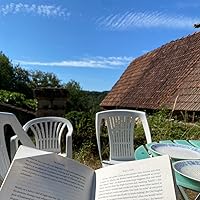
Amazing and thought provoking read, with a rare oral history presentation. Enjoyed it all the more for reading this in the Brecon Beacons, next the fire, with a brandy in hand.
Displaying 1 - 22 of 22 reviews