Jump to ratings and reviews
Rate this book

The Travels of Mendes Pinto

Rate this book
This text, ostensibly the autobiography of Portugese explorer Fernão Mendes Pinto, came second only to Marco Polo's work in exciting Europe's imagination of the Orient. Chronicling adventures from Ethiopia to Japan, Travels covers twenty years of Mendes Pinto's odyssey as a soldier, a merchant, a diplomat, a slave, a pirate, and a missionary, and continues to overwhelm questions about its source with the sheer enjoyment of its narrative.

"[T]here is plenty here for the modern reader. . . . The vivid descriptions of swashbuckling military campaigns and exotic locations make this a great adventure story. . . . Mendes Pinto may have been a sensitive eyewitness, or a great liar, or a brilliant satirist, but he was certainly more than a simple storyteller."—Stuart Schwartz, The New York Times

752 pages, Hardcover

First published January 1, 1614

39 people are currently reading
714 people want to read

About the author

Fernão Mendes Pinto

71 books15 followers
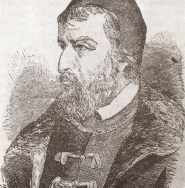
Fernão Mendes Pinto (Date of Birth, unknown c.1509 – 8 July 1583) was a Portuguese explorer and writer. His voyages are recorded in Pilgrimage (Portuguese: Peregrinação) (1614), his autobiographical memoir. The historical accuracy of the work was, for many years debated due to the many events which seemed far fetched and unreasonable to western cultures. Some aspects of the work can be verified, particularly through Pinto's service to the Portuguese Crown and by his association with Jesuit missionaries.

Ratings & Reviews

What do you think?
Rate this book

Friends & Following

Create a free account to discover what your friends think of this book!

Community Reviews

5 stars
89 (23%)
4 stars
119 (31%)
3 stars
105 (28%)
2 stars
50 (13%)
1 star
10 (2%)
Displaying 1 - 30 of 32 reviews
Profile Image for Luís.
2,372 reviews1,369 followers
December 14, 2024
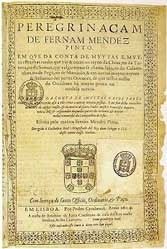
Peregrinação is the most translated and famous travel book in Portuguese literature. It was published in 1614 by Peter Crasbeeck's presses, thirty years after the author's death. It was probably written between 1570 and 1578 in Vale de Rosal, Almada. The book mixes history and fantasy, making it sometimes difficult to know where one begins and ends.
Combining autobiographical aspects with believable and convincing fiction, Fernão Mendes Pinto offers a curious report on the impact of Eastern customs on Europeans at the time and a compelling testimony of the Portuguese actions in the East.
He declares that three objectives led him to write the book: to make his children aware of his work (autobiographical function), to encourage the desperate and those who find themselves in difficulties (moral function), and to have someone to thank God for (moral role religious). However, after reading the 226 chapters of the work, one is left with the impression that there is a permanent tone of satire to the limited abilities of many Portuguese in the lands and seas of the East.
What draws the most attention is its exotic content. The author is an expert - even said to a painter - in describing the geography of India, China, and Japan and ethnography: laws, customs, morals, festivals, commerce, justice, wars, funerals, etc. Also noteworthy is the prediction of the collapse of the Portuguese Empire, eroded by so many vices and abuses.
It said that it is in Peregrinação that Portuguese literary prose prepared its modern period. That is the naturalness, the conversational tone, and the unique visual point to new directions that will be seen in Viagens na Minha Terra by Almeida Garrett.
Profile Image for Jan-Maat.
1,686 reviews2,499 followers
Read
May 31, 2021
I first came across F.M. Pinto's journeys from reading Maurice Collis' The Grand Peregrination which is an elegant (and fairly short) account of Pinto's (mis)adventures East of the Cape of Good Hope in the Sixteenth-century, which I would recommend as a condensed introduction to Pinto but for the fact that it is too not so easy to find, he drew mostly on the 1651 translation of Pinto's book into English which as you might imagine underplayed some elements of his story.

Since I wasn't paying attention I missed the event of Rebecca Catz's translation into English, however fate gave me the opportunity to read Pinto's book in Dutch.

I suppose it might be a good idea to say what this book is, or what it is about. But that brings me immediately to the major and vexed question of the relationship between the author and the content - which is not clear, if I can anchor that matter to one side for a few paragraphs maybe I can say that this is a sprawling personal view of the (mis)adventures of Portuguese fortune seekers east of the Cape of Good Hope in the middle of the sixteenth century.

By this time the Portuguese are in contact with the Christian empire of Abyssinia (Ethiopia) and control important harbours at Goa and Malacca, while during this book they are trading into China and make contact with Japan. Quite large numbers of Portuguese are in service as mercenaries with, in particular, the tyrannous king of Burma.

Interestingly the Portuguese don't seem to have any superiority over the peoples of the Far East, their ships have cannon but these are only used to devastating effect in one river battle late in the narrative. Their muskets seem to give them an edge in battles on land but it does not seem to be decisive. The impression arising from the text is that they maintain their empire through local alliances and taking sides in local disputes. They largely seem to have abandoned the use of Portuguese ships in favour of local vessels but this may reflect that there were not many Portuguese in the far East and that the sailing is mostly done by local crews using the vessels that they were familiar with.

Throughout the text there are ongoing struggles against powerful Muslim rulers (occasionally supported by, or allied with the Ottoman Turks), vexatious piratical pirates (whom seem to be much like the Portuguese), while in the background there are fears that the Chinese may become active and send powerful fleets into the region to assert sovereignty.

Ok, lets slip the moorings and try to tack this review past rocks and sandbanks hopefully sailing towards the big issue of the relationship of the author with the text.

Perhaps you may have noticed but I have avoided using words like novel, memoir, and, fact or fiction. It is very hard to say where Pinto's work sits in relation to such categories, perhaps they all apply. In that way it reminds me strongly of Marco Polo's Travels rather than of contemporary travel writing of the kind you can find in Richard Hakluyt.

The story goes that Pinto wrote his memoir and gifted it to a religious institution specialising in the Reform of 'fallen women' to be read aloud to them. And I did notice that despite this being a book dealing with many youngish men, far from home, hanging about in insalubrious ports there were no mentions of dangerous liaisons or unappreciated claims of paternity. I rather romantically imagined that maybe this was to avoid reminding those ladies of their former lives. Maybe though it is fairer to say that this is not strictly speaking a realistic warts and all account, for instance until Francis Xavier dies of illness close to the end of the tome nobody else dies of disease, indeed until then the leading cause of death among the Portuguese seems to be shipwreck, I assume, maybe fancifully, that there is a religious reason for this.

Much later and well after the author's death it was published. And possibly some editing occurred which might explain the very odd way that the Jesuits are dealt with here - that is we know that Pinto was a big fan and gave most of his money to that order leaving only a far smaller amount to his heirs.

Pinto opens by telling us that he was taken captive on 13 occasions and sold as a slave 17 times. All these misfortunes, we are told on the first page, were the result of his sins. Therefore he describes his adventures as a pilgrimage. I think this drives the narrative, fortunes are made - but then lost in shipwreck another view suggested in the introduction is that Pinto portrays himself as a picaro, a happy-go-lucky adventurer who is fated never to be successful, and operates among poorer people, having said that if we do read Pinto 's work as picaresque it would be if not the first than one of the earliest ones to be written, but on the third hand traveller's tales tend to be tall in any case.

The text is a series of bulky episodes each a set of adventures in one country after another, starting from Ethiopia an important Portuguese contact, they hoped to find the realm of Prester John, and to work with him to overthrow Muslims in general and recapture Jerusalem etc, etc... at first everything went well until the Portuguese noticed that the Ethiopians while Christian were not Catholic, they introduced the Inquisition to remedy this situation and then the relationship between the Portuguese and the Ethiopians rapidly went downhill and working eastwards and finally northwards to Japan. Pinto pops up in the Yeman, India, Indonesia, Burma, Thailand, Vietnam, China, and various other places.

It is hard to credit that Pinto was actually on all the missions that he says he was and there seems to be too much detail at times considering the passage of years between his service and writing his memoirs. This adds layers of complexity to the reading. Is it literally true or autofiction or something like a description of East Asia presented in the form of a travelogue or perhaps it is not consistently one of those but all of them at different points? Perhaps this book is more evidence of the literary creativity of the era and so will refuse to be pigeon holed into one of the genres that we recognise today.

The section about Burma is placed in the text before the story of Francis Xavier's trip to Japan and his death, even though chronologically it happened after. Xavier's activities are compressed in time too, several years vanish between sentences which serves to emphasise his interest in Japan and China at the cost of ignoring his interest in mission to peoples around Malacca.

It maybe that Pinto did not visit everywhere and partake in everything he describes. I felt reading that it was more than odd that he says 'the Portuguese' when since he was one himself, when it would have been natural to say 'we'. Mostly in recounting adventures though he only uses 'the Portuguese', occasionally 'we', even more rarely 'I', and once or twice 'I saw this with my own eyes', so it could be that the book is actually a composite of Portuguese adventures, which mostly involve shipwrecks, but only a few of which Pinto was part of himself.

In the long Chinese and Tatar section, bits seem to reflect his own experiences, but then presumably he might have seen a Chinese market or had a chance to eat with Chinese people without having to undergo the lengthy and arduous adventures that he describes. It is a very dubious episode -arrest (eventually after shipwreck and some time wandering and begging) and transfer to Nanking and then Beijing for trial on a charge of vagrancy and attempted theft, sent to work on the Great Wall of China, freed during a raid by the King of the Tatars, and sent by him him with his ambassadors to Cochin China. Then I recalled the Altan Khan, and indeed he had raided into China and burnt the suburbs of Beijing at the same time as Pinto says he was freed, but that itself seems very convenient. This leads eventually to landing in Japan and presenting the locals with an arquebus, which it is hard to imagine that he had carried around with him through China, in prisons, then among the Tatars, and still had it handy to give away as a present, but if this is a composite of several different people's experiences then it is more plausible.

Similarily there is an offhand comment that the king of Siam among other beasts liked to hunt lions and zebras. Imported lions and zebras from Africa to Asia to kill them would not be the strangest thing to happen in world history, but it does seem a little unlikely - or am I imagining too much the difficulties for the sailors transporting ships loads of lions across the Indian ocean?

The book is, oddly, not interested in the people and cultures that 'the Portuguese' encounter, so much so that it comes as a shock when Pinto describes a Chinese market and Chinese people eating with sticks rather than with their hands like he does, or when he mentions Burmese women as particularly beautiful and stylishly dressed.

But it is action packed, almost non-stop adventure, sea battles, sieges, shipwrecks, slavery, piracy, pursuit of pirates, tomb raiding, meeting famous Jesuits...there's enough material here for seventeen novels

There are occasional sentences of speech in other languages - sadly in this edition there were no notes if these were nonsense or genuine 16th century Thai, or Malay, or what ever it may have been. Pinto doesn't mention anyone learning languages or anyone acting as a translator, but despite this everyone seems able to communicate verbally (and to read each other's letters), also certain speeches by non-Christians seem very Christian in tone and language Equally I was not sure how Pinto understood the religious groups that he encountered, unlike some of his predecessors he does not think that they are all Christian. Interestingly at times there does seem to be an implicit criticism of the Portuguese and an openness to good 'Christian' behaviour by non-Christians - I think here of a Muslim merchant who buys Pinto as a slave and returns him as a free man to Malacca or the Pirate who had become a Christian and worked with the Portuguese but became a pirate and converted to Islam because of the abusive way he was treated by the Portuguese.

In a couple of places Pinto mentions sounds, specifically armies playing instruments before battle and the text then explodes in a rough cacophony of unfamiliar instruments.

It is an incredible work though not a literary masterwork.
Profile Image for Owlseyes .
1,805 reviews304 followers
April 16, 2021


A book first published in 1614.
Fact or fiction? Truth or part of it?

What to say of a 16th century Portuguese man who travelled over large areas of Africa and Asia (Gulf of Siam, Japan, India, China...) as merchant, as warrior,...in company of the Jesuits...imprisoned turned into slave...,as occasional physician, ambassador,...a pirate in the China seas,...a soldier, a business agent and... 20 years later, in Portugal, recalled his trips?


I think Mendes Pinto has the stature of Da Gama, the only difference being that a few noticed that, so far.


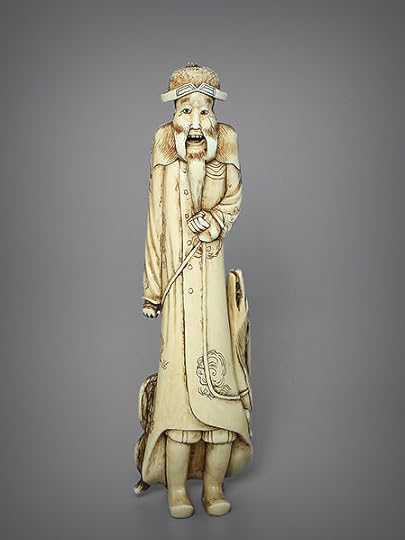
(Portuguese Traveler Mendes Pinto, carver Yomeisai, 19th century, ivory, height 132 mm)

He's the Unrecognized Hero of Portugal.

Back in 1987 the Portuguese writer Miguel Torga visited Macao. Reflecting on the Discoveries time he said:" this land has got something of disturbing and of opium-quality". "Macao is like a confusing dream of Portugal".

Torga wrote in his Diary: "it's our destiny not to fit in the birth's cradle"... since the early days we are emigrants; the pre-historical Portuguese was already an adventurer, a missioner, a sower of culture"..."... "to be a complete Portuguese is to be (Camões) a pioneer, a banner holder, an apostle, a visionary, a boyfriend and a poet ". All the enunciated qualities fit so well into Mendes Pinto.


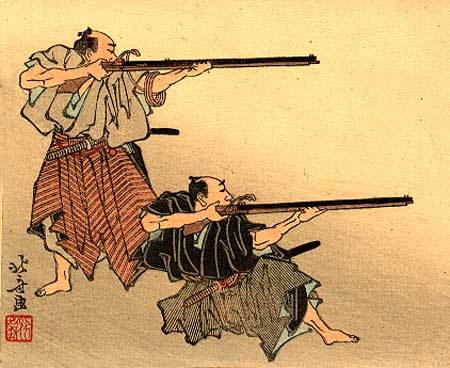
("Samurai snipers"; Diogo Zeimoto,a companion of Mendes Pinto, made a shooting demonstration which amazed the Japanese "nautaquim")

On the 2004 edition of "Peregrinação" the Portuguese writer José António Saraiva wrote in the Introduction: "Being an auto-biographical book, what's most interesting about the character is his anti-hero side. FMP is a poor devil....he refers to himself as "poor me"...he exposes himself to the reader to be laughed at". Saraiva compared FMP to Charlot of Charlie Chaplin or certain characters of Woody Allen.

Saraiva added: "the episode when FMP portrays himself killing time laying down on a sea beach, watching hours roll by, ending up being bought by a merchant for a ridiculous price, may be symbolical: it shows us a man reduced to his tiniest condition-the human merchandise in its simplest form".

"He could have died a twenty times but he always saved himself"

Quoting FMP: "...God always saved me....for twenty one years, thirteen times I was held captive and for seventeen I was sold, in those parts of India, Ethiopia, Arabia Félix, China, Tartária, Macáçar, Samatra and many other provinces of that oriental archipelago of the far east Asia, one of the chin, siam, "guéus" and "léquios" writers call in their geographies the "lid of the world"..."

"Fernão, mentes?"
-Minto!
*

Had I been a Historian; had I had the chance to write a doctoral dissertation than FMP would had been my topic.

I'm not lying.

*Portuguese game of words/sounds (playing with name Pinto and the verb to lie=Minto=I lie):
-Fernão, do you lie?
-I do.


UPDATES


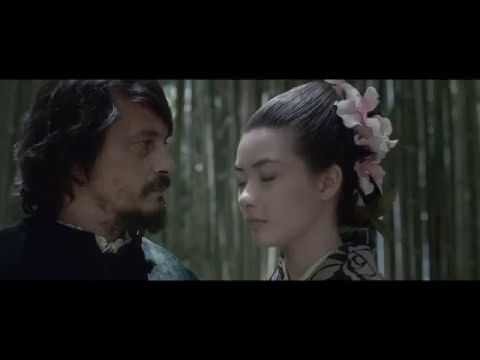
Tomorrow, the 1st of November, will be the debut of a Portuguese film on Mendes Pinto. I'll stay tuned. I'm happy even before knowing how good the movie is. Just because Mendes Pinto deserves all recognition.

https://www.youtube.com/watch?v=3617s...
Profile Image for Ana.
230 reviews91 followers
September 23, 2018
Não fosse esta obra ter sido abordada na comunidade de leitores a que pertenço e provavelmente nunca a a teria lido, o que seria uma pena. Aprendi e diverti-me com esta leitura, não obstante algumas dificuldades com a linguagem da época. Por esse motivo desisti da edição da Relógio d'Água que tinha iniciado e troquei-a por uma edição com anotações, da Europa-América.
Uma leitura interessante que nos dá uma visão diferente, e menos glorificadora, da acção dos portugueses pelo Mundo (neste caso o Oriente) e suas motivações.

Profile Image for Larissa.
17 reviews3 followers
April 27, 2013
This is one of my all time favorite Portuguese books. It's a little hard to tell what is genuine personal history versus sailor swagger but that just makes it all the harder to put down. Fernao Mendes Pinto was a real person who wrote this as his autobiography. It follows him from his youth, to his first ship, through worldly travels and 3 shipwrecks across 21 years in the 16th century. The Portuguese at this point in time saw themselves as masters of the world. So it is a shock when they come across the advanced cultures of Eastern Africa on over to India, China and Japan.

During this tale Fernao claims to be made captive numerous times and sold into slavery many times. In one particularly horrific shipwreck, the survivors resort to cannibalism before selling themselves into slavery for passage out of Java. He claims to have been on the first voyage of Europeans to Japan and to have introduced the gun to Japan.

What I love about this story is it is a great introduction to 16th century European-Asian relations but you hardly notice because the storytelling is so over the top it's more like reading a guilty pleasure escapist adventure novel from your youth.
Profile Image for Andrei Bădică.
392 reviews10 followers
October 10, 2021
Peregrinare se prezintă drept o operă autobiografică care cuprinde viața autorului din momentul plecării din casa tatălui său și până când, după îndelungi călătorii prin Orient, s-a întors în Portugalia. Prin combinația dintre exotism și picaresc folosite în scopuri critice, cartea poate fi numită și o operă de precursor, îndrăzneață și captivantă, în care iluminiștii de peste două secole vor găsi un material vast de informare și confirmare.

„(...), să nu se descumpănească în fața greutăților vieții și să lase la o parte săvîrșirea celor trebuincioase, deoarece nu se află nici unele, oricît de mari ar fi, pe care ființa omenească să nu le poată birui cu sprijinul proniei cerești.”
Profile Image for Adelina.
228 reviews1 follower
August 31, 2018
Um testemunho real e emocionante de alguns dos trágicos acontecimentos ocorridos durante as descobertas portuguesas. Impressiona a coragem e a valentia dos nossos "valerosos" antepassados e a forma despojada de glória dos relatos. Um dos livros a ler na vida.
Profile Image for Samuel Viana.
Author 3 books6 followers
July 12, 2017
Comecei a lê-lo hoje, penso que se citar os parágrafos iniciais não trarei mal nenhum ao mundo, de forma que estou apenas a acicatar o vosso interesse por este épico:


Do que passei om minha mocidade n'este reino ate que me embarquei para a índia.

Quando ás vezes ponho diante dos olhos os muitos e grandes trabalhos e infortunios que por mim passárão, começados no principio da minha primeira idade, e continuados pela maior parte e melhor tempo da minha vida, acho que com muita razão me posso queixar da ventura, que parece que tomou por particular tenção e empreza sua perseguir-me e maltratar-me, como se isso lhe houvera de ser materia de grande nome e de grande gloria; porque vejo que, não contente de me pôr na minha patria, logo no começo da minha mocidade, em tal estado que n'ella vivi sempre em miserias e em pobreza, e não sem alguns sobresaltos e perigos da vida, me quiz tambem levar ás partes da índia, onde, em lugar do remedio que eu ia buscar a ellas, me forão crescendo com a idade os trabalhos e os perigos. Mas por outra parte, quando vejo que do meio de todos estes perigos c trabalhos me quiz Deos tirar sempre em salvo, e pôr-me em seguro, acho que não tenho tanta razão de me queixar por todos os males passados, quanta de lhe dar graças por este só bem presente; pois me quiz conservar a vida, para que eu pudesse fazer esta rude e tosca escriptura, que por herança deixo a meus filhos (porque só para elles é minha tenção escrevêl-a), para que clles vejão n'ella estes meus trabalhos e perigos da vida, que passei no discurso de vinte e um annos, em que fui treze vezes captivo, e dezesete vendido, nas partes da índia, Ethiopia, Arabia feliz, China, 'fartaria, Macassar, Samatra, c outras muitas provincias d'aquelle oriental archipelago, dos confms da Asia, a que os escriptores chins, siames, gueos, elequios, nomêão nas suas geographias por pestana do mundo, como ao diante espero tratar muito particular e muito diffusamente; e d'aqui por uma parte tomem os homens motivo de se não desanimarem com os trabalhos da vida para deixarem de fazer o que devem, porque n3o ha nenhuns, por grandes que sejão, com que não possa a natureza humana, ajudada do favor divino, e por outra me ajudem a dar graças ao Senhor omnipotente, por usar comigo da sua infinita misericordia, apezar de todos meuspeccados, porque eu entendo e confesso quê d'elles me nascêrão todos os males que por mim passárão, e d'ella as forças e o animo para os poder passar, e escapar d'elles com vida.

Profile Image for Bambino.
127 reviews5 followers
October 20, 2019
Acabei de ler o primeiro volume da Peregrinação e venho apenas deixar um aviso para quem ama enterrar os pés invernais, finalmente nus, na tão aguardada areia da praia primaveril.

Isto é: se de alguma forma se sentirem encantados com o conteúdo deste livro, parem imediatamente de o ler (eu tardei em fazê-lo e arrependi-me). Percorrer o fabuloso oceano quinhentista num barco de borracha da Colecção 120 Anos JN é uma experiência admirável. Mas é ainda melhor percorrer esse mar na respectiva caravela portuguesa negra e infame que é a versão integral da Peregrinação, com a respectiva estrutura, com o percurso guiado por Fernão Mendes, sem elevadores nem portais de teleporte engendrados por editores modernos.

Se não vos apetecer ler 866 páginas fiquem-se pelos primeiros 80 capítulos. São límpidos, fulminantes, tão leves quanto a prosa moderna engendrada em laboratório para vender diarreia literária ao desbarato (com as respectivas diferenças no conteúdo, claro). Os capítulos são curtos e acabam sempre em subtis suspenses. A capacidade descritiva de Fernão Mendes é espantosa, enternecedora, inocentemente cómica. A sua descrição das barcaças dos patos, na sua simplicidade, vai-me fazer rir até que a morte me leve para a côncava funda do lago da noite.

A Peregrinação é um belíssimo poema sobre as mais nobres e vis características da besta humana. Um fragmento vital para a compreensão do delicioso mistério de se ser português. Um retrato fiel, fulminante, da absoluta insanidade dos Descobrimentos e da perniciosa disseminação dos infames esporos da Cristandade.

Qualquer despeito relativamente à honestidade do autor é fruto de ignorância e peçonha coronária (eu próprio reconheço que, durante mais de vinte anos, cometi tal pecado). Na vida, mentir é algo muito feio. Mas na literatura a mentira chama-se ficção. Fernão Mendes é simultaneamente um cronista e um contador de histórias.

Que viagem perdi todo este tempo! Quanto de mim estaria achado, durante as travessias de desertos e selvas em que me perdi, se já conhecesse a ancestral voz lusitana que ecoa no peito deste senhor - ou melhor, na verdade, essa voz já nasceu comigo. Ah, a lusitana vontade de naufragar e viver para contar!
Profile Image for tiago..
464 reviews135 followers
April 7, 2019
Poderia ter sido mais agradável a leitura não fosse a edição que me veio parar às mãos: a da QuidNovi, cujo editor teve a peregrina ideia de cortar vários capítulos ao texto, sem qualquer explicação. Disto resultou um texto muito confuso, com os protagonistas a mudar de localização de um capítulo para o outro e no qual facilmente se ficava completamente perdido. A isto não ajudava o facto de o texto não ter um único parágrafo, sendo cada capítulo um único bloco de texto.

Quanto ao livro em si, surpreendeu-me tanto por ser mais imaginado do que esperava (embora hajam partes que serão sem dúvida descrições verídicas do que o autor viu, certas descrições de milagres e diálogos fantasiosos serão com certeza inventadas) como pelas críticas que o autor - não desprovido de remorso - faz ao modo com os "Cristãos" ocuparam, de forma pouco Cristã, as terras de Oriente. Apesar de poder ser um pouco maçudo e de ter excesso de reviravoltas, ficou sem dúvida alguma curiosidade de ler o livro todo. Termino com uma citação do texto:

“(...) homens que por indústria e engenho voam por cima das águas todas, por adquirirem o que Deus lhes nao deu, ou a pobreza neles é tanta que todo lhes faz esquecer a sua pátria, ou a vaidade, e a cegueira que lhes causa a sua cobiça é tamanha que por ela renegam a Deus, e a seus pais.”
Profile Image for Francisco Câmara Ferreira.
52 reviews
July 30, 2013
Apesar do texto ser às vezes um tanto difícil de ler (português do século XVI) e de algumas contradições gostei muito destas crónicas da muito dura e incerta (mas emocionante) vida da nossa gente lusitana pela Ásia do séc. XVI. "A mais pura glória do passado de um povo é ter tido humanistas como (Fernão) Mendes Pinto, que o ensinam a aferir os seus próprios actos pelos princípios supremos do verdadeiro e do justo. Por essas estradas de fulgor eterno é que se traçam as rotas de um provir melhor". A. Sérgio
Profile Image for Paulo Monteiro.
44 reviews2 followers
September 2, 2020
Este é um relato das impressionantes aventuras de Fernão Mendes Pinto no séc XVI. Embora de leitura menos fácil, mesmo já no léxico actual, vale de todo a pena ler pelas inúmeras histórias em que relatam o contacto dos portugueses com os povos do extremo oriente, incluindo o Japão.
Profile Image for J SC.
6 reviews4 followers
August 3, 2019
Dantes era uma vida complicada.
Profile Image for Mafalda.
127 reviews2 followers
July 23, 2020
Acho que se alguma vez quiser revisitar esta obra, terei de arranjar uma outra edição e de preferência anotada. A edição que li tem vários capítulos cortados e não consigo perceber qual foi o critério de seleção dos capítulos que efetivamente ficaram, dado que, da forma como estão, apresentam uma narrativa assim meio desconexa. Num momento os personagens estão num local, no capítulo seguinte já estão náufragos nem sei de que viagem.

Além disso, achei lamentáveis as descrições das pilhagens em nome do Cristianismo. Sei que elas aconteceram, não há como negar, mas é triste ler as desculpas dadas para tais atos.

Fartei-me de rir com os relatos de Fernão Mendes Pinto ao ser capturado, aprisionado, ter naufragado n vezes, mas ter sobrevivido sempre, sem saber como, quando os seus companheiros acabam sempre por perecer. Claro, que conveniente.
Profile Image for Liesel.
32 reviews
December 27, 2020
Terá sido mesmo Fernão Mentes? Minto! um autor desacreditado e rotulado de mentiroso por ter supostamente inventado uma ida a Nanjing ou terá sido apenas desvalorizado, desrespeitado e injustiçado?
O que é certo é que as soberbas descrições que faz do Oriente, dos homens, dos rituais e tradições são incrivelmente reais. Na sua magnifica "peregrinação" ele aponta e critica admiravelmente as realidades com que se depara: crimes, roubos, hipocrisia dos homens.
Sua obra constitui a primeira narrativa de viagens portuguesa.
Na minha opinião, Fernão Mendes Pinto é indubitavelmente merecedor de figurar no Padrão dos Descobrimentos, em Belém.

Profile Image for Bin Santos.
3 reviews1 follower
January 9, 2014
Perspectiva completamente diferente da época dos descobrimentos. Fernão Mendes Pinto expõe as atrocidades que foram cometidas supostamente em nome do cristianismo, ao mesmo tempo que incrivelmente não morre (quando toda a gente à sua volta morre) nem nas várias prisões, nem nos vários naufrágios que sofre.
É uma autentica peregrinação ler este livro... 800 e tal páginas escritas em antigo português com tanta navegação e tanto naufrágio que por vezes me deu a volta à barriga.
22 reviews
September 20, 2022
It is unfortunate that Catz' translation loses some of the sentiment and is briefer than the original writing but I feel like it's not enough to give less than five stars to an extraordinary story. For those less inclined to read the 16th century account penned by Pinto himself, I would recommend his biography as narrated by Maurice Collis.
Profile Image for Paul Pereira.
Author 2 books6 followers
May 27, 2020
Good translation. These are the tales of Fernão Mendes Pinto which can be summed up by the old Portuguese joke: Fernão, Mentes? Minto! Still, fantastic as they are, they are great stories which mix reality with tall tales and mythical creatures never seen before, during or after.
Profile Image for Luís Redondo.
67 reviews
July 25, 2021
Continua a ser uma dos melhores livros de aventuras de todos os tempos.
Profile Image for Íris Ramos.
80 reviews1 follower
May 21, 2023
obrigado fernão mendes pinto, por estragares a minha média<3
mas o livro chegou a ser interessante
Profile Image for Tijl Vandersteene.
124 reviews12 followers
December 8, 2020
Kanjer van een boek.
630 p. in vrij kleine druk / 226 hoofdstukken vol verbazende avonturen en observaties.
Voorafgegaan door 3 verhelderende inleidingen en voorzien van 3 nuttige registers.

Een belangrijk historisch en literair werk -zeker voor de Lusofone wereld- dat moeilijk te definiëren is. Is het een reisverslag ? een avonturenroman ? een cultureel-religieus werk ? een uitzonderlijk dagboek ? een politiek-economische studie ?
In elk geval bevat het veel opmerkelijke gebeurtenissen en (voor ons) verrassende overtuigingen. En hoewel het met een korreltje zout te lezen is werpt het toch een boeiend, onverwacht licht op kolonialisme, politiek, religie, ethiek... met als centrale ankerpunten de christelijk Portugese (en bij uitbreiding Europese) cultuur en de verschillende Aziatische culturen uit de 16e eeuw.

Een hele kluif maar evengoed een uniek, fantastisch en interessant leesavontuur.
Profile Image for Teresa Gonçalves.
124 reviews7 followers
May 13, 2021
#1PortuguêsPorMês
Um clássico que nos relembra que não há fortuna no mundo capaz de superar o valor das vivências e experiências que o dinheiro não compra e só as viagens proporcionam.
538 reviews6 followers
December 17, 2022
Гумилев Н.С. "Капитаны II" 1909
///
Вы все, паладины Зеленого Храма, Над пасмурным морем следившие румб, Гонзальво и Кук, Лаперуз и де-Гама, Мечтатель и царь, генуэзец Колумб! Ганнон Карфагенянин, князь
Cенегамбий, Синдбад-Мореход и могучий Улисс, О ваших победах гремят в дифирамбе
Седые валы, набегая на мыс! А вы, королевские псы, флибустьеры, Хранившие золото в темном порту, Скитальцы арабы, искатели веры И первые люди на первом плоту!
И все, кто дерзает, кто хочет, кто ищет, Кому опостылели страны отцов, Кто дерзко хохочет, насмешливо свищет, Внимая заветам седых мудрецов! Как странно, как сладко входить в ваши грезы, Заветные ваши шептать имена, И вдруг догадаться, какие наркозы Когда-то рождала для вас глубина! И кажется — в мире, как прежде, есть страны, Куда не ступала людская нога, Где в солнечных рощах живут великаны И светят в прозрачной воде жемчуга.
С деревьев стекают душистые смолы, Узорные листья лепечут: «Скорей, Здесь реют червонного золота пчелы, Здесь розы краснее, чем пурпур царей!» И карлики с птицами спорят за гнезда, И нежен у девушек профиль лица… Как будто не все пересчитаны звезды, Как будто наш мир не открыт до конца!

Запах моря, смолы, дёгтя, специй, пороха и крови. Век 16, век конкистадоров, век религиозных войн. Империя над которой не заходит Солнце, но где очень мало земли. Никому неизвестный португалец Пинто отправляется на Восток...
По крайней мере для меня, Португальская империя всегда как-то была в тени своего крупного соседа - Испании. Которая одно время подмяла Португалию, так что две империи слились в одну католическую и морскую. Ограниченная с суши, Португалия расширялась за счёт тонких морских путей. Даже удивительно как такая маленькая страна могла вести свои дела на другом конце света, учитывая несовершенство кораблей 16 века и малочисленность португальцев. В книге Пинто смесь правды и вымысла, сентиментального и страшного, грешного и святого. Тут слишком много всего интересного, чтобы ухватить в одном обзоре. Немного снижу оценку за совсем уж фантастическое описание Минской империи. Наверно самое интересное, для меня, было описание политики юго-восточной Азии, а именно ужасные войны, которые вёл Табиншвехти, король Бирмы. Вообще политика того индокитайского региона была исключительно кровавой. И удивительно насколько далеко дотягивались руки Османской империи.
Profile Image for Tmacedo.
3 reviews
March 23, 2023
Mo caozeiro do crl

Muito interessante as aventuras doidas e irreais do cara. Ele diz que queria deixar uma herança e deixou, como um gigantesco misto de alguma verdade e muita ficção.

Só perde que o livro por muitas vezes é massante e chato.
Profile Image for Hélio Oliveira.
182 reviews
October 17, 2023
Sempre tive alguma dificuldade com a linguagem de época e isso torna o livro mais difícil, mas, curiosamente, até o achei divertido pela forma, aqui e ali, leve e real com que retratava as coisas.

70-100
Displaying 1 - 30 of 32 reviews

Can't find what you're looking for?

Get help and learn more about the design.