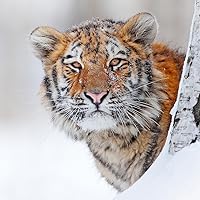
An inspiring look at wildlife species that are defying the odds and teaching important lessons about how to share a planet.
The news about wildlife is dire—more than 900 species have been wiped off the planet since industrialization. Against this bleak backdrop, however, there are also glimmers of hope and crucial lessons to be learned from animals that have defied global trends toward extinction. Bear in Italy, bison in North America, whales in the Atlantic. These populations are back from the brink, some of them in numbers unimaginable in a century. How has this happened? What shifts in thinking did it demand? In crisp, transporting prose, Christopher Preston reveals the mysteries and challenges at the heart of these resurgences.
Drawing on compelling personal stories from the researchers, Indigenous people, and activists who know the creatures best, Preston weaves together a gripping narrative of how some species are taking back vital, ecological roles. Each section of the book—farms, prairies, rivers, forests, oceans—offers a philosophical shift in how humans ought to think about animals, passionately advocating for the changes in attitude necessary for wildlife recovery.
Tenacious Beasts is quintessential nature writing for the Anthropocene, touching on different facets of ecological restoration from Indigenous knowledge to rewilding practices. More important, perhaps, the book offers a road map—and a measure of hope—for a future in which humans and animals can once again coexist.
Tenacious Beasts: Wildlife Recoveries That Change How We Think About Animals By Christopher J Preston
I want to thank the publisher and NetGalley for letting me read this informative and interesting book. This book focuses on several different animals and describes their decline in numbers and the reasoning behind it and then how they are making a comeback. Along the way we learn about other animals that are effected in the interlocking web of life. Some of the animals discussed are wolves, whales, bison, and owls. But many other animals are mentioned. We also learn how humans have played a role in helping with the comeback. I guess it's only fair since we helped in the decline. The book is easy to read and informative on various subjects. You really have to want to know about animals before starting this book due to all the facts it has. To me it was an eye opener. I read a lot on nature books so most of the basics I knew but I really did learn so much!
From NYer "Best Recently-read books" list: "The occasional resurgences of animal populations in an era of mass extinction are the subject of this lively study, by a journalist and professor of environmental philosophy. Despite widespread depredation, some species, from wolves in densely populated Central Europe to beavers in the polluted Potomac to whales in the Gulf of Alaska, have staged dramatic comebacks. Preston focusses much of his reporting on wildlife scientists and Indigenous activists, arguing that these recoveries—and the ecological restorations they engender—demonstrate that the flourishing of other species is “integral to our shared future.” In cases where conditions are right, degraded landscapes can be revitalized through the combination of thoughtful environmental practices and animals’ natural capacities."
This book is one of many, where the author had good ideas, but really not enough material to fill a book. I find such books annoying, but in skim mode, sometimes they are readable. For the occasional chapter where he has enough stuff, hrm. I don't think I've actually found one yet! But it is pretty interesting if one is a good skimmer (which I am), and he writes OK -> well. Pity he didn't have a sterner editor. And a better copy-editor! The book is riddled with typos, mostly of the homonym, whine for wine sort. Which of course spell-check can't find. Perhaps in the sweet bye-and-bye, a competent AI copy-editor will emerge! Don't hold your breath.
I haven't given up, because the interactions with American Indians aka "Native Americans" are good. And I'm correcting some of the typos . . .
The book does get better, and ends on a hopeful note: human population is expected to peak sometime in this century, and then begin to decline. When there is more room for wildlife, the Tenacious Beasts will be ready.
Overall, a weak 3 star rating from me. Cautiously recommended for readers who don't mind skimming to get to the good bits.
Great book. I loved the concept of the 'cultural carrying capacity', and how the author explained how different cultures created their own 'cultural carrying capacities'. The book is 100% biased toward Europe and the western US, but this didn't really bother me because the author is really transparent about why he is writing about these places. I also thought the author highlighted Indigenous/First Nations perspectives on wildlife in a very respectful and enlightening way. I learned that the author was a philosopher about halfway through the book, and I think his perspective as a non-environmentalist really makes this book. He is a great writer and a great thinker. I think anyone interested in environmentalism or anthropology would really enjoy this.
I enjoyed this, and I sometimes found it hard to tell what animals were the stars of what chapters; though, many of the animals/plant life they discuss are reliant on one another, highlighting the growing concerns about our abilities to survive as certain animal populations go extinct. I definitely learned quite a bit throughout this book. I think I would’ve liked to have learned a bit about the impact of microplastics in our waterways on some of the aquatic life discussed like salmon species, whales, otters, etc.
this writing style was interesting and very narrative-driven despite being nonfiction, which i appreciated; everyone out there has surely read a nonfiction book that bored them to tears
that being said, it was slightly disjointed at times. the book set out to focus on 5 main keystone species, but ended up delving into related species in a way that was relevant but could be difficult to follow
bonus points for the part where the author described bear cubs as "burrito-sized"
Just so beautifully wonderfully written and teeming with hope and life - ranging from insects to birds to whales to people, because it is people who are making all of this work, people are putting in the time and the effort and love to restore nature and co-exist once more with our ecosystems rather than destroying them. The worlds Preston shows us leap off of the page.
I also really appreciate how this book talks specifically about how colonialism and industrialism have created degraded, defunct ecosystems, and centres indigenous people in environmental activism and the calls for a new nature, because time and time again we’ve seen the failures of fortress conservation, and the successes of indigenous-led conservation movements. It’s also very fair about issues like active management and the ethics of killing invasive species, displaying both points of view.
This was a pretty good book as far as course readings go.
Some of us have the tendency to make total victims out of animals, that they are only ever endangered and therefore in need of human help.
Preston sidelines this misconception of animals, highlighting that animals have the agency to make comebacks, even against mass slaughter carried out by humans, directly or indirectly.
That was really the major takeaway from the book, and Preston gets at this through a variety of case studies. Overall, a good starting book for recognizing that animals are not helpless creatures completely reliant on human help. And it raises interesting ethical questions of how then we are to involve ourselves in the recovery of endangered species.
Definitely is not meant to take away from the fact that we are killing the planet, though.
While most natural science books currently become very doom and glum about global warming, Tenacious Beasts is a look into just how resistant to humans nature can be, focusing on species that have to recover and come back from the brink of extinction. It's full of love for the natural world and just how powerful it is. It is full of love for every animal featured and love for the research that was put into all the discoveries. Reading this book felt like going back to lectures, and I mean the good ones. Instead of making you feel like there is nothing that can be done about global warming and the impact of humans on nature, it shows you what is possible. How the natural world can adapt to humans and the positive research/change you can make. Preston goes out to find all these stories and tells them all with such excitement you find yourself excited about salmon sperm. I am excited to start trying to find ways to incorporate this new knowledge into my programming and continue spreading the word. Thanks to the author and publisher for providing a free ARC copy through NetGalley in exchange for an honest review.
This book gave me a lot of hope and excitement. I’ve spent a lot of time up in Montana since my dad moved there, so I feel well acquainted with the human-predator conflicts. However, I honestly had no idea there were still bears and wolves in Europe. I assumed they were long gone. It was great to read about the recoveries in various regions. It was also just encouraging to have a positive wildlife book to read. As someone with a background in environmentalism and sustainability, it can be incredibly draining always researching and reviewing the negatives. This book was a breath of fresh air in that sense.
Did you grow up with National Geographic and discovery kids books? This is the adult version that raises philosophical questions about our relationship to animals in the wake of our growing climate crisis. Each chapter helped me appreciate the elegant balance of ecosystems in nature. Your walk away with cool animal facts about wolves, buffalo, see otters, owls, and more, but also grapple with the questions the author raises.
I don’t get it… it’s about “tenacious beasts” but then is all about beasts that Fish and Game painstakingly brought back? Like…they’re welcome? Also cuh keeps saying he has a new way to think about animals but all the Indians he talks to already think that way? Two stars.
What a book! After reading many rewilding books that regurgitate the same stories here is an author who went into the field to talk to different people practicing and learning from wildlife recovery. The result is a wealth of insight brought in simple terms that fill you with a positive outlook. Coexistence is the key concept i will take from this book. Thanks to the author for sharing these insights.
Thank you to Netgalley and the publisher for an eARC in exchange for an honest review
An interesting book that speaks to how species can come back from the brink. Preston’s writing style is enjoyable and informative even for someone that doesn’t typically read non fiction nature books.
For the shortest of summaries the reader may go with:
Main points: Climate change will kill us, white man in all his forms bad/Indigenous good (except the few who helped to shoot beaver), let nature fix herself and what's the point.
Otherwise Tenacious Beasts explores in some detail the recovery of wolves to the Netherlands, bison to the United States, the removal of dams to allow for spawning fish to make their way back to original spawning grounds, the bears of central Italy, the struggles of the spotted owl and the recovering whale populations. But instead of providing the reader with a neutral stand on explaining how these animals are coming back and giving the reader with even more details that they may be interested in he chooses to provide the reader instead with the human conflicts that are caused by these animals returns, the moral struggles, the theories and of course his own story as he explores these issues. Thus the book also becomes a book on:
-Changing our attitude to permit rewilding of all spaces such as very close civilized locations and easing the doubts of those people who live off the land by helping them to put in measures to prevent those animals from possibly invading as it will help to improve their farmlands as well -Should genetic purity be a need or is it alright for endangered animals to be hybrids as long as they look like the desired as well as behave as the original animal -Rivers will rebuild themselves if given an opportunity -Beavers will rebuild rivers if given an opportunity and stop wildfires -Indigenous peoples' practices should be followed as they are environmental heroes -When should we surrender on conservation-dependent species and allow nature to take its course -We should use nature to help us in our fight in climate control since of the amount of carbon that whales and sea otters can help to put away (theories) although in such a measure we can make all parties happy since of the effects especially that sea otters have on much desired shellfish
As a result I found this book to be a bit on the slow side since each section has three chapters within it. The first invariably introduces the reader to the animal in question for that section, puts in some history of what occurred to the animal, etc. The next chapter then explores the "concept" in more detail about conservation practices, what they mean to the land, etc. And finally between the second and third chapter the reader is introduced to other similar conservation attempts with other species, how they are working out or not, etc.
Other issues included the fact that he mentioned sperm whales that are on the attack will swim away from said danger after entering into a rosette form with their heads in the center. Doesn't seem like a plausible way of escaping for whales while I think some of the whales would be in a bad position for swimming if they do so.
And my last big snit is the fact that the author talks about how California condors have made a comeback but of course even though there are some laws to stop them from being poisoned by lead shots not everyone follows these law. Instead he tells the readers that there is a way of ensuring these birds don't die from the poisoning but it takes human intervention and days for the treatment to be applied as a result these condors are still "conservation-dependent" for the help. Unwinding this in my brain - animals are finally making a comeback and are strong except one human activity, we can save the birds from that said human activity by two ways - 1. trying to get every stubborn human to actually listen to your laws (good luck) or 2. stepping in with medical help when we see the need thus saving the bird's numbers from stopping from going back down to endangered and yet it is the animal who is reliant because again of human cause-and-effect. That boat doesn't sail.....
All in all it was rather decent if you could stick through the writing but you would have to be rather one tenacious beast to do so.....
A very detailed, well documented book, Tenacious Beasts starts strong by discussing natural recoveries of wolves in Europe and bison in North America. The author interviewed a lot of experts in the field and made sure to not perpetuate long-held incorrect beliefs (e.g., the alpha wolf myth). The accounts are not 0verly-sentimental and do not ignore the damage that some of the wild recovering species can cause unnecessarily (e.g., wolves going on a feeding frenzy and occasionally killing flocks of sheep without consuming more than a couple of animals). At the same time he makes sure to highlight the intelligence and complexity of the animal, as well as their role in maintaining the health of the ecosystem, and by extension of human-delved environments. He also includes a lot of First Nation voices, which was wonderful. The approach Native Americans had when interacting with the wild is something that needs to be thoroughly internalized by western societies, who perceive value based on the potential to extract value (i.e., create wealth for an individual/corporation). "In indigenous culture, to express value is to preserve it."
The middle chapters start discussing reintroduction strategies where a little or a lot of human intervention is required. These parts, while still well documented, where less clear and raised some alarm bells for me. Especially the part about reintroducing an auroch-like herbivore in Europe. The problem is: aurochs are extinct. And the person creating an auroch-like species by mixing several living species is apparently considering introducing a brand new non-existing species in a bunch of ecosystems...based on whose advice though? My blood boiled when he suggested introducing such hybrids in the Danube Delta, a wonderfully diverse ecosystem, a protected area housing a lot of endangered and unique species, and also an ecosystem that doesn't need a big herbivore. Don't take my word for it, talk to the ecologists working in the area. One of them is my mother. Have the Romanian authorities been contacted about this, or is this yet another case of rich Western Europeans telling poorer countries what to do? And while a lot of Native American voices were included in the story, not a lot of Eastern European voices were allowed to speak in this book--even when some of the European recoveries were only possible because of the Eastern European countries. In Europe, the West has already altered wild ecosystems beyond recognition. The East still knows how to live close to an abundant wild life. As such, the exclusion of most Eastern European voices and the joy with which westerners talked of introducing artificial species in already complex ecosystems, sounded more like a western folly attempt to "recreate the wild" without input from the people living in the areas they are interested in.
Overall, I've learned a lot from this book. I'm not nearly as worried about species "purity" as some of the people interviewed in this book, as nature adapts and selects. The inclusion of seldomly heard voices, informed scientists and enthusiastic conservationist created an intricately layered and connected narrative. I loved the discussions in the final chapters about how recovering species are one of the solutions for climate change. But I would advise much more caution when discussing species reintroductions where a lot of human involvement is required--especially dropping species in ecosystems that either don't need them, or haven't had them in many millennia.
the other day, i was looking through a box of things from first grade and found the lyrics sheets to "reptile rap" and "hairy not scary," some sick tunes courtesy of the 1990's missouri department of conservation. 15 years later, i still think of ms. lynn goode as one of the most formative individuals of my childhood and one of the reasons i fell in love with animals and the environment.
well, i'm now 3/4ths of the way to a mechanical engineering degree. the industrial revolution and its consequences, am i right? and as much as i do genuinely love engineering, the alternate timeline i always come back to is the one where i studied something environmental. the one where i'm the world's leading expert on the feeding patterns of an organism no one's ever heard about. the one where i spend my days outside collecting data and traveling the world in hopes of saving of disappearing habitats.
anyway. this is supposed to be a book review.
this book was a hopeful yet urgent primer and call to action on a variety of wildlife conservation efforts. it packed in a *lot* of information in a fairly accessible manner, even to people without a scientific background. i especially really loved the focus on individuals--it really got across their passion and commitment, as well as the difference one person can make. i also really appreciate the consistent inclusion of indigenous communities and leaders, given how they are some of the people hurt most by past environmental destruction and are now at the forefront of conservation. preston includes the many implications of what human activity has done to the environment, as well as the implications of further meddling via rehabilitation and conservation--there are no simple answers and he fully acknowledges that and brings in a variety of perspectives.
what i really loved about this book, however, was how it emphasized the delicate balance and links across the elements of an ecosystem. i especially loved the section on whales and how their birth, migration, and death all massively change the nutrient landscape of the ocean. there was also a fair bit of washington (!!) representation, from the salmon runs to spotted owls. and it truly made me appreciate what a cool place we live in. this book genuinely made me want to Do Something and for that, it joins the ranks of 6-year old shruthika's favorite song.
I have finally finished reading this phenomenal, epic book. It took me a while because I was interested in everything, and it’s packed full of…everything. I’m a lover of animals and nature, and if you are, too, then this is a must-read.
Per Tenacious Beasts, many animals have come back from the brink of extinction (local, or global), and Preston details how this has happened—sometimes through human intervention, and at other times in spite of us. Foxes, whales, owls, wolves, bison, sea otters, and others have been imperiled by human activities. What sets this book apart is the massive amount of work Preston put in, from research, to extensive interviews with all kinds of people: those working in conservation, activists, and even farmers affected by human-wildlife interactions.
There are numerous delightful details (my copy of the book is rather well-highlighted now). For example, male barred owls are smaller than females, and females are much more aggressive, and sea otters are kelp forest rescuers with a huge appetite for sea urchins, which are ruiners of kelp forests. There’s a huge amount of information in the book that will stick in your head and make you wildly popular at parties, if those are the parties you go to.
I’ve also spent some time contemplating the arguments presented in the book for how to think about our present and future, encompassing climate change, wildlife extinction/recovery, and human intervention in environmental management. Although Preston does not advance overtly political views, I’m more persuaded than ever that capitalism and colonialism (with technology as their tool) were the architects of our current problem, and that Indigenous ways of seeing were always the correct approach and will be the solution, something Preston also ponders in the book. Preston also talks about the dangers of “Fortress Conservation” (not explicitly mentioned in those terms, but the concept is referenced), warning that this will not be the way back. In all, I appreciate Preston’s analysis of the current situation, and his conclusions about the way forward.
Thank you to MIT Press and to NetGalley for this illuminating and engrossing read.
Good writing, good presentation of the information, interesting and compelling narrative. Given all the bad news about the environment and wildlife these days, this book provides a hopeful look at how nature recovers, when given a chance.
Much good information presented about salmon and dam removals, harm from grazing practices, restoring bison and wolves, recovering whales and bears, and more, from across the globe. The diversity of these examples strengthens the conclusions Preston presents, which can at lease in part be categorized as coexistence, compassion, and understanding. Preston does not fall strictly into the camp of let nature heal itself or half-earth, but leans more toward learn to coexist and live and let live, with some appropriate help.
Some Quotes:
"If animals don't have their own wildernesses to occupy anymore, then the land and its people must reshape themselves to help." -- p. 194
"Coexistence with wildlife offered something unique, [Cipollone] argued. 'People should be proud of wildlife. It means an integral, healthy environment in which wildlife and humans can thrive.'" -- p. 195
"Conservation happens through ongoing respectful use, not by walling off animals within a protected area. ... [Willoughby Peterson said] 'In Western societies, it seems to express value is to extract value. In our culture, to express value is to preserve it.'" -- p. 251
"In the book he wrote about the experience, The Outermost House, Beston concluded that nature and the wildlife it contains are part of our humanity. Without them, we lose fragments of ourselves. We need them to be whole." -- p. 255
"... the possibilities are ecological and biological. ... More trophic cascades to nourish complexity and promote diversity. If the right practices are implemented and the right laws enforced, landscapes might heave with wildlife again." -- p. 259
"We need greater tolerance for the company of nonhumans, thinking of them not as adversaries but as kin with common goals." -- p. 263
"The climate future will be brighter if we enter it with robust populations of wild animals weaving protective ecological webs through the systems around us." -- p. 265
As someone who reads a lot of nature and pop science writing, especially on the topic of rewilding, I wondered going into this book whether enough of the material would be new to me. I'm very pleased to say: YES.
Preston's style of writing somewhat straddles the "poetic nature writing" camp and the "harder-edged pop science writing" camp. It's a good balance. Hs descriptions of the places he visits are brief but vivid enough. There are some lines of soaring beauty. He sticks to the template of a researcher going around and interviewing various scientists and other experts, but his chosen case studies are fascinating enough that the narrative remains compelling throughout.
I relished the amount of detail the author gave to each species he focused on. Some pop science books whiz through a huge variety of species, but I tend to find them less satisfying. In 'Tenacious Beasts', the animals are familiar ones - American bison, American wolves, whales, etc. - but I learned a great deal of new things about how exactly they have managed to return to old haunts. I suspect the fact that Preston is British, albeit a Brit who has spent some of his life living in the USA, also gives him the advantage of a fresh perspective on conservation and rewilding in that country. On the other hand, bear in mind that the book is very American-centric, though there are some pleasant forays in the UK and Italy.
One final piece of praise for me is the number of female scientists in the book - I'm still grumpy from a recent nature/conservation book in which every person featured was male.
HIGHLY recommended to anyone with an interest in rewilding and conservation, and a need for hope. The one real downside for me is that cover - I had to carefully read the blurb to make sure I wasn't about to dive into a children's book!
(With thanks to MIT Press and NetGalley for this ebook in exchange for an honest review)
As I work my way through my large virtual backlog, I have read quite a few non-fiction that have taken me on different journeys. The particular book was particularly enlightening.
I did not expect the Netherlands to be at the centre of a lot of the topics discussed here, and that brought the content a little closer home (since I live here now). The author also has a very interesting style of narration. There is an upbeat, chatty nature to the way things are told without pushing it too far away from the animals being discussed or the seriousness of what changes human history has done to the animals in the now-populated areas.
The chapters are divided by the animals they focus on while sometimes talking a bit about a previously discussed creature. The author includes a ‘how to read the book section in the very beginning, which effectively captures his intention with what we are about to read, and I think that paragraph is enough for readers to decide if the book is for them or not. Basically,(and I am quoting here) he highlights the changes each recovering species demands. He has managed to talk about different viewpoints (along with his own).
There is a lot of information within these pages – history and geography also play an important role in setting the scene. I left this book on my virtual shelf for a long time before getting to it. When I finally did, I ended up working my way through it very quickly.
I would highly recommend this book to anyone with even a remote interest in nature and wildlife.
I received an ARC thanks to NetGalley and the publishers but the review is entirely based on my own reading experience.
Like much of the news coming out of the 2020's, the stories surrounding wildlife are bleak. Across the globe mass extinctions are becoming the norm as plants and animals suffer from the effects of mankind. Climate change, over hunting and fishing, loss of habitat, and the introduction of invasive species have all done significant damage to native fauna. And while the decline in wildlife remains true across much of the animal kingdom, in Tenacious Beasts Preston offers a few shining examples of recovery. Moments of hope where animals, against all odds, have managed to reclaim a foothold and are making their way back from the brink. Preston's research took him back and forth across the world, from the PNW to the mountains of Italy, from snowy Montana to the tulip fields of Holland, all places where populations have challenged the way they think about and live among wildlife.
In five separate sections, Tenacious Beasts explores the resurgence of near extinct species and the activists and policy changes that helped make that survival possible. There are the wolves of Holland, who show us that people and wildlife cannot always live separately but must instead learn to inhabit the same landscapes. There are the bisons of North America, who bring up the question of genetic purity within conservation. There are the salmon of the Pacific Northwest, ----. Then we examine the plight of the spotted owls and the ethical debate of how far is too far with human intervention. And lastly, we look at whales and their surprising aid in the fight against climate change.
As interested as I was in the subject matter of Tenacious Beasts, I did really struggle to get into this novel. It felt like each section lacked a cohesive through line, instead jumping around so much and with so many examples it was very easy to get disoriented. For instance, in the section concerning the spotted owls of the American West, we'd spend a page or two on owls before being whisked off to England to look at their bison recovery there, then, just as quickly, we're off to Italy examining grizzly bears and mountain goats. While all the examples were relevant to Preston's messaging for that section (i.e. human intervention), there was something lacking that could have better connected these stories. Unfortunately, I also didn't find Preston to be a super engaging writer as his prose tended to be choppy and disjointed.
Even though I didn't love the way the book was written, I did love Tenacious Beasts overall message. And I especially appreciated the attention and credit Preston gives to Indigenous communities, who have many of the answers we seek on how to coexist successfully with wildlife. Preston's parting thought was also a surprisingly hopeful one, in that sometime this century the human population will hit its peak and then move toward its decline, making way for all the tenacious beasts to fill that void. What a beautiful world that will be.
I learned as much about wildlife as I have known before I read this book. Preston has researched some of the impressive successes in rewilding animals on the brink of extinction: bison, whales, wolves, etc. The research is there, the documentation is there, and the writing is personal and accessible. Yet this is no happy hippy joy to world song of joy. Preston is very clear of the dangers our blue planet is facing, especially climate change. Often the attempts to increase the wildness of these species raise as many questions as they solve. Are the animals really wild if it is only possible with assistance of humans? Is it okay to kill some owls to bring back others? Is an animal really a bison if it has any genes from domestic cattle, even though it looks just like a bison? All sides of these issues, and more, are discussed by Preston. Obviously, he is in favor of these efforts, although he does bring up the controversies.
Anybody who's curious about what I want to do with my life, or what the goal of what I'm doing in Romania is, take a look at this book. Nature and evolution really had everything figured out before capitalism came in and fucked it all up, and in addition to curbing our worst behavior, restoring natural balances to ecosystems can do a whole lot of healing the world and helping out human society. One major takeaway from this book that was especially cool that I hadn't thought about before was about how whales sequester so much carbon in their bodies which then goes to the bottom of the ocean, which otherwise would be in the atmosphere. Mad respect to all the people that go out of their way to put a number on the carbon sequestration benefit of some of these reintroductions, when we as a society should just be doing reintroductions because it's the right thing to do, but the economics definitely helps.
Starting a new job where a significant portion of the mission is tied to conservation, this was a nice entry level perspective at the current state of play is across the world.
The field is so much more complicated than just "save the animals." Preston gets into a lot of different thorny issues like the cultural buy-in necessary for rewilding species in "settled" areas, battles over the primacy of genetic purity of species vs. their ecological role, and thoughtful ruminations about indigenous practices of wildlife management juxtaposed to a western extractive mode.
Preston's narrative style does make for a shallower exploration of the issues he seeks to highlight, but it's also much more effective for pulling the reader in and gaining personal investment. I would highly recommend it for those dipping their toes into the complicated issues surrounding wildlife in the Anthropocene.
This book is optimistic about the future of many once endangered species as a “rewilding” takes place across the globe. This book is as much about people as it is about animals, and the author speaks often to a need for humans to embrace the presence of all creatures in our community and share wild spaces with them. As someone who lives in an area with large carnivores and wildness close by I see the ever present conflict between people and the animals with whom we share habitat. Attitudes are changing, and everyone must take responsibility for their part in safeguarding wild spaces for all creatures for their continued success. Very interesting book!
Really enjoyed this book and especially appreciated its writing—the warm voice and detailed description made it a very engaging read. The author takes us with him on his quest to learn more about the biological and cultural conditions (and scientific interventions) that have allowed for the recovery of several different animal populations. He does a beautiful job of introducing readers to the specific history of each animal’s recovery, giving us a feel for their environment and also for the scientists who are studying them and, at times, contributing to or even managing their survival. Even more interesting, though, are Preston’s philosophical musings about human culture and the need for shifts in our relationship to wildlife. Super thoughtful and a delight to read.
Super informative, thought provoking, inspiring book. I studied at the University of Montana and took one of his courses many years ago and the way he thinks and speaks about wildlife and wildness was great. The way he writes about it? I have no words. The effort put into the book runs off every page there’s no doubt of the amount of work, research, and passion put in. Also why’d the acknowledgments also make me choke up? Christopher Preston sees the world in a beautiful way and more people should take note of his views and everyone else’s mentioned in this book. Thank you for this one!
It's nice to come across an optimistic take on the state of ecology for a change, but it's one that's optimistic w/r/t some very specific examples. Preston shows that the species he has selected are capable of rebounding from all the harm done to them (though the genetic bottlenecks they've been through isn't discussed much). However, there is no sign that we as a whole are learning from this and curbing the excesses of the Anthropocene.
This book strikes a nice balance of providing some inspiring conservation success stories (reintroductions of rare and/or ecologically important animals into areas from which they had been extirpated) without sugarcoating the grim reality of global biodiversity decline. I read it for the USFWS book club, but wound up not being able to attend the meeting, so I can't report what other readers thought, but I enjoyed it.