

What do you think?

Die #1-20
Die
In the nineties, six teenagers disappeared into a
fantasy role-playing game. Only five returned. Nearly thirty years later, these
broken adults are dragged back to discover the game isn't finished with
them yet.
Kieron Gillen (The Wicked + the Divine) and Stephanie Hans (Journey
Into Mystery)'s award-winning, critical hit series is collected in a
single, beautiful, oversized hardcover volume.
Collects DIE Volumes #1-4; issues
#1-20.
fantasy role-playing game. Only five returned. Nearly thirty years later, these
broken adults are dragged back to discover the game isn't finished with
them yet.
Kieron Gillen (The Wicked + the Divine) and Stephanie Hans (Journey
Into Mystery)'s award-winning, critical hit series is collected in a
single, beautiful, oversized hardcover volume.
Collects DIE Volumes #1-4; issues
#1-20.
656 pages, Hardcover
First published November 22, 2022
About the author
Kieron Gillen
1,508 books1,948 followersKieron Gillen is a comic book writer and former media journalist.
Ratings & Reviews
Friends & Following
Create a free account to discover what your friends think of this book!
Community Reviews
Displaying 1 - 30 of 118 reviews

January 18, 2023
The original premise was cool?
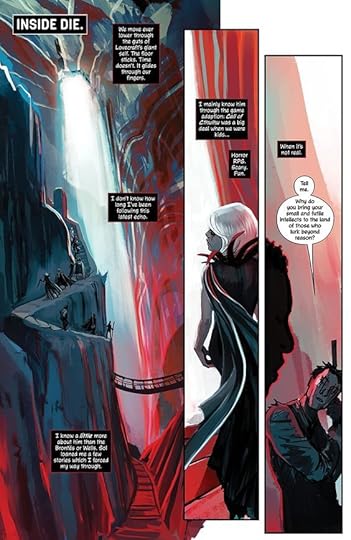
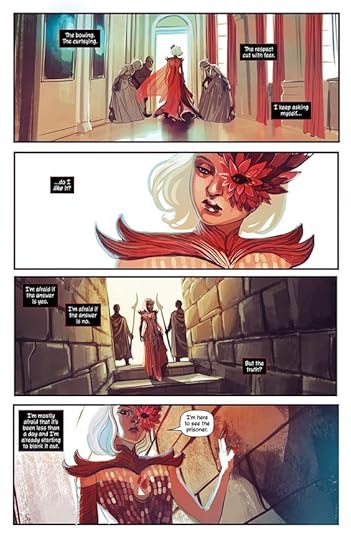
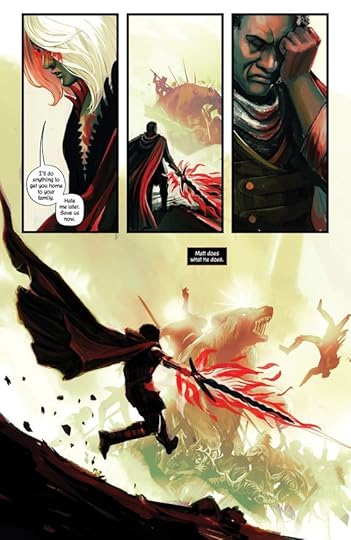
And the art was fantastic throughout the book. Beautiful panels and beautiful coloring really made this something that was easy to pick back up and look at again and again.
If you're interested in gender fluidity, I think this does a good job of exploring and opening up discussion on that topic. There's also a good deal about abandonment and regret in parent/child relationships. Depression, anger, & resentment over the loss of the life you thought you would have, and even the realization that you weren't a good person and now it's too late to do anything to change that.
In other words, heavy stuff. And not badly done.
On the other hand, the action-y plot stuff? The quest? The being trapped in another realm and trying to get home?
That shit went off the rails quick-like. Since this was the omnibus, I'm not sure exactly when (volume-wise) it stopped being cool for me, but I think it was somewhere around the introduction of the Bronte family. I thought that whole thing with authors being involved was masturbatory and cringe.
Yes, yes, you guys create worlds. We get it.
Anyway. I didn't really think this was terrible but I didn't really enjoy it, either.
My advice is that you should know what you're getting into. If you want a D&D quest story, go elsewhere. This is more of a deep, somewhat depressing character study.
Worthwhile, but not for me.
And the art was fantastic throughout the book. Beautiful panels and beautiful coloring really made this something that was easy to pick back up and look at again and again.
If you're interested in gender fluidity, I think this does a good job of exploring and opening up discussion on that topic. There's also a good deal about abandonment and regret in parent/child relationships. Depression, anger, & resentment over the loss of the life you thought you would have, and even the realization that you weren't a good person and now it's too late to do anything to change that.
In other words, heavy stuff. And not badly done.
On the other hand, the action-y plot stuff? The quest? The being trapped in another realm and trying to get home?
That shit went off the rails quick-like. Since this was the omnibus, I'm not sure exactly when (volume-wise) it stopped being cool for me, but I think it was somewhere around the introduction of the Bronte family. I thought that whole thing with authors being involved was masturbatory and cringe.
Yes, yes, you guys create worlds. We get it.
Anyway. I didn't really think this was terrible but I didn't really enjoy it, either.
My advice is that you should know what you're getting into. If you want a D&D quest story, go elsewhere. This is more of a deep, somewhat depressing character study.
Worthwhile, but not for me.

January 10, 2026
25 years ago, six kids played an RPG and were sucked into a fantasy world and only five made it back. Now, a mysterious die has shown up in the mail and they're sucked back into the world of Die.
Now, I just read God's Junk Drawer, another 'portal fantasy gone wrong' book, but I like the approach this book takes. Gillen and the gang take D&D and other fantasy conventions and turn them on their collective ears. It reminds me of Lev Grossman's Magicians trilogy more than anything else. Ash and the gang mess shit up, start a war, and eventually have to save the worlds.
The twenty worlds of die are inspired by various things that inspired D&D and RPGs in general, like World War I, Lord of the Rings, and other varied sources. The characters are flawed, both in the real world and in the world of Die where they play Paragons.
I'm glad that Gillen strayed far from the usual fantasy archetypes from his characters. It made for some great reading.
I don't know if Stephanie Hans' art is painted or digital but it looks great and perfectly suited for the tale. I tend to avoid fantasy comics that are drawn like super hero ones and this definitely isn't it. I think the lone gripe I have about the visuals of the book at the font on some of the lettering. I couldn't tell if the vampire's name was Zamoma or Zarmorna.
The ending was pretty satisfying too. After 20 issues, I was relieved the ending wasn't some 'let's all sacrifice ourselves for the greater good of whatever' bullshit.
Five out of five stars. The bar for 2026 has been set pretty high.
Now, I just read God's Junk Drawer, another 'portal fantasy gone wrong' book, but I like the approach this book takes. Gillen and the gang take D&D and other fantasy conventions and turn them on their collective ears. It reminds me of Lev Grossman's Magicians trilogy more than anything else. Ash and the gang mess shit up, start a war, and eventually have to save the worlds.
The twenty worlds of die are inspired by various things that inspired D&D and RPGs in general, like World War I, Lord of the Rings, and other varied sources. The characters are flawed, both in the real world and in the world of Die where they play Paragons.
I'm glad that Gillen strayed far from the usual fantasy archetypes from his characters. It made for some great reading.
I don't know if Stephanie Hans' art is painted or digital but it looks great and perfectly suited for the tale. I tend to avoid fantasy comics that are drawn like super hero ones and this definitely isn't it. I think the lone gripe I have about the visuals of the book at the font on some of the lettering. I couldn't tell if the vampire's name was Zamoma or Zarmorna.
The ending was pretty satisfying too. After 20 issues, I was relieved the ending wasn't some 'let's all sacrifice ourselves for the greater good of whatever' bullshit.
Five out of five stars. The bar for 2026 has been set pretty high.

April 17, 2024

Something like a cross between Jumanji and Lev Grossman's The Magicians, this involves a group of old friends who get sucked into a D&D-like roleplaying game and proceed to riff on all the conventions of the genre in their long quest to get out. Except of course the real reference isn't Jumanji at all, it's the old 80s Dungeons & Dragons cartoon (which I was obsessed with growing up); the idea here is, what if they ended up going back to that magical world as adults?
It's a slightly convoluted set-up (kids get sucked into game, get out, grow up, get sucked in again), and this is something that seems to be true for a lot of Kieron Gillen's storytelling; I always feel that he's tying himself in knots slightly. Still, this is by far my favourite of his comics that I've read, and his ambitions and abilities are much grander here than they have been in previous incarnations.

I think it really helps that he's separated in this one from Jamie McKelvie, and instead we have the French bédéiste Stephanie Hans illustrating the story: her art is spectacular. She seems equally at home drawing 90s teenage bedrooms or vast fantasy landscapes, and her thoughtful and tightly controlled colour palettes set the mood wonderfully.

Along the way, there is an admirable attempt to take on the whole notion of fantastical world-building, from the Brontës to HG Wells to Lovecraft, tangentially lighting on things like the Kriegsspiel and Tolkien's experience of the First World War. There are also a lot of pleasingly British references to unexpected things like Garth Marenghi's Darkplace, or Stafford High Street.

I was also impressed by how much emotional depth Gillen and Hans can generate from these characters. One of them, who is a man in real life but a girl in the fantasy world, spends several panels confronting terms like ‘genderfluidity’ and thinking about the modern labels, both reductive and inspiring, which were not available to us back in the 90s:
When we were young, we didn't have words for any of these complexities, and since then there's been all these expansion packs full of character classes…
Die can be quite an intense (even claustrophobic, and often horror-inflected) experience, but it's a very worthwhile one. Certainly I will read whatever Stephanie Hans does next.

December 20, 2023
Does it lose me a little bit in the middle? Yes it does. But I think it pulls together at the end and the artwork is so strong all throughout.
February 25, 2025
Easily one of my favorite comics ever. Hans' art is gorgeous, the kind that does no injustice to illustrating the theater of the mind. Gillen's writing is some of the best in the medium right now, thoughtful, clever, referential yet inventive, self aware and unflinchingly sincere. Die is a dark fantasy de/reconstruction of table-top roleplaying and fantasy as a whole; it spares no quarter in asking why we even want to escape into imaginative fiction, for better or worse.

January 27, 2023
Really enjoyed the opening chapters with copious literary references. Then some torturous contortions of the timeline were head-scratching. Interludes with history and history rpgs felt forced. Disappointing conclusion. Definitely didn't live up to my expectations. The art however is wonderful, and I'll continue to look for projects from Ms Hans.

Did Not Finish
September 6, 2025dnf@25%
This was okay... up until literally every time I look at this massive volume and dread the slog for so little reward. It's just not enjoyable, and the art, to quote my rec, is "murky." I enjoyed the Tolkien cameo. And some of the ideas were clever. But overall it was just dreary and tiresome, and you can go ahead and miss me with that. 😆
Recommended review: https://www.goodreads.com/review/show...
This was okay... up until literally every time I look at this massive volume and dread the slog for so little reward. It's just not enjoyable, and the art, to quote my rec, is "murky." I enjoyed the Tolkien cameo. And some of the ideas were clever. But overall it was just dreary and tiresome, and you can go ahead and miss me with that. 😆
Recommended review: https://www.goodreads.com/review/show...

November 20, 2025
2.5 ⭐️ rounded up. It has a lot going for it and I can see why people love it but ultimately not for me.
The art style (esp the use of colour) was great and a cool overall concept, but it lost me a little once it got into the time travel/famous authors/politics of it all. Maybe if I knew more about those things I would’ve enjoyed it more, the first ~half was really good.
Die also explored a lottt of different themes, some more relatable than other but I felt maybe it was trying to do too much and some characters never developed as much as I wanted them to
The art style (esp the use of colour) was great and a cool overall concept, but it lost me a little once it got into the time travel/famous authors/politics of it all. Maybe if I knew more about those things I would’ve enjoyed it more, the first ~half was really good.
Die also explored a lottt of different themes, some more relatable than other but I felt maybe it was trying to do too much and some characters never developed as much as I wanted them to

September 22, 2023
I read this complete version (an ebook version btw, not hardcover!) after already having read vol.1 and vol.2 separately... My reviews for those were:
Die, Vol. 1: Fantasy Heartbreaker⭐⭐⭐⭐⭐
I didn't see that coming.
Die, Vol. 2: Split the Party ⭐⭐⭐
This one was still interesting, but a bit more confusing. Also, not sure what to think about the constant kids/pregnancy plot points.
--- Now onto the complete series review...
I am very glad to have found this graphic novel. The topic and the art appeal to me a lot, and I was looking forward to reading more about these characters and world. Just for the art, this gets a whole other star 🌟
While overall this was an enjoyable read, and I would say a complete and well-crafted story, it seemed to have focused on all the things that I wasn't that excited about. Like it was too slow in moments I didn't care about, and too fast in moments that were over too quick. Characters could have used more development, as almost none of them seemed interesting to me. I also found the plot confusing at times. Moreover, all the references to Tolkien's work, while somewhat understandable, were way too overbearing and on the nose. It ended up being a bit too cliché.
AND WAAAAY too much about pregnancy-related stuff... Why? Just... Why?
The "mechanics" of the story (and the game) were the most interesting part to me and I am curious to try Die as a tabletop game. Especially if the art is comparable to this!
Die, Vol. 1: Fantasy Heartbreaker⭐⭐⭐⭐⭐
I didn't see that coming.
Die, Vol. 2: Split the Party ⭐⭐⭐
This one was still interesting, but a bit more confusing. Also, not sure what to think about the constant kids/pregnancy plot points.
--- Now onto the complete series review...
I am very glad to have found this graphic novel. The topic and the art appeal to me a lot, and I was looking forward to reading more about these characters and world. Just for the art, this gets a whole other star 🌟
While overall this was an enjoyable read, and I would say a complete and well-crafted story, it seemed to have focused on all the things that I wasn't that excited about. Like it was too slow in moments I didn't care about, and too fast in moments that were over too quick. Characters could have used more development, as almost none of them seemed interesting to me. I also found the plot confusing at times. Moreover, all the references to Tolkien's work, while somewhat understandable, were way too overbearing and on the nose. It ended up being a bit too cliché.
AND WAAAAY too much about pregnancy-related stuff... Why? Just... Why?
The "mechanics" of the story (and the game) were the most interesting part to me and I am curious to try Die as a tabletop game. Especially if the art is comparable to this!

July 26, 2023
Die ended up being a very complex book both, narratively and emotionally. There's a lot to unpack, but mostly in a good way. There are hard truths in the story. The biggest one is that we may not know ourselves as well as we think.
The peaks far outweigh the valleys is the quality of the storytelling here. The art is really excellent and uses color to convey mood in a way that is more intuitive than manipulative.
I'd say my criticisms come in the form of two qualms. First, the story absolutely slogs in the middle. With a world as large as this, it becomes a bit easy to indulge in the building at the expense of pace. Secondly, some of the characters are a bit thin. I believe this is mostly by design, as the reader is seeing the game played through Ash's perspective. And thus (much like D&D) we can't see into the minds of other players. It's interesting, but can also cause some flatness emotionally when dealing with the others involved.
The story is epic, and I love Gillen's style. As with WicDev, there could be some tightening around the middle, but overall I was engrossed and invested. I very much enjoyed my time with Die.
The peaks far outweigh the valleys is the quality of the storytelling here. The art is really excellent and uses color to convey mood in a way that is more intuitive than manipulative.
I'd say my criticisms come in the form of two qualms. First, the story absolutely slogs in the middle. With a world as large as this, it becomes a bit easy to indulge in the building at the expense of pace. Secondly, some of the characters are a bit thin. I believe this is mostly by design, as the reader is seeing the game played through Ash's perspective. And thus (much like D&D) we can't see into the minds of other players. It's interesting, but can also cause some flatness emotionally when dealing with the others involved.
The story is epic, and I love Gillen's style. As with WicDev, there could be some tightening around the middle, but overall I was engrossed and invested. I very much enjoyed my time with Die.

November 30, 2022
Probably 3.5*, rounded up.
The comic was at its best when we were fully in the midst of the game. The world was absolutely fascinating (and I'm more excited than ever to try the TTRPG when I can), the characters were fairly complex and interesting, and the plot rolled forward at a decent pace. Unfortunately, it stumbles at the end. It just gets too self-congratulatory? I'm not fundamentally against a love letter to TTRPG kind of shtick, except that we kind of forgot the rest of comic along the way.
The art is so astonishingly gorgeous though, it's an easy 5* rated on the art alone.
[ETA]: I'm counting this as book 10/12 of my 2022 challenge to read one paper book per month that I physically own! I got my copy new on release but pre-ordered it for 20% off.
The comic was at its best when we were fully in the midst of the game. The world was absolutely fascinating (and I'm more excited than ever to try the TTRPG when I can), the characters were fairly complex and interesting, and the plot rolled forward at a decent pace. Unfortunately, it stumbles at the end. It just gets too self-congratulatory? I'm not fundamentally against a love letter to TTRPG kind of shtick, except that we kind of forgot the rest of comic along the way.
The art is so astonishingly gorgeous though, it's an easy 5* rated on the art alone.
[ETA]: I'm counting this as book 10/12 of my 2022 challenge to read one paper book per month that I physically own! I got my copy new on release but pre-ordered it for 20% off.

February 10, 2023
Beautiful artwork. The story? Kinda pretentious, kinda feel stupid after reading it. Not for me.

December 26, 2024
Em Die (a forma singular de Dice), Kieron Gillen e Stephanie Hans criaram uma obra-prima que combina fantasia sombria, trauma adolescente e uma homenagem épica ao mundo dos RPGs.
Em 1991, seis adolescentes desaparecem misteriosamente durante um jogo de RPG. Dois anos depois, apenas cinco regressam, marcados por segredos obscuros e cicatrizes, tanto físicas como emocionais, que nunca chegam a sarar. Agora, 25 anos mais tarde, atormentados pelos fantasmas do passado, decidem regressar ao mundo de Die: um universo sombrio e fascinante, inspirado na literatura fantástica anglófona e encapsulado num icosaedro, um dado de 20 lados.
Gillen constrói um enredo que é uma verdadeira carta de amor aos RPGs, explorando as suas raízes históricas. Desde os tabuleiros do século XIX, passando pelas influências literárias de Tolkien, H.G. Wells e Lovecraft, pelo Dungeons & Dragons (D&D) e chegando aos jogos de consola da atualidade. As alusões às irmãs Brontë são um toque brilhante e genuinamente inesperado, especialmente porque desconhecia por completo os mundos imaginários criados por Charlotte e Emily na infância, Angria e Gandol, dos quais apenas sobreviveram alguns poemas.
E depois, há a arte. A arte de Stephanie Hans é simplesmente deslumbrante. Cada página é uma pintura de tirar o fôlego, repleta de emoções intensas e detalhes arrebatadores, digna de ser emoldurada.
Outro aspeto fascinante é a alegoria queer que permeia a obra. Gillen, que já nos brindou com inúmeros personagens LGBTQ+ no seu repertório, explora aqui a identidade de género de forma inicialmente subtil, mas que culmina num final profundamente emocional e poderoso.
Die relembrou-me a importância dos jogos e das histórias: porque nos envolvemos tão profundamente nelas, como podem moldar quem somos e como nos oferecem um refúgio nos momentos em que mais precisamos. Acima de tudo, é uma história sobre aceitação pessoal e perdão, tanto para os outros como para as versões passadas de nós mesmos, aquelas que, embora distantes, permanecem inescapavelmente parte de quem somos.
Em 1991, seis adolescentes desaparecem misteriosamente durante um jogo de RPG. Dois anos depois, apenas cinco regressam, marcados por segredos obscuros e cicatrizes, tanto físicas como emocionais, que nunca chegam a sarar. Agora, 25 anos mais tarde, atormentados pelos fantasmas do passado, decidem regressar ao mundo de Die: um universo sombrio e fascinante, inspirado na literatura fantástica anglófona e encapsulado num icosaedro, um dado de 20 lados.
Gillen constrói um enredo que é uma verdadeira carta de amor aos RPGs, explorando as suas raízes históricas. Desde os tabuleiros do século XIX, passando pelas influências literárias de Tolkien, H.G. Wells e Lovecraft, pelo Dungeons & Dragons (D&D) e chegando aos jogos de consola da atualidade. As alusões às irmãs Brontë são um toque brilhante e genuinamente inesperado, especialmente porque desconhecia por completo os mundos imaginários criados por Charlotte e Emily na infância, Angria e Gandol, dos quais apenas sobreviveram alguns poemas.
E depois, há a arte. A arte de Stephanie Hans é simplesmente deslumbrante. Cada página é uma pintura de tirar o fôlego, repleta de emoções intensas e detalhes arrebatadores, digna de ser emoldurada.
Outro aspeto fascinante é a alegoria queer que permeia a obra. Gillen, que já nos brindou com inúmeros personagens LGBTQ+ no seu repertório, explora aqui a identidade de género de forma inicialmente subtil, mas que culmina num final profundamente emocional e poderoso.
Die relembrou-me a importância dos jogos e das histórias: porque nos envolvemos tão profundamente nelas, como podem moldar quem somos e como nos oferecem um refúgio nos momentos em que mais precisamos. Acima de tudo, é uma história sobre aceitação pessoal e perdão, tanto para os outros como para as versões passadas de nós mesmos, aquelas que, embora distantes, permanecem inescapavelmente parte de quem somos.

April 6, 2026
There is a lot to like about Die; the writing feels well suited to the setting and the medium, a mix of fantasy and reality, at times silly and juvenile, other times it feels real and tragic. The art too is gorgeous, full of bright color and dark shadows, a fairytale brought to life in paintings. The story too is interesting, dealing with the trauma of being trapped in a fantasy world as teenagers and escaping only to be brought back decades later to deal with the fallout of everything that happened during their time there. There are a lot of interesting themes, such as aspects of gender fluidity and the struggle to understand one’s own identity, parenthood and the responsibility one has towards one’s children and parents, and the dangers of giving in to escapism. The story addresses these themes with respect and empathy, while also weaving a grand tale of imaginative minds across history that gave rise to an intelligence that threatens to swallow the world. It did feel like it dragged towards the middle a fair bit with a lot of spinning wheels, but in the end it manages to tighten up and provide a satisfactory climax. I liked it.

June 14, 2026
He calls it Goth Jumanji, but it'd be more accurate to call it a 20 issue love letter to games.
Possibly my favorite thing Kieron Gillen has written, and he's one of the best to do it.
I think Ash might be my favorite character he's written, even if I think some parts of issue 19 are a little clunky.
The back of this collection also collects the essays and interviews that were in the back of the single issues, but I'm unsure if they made their way into the paperbacks.
Possibly my favorite thing Kieron Gillen has written, and he's one of the best to do it.
I think Ash might be my favorite character he's written, even if I think some parts of issue 19 are a little clunky.
The back of this collection also collects the essays and interviews that were in the back of the single issues, but I'm unsure if they made their way into the paperbacks.

February 4, 2023
This comic fucked me up in the best way and I’m glad I accidentally waited to read it until after I had fallen head first into the world of TTRPGs.
September 8, 2024
Voy a necesitar leerlo 2 veces más, mínimo
August 20, 2025
god damn what an emotional tour de force. so glad it's coming back.
December 19, 2025
It was dungeons and dragons and DEPRESSION (awesome art though)

July 5, 2025
The story is five stars, the art is five stars, the writing is five stars, and the essays and interviews at the end are five stars. This is amazing, and it baffles me that it took me this long to read it.
December 31, 2022
Definitivamente es una de las mejores cosas que he leído no solo en el año sino en toda mi vida. Se lee fantástico, incluso si como yo, tienes poco o nada de conocimiento sobre los RPG, dungeons y referencias oscuras del mundo literario de Fantasía... te invita e incita a investigar y conocer más y más de esto.
En mi travesía personal por sus 600+ páginas me hizo informarme y aprender qué es un Geas, un Neo, los distintos dioses mencionados, Little Wars, Bronthes y cómo nació Prussia/Alemania a través de un juego de mesa.
Lejos de todo esto, el mundo de Die es inmenso y solo conocimos algunas de sus caras (cada una poblada e inspirada en un "Master" ya fuese la misma Bronthes, Wells, Tolkien, Lovecraft...). Los personajes, la historia y el arte, dios, el arte: Stephanie Hans le da vida a todo lo creado por Kieron de una forma que no me imagino posible más que por un puñado de artistas más y aún así, ninguno tendría esa sincronicidad que tienen estos dos juntos al crear cómics.
Si hay algo malo que pueda decir de Die, es que no puedo recomendarlo. Creo que es algo que debe descubrir y leer quien deba hacerlo, no es una historia fácil de digerir y si no te atrapa al inicio, no lo hará después.
En mi travesía personal por sus 600+ páginas me hizo informarme y aprender qué es un Geas, un Neo, los distintos dioses mencionados, Little Wars, Bronthes y cómo nació Prussia/Alemania a través de un juego de mesa.
Lejos de todo esto, el mundo de Die es inmenso y solo conocimos algunas de sus caras (cada una poblada e inspirada en un "Master" ya fuese la misma Bronthes, Wells, Tolkien, Lovecraft...). Los personajes, la historia y el arte, dios, el arte: Stephanie Hans le da vida a todo lo creado por Kieron de una forma que no me imagino posible más que por un puñado de artistas más y aún así, ninguno tendría esa sincronicidad que tienen estos dos juntos al crear cómics.
Si hay algo malo que pueda decir de Die, es que no puedo recomendarlo. Creo que es algo que debe descubrir y leer quien deba hacerlo, no es una historia fácil de digerir y si no te atrapa al inicio, no lo hará después.

Read
February 24, 2025Not for me.
May 28, 2026
I love this series
the writing, the art work, the characters , everything
i caught so much more with this re-read of the whole series
I look forward to the sequel series to see more
This really is a dark D&D Jumanji
the writing, the art work, the characters , everything
i caught so much more with this re-read of the whole series
I look forward to the sequel series to see more
This really is a dark D&D Jumanji

November 28, 2022
Beautifully written and beautifully illustrated. Both Kieron and Stephanie at the tops of their game.
August 14, 2025
I've gotta read more by Kieron Gillen because DIE and The Power Fantasy have both been bangers.
DIE is about tabletop roleplaying games and why we play them, in the most literal way. In 1992, a group of teenagers play a strange new roleplaying game and get stuck inside a d20-shaped fantasy world. Two years later, they get out, with one of them missing and the rest refusing to talk about it. Twenty-five years later, they reunite as a group of dysfunctional adults and re-enter the game.
The main characters are really interesting because they're so mundane. In particular, I really liked Ash's arc about her gender identity - I know that a lot of trans people who are into TTRPGs used them as a vessel to explore their gender pre-transition so I'm glad that DIE explores that. The fantasy world of Die is endlessly interesting and the character classes are genuinely sick. I'm so glad that there's a DIE TTRPG spinoff because I desperately want to play a Godbinder in a campaign. Stephanie Hans' artwork is amazing too, I really loved the way it plays around with colour during flashbacks to the party's first time in Die and their lives outside it. I borrowed a big collected edition of the entire first series from my local library, and it came with a big collection of essays at the back by various people about tabletop RPGs and it was really interesting too. Banger of a comic that I highly recommend.
DIE is about tabletop roleplaying games and why we play them, in the most literal way. In 1992, a group of teenagers play a strange new roleplaying game and get stuck inside a d20-shaped fantasy world. Two years later, they get out, with one of them missing and the rest refusing to talk about it. Twenty-five years later, they reunite as a group of dysfunctional adults and re-enter the game.
The main characters are really interesting because they're so mundane. In particular, I really liked Ash's arc about her gender identity - I know that a lot of trans people who are into TTRPGs used them as a vessel to explore their gender pre-transition so I'm glad that DIE explores that. The fantasy world of Die is endlessly interesting and the character classes are genuinely sick. I'm so glad that there's a DIE TTRPG spinoff because I desperately want to play a Godbinder in a campaign. Stephanie Hans' artwork is amazing too, I really loved the way it plays around with colour during flashbacks to the party's first time in Die and their lives outside it. I borrowed a big collected edition of the entire first series from my local library, and it came with a big collection of essays at the back by various people about tabletop RPGs and it was really interesting too. Banger of a comic that I highly recommend.
September 17, 2025
This book wears its heart so fully on its sleeve that it feels cruel to punch down. It wants so desperately to be big, important, and profound that it just ends up feeling redundant and cliched.

October 28, 2022
What starts as a fairly straight forward (for Kieron Gillen) examination of tabletop roleplaying games and the people that play them soon becomes a compelling character piece that looks at everything from gender dysphoria to fatalism and parenthood, all against the backdrop of a fantasy world that constantly reinvents itself, with all twenty issues painted beautifully by Stephanie Hans.
Every time Gillen does something at Image, it's easy to call it his magnum opus. First Phonogram, and then The Wicked + The Divine, and now along comes Die to claim that title too. Absolutely superb, from cover to cover.
Every time Gillen does something at Image, it's easy to call it his magnum opus. First Phonogram, and then The Wicked + The Divine, and now along comes Die to claim that title too. Absolutely superb, from cover to cover.

February 5, 2023
Artwork - outstanding. Overall plot - kids get trapped in another world after they roll some dice - pretty good. Overall dialogue and storyline - confusing as hell. Constant references to names and places that are too many to keep track of. Got through it somehow, but I barely understood it. Need to stop reading fantasy graphic novels, they get too into their own world and make it confusing for everyone else. Reminded me of how confused I felt reading seven to eternity. Sci-Fi graphic novels (Saga, Low) they’re all ok, understandable. Fantasy - wtf is going on? Still, artwork nice, book build nice.
August 5, 2023
This is a solid 3.5 out of five but stupid Goodreads won’t let you do half stars. Bumped it up to four because the art is tremendous. Great premise, and interesting characters, but the story gets bogged down under its own weight somewhere in the middle. I did find myself enjoying the last third of the book quite a bit though. Kieron Gillen said when you play an rpg maybe a part of you disappears into that fantasy and never comes out. Now imagine that happened at 16 and you get to go back 20 years later. That’s an inherently great idea. I’m not sure that the series fully lives up to the potential of the premise but what you get is pretty good.

January 10, 2024
I skimmed most of the last volume, only finished it because I wanted to finish the series. I also realized that I’ve read a lot of Keiron Gillen series and yet I haven’t actually fully enjoyed a series by him. Only 1 was 4 stars, the rest were 3 and below, with the majority being 2 stars. So I think it’s time for me to stop picking up his work unless it actually really interests me.
Displaying 1 - 30 of 118 reviews