

What do you think?

Rose Ransom #1
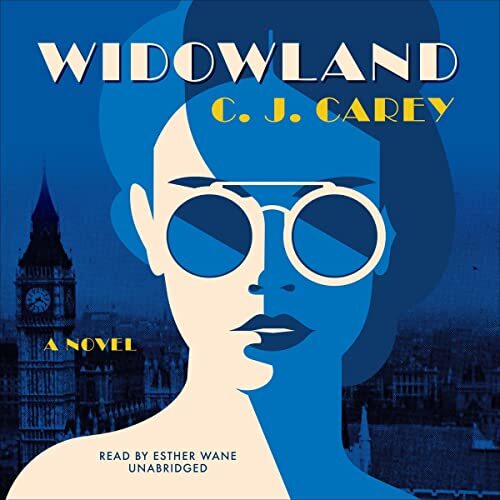
Quercus Widowland.
To control the past, they edited history. To control the future, they edited literature.
London, 1953, Coronation year - but not the Coronation of Elizabeth II.
Thirteen years have passed since a Grand Alliance between Great Britain and Germany was formalized. George VI and his family have been murdered and Edward VIII rules as King. Yet, in practice, all power is vested in Alfred Rosenberg, Britain’s Protector. The role and status of women is Rosenberg’s particular interest.
Rose Ransom belongs to the elite caste of women and works at the Ministry of Culture, rewriting literature to correct the views of the past. But now she has been given a special task.
Outbreaks of insurgency have been seen across the country; graffiti daubed on public buildings. Disturbingly, the graffiti is made up of lines from forbidden works, subversive words from the voices of women. Suspicion has fallen on Widowland, the run-down slums where childless women over fifty have been banished. These women are known to be mutinous, for they have nothing to lose.
Before the Leader arrives for the Coronation ceremony of King Edward and Queen Wallis, Rose must infiltrate Widowland to find the source of this rebellion and ensure that it is quashed.
London, 1953, Coronation year - but not the Coronation of Elizabeth II.
Thirteen years have passed since a Grand Alliance between Great Britain and Germany was formalized. George VI and his family have been murdered and Edward VIII rules as King. Yet, in practice, all power is vested in Alfred Rosenberg, Britain’s Protector. The role and status of women is Rosenberg’s particular interest.
Rose Ransom belongs to the elite caste of women and works at the Ministry of Culture, rewriting literature to correct the views of the past. But now she has been given a special task.
Outbreaks of insurgency have been seen across the country; graffiti daubed on public buildings. Disturbingly, the graffiti is made up of lines from forbidden works, subversive words from the voices of women. Suspicion has fallen on Widowland, the run-down slums where childless women over fifty have been banished. These women are known to be mutinous, for they have nothing to lose.
Before the Leader arrives for the Coronation ceremony of King Edward and Queen Wallis, Rose must infiltrate Widowland to find the source of this rebellion and ensure that it is quashed.
435 pages, Paperback
First published June 10, 2021
About the author
C.J. Carey
3 books142 followersC.J. Carey is a pen name of Jane Thynne. She was born in Venezuela and educated in London. She graduated from Oxford University with a degree in English and joined the BBC as a journalist. She has also worked at The Sunday Times, The Daily Telegraph and The Independent, as well as for numerous British magazines. She appears as a broadcaster on Radio 4 and Sky TV.
Ratings & Reviews
Friends & Following
Create a free account to discover what your friends think of this book!
Community Reviews
Displaying 1 - 30 of 639 reviews

January 1, 2021
Ok, so I picked this because it has been flagged in a Guardian list of books to look out for in 2021 where it was described as 'smart': turns out that it's a fan-fiction-alike story, deeply derivative (there are recognisable lifts from 1984, Fatherland, The Handmaid's Tale, with a touch of the Bernie Gunther tales of Philip Kerr), clumsily plotted and with a 'popular' style of writing (women have 'heart-shaped faces', 'he was the kind of man who only grew more handsome as he aged', Nazis stalk around in 'black leather boots polished to a mirror shine' and call pretty girls 'liebling'; and 'excitement was at fever pitch').
So I'm really not the target audience for this book - I expected something more 'literary', and this is more of a Jolly Good Romp.
I've put details of why this isn't for me in spoiler tags below and reveal the plot - read at your peril!
So I'm really not the target audience for this book - I expected something more 'literary', and this is more of a Jolly Good Romp.
I've put details of why this isn't for me in spoiler tags below and reveal the plot - read at your peril!

June 13, 2021
I thoroughly enjoyed reading this dystopian alternative history set in an England that is a protectorate of Nazi Germany and where women are classified by their Aryan-ness, age and breeding ability into a caste like system. Reading is discouraged (as are any solitary activities) and the main character Rose, an elite female, works in the culture ministry rewriting classic texts with problematic female characters so they fit into the regime ideals and suitable for classrooms. Everyone is busy in preparation for the coronation of Edward VIII and his wife, and the Leader will be visiting. Graffiti has begun to appear quoting Mary Wollstonecraft and other female writers and Rose is asked to visit widowland, basically ghettoes where the lowest class of women live, old single and therefore of no use to society. It reminded me obviously of many classic dystopias from The Handmaid's Tale to 1984 but it’s highly readable and I finished it quickly.

July 21, 2022
C. J. Carey takes the great “what if” question of the twentieth century and gives it a wholly inventive feminist twist in this fascinating debut novel. With impressive historical research and thriller-like suspense, Carey charts heroine Rose’s journey from privileged subject to brave resistor in a world that has weaponized education, social status and even memory. Tense, thought-provoking and terrifying, WIDOWLAND is about a woman’s search for truth in a world bent on destroying all traces of it.

August 1, 2025
A mediocre dystopian alternate history but that is exceptionally well written.
I’ve said it before and I’ll say it again here, the dystopian branch of the speculative fiction house is filled to dilution with lots of books and lots of more or less the same ideas. Add the alternate history filter to our search and we’ll still find lots of books about what if National Socialism took over the world and how bad it is to live under totalitarianism. To say that Harry Turtledove and Philip K. Dick did it better is a bit of an understatement but also somewhat unfair as writer C. J. Carey delivers a very well written novel.
Carey described an England where Queen Elizabeth never took the thrown and the world just sort of buckled under the Nazi flag without much of a fight. We see a fundamental lack of due process, civil liberty abuses, freedom of speech violations, a caste system, racism and casual violence, particularly towards women.
Carey also includes a host of colorful characters highlighted by a more or less likable protagonist and a better than average story. And her writing is exceptional, she knows how to string some words together.
But being well written still does not bring this predictable story to a higher rating.
I’ve said it before and I’ll say it again here, the dystopian branch of the speculative fiction house is filled to dilution with lots of books and lots of more or less the same ideas. Add the alternate history filter to our search and we’ll still find lots of books about what if National Socialism took over the world and how bad it is to live under totalitarianism. To say that Harry Turtledove and Philip K. Dick did it better is a bit of an understatement but also somewhat unfair as writer C. J. Carey delivers a very well written novel.
Carey described an England where Queen Elizabeth never took the thrown and the world just sort of buckled under the Nazi flag without much of a fight. We see a fundamental lack of due process, civil liberty abuses, freedom of speech violations, a caste system, racism and casual violence, particularly towards women.
Carey also includes a host of colorful characters highlighted by a more or less likable protagonist and a better than average story. And her writing is exceptional, she knows how to string some words together.
But being well written still does not bring this predictable story to a higher rating.

May 10, 2021
This book didn't work out for me.
The premise was wonderful - what if there was no World War and Britain decided to act for Germany as its Protectorate? Women have been divided into castes. The protagonist is of the higher caste that allows her more freedom yet she has numerous restrictions to pass. Life in Britain is dull and grey. There is a shortage of everything. Our heroine has a good life in comparison to others.
But the book meanders and there is not much impactful in it in the end. It just goes on and ends.
3 stars.
Thanks to Netgalley for the ARC.
The premise was wonderful - what if there was no World War and Britain decided to act for Germany as its Protectorate? Women have been divided into castes. The protagonist is of the higher caste that allows her more freedom yet she has numerous restrictions to pass. Life in Britain is dull and grey. There is a shortage of everything. Our heroine has a good life in comparison to others.
But the book meanders and there is not much impactful in it in the end. It just goes on and ends.
3 stars.
Thanks to Netgalley for the ARC.

March 16, 2024
In a 1953 England under the control of German forces, life is good for Rose Ransom, a member of the privileged Geli class - or at least as good as life can be for a woman in the oppressive regime. But when she is given the task of infiltrating Widowland in search of possible subversives, she comes to learn she might have more power than she always thought.
The premise of this book caught my eye immediately. I haven't really read alternate history books before, but the idea of how the world would look had another action been taken at a critical point in time has always fascinated me. Here, the different action is the British government continuing appeasement instead of declaring war on Germany.
The writing was poetic and evocative, plunging me straight into the tired grey world of occupied Britain. I loved how the author wove plenty of historical figures and the details of Hitler's vision for the future into the world-building, and showed how thoroughly the British populace was brainwashed into accepting this new version of their country. I also appreciated the exploration of how literature can be used to both control and inspire its readers through Rose's occupation.
However, I thought that the plot took too long to build - Rose's investigation in Widowland does not take up much of the story at all. Instead, it's more about how Rose's worldview begins to change as she becomes more open to questioning the Nazi regime, and this I didn't think the author did very well, considering how swiftly and arbitrarily it seems to occur. I was also underwhelmed by Rose's romances and felt blindsided by the ending, which leaves us before we can witness the fallout of the climax. I suppose it is addressed in the sequel, but I'm not invested enough to read on.
Disclaimer: I received an ARC of this book from NetGalley. This is my honest and voluntary review.
The premise of this book caught my eye immediately. I haven't really read alternate history books before, but the idea of how the world would look had another action been taken at a critical point in time has always fascinated me. Here, the different action is the British government continuing appeasement instead of declaring war on Germany.
The writing was poetic and evocative, plunging me straight into the tired grey world of occupied Britain. I loved how the author wove plenty of historical figures and the details of Hitler's vision for the future into the world-building, and showed how thoroughly the British populace was brainwashed into accepting this new version of their country. I also appreciated the exploration of how literature can be used to both control and inspire its readers through Rose's occupation.
However, I thought that the plot took too long to build - Rose's investigation in Widowland does not take up much of the story at all. Instead, it's more about how Rose's worldview begins to change as she becomes more open to questioning the Nazi regime, and this I didn't think the author did very well, considering how swiftly and arbitrarily it seems to occur. I was also underwhelmed by Rose's romances and felt blindsided by the ending, which leaves us before we can witness the fallout of the climax. I suppose it is addressed in the sequel, but I'm not invested enough to read on.
Disclaimer: I received an ARC of this book from NetGalley. This is my honest and voluntary review.

May 26, 2021
I finished this in a day, so yes I was sick and home and had time, but still, I totally binged.
I really liked what if stories. What if England and Germany had made peace? What if England now had a Protector, the royal family had been killed and they had brought back Edward and Wallis since he was German friendly. What if the UK was totally isolated and they did not know what happened in the rest of the world. And how The UK was this weird place where women was designated titles and worth. Pretty, young and Aryan? First class. A widow, childless and over 50? Low class, shut away in a crumbling part of the city. The best thing you can do is work, then marry and have kids. Many kids. Make-up, bad mouthing the regime and sex outside marriage is not tolerated.
This was a grey brainwashed world. They had all gone through training to forget the Before times. Men who had survived the war had been sent away to labour camps. There were 2 women per every man. Resistance is futile.
And then we have Rosa, brainwashed to not think of the Before times. She edits classics to make them more regime friendly. Not that reading or being literate is encouraged. Like is Pride and Prejudiced good? No, Elizabeth needs to be more quiet and timid, and stay within her class. Everything is edited, from history to literature.
But she does have passions hidden deep, but she keeps them in check. And then she is sent out to interview women in Widowland, and she starts to think again...
I liked it, yes alternative history is so interesting. All those what ifs. The UK turned into a really scary place. So dull and, huh, honestly what I know think of more like Soviet. Grey, mindless drones and everyone spying on you. And then insert crazy German ideologies.
And it was so easy to read that I just could not put it down.
I really liked what if stories. What if England and Germany had made peace? What if England now had a Protector, the royal family had been killed and they had brought back Edward and Wallis since he was German friendly. What if the UK was totally isolated and they did not know what happened in the rest of the world. And how The UK was this weird place where women was designated titles and worth. Pretty, young and Aryan? First class. A widow, childless and over 50? Low class, shut away in a crumbling part of the city. The best thing you can do is work, then marry and have kids. Many kids. Make-up, bad mouthing the regime and sex outside marriage is not tolerated.
This was a grey brainwashed world. They had all gone through training to forget the Before times. Men who had survived the war had been sent away to labour camps. There were 2 women per every man. Resistance is futile.
And then we have Rosa, brainwashed to not think of the Before times. She edits classics to make them more regime friendly. Not that reading or being literate is encouraged. Like is Pride and Prejudiced good? No, Elizabeth needs to be more quiet and timid, and stay within her class. Everything is edited, from history to literature.
But she does have passions hidden deep, but she keeps them in check. And then she is sent out to interview women in Widowland, and she starts to think again...
I liked it, yes alternative history is so interesting. All those what ifs. The UK turned into a really scary place. So dull and, huh, honestly what I know think of more like Soviet. Grey, mindless drones and everyone spying on you. And then insert crazy German ideologies.
And it was so easy to read that I just could not put it down.

March 13, 2021
For my full review: https://girlwithherheadinabook.co.uk/...
The year is 1953. The flags are all out for the Coronation. Huge crowds are expected. But rather than the new young Queen Elizabeth approaching the throne, instead Westminster Abbey is preparing to crown King Edward VIII and Queen Wallis. Thirteen years have passed since Britain and Germany formed an alliance, the subsequent abrupt disappearance of King George VI and his young family and the return of Edward VIII. Yet in practice, power rests in the hands of the Protector Alfred Rosenberg and with most males shipped off to the continent, women outnumber men almost two to one. The status of females is of particular interest to the Protector, who has constructed a complex caste system. At the top are the 'Gelis', one of which is Rose Ransom, star employee at the Ministry of Culture, tasked with correcting the classics of literature to bring them further in line with the goals of the Alliance. But now she has a new assignment. Feminist slogans from literature are appearing around London. Somewhere there is a group of insurgents who seem to be planning to destabilise the Coronation. Suspicion falls on Widowland, the ghetto which houses those on the bottom rung of society - childless women over fifty. In this intricately constructed alternative history, C J Carey imagines the post-war defeat of Britain through a female lens and the results are electrifying.
The central question of the novel is, 'what if a place existed where older women, already marginalised by society, were banished?' The author draws on her own experiences of widowhood as well as her research into the treatment of older woman in Germany during World War II. The real Rosenberg was genuinely attracted by the Brahmin caste system which he felt was the best way of managing women. With Widowland, Carey constructs an incredibly intricate alternate universe where this man's hateful vision is taken to its ultimate conclusion. There are six 'Female Classes'; below the young and blonde Gelis are the Klaras who produce four or more children. Then the Lenis who are the professional women, the Paulas who are the nurses, the Magdas who are the shop and factory employees and the Gretls who do the grunt work. Beneath all of them lurk the Friedas, the lowest of the low.
In terms of alternate history, 'post-1945 if the Nazis had won' has been 'done' many times. Fatherland, The Man in the High Castle, SS-GB, Dominion ... the list goes on. So it is quite an achievement that Widowland feels like a fresh take on such a well-trodden topic. There is an incredible amount of detail to Carey's world-building which does rather unfold in history lecture form as we observe Rose's daily routine. We learn a great deal about the rules of this heavily-regulated state as well as the rumours which run around in whispers. While this method of exposition may not be to the taste of every reader, I found it utterly absorbing, grounding the story in haunting realism. Bluntly, this is a book which kept me up way past my bedtime.
Like its literary ancestor Nineteen Eighty Four, Carey considers how a totalitarian state can reconstruct our way of thinking. This is very much dystopian fiction for book-lovers however as Rose analyses the heroines of literature and works to bring them into line with the Protectorate. Thus, Elizabeth Bennet becomes meek and learns her place. Jo March tones down her anger, sets down her pen and accepts her lot. Rose is startled by Jane Eyre, whose heroine questions her low status and then does not show sympathy to Mr Rochester when it is revealed that he has the affliction of an insane wife. The rules are that, 'No female protagonist should be overly intelligent, dominant or subversive, no woman should be rewarded for challenging a man, and no narrative should undermine in any way the Protector’s views of the natural relationship between the sexes.' I found this ordinance fascinating given the current literary landscape which bristles with trigger warnings and tuttings over problematic plots. Because even as Rose 'corrects' these books, their original messages are seeping through and her ossified mind is beginning to wake up.
Widowland underlines the subversive power of literature and I absolutely loved it. Rose ponders Emma and how it could be a useful text in demonstrating how Emma Woodhouse is wrong to match-make for her lower-status friend Harriet Smith with higher status males. But yet. The book tells it wrong. 'Harriet gained self-confidence through her mistaken romance. She came to understand that high social class did not necessarily imply a finer character. Indeed, Austen seemed hellbent on undermining traditional class divisions and suggesting some difference between mere accomplishments and the deeper understanding that signals self-knowledge.' Having spent years defending Austen from charges of being 'just' a romance novelist or - worse - that her heroines were gold-diggers, it was gratifying to see Austen's quiet radicalism recognised.
Unsurprisingly, the regime discourages female literacy. Girls are not taught to read until the age of eight and even after that, they are taught at a more basic level. The intended goal is that a female's vocabulary should be no more than two thirds that of a man. The risk of reading was 'that it could accidentally expand a child’s use of language. It might enchant and intoxicate her. Help her express herself in new and exciting ways.' It is the casual way that it is gently 'suggested' that a girl need not bother learning to read, such as when Rose's boss - a married older German who is also her lover - tells her that she should not read to her niece,
'You know the Party believes there is no shame in illiteracy. We discourage reading for lower orders. It's hardly revolutionary. American slaves weren’t permitted to read. For centuries Catholics held the mass in Latin. Besides, most people don’t actually want to read. They'd rather listen to the wireless or go to the movies. Once this new television gets off the ground, reading will wither away in a generation, you’ll see. People will fall out of the habit of reading, and once that happens, the mere act of reading will be harder.'
That one feels particularly poignant given how few people I know enjoy reading. And as a committed campaigner against literary snobbery, I kind of hate myself for saying it but I could understand Carey's point that it 'requires discipline' to get through a six or seven hundred (or even more) page novel and if you're not in the habit, you're unlikely to try. I believe that life is short and that people should read what they enjoy. But I also wish wasn't the only person I know who has read Bleak House. I hate how often I have cringey experiences like the time my hairdresser called me an 'intellectual' because I turned up for an appointment with a copy of Middlemarch. There's nothing wrong with not reading but in the midst of my sleep-deprived new-parent haze, I also know that making (stealing) the time to read Anna Karenina really helped my scattered brain to regroup. The ability to sustain that kind of attention can feel like a lost art in a world which promotes instant gratification.
But while Rose might have remained at the Ministry of Culture quietly updating novels and placidly submitting to her boss' unwelcome touch, mysterious happenings are afoot. The Leader, who we are led to believe is Hitler, is planning his first ever state visit to Britain to mark the coronation. Everything must be perfect. And yet in the midst of this, graffiti has been appearing with messages that the Leader must never see. And there are dark suggestions that the Coronation may just be the turning point for Britain towards something even worse. There is something rather delicious that the most organised threat to Rosenberg's regime comes from a highly literate group of middle-aged women - these are not the Katniss Everdeens or Paige Mahoneys but instead a band of 'difficult women'. Women who don't shut up, give up or throw in the towel. Women who don't forget. Women who have nothing to lose.
Widowland also feels strangely topical. The Leader explained that 'Women are the most important citizens in this land'. These words are even carved into a bridge. And yet everywhere in the novel, women are erased, squashed down and forced to live according to definitions set by men. Their voices are silenced, their individuality effaced. The language around them is carefully managed, their vocabulary policed. It is a truth rarely acknowledged that whenever something claims to put women first, another self-seeking agenda will be found if you scratch at the surface. Yet although the women of Carey's Widowland are all being exploited in their different ways, we cannot excuse ourselves by discounting the story as fiction. Like a literary cousin to The Handmaid's Tale, the novel has pieced together a nightmarish setting out of things that have happened to women in history. But also from that which could befall us in the future.
The end when it came struck like a sucker punch. Utterly immersed in the novel's claustrophobic setting, it was startling to be once more hurled back to the world outside. Yet despite my immediate wave of hope for a sequel, I can also see that returning to the scene would almost certainly lessen the novel's impact. Widowland never sets out to depict yet another ongoing franchise of despair. Its message is far more oblique. It takes no pleasure in depicting atrocities. The enemy here goes beyond Nazism. It is striking that 'the Leader' is never directly named as Hitler, although instead we have the sardonic observation that 'People liked the idea of a strong leader – they didn’t much care what that leader stood for'. The last few years have seen that statement proven to be accurate.
Part thriller, part speculative fiction, Widowland is also a stunning hymn to the power of literature and to the courage of strong women. It was beautiful to read how these literary heroines who have only ever existed on the page were able to inspire Rose and to encourage her freedom of thought. Widowland is also a novel that encourages its readers to know their history and specifically women's history. It tells us not to accept what we are being told via the mainstream media and social media clickbait. Not to mindlessly parrot the acceptable soundbites of the day. But to read in detail. The full article, not just the headline. Then do your background reading as well. The rapid washing machine cycle of instant news can make it feel that the double-plus-goodthink of Nineteen Eighty Four is already upon us. So this feminist re-imagining of a Big Brother state feels incredibly timely. A rollicking great ride of a novel as well as a feminist cautionary tale, I can already anticipate that I will be purchasing many copies.
The year is 1953. The flags are all out for the Coronation. Huge crowds are expected. But rather than the new young Queen Elizabeth approaching the throne, instead Westminster Abbey is preparing to crown King Edward VIII and Queen Wallis. Thirteen years have passed since Britain and Germany formed an alliance, the subsequent abrupt disappearance of King George VI and his young family and the return of Edward VIII. Yet in practice, power rests in the hands of the Protector Alfred Rosenberg and with most males shipped off to the continent, women outnumber men almost two to one. The status of females is of particular interest to the Protector, who has constructed a complex caste system. At the top are the 'Gelis', one of which is Rose Ransom, star employee at the Ministry of Culture, tasked with correcting the classics of literature to bring them further in line with the goals of the Alliance. But now she has a new assignment. Feminist slogans from literature are appearing around London. Somewhere there is a group of insurgents who seem to be planning to destabilise the Coronation. Suspicion falls on Widowland, the ghetto which houses those on the bottom rung of society - childless women over fifty. In this intricately constructed alternative history, C J Carey imagines the post-war defeat of Britain through a female lens and the results are electrifying.
The central question of the novel is, 'what if a place existed where older women, already marginalised by society, were banished?' The author draws on her own experiences of widowhood as well as her research into the treatment of older woman in Germany during World War II. The real Rosenberg was genuinely attracted by the Brahmin caste system which he felt was the best way of managing women. With Widowland, Carey constructs an incredibly intricate alternate universe where this man's hateful vision is taken to its ultimate conclusion. There are six 'Female Classes'; below the young and blonde Gelis are the Klaras who produce four or more children. Then the Lenis who are the professional women, the Paulas who are the nurses, the Magdas who are the shop and factory employees and the Gretls who do the grunt work. Beneath all of them lurk the Friedas, the lowest of the low.
In terms of alternate history, 'post-1945 if the Nazis had won' has been 'done' many times. Fatherland, The Man in the High Castle, SS-GB, Dominion ... the list goes on. So it is quite an achievement that Widowland feels like a fresh take on such a well-trodden topic. There is an incredible amount of detail to Carey's world-building which does rather unfold in history lecture form as we observe Rose's daily routine. We learn a great deal about the rules of this heavily-regulated state as well as the rumours which run around in whispers. While this method of exposition may not be to the taste of every reader, I found it utterly absorbing, grounding the story in haunting realism. Bluntly, this is a book which kept me up way past my bedtime.
Like its literary ancestor Nineteen Eighty Four, Carey considers how a totalitarian state can reconstruct our way of thinking. This is very much dystopian fiction for book-lovers however as Rose analyses the heroines of literature and works to bring them into line with the Protectorate. Thus, Elizabeth Bennet becomes meek and learns her place. Jo March tones down her anger, sets down her pen and accepts her lot. Rose is startled by Jane Eyre, whose heroine questions her low status and then does not show sympathy to Mr Rochester when it is revealed that he has the affliction of an insane wife. The rules are that, 'No female protagonist should be overly intelligent, dominant or subversive, no woman should be rewarded for challenging a man, and no narrative should undermine in any way the Protector’s views of the natural relationship between the sexes.' I found this ordinance fascinating given the current literary landscape which bristles with trigger warnings and tuttings over problematic plots. Because even as Rose 'corrects' these books, their original messages are seeping through and her ossified mind is beginning to wake up.
Widowland underlines the subversive power of literature and I absolutely loved it. Rose ponders Emma and how it could be a useful text in demonstrating how Emma Woodhouse is wrong to match-make for her lower-status friend Harriet Smith with higher status males. But yet. The book tells it wrong. 'Harriet gained self-confidence through her mistaken romance. She came to understand that high social class did not necessarily imply a finer character. Indeed, Austen seemed hellbent on undermining traditional class divisions and suggesting some difference between mere accomplishments and the deeper understanding that signals self-knowledge.' Having spent years defending Austen from charges of being 'just' a romance novelist or - worse - that her heroines were gold-diggers, it was gratifying to see Austen's quiet radicalism recognised.
Unsurprisingly, the regime discourages female literacy. Girls are not taught to read until the age of eight and even after that, they are taught at a more basic level. The intended goal is that a female's vocabulary should be no more than two thirds that of a man. The risk of reading was 'that it could accidentally expand a child’s use of language. It might enchant and intoxicate her. Help her express herself in new and exciting ways.' It is the casual way that it is gently 'suggested' that a girl need not bother learning to read, such as when Rose's boss - a married older German who is also her lover - tells her that she should not read to her niece,
'You know the Party believes there is no shame in illiteracy. We discourage reading for lower orders. It's hardly revolutionary. American slaves weren’t permitted to read. For centuries Catholics held the mass in Latin. Besides, most people don’t actually want to read. They'd rather listen to the wireless or go to the movies. Once this new television gets off the ground, reading will wither away in a generation, you’ll see. People will fall out of the habit of reading, and once that happens, the mere act of reading will be harder.'
That one feels particularly poignant given how few people I know enjoy reading. And as a committed campaigner against literary snobbery, I kind of hate myself for saying it but I could understand Carey's point that it 'requires discipline' to get through a six or seven hundred (or even more) page novel and if you're not in the habit, you're unlikely to try. I believe that life is short and that people should read what they enjoy. But I also wish wasn't the only person I know who has read Bleak House. I hate how often I have cringey experiences like the time my hairdresser called me an 'intellectual' because I turned up for an appointment with a copy of Middlemarch. There's nothing wrong with not reading but in the midst of my sleep-deprived new-parent haze, I also know that making (stealing) the time to read Anna Karenina really helped my scattered brain to regroup. The ability to sustain that kind of attention can feel like a lost art in a world which promotes instant gratification.
But while Rose might have remained at the Ministry of Culture quietly updating novels and placidly submitting to her boss' unwelcome touch, mysterious happenings are afoot. The Leader, who we are led to believe is Hitler, is planning his first ever state visit to Britain to mark the coronation. Everything must be perfect. And yet in the midst of this, graffiti has been appearing with messages that the Leader must never see. And there are dark suggestions that the Coronation may just be the turning point for Britain towards something even worse. There is something rather delicious that the most organised threat to Rosenberg's regime comes from a highly literate group of middle-aged women - these are not the Katniss Everdeens or Paige Mahoneys but instead a band of 'difficult women'. Women who don't shut up, give up or throw in the towel. Women who don't forget. Women who have nothing to lose.
Widowland also feels strangely topical. The Leader explained that 'Women are the most important citizens in this land'. These words are even carved into a bridge. And yet everywhere in the novel, women are erased, squashed down and forced to live according to definitions set by men. Their voices are silenced, their individuality effaced. The language around them is carefully managed, their vocabulary policed. It is a truth rarely acknowledged that whenever something claims to put women first, another self-seeking agenda will be found if you scratch at the surface. Yet although the women of Carey's Widowland are all being exploited in their different ways, we cannot excuse ourselves by discounting the story as fiction. Like a literary cousin to The Handmaid's Tale, the novel has pieced together a nightmarish setting out of things that have happened to women in history. But also from that which could befall us in the future.
The end when it came struck like a sucker punch. Utterly immersed in the novel's claustrophobic setting, it was startling to be once more hurled back to the world outside. Yet despite my immediate wave of hope for a sequel, I can also see that returning to the scene would almost certainly lessen the novel's impact. Widowland never sets out to depict yet another ongoing franchise of despair. Its message is far more oblique. It takes no pleasure in depicting atrocities. The enemy here goes beyond Nazism. It is striking that 'the Leader' is never directly named as Hitler, although instead we have the sardonic observation that 'People liked the idea of a strong leader – they didn’t much care what that leader stood for'. The last few years have seen that statement proven to be accurate.
Part thriller, part speculative fiction, Widowland is also a stunning hymn to the power of literature and to the courage of strong women. It was beautiful to read how these literary heroines who have only ever existed on the page were able to inspire Rose and to encourage her freedom of thought. Widowland is also a novel that encourages its readers to know their history and specifically women's history. It tells us not to accept what we are being told via the mainstream media and social media clickbait. Not to mindlessly parrot the acceptable soundbites of the day. But to read in detail. The full article, not just the headline. Then do your background reading as well. The rapid washing machine cycle of instant news can make it feel that the double-plus-goodthink of Nineteen Eighty Four is already upon us. So this feminist re-imagining of a Big Brother state feels incredibly timely. A rollicking great ride of a novel as well as a feminist cautionary tale, I can already anticipate that I will be purchasing many copies.

August 27, 2022
A Handmaid’s Tale meets 1984.
In 1953, in post war England, after England surrendered to Germany, life is totally under the control of the Alliance-aka the Protectorate- and its rigid rules. Women are subjected to a caste system which classifies them into hierarchical groups according to their perceived value to society.
“Although each classification had its official title, nobody bothered with a mouthful like ASA Female Class II (b)when they could use the inevitable nicknames. Members of the first – and elite – cast were popularly called Geli Girls, after the woman most loved by the Leader, his niece Geli. Klaras-after the Leader’s mother- were fertile women who had produced, ideally, four or more children. Lenis were professional women, such as office workers and actresses, after Leni Riefenstahl, the regime’s chief film director. Paulas, named after the Leader’s half sister, we’re in the caring professions, teachers and nurses, whereas Magdas were lowly shop and factory employees and Gretls did the grunt work as kitchen and domestic staff. A range of other designations existed-for nuns, disabled mothers and midwives- but right at the bottom of the hierarchy came the category called Friedas. It was a diminutive of the nickname ‘Friedhofsfrauen’ -cemetery women. These were widows and spinsters over fifty who had no children and no reproductive purpose and who did not serve a man.
There was nothing lower than that.”
(Full disclosure: I am a Frieda by this definition.)
Now the Alliance is planning the festivities for the Coronation of King Edward VIII and Queen Wallis. They are determined that it should all go smooth, especially the visit of the Leader to England. But some resistors are writing subversive graffiti on public buildings and the Alliance is determined to stop this at all costs.
The main character, Rose Ransom, is a Geli whose job is to rewrite classic literature. She must “correct” anything that is degenerate, subversive or doesn’t align with the Protectorate’s ideals. She has a difficult time with Jane Eyre which is a novel about female empowerment. (Note to self: read this! You’ve had a copy for ages!) She is ordered by the Protectorate to interview Friedas who live in Widowland, who are suspected of being behind the subversive graffiti. As she becomes immersed in the literature and learns more about the Friedas, she starts to question everything about her life, including her relationship with a powerful married German official.
The writing is quite good and the story moves along at a compelling pace. The characters are complex and well portrayed. I did have to keep referring back to the above quote to figure out what caste each name meant.
I’d like to think that nothing like this could happen here, but the overturning of Roe V Wade and the subsequent assault on women’s reproductive autonomy, as well as the censorship of library books around the country tells me differently. There is a large proportion of our political elite that would turn this country into a fascist, totalitarian state if given the chance.
“Nostalgia crime. Any suggestion that the past was better than the future was strictly outlawed.”
“Reading for females was strictly banned before the age of eight, and when they were taught to read, girls learned at a more basic level than boys. Under the Rosenberg rules, females should have a limited vocabulary-ideally two-third that of a man- and the risk of reading was that it could accidentally expand a child’s use of language. It might enchant and intoxicate her. Help her express herself in new and exciting ways.”
“You know, the authorities couldn’t believe how smoothly it went here. They expected a long hard-fought resistance, and instead they found the population was mostly placid. Compliant. People liked the idea of a strong leader-they didn’t much care what their leader stood for. What citizens wanted above all things was a quiet life. They didn’t mind shrinking their horizons. They didn’t object to not traveling, as long as nobody else was traveling either. They wanted an orderly life, with everyone knowing their place. So that’s what they got. The British didn’t feel like collaborators, they felt like victims. And that’s always much more comfortable.”
The most chilling sentence in the book for me:
“King George, Queen Elizabeth, and their two little princesses disappeared.”
In reading the author’s notes, she said she is currently writing a sequel to this book. Can’t wait to read it.
A definite recommend.
Thank you to Sourcebook Early Reads program for an ebook ARC of this book. It’s a good program for free ARCs of books, although the ebook format is clunky and hard to navigate.
In 1953, in post war England, after England surrendered to Germany, life is totally under the control of the Alliance-aka the Protectorate- and its rigid rules. Women are subjected to a caste system which classifies them into hierarchical groups according to their perceived value to society.
“Although each classification had its official title, nobody bothered with a mouthful like ASA Female Class II (b)when they could use the inevitable nicknames. Members of the first – and elite – cast were popularly called Geli Girls, after the woman most loved by the Leader, his niece Geli. Klaras-after the Leader’s mother- were fertile women who had produced, ideally, four or more children. Lenis were professional women, such as office workers and actresses, after Leni Riefenstahl, the regime’s chief film director. Paulas, named after the Leader’s half sister, we’re in the caring professions, teachers and nurses, whereas Magdas were lowly shop and factory employees and Gretls did the grunt work as kitchen and domestic staff. A range of other designations existed-for nuns, disabled mothers and midwives- but right at the bottom of the hierarchy came the category called Friedas. It was a diminutive of the nickname ‘Friedhofsfrauen’ -cemetery women. These were widows and spinsters over fifty who had no children and no reproductive purpose and who did not serve a man.
There was nothing lower than that.”
(Full disclosure: I am a Frieda by this definition.)
Now the Alliance is planning the festivities for the Coronation of King Edward VIII and Queen Wallis. They are determined that it should all go smooth, especially the visit of the Leader to England. But some resistors are writing subversive graffiti on public buildings and the Alliance is determined to stop this at all costs.
The main character, Rose Ransom, is a Geli whose job is to rewrite classic literature. She must “correct” anything that is degenerate, subversive or doesn’t align with the Protectorate’s ideals. She has a difficult time with Jane Eyre which is a novel about female empowerment. (Note to self: read this! You’ve had a copy for ages!) She is ordered by the Protectorate to interview Friedas who live in Widowland, who are suspected of being behind the subversive graffiti. As she becomes immersed in the literature and learns more about the Friedas, she starts to question everything about her life, including her relationship with a powerful married German official.
The writing is quite good and the story moves along at a compelling pace. The characters are complex and well portrayed. I did have to keep referring back to the above quote to figure out what caste each name meant.
I’d like to think that nothing like this could happen here, but the overturning of Roe V Wade and the subsequent assault on women’s reproductive autonomy, as well as the censorship of library books around the country tells me differently. There is a large proportion of our political elite that would turn this country into a fascist, totalitarian state if given the chance.
“Nostalgia crime. Any suggestion that the past was better than the future was strictly outlawed.”
“Reading for females was strictly banned before the age of eight, and when they were taught to read, girls learned at a more basic level than boys. Under the Rosenberg rules, females should have a limited vocabulary-ideally two-third that of a man- and the risk of reading was that it could accidentally expand a child’s use of language. It might enchant and intoxicate her. Help her express herself in new and exciting ways.”
“You know, the authorities couldn’t believe how smoothly it went here. They expected a long hard-fought resistance, and instead they found the population was mostly placid. Compliant. People liked the idea of a strong leader-they didn’t much care what their leader stood for. What citizens wanted above all things was a quiet life. They didn’t mind shrinking their horizons. They didn’t object to not traveling, as long as nobody else was traveling either. They wanted an orderly life, with everyone knowing their place. So that’s what they got. The British didn’t feel like collaborators, they felt like victims. And that’s always much more comfortable.”
The most chilling sentence in the book for me:
“King George, Queen Elizabeth, and their two little princesses disappeared.”
In reading the author’s notes, she said she is currently writing a sequel to this book. Can’t wait to read it.
A definite recommend.
Thank you to Sourcebook Early Reads program for an ebook ARC of this book. It’s a good program for free ARCs of books, although the ebook format is clunky and hard to navigate.

June 14, 2021
Widowland is an alternate history speculative novel which, while it has some beautiful writing, turned out to be fairly derivative of many other such books, a kind of Fatherland/Handmaids Tale hybrid where the alternate history aspects weren't quite spot on in feel.
I should probably point out that not liking this too much is more about me than it is about the book. I'm weary of the subjugation -of -women - warning plot-men bad narrative that seems to be the thing at the moment, whilst it's an interesting concept in theory it soon grows old when you realise you are reading basically the same thing in the we start here and end there sense.
The literary aspects- rewriting classics to a current social construct- was the one aspect that gave this a bit of a lift - but overall it didnt really offer anything new to ponder on this particular topic.
The writing is lovely though. I believe the real identity of the author as poet shows here, the prose is poetic and if you love this kind of narrative then you'll likely really love this.
I should probably point out that not liking this too much is more about me than it is about the book. I'm weary of the subjugation -of -women - warning plot-men bad narrative that seems to be the thing at the moment, whilst it's an interesting concept in theory it soon grows old when you realise you are reading basically the same thing in the we start here and end there sense.
The literary aspects- rewriting classics to a current social construct- was the one aspect that gave this a bit of a lift - but overall it didnt really offer anything new to ponder on this particular topic.
The writing is lovely though. I believe the real identity of the author as poet shows here, the prose is poetic and if you love this kind of narrative then you'll likely really love this.

February 19, 2022
Роза живёт в Англии, но в ее временной линии страна сдалась Германии еще в 1930-х, поэтому на Острове теперь совсем другая жизнь. Вокруг одни лозунги, повсюду цензура, книги под запретом, а женщины классифмцированы согласно внешности, возрасту и положению, ведь для любого государства самое важное — контроль за рождаемостью.
Роза работает в минкульте и крутит роман с чиновником, импозантным женатым немцем. Днем она усердно правит классику литературы — редактирует согласно директивам Вождя, — а вечером бегает с подружками в кино, или встречается с любовником. Ей можно, ведь Роза принадлежит к высшей категории женщин, которых здесь именуют гели, клары, магды, лени, паулы и фриды. Последние — пожилые вдовы. Они живут хуже всех, но живут. В Англии понятия не имеют, что происходит на континенте, обычные граждане, в том числе и Роза, не знают ни о Холокосте, ни об остальных зверствах Вождя.
Роза удачно строит из себя хорошую гели, но постепенно классика заставляет ее провести переоценку ценностей.
Четкий вайб «Рассказа служанки» — на сравнение с этой книгой обречен любой роман с альтернативной историей и угнетением женщин. В России Widowland называется «Книга Розы» и, как ни странно, такая локализация куда удачней простого перевода. Роза мечется между своим отцом, сестрой, любовником, работой, но только книги дают ей возможность трезво посмотреть на свою судьбу и понять, что нужно что-то менять.
Очень быстро читается, на удивление хороший перевод, да и героиня проходит любопытный путь. Может только оставаясь чуть более холодной, чем мне этого хотелось.
Роза работает в минкульте и крутит роман с чиновником, импозантным женатым немцем. Днем она усердно правит классику литературы — редактирует согласно директивам Вождя, — а вечером бегает с подружками в кино, или встречается с любовником. Ей можно, ведь Роза принадлежит к высшей категории женщин, которых здесь именуют гели, клары, магды, лени, паулы и фриды. Последние — пожилые вдовы. Они живут хуже всех, но живут. В Англии понятия не имеют, что происходит на континенте, обычные граждане, в том числе и Роза, не знают ни о Холокосте, ни об остальных зверствах Вождя.
Роза удачно строит из себя хорошую гели, но постепенно классика заставляет ее провести переоценку ценностей.
Четкий вайб «Рассказа служанки» — на сравнение с этой книгой обречен любой роман с альтернативной историей и угнетением женщин. В России Widowland называется «Книга Розы» и, как ни странно, такая локализация куда удачней простого перевода. Роза мечется между своим отцом, сестрой, любовником, работой, но только книги дают ей возможность трезво посмотреть на свою судьбу и понять, что нужно что-то менять.
Очень быстро читается, на удивление хороший перевод, да и героиня проходит любопытный путь. Может только оставаясь чуть более холодной, чем мне этого хотелось.

January 14, 2022
An interesting take on a tried and true story but ultimately not one I would recommend to others. Unfortunately, this book is let down by a few things including -
- writing that is wooden and clumsy in some areas, and dense and overly-flowery in others.
- poor character development, particularly for women characters, that relies on tropes.
- a couple of plot points that made me go “really?!” - including an over reliance on sheer luck, coincidence and deus ex machina.
- writing that is wooden and clumsy in some areas, and dense and overly-flowery in others.
- poor character development, particularly for women characters, that relies on tropes.
- a couple of plot points that made me go “really?!” - including an over reliance on sheer luck, coincidence and deus ex machina.

June 5, 2021
When I started reading this book I didn’t think there was an actual storyline to it, how wrong was I . I thought it would be based on mainly just a history storyline. So why I recommend this book is that although this story is is based on history in London 1953, Coronation year but not the Coronation of Elizabeth II, the story here is with Rose Ransom who works in an office rewriting literature, on her typewriter, she can see from her office the Thames decorations with crowds in London beginning to line the Coronation route and TV sets. All across the nation the Coronation of Edward VII and Queen Elizabeth Wallis was scheduled for 2nd May and the Government announced that every citizen in the land would have access to a television to watch it. The story does progress with Rose Ransom and other topics that I don’t want to go into a spoiler for those of you readers that like a storyline with characters, but with history added into the mix . The setting maybe fictional but many figures inside this novel existed.

December 11, 2022
“If you can eliminate trust between men and women, even between parents and children, then there’s nobody to trust but the state. That’s why we have to trust each other. It’s part of being human.”
In Widowland CJ Carey takes a prolific historical event (WWII), flipping the outcome and answering the question “what if?” What if the outcome of the war had been different? What if Nazi Germany had succeeded with their plans for the world. And in amongst that what does that mean for women and the world of literature; two things that the regime did not appreciate, especially when combined.
Great Britain has been overthrown, the king and his daughters have disappeared and in their place The Alliance reigns. Women are broken down into factions based on their aryan purity with the aim of creating a new superior population. Widowland is where the unwanted women are sent; old women can no longer be helpful to the cause. Literature is off limits and either burned or edited, used as a vehicle for control.
But as the leader comes to visit; a rebellion is forming.
Widowland is an excellent idea and one that I thought I would absolutely love. It really made me think of the reasons why governments (even today) look to ban certain literature; and indeed whether any should be banned at all. In Widowland these books are altered in order to put their ideologies into young minds and so it also made me think of how the literature I read has shaped how I see the world, my morals and my beliefs.
I applaud the authors choice to never give “the leader” his name. By removing his name they have removed his power. And made sure that this book does allow him to remain remembered. He is a nothing, his victims are who should be remembered.
But alas, something felt a bit flat. I feel like this book only scratched the surface of what it could have been. I wanted more danger, more rebellion and to be honest it could have been harsher. Let’s face it the Nazi regime weren’t known for anything but brutality. I feel like it moved at lightening speed from telling us how the Alliance works to all of a sudden a rebellion…. Then the end. I want more rebellion and build up! And the love interest that happened after a chance meeting a few hours before. No. It added nothing to the story for me. Friends was enough.
I also didn’t appreciate so many spoilers about classic books I hadn’t read yet (I know I know Jane Eyre is well known but honestly I didn’t know the plot), so if you plan to read any soon maybe do that first!
All in all a terrific idea and great to see how the word would look like from a different lens.
In Widowland CJ Carey takes a prolific historical event (WWII), flipping the outcome and answering the question “what if?” What if the outcome of the war had been different? What if Nazi Germany had succeeded with their plans for the world. And in amongst that what does that mean for women and the world of literature; two things that the regime did not appreciate, especially when combined.
Great Britain has been overthrown, the king and his daughters have disappeared and in their place The Alliance reigns. Women are broken down into factions based on their aryan purity with the aim of creating a new superior population. Widowland is where the unwanted women are sent; old women can no longer be helpful to the cause. Literature is off limits and either burned or edited, used as a vehicle for control.
But as the leader comes to visit; a rebellion is forming.
Widowland is an excellent idea and one that I thought I would absolutely love. It really made me think of the reasons why governments (even today) look to ban certain literature; and indeed whether any should be banned at all. In Widowland these books are altered in order to put their ideologies into young minds and so it also made me think of how the literature I read has shaped how I see the world, my morals and my beliefs.
I applaud the authors choice to never give “the leader” his name. By removing his name they have removed his power. And made sure that this book does allow him to remain remembered. He is a nothing, his victims are who should be remembered.
But alas, something felt a bit flat. I feel like this book only scratched the surface of what it could have been. I wanted more danger, more rebellion and to be honest it could have been harsher. Let’s face it the Nazi regime weren’t known for anything but brutality. I feel like it moved at lightening speed from telling us how the Alliance works to all of a sudden a rebellion…. Then the end. I want more rebellion and build up! And the love interest that happened after a chance meeting a few hours before. No. It added nothing to the story for me. Friends was enough.
I also didn’t appreciate so many spoilers about classic books I hadn’t read yet (I know I know Jane Eyre is well known but honestly I didn’t know the plot), so if you plan to read any soon maybe do that first!
All in all a terrific idea and great to see how the word would look like from a different lens.

June 10, 2021
Widowland is a compelling dystopian alternative history and richly imagined and totally convincing portrait of what 1950s Britain might have been like as a German Protectorate, where the role and status of women is of special interest to those in power. Within a thrilling narrative of revenge and redemption, C J Carey has pictured every detail of how such a society might have been, and readers will cheer as the heroine Rose Ransom wins through in the end. A riveting read with richly descriptive worldbuilding and a thoroughly atmospheric sense of time and place, this is a stunning novel.

June 8, 2021
Review 4.5 stars! Thank you to Quercus books for the free ARC!
This was a remarkable dystopian novel that had me hooked since the very beginning. I was captivated by the alternative history of the novel, which shows what could have happened after WWII if Germany had won and ruled over other countries in Europe, specially over England, Rose’s home.
Due to Roses' ancestry, family, age and fertility, she is enlisted as part of the elite caste, a Geli. Her whole life is dictated by the caste division and rules; her job, food habits, clothing and even entertainment that she could enjoy. The whole Society lives by the rules from the mainland; a Nazy Germany, and is divided in these castes, specially the women, whereas Gelis are considered the top class and Friedas - widows - the lowest.
Rose works as a book analyst, mainly because of her access to books and her lover who works in the high power government sector. Her job is to alter the meaning of subversive books - particularly the classical books - in order to maintain the population illiterate and the government in control. Rose's has a great love for literature and begins to question the system, as well as to notice a revolutionary feeling start to erupt - namely at the widowland. This political and yet emotional story is full of depth and kept a crescendo pace until the end. This is a strong feminist story, where we learn the power of literature to fight against tyranny and oppression, specially in the hands of strong women.
This was a remarkable dystopian novel that had me hooked since the very beginning. I was captivated by the alternative history of the novel, which shows what could have happened after WWII if Germany had won and ruled over other countries in Europe, specially over England, Rose’s home.
Due to Roses' ancestry, family, age and fertility, she is enlisted as part of the elite caste, a Geli. Her whole life is dictated by the caste division and rules; her job, food habits, clothing and even entertainment that she could enjoy. The whole Society lives by the rules from the mainland; a Nazy Germany, and is divided in these castes, specially the women, whereas Gelis are considered the top class and Friedas - widows - the lowest.
Rose works as a book analyst, mainly because of her access to books and her lover who works in the high power government sector. Her job is to alter the meaning of subversive books - particularly the classical books - in order to maintain the population illiterate and the government in control. Rose's has a great love for literature and begins to question the system, as well as to notice a revolutionary feeling start to erupt - namely at the widowland. This political and yet emotional story is full of depth and kept a crescendo pace until the end. This is a strong feminist story, where we learn the power of literature to fight against tyranny and oppression, specially in the hands of strong women.

September 30, 2022
WIDOWLAND
CJ CAREY
Who thinks of this? Well, I guess it was Carey. It took me a bit to get what I was reading. I really need to read the book jacket before I start reading the book!
The book is set in an imagined world (oh really?) just shortly after WWII, 1953, and women have once again lost the gain that they had achieved after the war. Well, perhaps not all of the women, only those that are wealthy, young, beautiful, and breedable. Germany won the European war and has established a chaste system for women that states what they can and cannot do, wear, eat, work or reproduce. The government is powerful and dictatorish and people are powerless and manipulated to be cruel and oppressive.
Rose is smart, well-educated, and high-ranking in the chaste system, she is indoctrinated into the government's position by working for them. She is not only working for the Ministry of Culture but sleeping with Martin, a governmental official so that she can get higher rations and more power for herself. But there are always eyes and questions. Her job is to change history by rewriting works of literature (omg, sounds like... well, now) because literature tells the story of freedoms and "before" and that should not be allowed to happen.
Rose is charged with "investigating" some slanderous statements that have been appearing on buildings. The government believes that a group of older and less-ranking women are likely to be responsible. But Rose finds them, while older, certainly braver and more educated, they were professionals "before" but now are deligated to low demeaning jobs, near starvation, and very limited resources. Rose is amazed at their "book club" as there is no real book but what they remember.
Carey sounds off the warning that they came for this one and that one and nobody were alert or cared until they come for you. The English handed their freedoms to the Nazis without much fight and became dependent on the government for everything including what they thought.
While it took me a chapter to get what was going on, I felt the intent of the book was not lost on me. Sort of an eye-opener.
4 stars
Happy Reading!
CJ CAREY
Who thinks of this? Well, I guess it was Carey. It took me a bit to get what I was reading. I really need to read the book jacket before I start reading the book!
The book is set in an imagined world (oh really?) just shortly after WWII, 1953, and women have once again lost the gain that they had achieved after the war. Well, perhaps not all of the women, only those that are wealthy, young, beautiful, and breedable. Germany won the European war and has established a chaste system for women that states what they can and cannot do, wear, eat, work or reproduce. The government is powerful and dictatorish and people are powerless and manipulated to be cruel and oppressive.
Rose is smart, well-educated, and high-ranking in the chaste system, she is indoctrinated into the government's position by working for them. She is not only working for the Ministry of Culture but sleeping with Martin, a governmental official so that she can get higher rations and more power for herself. But there are always eyes and questions. Her job is to change history by rewriting works of literature (omg, sounds like... well, now) because literature tells the story of freedoms and "before" and that should not be allowed to happen.
Rose is charged with "investigating" some slanderous statements that have been appearing on buildings. The government believes that a group of older and less-ranking women are likely to be responsible. But Rose finds them, while older, certainly braver and more educated, they were professionals "before" but now are deligated to low demeaning jobs, near starvation, and very limited resources. Rose is amazed at their "book club" as there is no real book but what they remember.
Carey sounds off the warning that they came for this one and that one and nobody were alert or cared until they come for you. The English handed their freedoms to the Nazis without much fight and became dependent on the government for everything including what they thought.
While it took me a chapter to get what was going on, I felt the intent of the book was not lost on me. Sort of an eye-opener.
4 stars
Happy Reading!

September 10, 2023
Widowland tells of an alternate history. The story begins in 1953, thirteen years after England surrendered to the Nazis and formed a Grand Alliance with Germany. Many oppressive ideologies have bee
adopted and women have been subject to classification into hierarchical groups based on the perceived value they brought to society.
Rose Ransom is a member of an elite class, She works for the Ministry of Culture, rewriting the classics of English literature to ensure there are no subversive thoughts that will give women any ideas, but she still remembers what it was like thirteen years ago.
There have been outbreaks of insurgency and Rose is supposed to find the source. Will Rose follow along?
This is an interesting story filled with a lot of ideas. The way women are treated is infuriating. The way books are treated and classified is appalling but is the basis for the story. There is some beautiful writing and I loved all of the literary quotes.
The book is a little difficult to get through as there is so much detail. It's an alternative history but reads like an historical fiction the reader is already familiar with. I was confused in places because I didn't understand anything that had happened before the story began.
If you like dystopian tales, historical fiction, or books about books this might be for you.
adopted and women have been subject to classification into hierarchical groups based on the perceived value they brought to society.
Rose Ransom is a member of an elite class, She works for the Ministry of Culture, rewriting the classics of English literature to ensure there are no subversive thoughts that will give women any ideas, but she still remembers what it was like thirteen years ago.
There have been outbreaks of insurgency and Rose is supposed to find the source. Will Rose follow along?
This is an interesting story filled with a lot of ideas. The way women are treated is infuriating. The way books are treated and classified is appalling but is the basis for the story. There is some beautiful writing and I loved all of the literary quotes.
The book is a little difficult to get through as there is so much detail. It's an alternative history but reads like an historical fiction the reader is already familiar with. I was confused in places because I didn't understand anything that had happened before the story began.
If you like dystopian tales, historical fiction, or books about books this might be for you.

September 7, 2022
I listened to the audio version of this book and REALLY loved it! A dystopian alternate history in which England surrendered to Germany during WWII and is now under their control. Women have strict roles and there's lots of government censorship but one woman stumbles upon an underground movement and gets wrapped up in an assassination attempt. Full of action, espionage, strong feminist women, lots of classical literature references and a little romance too. This book truly has something for everyone and is highly recommended for fans of 1984, Farenheit 451 or Life after life by Kate Atkinson. I'm excited to see what the next book brings!

February 18, 2026
Very enjoyable counterfactual story of the Nazis taking over England and installing Edward and Wallis as king and queen. Mostly well written with an engaging main character Rose, who has been tasked with « correcting » classic works of literature to bring them in line with Nazi values. A curious person, she is eventually drawn into the resistance ….
Part of a series.
Part of a series.

March 5, 2021
The concept of this book is fantastic. I think a lot of people enjoy “what if...” stories. What if we didn’t go to war with Germany? What if we surrendered to them and were taken over? It’s always fascinating to look at what someone thinks could have happened. While I don’t know if it’s realistic or not (anything is possible), I am intrigued by the idea of women being split into castes. It’s both interesting and heartbreaking to think that some women might be the very bottom of society, while others are at the top (below men). Reflecting on this, there is some reality to the system. Women who are at the bottom of our society, though in a far less formal way. Their children doomed to continue being at the bottom. But this book doesn’t focus on the bottom of the pile, it focuses on a Geli. A woman at the top. I’m not sure if this was the right choice or not. I can’t quite put my finger on it. I enjoyed learning about her world but it felt like some snapshots were there for the sake of being snapshots and not necessarily part of the story. I feel like the actual story was lacking at times and the ending felt disappointing. I’m not really sure what the story was, what the author was wanting to say, or what story they wanted to tell. I think the concept/world building was fantastic but the storyline itself leaves a lot to be desired. I wanted this to be amazing but I wonder if the author had a brilliant concept but struggled to come up with a decent storyline. I don’t think it’s a terrible storyline it just wasn’t very well organised or was a bit lacking. It’s like it ran out of steam or was trying to be too many things at once. It’s technically a very good book, the world is super, I just wanted more from the storyline and character arcs.

May 5, 2022
“Strengthen the female mind by enlarging it and there will be an end to blind obedience.” – Mary Wollstonecraft.
“Widowland”, by C. J. Casey, is a speculative/dystopian novel with a feminist twist that pulled me in immediately!
It’s April 1953 and Germany has completely subjugated Britain which has become a protectorate of “the mainland”. All of London is looking forward to the imminent Coronation of King Edward VIII and Queen Wallis. Since the war, women outnumber men two to one, so all females have been “weighed and measured” and put in a caste system according to rank and duties.
Our protagonist, Rose, was placed in the highest caste, and has a position within the Ministry of Culture that, in part, “edits” classic “female literature” that is too well known to be banned entirely (“Pride and Prejudice”, “Middlemarch”, “Jane Eyre”). These are problematic as they feature women thinking for themselves, which could produce disturbing thoughts in young readers. Anyway, females were discouraged from an early age from reading at all.
Rose’s secret: she’s a writer. She must hide her notebooks (you must have a license to own a typewriter). What Rose writes about – a world without female castes where girls can become whatever they want – could get her severely punished.
Enter “Widowland”, where only the “lowest of the low” women live in squalor: old women, those without husbands or family. The Ministry believes someone from Widowland may be responsible for recent “pro-women’s education” graffiti and Rose is sent there as a spy.
Though the ending is a bit rushed, I was enthralled by this story and fascinating re-imagined history.
“Widowland”, by C. J. Casey, is a speculative/dystopian novel with a feminist twist that pulled me in immediately!
It’s April 1953 and Germany has completely subjugated Britain which has become a protectorate of “the mainland”. All of London is looking forward to the imminent Coronation of King Edward VIII and Queen Wallis. Since the war, women outnumber men two to one, so all females have been “weighed and measured” and put in a caste system according to rank and duties.
Our protagonist, Rose, was placed in the highest caste, and has a position within the Ministry of Culture that, in part, “edits” classic “female literature” that is too well known to be banned entirely (“Pride and Prejudice”, “Middlemarch”, “Jane Eyre”). These are problematic as they feature women thinking for themselves, which could produce disturbing thoughts in young readers. Anyway, females were discouraged from an early age from reading at all.
Rose’s secret: she’s a writer. She must hide her notebooks (you must have a license to own a typewriter). What Rose writes about – a world without female castes where girls can become whatever they want – could get her severely punished.
Enter “Widowland”, where only the “lowest of the low” women live in squalor: old women, those without husbands or family. The Ministry believes someone from Widowland may be responsible for recent “pro-women’s education” graffiti and Rose is sent there as a spy.
Though the ending is a bit rushed, I was enthralled by this story and fascinating re-imagined history.

May 26, 2023
Take a dollop each of 1984, Fatherland and The Handmaid’s Tale, shake and serve with a sprinkle of the movie Equilibrium.
Bon appetit.
Unfortunately, unlike some of the above, which are pretty hearty meals, this is more of a light appetiser, or maybe a mid-morning snack. With all those great examples to draw from, I was hoping for a bit more meat, and a little less empty calories. It is however competently written for the most part, so at least it wasn't an unpleasant experience, just a little disappointing thinking of what it could have been.
I keep seeing people go on about how unique this book is. Obviously, those people have never encountered any of the above. Unique is the one thing I'd say this book isn't.
Bon appetit.
Unfortunately, unlike some of the above, which are pretty hearty meals, this is more of a light appetiser, or maybe a mid-morning snack. With all those great examples to draw from, I was hoping for a bit more meat, and a little less empty calories. It is however competently written for the most part, so at least it wasn't an unpleasant experience, just a little disappointing thinking of what it could have been.
I keep seeing people go on about how unique this book is. Obviously, those people have never encountered any of the above. Unique is the one thing I'd say this book isn't.

Read
March 19, 2023DNF page 158. I’m just bored. It felt like 158 pages of world building and I’m still waiting for something to happen? I loved Fatherland and Handmaid’s tale and this felt too similar and not as good.

March 20, 2022
It’s 1953 and Britain has been a protectorate of Germany for thirteen years. Instead of WWII, the government of Great Britain agreed to join the Alliance, Germany’s formation of territories that includes, among others, France and Austria. There is a protector from Germany, or the mainland, who oversees the British government and the rules and regulations implemented with the joining of the Alliance. There is still royalty, a King and Queen, but it is King Edward VIII and Queen Wallis who sit on the throne as figureheads. King George V and his family have vanished, including the two princesses Elizabeth and Margaret. The Protector, Alfred Rosenberg from Germany, holds all the power and now lives at 10 Downing Street, London. There is no longer a Prime Minister.
Everything has changed from how it was in the Britain of Before. One of the most jarring changes is in the application of a caste system to the women. Ater a female’s fourteenth birthday in Britain, she receives a letter to summon her for a classification date. The appointments include physical examinations, which incorporate taking measurements of the skull and close attention to nose shape and eye color, with the results compared to a chart to determine placement. Family history and mental illness are also covered. The caste assigned by the Frauenshaft, or Women’s Services, will follow you the rest of your life unless you get demoted for some reason. Different classifications include, from the top to the bottom, the Gelis, the first, elite class; Klaras, the all-important mothers producing offspring for the Alliance; Lenis, professional women, like office workers and actresses; Paulas, the caring professions of teachers and nurses; Magdas, shop and factory workers; Gretls, the kitchen and domestic staff; and the Friedas, those women over fifty who are widowed or childless. The Friedas live in places called Widowland, the worst possible housing and conditions. They are non-essential in every way. The names for the classifications are taken from women
There are regulations for each caste of women, down to the number of calories they are allocated daily. Also, their hair styles, where to live, shop, eat, go. Rose Ransom’s classification occurred when she was sixteen, and she was luckily assigned top classification, a Geli. None of the women are allowed to vote. Women of childbearing age are supposed to find a husband and bear children for the Alliance. If women lag behind on this responsibility, they will be visited by the authorities and be questioned. To complicate the achievement of having children, there is a scarcity of British men available, as many of them have been sent on Extended National Service for the Alliance, so some women become desperate and place ads in newspapers for husbands. These ads do not draw the most attractive results.
Other adverse changes affecting the people of Britain include more and more raw materials going to Germany and depleting Britain’s supplies of food, clothing material, and even paper. The average Alliance citizen in Britain has “shabby clothes and worn shoes.” Clothing is regulated through a system of coupons, which is, of course, dependent on what caste. Many women have sewing machines to try and piece together clothes to wear. It is mostly noticeable in women’s clothing, as men’s differences aren’t as pronounced. Only the very privileged have cars and decent housing. Religion has been replaced with the Nazi encouragement to worship the Leader (Hitler) and be committed to the Nazi philosophy.
At first there was open resistance to the Alliance by many British citizens, but that was put down quickly and violently, and now the resistance has gone underground. If discovered, insurgents are picked up in vans and taken away, most likely to a “camp. Germany controls the desire to rebel by controlling communication with the outside free world, only allowing Alliance sponsored news on the radio and in the paper and not allowing any travel outside the British Isles. So, most of the population of Britain doesn’t know what’s going on other than in their own backyard and has only their restricted views of truth. Journalists are all under close scrutiny and have to write only what complies with the Alliance message and beliefs. “Life in the Alliance was a process of continual observation. Universal Surveillance, it was called. Eyes followed you everywhere, seen and unseen.” Freedom Radio from America was secretly accessible, but it was risking your life and that of your family if caught, and with neighbors spying on neighbors, few would risk it.
Departments exist to control all aspects of life, to ensure that the past way of life is forgotten and Nazism rules thoughts and actions, such as the Department of Culture. This department deals with literature and music and art and film (movies), not only banning that which is not in sync with the Nazi philosophy and teachings, but it also is tasked with altering the classics of literature to reflect the demoted value of women and their inferiority to men. Some American music is allowed, but not jazz or swing. Art, too, is tightly controlled, with many great artists, such as Van Gogh, labeled degenerate and banned from public viewing. Even the colors allowed to be used in current art are restricted. Only approved movies with approved actors and actresses can be shown at the movie theater, and there is always a newsreel from the Alliance before the movie with propagandized news.
Rose Ransom, English born, is employed by the Ministry of Culture to perform the important job of Alliance “correction” to literature classics. It is through Rose’s eyes readers will experience this nightmare version of 1953 England. Rose is not robotic in her job or her life, but she does adhere to the confines of what is required and/or mandated of her in the world the Alliance has brought to her homeland. She observes the rules of what certain people can and can’t do. Fortunately, she was classified as a Geli, and she is privy to a better life than so many other of her sisterhood in Britain. She sits in the best seats at the movie theater, she receives more rations, she’s allowed access to cafes and restaurants, and has an apartment in a building with its amenities still intact.
Rose is tasked with rewriting the parts of classic literature works that in any way promote women being smarter or more capable than men. This project is part of the Protector’s plan to address the “woman question,” as Assistant Cultural Commissioner Kreuz puts it to her when handing her the job to correct the classic books used in schools. Rather than ban the well-known books, they will be changed so that “no passages would infringe the Alliance line on feminine portrayal,” which is, of course, that women are never superior to men in any way. In the novel Emma by Jane Austen, Rose has to tune the story to show that Emma should not have tried to match someone above their caste, that women should not strive for marriage above their caste. The guidelines Rose is to follow in her “correction” of the stories is that “no female protagonist should be overly intelligent, dominant or subversive, no woman should be rewarded for challenging a man, and no narrative should undermine in any way the Protector’s views of the natural relationship between the sexes.”
But, Rose’s work with altering literature has had an unexpected side effect. She has grown fond of stories and her outlet for it is to tell stories she’s made up to her young niece and to write stories in a journal made from scraps of paper. She hides the journal in the wall of her apartment, as its discovery could result in a demotion of her caste level or worse. So, while Rose operates obediently in the Alliance’s system, she hasn’t lost her imagination, which is something the Alliance fervently wants people to abandon. If one uses their imagination, then a better, different life could be imagined. Martin tells Rose that “books are intellectual weapons,” and she realizes how right he is. The Alliance knows how powerful reading and words can be, so they delay teaching girls to read until they’re eight-years-old and discourage any interest in reading thereafter. With books so hard to come by in the Britain under the Alliance, people may indeed be forgetting its pleasure. Rose has a chilling conversation with Martin, in which he refers to the past and the future: “You know the Party believes there is no shame in illiteracy. We discourage reading for lower orders. It’s hardly revolutionary. American slaves weren’t permitted to read. For centuries Catholics held the mass in Latin. Besides, most people don’t actually want to read. They’d rather listen to the wireless or go to the movies. Once this new television gets off the ground, reading will wither away in a generation, you’ll see. People will fall out of the habit of reading, and once that happens, the mere act of reading will be harder.”
Rose is also caught in a personal relationship with her boss, one that is not of her choosing. The Assistant Cultural Commissioner, Martin Kreuz, who is from Germany, where he has a wife and the perfect family of four children, has chosen Rose to be his mistress, and she has no power to refuse. It’s become a challenge for her to return his affections, but he is not someone she can reject. Even though there is a Department of Morality, and adultery is supposed to be a criminal offense, a blind eye is usually turned to the higher ranking officials’ affairs. Of course, when it serves a purpose, an affair can be a threatening weapon. So it happens that the Director of Cultural Affairs Eckberg uses the threat of exposure of her affair with Kreuz against Rose to obtain her cooperation to spy on a group of Friedas in Oxford. The Freidas are suspected of vandalism, painting feminist quotes from literature on the sides of buildings. This is unacceptable at any time, but with the Coronation and the Leader’s visit nearing, it’s absolutely essential that everything be under control. The Leader will make his first appearance in Oxford on his trip, so Oxford must make a grand impression.
Upon seeing the squalor in which the widows/Friedas live, Rose is appalled by the falling-down houses and lack of food or clothing. Friedas must always dress in black, and the amount of clothing they can have is severely limited. Their rations are miniscule and don’t contain any meat. If not for the vegetable gardens they grow, they would starve. Posing as a researcher for the Protector Rosenberg’s book he is writing on British folklore and historical links to the Germans, Rose is allowed to talk to a small group of the Freidas. It’s ironic that she is asking them to remember the Before, as one of the Alliance’s favorite mottos is “Memory is treacherous.” For the British, “Memory was like a muscle (and) the less you used it, the less it worked.” Rose finds nothing to cast suspicion on the Freidas for subterfuge and returns to London, although she will have to make a second trip to try again.
If staying off the radar is the way to survive in the Alliance, Rose can no longer hope to enjoy that status. As the days grow closer to the inauguration of King Edward and Queen Wallis and the long-awaited visit of the Leader, Rose will find herself in the middle of events she no longer can control. She will face a harrowing experience. Can she get her life back to normal, or what was normal in the Alliance, or does she even want that anymore? Who will get what they want out of the Leader’s visit? Will the cheers for Hitler forever doom England? So much to find out in this amazing story.
I was riveted to the pages of Widowland for its spectacular setup of this alternative history for so many reasons. First, there are lots of allusions to factual history behind the story, such as the Bride Schools Erich Himmler and the retaliative destruction of the Czech town of Lidice and murder of its residents. It’s good to have some knowledge of Hitler’s Germany when reading Widowland, but even then, I can guarantee that you will fall down rabbit holes looking up more information to fill in some blanks. One of my favorite parts of reading is that a book of fiction can send me Googling as fast as I can for more back story. The horror of Nazi Germany cannot be exaggerated and reading books like Widowland drive home the importance of not letting such a horror get a toehold ever again. Of course, there have been more despots and more atrocities in the world since Hitler, but this story conveys the message that it could happen anywhere.
Is the worst still to come in Rose’s life, in England? What are the “executive orders” Martin Kreuz referred to? Are Great Britain and the rest of Europe doomed to forever live under the Alliance’s/Hitler’s tight control? Can America remain isolated? I will warn readers that this book has a giant cliffhanger, which oddly enough didn’t disturb me, probably because there is another Widowland book coming out in the UK on October 13th, entitled Queen High. I couldn’t yet find the U.S. date, but it shouldn’t be too far behind the UK one.
To close this lengthy review, I will add that the time readers invest in this 400 page book (not really all that long) is time well spent. The pages will seem to fly by, as C.J. Carey casts a spell from the opening pages of this alternate history book and uses her carefully honed talent (as author Jane Thynee) to hold us spellbound until the last chilling sentence. Widowland is not a book to be pigeon-holed by a category such a science fiction, where many alternate history tales are placed. It is as much a thriller as it is any category. The character that receives the only in-depth character development is Rose, but that doesn’t mean that the other characters aren't plenty interesting. But, Rose is the vehicle from which we see the story, and it is her thoughts we are privy to. I am sure that Widowland will be up for some well-deserved awards this year. I am eagerly awaiting its sequel.
Everything has changed from how it was in the Britain of Before. One of the most jarring changes is in the application of a caste system to the women. Ater a female’s fourteenth birthday in Britain, she receives a letter to summon her for a classification date. The appointments include physical examinations, which incorporate taking measurements of the skull and close attention to nose shape and eye color, with the results compared to a chart to determine placement. Family history and mental illness are also covered. The caste assigned by the Frauenshaft, or Women’s Services, will follow you the rest of your life unless you get demoted for some reason. Different classifications include, from the top to the bottom, the Gelis, the first, elite class; Klaras, the all-important mothers producing offspring for the Alliance; Lenis, professional women, like office workers and actresses; Paulas, the caring professions of teachers and nurses; Magdas, shop and factory workers; Gretls, the kitchen and domestic staff; and the Friedas, those women over fifty who are widowed or childless. The Friedas live in places called Widowland, the worst possible housing and conditions. They are non-essential in every way. The names for the classifications are taken from women
There are regulations for each caste of women, down to the number of calories they are allocated daily. Also, their hair styles, where to live, shop, eat, go. Rose Ransom’s classification occurred when she was sixteen, and she was luckily assigned top classification, a Geli. None of the women are allowed to vote. Women of childbearing age are supposed to find a husband and bear children for the Alliance. If women lag behind on this responsibility, they will be visited by the authorities and be questioned. To complicate the achievement of having children, there is a scarcity of British men available, as many of them have been sent on Extended National Service for the Alliance, so some women become desperate and place ads in newspapers for husbands. These ads do not draw the most attractive results.
Other adverse changes affecting the people of Britain include more and more raw materials going to Germany and depleting Britain’s supplies of food, clothing material, and even paper. The average Alliance citizen in Britain has “shabby clothes and worn shoes.” Clothing is regulated through a system of coupons, which is, of course, dependent on what caste. Many women have sewing machines to try and piece together clothes to wear. It is mostly noticeable in women’s clothing, as men’s differences aren’t as pronounced. Only the very privileged have cars and decent housing. Religion has been replaced with the Nazi encouragement to worship the Leader (Hitler) and be committed to the Nazi philosophy.
At first there was open resistance to the Alliance by many British citizens, but that was put down quickly and violently, and now the resistance has gone underground. If discovered, insurgents are picked up in vans and taken away, most likely to a “camp. Germany controls the desire to rebel by controlling communication with the outside free world, only allowing Alliance sponsored news on the radio and in the paper and not allowing any travel outside the British Isles. So, most of the population of Britain doesn’t know what’s going on other than in their own backyard and has only their restricted views of truth. Journalists are all under close scrutiny and have to write only what complies with the Alliance message and beliefs. “Life in the Alliance was a process of continual observation. Universal Surveillance, it was called. Eyes followed you everywhere, seen and unseen.” Freedom Radio from America was secretly accessible, but it was risking your life and that of your family if caught, and with neighbors spying on neighbors, few would risk it.
Departments exist to control all aspects of life, to ensure that the past way of life is forgotten and Nazism rules thoughts and actions, such as the Department of Culture. This department deals with literature and music and art and film (movies), not only banning that which is not in sync with the Nazi philosophy and teachings, but it also is tasked with altering the classics of literature to reflect the demoted value of women and their inferiority to men. Some American music is allowed, but not jazz or swing. Art, too, is tightly controlled, with many great artists, such as Van Gogh, labeled degenerate and banned from public viewing. Even the colors allowed to be used in current art are restricted. Only approved movies with approved actors and actresses can be shown at the movie theater, and there is always a newsreel from the Alliance before the movie with propagandized news.
Rose Ransom, English born, is employed by the Ministry of Culture to perform the important job of Alliance “correction” to literature classics. It is through Rose’s eyes readers will experience this nightmare version of 1953 England. Rose is not robotic in her job or her life, but she does adhere to the confines of what is required and/or mandated of her in the world the Alliance has brought to her homeland. She observes the rules of what certain people can and can’t do. Fortunately, she was classified as a Geli, and she is privy to a better life than so many other of her sisterhood in Britain. She sits in the best seats at the movie theater, she receives more rations, she’s allowed access to cafes and restaurants, and has an apartment in a building with its amenities still intact.
Rose is tasked with rewriting the parts of classic literature works that in any way promote women being smarter or more capable than men. This project is part of the Protector’s plan to address the “woman question,” as Assistant Cultural Commissioner Kreuz puts it to her when handing her the job to correct the classic books used in schools. Rather than ban the well-known books, they will be changed so that “no passages would infringe the Alliance line on feminine portrayal,” which is, of course, that women are never superior to men in any way. In the novel Emma by Jane Austen, Rose has to tune the story to show that Emma should not have tried to match someone above their caste, that women should not strive for marriage above their caste. The guidelines Rose is to follow in her “correction” of the stories is that “no female protagonist should be overly intelligent, dominant or subversive, no woman should be rewarded for challenging a man, and no narrative should undermine in any way the Protector’s views of the natural relationship between the sexes.”
But, Rose’s work with altering literature has had an unexpected side effect. She has grown fond of stories and her outlet for it is to tell stories she’s made up to her young niece and to write stories in a journal made from scraps of paper. She hides the journal in the wall of her apartment, as its discovery could result in a demotion of her caste level or worse. So, while Rose operates obediently in the Alliance’s system, she hasn’t lost her imagination, which is something the Alliance fervently wants people to abandon. If one uses their imagination, then a better, different life could be imagined. Martin tells Rose that “books are intellectual weapons,” and she realizes how right he is. The Alliance knows how powerful reading and words can be, so they delay teaching girls to read until they’re eight-years-old and discourage any interest in reading thereafter. With books so hard to come by in the Britain under the Alliance, people may indeed be forgetting its pleasure. Rose has a chilling conversation with Martin, in which he refers to the past and the future: “You know the Party believes there is no shame in illiteracy. We discourage reading for lower orders. It’s hardly revolutionary. American slaves weren’t permitted to read. For centuries Catholics held the mass in Latin. Besides, most people don’t actually want to read. They’d rather listen to the wireless or go to the movies. Once this new television gets off the ground, reading will wither away in a generation, you’ll see. People will fall out of the habit of reading, and once that happens, the mere act of reading will be harder.”
Rose is also caught in a personal relationship with her boss, one that is not of her choosing. The Assistant Cultural Commissioner, Martin Kreuz, who is from Germany, where he has a wife and the perfect family of four children, has chosen Rose to be his mistress, and she has no power to refuse. It’s become a challenge for her to return his affections, but he is not someone she can reject. Even though there is a Department of Morality, and adultery is supposed to be a criminal offense, a blind eye is usually turned to the higher ranking officials’ affairs. Of course, when it serves a purpose, an affair can be a threatening weapon. So it happens that the Director of Cultural Affairs Eckberg uses the threat of exposure of her affair with Kreuz against Rose to obtain her cooperation to spy on a group of Friedas in Oxford. The Freidas are suspected of vandalism, painting feminist quotes from literature on the sides of buildings. This is unacceptable at any time, but with the Coronation and the Leader’s visit nearing, it’s absolutely essential that everything be under control. The Leader will make his first appearance in Oxford on his trip, so Oxford must make a grand impression.
Upon seeing the squalor in which the widows/Friedas live, Rose is appalled by the falling-down houses and lack of food or clothing. Friedas must always dress in black, and the amount of clothing they can have is severely limited. Their rations are miniscule and don’t contain any meat. If not for the vegetable gardens they grow, they would starve. Posing as a researcher for the Protector Rosenberg’s book he is writing on British folklore and historical links to the Germans, Rose is allowed to talk to a small group of the Freidas. It’s ironic that she is asking them to remember the Before, as one of the Alliance’s favorite mottos is “Memory is treacherous.” For the British, “Memory was like a muscle (and) the less you used it, the less it worked.” Rose finds nothing to cast suspicion on the Freidas for subterfuge and returns to London, although she will have to make a second trip to try again.
If staying off the radar is the way to survive in the Alliance, Rose can no longer hope to enjoy that status. As the days grow closer to the inauguration of King Edward and Queen Wallis and the long-awaited visit of the Leader, Rose will find herself in the middle of events she no longer can control. She will face a harrowing experience. Can she get her life back to normal, or what was normal in the Alliance, or does she even want that anymore? Who will get what they want out of the Leader’s visit? Will the cheers for Hitler forever doom England? So much to find out in this amazing story.
I was riveted to the pages of Widowland for its spectacular setup of this alternative history for so many reasons. First, there are lots of allusions to factual history behind the story, such as the Bride Schools Erich Himmler and the retaliative destruction of the Czech town of Lidice and murder of its residents. It’s good to have some knowledge of Hitler’s Germany when reading Widowland, but even then, I can guarantee that you will fall down rabbit holes looking up more information to fill in some blanks. One of my favorite parts of reading is that a book of fiction can send me Googling as fast as I can for more back story. The horror of Nazi Germany cannot be exaggerated and reading books like Widowland drive home the importance of not letting such a horror get a toehold ever again. Of course, there have been more despots and more atrocities in the world since Hitler, but this story conveys the message that it could happen anywhere.
Is the worst still to come in Rose’s life, in England? What are the “executive orders” Martin Kreuz referred to? Are Great Britain and the rest of Europe doomed to forever live under the Alliance’s/Hitler’s tight control? Can America remain isolated? I will warn readers that this book has a giant cliffhanger, which oddly enough didn’t disturb me, probably because there is another Widowland book coming out in the UK on October 13th, entitled Queen High. I couldn’t yet find the U.S. date, but it shouldn’t be too far behind the UK one.
To close this lengthy review, I will add that the time readers invest in this 400 page book (not really all that long) is time well spent. The pages will seem to fly by, as C.J. Carey casts a spell from the opening pages of this alternate history book and uses her carefully honed talent (as author Jane Thynee) to hold us spellbound until the last chilling sentence. Widowland is not a book to be pigeon-holed by a category such a science fiction, where many alternate history tales are placed. It is as much a thriller as it is any category. The character that receives the only in-depth character development is Rose, but that doesn’t mean that the other characters aren't plenty interesting. But, Rose is the vehicle from which we see the story, and it is her thoughts we are privy to. I am sure that Widowland will be up for some well-deserved awards this year. I am eagerly awaiting its sequel.

February 15, 2022
Widowland by C. J. Carey is a unique and entertaining dystopian and alternative history novel that gives us the insight into what if…
This novel is set in England and gives us the alternative history of what the world could look like if WWII never happened as it did. This book takes a few givens: Nazi control over England, a new and created society, segregation along not just race/religion, but also among gender and usefulness as decided by the new government.
Societal classes are enforced, and history is being rewritten by the victors.
Rose is a great character. Her quest is very unique and dare I say I was drawn to her personality and the fundamental concepts, decisions, and inner voice that were presented within this story.
I don’t want to give anything away, so I will just say I went into this with certain expectations, but the book delivered so much more…and with a side of attitude and flare. I was pleasantly surprised and definitely recommend it.
4/5 stars
Thank you NG and Sourcebooks Landmark for this wonderful arc and in return I am submitting my unbiased and voluntary review and opinion.
I am posting this review to my GR and Bookbub accounts immediately and will post it to my Amazon, Instagram, and B&N accounts upon publication on 8/6/22.
This novel is set in England and gives us the alternative history of what the world could look like if WWII never happened as it did. This book takes a few givens: Nazi control over England, a new and created society, segregation along not just race/religion, but also among gender and usefulness as decided by the new government.
Societal classes are enforced, and history is being rewritten by the victors.
Rose is a great character. Her quest is very unique and dare I say I was drawn to her personality and the fundamental concepts, decisions, and inner voice that were presented within this story.
I don’t want to give anything away, so I will just say I went into this with certain expectations, but the book delivered so much more…and with a side of attitude and flare. I was pleasantly surprised and definitely recommend it.
4/5 stars
Thank you NG and Sourcebooks Landmark for this wonderful arc and in return I am submitting my unbiased and voluntary review and opinion.
I am posting this review to my GR and Bookbub accounts immediately and will post it to my Amazon, Instagram, and B&N accounts upon publication on 8/6/22.

September 14, 2022
Thank you, NetGalley and Sourcebooks Landmark, for this arc and in return I am submitting my honest review.
This was a ride. Alternative history, dystopian world, Orwellian if you will. Pondering the question of what would happen if Nazi's have won. The idea behind this is what prompted me to read it in the first place, and I must say it did not disappoint. Writing was good, worldbuilding, pacing was a little wobbly, especially towards the end it felt inconsistent to the rest of the book. But if that isn't an issue for you, and you love these topics, I'm certain this one will be something you enjoy!
This was a ride. Alternative history, dystopian world, Orwellian if you will. Pondering the question of what would happen if Nazi's have won. The idea behind this is what prompted me to read it in the first place, and I must say it did not disappoint. Writing was good, worldbuilding, pacing was a little wobbly, especially towards the end it felt inconsistent to the rest of the book. But if that isn't an issue for you, and you love these topics, I'm certain this one will be something you enjoy!

April 27, 2024
This is a dystopian historical fiction where America never joined WWII, Churchill never became prime minister, and England surrendered to Germany. Now in 1953 we follow Rose as she lives her life in this society where women are sorted into castes based on appearance and breeding potential. She works at the ministry of culture and starts having dangerous ideas. This was really unsettling, which is the point and it made me even more grateful to the brave men and women who fought in WWII and prevented this. There is a sequel that I’m debating picking up.

June 24, 2021
Like Robert Harris’s Fatherland and C. J. Sansom’s Dominion, this novel imagines that rather than the Allies defeating Germany and the Axis powers in World War II, Britain has become part of a greater Europe controlled by Europe. With maybe slightly more autonomy than other European nations, Britain has become a repressive regime, reflecting many of the same abusive racial, social and sexual rules of Germany.
In the 1950s, Rose Ransom works at the Ministry of Culture, where her job is to rewrite literature so that it reflects the proper attitudes, particularly as regards women. They must not be pert, like Elizabeth Bennett, opinionated, like Jo March, or in any way different from the narrow roles allowed by the so-called Alliance (between Britain and Germany). Women in Britain have been allocated to castes, which are popularly referred to by women’s names. Rose is in the top caste, called a “Geli.” (After Geli Raubal, who was Hitler’s niece with whom he had an intense relationship before Raubal killed herself.) There are several other castes, which determine what kinds of jobs are allowed, whom one may marry, what rations one receives, where one may live, shop and go for entertainment, and so on.
Like many Gelis, Rose is in a relationship with an SS man. Martin Kreuz works in her ministry and claims he loves her, but he is married. Rose has come to despise him in any case, and maintains a facade with him for self-preservation.
The head of Rose’s ministry tasks her with assisting him in his research involving distant history of British folktales, thinking to link them with German history. She is sent to interview old ladies in Oxford. These ladies live in poverty in what is called the Widowland. Rose begins to learn more about the more recent past through this pursuit and from other sources. And her own work can’t help but make her see that there was once a different world and different aspirations for women, as well as for others viewed as lessers by the Nazis and the Alliance.
Tensions are on the rise in Britain as preparations reach a fever pitch for the coronation of King Edward VIII and Queen Wallis, which will bring a visit from The Leader. Resistance activities ramp up as well, and suspicion has fallen on Widowland, where many women are educated and feel they have nothing left to lose. Her time in Widowland sets Rose’s mind along new paths, and when she learns a momentous secret about the governance of her country, she must make decisions that will change her life and those of everyone she cares about.
I was more impressed than I thought I would be by this face-paced thriller. Author Carey builds a detailed Alliance world and shows how social mores can be altered within one generation with a concerted effort, including literally rewriting history and literature. Rose is not idealized at all. She is an intelligent woman, but one who is compliant with the regime until she reaches her breaking point. This seems much more realistic than a main character who is rebellious from the start.
A well-executed alternate history.
In the 1950s, Rose Ransom works at the Ministry of Culture, where her job is to rewrite literature so that it reflects the proper attitudes, particularly as regards women. They must not be pert, like Elizabeth Bennett, opinionated, like Jo March, or in any way different from the narrow roles allowed by the so-called Alliance (between Britain and Germany). Women in Britain have been allocated to castes, which are popularly referred to by women’s names. Rose is in the top caste, called a “Geli.” (After Geli Raubal, who was Hitler’s niece with whom he had an intense relationship before Raubal killed herself.) There are several other castes, which determine what kinds of jobs are allowed, whom one may marry, what rations one receives, where one may live, shop and go for entertainment, and so on.
Like many Gelis, Rose is in a relationship with an SS man. Martin Kreuz works in her ministry and claims he loves her, but he is married. Rose has come to despise him in any case, and maintains a facade with him for self-preservation.
The head of Rose’s ministry tasks her with assisting him in his research involving distant history of British folktales, thinking to link them with German history. She is sent to interview old ladies in Oxford. These ladies live in poverty in what is called the Widowland. Rose begins to learn more about the more recent past through this pursuit and from other sources. And her own work can’t help but make her see that there was once a different world and different aspirations for women, as well as for others viewed as lessers by the Nazis and the Alliance.
Tensions are on the rise in Britain as preparations reach a fever pitch for the coronation of King Edward VIII and Queen Wallis, which will bring a visit from The Leader. Resistance activities ramp up as well, and suspicion has fallen on Widowland, where many women are educated and feel they have nothing left to lose. Her time in Widowland sets Rose’s mind along new paths, and when she learns a momentous secret about the governance of her country, she must make decisions that will change her life and those of everyone she cares about.
I was more impressed than I thought I would be by this face-paced thriller. Author Carey builds a detailed Alliance world and shows how social mores can be altered within one generation with a concerted effort, including literally rewriting history and literature. Rose is not idealized at all. She is an intelligent woman, but one who is compliant with the regime until she reaches her breaking point. This seems much more realistic than a main character who is rebellious from the start.
A well-executed alternate history.

March 10, 2021
Imagine a mingling of Fatherland, Vox, Handmaid's Tale, and other novels that change the story we grew up learning.
Rose lives in 1953 England, a minor country in the German Alliance that began in 1940 when England essentially surrendered and King George VI, Queen Elizabeth, and their two daughters were “removed.” Now, the country is gearing up for the Coronation of Queen Wallis and her husband, King Edward VIII. The Leader will be coming just to watch this great event.
Women in this regime are now classified by various levels of usefulness to the Alliance. Rose resides in the highest classification, for now, but one wrong move can get her reclassified. Everything depends on the classification: food rations, what clothing you're allowed to wear, the activities in which you're allowed to take part, and whether you live or die.
But something is happening that is troubling the powers that be. Graffiti featuring quotes from “degenerate” literature are appearing in random places around England. Rose is tasked with finding out who is doing it and turning them in for punishment. In doing so, she uncovers things that she had no idea were in process.
All in all, I thought Widowland was a page-turning, cracking read. I was initially (and remained throughout the read) terribly confused by the various classifications cited for women in this alternative world created by Carey. I lost count after about five, and there were really only two that mattered to the story in any great degree: highest and lowest. Any of the others I just could not keep track of, and it wasn't until I was a fair way in to the story that I realized I didn't really need to do so, because this is all about Rose and her investigations into the denizens of Widowland. Until I came to that realization, however, it did slow and weigh down my experience with Widowland, and I wish it could have been just slightly more streamlined.
Intrigue, subterfuge, suspense, and even a little humour. Widowland has most things you could ask for from a novel. Contrasting this world that could have been with the world that is was a rewarding experience.
I thank the author and NetGalley for allowing me access to Widowland in exchange for my honest review.
Rose lives in 1953 England, a minor country in the German Alliance that began in 1940 when England essentially surrendered and King George VI, Queen Elizabeth, and their two daughters were “removed.” Now, the country is gearing up for the Coronation of Queen Wallis and her husband, King Edward VIII. The Leader will be coming just to watch this great event.
Women in this regime are now classified by various levels of usefulness to the Alliance. Rose resides in the highest classification, for now, but one wrong move can get her reclassified. Everything depends on the classification: food rations, what clothing you're allowed to wear, the activities in which you're allowed to take part, and whether you live or die.
But something is happening that is troubling the powers that be. Graffiti featuring quotes from “degenerate” literature are appearing in random places around England. Rose is tasked with finding out who is doing it and turning them in for punishment. In doing so, she uncovers things that she had no idea were in process.
All in all, I thought Widowland was a page-turning, cracking read. I was initially (and remained throughout the read) terribly confused by the various classifications cited for women in this alternative world created by Carey. I lost count after about five, and there were really only two that mattered to the story in any great degree: highest and lowest. Any of the others I just could not keep track of, and it wasn't until I was a fair way in to the story that I realized I didn't really need to do so, because this is all about Rose and her investigations into the denizens of Widowland. Until I came to that realization, however, it did slow and weigh down my experience with Widowland, and I wish it could have been just slightly more streamlined.
Intrigue, subterfuge, suspense, and even a little humour. Widowland has most things you could ask for from a novel. Contrasting this world that could have been with the world that is was a rewarding experience.
I thank the author and NetGalley for allowing me access to Widowland in exchange for my honest review.
Displaying 1 - 30 of 639 reviews